Morszeck Junkers F 13

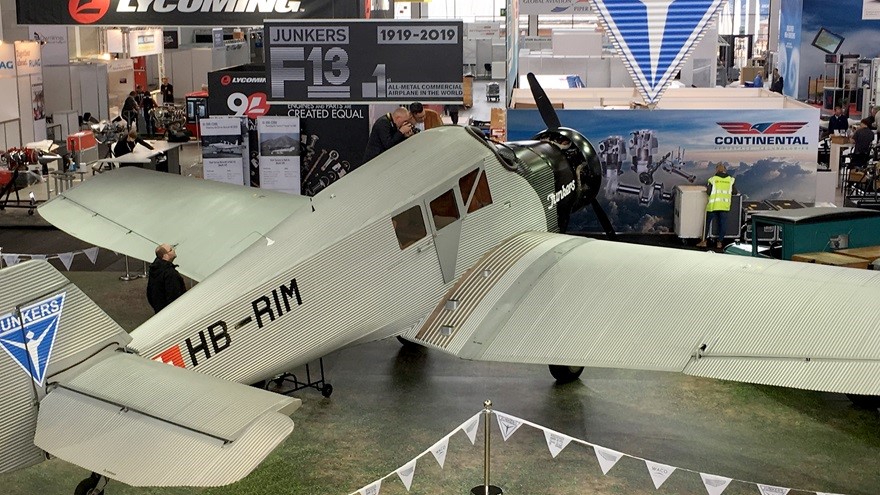
The Junkers F 13 at Aero 2018

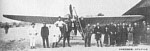
Dieter Morszeck, the owner of Rimowa GmbH, the famed baggage manufacturer, had a fondness for Junkers’ aircraft, and his father had produced the first travel case made of duralumin, the corrugated material Junkers used for his airplanes.

When the idea of a flyable reconstruction of the Junkers F 13 was floated in 2013, he was keen. However, he soon found out that there were only few remaining engineering drawings on which to base a reconstruction, and what existed was damaged and incomplete.

Further research revealed that there was an engineless F 13 in a museum in Le Bourget, France. With the permission of the curator, this aircraft was disassembled and laser-scanned, and the reconstruction proceeded on the basis of the derived blueprints.

Morszeck’s vision was a flyable airplane just like the original, but the knowledge of how to tool the components was seemingly lost. Dominik Kaelin, an expert in restoring vintage aircraft, their structures, and components. He and his team reinvented methods and materials they integrated into the aircraft. By the time they finished, every piece of it was crafted from scratch.

A ladder gets onto the huge wing, and tiny steps get through the door into the cabin, where four passengers can sit comfortably opposite each other in roomy leather upholstery. The two-seat cockpit, which is separated from the cabin by a window and, quite unlike the cabin, is open to the air. It can’t be accessed through the cabin as it also not have an outside door. Entry is from the wing.

A small recessed step leads into the pilot’s bucket seat 10 feet 2 inches above the ground. The instrument panel is equipped with a primary flight display, as well as a multifunction display, modern radio equipment, a transponder, and engine controls, but the wind is still in the pilot’s face.

In 2018 HB-RIM obtained type certification and was touring Europe.

Peter Bowers, president of Waco Classic Aircraft (which has been acquired by Morszeck) exhibited with the Junkers at Aero 2018.

Junkers F 13
Engine: Pratt & Whitney R-985 450 hp
Wing span: 48 ft 9 in
Length: 31 ft 6 in
Height: 10 ft 2 in
Empty weight: 3,430 lbs
Range: 345 nm
Cruise speed: 100 mph
Never exceed: 138 mph
Stall speed: 59 mph
Fuel consumption: Avgas 100 LL, 21 gph
Price: $ 2.8 million
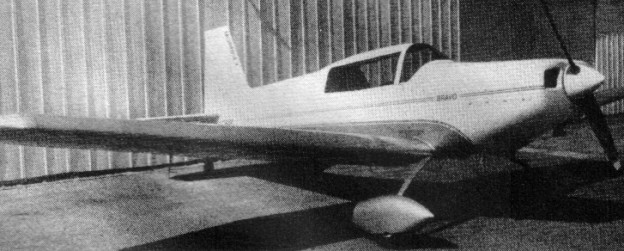

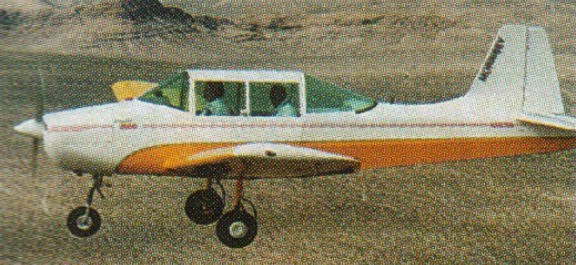
Morrisey OM-1 / OM-1-2 Bravo II

OM-1-2 Bravo II

Designed by Bill Morrissey, the Bravo originated as the single-place Model OM-1, which became the two-place Bravo II in 1982. Modification was simple – no alterations to the basic structure. Instrument panel and windscreen were moved forward and the canopy extended.

August 1983

Gross wt: 1700lbs
Empty wt: 965 lbs
Fuel cap: 35 US Gal
Wing span: 26.5’
Length: 21.5’
Top speed: 155mph
Cruise 75%: 145mph
Stall: 57mph
Climb rate: 1500fpm
T/O run: 400ft
Ldg roll; 700ft
Range: 550mls + res

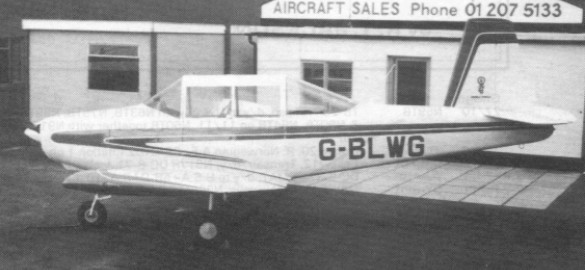
Morrisey Nifty / 2000 / 2150 / Shinn Engineering Inc 2150A Kachina / Varga Kachina 2150A

Morrisey 2000

The only Nifty ever built had a fabric cover, wooden wings, and a 115 hp engine, built in the late 1940s.

Morrisey Nifty / 2000 / 2150 Article

Bill Morrisey adapted the design to aluminum, installed a 150 hp engine and built 10 Morriseys.

Shinn Engineering acquired full manufacturing rights, tooling and spares, and turned out 35 Shinn 2150 airplanes.

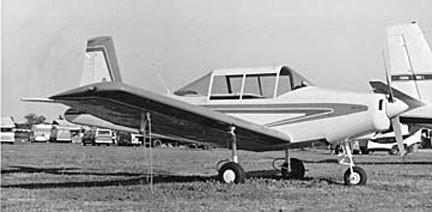
Varga Aircraft Corp 2150A Kachina

Varga Aircraft Corp, an airplane parts dealer, acquired from Shinn Engineering Inc full manufacturing rights, tooling and spares for Shinn Model 2150A in 1967. Vega moved the tooling twice and started setting up a plant in 1971. Put into production by Varga in 1977 as Model 2150A Kachina. It was available with 180 hp.

Varga Kachina

The 1973 Kachina sold for $13,500. 121 of the 1978 2150A (ATC 4A19) were built, and 18 of the 1981 2180 (4A19).

The 1982 2180TG were three conventional-gear configuration by Hibbard Aviation Co, Oakland CA.

Over 200 were built by the three manufacturers. As the Morrisey 2000, was offered as a kit, with planed production still under the FAA type certificate 4A14.

Gallery

Nifty
Engine: 115 hp

Kachina 2150A
Engine: 1 x Lycoming O-320-A2C, 150 hp
TBO: 2000 hrs
Prop: Schenich 2 blade, fixed pitch 74in
Seats: 2
Length: 21.3 ft
Height: 7.2 ft
Wingspan: 30 ft
Wing area: 145 sq.ft
Wing aspect ratio: 6.3
Max ramp wt: 1817 lbs
Max take off wt: 1817 lbs
Standard empty wt: 1125 lbs
Max useful load: 692 lbs
Max landing wt: 1817 lbs
Wing loading: 12.5 lbs/sq.ft
Power loading: 12.1 lbs/hp
Max useable fuel: 34 USG/204 lbs
Climb rate: 910 fpm @ 68 kts
Climb gradient: 803 ft/nm
Rate of climb @ 8000 ft: 400 fpm
Service ceiling; 22,000 ft
Max speed: 128 kts
Cruise @ 65% power @ 8,000ft: 105 kts
Fuel flow @ 65% power @ 8,000ft: 45 pph
Endurance @ 65% power @ 8,000ft: 4.3 hr
Stalling speed clean: 50 kts
Stall speed flaps down: 45 kts
Turbulent air penetration speed: 102 kts
Fixed nose wheel undercarriage

2150ATG
First built: 1981
Engine: Lycoming O-320-A2C, 150 hp
TBO: 2000 hrs
Prop: Sensenich 2-blade, 74-in
Seats: 2
Length: 21.3 ft
Height: 7.2 ft
Wingspan: 30 ft
Wing area: 145 sq.ft
Wing aspect ratio: 6.3
Maximum ramp weight: 1817 lbs
Maximum takeoff weight: 1817 lbs
Standard empty weight: 1125 lbs
Maximum useful load: 692 lbs
Maximum landing weight: 1817 lbs
Wing loading: 12.5 lbs/sq.ft
Power loading: 12.1 lbs/hp
Maximum usable fuel: 204 lbs
Best rate of climb: 1110 @ 68 kts
Climb gradient: 803 ft/nm
Service ceiling: 22,000 ft
Stalling speed clean: 50 kts
Stalling speed flaps down: 45 kts
Turbulent-air penetration speed: 102 kts
Fixed tail wheel under carriage

Morrisey 2000
Speed max: 132 mph
Cruise: 125 mph
Range: 350 sm
Stall: 50 mph
ROC: 1000 fpm
Take-off dist: 500 ft
Landing dist: 500 ft
Service ceiling: 16,000 ft
Engine: Lycoming O-235, 115 hp
HP range: 65-150
Fuel cap: 20 USG
Weight empty: 975 lbs
Gross: 1600 lbs
Height: 7 ft
Length: 20 ft
Wing span: 30 ft
Wing area: 142.1 sq.ft
Seats: 2
Landing gear: nose wheel

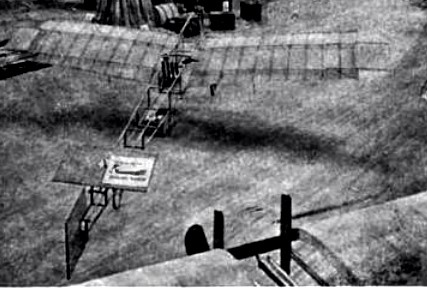
Morok 1910 monoplane

A monoplane with sliding wing-tips, which allowed it to bypass the lateral control patent wars of the time. It was built by Charles F. Morok of the Morok Aeroplane Co. of New York. His most noted flight was when he flew across the Green Mountains at Rutland, Vermont, but he also gained some notoriety by crashing into the window of a young woman during an attempt to fly across the Hudson River in December 1910.

Morin M85

In 2010 the prices were:
Complete Morin M85 Plans- Aluminum Wing: $375.00
Complete Morin M85 Plans- Wood Wing: $375.00
Morin M85 Aluminum Wing Plans Only: $235.00
Morin M85 Wood Wing Plans Only: $235.00
Morin M85 Streamlined Wood Stabilizer Plans: $105.00
Morin M85 11″x17″ Booklet Of Complete 143 Drawings: $175.00

Morgan Aero Works 10 Cheyenne

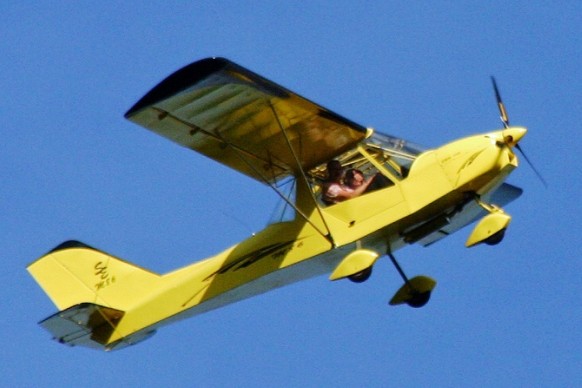
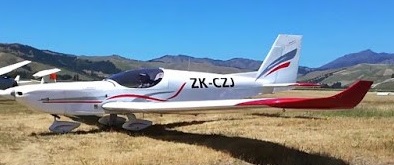
The one-off Morgan 10 Cheyenne aircraft was a 15 metre span motor glider powered by an 80 HP Jabiru 2200 engine. The fibreglass wings were constructed using foam ribs and the cockpit/engine mount/undercarriage mounts were connected by a steel frame.

The aircraft was registered VH-NZJ in Australia on 22/1/14 and its first flight was in May 2016 with an 18 metre 4-piece wing which was later replaced with a 15 metre wing.

Garry Morgan returned back to New Zealand in 2017 with the aircraft being cancelled from the Australian Civil Register on 17/2/17.

ZK-CZJ c/n GFA/AB/150 was registered to Garry Morgan of Renwick, New Zealand, on 7/8/17 as an Amateur Built Aircraft with a MAUW of 698 Kg.

The aircraft didn’t last very long on the New Zealand Register as on 31 December 2017 it suffered a major wing failure when flying over the Blairich Range South of Blenheim. The aircraft spiralled down and impacted on a steep slope with only minor injuries to the two occupants who walked to the top of the range and called for help by cellphone. The aircraft was fitted with a ballistic parachute but it could not be fired because the wing had folded over it.

It was cancelled from the New Zealand Civil Register on 18/1/18.

Morgan Aero Works Cougar / Wedgetail Aircraft Cougar

The 4-seater Cougar aircraft are built from kits and are of aluminium tube and sheet construction using pop rivets with a welded steel frame for the cockpit, undercarriage and engine mounts. The fairings and engine cowling are fibreglass.

Garry Morgan sold Morgan Aero Works in 2016 to Wedgetail Aircraft Pty Ltd which was formed by Ray Tolhurst and which is based at Camden Airport in NSW. Wedgetail Aircraft offer the Cheetah Sierra 200 and the Cougar, as well as the single seat Vampire.

The Wedgetail Aircraft Cougar 200, modelled on the original Morgan aircraft; features a number of improvements. Improvements to the landing gear, engine performance and instrumentation have not only improved this aircraft’s safety record but enhanced its performance and reliability.
Features:
3 Baggage Compartments
Derigged for trailer transportation in 10min
All kits include: Instruments and Radio

Wedgetail Aircraft Cougar 200
Engine: Jabiru 3300 (up to 160HP)
Wing Span: 8.23m
Length: 6.43m
Cabin Width: 1.06m
Tail Height: 2m
Tail Span: 3.05m
Empty Weight: 350-375kg
MTOW: 950kg
Main Fuel Tank: 100 Lt
Vne: 150 KNTS
Cruise 75% @8000ft: 120 KNTS
Max Manoeuvring Speed: 85KNTS
Stall Clean: 35 KNTS
Stall with flaps: 28 KNTS
Glide Ratio: 12
Rate of Climb: 1000FPM @ 80KNTS (with 130HP)
Service Ceiling: 10 000ft
Endurance: 5hrs +
Take Off Roll (Over 50ft): 150m
Landing Roll (Over 50ft): 180m
Rear Seat Load: 160kg
Seats: 4
Ultimate Load Limit: +4G, -2G

Morgan Aero Works Joey / Miranda Investments Joey

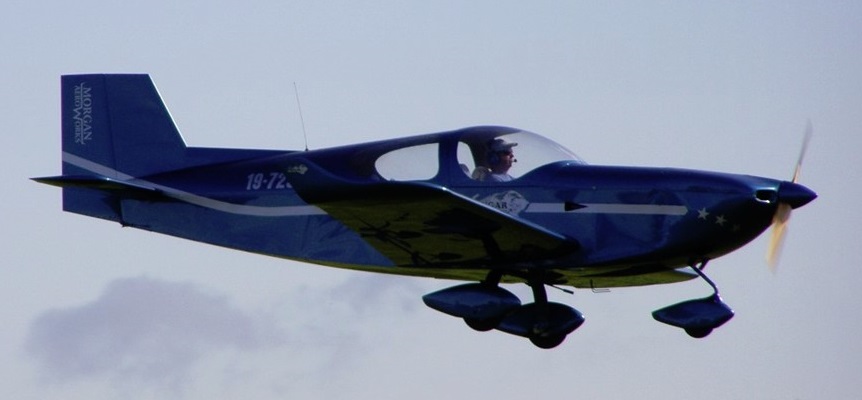
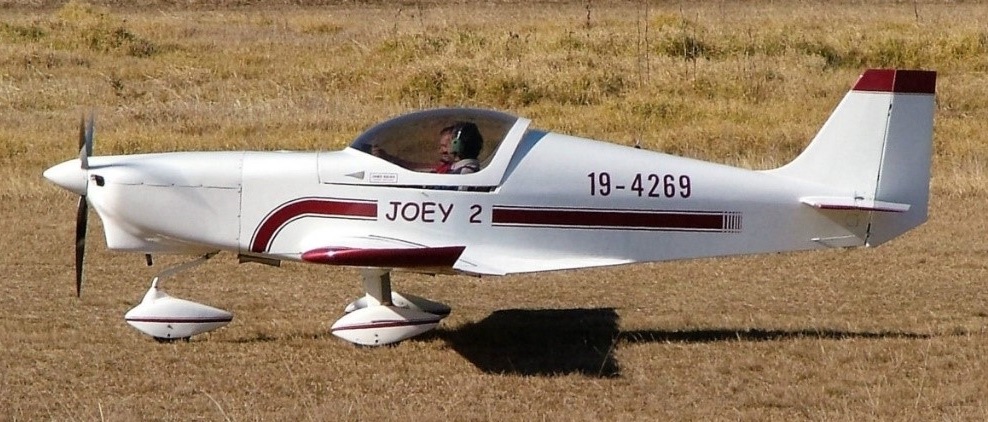
The two-seat Joey series of light sporting monoplanes was designed, developed and built by Garry Morgan of Miranda Investments of Riverwood, NSW, Australia. The first of his designs, the Joey, was designed for the amateur builder and was provided in kit form.

The kit provided the fuselage partly built, brakes, seat-belts, metal parts cut and bent, bolt kit, control cables and all welding carried out. The wing had wooden spars. The fuselage had fibreglass moulded skins on top of the fuselage deck, these being bonded with resin and cotton flock, the ply on the bottom half being 2.5 mm (0.98 in) Birch. The wing skins were pre-moulded, the tail, rudder and fin being supplied. Fuel was carried in integral wings in the wing.

The Joey can be de-rigged for carriage by trailer and to save on hangarage.

The prototype (19-3377) was completed in 2003, was fitted with a converted Volkswagen engine driving a two-blade propeller, and the cockpit width was 104 cm (41 in).

A number have been built and have been fitted with a range of engines, including Volkswagen conversions, Rotax and Jabiru units. Engines in the 45 kw to 75 kw (60 hp to 100 hp) range may be installed.

Development of the series continued and in late 2005 a new variant was released, known as the Joey 2, with a 114 cm (45 in) wide cockpit, powered by a Rotax 912 engine. Fuel capacity was a total of 150 litres (33 Imp gals) comprising 70 litres (15 Imp gals) in a header tank and 40 litres (8.8 Imp gals) in each wing tank. A further example became 19-7913.

Joey Mk II
Engine: Rotax 912, 60 kw (80 hp)
Wingspan: 8.3 m (27 ft 2 in)
Length: 5.5 m (18 ft 0½)
Height: 1.82 m (5 ft 10 in)
Empty weight: 300 kg (661 lb)
Loaded weight: 544 kg (1,199 lb)
Fuel capacity: 150 litres (33 Imp gals)
Max speed: 322 km/h (200 mph)
Max cruising speed: 222 km/h (138 mph)
Max manoeuvring speed: 222 km/h (138 mph)
Max rough air speed: 259 km/h (161 mph)
Stalling speed: 74 km/h (46 mph)
Takeoff and landing run: 200 m (656 ft)
Cockpit width: 114 cm (45 in)

Morgan Aero Works Cheetah / Cheetah Sierra / Wedgetail Aircraft Cheetah Sierra

Cheetah Sierra 100 ZK-LLS (c/n 21-54)

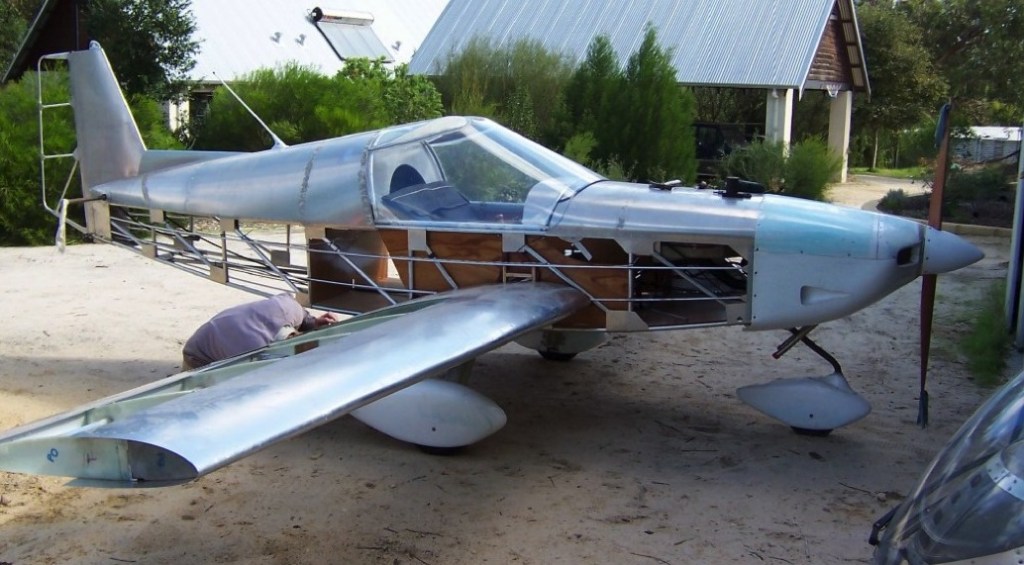
New Zealander Garry Morgan’s first design was the Cheetah and this was further developed into the Cheetah Sierra 100.

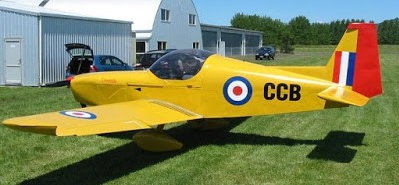
Morgan Aero Works Cheetah ZK-CCB (c/n MA 17)

The aircraft are built from kits and are of aluminium tube and sheet construction using pop rivets with a welded steel frame for the cockpit, undercarriage and engine mounts. The fairings and engine cowling are fibreglass. The wings are easily detachable for trailering and storage.

Morgan Aero Works Cheetah ZK-CCB (c/n MA 17)

Garry Morgan sold Morgan Aero Works in 2016 to Wedgetail Aircraft Pty Ltd. Wedgetail Aircraft offer the Cheetah Sierra 200.

Cheetah Sierra 100 ZK-TJD (c/n 23-S-5)

Cheetah Sierra 100
Engine: Jabiru 2200, 80 HP
Wingspan: 26 feet
Length: 19 feet
Empty weight: 313 Kg
MAUW: 544 Kg
Cruise speed: 130 knots
Stall speed: 37 knots