Perman Parasol

This aircraft started off as a Mignet HM.14 Pou du Ciel (Flying Flea), and as such, was registered as G-ADZG (C of R 6568) on 16.12.35 with the c/no EGP/SS/56. However, the registration G-ADZG was not taken up.

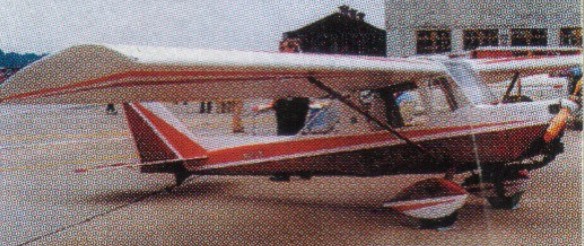
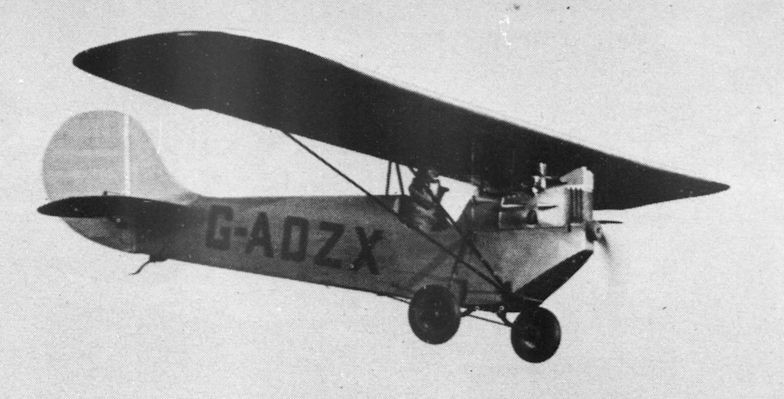
In 1936, together with Frank William Broughton, Perman developed a project for a small airplane called the Perman Parasol. Instead, the basic Flying Flea airframe was heavily modified and redesigned, and the aircraft was first registered (C of R 6593) on 2.5.36 as G-ADZX to E.G. Perman & Co, Gravesend Airport, Gravesend, Kent. The aircraft was described to the Air Ministry (per the aircraft’s record card) as a “Perman Parasol”. The Perman Parasol was a single seat ultra light monoplane, designed and built by E.S. Penman & Co Ltd. of London.

It was a single-seat parasol strut-wing monoplane powered by a Perman-Ford (Perman Poupower) engine with a claimed power of 32 hp with a two-bladed wooden propeller.

One only – G-ADZX – flew for the first time 23.5.36 (at Gravesend), powered by a 30 hp Perman-Ford engine, and flown by Mr A E Clouston.
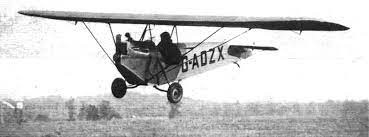
Sold on for £175 and re-registered (C of R 6593) 13.10.36 to Airworthiness Ltd., Gravesend Airpoprt, Gravesend, Kent. According to the aircraft record card, they re-named the aircraft as a “Brown Pigeon” (“formerlly called Parasol”)
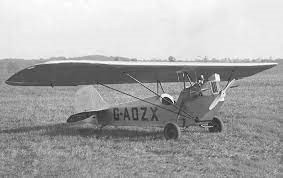
On the night of 31 July 1937, fire broke out in one of the hangars at Gravesend Airport. By the time it was extinguished, no fewer than five aircraft had been destroyed or damaged beyond economic repairThese were Blackburn Bluebird G-EBRF, two Robinson Redwings, G-ABDO and G-ABOK, DH60M Moth G-AAUH — and the one and only Perman Parasol, G-ADZX.

The blaze has been described elsewhere as “a firefighting exercise”. A local newspaper reported that “an aeroplane’s petrol tank exploded in a mysterious fire”. The airfield was also known as London East.

Written off (destroyed) by or on 31.7.37 when burnt out in a hangar fire at Gravesend Airport, Gravesend, Kent. Registration G-ADZX formally cancelled by the Air Ministry 31.12.38 due to “destruction or permanent withdrawl from use of aircraft”. The aircraft record card also noted “Census 1938”, which indicates that the cancellation was as a result on the Air Ministry’s 1938 Census into all surviving British-registered civilian aircraft.

The Perman Parasol was developed into the Perman Grasshopper.

Engine: Perman-Ford, 32 hp
Wingspan: 7.80 m
Wing area: 11.60 sq.m
Length: 4.75 m
Height: 1.80 m
Empty weight: 192 kg
Maximum takeoff weight: 272 kg
Maximum speed: 120 km/h
Cruise speed: 109 km/h
Range: 450 km
Crew: 1
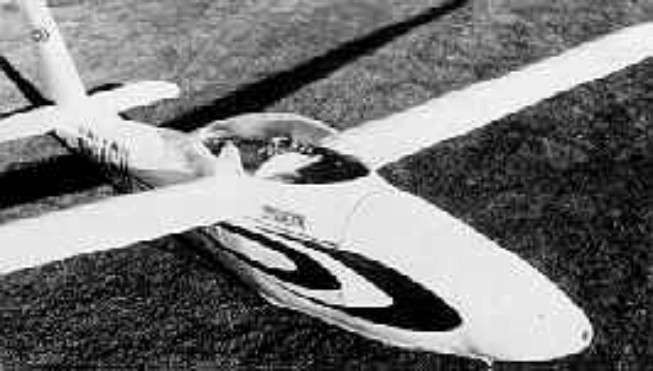
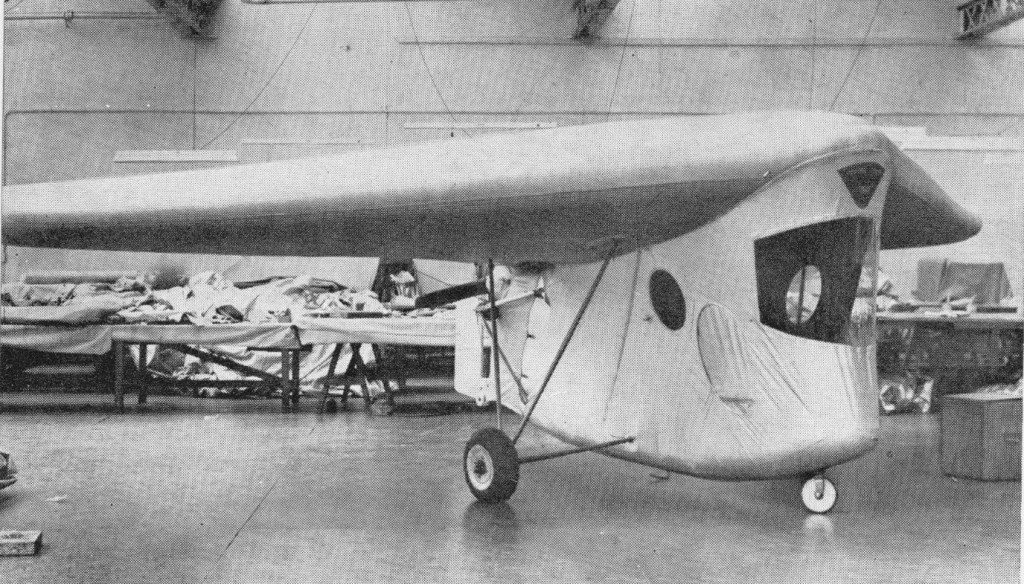
Perman Grasshopper / Broughton-Blayney Brawney

The rights to the Perman Grasshopper, a development of the Perman Parasol, were taken over by Broughton-Blayney and marketed as the Broughton-Blayney Brawney.

A single-seat parasol monoplane, three Broughton-Blayney Brawney were built at Hanworth;
G-AENM c/n BB/50 – written off 21 March 1937
G-AERF c/n BB/51 – written off 6 June 1937
G-AERG c/n BB/52 – withdrawn from use in 1937

Broughton-Blayney Brawney
Engine: Carden Ford
Wingspan: 25.06 ft
Length: 15.06 ft

Perl Penetrator PG-130

Designed and built be Harry Perl, the Penetrator first flew in 1953. Built from wood and fabric, it has an all-moving tail, styrofoam-filled wing leading edges, and airbrakes. It originally had a skid with jettisonable take-off dolly, but was subsequently fitted with a fixed wheel. The sole example now belongs to the National Soaring Museum.

Wing span: 14.63 m / 48 ft
Wing area: 12.07 sq.m / 130 sq.ft
Empty Weight: 218 kg / 480 lb
Payload: 90 kg / 200 lb
Gross Weight: 308 kg / 680 lb
Wing Load: 25.51 kg/sq.m / 5.23 lb/sq.ft
L/DMax: 33 84 kph / 45 kt / 52 mph
MinSink: 0.64 m/s / 2.1 fps / 1.24 kt
Seats: 1
Aspect ratio: 17.75
Airfoil: Go 549

Perkins & Lock New Horizon

Designed and built by D. Perkins and A. Lock in 1958, the New Horizon was a tail-less, parasol wing monoplane, with a pusher propellor and tricycle undercarriage. It featured an inflatable wing.

Man-powered, it was unsuccessful in flight trials inside the Cardington airship hanger.

Development of the inflatable wing concept did lead to the ‘Reluctant Phoenix’.

Perkins Reluctant Phoenix

After gaining experience with his ‘New Horizon’, D. Perkins went on to design a tail-less delta inflatable man powered aircraft which he called ‘Reluctant Phoenix’.

It first flew inside the Cardington balloon hanger on 18 July 1966 and went on to make 97 similar flights, all of which were only in ground effect.

Wing span: 27.00 ft
Wing area: 250 sq.ft

Peris JN-1 / Povey JN-1

Construction Wood, Foam, Fiberglass
Plans cost $68.00. Est. Bldg. Time 800 hrs.

Engine: Kawasaki 440, 38 hp
Height: 5.16 ft
Length: 17.33 ft
Wing span: 30 ft
Wing area: 140 sq.ft
Weight empty: 320 lbs
Gross: 600 lbs
Fuel cap: 5 USG
Speed max: 65 mph
Cruise: 60 mph
Range: 110 sm
Stall: 28 mph
ROC: 600 fpm
Take-off dist: 250 ft
Landing dist: 250 ft
Service ceiling: 10,000 ft
HP range: 38-50
Seats: 1
Landing gear: tail wheel

Pereira GP-5

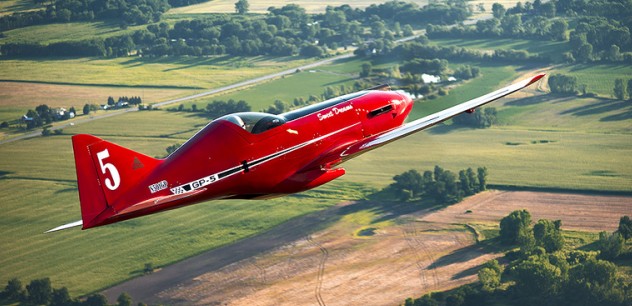
On 12 April 2014 Lee Behel set out from Mojave Airport to break two records, the 3,000m climb and the 3k speed run. Flying his V-8 powered George Pereira designed GP-5, he managed to reach 3,000 meters (or 9,842 feet), in exactly two minutes along with achieving a top speed of 372mph on a flat 3k run to take the records.

Pereira GP-4

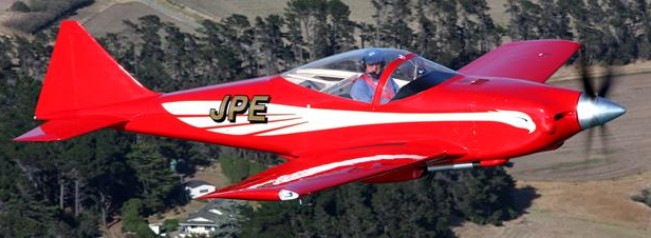
A high performance, low wing, side-by-side two-seater, of all wood construction. The GP4 is the latest in a series of four aircraft designed by George Pereira.

The GP-4 prototype was finished in April, 1984. Extensive flight tests were completed in time to compete for awards at the 1984 EAA Convention in Oshkosh, Wisconsin. That year at Oshkosh, the GP-4 won both the Grand Champion Custom Built and the Outstanding New Design awards. It is a high performance cross-country type aircraft designed to extract the most speed from the power available. Airfoil selection and drag reduction were primary considerations. The construction is of wood with foam and fiberglass utilized in the cowling and fairing areas. Design strength at full gross is 8G’s positive and 6G’s negative obtained by using a massive, one-piece main spar. The GP-4 aircraft has a manual landing gear retracting system but there is a separate set of plans for a hydraulic landing gear.

Osprey Aircraft also marketed as plans and kits is the Osprey GP-4.

Gallery

GP-4
Engine: Lycoming IO-360-A1A
Wing Span: 24′
Wing Area: 104 sq ft
Wing Load (full gross): 19.09 lbs/sq ft
Span Loading: 80.45 lbs/sq ft
Length: 21′ 6″
Aspect Ratio: 5.54 to 1
Dihedral: 5 Degrees
Fuel: 54 USGallons
Service Ceiling: 20,000 +
Vmax: 255 mph
Cruise Speed 75%: 240 mph true
V s1 (stall clean): 70 mph
V s0 (indg config): 62 mph
Gross wt: 2000 lb
Empty Weight: 1,260 lb
Useful Load: 740 lb
Baggage: 10.5 sq ft – 75 lbs
Wheel Track: 8′
Wing Airfoil: Laminar 63 Series
Range at 75%: 1,100 mi, 240 mph
Take Off Distance: 600 ft
Landing Distance: 1,200 ft
Climb Rate @ MSL: 2,200 fpm
Seats: 2
Cabin width: 40 in
Landing gear: retractable nose wheel

GP-4
Engine: Subaru EG33 6 Cyl
Prop: 4 blade elect CS prop.
Cruise: 150Kt @ 35 lts/hr
Fuel capacity: 200 lt.

Pereira GP-3 Osprey 2

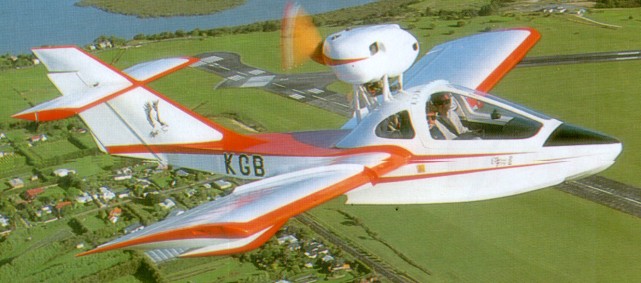
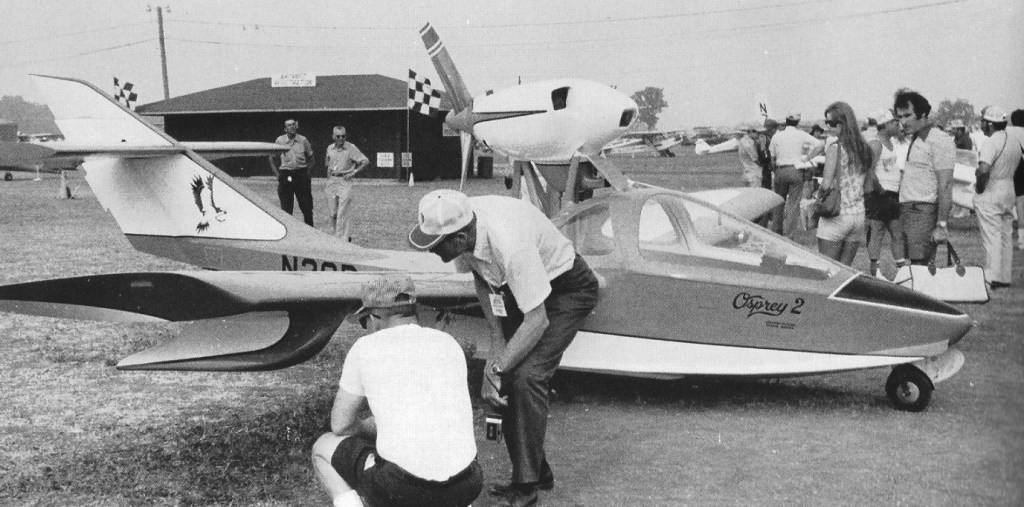
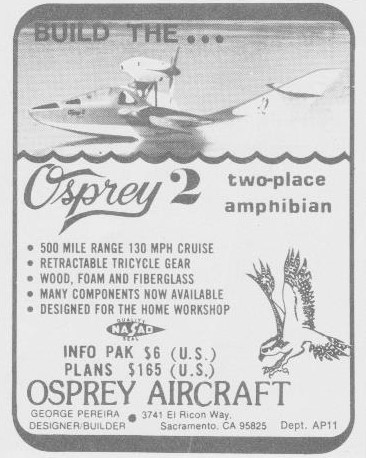
Design and construction of the two place Osprey 2 amphibian began early in 1972 following development of a military version, the U.S. Navy X-28A Air Skimmer, for civil police use in Southeast Asia. The designer, George Pereira, evolved a unique construction technique for the single-place Osprey I by coating the underside of the all-wood fuselage structure with polyurethane foam, later sculptured to the desired shape and covered with several protective layers of fiberglass bonded with resin. The result is a light, strong structure able to resist the shock of hard water landings.

The pusher engine is a Lycoming O-320 flat-four of 160 hp mounted on a pedestal so the prop wash blows directly over the cruciform tail surfaces. Wings are of all-wood construction with a single box spar, while the landing gear for use on land is of the retractable tricycle type. The wings just outboard of the main gear are removable for towing and home storage.

The Osprey 2 was designed to be built, in its entirety, in a workshop with no molds required, and first flew in 1973.

Detailed construction plans are available. They consist of 46 sheets, drawn with amateur builder in mind, plus step-by-step, photo illustrated, construction manual. Price 1982: $3,690 (Excludes engine, propeller, Instruments and paint). Units delivered to June 1981: 500.

November 1983

Gallery

Seats: 2
Engine: Lycoming 150-160 hp
Length: 21 ft
Cabin Width: 43 in
Wing Span: 26 ft
Wing Area: 130 sq ft
Wing Load (full gross): 10.09 lbs/sq ft
Span Loading: 80.45 lbs/sq ft
Aspect Ratio: 5.2
Dihedral: 5 Degrees
Gross Weight: 1,560 lb
Empty Weight: 960 lb
Useful Load: 420 lb
Fuel: 32 USG
Baggage: 10.5 sq ft – 75 lbs
Wheel Track: 8′
Wing Airfoil: 23012
Range at 75%: 500 +
Takeoff run (land): 300 ft
Takeoff run (water) 520 ft
Landing roll 600 ft
Climb Rate @ MSL: 1,200 fpm
Service Ceiling: 20,000 +
Vmax: 150 mph
Cruise Speed 75%: 130 mph true
V s1 (stall clean): 65 mph
V s0 (indg config): 60 mph