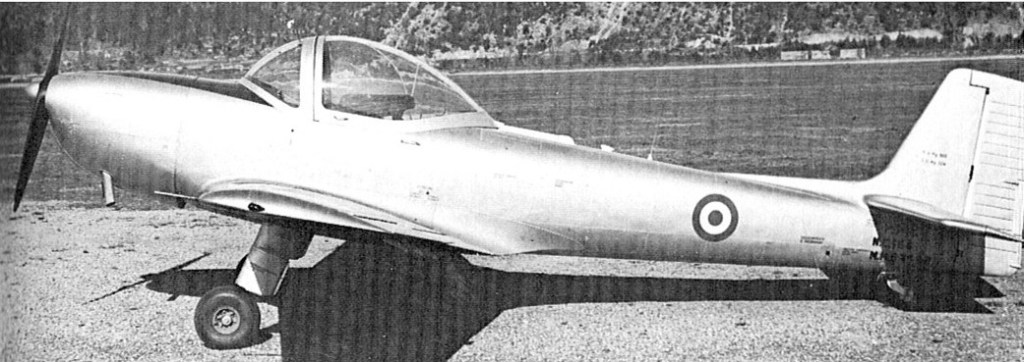
In September 1950 Piaggio began development of the P.148 primary trainer and in less than six months the prototype had been certificated. Production examples became standard trainers with the Italian Air Force.
Engine: 1 x Avco Lycoming O-435-A, 142kW Max take-off weight: 1280 kg / 2822 lb Empty weight: 876 kg / 1931 lb Wingspan: 11.12 m / 37 ft 6 in Length: 8.44 m / 28 ft 8 in Height: 2.4 m / 8 ft 10 in Wing area: 18.85 sq.m / 202.90 sq ft Max. speed: 234 km/h / 145 mph Ceiling: 5000 m / 16400 ft Range: 925 km / 575 miles
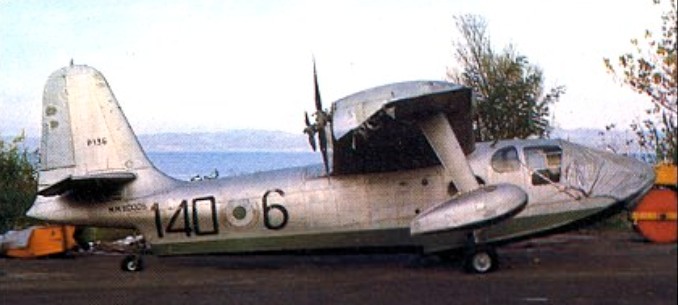
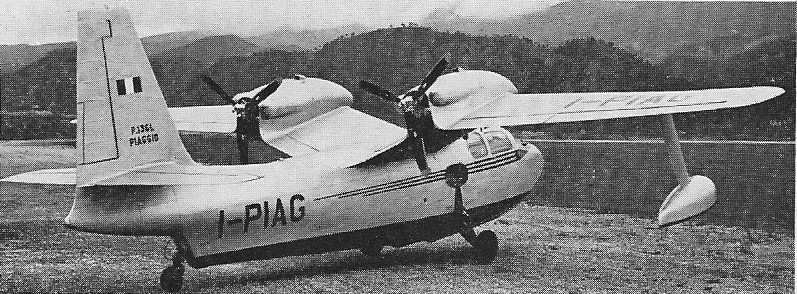
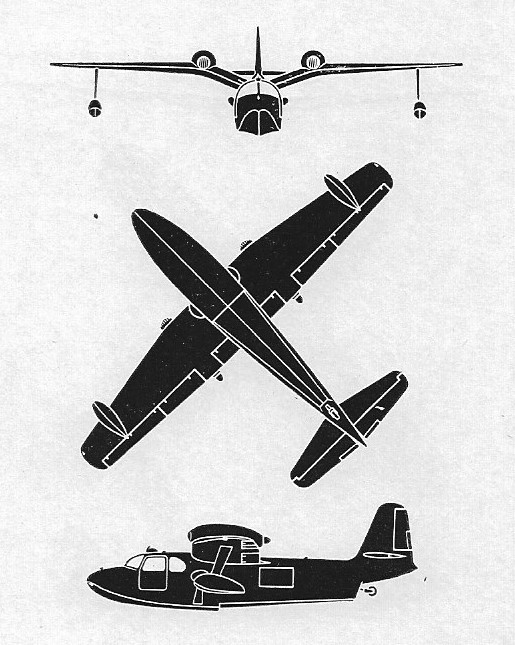
The P.136 was flown for the first time on 29 August 1948 and he first production aircraft were powered by 215 hp Franklin 6A8-215-B9F engines. Eighteen of these were acquired by the Italian Air Force followed by a further fifteen of the P.136-L powered by Lycoming engines.
More than 80 P.136 five-seat light amphibians were built as one of the company’s first post-war products, 33 of which were supplied to the Italian Air Force for use as flying-boat trainers and for air-sea rescue duties.
A second production series, the P.136-L, differed in having higher-power Lycoming engines and redesigned, enlarged squared-off tail surfaces.
A total of 32 were delivered to non-military customers, including twenty to the USA where they were marketed as the Trecker Gull. Most of these were P.136-L-1 or P.136-L-2.
P.136-L
Trecker Aircraft Corp, a division of Kearney & Trecker Corporation, in early/mid-1960s assembled at Milwaukee, Wisconsin, Piaggio P.136L-1 s and L-2s under names Trecker Gull and Super Gull.
P.136-L Engine: 2 x Lycoming GO-435-C2 Wingspan: 44 ft 4.75 in Wing area: 268 sq.ft Length: 35 ft 5 in Height: 11 ft 6 in Empty weight: 3211 lb Loaded weight: 5842 lb Max speed: 181 mph Cruise: 160 mph at 6890 ft Time to 3280ft: 3 min 40 sec Service ceiling: 17,716 ft Normal range: 373 mi Max range: 621 mi
P.136-L-1 Engines: 2 x 270 hp Lycoming GO-480-B Wingspan: 44 ft 4.5 in / 13.53 m Length: 35 ft 4 in / 10.8 m Height: 12 ft 7 in / 3.83 m Wing area: 270.2 sq.ft / 25.1 sq.m Empty weight: 4400 lb Loaded weight: 5996 lb Max speed: 183 mph at SL Cruise 70%: 167 mph Service ceiling: 19,685 ft Max range: 1056 mi
P.136-L-2 Engines: 2 x 340 hp / 254kW Lycoming GSO-480 Wingspan: 44 ft 4.5 in / 13.53 m Length: 35 ft 4 in / 10.8 m Height: 12 ft 7 in / 3.83 m Wing area: 270.2 sq.ft / 25.1 sq.m Empty weight: 4652 lb / 2110 kg Loaded weight: 6600 lb / 2995 kg Max speed: 208 mph / 335 km/h at SL Cruise 70%: 190 mph Service ceiling: 25,500 ft / 7800 m Max range: 900 mi / 1450 km
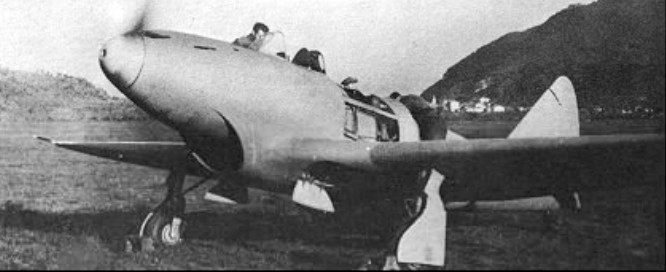
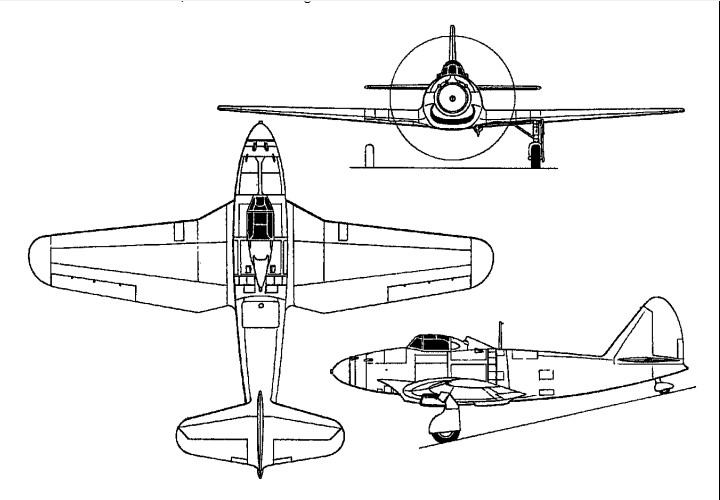
Flown for the first time on 19 December 1942 from the company’s Villanova d’AIbegna airfield, the Piaggio P.119 was an all-metal low-wing monoplane single-seat fighter with a slim fuselage. This was made possible by enclosing the 1230kW Piaggio P.XV RC.45 radial engine in the fuselage behind the pilot’s fully enclosed cockpit, the three-blade propeller being driven by an extension shaft. The clean lines were broken only by the engine air intake located beneath the fuselage, forward of the wing. It was intended to be re-engined with a RC50 of 1,650hp. Proposed armament was four nose-mounted 12.7mm machine-guns and one 20mm cannon firing through the propeller hub.
Test flights indicated a maximum speed of 620 km/h but the aircraft was plagued by engine vibration problems and after relatively slight damage suffered during a landing accident, on 2 August 1943, further development was abandoned and no attempt made to repair it.
Engine: 1 x Piaggio P.XV RC.45, 1230kW Max. speed: 620 km/h Armament: 1 x 20mm cannon, 4 x 12.7mm machine-guns
In 1938 the RA issued a request for proposal for a BGR (Bombardiere a Grande Raggio, long-range bomber); proposals came from Caproni with their Ca.204 and Ca.211 projects, CRDA with Cant. Z.1014 (built only in mock-up form), Piaggio with the P.108B (a private venture project, offered as an additional entry) and the P.112. Also considered was the purchasing of a production license for the Boeing B-17C ‘Fortress’, but this idea was later discarded for reasons of autarchia (national self-sufficiency). The competition was won by the Cant. Z.1014, but since the development of the P.108B was already at an advanced stage, this aircraft was chosen to be produced in quantity. Designed by Casiraghi, who had worked in the USA and was familiar with B-17 technology, it was a sophisticated machine, although slower and heavier than the Fortress.
Piaggio P-108B Engines: 4 Span 108 ft 3 in Length: 81 ft 6 in Max speed: 290 mph at 11,480 ft Range: 2500 miles Armament: 8 x 12.7 mm mg Bombload: 7716 lb Crew: 6-7
The Piaggio P.50 four-engine heavy bomber was the first aircraft to be designed for the company by Giovanni Casiraghi, following project outline by Giovanni Pegna. The P.50-1 (MM 369) prototype, test flown in 1937, was a shoulder-wing monoplane with a large single fin and rudder and four 544kW Isotta Fraschini XI RC V-12 engines wing-mounted in tandem pairs and driving two tractor and two pusher propellers. Three defensive gun positions included a nose turret, and offensive load was a maximum of 2500kg. A second prototype (MM 370) was damaged in a landing accident at Malpensa airfield in 1938. During that year the P.50-II (MM 371) appeared with a conventional four-engine layout, the 746kW Piaggio P.XI RC.40 radials driving four three-bladed tractor propellers. Defensive armament was increased to five 12.7mm machine-guns. Although no production ensued, the P.50 was the progenitor of the P.108 of World War II.
P.50-I Engine: 4 x Isotta-Fraschini XI RC, 544kW Wingspan: 25.76 m / 85 ft 6 in Length: 19.8 m / 65 ft 12 in Max. speed: 435 km/h / 270 mph
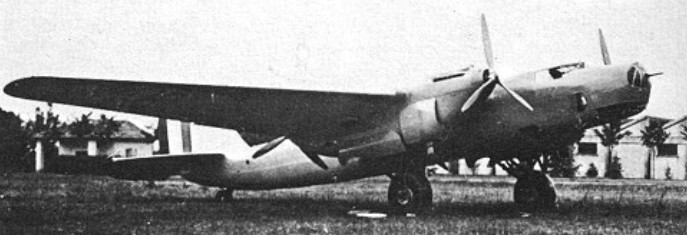
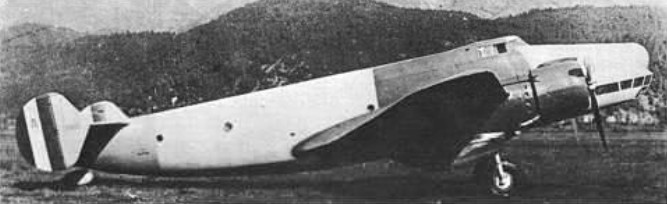
The prototype of the Piaggio P.32 twin-engine bomber flew in early 1936 powered by two Isotta Fraschini Asso XI V-12 engines. Of mixed construction, the P.32 had a stubby fuselage with a low/ mid-set wing incorporating Handley-Page leading-edge slats and double trailing-edge flaps, and a tail unit with twin fins and rudders. The V-12 engines were later replaced by 746kW Piaggio P.XI RC.40 radials. Armament comprised a single 7.7mm Breda machine-gun in a nose turret, and twin guns of the same type and calibre in retractable dorsal and ventral turrets.
A production series of 16 P.32s with Isotta Fraschini engines went into service with the 47a and 48a Squadriglie B.T. of the Regia Aeronautica during 1937, only to be withdrawn and scrapped the following year after a crash which indicated irremediable control problems. Twelve radial-engined aircraft under construction were never completed.
Used in the disasterous attempt by the Italians to bomb London on 11 November 1940.
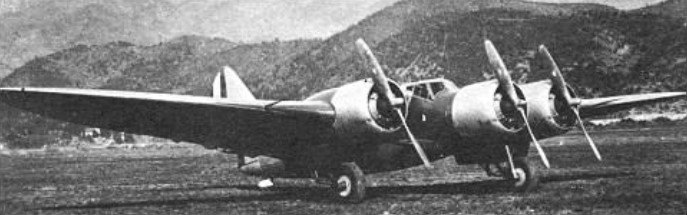
An entirely new design, bearing little resemblance to the original P.23, the Piaggio P.23R of 1936 had a pencil-shaped fuselage, a cantilever low-set wing with straight taper, and was powered by three 671kW Isotta Fraschini Asso XI R V-12 engines in sleek cowlings.
Intended purely as a record-breaker, the P.23R had a crew of two seated side-by-side in individual cockpits, each with its own windscreen and first flew in 1936.
Later modified by the installation of three 746kW Piaggio P.XI RC.40 radials, and with an enclosed canopy over each cockpit and revised main landing gear, the P.23R was used on 30 December 1938 to establish new world records, carrying a payload of 5000kg over distances of 1000km and 2000km at an average speed of 404km/h.
Although the P.23R appeared in Allied wartime recognition manuals as a potential bomber, development of the type had already been abandoned in 1939.
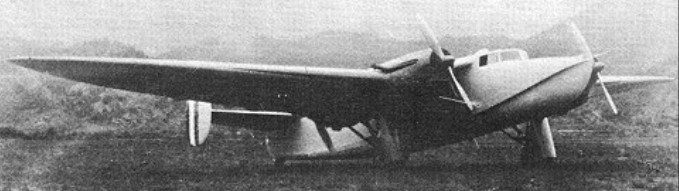
Built to fly the North Atlantic, with potential for development as a commercial transport, the Piaggio P.23 had inverted-gull shoulder-mounted wings and was powered by four 671kW Isotta Fraschini Asso XI R V-12 engines mounted in tandem pairs and driving two tractor and two pusher propellers. It had retractable main landing gear units and twin fins and rudders. A distinctive feature was the ‘avion marin’ boat-type hull underside to the fuselage, intended to assist in an emergency if the aircraft had to alight on the sea.
Maximum take-off weight was 18,400kg and maximum speed a claimed 400km/h; at a cruising speed of 300km/h its range was estimated to be 5100km. However, no transatlantic flight was made and the aircraft was dismantled soon after its appearance in 1935.
Engine: 4 x Isotta-Fraschini Asso XI R, 671kW Max take-off weight: 18400 kg / 40565 lb Max. speed: 400 km/h / 249 mph Range: 5100 km / 3169 miles
The Piaggio P.16 three-engine heavy bomber of 1934 was distinguished by a thick-section semi-elliptical wing set at shoulder height, and of inverted gull configuration. Defensive armament comprised four 7.62mm machine-guns located in the wing leading edge, in a retractable dorsal turret and in the rear fuselage beneath the high-positioned single fin and rudder. Largely of metal construction, the P.16 had retractable main landing gear units and a non-retractable tailwheel with a spat-type fairing. The bomb-aimer’s compartment was located in the underside of the fuselage, just behind the central engine.
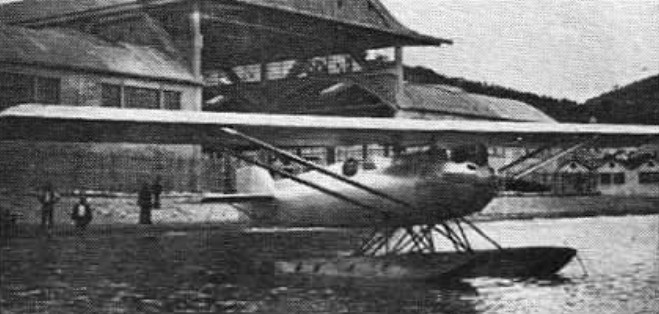
A parasol-wing single-seat floatplane, the small Piaggio P.8 reconnaissance aircraft of 1928 was intended, like its rival the Macchi M.53, to be stored in a cylindrical container aboard submarines of the large ‘Ettore Fieramosca’ class. It was designed to be assembled rapidly for deployment at sea on patrol or reconnaissance; after being recovered it could as easily be dismantled and re-stowed in its container. Powered by a 56kW Blackburn Cirrus II engine, it had a maximum speed of 135km/h.
Engine: 1 x Blackburn Cirrus II, 56kW Max. speed: 135 km/h / 84 mph





 All Aero