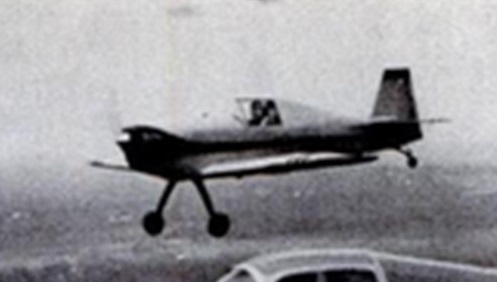
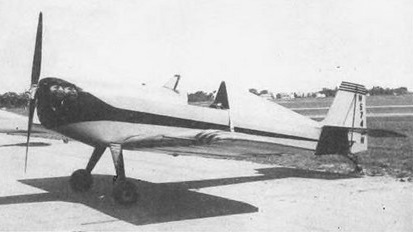
In 1953 Bruce & Gilbert Pitt designed and built the sole single place low wing monoplane, Yellow Jacket N5745N. The fuselage was framed with tubing from a surplus PT-23 and a Porterfield, and the wings from a 1948 Anderson Special. The Yellow Jacket was first flown on 8 August 1953.
“Bullet” cowls were added to streamline the four cylinders of the 85-hp Continental C-85-8 motor.
Engine: Continental C-85-8, 85-hp Wing span: 14 ft. Length: 19 ft Max speed: 150 mph Cruise speed: 130 mph Stall: 60 mph
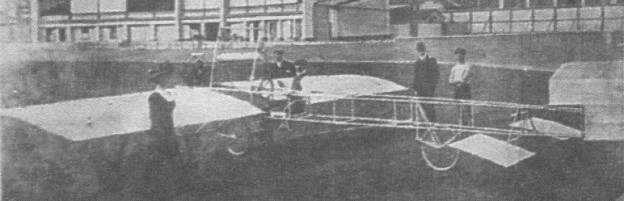
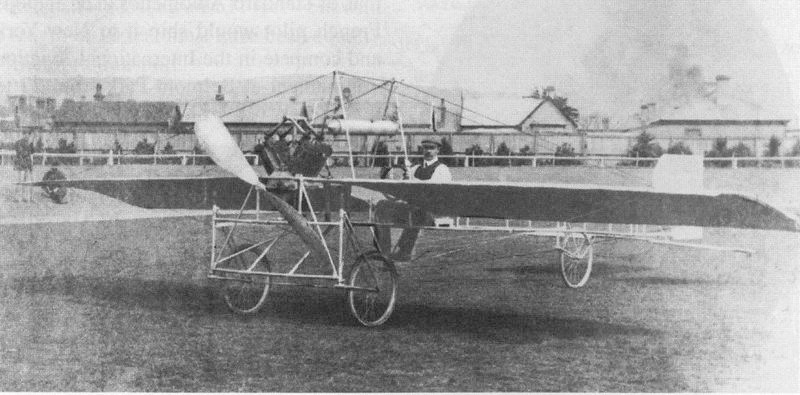
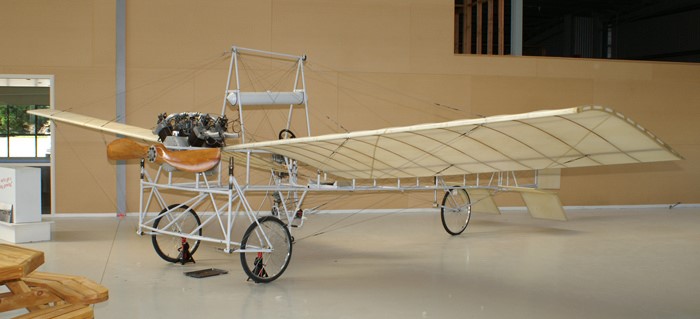
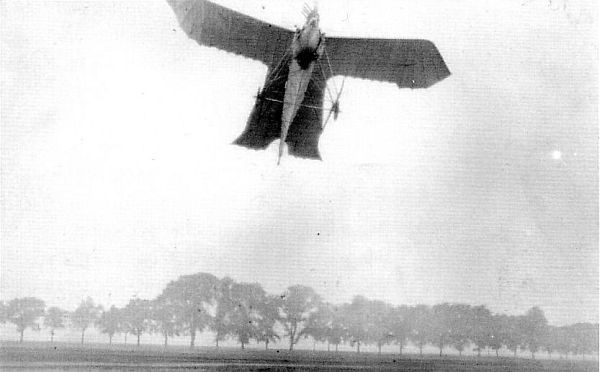
Herbert John Pither of Invercargill, New Zealand, was a professional cyclist, cycle and small engine manufacturer and aviation experi¬menter. The basic facts are clear. Pither built a Bleriot type monoplane, and a V 4 configured engine to power it. He incor¬porated some ideas of his own, including the early use of bicycle steel for the airframe. His workmanship was of a high standard.
Pither tested his aircraft on a remote Southland beach in winter 1910, but there is no contemporary record of a witness to the flight he later described. He claimed to have flown for 1.5 km along Riverton Beach on 15 July 1910 at a height of 30 ft.
He took it to Australia in November 1910 hoping to attract the attention of the Australian government, and then disappeared from aviation history.
By 1923 Victor Pisarenko had become one of the best Soviet flight instructors, but in the fall of that year he also made his debut as an aircraft builder and became the first Soviet amateur builder.
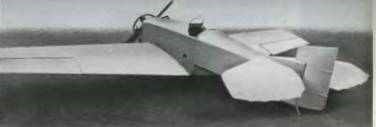
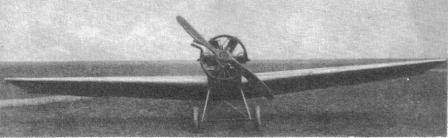
With the help of several students, Pisarenko built a single-seater light aircraft in the workshops of the Kacha Flight School, Sevastopol, which had the privilege of being the first Soviet aircraft with a low cantilever wing. This plane received the name VOP-1, an acronym for Victor Osipovich Pisarenko – 1 (Russian: Писаренко ВОП-1).
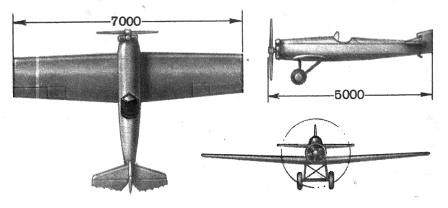
The VOP-1 was conceived as a cantilever low-wing monoplane built in wood. The one-piece wing with a trapezoidal shape on the plane used a profile selected by the author himself. With a surface area of 10 square metres, it had a double-beam structure and was completely covered by a thin layer of plywood.
The fuselage was built with a wooden structure and had a plywood covering with angular lines. In its central part, behind the engine, the open cockpit for the pilot was located.
The tail was of the monoplane type with the rudders covered in fabric.
The landing gear was conventional, fixed and had a tail skid.
A 35 hp Anzani engine obtained in the workshops themselves was used as the power plant.
The VOP-1 was built in the school’s workshops in Sevastopol and many of its parts were taken from old discontinued models. On November 27, 1923 Pisarenko flew for the first time. This flight was followed by several others.
During the test flights, carried out by Pisarenko himself, the plane was stable in flight and responded well to the controls. With its 35 hp engine, the plane reached a speed of 120 km/h.
Powerplant: One 35 hp Anzani Wingspan: 7.50 m Wing area: 10.00 m² Length: 5.00m Empty weight: 222 kg Normal takeoff weight: 322 kg Weight of fuel + lubricant: 20 kg Wing loading: 32 kg/sq.m Power load: 9.2 kg/hp Total load capacity: 100 kg Top speed: 120km/h Cruising speed: 100 km/h Practical ceiling: 1200 m Accommodation. 1
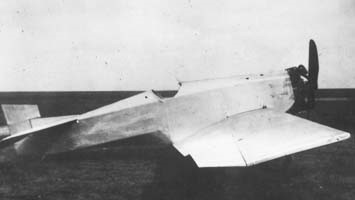
After moving to the Serpukhov Higher School of Air Combat, Shooting and Bombing (Strelbom), Pisarenko, with the help of cadets, began construction of his second aircraft. This model was called VOP-T (Víctor Osípovich Pisarenko – Trenirovochni (coach)) (Russian: Писаренко-Т or ВОП-Т).
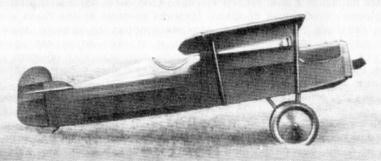
The Pisarenko-T was conceived as a parasol-braced wing single-seat monoplane. As a distinctive feature of this model we can point out its unconventional wing profile, with flat upper and lower surfaces, a curved leading edge and a flattened tail. In general, a strange wing with a sharp leading edge was obtained.
The wing, with a double spar structure, had parallel wooden supports that fixed it to the sides of the fuselage. The covering was plywood.
The Pisarenko-T was powered by a 150-hp Hispano-Suiza engine driving a two-blade wooden propeller.
The plane was built at the Serpukhov school and was ready in 1925.
Pisarenko prepared the plane for its first flight and when it was ready, he went to the head of the school for permission. The plane had been built with hardly any calculations and its pilot was only authorized to race down the runway. Pisarenko disobeying, took the flight back and headed for Moscow, landing at the Central Aerodrome in Jodinka. Once there, before the authorities could react and ban him, he made a second flight, executing several high school piloting tricks that included inverted flight and several rolls.
Once the second flight was completed, Pisarenko never flew his plane again, nor did he request permission to do so.
The success of his model led to Pisarenko soon receiving an application to build a training aircraft with funds from the VVS leadership. He began to work in this direction, but the appearance of the excellent trainer Polikarpov U-2 soon made him leave the company.
Powerplant: One 150 hp Hispano-Suiza engine Accommodation. 1
Presented in October 1912 at the “Süddeutschland Flug” that started in Mannheim, Germany. It was nicknamed “the flying nightdress”. Apart from the long stabilizing areas a more or less conventional Taube-design, powered by a 70 hp Argus.
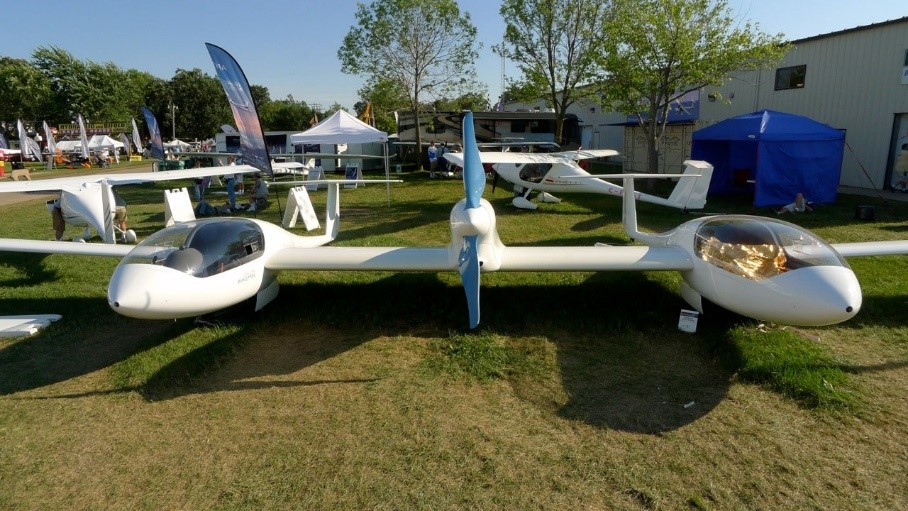
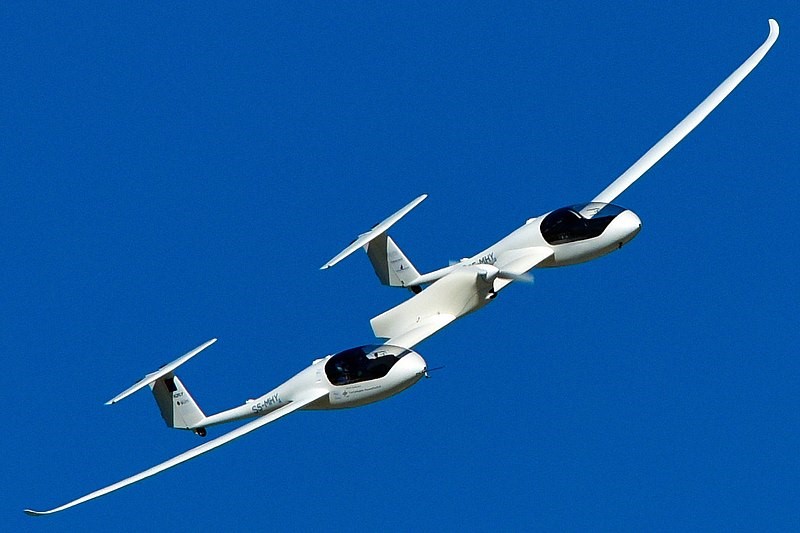
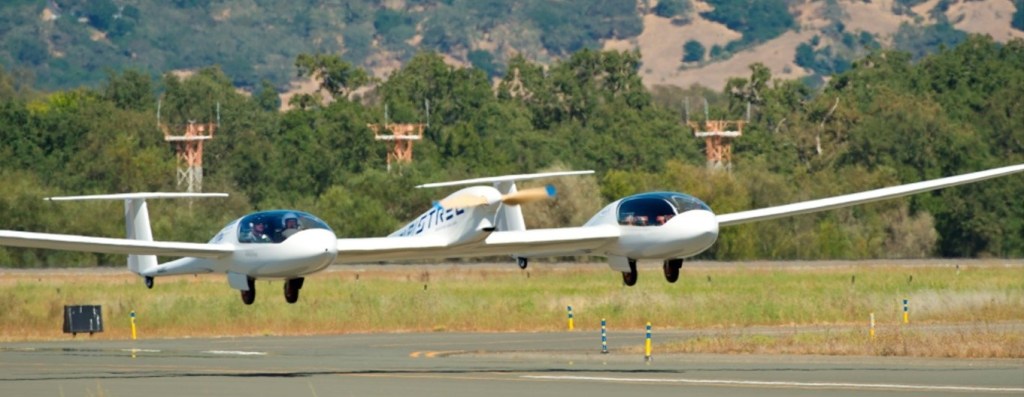
The Taurus G4 is a test bed to develop a high-power electric propulsion system. It features twin fuselages, room for four and an electric motor.
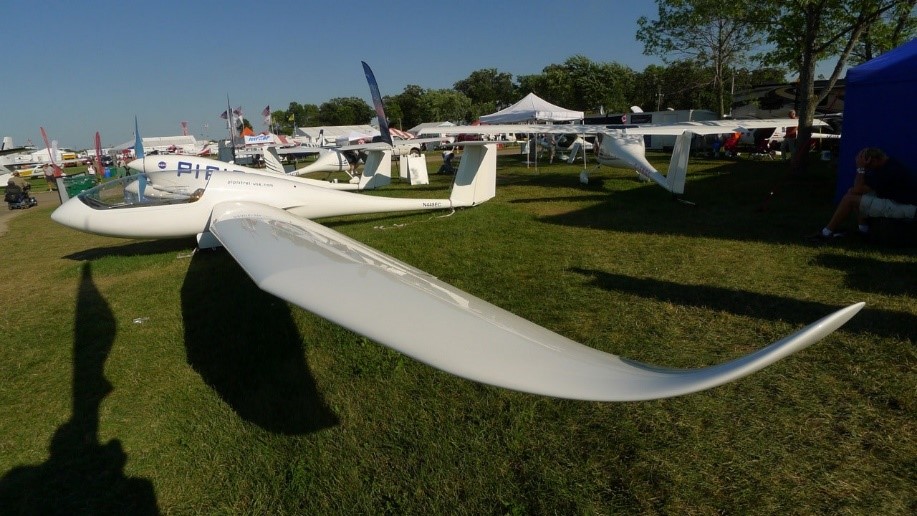
The Taurus G4 was built entirely in house, and mostly of carbon fiber with some Kevlar here and there. It is essentially a pair of Pipistrel’s Taurus self-launch glider fuselages joined by a single wing.
Mounted between the fuselages is a 150 kilowatt (200 horsepower) electric motor. It is the most powerful electric motor seen thus far in an all-electric airplane design. The Taurus G4 carries more than 1,100 pounds of lithium polymer batteries. There is more than 75 kilowatt-hours available via the company’s proprietary management system.
The airframe is very light. Although the aircraft weighs roughly 2,350 pounds empty, nearly half of that is the battery. Maximum takeoff weight is 3,300 pounds.
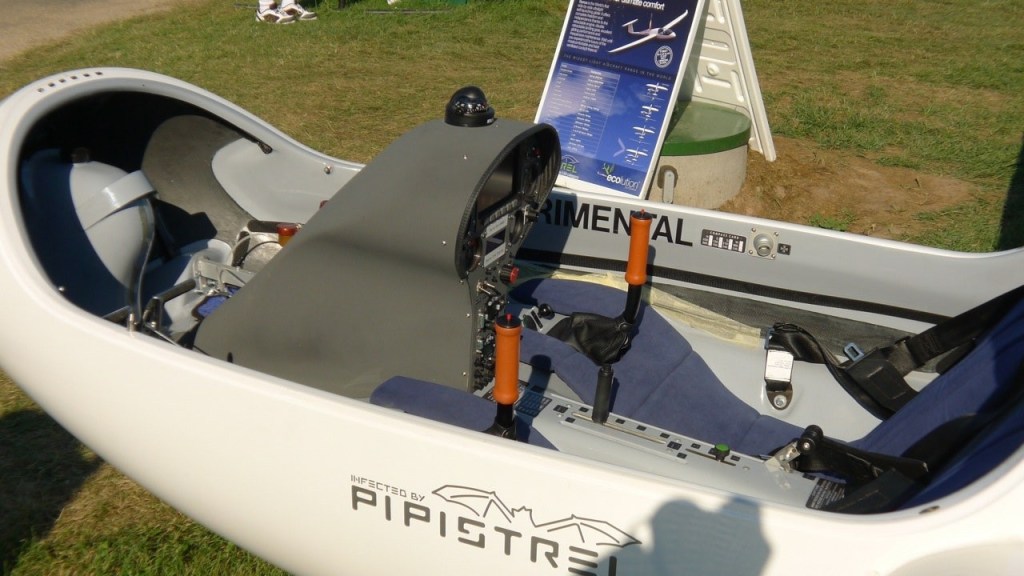
The right fuselage of the Taurus G4 contains the cockpit with dual controls.
The airplane was designed and built in the course of four months. The G4 was built specifically for the NASA/CAFE Green Flight Challenge. Its sizing and aerodynamic features, as well as the power train and battery capacity were matched to the requirements. The competition is aimed at developing highly fuel-efficient, yet practical, aircraft. Competitors must fly at least 200 miles in less than two hours while averaging at least 200 seat miles per gallon. With its four seats, the Taurus G4 has a distinct advantage if Pipistrel can meet the performance requirements.
The airplane is purely a demonstrator, with no plans for production. Pipistrel is using the G4 to develop the motor, battery and power management system for a more traditional design.
It was designed by DLR Institute of Engineering Thermodynamics of the German Aerospace Center, based on the Pipistrel Taurus G4, the German Aerospace Center / DLR HY-4 is a four-seat hydrogen fuel cell powered aircraft. It made its maiden flight on 29 September 2016 from Stuttgart Airport.
DLR HY4
In late September 2011, Google sponsored the CAFE Green Flight Challenge at the Sonoma County Airport in Santa Rosa, California. Three aircraft competed and two met the challenge requirements to fly 200 miles in less than 2 hr and use less than the energy equivalent of one gallon of fuel per passenger. The first place prize of $1.35 M was won by the Pipistrel-USA.com team led by Jack Langelaan of State College, Pennsylvania. Pipistrel’s new, twin-fuselage plane was created by combining two Taurus G2 fuselages, connected by a 5-m-long spar. A 145-kW brushless electric motor, developed for Pipistrel’s new 4-seat Panthera aircraft, is mounted between the passenger pods and drives a 2-m-diameter, two-bladed propeller in a tractor configuration. The Taurus G4’s full wingspan is about 21.36 m (75 feet) and it flew 200 miles nonstop while achieving 403.5 passenger mpg.
Pipistrel Taurus G4 at the CAFE/NASA green flight challenge, September 2011.
Pipistrel has a four-seat GA airplane under development in 2012. The Panthera, that’s already flown and was to be offered with three power packages: traditional gas, hybrid gas/electric…and all electric.