Portsmouth Aerocar Major

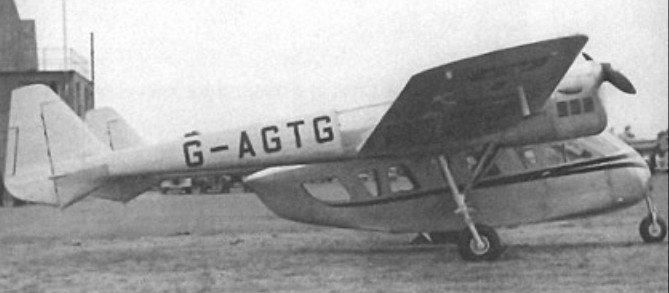
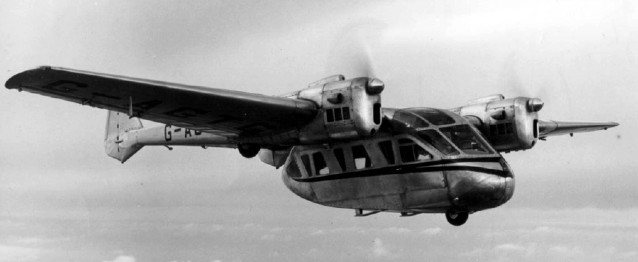
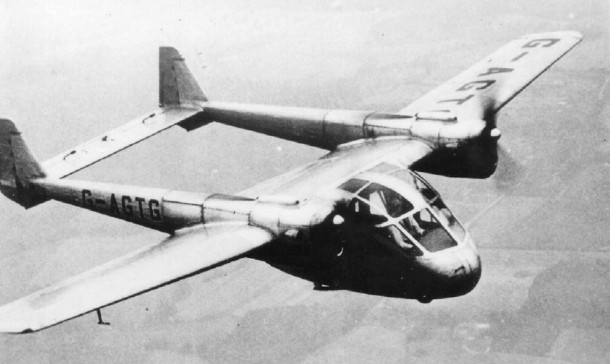
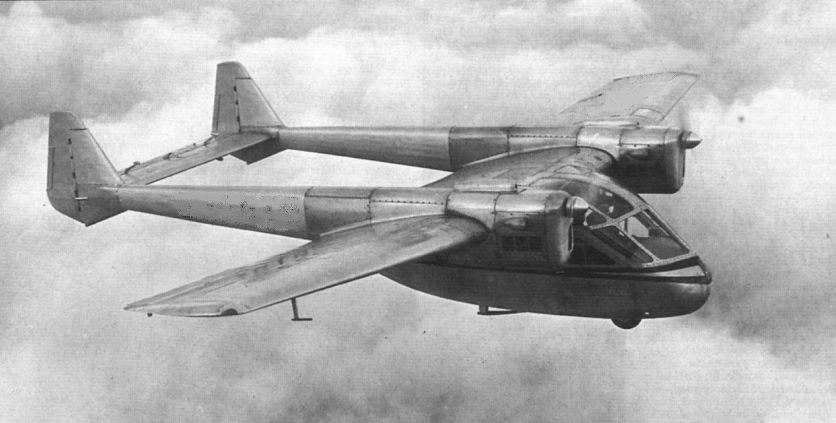
The prototype Portsmouth Aerocar Major G-AGTG was flown on June 18, 1947 when it was exhibited at the1947 SBAC Show held at Radlett, UK.

It was powered by two Blackburn Cirrus Major Series III engines of 155hp each. The retractable undrcarriage was pneumatically operated, and the manufacturer envisioned both ski and float versions as well. The pod and boom layout and its multi-role capability attracted much interest, despite the fact that the prototype was somewhat under powered or over weight. But after a promising start, financial backing for full development and production was not forthcoming, and by the latter part of 1948 the Aerocar project was abandoned following re-structuring of the Portsmouth Aviation Company. It was scrapped in 1950.

Gallery

Porterfield 35-70 Flyabout

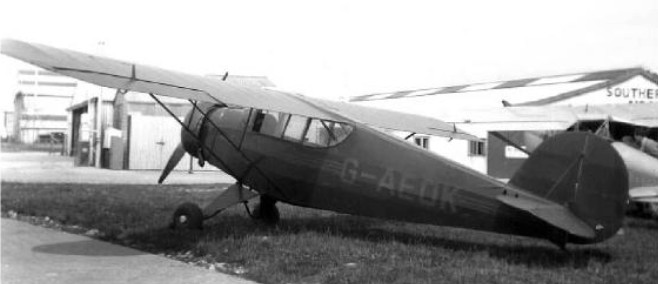
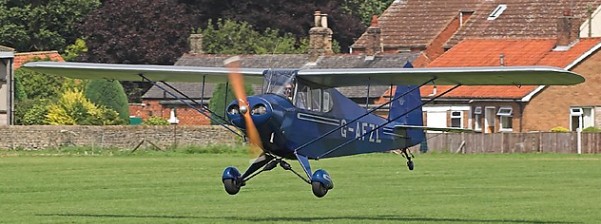
G-AEOK 20 August 1939

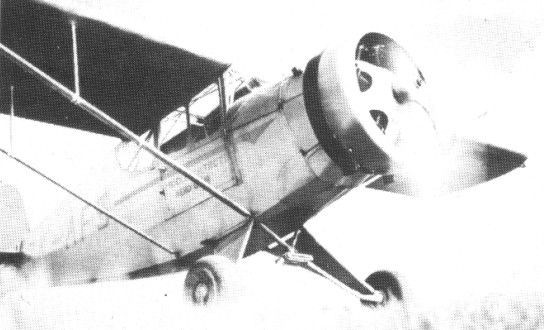
The Wyandotte High School, Kansas City KS, USA, built 2 or 3 Pup in 1932. The last one was sold to Porterfield Aircraft and introduced at the 1935 Detroit Air Show as the Porterfield Flyabout with a 70hp LeBlond.

The Porterfielf 35-70 was a tandem two seater powered by a 70 hp Le Blond radial engine.

The 35-70 was certificated in the USA in May 1935. Around 200 were built.

Engine: 5 cylinder 70hp radial
Seats: 2

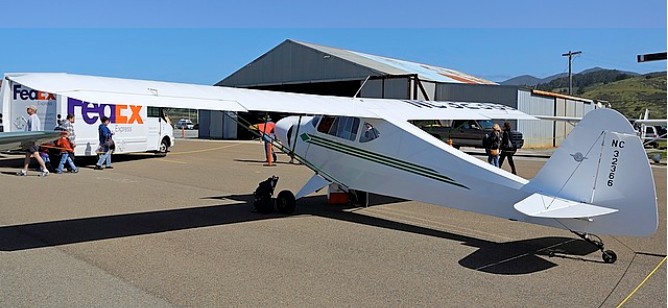
Porterfield CP-50 Collegiate / FP-50 Collegiate / FP-60 Collegiate / CP-65 Collegiate / FP-65 Collegiate / Rankin Collegiate

CP-50

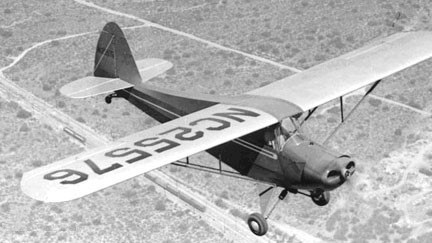
The 1937 CP-50 Collegiate (ATC 690) prototype was NC21953. Fifty were built, priced at $1,495, or $1,695 for the deluxe version with dual mags, brakes, tail wheel.

Porterfield CP-50 NC25576

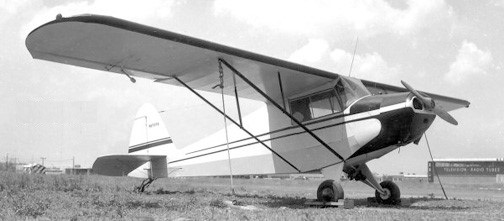
The Porterfield CP-65 of 1940 (ATC 720) sold for $1,665, or $1,895 for the deluxe version with dual mags, brakes, tail wheel.

Porterfield CP-65 NC27270

Rankin Aircraft was founded to market an improved version of the prewar Porterfield CP-65, as Collegiate two-seat lightplane for $15,000 in 1984.

CP-50 Collegiate
Engine: 50hp Continental A-50
Wingspan: 34’9″
Length: 22’6″
Useful load: 436 lb
Max speed: 102 mph
Cruise: 91 mph
Stall: 32 mph
Range: 270 mi
Seats: 2

CP-65 Collegiate
1940 (ATC 720)
Engine: 65hp Continental A-65
Wingspan: 34’9″
Length: 22’8″
Useful load: 500 lb
Max speed: 110 mph
Cruise: 100 mph
Stall: 32 mph
Range: 300 mi
Seats: 2

FP-50 Collegiate
1941 (ATC 690)
CP-50 with 50hp Franklin 4AC.

FP-60 Collegiate
1941 (ATC 720)
FP-50 with 60hp Franklin 4AC
$1,560.

FP-65 Collegiate
1940 (ATC 720)
CP-65 with 65hp Franklin 4AC
$1,590.

Pop’s Props Zing

First flown in 1996, optional engines are the ½ VW or Rotax.

Engine: Kawasaki 340 LC, 35 hp
HP range: 28-40
Wing span: 25.5 ft / 7.77 m
Wing area: 118.8 sq.ft / 11.05 sq.m
Length: 17 ft
Height: 5.9 ft
MAUW: 500 lb / 226 kg
Empty weight: 249 lb / 112 kg
Fuel capacity: 3.5USG / 19 lt
Max speed: 70 mph / 112 kph
Cruise speed: 55 mph / 90 kph
Stall: 26 mph / 45 kph
Rate of climb: 675 fpm / 3.25 m/s
Range: 75 sm
Takeoff dist: 100 ft
Landing dist: 250 ft
Service ceiling: 6000 ft
Seats: 1
Landing gear: tailwheel
Plan price (1998): US$60

Pop’s Props Pinocchio

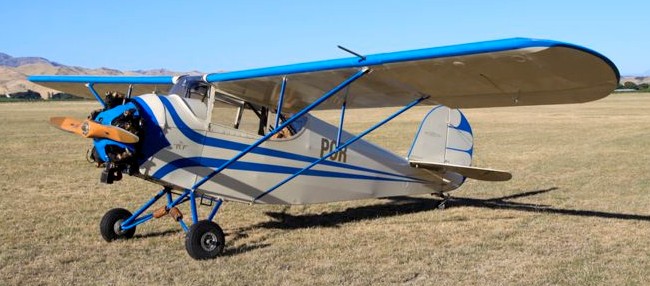
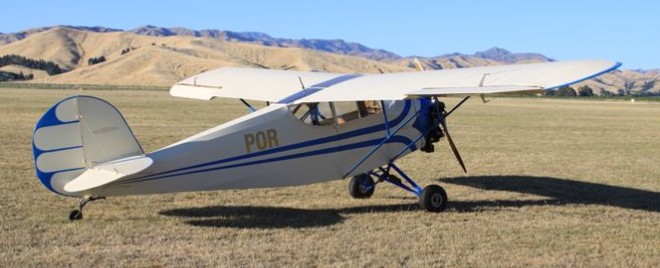
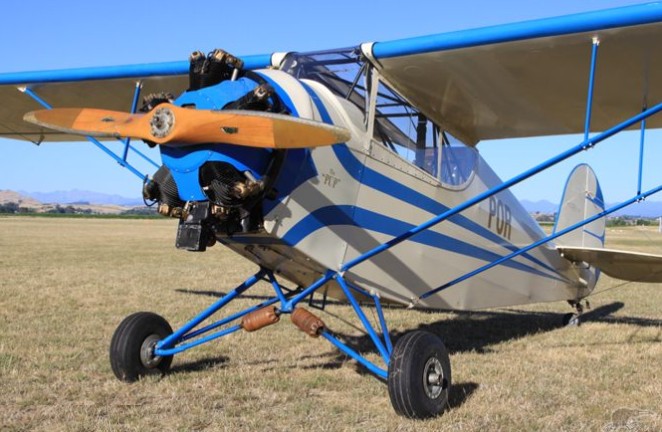
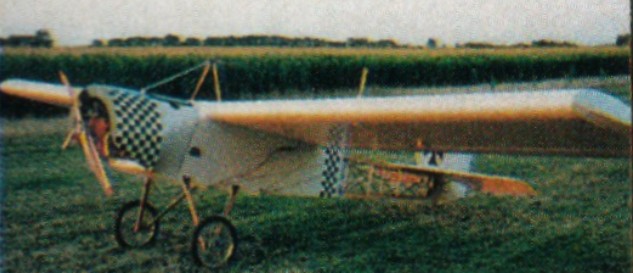
First flown in 1994, the prototype is powered by a twin-carburetted, two cylinder VW, with plans that will include optional motor mount illustrations for Kawasaki installation. The aircraft boasts three-axis controls and large tail surfaces. Wings carry full-span ailerons and can be detached for trailering. Its wire-bracing, spoked wheels and radial cowling gives the craft a very nostalgic look.

All wood construction. Estimated hp of the 2 cylinder VW is 40-45 hp. Construction. The fuselage is all wood incorporating 3mm plywood skin from firewall to seat back and aft of the seat on the centre section. From there, full length gussets all the way to the tail of all four corners.

Laminated bows help round out the fin and rudder and scallops accent the elevator and rudder trailing edges. The stabiliser leading edge is .8mm ply wrapped around wood formers to create a rigid D box and wire bracing tops off the lightweight but strong tail package.

The 16% Clark Y airfoil and 54” chord were chosen for the wings because of its superior stall speed characteristics and high lift capabilities. 30 dihedral was added for stability and 20 of incidence. Teleflex push-pull cables operate the full span ailerons safely and precisely. Leading edge is .8mm plywood wrapped around 3/4” foam nose ribs with 1/8” ply formers at each end and on all butt joints. Wire bracing not only makes for quick and easy wing removal but adds to the look of early aviation. Fuel is pulled from a 4.8 USG plastic tank tucked neatly above the pilot’s shins and filler is recessed into the rounded aluminium cover. Laminated foam cowl cheeks taper the round cowling into the fuselage which makes for a smooth flowing transition.

“Pinocchio’s” airframe requires no welding, no fibreglass work and the prototype was designed and constructed in approximately 500 hrs.

Speed max: 70 mph
Cruise: 60 mph
Range: 150 sm
Stall: 27 mph
ROC: 450 fpm
Take-off dist: 250 ft
Landing dist: 350 ft
Service ceiling: 2,000 ft
Engine: ½ VW, 45 hp
HP range: 35-50
Fuel cap: 4.8 USG
Weight empty: 254 lb
Gross: 500 lb
Height: 5.5 ft
Length: 16.5 ft
Wing span: 25.75 ft
Wing area: 115.8 sq.ft
Seats: 1
Landing gear: tail wheel
Tail span: 7’ without tips
Cockpit length: 46 1/2”
Cockpit width: 21 3/4”
Gear span: 46 1/2”
Payload: 230 lbs
Kit: Yes
Construction materials: Wood/fabric
Plans: Yes
Options: 2 cycle firewall forward capable.

Engine: Rotax 447, 40 hp
Wing span: 8 m
Wing area: 10.76 sq.m
MAUW: 226 kg
Empty weight: 115 kg
Fuel capacity: 19 lt
Max speed: 130 kph
Cruise speed: 100 kph
Minimum speed: 45 kph
Climb rate: 2.5 m/s
Fuel consumption: 2.5 lt/hr
Seats: 1
Plan price (1998): US$120
Kit price (1998): US$3995