This 4 passenger tri-motor was designed in response to an official Belgian request for a long range transport aircraft for the Belgian Congo. It met all the design requirements but by the time it flew in 1931 it was already obsolete and only one was completed.
Engines: 3 x 120 h.p. Renard 5 cylinder radials Span: 49’3″ Length: 32′ 10″ Height: 11′ 2″ Wing area: 360 sq ft Empty Weight: 3,410 lb Gross Weight: 5040 lb Max Speed: 131 mph Range: 700 miles Service ceiling: 23,000 ft
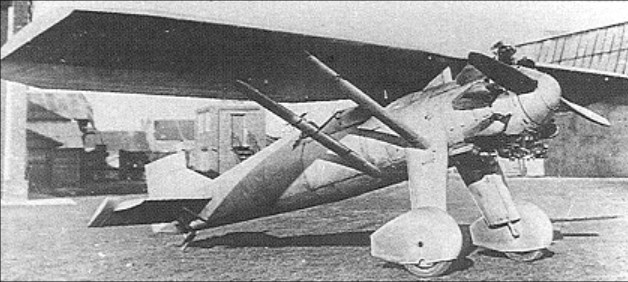
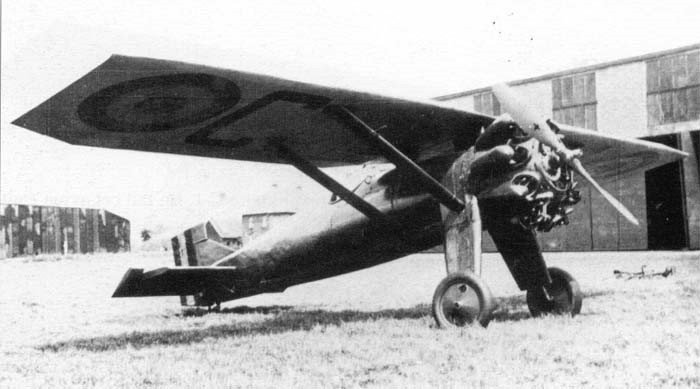
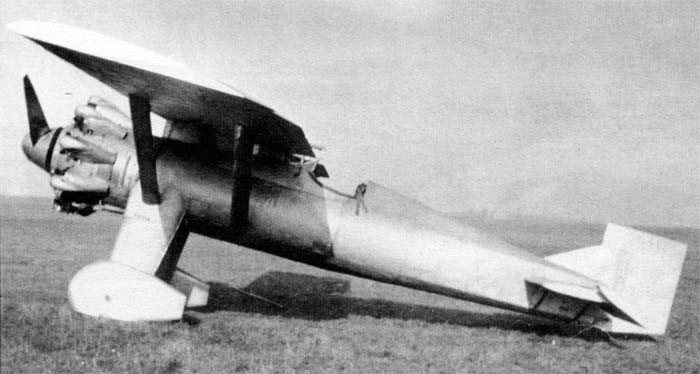
Designed by Georges and Alfred Renard to compete in a government-sponsored design contest, the Epervier (Sparrowhawk) single-seat all-metal fighter monoplane was intended for a 12-cylinder liquid-cooled Hispano- Suiza 12 J Vee-type engine. Unavailability of this power plant led to installation of a 480hp Gnome-Rhone Jupiter VI nine-cylinder radial in the first prototype, which was built by Stampe et Vertongen as the Epervier Type 2 and flown in 1928. The Epervier Type 2 carried an armament of two synchronised 7.7mm guns and was lost on 11 September 1928 after failing to recover from a flat spin.
A second prototype, the Epervier Type 2bis, introduced revised streamlined fairings for the cantilever mainwheel legs, mainwheel spats and cylinder aft-fairings, and was built by SABCA (Societe Anonyme Beige de Constructions Aeronautiques) under contract for Alfred Renard. Since Alfred Renard was both chief designer for Renard and technical director of Stampe, it is hard to keep the two firms separate. Demonstrated early in 1930 in competition with various foreign types for an Aviation Militaire order, the Epervier Type 2bis was rejected in favour of the Fairey Firefly.
A further development of the basic design, the Epervier Type 3 powered by a 480hp Rolls-Royce “F” engine and utilising mixed construction and a redesigned wing, was studied under government contract, but was not built.
Type 2bis Powerplant: 1 × SABCA Jupiter, 360 kW (480 hp) Wingspan: 10.20 m / 33 ft 6 in Wing area: 20.00 sq.m / 215.28 sq ft Length: 7.00 m / 23 ft 0 in Height: 2.76 m / 9 ft 1 in Empty weight: 794 kg / 1750 lb Max take-off weight: 1300 kg / 2866 lb Wing loading: 62.5 kg/m2 (12.8 lb/sq ft) Power/mass: 3.49 kg/kW (5.74 lb/hp) Maximum speed: 273 km/h (170 mph, 147 kn) Maximum speed at 4,000 m (13,000 ft): 265 km/h (165 mph; 143 kn) Maximum speed at 5,000 m (16,000 ft): 261 km/h (162 mph; 141 kn) Stall speed: 99 km/h (62 mph, 53 kn) Service ceiling: 9,300 m (30,500 ft) Practical ceiling; 8,600 m (28,200 ft) Time to 4,000 m (13,000 ft): 8 minutes 30 seconds Time to 5,000 m (16,000 ft): 12 minutes 35 seconds Crew: 1 Guns: 2x synchronised fixed forward firing 7.7 mm (0.303 in) Vickers machine-guns
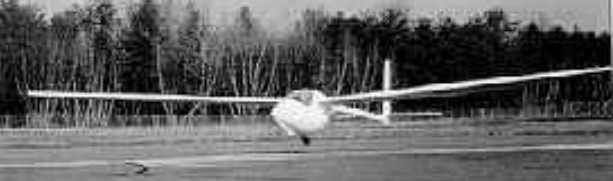
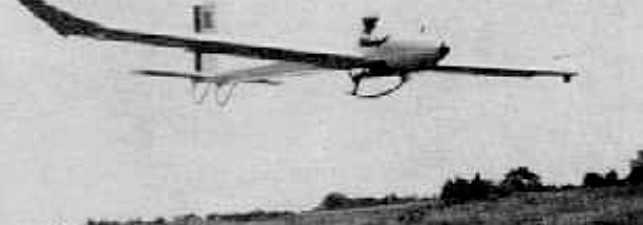
The RP-2, which first flew in 1985, was designed by Steven J. Winckler as a part of the Composite Aircraft Program, Glider of the Rensselaer Polytechnic Institute of Rensselaer, NY. The wing is equipped with split flaps for approach control.
The RP-1 which first product of the Composite Aircraft Program, Glider of the Rensselaer Polytechnic Institute, a project partly supported by NASA. The RP-1, although operated with an FAA airworthiness certificate, was also designed to permit foot launching.
In 2013, “Doc” Bailey of Renegade Light Sport Aircraft manufacturers the Renegade Falcon in Fort Pierce, Fla, a low wing, side-by-side seating, two-seat, all composite light sport aircraft, which was available in both a tricycle and taildragger. Price 2012: US$139,900 (Falcon LS 2.0 with IO-233).
Renegade Falcon LS 2.0 Engine: Lycoming IO-233, 124 hp
Remos of Germany continued in 2012 with three models of its GX line: the GX AVIATOR II, GXnES and GX eLite. A variety of standard features and options include Garmin aera 510 and GPSMAP696, Dynon SkyView EFIS, Dynon D100 and D120 EFIS and much more. 2012 prices range from $120,000 to $145,000, with many options.
GX Engine: Rotax 912S, 100 hp Propeller: Sensenich Gross weight: 1320 lb Empty weight, std: 670 lb Useful load, std: 650 lb Payload, full std. fuel: 518 lb Fuel capacity: 22 lb Wingspan: 30 ft. 6 in. Overall length: 21 ft. 3 in. Overall height: 7 ft. 5 in. Wing area: 118 sq. ft Wing loading: 11.2 lbs./sq. ft Power loading: 13.2 lbs./hp Seating capacity: 2 Cabin width: 46.8 in Vso: 38 kt Vne: 134 kt Cruise speed: 113 kt Max rate of climb: 1050 fpm Takeoff over 50 ft. obstacle: 730 ft Landing over 50 ft. obstacle: 760 ft
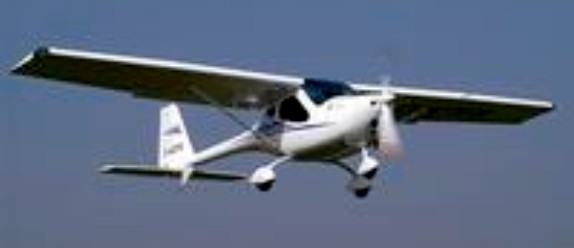
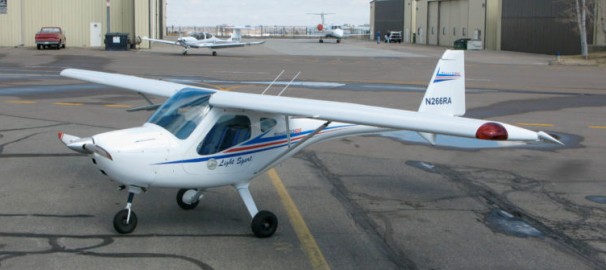
The Remos G3 is an FAA approved, German manufactured Light Sport Aircraft. Made mostly of carbon fibre, including the landing gear, the Remos weighs 626 lb empty, leaving a useful load of 695 lb. The cockpit is reinforced with Kevlar. Structural composite wing parts are covered with Ceconite fabric to reduce weight. The strutted wings fold back in 5 minutes.
The Remos G3 is approved to tow gliders up to 625 lb gross and banners up to 1633 sq.ft.
Ailerons and elevator are mass balanced, and there is some rudder surface forward of the hinge. Aileron differential is about 1.5:1. Electric trim and flaps are fitted. Flaps extend to 40 degrees. The fuel tank is high in the aft fuselage. Shoulder width in the cabin is 45.8 in. Doors, which are hinged on top, may be opened in flight to 66 kt. They can be removed before flight.
First flown in 1997, the Remos was introduced in 1998 and proclaimed Aircraft of the year at the biennial AERO sport aviation show in Friedrichshafen, Germany, in 2000.
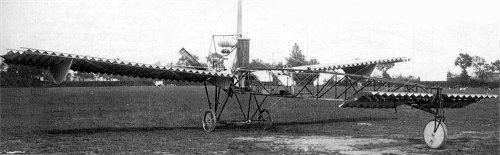
Prof. Dr. Hans Reißner built this canard in the experimental workshop of Junkers that was connected to the “Technische Hochschule Aachen”.
First flying on 23 May, 1912, in second form after having been rebuilt (in the third form, it got four fins under the mainplane).
According to G. Schmitt several versions were built and also flown. The Swiss Robert Gesell presented the machine over a few weeks in Johannisthal at the end of 1912.