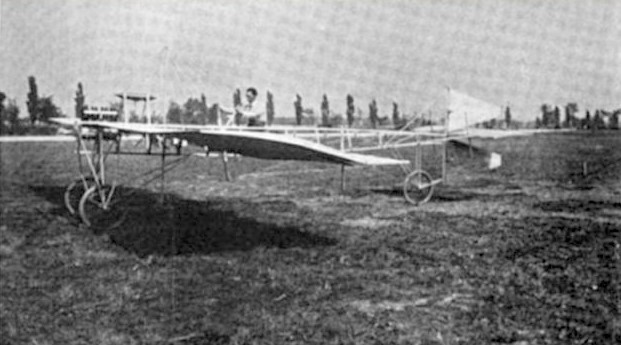
The Hugh Robinson monoplane is sometimes claimed to be the first American monoplane, this machine with a 30 hp engine was used for exhibitions in the Joplin and St Louis area in 1908.
The Hugh Robinson monoplane is sometimes claimed to be the first American monoplane, this machine with a 30 hp engine was used for exhibitions in the Joplin and St Louis area in 1908.
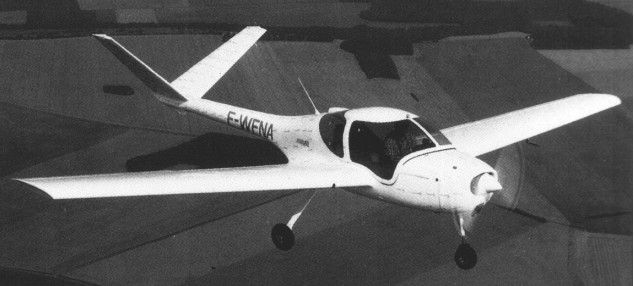
Robin began work on its Avion Tres Leger (very light aeroplane) in 1981 with the intention of producing a lightplane that would be cheap both to buy and to operate. The concept matured with a pod-and-boom fuselage whose wide side-by-side cockpit section tapers to a slim rear section terminating in a V-tail, fixed tricycle landing gear and a specially developed 35-kW (47-hp) Ateliers JPX air-cooled engine. Construction is mixed, the wings being of wood with fabric covering, the fuselage being a glassfibre/honeycomb/epoxy unit and the control surfaces are of Duralu¬min AU4G. The integral polycarbonate canopy opens by tilting forward over the front section of the fuselage and is counterba-lanced. The wing uses a modified NACA 43015 profile set at 3o incidence with a washout of 4 o; it has a coefficient of 0.5. Although with 0 o sweep back at the leading¬edge, the wing has an inverse sweep of 3o at the spar. Flaps totalling 10.4 ft 2 (0.97 sq.m) run the majority of the span and are independent of the ailerons. Operated by an electric motor, these flaps are controllable from the instrument panel and various angles can be selected between 0 and 60 o. The first example flew in June 1983, and testing led to certification to FAR Pt 22 standards. The French government ordered the type for government ¬sponsored training schools, and production is also being undertaken for private operators. The definitive version is the ATL Club with a more powerful engine and a number operationally desirable refinements.
A side by side two seat single engined low wing monoplane with conventional three axis con¬trol. Wing has unswept leading edge, swept forward trailing edge and tapering chord; V tail. Pitch/yaw control by elevons; roll control by half span ailerons; control inputs through stick for pitch/roll and pedals for yaw. Cantilever wing; wing profile NACA 43015; double surface. Undercarriage has three wheels in tricycle formation; bungee suspen¬sion on nosewheel and glass fibre suspension on main wheels. Push right go right nose¬wheel steering connected to yaw control. Brakes on main wheels. Glass fibre fuselage, totally enclosed. Engine mounted at wing height driving tractor propeller.
ATL
Length overall 22.1 ft, 6.75 m
Height overall 6.4ft, 1.95m
Wing span 32.8ft, 10.00m
Chord at root 4.9ft, 1.50m
Chord at tip 2.8ft, 0.80m
Dihedral: 6o
Sweepback: 0o
Tailplane span 9.5 ft, 2.87 m
Fin height 3.3 ft, 1.00 m
Total wing area 129 sq.ft, 12.0 sq.m
Total aileron area 10.4 sq.ft, 0.97 sq.m
Fin area 20.9 sq.ft, 1.94 sq.m
Total elevon area 5.2 sq.ft, 0.48 sq.m
Wing aspect ratio 8.3/1
Wheel track 9.7 ft, 2.92 m
Wheelbase 5.3 ft, 1.60 m
Nose¬wheel diameter overall 11 inch, 27 cm
Main wheels diameter overall 13 inch, 33 cm
ATL Club 47
Engine: PAL 1300, 47 hp
Seats: 2
Empty wt: 200 kg
MAUW: 420 kg
Cruise: 100 kt
Ceiling: 13,000 ft
Endurance: 5 hr
Range: 500 mile
ATL Club
two-seat sport lightplane
Span: 10.25m (33ft 7.5 in)
Length: 6.70m (2lft 11.8in)
Powerplant: l x Ateliers JPX 4T-60A, 44.7kW (60 hp)
Max T/O weight: 580 kg (1,279 lb)
Max speed: 112 mph at sea level
Operational range: 714 miles
First flown in 1988 in 3000/160 form, the four seat, T tailed Robin 3000 series should appeal to both the trainer and four seat cross country light single markets. A totally new airframe, but with the original Jodel wing planform, the aircraft was available as either a 120 hp or 140 hp version. The R3140 is powered by a derated 160 hp Lycoming and cruises at 119 knots (65 per cent power) over a 640 nm range (optional tanks for extended range available) with four seats.
In 1983 Avion Robin tested a 160 hp PRV V-6 car engine (Peugot, Renault & Volvo) in their new R.3150 prototype.
Certification of the R3000/160 is under Direction Generale L’Aviation Civile France DGAC 172.
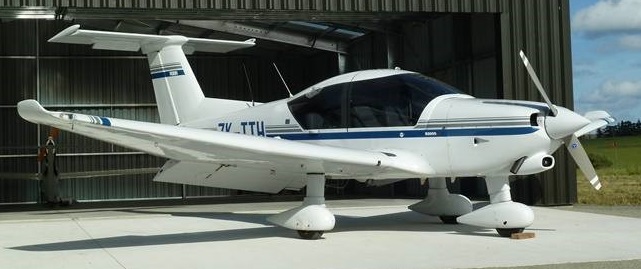
1993 R3000
Engine: Lycoming 0-360-A3A
Seats: 4 seat
R3000/120
R3140
Lycoming O-320
Cruise (65%): 119 kt
Range @ 65%: 640 nm
Seats: 4

Production of the first R2160 aircraft began in Canada in 1981, but Canadian production ceased in 1984 when the line was re¬turned to France. It was not until the early 1990s that the R2160 got a facelift for the growth of the trainer market foreseen at that time. With dual control joysticks and produced at the Dijon works of Avions Pierre Robin, the R 2000 series of all-metal lightplanes was introduced by the company in 1977 to replace the HR 200.
In general appearance, the R 2000 and HR 200 are similar, the most obvious external difference being the former’s enlarged tail unit, with a long ventral fin, designed to improve the lateral control and handling. The wing has been extensively modified, with an NACA 23015 profile instead of the earlier NACA 64A5 15, and a small increase in chord and area. Many changes have been made in the construction methods, with new tooling throughout for the metal aircraft in the Robin line, which included the R 1000 (formerly HR 100) as well as the R 2000.
The prototype of the R 2000 series flew on 15 January 1976 and a pre-production example followed on 15 July 1976, the latter having a 160 hp engine and therefore being, in effect, a prototype of the variant now in production as the R 2160. An aerobatic version of the latter is also available (certificated 1978), in which the AEIO-320 engine is used, with an inverted flight fuel system, and the same basic aircraft is offered with a 108 hp engine, in which guise it is marketed as the R 2100.
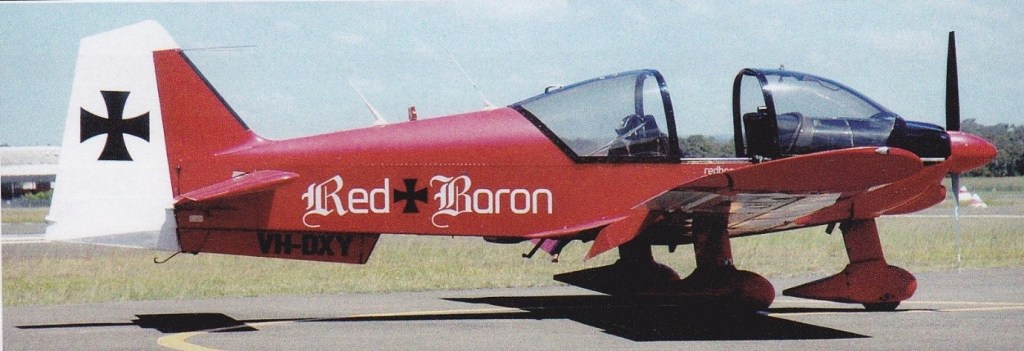
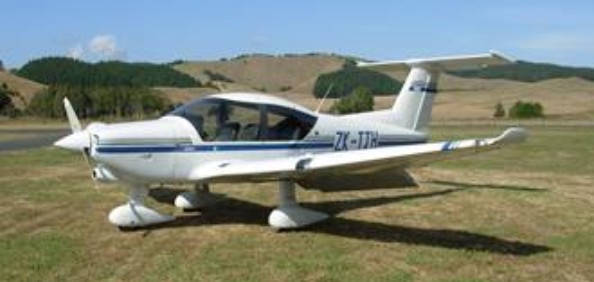
The Alpha 160 is renamed 2160. For unusual-attitude flight, the R2160’s all-aluminium alloy, semi-monocoque structure is built to the strength of FAR 23 and is certified to +6/-3g. The flap system is electric and gives up to 35 degrees.
The R2120 U (the certified model name) are referred to as the Alpha 120T (Trainer). The Alpha 120T is a non-aerobatic derivative of the Alpha 160A. Powered by a Lycoming O-235, and fitted with dual control sticks, throttles and differential brakes.
Alpha, in New Zealand, purchased the production rights in 2004.
12 April 2006 saw the first flight of a New Zealand-built Alpha 160A (formerly Robin R2160) at Hamilton Airport, New Zealand.
Certification of the R2120U, R2160 (265 and up), and R2160I is under NZ TC A-15.
2100
Engine: One 108 hp Lycoming O-235H
Fuel capacity 264 Imp gal (120 1)
Max speed at sea level, 138 mph (222 km/h)
Cruising speed at 75% power, optimum altitude, 124 mph (200 km/h)
Service ceiling, 12,500 ft (3 810 m)
Initial rate of climb, 710 ft/min (3,60 m/sec)
Range, 520 mls (838 km)
Empty weight: 1,167 lb (530 kg)
Max take-off weight: 1,718 lb (780 kg)
Wing Span, 27 ft 4 in (8,33 m)
Length, 23 ft 3½ in (7,10 m)
Height, 6 ft 1l½ in (2,13 m)
Wing area, 140 sq ft (13,00 sq.m)
Accommodation: 2
2112 Alpha
Engine: Lycoming O-235, 112 hp
2120U (Alpha 120T)
Engine: One 108 hp Lycoming O-235
Prop: 2 blade Sensenich fixed
Cruise: 105 kt
Fuel cap: 31.7 USG
Range: 550 nm
Loading: +6 / -3G
2160 (Alpha 160A)
Engine: One 160 hp Lycoming O-320-D2A or one 160 hp Lycoming AEIO-320
Prop: Sensenich 74-DM-685-2-64
Fuel capacity 264 Imp gal (120 1)
Vne: 178 kts
Vno: 127 kts
Max X-wind: 18 kts
Max speed at sea level, 160 mph (257 km/h)
Cruising speed at 75% power, 7500 ft, 130 kts (242 km/h)
Service ceiling, 15,000 ft (4572 m)
Initial rate of climb, 1,020 ft/min (5,20 m/sec)@ 78 kts
Best angle of climb: 70 kts
Range, 418 mls (673 km)
Stall: 51-63 kts
Empty weight: 1,211 lb (550 kg)
Max take-off weight: Utility 1984 lbs, aerobatic 1,764 lb (800 kg)
Max baggage: 77 lbs
Span, 27 ft 4 in (8,33 m)
Length, 23 ft 3½ in (7,10 m)
Height, 6 ft 1l½ in (2,13 m)
Wheel track: 9 ft 6in
Wing area, 140 sq ft (13,00 sq.m)
Accommodation: 2
Aerobatic
Load factor: +6/-3
2160 Sport
Engines: 1 x 160 hp Lycoming O-320-D2A
Prop: two-blade Sensenich fixed-pitch
Seats: 2
Useful load: 550 lb
Max range: 410 sm
Wingspan: 8.33 m
Length: 7.10 m
Height: 2.13 m
Under-carriage: Fixed oleo-pneumatic, steerable nose wheel
Stall: clean: 63 kts, with flap: 51 kts
Max Cruise: 150 mph
Cruise: 2,450 rpm @ 8,000 ft: 130 kts
Range: 363 nm with reserves
Fuel cap: standard tanks: 120 lt, optional160 lts
Maximum wt: 900 kg
Empty Wt: 580 kg
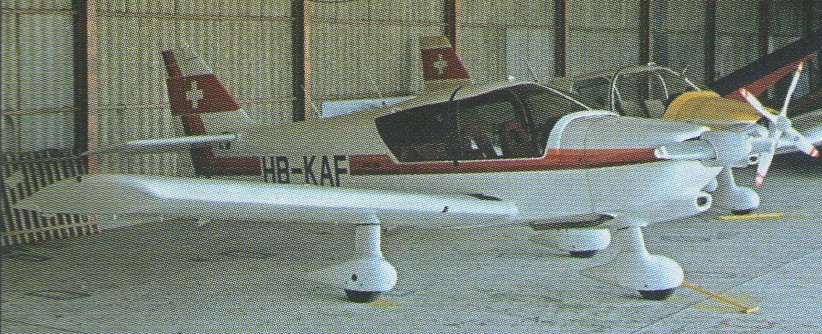
First flown in 1976, Avions Robin built 66 of the all metal, four seat, fixed gear R.1180 Aiglon before production was terminated in the early 1980s.
In 1997 Robin was set to restart production of the Aiglon II with a Lycoming O-320-A3A. The useful load is 1102 lb and cruise at 75% is 135 kt.
All R1180TD are certified under Direction Generale L’Aviation Civile France DGAC 61.
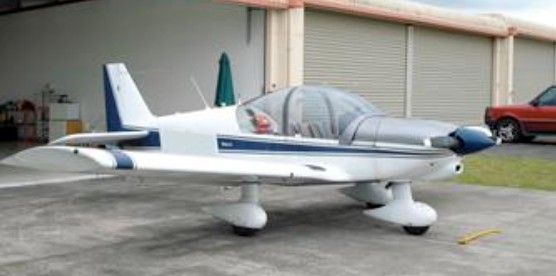
The HR 200, an original design of Christophe Heintz (hence the “H” in the designation, with “R” for Robin) when he was working with Pierre Robin, proved less successful than the company had hoped, and the R 2000 was evolved to replace it. The HR.200 was produced in response to a French flying school and club requirement for a two-seat trainer with modest touring capability, and first flew in prototype form during July 1971 as a low-wing monoplane of all-metal construction with fixed but spatted tricycle ending gear and a large clear-view canopy with a forward-sliding front section.
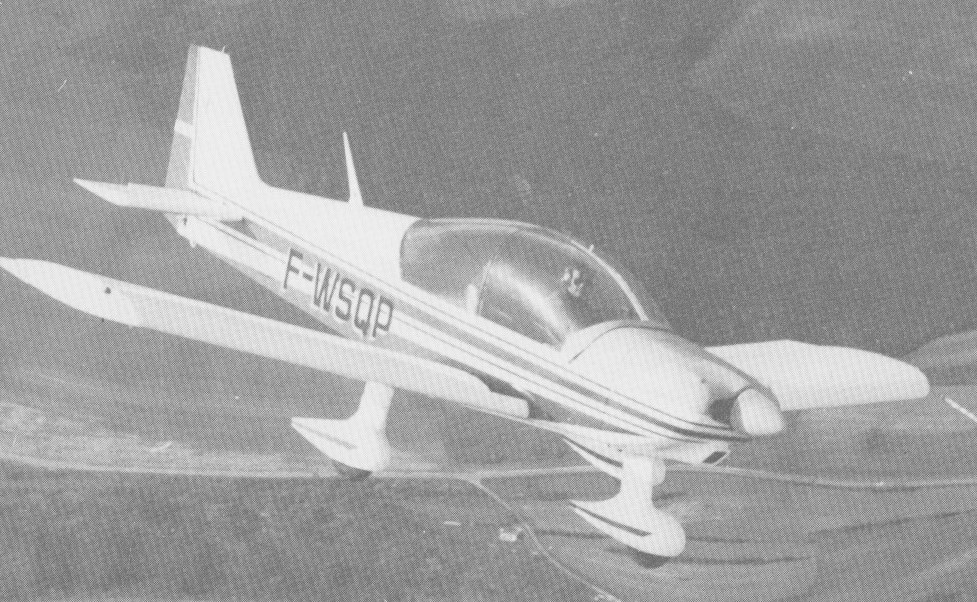
The HR.200 was produced in variants with Avco Lycoming engines of different ratings. The basic models were the HR.200/100 Club with the 81 kW (108hp) O-235-H2C, the HR.200/120 with the 93-kW (125-hp) O-235-J2A, the HR 200/140 with the 0-320-E and the HR.200/160 with the IO-320-D. Later two low-cost versions were produced as the HR.200/100S based on the HR.200/100 but with simpler equipment and no wheel spats, and the HR.200/120B with the 88-kW (118-hp) O-235-L2A.
HR.200/100 Club
Engine: Lycoming O-235-H2C, 81 kW (108hp)
HR.200/100 Club
Engine: Lycoming O-235-C1C, 100hp
Wingspan: 27 ft 4 in / 8.33 m
Length: 21 ft 9.5 in / 6.64 m
Cabin max width: 3 ft 6 in / 1.06 m
Empty weight: 1113 lb / 500 kg
MTOW: 1675 lb / 760 kg
Cruise 75%: 116 kt / 133 mph / 215 kph
Service ceiling: 12,950 ft / 3950 m
Max range: 582 nm / 671 mi / 1080 km
Seats: 4
Baggage: 55 lb / 25 kg
HR.200/100S
Engine: Lycoming 0-235-H2C, 81 kW (108hp)
HR.200/120
Engine: Lycoming O-235-J2A, 93-kW (125-hp)
HR.200/120B
Engine: Lycoming 0-235-L2A, 88-kW (118-hp)
Prop: McCauley 2 blade, Fixed Pitch
Useful load: 526 lbs
Total fuel: 120 litres
Cruise speed: 90 kts
HR200/125 Club
Engine: Lycoming 0-235, 125-hp
HR 200/140
Engine: Lycoming 0-320-E
HR.200/160
Engine: Lycoming IO-320-D, 119kW (l60hp)
Span: 8.33m (27ft 4in)
Length: 6.64m (21 ft 9.5in)
Max T/O weight: 800kg (1,7631b)
Max speed: 161 mph at sea level
Operational range: 581 miles
HR.200/160 Acrobin
Engine: Lycoming IO-320-D, 119kW (l60hp)
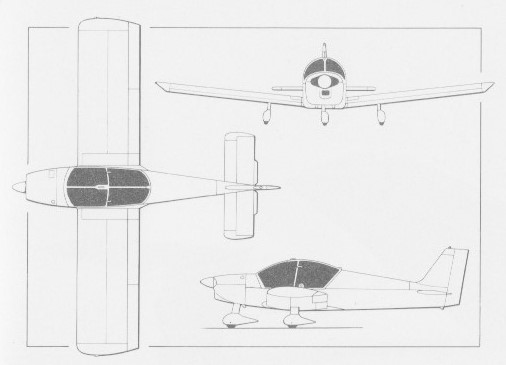
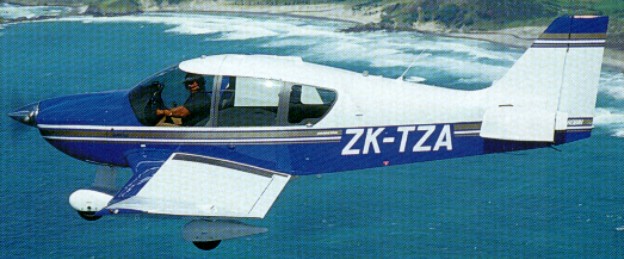
Descended from the DR400 series. The wooden airframe is con¬structed using modern synthetic glues, composite parts and the wing is covered in Dacron. It has a fixed oleo-pneumatic undercarriage and a steerable nose wheel. Entry is over the wing with the large canopy mov¬ing forward to allow entry. The DR500 comes standard with four fuel tanks totalling 275 litres, meaning the air¬craft, at its cruising speed of 145 knots at 75% power (at medium weights), is capable of flights of more than 1000 nm. 60kg of luggage can be stored behind these seats, above the auxiliary fuel tank.
DR500/200i President
Engine: Lycoming IO-360A1B6, 200-hp
Prop: Hartzell constant-speed, two-blade
Gross wt: 1150 kg
Max useful load: 500 kg
Wing¬span: 8.72 m
Height: 2.23 m
Length: 7.05 m
Take-off dist (50ft) MTOW: 450 m
ROC MTOW: 1000 fpm
Seats: 4/5
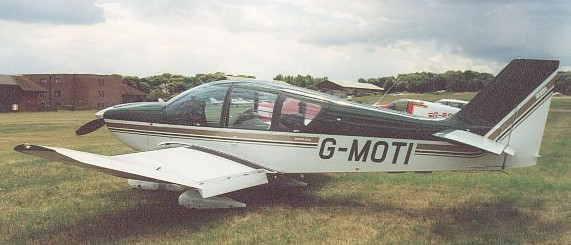
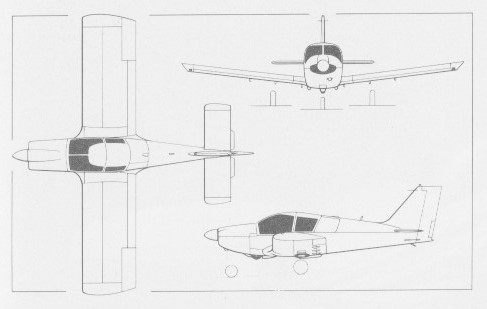
From the fabric-covered wooden DR.300 series with fixed tricycle landing gear the company evolved the DR.400, introduced in May 1972 with features such as a forward-sliding canopy and lower cabin sides for improved fields of vision. They still feature the wood structure and the cranked wings. The wings are built around a large, single piece, box spar. Steering is still by means of a stick.
The series has generally featured Avco Lycoming engines of a horsepower indicated by the designation suffix, and the original 1972 types include:
DR.400/2+2 – two adults and two children
DR.400/125 Petit Prince – three/four-seat
DR.400/140 Major – four-seat
DR.400/160 Chevalier – 160 hp lycoming O-320-D2A
DR 400/160 Major – 160 hp four-seat, extra fuel capacity, increased wing area
DR.400/180 Regent – 180 hp O-360, four-seat, forward sliding canopy and additional windows
DR.400/180R Remorquer – glider tug
DR.400/100 Cadet – Two seater trainer, 100 hp Continental O-200A
DR.400/120 Dauphin 80
DR.400/180 – 158-kW (212-hp) Porsche PFM.3200 engine.
DR 400-108 Dauphin – 2+2 seater trainer, 108 hp Continental O-235 engine
DR 400-120 Dauphin 2+2 – Like DR 400-108, but with 120 hp engine and additional side windows
DR 400-140 Earl – DR 120 with larger engine and forward sliding canopy
DR 400/140 B Dauphin – 4 four-seat 160 hp
DR 400-180R Remorqueur – Specifically designed as a glider tug with reduced fuel.
DR 400/200 R Remo 200 – 200 hp four seat, for glider towing
DR 400/200i President – 200 hp four/five-seat, larger fuselage, increased cabin space
The later variants of DR400 are real four seaters, capable of carrying both full fuel and four passengers. They are powered by an engine up to 180 hp, which consumes around 35 liters (9 US gallons) of fuel per hour and give the plane a speed of 267 km/h (166 mph). Since its first flight in march 1972, over 1300 DR 400s have been built.
Certification of the DR400-180 and DR400-500 is under Direction Generale L’Aviation Civile France DGAC 45.
Specifications:
DR.400/2+2
Engine: Lycoming O-235-C2C, 108 hp
Seats: 2+2
DR.400/125 Petit Prince
Engine: Lycoming O-235-F2B, 125 hp
Seats: 3-4
DR.400/140 Major
Engine: Lycoming O-320-E,140 hp
Seats: 4
DR 400/140 B Dauphin
Engine: 160 hp
Seats: 4
DR.400/160 Chevalier / Knight
Engine: Lycoming O-320-D2A, 160 hp
Seats: 4
DR 400/160 Major
Engine: 160 hp
Seats: 4
DR.400/180 Regent
Engine: l x Avco Lycoming 0-360-A, 134kW (180hp)
Span: 8.72m (28ft 7.25 in)
Length: 6.96m (22ft 10 in)
Max T/O weight: 1100kg (2,4251b)
Max speed: 173 mph at sea level
Operational range: 900 miles.
Seats: 4-5
DR.400/180R Remorquer
Engine: l x Avco Lycoming 0-360-A, 134kW (180hp)
Span: 8.72m (28ft 7.25 in)
Length: 6.96m (22ft 10 in)
DR.400/100 Cadet
Engine: 100 hp Continental O-200A
Seats: 2
DR.400/120 Dauphin 80
Engine: 120 hp
DR.400/180
Engine: 158-kW (212-hp) Porsche PFM.3200
DR 400-108 Dauphin
Engine: 108 hp Continental O-235
Seats: 2+2
DR 400-120 Dauphin 2+2
Engine: 120 hp
Seats: 2+2
DR 400-140 Earl
DR 400/140 B Dauphin
Engine: 160 hp
Seats: 4
DR.400/180 Regent
Engine: Lycoming O-360-A, 180 hp
Wingspan: 28 ft 7.25 in / 8.72 m
Length: 23 ft 6.25 in / 7.18 m
Empty weight: 1301 lb / 590 kg
MTOW: 2425 lb / 1100 kg
Max cruise 8000ft/2440m: 143 kt / 163 mph / 264 kph
Max ROC: 825 fpm / 252 m/min
Service ceiling: 20,000 ft / 6100 m
Range max fuel: 793 nm / 913 mi / 1470 km
Seats: 4-5
Baggage capacity: 88 lb / 40 kg / 13.75 cu.ft / 0.39 cu.m
Cabin length: 5 ft 3.25 in / 1,62 m
Cabin height: 4 ft 0.25 in / 1.23 m
DR 400-180R Remorqueur
Seats: 4
DR 400/200 R Remo 200
Engine: 200 hp
Seats: 4
DR 400/200i President
Engine: 200 hp
Seats: 4-5
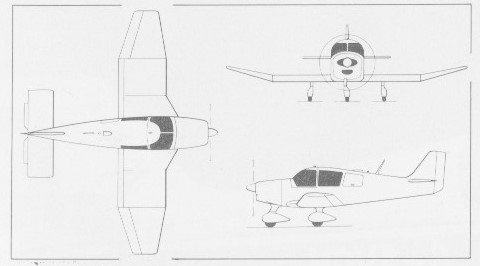
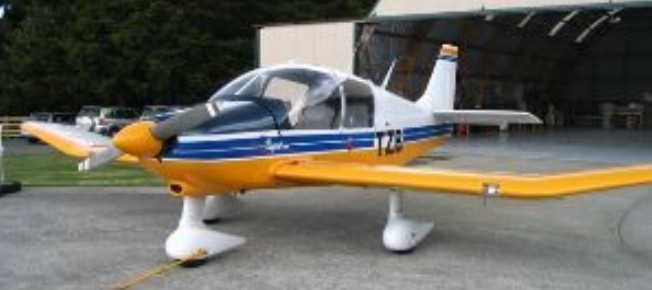
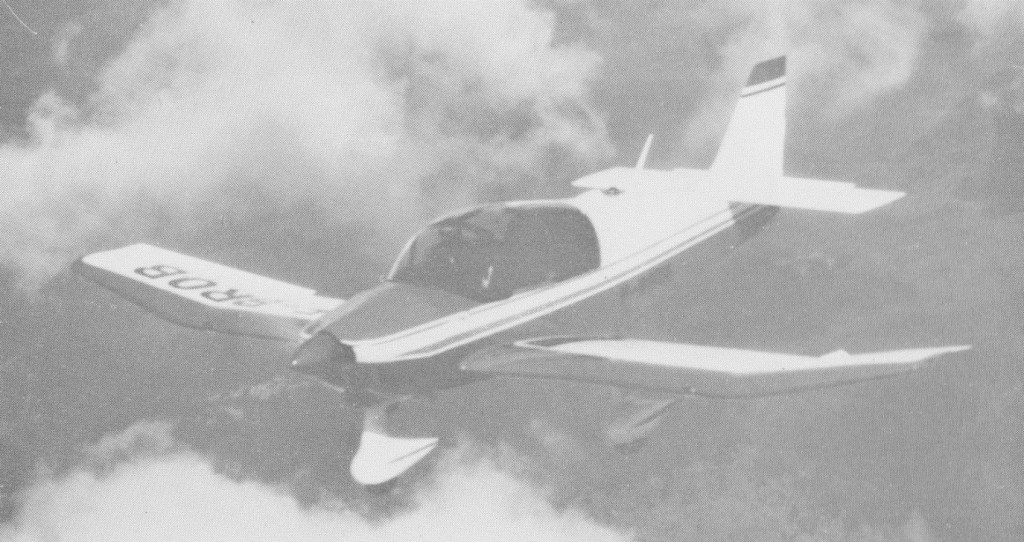
After the first nosewheel Robin, the DR253, a whole range of derivatives was developed: The DR300 series, featuring the DR300-108, DR300-120, DR 300-140 DR 300-180, DR 315 Petite Prince, DR340 Major, DR360 Chevalier and DR380 Prince.
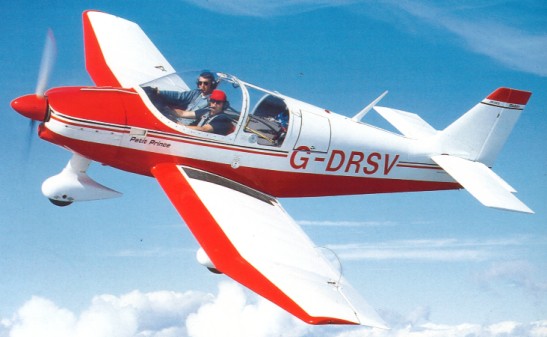
Robin DR 315X F-ZWRS was built as a development prototype for the DR 400 series. It was sold to the French Air Force for ‘evaluation’ purposes. It was originally fitted with a single ejection seat while the canopy was secured by explosive bolts.
It was sold as scrap to Robin Voice who rebuilt it to civilian standard and later registered G-DRSV.
From the fabric-covered wooden DR.300 series with fixed tricycle landing gear the company evolved the DR.400.
DR.380 Prince
Engine: Lycoming O-360-D, 180 hp
Prop: Fixed pitch 2 blade
Prop diameter: 6 ft 4 in / 1.93 m
Wingspan: 28 ft 7 in / 8.72 m
Length: 22 ft 11 in / 6.89 m
Height: 7 ft 3 in / 2.23 m
Empty weight: 1256 lb / 570 kg
MTOW: 2360 lb / 1070 kg
Useful load: 1104 lb / 500 kg
Fuel capacity: 34 Imp.G / 41 USG / 155 lt
Wheel track: 8 ft 6 in / 2.59 m
TO dist to 50 ft: 1500 ft / 457 m
Initial ROC: 1043 fpm / 318 m/min
Best climb speed: 85 mph / 137 kph / 74 kt
Service ceiling: 17,400 ft / 5300 m
Max level speed: 172 mph / 277 kph / 149 kt at SL
Cruise 75%: 165 mph / 265 kph / 143 kt
Max range: 900 mi / 1448 km / 781 nm
Max payload range: 900 mi / 1448 km / 781 nm
Stall flaps up: 64 mph / 103 kph / 56 kt
Stall flaps down: 58 mph / 93 kph / 50 kt
Best approach speed: 80 mph / 129 kph / 69 kt
50ft / 15m to touchdown: 350 ft / 107 m
Ground roll: 650 ft / 198 m
Seats: 4
Price 1970: £6460 / $15,500
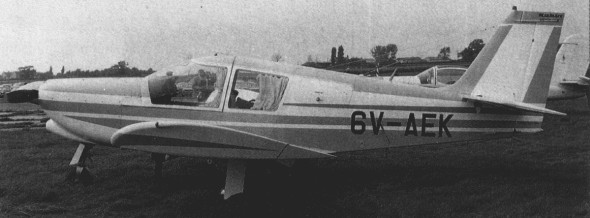
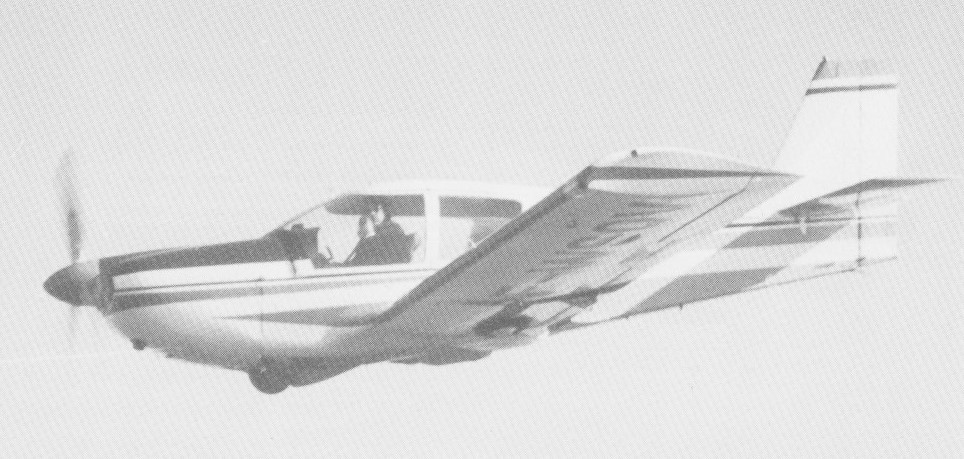
The HR.100 first flew in April 1969, and is in essence a development of the DR.253 Regent with metal construction. The first production variant was the HR.100/180 with the 134-kW (180-hp) Avco Lycoming O-360, but this was soon replaced by the HR.100/200. In 1971 Avions Pierre Robin placed in production its first all metal aircraft, the HR 100/200, designed by M Christophe Heintz. The HR.100/320/4+2 up-engined variant for two children as well as four adults failed to progress past the prototype stage, so the next model was the HR.100/ 210 with a 157-kW (210-hp) engine.
At this stage retractable landing gear and Continental engines entered the picture to produce the HR.100/285 with the 239-kW (285-hp) Tiara: this model entered production with the Tiara 6-285B version of the engine. The HT 100/Tiara, first flown in 1972, featured redesigned wings and vertical tail. This basic model was also produced in the HR.100/250TR version with the 186-kW (250-hp) Avco Lycoming IO-540 engine.
HR 100/200
Engine: Lycoming IO 360 A1D6, 200 hp
Prop: 6 ft 11 in (1.87 m) dia 2 blade metal
Wing span: 29 ft 6.25in (9.00 m)
Length: 24 ft 1 in (7.34 m)
Wing area: 155.0 sq ft (14.40 sq.m)
Gross weight: 2.645 lb (1,200 kg)
Max cruising speed: 155 mph (250 kph) at SL
Max range: 750 miles (1,210 km) std fuel
Seats: 4
Undercarriage: fixed
No built: approx. 30
HR.100 Royal 210F
Engine: Continental IO-360-D, 210 hp
Wingspan: 29 ft 9.5 in / 9.08 m
Length: 24 ft 3 in / 7.39 m
Empty weight: 1565 lb / 710 kg
MTOW: 2755 lb / 1250 kg
75% cruise 8000ft/1440m: 146 kt / 168 mph / 270 kph
ROC: 1000 fpm / 305 m
Service ceiling: 16,400 ft / 5000 m
Range 75% pwr 8000ft/1440m std fuel: 739 nm / 850 mi / 1370 km
Range 75% pwr 8000ft/1440m aux fuel: 1457 nm / 1675 mi / 2700 km
Seats: 4
Undercarriage: fixed
HR.100 Royal 210R
Undercarriage: retractable
HR.100/285
four-seat sport and touring lightplane
Powerplant: 1 x Teledyne Continental Tiara 6-285B, 239kW (285 hp)
Span: 9.08m (29ft 9.5 in)
Length: 7.59m (24ft 10.75 in)
Max TO weight: 1400 kg (3,086 lb)
Max speed: 202 mph at sea level
Operational range: 1,323 miles
HR.100/Tiara
Engine: Teledyne Continental Tiara 6, 320 hp
Seats: 5
Undercarriage: retractable