Romano Romanoplane

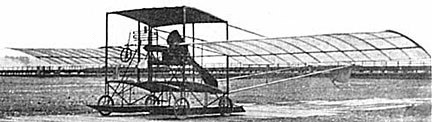
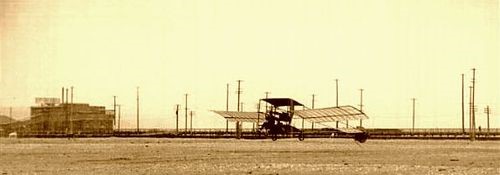
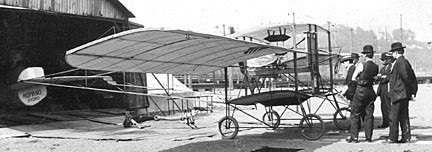
Built by Eugene Joseph Romano in Seattle, Washington, in 1910, the aircraft had a caged centre section designed like a biplane, while it had monoplane wings only.

According to a contemporary newspaper clipping of unknown origin, the Romanoplane had a span of 36 feet and “was flown successfully”.

Wingspan: 36’0″
Length: 36’0″
Seats: 1

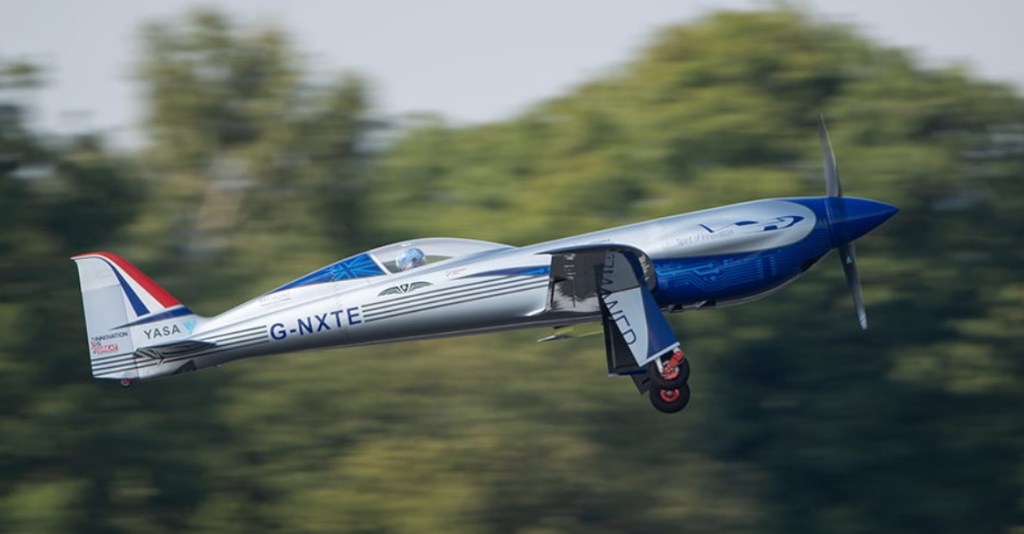
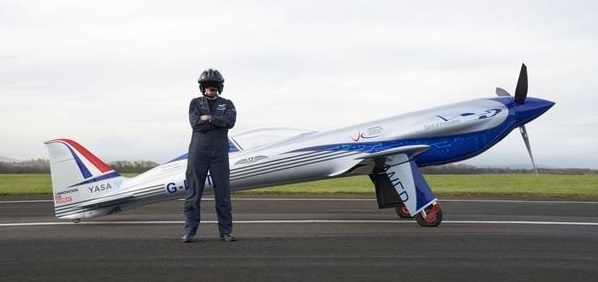
Rolls-Royce ACCEL / Spirit of Innovation

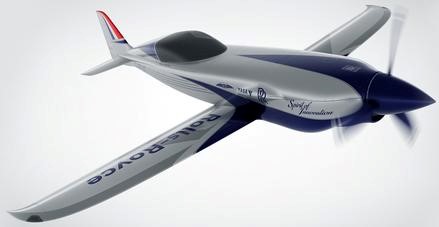
Rolls-Royce developed the ACCEL (Accelerating the Electrification of Flight) as an electric aircraft demonstrator racing aircraft to gain the all-electric air speed record, targeting over 480 km/h (260 kn). The existing electric aircraft record at that time was 182 kn (337 km/h), set in 2017 by a Siemens powered Extra 330.

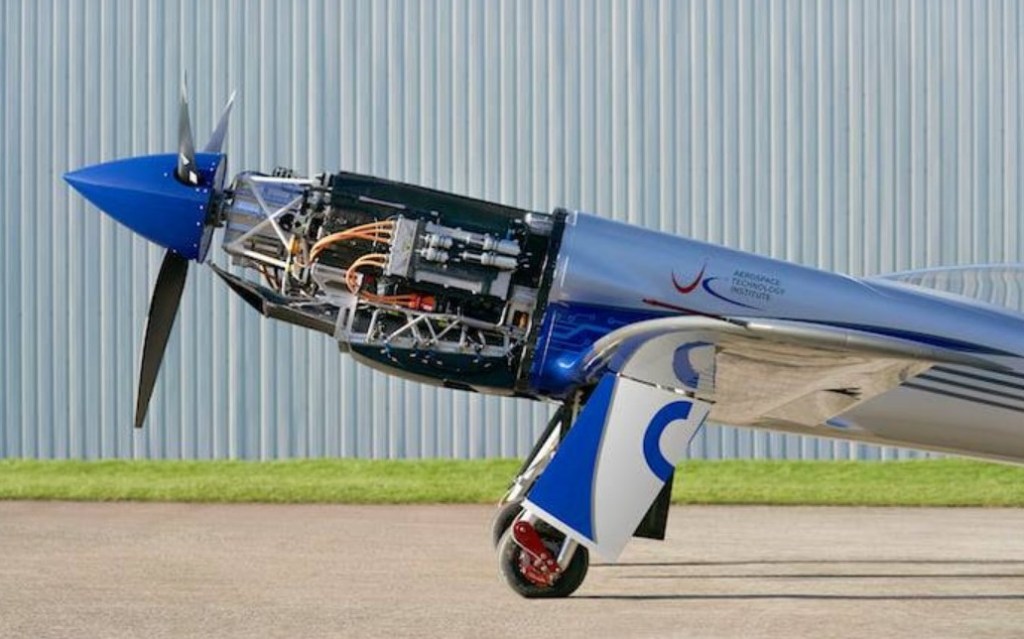
Designed at Gloucestershire Airport, the project is partly funded by the UK government and involves partners such as electric motor and controller manufacturer YASA Limited and aviation start-up Electroflight.

The team aimed to reach the 1931 Schneider Trophy speed, which was won by a R-R-powered Supermarine S.6B, reaching 298 kn (552 km/h).

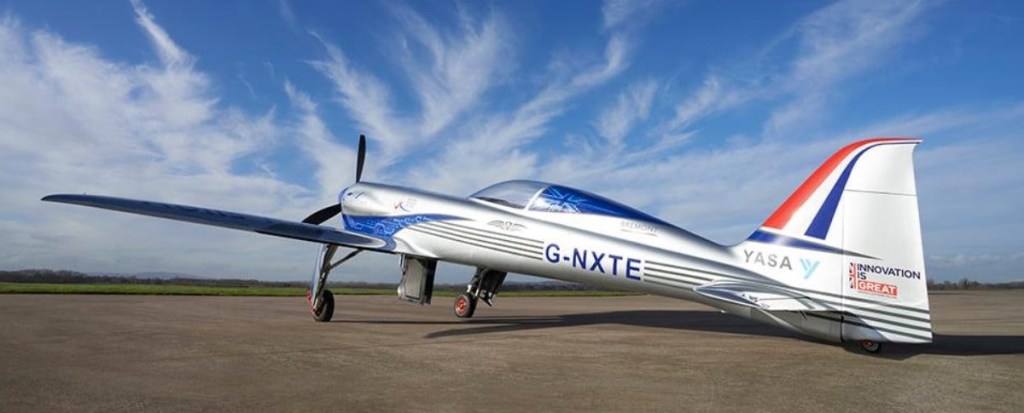
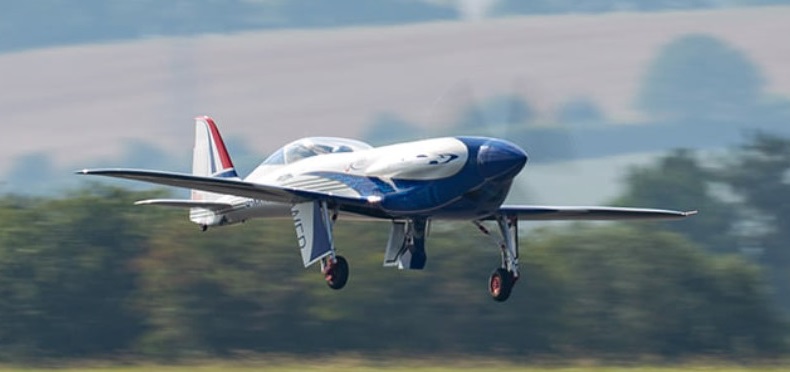
On 15 September 2021, Rolls-Royce announced the aircraft, named “Spirit of Innovation”, had successfully completed its first flight, flying from MoD Boscombe Down for fifteen minutes.

The 24 ft (7.3 m) span aircraft is powered by three high power density electric motors driving a single three-blade propeller spinning at 2,400 RPM, designed and manufactured by YASA, running at 750 volts and delivering over 400 kW (536 hp) combined from its 6,480-cell battery pack with cork insulation. Its cooled battery pack should have the highest energy density for an aircraft and should allow a 320 km; 170 nmi range.

It is derived from the carbonfibre Sharp Nemesis NXT racer, cruising at 282 kn (522 km/h) with a 350hp (260kW) piston engine, but reaching 355 kn (657 km/h) with a highly tuned engine. Battery power output will be 500 hp (373 kW) continuous, reaching 750kW (1,006hp) at maximum power. The battery, motors and control equipment weigh the same as the regular engine and fuel tank while the NXT has a maximum take-off weight of 1,200kg (2,645lb). Its 216 KWh battery pack weighs 1350 kg.

Rolls-Royce said that its all-electric Spirit of Innovation aircraft has set three new world speed records, making it the world’s fastest all-electric aircraft. The company has submitted data to the Fédération Aéronautique Internationale (FAI)— the World Air Sports Federation which controls and certifies world aeronautical and astronautical records—that at 15:45 (GMT) on 16 November 2021, the aircraft reached a top speed of 555.9 km/h (345.4 mph) over 3 kilometers, smashing the existing record by 213.04 km/h (132mph).
In further runs at the UK Ministry of Defense’s Boscombe Down experimental aircraft testing site, the aircraft achieved 532.1km/h (330 mph) over 15 kilometers—292.8km/h (182mph) faster than the previous record—and broke the fastest time to climb to 3000 meters by 60 seconds with a time of 202 seconds. It subsequently reached a top speed of 623 km/h (336 kn), 555 km/h (300 kn) over 3 km (1.6 nmi), 532 km/h (287 kn) over 15 km (8.1 nmi), and was able to climb to 3,000 m (9,840 ft) in 3min 22s. The speeds achieved were accepted as world records for electric aircraft by the Fédération Aéronautique Internationale in January 2022.

During its record-breaking runs, the aircraft clocked up a maximum speed of 623 km/h (387.4 mph)—making the Spirit of Innovation the world’s fastest all-electric vehicle.

Rollason Beta

Rollason / Luton Beta B2

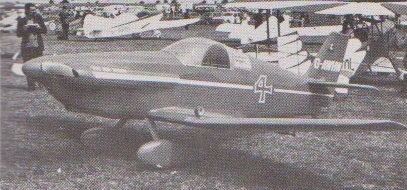
In 1964 Rollasons and the Tiger Club sponsored a competition for a midget racing aircraft which could be used for Formula One air racing. The winner was the Luton Group’s Beta, and after the prototype was attempted by that group, the design was taken over by Rollasons.

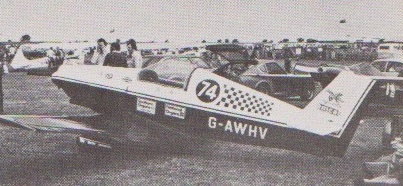
Beta B2A G-AWHV Continental C90

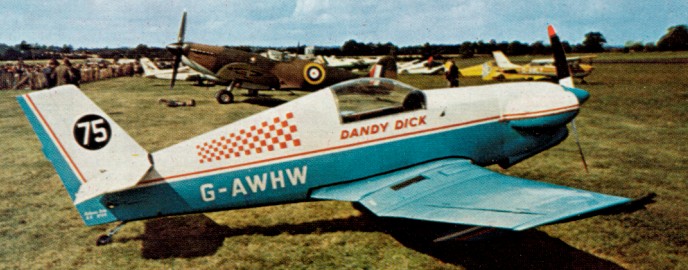
The Beta is a single seat sporting monoplane of all wood construction. The wing employs an NACA23012 aerofoil section and consists of a rectangular centre section and tapered outer panels. The wing is made up of a single main spar and auxiliary rear spar, wood ribs and plywood covering. The mass balanced wooden ailerons are fabric covered. Flaps are optional. The fuselage is a semi-monocoque structure consisting of elliptical wooden frames and plywood covered. The cantilever tail unit has a ply-covered fin and tail plane and fabric covered control surfaces. The fixed undercarriage has rubber in compression shock absorbers on early models, but spring steel legs on later models. Fuel capacity is 10.5 Imperial gallons. Four versions of the Beta are available, the basic difference being the engine fitted.

Beta B4 G-AWHW at Sywell 1975. Continental O-200-A

Beta B1
Engine: Continental A65, 65 hp
Wing span: 20.05 ft
Length: 16.08 ft

Beta B2
Engine: Continental C-90, 90 hp

Beta B2A
Engine: Continental C-90, 90 hp
Undercarriage: spring steel

Beta B3
Engine: Ardem 4C02 Mk.V, 55 hp

Beta B4
Engine: Rolls-Royce 0-200-A, 100 hp
Span: 20’ 5”
Length: l6’8”
Wing Area: 66 sq. ft
Empty Weight: 575 lb
Loaded Weight: 866 lb
Max. Speed: 200 mph
Cruise Speed: 166 mph
Stall Speed: 60 mph (less flaps)
Initial Climb: 1,800 fpm
Range: 300 miles

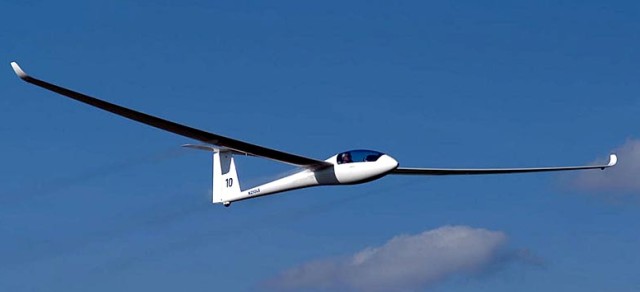
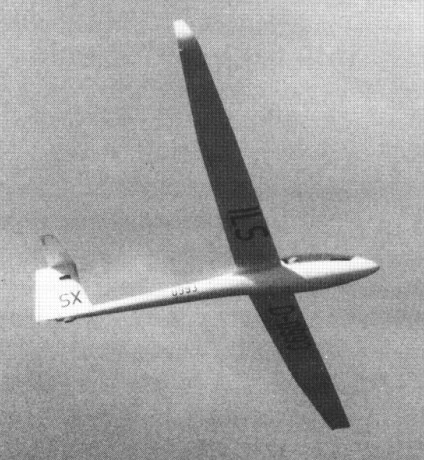
Rolladen-Schneider LS 10

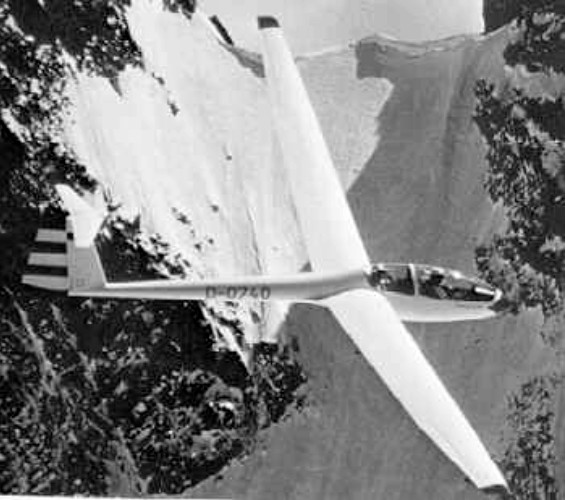
The end of 2005 concluded a series of workshops around key ideas for the new LS10. One key principle was not to “DG-ize” the LS10 but rather maintain the typical LS characteristics.
The LS 10 will differ from the existing model by all LS10 gliders being engine-ready. To simplify production all LS10 gliders will have the engine box built into the fuselage. All LS10 ordered in the glider-only version will offer the option of retrofitting a sustainer engine later.
The typical LS toe brake actuation will be replaced by a drum break actuated by the dive brake lever (in its fully deployed position). The “Haenle” guides for the ailerons remain.

There are no changes to the LS-type elevator assembly, but the outer wing panels trade-in the old threaded bolt for a spring loaded locking pin for easier assembly.

The skids on the wingtips remain (no wheels) as there will be no self-launching version.

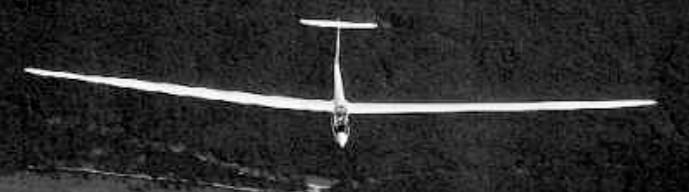
All versions of the LS10 feature 4 wing panels, i.e. each wing will be partitioned into two panels for all versions and configurations of the LS10. This design ensures easier assembly and allows for the use of a shorter trailer. As for the location of the paring between inner and outer panels, the further out toward the wing tip the designer places the divide, the easier the assembly and the cheaper and lighter the required connection for the wing spar. In the limit of parting at y=7.25m however, the resulting wing tips of 0.25m for the 15m wing plan form lead to sub-optimal performance characteristics. If the divide is moved too far toward the wing root, the outer panels become so heavy that they cannot be handled by one person. In addition, this also raises the total weight of the wing substantially, which in turn leads to a more expensive overall wing design. The best compromise is for the parting to be at y=7m. This results in 2m outer panels for the 18m version, a size that can still be handled effectively by one person. Combing the resulting 0.5m wingtips for the 15m version with “high” winglets leads to an aerodynamically optimal plan form for this version as well.

The 18m wing plan form will feature the well-known LS curved winglets.

All LS10 gliders are designed to accommodate a bug wiper system. Integrating this option into the design of the LS10 allows for the installation of a lower drag bug wiper system.

Meanwhile the second LS10 was construction at the Bruchsal facility according to the original Rolladen-Schleicher design. This aircrafts construction was begun by Rolladen-Schneider and was suffering from delays due to the well-known legal problems. The test pilot was Micro Scholz.

Its design is still identical to the “original”, as is production no. 1. The design of number 3 is currently being completed. It will include a number of improvements and will serve as the basis for serial production.

In parallel with the flight tests staff worked on detailed solutions and modifications. The extensive testing of the two prototypes resulted in new fairings at the lower part of the vertical fin, but the biggest changes took place in the cockpit e.g. the position of the rudder pedal cavity foot tub was changed. Now there will be room for big feet. To further improve the view out of the cockpit the instrument panel could be further lowered – without loosing space for the instrumentation, and a Piggott-Hook was installed.

The operating forces of the water ballast system were reduced. The shape of the opening levers was optimised. The flap lever the changes in flap setting works more precisely and pilot-friendly – the handle is coated with fine leather. The decompression lever for starting the engine was moved and now is very well accessible. The position of the trim knob was optimized ergonomically and functions much better. The rudder pedal handle now retracts in the seat pan after use in the LS10.

A very tall pilots will fit in the LS10 by using an optional separate headrest which can be installed instead of the back support. The change can be done in a minute.

Span: 15 m
Area: 10.4 sq.m
Aspect ratio: 21.7
Airfoil: Lemke
Empty Weight: 250 kg
Gross Weight: 525 kg
Wing Load: 50.5 kg/sq.m
Seats: 1

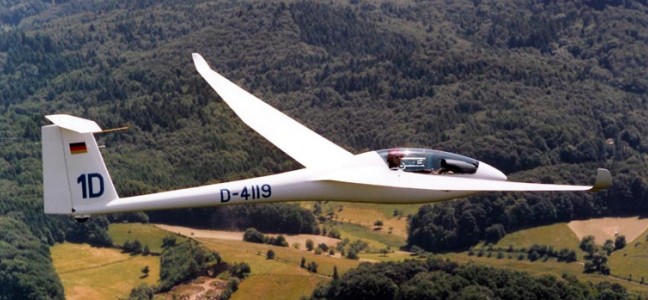
Rolladen-Schneider LS 8

Designed by Wolf Lemske to Standard Class specifications, and built by Walter Schneider, the prototype was completed in March 1994, although the fuselage was first flown with LS6 wings in 1993.

Wolf Lemke had recommended further comparison flights with the LS6 and LS7 models, but under different conditions. He increased the angle of incidence between wing and fuselage for improved thermalling and good take-off handling. He used the unmodified LS6-c flapped wing and added winglets.

Winglets come as standard and a fin ballast tank is an option. Approach control is by top surface Schempp-Hirth airbrakes. Wingtip extensions bringing the span to 18 m are also an option.

From the beginning the fuselage was designed for the installation of an engine and even the installation of a total rescue system was initially considered. As LS8-b the airplane can be ordered also with engine preparation only, this facilitates retro-fitting of a sustainer engine considerably.

Typical for LS the wheel brake is heel operated via the rudder pedals; the manual however terms it emergency brake only due to rapid brake pad wear. The beefed up 575 kg version has a 5 in wheel replacing the 4 in one, thus improving ground handling on grass runways substantially. Retracting the undercarriage also brings the belly release up into the fuselage.

The instrument panel tilts up with the canopy and an emergency exit assistance is optionally available.

The design of the LS8-s with variable wing span caters for pilots, who prefer to fly standard class competitions and, in addition want the performance of 18 meters. It’s also easier to accommodate the glider in a tight hangar having only 14.20 meters span without Winglet. The LS8-a is also available as a ‘skinned down’ version with 15 m only.

The glider has the characteristically double tapered wing with Wortmann profile and kink in leading and trailing edge. Adding the 18-Meter-tips with the noticeably smaller winglets the pilot experiences yet another substantial improvement of flight performances. Thus the lift/drag ratio rises to 48 and minimum sink improves to 0,51 m/s. in addition, 190 liters of water can maximally be carried in the 4 wing tanks, such requires center of gravity correction with water in the fin tank. All control connections are made automatically; double flange airbrakes are installed in the upper carbon fiber sandwich surfaceThe engine installation of the LS8-st with a Solo 2350 weighs complete with Fuel approx. 50 kg, made up for by the all up weight increase to 575 kg.

The original pneumatic retraction mechanism proved expensive and unreliable; DG replaced it with the proven linear bearing actuator for their production version. Operation of the 15 KW engine kept deliberately simple with the DG proprietary control unit. Travel distance with sustainer is approx. 300 km.

After the acquisition of Rolladen Schneider by DG-Flugzeugbau in July 2003 production of the LS8 continued very successfully despite initial legal problems. The finish of the airplanes manufactured at DG is reportedly noticeably better. The LS8 will be available again as an “LS8-s” (and not as “DG-700” or similar). We will continue the 15m version as well as the 15/18m version and the Turbo with the newly developed engine actuation. Delivery is possible from summer 2004.

Variants:

LS8-a
Top performance with 15 m wing span

LS8-s
High Performance Sailplane with 15 or 18 m of wing span
By adding the 18 meter tips the Standard Class Glider LS8 becomes the LS8-s. Despite the bigger wing span the outstanding flying characteristics of the LS8-a stay the same but now with performance numbers which are comparable to the open class of the seventies.
Although there are no wing flaps the LS8-s has reached best possible results in 18 meter class competitions under weak but also at best possible weather conditions. Obviously the wing section (a derivative of the LS6, as it is well known) is still a match to the most actual airfoil designs. The combination of very easy handling qualities, of having no problems when encountering turbulent conditions, minimum performance loss because of dirty or wet wings means a well proven competition glider which is also suitable for club operations or flying just for the joy of it.
For the LS8-s an increase of the maximum take-off weight from 525 to 575 kg could be done for the 18m version in combination with the shock-absorbing retractable 5″main wheel.

LS8-t
High Performance Sailplane with 15 or 18 meters of wing span and self-sustainer
As the popularity of the LS8-s began to increase more and more the question about a self-sustainer version was heard. Being able to get home on a weak day and travel by glider beyond the weather borders becomes reality with a self-sustainer engine. Furthermore the LS8-s with the increased wing span carries the additional weight of the engine installation better than a pure 15m sailplane. So we made the LS8-st with a self-sustainer, the LS8-s “turbo”.
The mold lines of the LS8-s were not changed – it was not even required to enlarge the fuselage.
The engine is the Solo 2350 two stroke two cylinder motor which is already well proven as a propulsion for sailplanes. The rigid two blade propeller is produced by Technoflug. With an additional weight of about 40 kg for the engine installation plus 10 kg of fuel there results a climb performance of 1 to 1.5 m/s and a range of 300 km or an endurance of 1 hour
The propulsion system was purposefully made as simple as possible. The engine plus propeller is very easy to install / uninstall.
If a customer should like to install the engine later, he can purchase a only motor-prepared version, too.

At the 1995 World Championships at Omarama, New Zealand, LS-8’s scored 2nd, 4th and 5th in the Standard Class.

LS8 Standard Equipment –
automatic control system connectors
retractable and sprung undercarriage
C.G. hook, retractable with landing gear
Nose tow hook
adjustable rudder pedals
wheel brake
Piggott-Hook
canopy with instruments panel hinged up front
infinitely adjustable trim system
oxygen flask receptacle
radio antenna in vertical tail fin
standard instrument panel
side pocket
double tapered wing in Carbon-sandwich-construction
15m winglets in Carbon-construction
ready to use water ballast system with funnel
ailerons in Carbon-construction
upper surface, double height air brakes
horizontal tail plane in Carbon-sandwich-construction
elevator in Carbon-Kevlar-construction
all control surface gaps sealed
backrest including headrest
temporary hinge at canopy rear for clean separation during emergency jettison
total energy connection in vertical fin
safety harness (multiple point buckle type)
registration signs
Cotton canopy cover
Optional Equipment
Tail dolly, covers for wings, leather upholstery, every instrument system offered, tail wheel 210x65mm, contest numbers, etc.

LS8 15m / 18m
Fuselage Length 6,72 m
Fuselage Width 0,61 m
Fuselage height 0,80 m
Wing Span 15,0 m / 18,0 m
Wing Area 10,5 m 11,4 m
Aspect Ratio 21,4 / 28,4
Min. Wing Loading about 32 kg/sq.m / ca. 30 kg/sq.m
Max. Wing Loading 50 kg/sq.m / 46 kg /sq.m
LS8-s /st: 50 kg/sq.m
Empty weight approx. 265 kg / 270 kg
Max. Take-off Weight 525 kg
LS8-s / st: 575 kg
Max. Cockpit Load 110 kg
Best Glide Ratio approx. 43 / 48
Minimum Sink Rate approx. 0,59 m/s / 0,51 m/s
Seats 1

LS8-st
Engine Solo 2350 ca. 18 hp
Fuel capacity 13 l
Climb rate in powered flight 1 -1,5 m/s
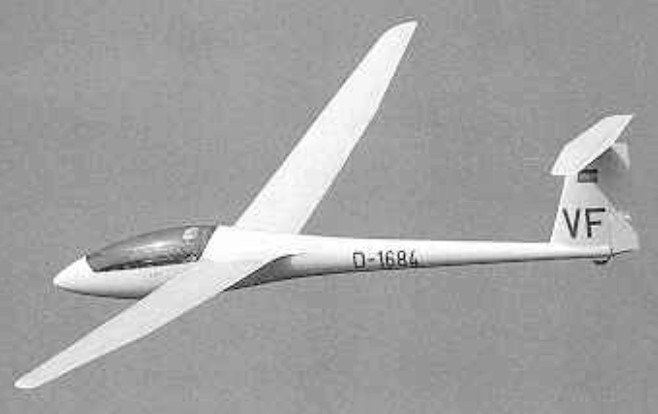
Rolladen-Schneider LS 7

Designed Wolf Lemke, this Standard Class sailplane first flew in 1987, and uses a modified LS-6 fuselage. It is fitted with a tail ballast tank for trimming purpose.

Span: 15 m / 49.2 ft
Area: 9.74 sq.m / 104.84 sq.ft
Aspect ratio: 23
Empty Weight: 235 kg / 520 lb
Payload: 251 kg / 553 lb
Gross Weight: 541 kg / 553 lb
Wing Loading: 55.54 kg/sq.m / 11.35 lb/sq.ft
Water Ballast: 0
L/DMax: 43
Seats: 1

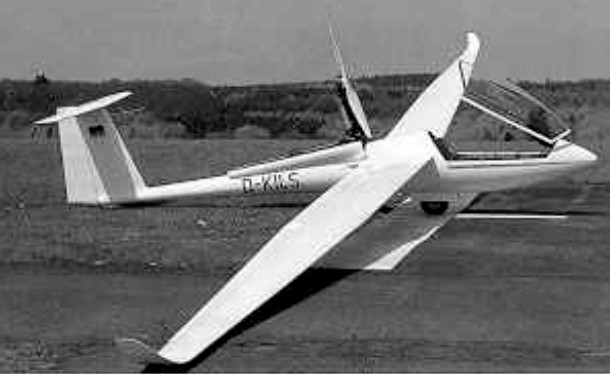
Rolladen-Schneider LS 6

Designed by Wolf Lemke, the 15 m racing class LS-6 first flew in 1983. The flaps are linked to the ailerons. Approach control is by top surface Schempp-Hirth airbrakes. Forty were built.

The type became popular with competition pilots — the first two places being won in the 1985 World Glid¬ing Championships at Rieti, Italy; the first three places in the 1987 Worlds in Benalla, Australia; and the first four places (using later B and C models) at Uvalde in Texas in 1991.

The LS-6a and -6b models had an optional 5 kg / 12 lb fin ballast tank.

At the 1991 World Championships at Uvalde, TX, the first four places were taken by LS-6b’s and LS-6c’s.

The LS-6 comes with tip extensions increasing the span to 17.5 m. (LS- 6c/ 17.5) and 18.0 m. (LS-6c/18.0 m.)

Structure: composite/ CFRP mainspar/ Kevlar

Span: 15 m / 49.2 ft
Area: 10.5 sq.m / 113 sq.ft
Aspect ratio: 21.4
Airfoil: Wortmann mod.
Empty Weight: 250 kg / 551 lb
Payload: 275 kg / 606 lb
Gross Weight: 525 kg / 1157 lb
Wing Load: 50 kg/sq.m / 10.25 lb/sq.ft
Water Ballast: 180 kg / 397 lb
L/DMax: 40
Seats: 1