RWD RWD-5 / DWL RWD-5

The RWD 5 was constructed by the RWD team of Stanisław Rogalski, Stanisław Wigura and Jerzy Drzewiecki (their designs were named RWD after their initial letters). It was a further development of earlier RWD aircraft series, especially of its direct predecessor, the RWD 4. It shared the same wing shape and construction, while the fuselage was totally new, constructed of steel frame, unlike its wooden predecessors. The fuselage had a modern shape and a closed canopy with panoramic windows.

Mixed construction (steel and wood) high-wing cantilever monoplane, conventional in layout. The fuselage of a steel cro-mo tube frame, covered with canvas on a wooden frame (with duralumin in engine section). Trapezoid one-part wing, canvas covered (plywood in front), two-spar, with no mechanization, fastened to the fuselage framework with four clamps. Elastic trailing edge connecting rib ends extended from the fuselage to the ailerons. After the coating was tightened there were characteristic bogging. Ailerons – cantilever, differential +10 deg/-25deg. The wing was designed in accordance with technical documentation of the yet unbuilt wing to the PZL-3 bomber by engineer Władysław Zalewski. The undivided tapered wing, a two-spar structure of wood with plywood D leading edge, was covered with fabric and bolted direct to the top of the fuselage. On the standard production aircraft the wing aspect ratio was slightly reduced, the overall span being cut from 34 ft 5.5 in (10.5 m) to 33 ft 10 in (10,3 m), and wing area increased from 161.5 sq.ft (15 sq.m) to 166.8 sq.ft (15.5 sq.m). The stabilizers were cantlever, wooden construction, covered with plywood. Control surfaces without balancing surfaces and trimming tabs, covered with cloth. Horizontal stabilizer adjustable during flight with a handwheel placed on the left-hand side of a pilot’s cabin. Fin and tailplane were ply-covered, and rudder and elevators were fabric-covered, in later models a taller fin and rudder was employed. A crew of two, sitting in tandem in a glazed cockpit, with dual controls and individual doors on the right (one in RWD-5bis). Control stick from the back seat could be removed. The baggage holder was behind the back seat. Control panel was equipped with speedometer, altimeter, compass, time clock, engine-speed indicator, oil manometer and fuel indicator. A noise muffler installed on the exhaust gas pipe, and cabin heating was with hot air taken from a heater installed on the exhaust gas pipe (it was removed on RWD-5bis). Conventional fixed landing gear, with a rear skid, wheels in teardrop covers on serial aircraft. Fixed, two wheels, with tail landing skid, three-legs, oil-air shock absorbtion. Tail landing skid half-springing, not controllable. Wheels with low-pressure tyres suspended on forked rocker arm supported on shock-absorbing angle strut and shielded with alluminium fairings. The undercarriage of the production model was of the divided type and consisted of two D.W.L. rubber-in-compression legs, running from the sides of the fuselage, with the lower ends hinged to the bottom of the fuselage by short axles and radius rods. The compression legs were enclosed in streamlined fairings, and the medium-pressure Dunlop wheels were often fitted with large spats. A semi-leaf spring tailskid was used. The wheel track was 5 ft 11 in (1.8 m).Some models of RWD-5 were equipped with wheel brakes. SP-AGJ prototype had high-pressure tyres and three-legs with shock-absorber supporten on lower fuselage section. The shape of wheel fairings differed on different models. Fuel tanks of capacity 110 liters in center of wing section.

Alternative powerplants included the 105-115 hp Cirrus-Hermes IIB, 120-130 hp Cirrus-Hermes IV, 130 hp de Havilland Gipsy-Major, or 110 hp Walter Junior four-cylinder inverted in-line air-cooled engines, driving a Szomanski two-blade wooden airscrew. Other in-line engines of similar output could be installed. Two fuel tanks, with a total capacity of 58.12 gal (220 l) were mounted side by side in the wing above the cabin. The oil tank was carried externally at the bottom of the fuselage on the port side.

The first year of D.W.L.’s existence was a critical one, and, apart from the RWD 5 prototype, only one other aeroplane, the record-breaking RWD 7, was completed in 1931. Soon, however, the prospects began to improve, and in addition to a Government contract for a new Challenge tourer, the RWD 6, orders for the RWD 5 were mounting. Work on the machine was delayed by the move from the University’s primitive workshop to the new establishment at Warsaw-Okecie. Construction of the prototype began at the new factory in September 1930, but due to extreme financial difficulties and other problems arising from the move, the aircraft was not finished until July 1931. In the spring of 1932 work on the first batch of ten RWD 5s began, and this was followed by another batch of ten in 1933.

Powered by the Cirrus-Hermes IIB the RWD 5 flew for the first time on August 7, 1931, proving eminently successful. Registered SP-AGJ (c/n 34) the aircraft was flown a week later to victory in the 3rd Tour of Southwestern Poland by Mieczyslaw Pronaszko, and less than two months after its first flight it came first in the 4th National Lightplane Contest, piloted by Franciszek Zwirko.

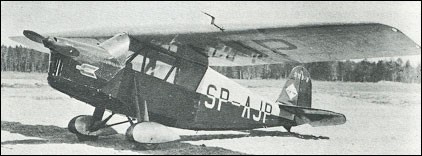
The production model differed from the prototype in having a redesigned undercarriage with medium-pressure wheels and a more efficient windscreen and improved cabin windows. The first two production machines, the Cirrus-Hermes IIB powered SP-AJA and SP-AJB, c/ns 58 and 59, named Kolejarz I (Railwayman) and Kolejarz II, were financed by the Railwaymen’s Union, and officially presented to the Warsaw Aeroclub on November 13, 1932.

Engine in front, with tractor two-blade wooden propeller of a fixed pitch. A variety of 4-cylinder air-cooled inverted straight engines were used, most typically Cirrus Hermes IIB (105 hp (78 kW) nominal power and 115 hp (86 kW) take-off power). Used also were 130 hp Hermes IV or de Havilland Gipsy III, or 120 hp Walter Junior 4. The RWD 5bis and RWD 5 SP-LOT had a 130 hp (97 kW) de Havilland Gipsy Major.

The first prototype (registration SP-AGJ) was flown on 7 August 1931 by its designer Jerzy Drzewiecki. It was built in new workshops of Warsaw University of Technology near Okęcie airport, from 1933 converted to Doświadczalne Warsztaty Lotnicze (DWL) company.

After successes of the prototype in air competitions, a small-scale series production was set up, mostly for the Polish Aero Club. Series aircraft had improved landing gear. Two were built in 1932 (registration SP-AJA and AJB), five in 1933 (including the single-seater RWD 5bis), eleven in 1934 (including one in Aero Club workshops in Lublin) and one more in 1937 (SP-BGX), for a total of 20 aircraft. In 1932, the RWD 5 was shown at the International Air Show in Paris.

The prototype, SP-AGJ, underwent various modifications; in 1933 it was re-engined with a Cirrus-Hermes IV, and later was fitted with a production-type wind screen and Dunlop medium-pressure wheels in place of the earlier Palmer wheels. Several RWD 5s were re-engined during their life, including SP-AJA, which was fitted with a Gipsy Major in 1936. In addition to the twenty RWD 5s produced by D.W.L., one monoplane of this type was completed before the end of 1933 by the Central Aeroclubs’ Workshops in Lublin.

The RWD 5s played a prominent role in the development of Polish popular flying and, in addition to extensive touring and sporting activities, some of the machines, such as SP-ARP (c/n 68), owned by the Central Board of the Aeroclub of the Polish Republic, and SP-LOP (c/n 84), owned by the Central Board of Aviation League, were operated as executive aircraft. The RWD 5s achieved a number of victories in national and regional rallies and meetings, most outstanding among them being the success in the 5th National Lightplane Contest; the competition was won by Cirrus-Hermes IV powered SP-AGJ, piloted by Pronaszko, and two Cirrus-Hermes IIB powered RWD 5s qualified for the fourth and fifth places.

SP-AGJ c/n 34

The RWD 5 participated also in several international events, and gained considerable fame in the Tour of Algeria and Morocco, staged in April 1933, in the course of which SP-AJB, flown by Robert Hirszbandt, with Bohdan Kwiecinski as passenger, covered a route of 7,077 mls (11,389 km) without a hitch. Flying in greatly varying climatic conditions over difficult terrain, the monoplane won the ‘Foreigners’ Prize’ at the Casablanca Meeting. However, all these successes were overshadowed by one of the greatest epics in the annals of Polish flying, Skarzynski’s Atlantic flight.

RWD-5bis, in the place of the back seat had additional fuel tank of capacity 300 liters, the doors and windows for back seat were removed. RWD-5bis had more comfortable pilot’s seat, designed for long flights, with rubber pneumatic pillows, armrests, footrests and lighting for night flights. On RWD-5bis an additional tank of capacity 300 liters was installed in place of the back seat, and two additional wing tanks, each 113 liters were installed. Oil tank of capacity 35 liters was placed just in front of the pilot’s seat, under the cabin’s floor.

RWD 5s were mostly used as trainers and sport planes by Polish regional aero clubs. They scored good results in local competitions, starting from 1931, when the prototype won the 3rd South-Western Poland Flight (pilot M. Pronaszko) and the 4th Touring Aircraft Contest (pilot Franciszek Żwirko). As sport and touring planes, they were later superseded by the RWD 13, and were relegated mostly for training. Three were written off before 1939.

In March 1933 a special single-seater variant was built, called RWD 5bis (registration SP-AJU), powered with 130 hp Gipsy Major engine. The rear cabin was replaced with an additional 300 l (79 US gal) fuel tank, and the windows were removed. Additional fuel tanks were added in wings, the fuel capacity reached 752 l (199 US gal) in total and a range increased to 5,000 km (3,100 mi). Stanisław Skarżyński flew this plane from Warsaw to Rio de Janeiro from 27 April to 24 June 1933, on a path of 17,885 km (11,113 mi).
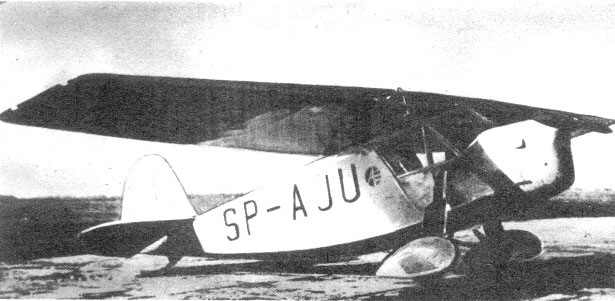
RWD 5bis SP-AJU

During his travel, on 7 May/8 May, Skarżynski flew the RWD 5bis across the southern Atlantic, from Saint-Louis, Senegal to Maceio in Brazil. The flight took 20 hours 30 minutes (17 hours above the ocean). He crossed 3,582 km (2,226 mi), establishing a distance record in the FAI light tourist plane class. The RWD 5bis was at that time the smallest plane that has ever flown across the Atlantic — its empty weight was below 450 kg (1000 lb), loaded 1100 kg (2425 lb). The plane had no radio nor safety equipment, due to weight. It returned to Europe on a ship. After its record-breaking flight, the RWD 5bis was converted to a two-seater variant without additional tanks, and used by Skarżyński.

One aircraft was used by LOT Polish Airlines in 1933–1936 for taxi flights (registration SP-LOT), one by LOPP organization (SP-LOP). After the outbreak of World War II, during the Polish September Campaign, at least one RWD 5 was utilized as liaison aircraft. Also, Maj. E. Wyrwicki flew RWD 5 from Romania to besieged Warsaw. None of the RWD 5s survived the war.

One RWD 5 was sold to Brazil in 1938 (former SP-LO, removed from the Polish registry on 4 December 1936) and registered there as PP-TDX in 1939. Its airworthiness expired in 1943.

In late 1990s, a flying replica of the RWD 5, named RWD 5R, was built in Poland by EEA991 association. It flew first on 26 August 2000, and is powered with 140 hp LOM Praha Avia M-332 engine.
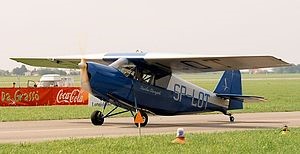
Modern RWD 5 replica, 2005

Gallery

RWD 5
Engine: 1 × Cirrus Hermes IIB, 115 hp (86 kW), Hermes IV, 130 hp / Gipsy III, 120 hp / Walter Junior, 120 hp
Wingspan: 10.2 m (33 ft 5 in)
Length: 7.2 m (23 ft 7 in)
Height: 2.05 m (6 ft 9 in)
Wing area: 15.50 m² (166.8 ft²)
Wing chord: 1.75 m
Wing profile: Bartel 37 IIA
Empty weight: 430 kg (950 lb)
Loaded weight: 760 kg (1,675 lb)
Useful load: 330 kg
Fuel consumption: 22 l/h
Maximum speed: 202 km/h (109 knots, 126 mph)
Cruise speed: 170 km/h
Stall speed: 75 km/h
Range: 1,080 km (583 nm, 670 mi)
Endurance: 6 hr
Service ceiling: 4,700 m (15,400 ft)
Take-off run: 110 m
Rate of climb: 4.6 m/s, 276 m/min (905 ft/min)
Wing loading: 49 kg/m² (10.0 lb/ft²)
CX min: 0.035
CZ max: 1.35
Crew: One, pilot
Capacity: One, passenger / trainee or second pilot

RWD-5bis
Engine: DH Gipsy Major, 130 hp
Wingspan: 10.2 m
Wing Area: 15.5 sq.m
Wing profile: Bartel 37 IIA
Wing Chord: 1.75 m
Length: 7.2 m
Height: 2.05 m
Max Take-Off weight: 1100 Kg
Empty weight: 447 Kg
Max Wing Load: 71 Kg/sq.m
Max Speed: 210 Km/H
Cruise Speed: 175 Km/H
Landing Speed (With Max Load): 90 Km/H
Flight Endurance: 29 hr
Theoretical Max Range: 5000 Km
Fuel Consumption: 26 Lt/Hr
Cx Min: 0.035
Cz Max: 1.35
Crew: 1 Pilot
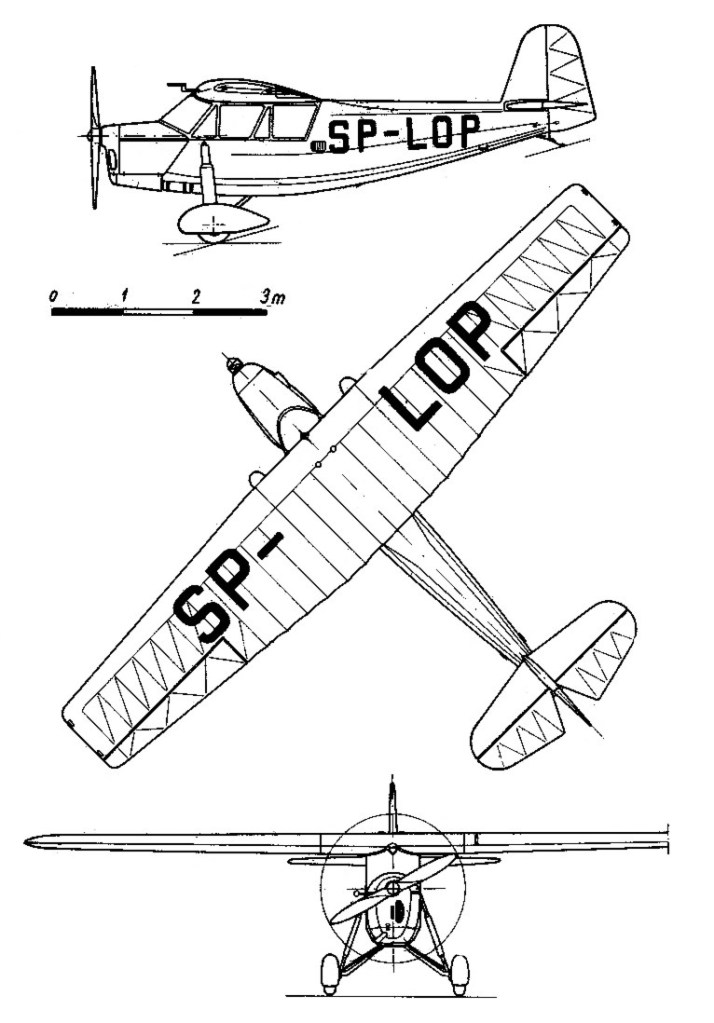
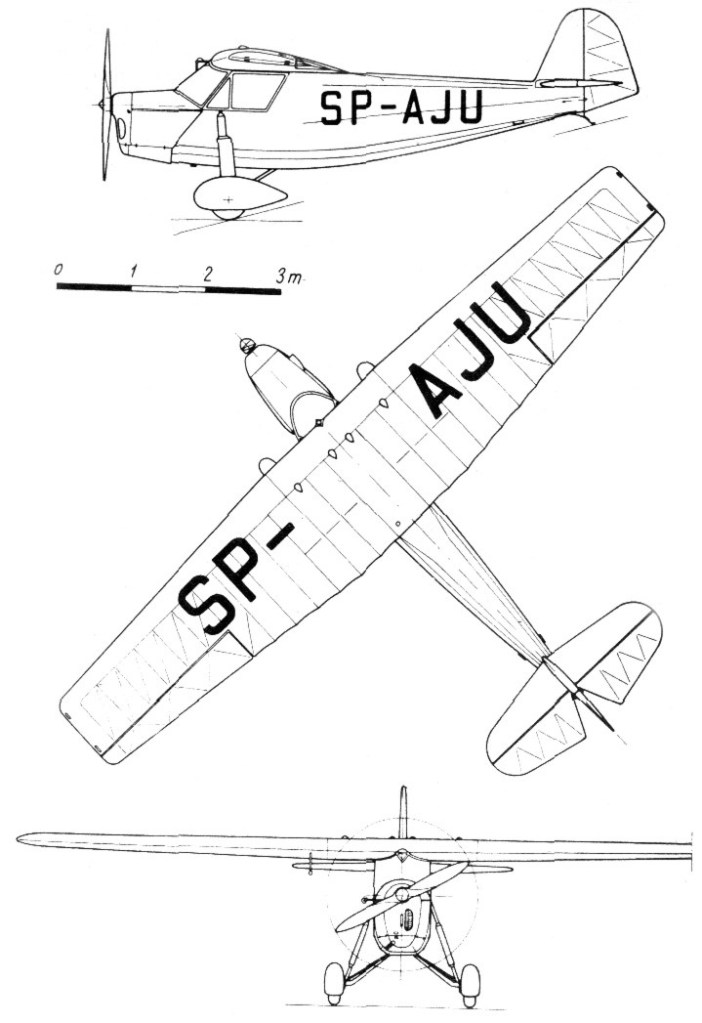
RWD-5
RWD-5bis

RWD RWD-4 / Warsaw University of Technology RWD 4

The RWD 4 was constructed by the RWD team of Stanisław Rogalski, Stanisław Wigura and Jerzy Drzewiecki in Warsaw. It was based upon their earlier RWD 2 design, but enlarged and fitted with more powerful inline engine. It retained the same fish-shaped fuselage without a direct view forward from the pilot’s seat, though the view improved due to thin fuselage profile before the pilot. Also a silhouette became slimmer. The aircraft development was ordered by the Ministry of Communication especially for participation in the Challenge 1930 international air competition. At the same time, the RWD developed similar liaison aircraft project, the RWD 3, which shared many features with the RWD 4.

Wooden construction sports plane, conventional in layout, high-wing cantilever monoplane. The fuselage rectangular in cross-section (narrower in upper part), plywood-covered. Trapezoid one-part wing, canvas and plywood covered. A crew of two, sitting in tandem in the fuselage, with dual controls. The cockpits were open to the sides, with individual doors on the right. Principally powered by a 4-cylinder air-cooled 115 hp Cirrus Hermes straight engine (105 hp nominal power, 115 hp take-off power), driving a two-blade wooden propeller, the aircraft was also known to be fitted with 85 hp Cirrus III and 105 hp de Havilland Gipsy II engines. Landing gear was conventional, fixed, with a rear skid. The fuel tank capacity was 110 litres held in-wing giving fuel consumption of 21 litres per hour.

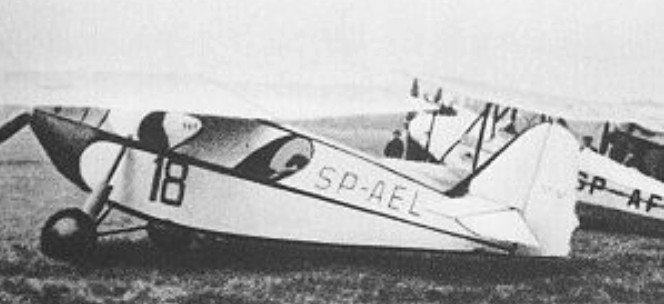
The first three aircraft (registration SP-ADK, -ADL and -ADM) were completed and flown by the designer Jerzy Drzewiecki in early 1930. In late 1930, a further six aircraft were built for the Polish Aero Club (registration SP-AEK, -AEL, AEY, -AEZ, -AFC, -AGP).
Service

The first three aircraft took part in the Challenge 1930 competition in July. Only Jerzy Bajan completed the race on SP-ADM on the 32nd place (of 35 classified and 60 starting crews). Franciszek Żwirko (flying with Stanisław Wigura) withdrew due to engine failure, while the third pilot Tadeusz Karpiński withdrew due to illness.

RWD 4s were later used in Polish local air competitions, with some success (for example, F. Żwirko won the 3rd Polish Light Aircraft Contest in 1930, and other RWD 4s took the 2nd, 5th and 6th place). In 1931, in an international air meeting in Zagreb, Jerzy Bajan won 2nd place overall and the 1st place in aerobatics. RWD 4s were also used for training and glider towing in regional aero clubs. The first two were withdrawn in 1931, the last were scrapped in 1936, after quite short, but meritorious service in Polish sporting aviation.

Engine: 1 × Cirrus Hermes, 115 hp (86, kW)
Length: 7.0 m (22 ft 11 in)
Wingspan: 10.5 m (34 ft 5 in)
Wing area: 15.0 sq.m (161.5 sq.ft)
Height: 2.26, m (7 ft 5 in)
Empty weight: 398-420 kg (875-924 lb)
Loaded weight: 700 kg (1,540 lb)
Useful load: 280-382 kg
Max. takeoff weight: 780 kg (1,716, lb)
Wing loading: 46.5 kg/sq.m (9.5 lb/sq.ft)
Maximum speed: 180 km/h (97 knots, 112 mph)
Cruise speed: 160 km/h
Stall speed: 75 km/h
Range: 800 km (432 nm, 497 mi)
Service ceiling: 5,000 m (16,400 ft)
Rate of climb: 4.6, m/s (905 ft/min)
Take-off run: 110 m
Take-off run to 8.5 m: 243 m
Crew: One, pilot
Capacity: One, passenger, student or second pilot

RWD RWD-3 / Warsaw University of Technology RWD 3

The RWD 3 was constructed by the RWD team of Stanisław Rogalski, Stanisław Wigura and Jerzy Drzewiecki in Warsaw. Since their earlier design, the RWD 2 sports aircraft appeared quite successful, the Polish Military of Defence ordered in 1929 to develop its enlarged variant as a liaison aircraft. It retained the same fish-shaped fuselage without a direct view towards forward from the pilot’s seat, though the view improved due to a thin fuselage profile before the pilot. At the same time, the RWD developed similar enlarged sports aircraft, the RWD 4, which shared many features with the RWD 3, but was powered with an inline engine and did not have folding wings.

Wooden construction single-engine high-wing cantilever monoplane, conventional in layout. The fuselage was rectangular in cross section (triangular in upper part), plywood-covered. Two-spar wings, covered with canvas, in front with plywood, were folding rearwards, unlike other early RWDs. Cantilever empennage, covered with plywood (stabilizers) and canvas (rudder and elevators). Crew of two was sitting in tandem in the fuselage. The cockpits were open in upper part on the sides, with individual doors on the right side. 5-cylinder air-cooled 88 hp radial engine Armstrong Siddeley Genet (80 hp nominal power, 88 hp take-off power) was mounted in front and drove two-blade wooden propeller. Conventional fixed landing gear, with a rear skid. Fuel tank in central wing section.

One prototype was built for ground trials and one flying prototype. It was completed and flown by the designer Jerzy Drzewiecki in April 1930. Since it was found unsatisfactory as a liaison aircraft, it was handed over to sports aviation – Academic Aero Club in Warsaw, with the civil registration SP-WAA. It was used for training and in some competitions. Unlike the RWD 3, the RWD 4 appeared more successful design.

Engine: 1 × Armstrong Siddeley Genet, 65 kW (88 hp)
Length: 7 m (22 ft 11 in)
Wingspan: 10.5 m (34 ft 5 in)
Wing area: 15.0 sq.m (161.5 sq.ft)
Height: 2.26 m (7 ft 5 in)
Empty weight: 380 kg (836 lb)
Loaded weight: 560 kg (1,232 lb)
Useful load: 180-310 kg
Max. takeoff weight: 690 kg (1,518 lb)
Wing loading: 37 kg/sq.m (7.56 lb/sq.ft)
Maximum speed: 170 km/h (91 knots, 105 mph)
Cruise speed: 140 km/h
Stall speed: 68 km/h
Crew: one, pilot
Capacity: one passenger

RWD RWD-2 / Warsaw University of Technology RWD 2

The RWD-2 was constructed by the RWD team of Stanisław Rogalski, Stanisław Wigura and Jerzy Drzewiecki in the Aviation Section of Mechanic Students’ Club of Warsaw University of Technology. It was a development of their first design RWD-1. Its feature was a unique, fish-shaped fuselage, with good aerodynamics, but without a direct view forward from the pilot’s seat. For this reason, they were later nicknamed: blind mice.

Wooden construction high-wing cantilever monoplane, conventional in layout. Fuselage rectangular in cross-section, plywood covered. Single-spar one-part wing of a trapezoid shape, covered with canvas and plywood in front. Cantilever empennage, covered with plywood (stabilizers) and canvas (rudder and elevators). Crew of two, sitting in tandem, with dual controls. The crew cabs were open on the sides in upper part, they had individual doors on the right side. Salmson 9Ad, 46 hp (40 hp nominal power), 9-cylinder air-cooled radial engine in front, driving two-blade metal propeller (wooden in the prototype). Conventional fixed landing gear, sprung by rubber rope, with a rear skid. Fuel tank 75 l in fuselage front (fuel consumption – 9.5 l/ flight hour).

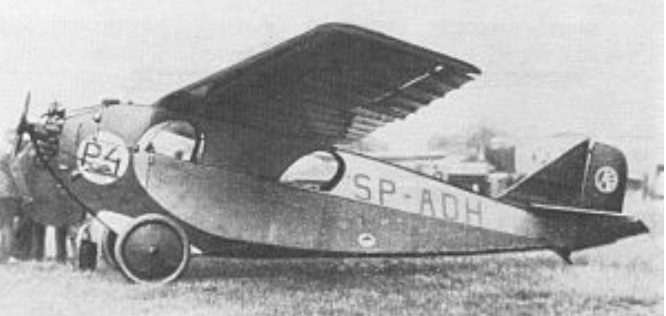
The first prototype (registration SP-ACE) was completed and flown by the designer Jerzy Drzewiecki in July 1929. Since it appeared successful in sports flying, three more RWD-2s were built in 1930 (registration SP-ADJ, -ADG, -ADH).

In August-September 1929, Franciszek Żwirko and Stanisław Wigura flew the prototype across Europe, on the 5000 km Warsaw-Paris-Barcelona-Warsaw route (it was the first long foreign flight of the Polish-designed aircraft). On 16 October, 1929, Żwirko and Antoni Kocjan set an international FAI altitude record of 4,004 m (13,133 ft) in the light tourist plane class (below 280 kg / 616 lb empty weight).

Three serial aircraft took part in the Challenge 1930 international touring planes competition in July 1930. Stanisław Płonczyński took the 19th place, as the best Pole (for 35 qualified and 60 starting crews), and Edward Więckowski took the 21st place (the third Józef Muślewski was disqualified due to time exceeding, but he completed the rally off the contest). In the Challenge, RWD-2s won the trial of lowest fuel consumption (5.2 kg / 100 km). According to Flight, they “appear to possess particularly good air-sailing qualities”.

RWD-2s were also used in several Polish air competitions and other minor international ones, with some success. They were also used for training in the Polish Aero Club in Warsaw, Poznań and Vilnius. They were withdrawn in 1935 (one was bought by a private owner and flew for some time longer).

RWD-2
Engine: 1 × Salmson 9Ad, 46 hp (33.8 kW)
Length: 6.15 m (20 ft 2 in)
Wingspan: 9.8 m (32 ft 2 in)
Wing area: 13.6 sq.m (146.3 sq.ft)
Height: 1.9 m (6 ft 3 in)
Empty weight: 268 kg (590 lb)
Loaded weight: 450 kg (990 lb)
Useful load: 200-250 kg
Max. takeoff weight: 500 kg (1,100 lb)
Maximum speed: 155 km/h (96 mph)
Cruise speed: 130 km/h
Stall speed: 65 km/h
Range: 550 km (342 miles)
Service ceiling: 3,500 m (11,480 ft)
Rate of climb: 3 m/s, 180 m/min (590 ft/min)
Wing loading: 33 kg/sq.m (161.4 lb/sq.ft)
Take-off run: 120 m
Take-off run to 8.5 m: 260.5 m
Landing run from 8.5 m: 219 m
Crew: One, pilot
Capacity: One, trainee / second pilot

RWD RWD-1 / Warsaw University of Technology RWD 1

The RWD-1 was the first aircraft constructed by the RWD team of Stanisław Rogalski, Stanisław Wigura and Jerzy Drzewiecki in the Aviation Section of Mechanic Students’ Club of Warsaw University of Technology. It was designed in late 1927. The plane was built with a financial help of the LOPP organization. One prototype was built for static trials, and one flying prototype (registration SP-ACC), completed and flown by the designer Jerzy Drzewiecki in September 1928.

Wooden construction single-engine high-wing cantilever monoplane, conventional in layout. The fuselage rectangular in cross-section, narrowing in upper part, plywood covered. Single-spar one-part trapezoid wings, covered with canvas and plywood in front. Cantilever empennage, covered with plywood (stabilizers) and canvas (rudder and elevators). The crew of two sat in tandem. The crew cockpits were open on the sides in upper part, and had individual doors (first cockpit – on the right, second one – on the left). A 2-cylinder air-cooled 40 hp ABC Scorpion II boxer engine (34 hp nominal power) was in front, driving two-blade wooden propeller Szomański (1,5 m diameter). Conventional fixed landing gear, sprung with a rubber rope, with a rear skid. Fuel tank in fuselage front (fuel consumption 9 l/h).

Its unusual feature was a unique, fish-shaped fuselage, similar to early Messerschmitt’s designs (M17). Two crewmen sat in tandem inside the fuselage and had only side openings in its upper part. In front of the pilot’s head there was an upper part of the fuselage, supporting wings, limiting his view forward, though its profile was thin. This shape was repeated in following RWD designs. The aircraft was evaluated as a quite good design, with an original construction. It had high glide ratio of 12, and its payload was bigger than its empty weight. It was not built in any quantities, but gave a basis to further more successful RWD designs: RWD-2, RWD-3, RWD-4, RWD-7, and, partly RWD-5.

The prototype took part in the 2nd Polish Light Aircraft Contest in 1928, but did not complete it due to engine breakdown. In 1929 it undertook a raid around Poland. It was scrapped in winter of 1929/1930.
Description

RWD-1
Engine: 1 × ABC Scorpion II, 40 hp (53.6 kW)
Length: 6 m (19 ft 8 in)
Wingspan: 9.8 m (32 ft 2 in)
Wing area: 13.6 sq.m (146.3 sq.ft)
Height: 1.7 m (5 ft 7 in)
Empty weight: 206 kg (453 lb)
Loaded weight: 417 kg (918 lb)
Maximum speed: 135 km/h (84 mph/h)
Cruise speed: 115 km/h
Stall speed: 65 km/h
Range: 500 km (310 mi)
Service ceiling: 1,950 m (6,396 ft)
Rate of climb: 1.8 m/s, 108 m/min (354 ft/min)
Wing loading: 30.5 kg/sq.m (6.3 lb/sq.ft)
Take-off run: 100 m
Landing run: 130 m
Crew: One, pilot
Capacity: One, passenger / second pilot

Ruthenberg Schwingenflieger

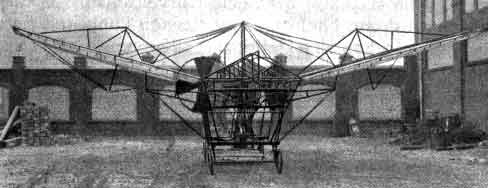
Ruthenberg built a flapping wing monoplane (‘Schwingenflieger’ in German) in 1909. In his complex construction the wings were moved (flapped) by rods moved by an engine which was mounted in the fuselage. The same engine also drove two pusher propellers in contrary motion. The undercarriage was fitted with a four wheel undercarriage. To make the tests of this machine less dangerous a small balloon was mounted in the fuselage, which as was said could lift the machine almost on its own. Tests revealed that the machine did not leave the ground.

Rutan SkiGull

Burt Rutan has designed and buil the SkiGull, his own light aircraft concept. The SkiGull is a small amphibious aircraft that fits in a single-car garage, after having folded its wings. The plane has a single engine located directly above the cockpit that is itself suspended from the wings in a gondola-like cabin.

The SkiGull has a retractable, flexible ski system. The skis provide five times the shock absorption deflection of a typical land plane, making it possible for the SkiGull to operate in considerably rougher environments than most other seaplanes. This includes the ability to perform water landings on beach waves and ocean crests.

Small wheels protrude from the bottom of the skis, making it possible to land on surfaces such as snow or grass.

According to Rutan, the SkiGull’s all-composite structure means he can avoid conventional structural design and fabrication methods. No specific details have been made available yet, he does give a hint: “For now all I can say is that its structure is more like nature than conventional.”

“It will be the last time I design and build an airplane, since I want to enjoy this one for myself,” said the 72-year-old Rutan.

Rutan SpaceShipTwo

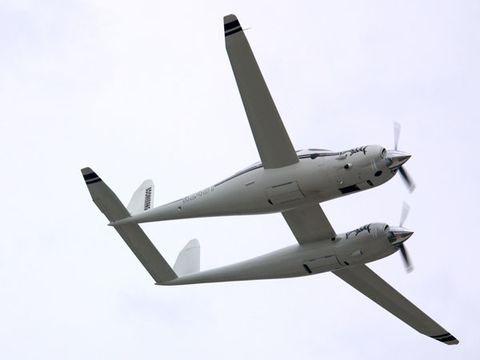
The six passenger SpaceShipTwo is carried aloft by WhiteKnightTwo.

Virgin Galactic’s SpaceShipTwo made its second successful powered flight on 5 September 2013 from Mojave Air and Space Port in California.

SpaceShipTwo, funded by billionaire Richard Branson, was carried to an altitude of 42,000 feet attached to the “mothership” and then climbed to 69,000 feet under its own power before descending back to Mojave.

“In addition to achieving the highest altitude and greatest speed to date, the test flight demonstrated the vehicle’s full technical mission profile in a single flight for the first time … All of the test objectives were successfully completed,” the company said.