A high wing, two seat, single engine trainer/aerobatics trainer aircraft. First flying in 1937, Twenty-four were built.
The RWD-17W was a floatplane version, first flying in 1938, six were built.
A high wing, two seat, single engine trainer/aerobatics trainer aircraft. First flying in 1937, Twenty-four were built.
The RWD-17W was a floatplane version, first flying in 1938, six were built.
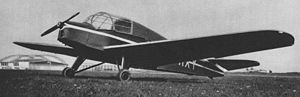
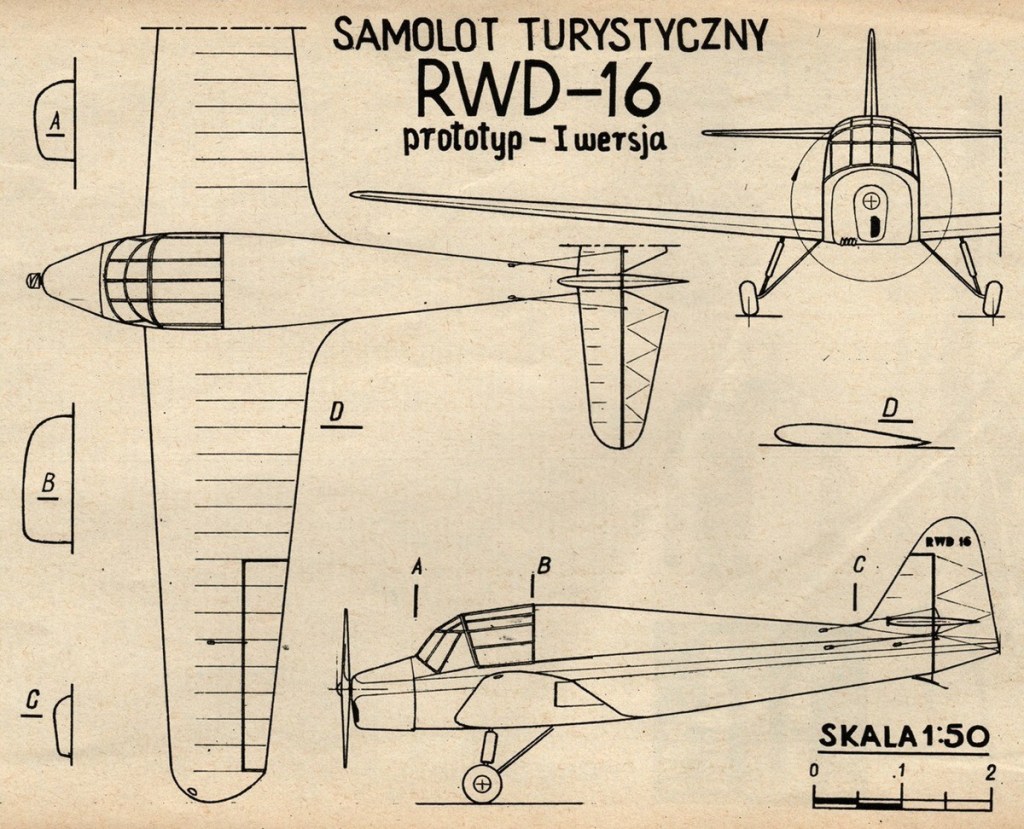
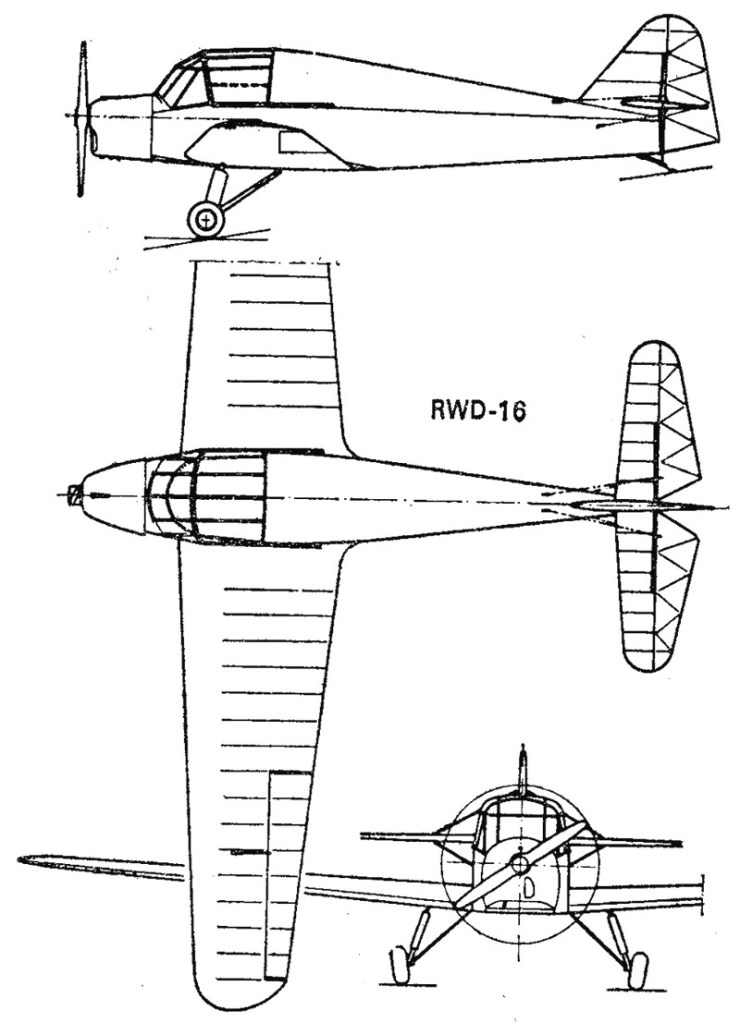
The RWD-16 was designed in 1935 by Andrzej Anczutin as a light, two-seat low-wing, and economical sports plane. The plane was a wooden construction low-wing cantilever monoplane, conventional in layout, with a fixed landing gear and a closed cockpit. The fuselage was semi-monocoque, plywood-covered. Single-piece trapezoid wings with rounded tips, two-spar, plywood (in front) and canvas covered. Conventional cantilever empennage, plywood (fins) and canvas (elevators and rudder) covered. Two seats side-by-side, with twin controls, under a common canopy, with a fixed windshield. Conventional fixed landing gear with a rear skid. Powered was 50 hp Walter Mikron I straight engine, with two-blade wooden Szomański propeller, 1.8 m diameter.
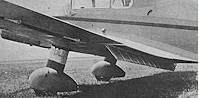
The prototype was built by the RWD team and first flown in early 1936 (registration SP-AXY), funded by the Polish division of Osram factory. The plane did not appear a successful design, though. Test revealed lack of directional stability, therefore its rudder was much enlarged, the wings were fitted with fixed slats and a windshield was redesigned. It did not improve the situation much, and in 1937-1938 the prototype was rebuilt and fitted with stronger 60 hp Avia 3 engine in a lengthened nose, while the vertical stabilizer and rudder were made smaller. Most significant feature became a front windshield with a negative slope.
After final changes, the prototype still was not satisfactory, but it served as a basis for the 1938 RWD-16bis design, which two were built. The redesigned aircraft was produced as the RWD-21. The prototype RWD-16 was given then to a known touring aviator Zbigniew Babiński.
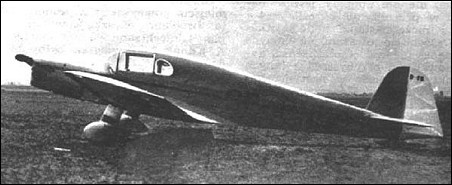
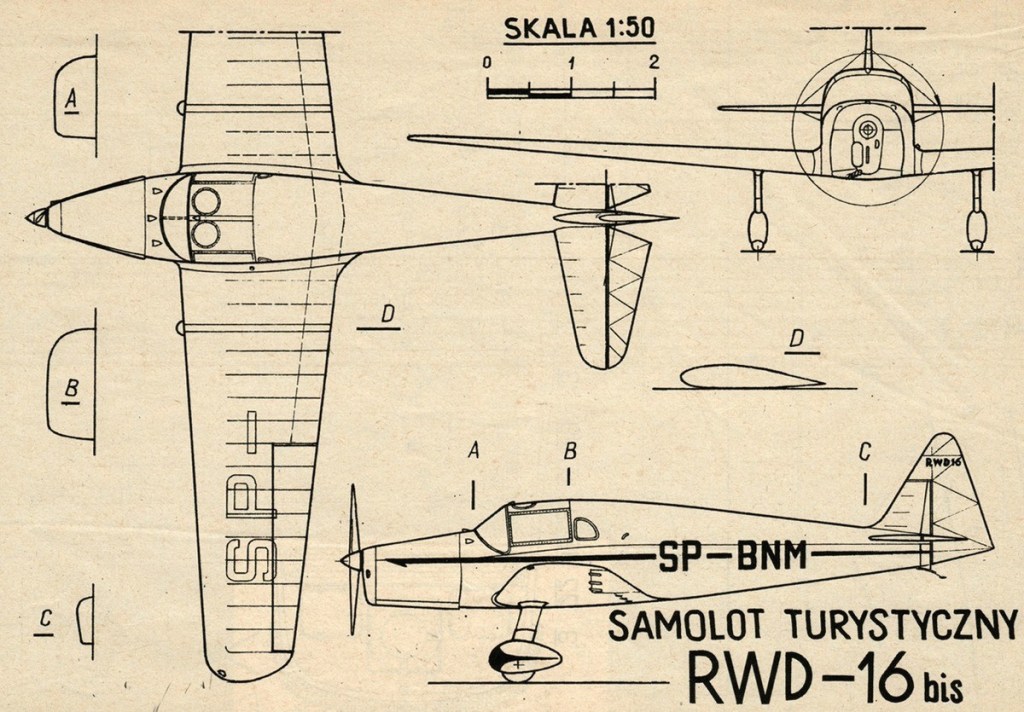
Andrew Anczutin designed over 1937-38 the RWD-16 bis. The prototype RWD-16 bis (registration SP-BNM) was built in the first half of 1938 and was flown in late June 1938 by Eugene Prysieckiego, powered by a Polish-designed 63 hp Avia 3 straight engine. Insufficient directional control led to a wider and higher, pointed fin. The modified prototype flew well in September 1938 and in the same month successfully completed ITL testing.
In November 1938 they built two new RWD-16 bis. The first (SP-BPC) differed in the shape of the rear window, and was fitted with an Avia 3 of 44 kW. The second copy (Factory no.305 SP-BPE) was powered by a Cirrus Minor of 66 kW and was soon modified to become the ‘luxury’ version, and prototype of the RWD-21.
LOPP made a public presentation on 14 January 1939 and at the end of the month LOPP ordered from DWL, through the Committee Wigury Street, 20 of the RWD-16 bis. LOPP offered the aircraft at only 9500 gold because LOPP rented the engine free, and gave a 20% tax discount. Purchase was effectively 53% of the real price.
The first orders were received in January 1939 from 26 yesr old PhD. Jadwiga Pitulanka of Karkow Aeo Club, Dr. Šwietoslaw Baley from Dubna, H.Hoffman from Warsaw, owner of the Stemplew George Gerlicz and Lodz industrialist Andrew Sobczyk.
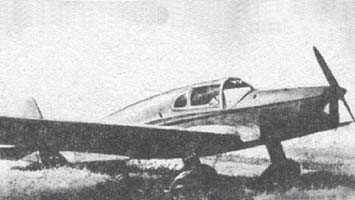
In September, Sec.pil. Gerllicz flew his RWD 16 bis to Steplewa Airport Lodz Lublinek to take up the post of commander of 5 Platoon Army liaison Carpathians.
The RWD 16 bis ordered by Vilnius Charles Wedziagolskiego was replaced by an RWD-21. Wedziagolskiego’s RWD 16 bis went to the Aero Club of Vilnius.
A quantity of aircraft produced never flew.
Engine: 1 × Avia 3, 60 hp (kW)
Length: 7.51 m
Wingspan: 11.8 m
Height: 2.75 m
Wing area: 15.3 m²
Empty weight: 325 kg
Loaded weight: 610 kg
Useful load: 285 kg
Wing loading: 40 kg/m²
Maximum speed: 145 km/h
Cruise speed: 120 km/h
Stall speed: 67 km/h
Range: 750 km
Crew: 1, pilot
Capacity: 1, passenger or co-pilot
RWD 16 bis
Wingspan: 11.0 m
Length: 8.5 m
Height: 2.07 m
Wing area: 14.95 sq.m
Empty weight: 385 kg
MAUW: 615 kg
Payload: 230 kg
Top speed: 180 kph
Cruise speed: 155 kph
Minimum speed: 70 kph
Climb rate: 3.1 m/s
Ceiling: 4150 m
Range: 700 km
Takeoff dist: 140 m
Fuel burn: 16 lt/hr
Endurance: 4.5 hr
Engine: Avia 3, 65 hp
The RWD-15 of 1938 was a high wing, four seat, single engine touring aircraft.
Six were built, plus ten unfinished.
The RWD-15 were utilised by the Germans as Red Cross ambulances in World War II.
Engine: 205 hp DH Gipsy Six
Wing span: 40 ft 7 in
Length: 29 ft 6 in
Height: 8 ft 2 in
MAUW: 2860 lb
Max speed: 149 mph
Range: 500 mi at 135 mph
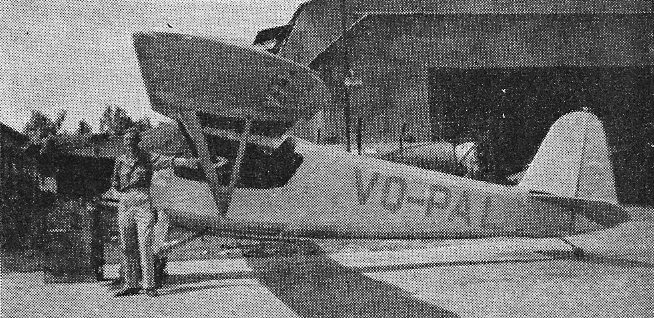
A high wing, three seat, single engine sports and touring aircraft. First flying in 1936, approximately 100 were built.
The Germans used RWD-13s as air ambulances in World War II.
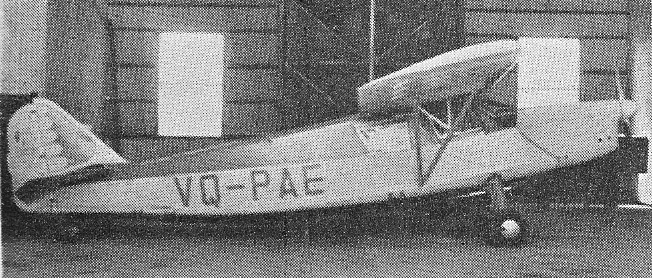
After to war, two RWD-13s, VQ-PAL and VQ-PAM, and a suspected third, VQ-PAF, found their way to Palestine and served with Aviron Ltd. The original Czech 130 hp Walter Major 4-1 was replaced by a 130 hp DH Gipsy Major.
A low wing, 2 + 6 seat, twin engine passenger aircraft. First flying in 1936, one was built.
A high wing, single seat, single engine aerobatics aircraft. First flying in 1933, 23 were built.
A high wing, four seat, single engine sports aircraft. First flying in 1933, eight were built.
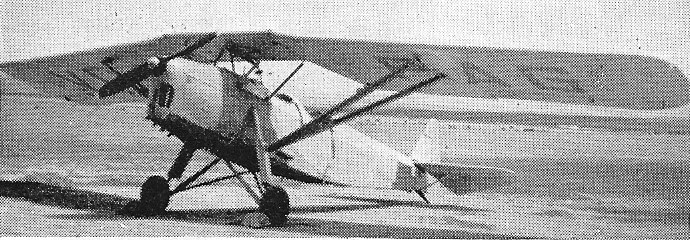
A single engine, high wing, two seat primary trainer. First flying in 1933, approximately 550 were built.
It was also built under licence in Eastonia and Yugoslavia.
Originally powered by a Czech 110 hp Walter Junior 4-1, two delivered to Aviron Ltd, Israel (VQ-PAG and VQ-APK) were fitted with the more powerful 130 hp DH Gipsy Major.
RWD-8
Engine: 110 hp Walter Junior 4-1
Wingspan: 36 ft
Length: 26 ft 3 in
Height: 7 ft 6 in
Empty weight: 616 lb
Loaded weight: 1659 lb
Max speed: 105 mph
Cruise: 97 mph
Endurance: 3 hr
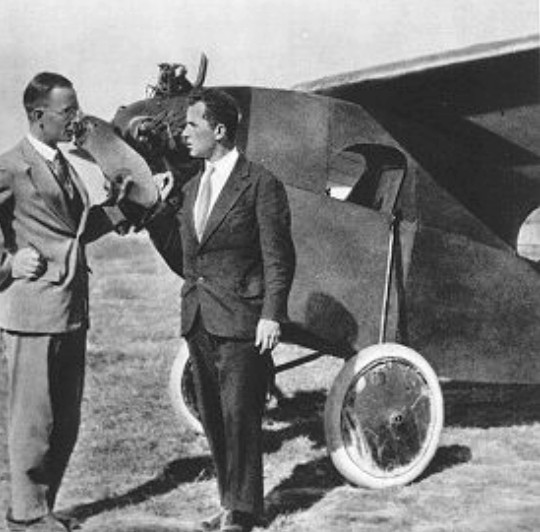
The RWD 7 was constructed by the RWD team of Stanisław Rogalski, Stanisław Wigura and Jerzy Drzewiecki in Warsaw. It was based upon their earlier designs, especially the RWD 2 and RWD 4. The RWD 7 was meant to be a record-beating plane, so it had a more powerful engine, while its mass was reduced. From its predecessors, it took the same fish-shaped fuselage without a direct view towards forward from the pilot’s seat.
The RWD 7 was a wooden construction, conventional in layout, high-wing cantilever monoplane. The fuselage was rectangular in cross-section (narrowing in upper part), plywood-covered, apart from the engine section, which was aluminium sheet-covered. The wings were trapezoid, single-spar, single part, canvas and plywood covered. A crew of two was sitting in tandem, with a pilot in the rear cab. The crew cabs were open on upper sides, and had doors on the right side. The engine was 5-cylinder Armstrong Siddeley Genet II radial engine, 56 kW (75 hp) nominal power. Two-blade wooden propeller of a fixed pitch. The plane had a conventional landing gear, with a rear skid. A 30 l fuel tank was in central part of wing. A cruise fuel consumption was 18 l/hour.
The only RWD 7 built (registration SP-AGH) was flown in July 1931 by its designer Jerzy Drzewiecki. On August 12, 1931, Drzewiecki and Jerzy Wędrychowski established an international FAI speed record of 178 km/h (111 mph) in the light touring plane class, (below 280 kg / 616 lb empty weight). On September 30, 1932, Drzewiecki and Antoni Kocjan set a height record of 6,023 m (19,755 ft). The RWD 7 was used in Warsaw Aero Club, among others, for aerobatics, then in 1936 it was bought by a known aviator Zbigniew Babiński for touring flights and used until 1938.
The RWD 7 was known for its extremely short take-off run: with a single crew member only 18 m (59 ft), with two crew members, 30 m (98 ft).
Engine: 1 × Armstrong Siddeley Genet II, 75 hp (56 kW)
Length: 9.8 m (32 ft 2 in)
Wingspan: 6.3 m (20 ft 8 in)
Wing area: 13.60 sq.m (146 sq.ft)
Height: 2.0 m (6 ft 7 in)
Empty weight: 246 kg (541 lb)
Loaded weight: 440 kg (968 lb)
Useful load: 194 kg
Maximum speed: 186 km/h (116 mph)
Cruise speed: 160 km/h
Stall speed: 65 km/h
Range: 260 km (163 miles)
Service ceiling: 6,000 m (19,680 ft)
Rate of climb: 6.2 m/s (1,220 ft/min)
Wing loading: 32 kg/sq.m (6.6 lb/sq.ft)
Power/mass: 0.23 kW/kg
Take-off run: 18-30 m
Crew: 1
Capacity: 1
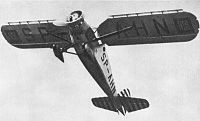
The RWD-6 high wing, single engine sports aircraft was first flown in 1932. A two seater, three were built.

