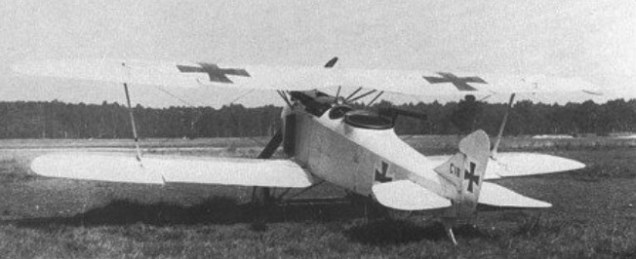
Following the C.II, an experimental C.III designed by Georg König introduced a deep fuselage filling the gap between the biplane wings to allow the crew a clear forward view over the upper wing. Seating the pilot aft gave the gunner a clear field of fire forwards. No production of the C.III was undertaken.
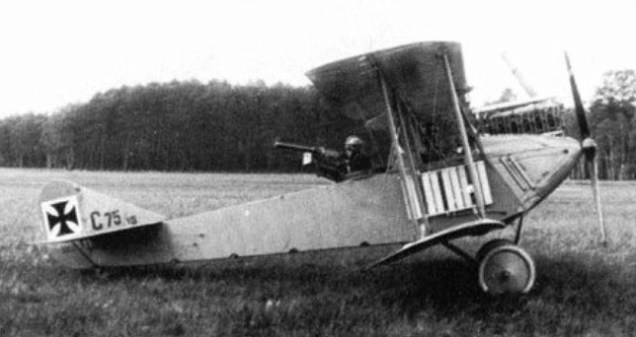
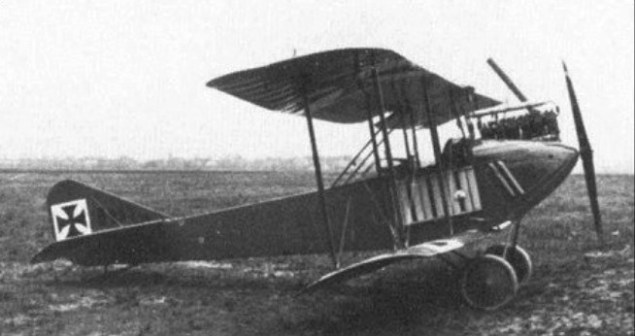
Introduced in March 1915, as the AEG C.1, the ZK.9 designed by Georg König was a minor development of the B.II with a more powerful Benz Bz.III engine and the observer relocated to the rear cockpit. The rear cockpit being fitted with a Schneider Drehring gun mount and a 0.312in (7.92mm) MG 14 Parabellum trainable machine gun for defence of the rear and sides.
Engine: 1 x Benz Bz.III, 150hp Wingspan: 15.00 m / 49 ft 3 in Length: 9.00 m / 30 ft 6 in Height: 3.50 m / 12 ft 6 in Wing area: 41.50 sq.m / 446.70 sq ft Empty weight: 650 kg / 1433 lb Max. speed: 140 km/h / 87 mph Cruise speed: 120 km/h / 75 mph Ceiling: 4800 m / 15750 ft Range: 480 km / 298 miles Armament: 1 x 7.92mm
Following the B.II, the B.III designed by Georg König incorporated some detail improvement, including a rounded fin and rudder. The B.III was only produced in small numbers and was the last of AEG’s unarmed reconnaissance ‘B’ Series.
Designed by Georg König the 1914 Z.9 (military B.II) of 1914 was an improved version of the Z.6 (military B.1). A two bay biplane of smaller wingspan, the Z.9 was powered by the Mercedes D.II engine of 120 hp and saw limited war service.
Engine: 1 x Mercedes D.II, 120hp Wingspan: 15.50 m / 51 ft 10 in Length: 10.50 m / 34 ft 5 in Height: 3.15 m / 10 ft 4 in Wing area: 40.12 sq.m / 431.85 sq ft Empty weight: 723 kg / 1594 lb Max. speed: 110 km/h / 68 mph Cruise speed: 96 km/h / 60 mph Ceiling: 3000 m / 9850 ft Range: 1130 km / 702 miles Crew: 2
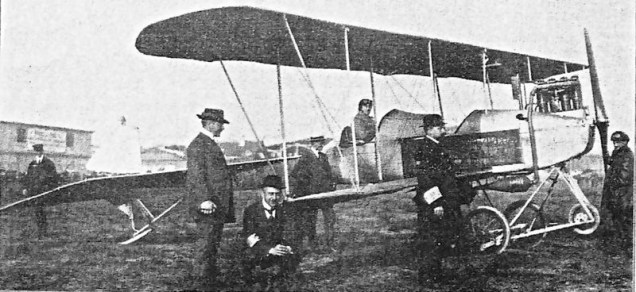
Designed by Georg König, the Z.6 three-bay biplane of unequal span became the company’s first mass production type, serving with the military from 1914 as the B.1, an unarmed two-seat reconnaissance aircraft. Almost the entire structure was of welded steel tube, the wings each having two tubular steel spars with wooden ribs covered in fabric. The tailskid featured a nosewheel unit mounted beneath the engine to protect the propeller if the aircraft nosed over. Large radiators for the engine were mounted on each side of the fuselage.
Type: Reconnaissance biplane. Engine: Mercedes D.I inline, 100 hp. Wingspan: 50 ft 10.25 in / 15.5 m Length: 34 ft 5 3/8 in / 10.5 m Wing area: 473.6 sq.ft / 44 sq.m Empty wt: 1433 lb / 650 kg Max speed: 62 mph / 100 kph Seats: 2
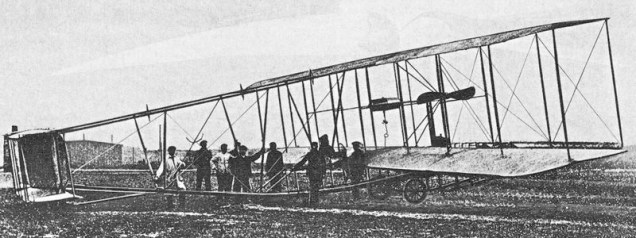
The first aircraft in 1912 was of wooden construction and modeled after the biplane of the Wright brothers. It had a wingspan of 17.5 m, powered by an eight-cylinder engine producing 75 hp; unladen weight was 850 kg and could attain a speed of 65 km / h.
Engine: 1 x 8-cylinder, 75 hp Wingspan: 17.5 m Empty weight: 850 kg Max speed: 65 km / h.
The Allgemeine Elektrizitäts-Gesellschaft decided in 1910 to start an aeroplane department (Abteilung Flugzeugbau) at Berlin-Hennigsdorf. At the beginning they had no knowledge of design and production methods for aircraft, so as other firms they started with analyzing a proven machine. They chose a Wright biplane. After analyzing it they realized the limitations of building aircraft in wood. To gain experience in designing and building metal machines they decided in 1910 to start with a research machine which was the responsibility of chief designer Oberingenieur Paul Stumpf. The design was an open-fuselage all-metal tube construction of large dimensions, with a span of 17.5 m. It was a single-seater, with the pilot placed in the open aft of the wings. In front of the wings a small platform construction held the 75 hp Körting engine, which drove a tractor propeller mounted in the middle of the wings via a chain. The factory identification was Z. 1, with Z for Zweidecker (Biplane).
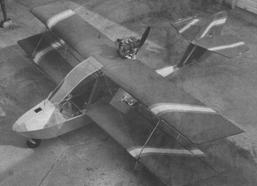
A single pusher engine (of many different sizes) cabin class; conventional-tail amphibian fly¬ing boat, negative stagger biplane, with conventional three-axis control (differential ailerons); retractable tricycle gear for water operations and outrigger floats for lateral stability on the water; and caster¬ing nosewheel and main wheel brakes for steering on land. Of bolted aluminum tube construction with interbay cable and strut bracing and covered with pre-sewn Dacron envelopes. The Seawolf, has a semi-monocoque hull. Aluminum sheets (2024-T2 alloy) are riveted together with self-sealing pull rivets. All bulkheads and stiffeners are formed aluminum. The cross section is a deep ‘N,” and low-porosity foam blocks inside the hull help distribute water loads and give additional flotation. Three sections provide housing for the retractable nosewheel, anchoring for the main structure and gear, and structural support for the tail and tail skid. In the ladder-style wing construction is the internal cable brac¬ing, with 85 percent span ailerons, and a torque-tube control system. The tail group is also Dacron and tube, with fold-down capa¬bility for trailering. Control linkage is via stainless-steel cable for rudder, and teleflex-type for elevator. The landing gear is a conventional tri¬cycle setup, with retraction via a single lever in the cockpit. Advanced Aviation planned to offer several different engine packages, either air or liquid cooled, in power ratings up to 65.
HB-35 Horsepower: 35 Thrust: 250 lb Pwr loading; 18.4 lb/hp Prop: 68 in MTOW: 644 lb Empty wt: 304 lb Max pilot wt: 260 lb Fuel cap: 5 USG Length: 21 ft 3 in Wing span: 23 ft 6 in Wing area: 165 sq.ft Aspect ratio: 6.93 Wing loading: 3.93 lb/sq.ft Stall: 24 mph Max speed: 63 mph Vne: 79 mph Vr: 29 mph Cruise 75%: 57 mph Best climb angle: 34 mph Best glide: 31 mph Cruise 65% power: 52 mph Max ROC: 750 fpm @ 38 mph Baggage cap: 50 lbs / 20 cu.ft Range(30min res)75%: 152 sm Range(30min res)65%: 157 sm Manoeuvre speed: 53 mph Land T/O dist: 125 ft Water T/O dist: 250 ft Ldg dist land: 125 ft Ldg dist water: 250 ft
 All Aero