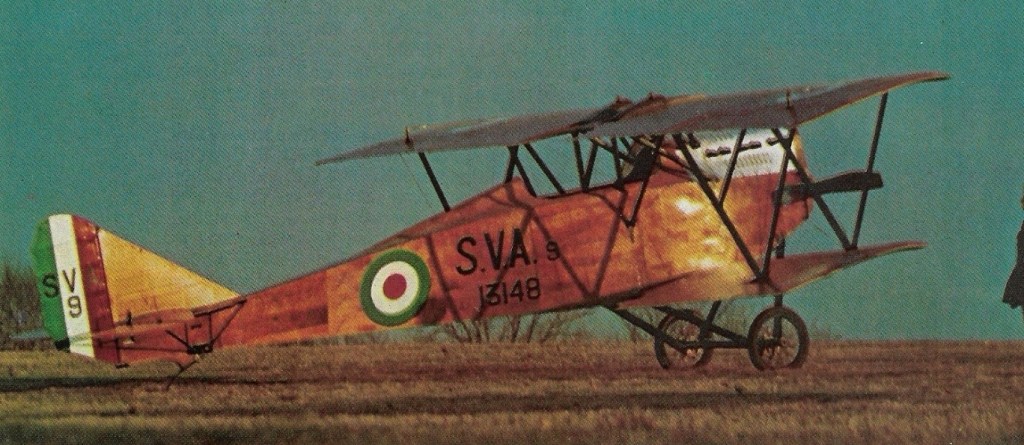
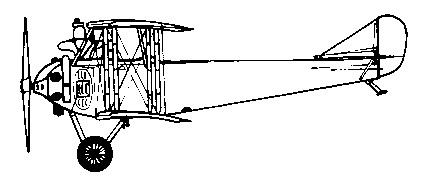
The two seat trainer, designated SVA.9, was powered by a 250 hp IsottaFraschini V 6 engine.
The 1918 two seat trainer, designated SVA.9, was powered by a 250 hp IsottaFraschini V 6 engine. Designed by Savoia and Verduzio, it was built by Ansaldo.
The 1917 SVA.1 was a single-engine one-seat biplane utility aircraft. The SVA.2 was the production version of the SVA.1.
The SVA.3 was a fast-climbing interceptor version of the SVA.2
A production version of the SVA.2 equipped for reconnaissance was designated SVA.4.
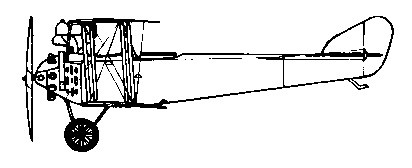
The SVA.5 production version of the SVA.2 was a fighter. Notable for fast reconnaissance flights and record-breaking. The SVA.5 had Warren truss wing bracing, later a characteristic of Fiat biplanes.
Armament was two Vickers machine guns mounted above the fuselage forward of the cockpit on the fighter. The reconnaissance version carried one gun and 220 lb of bombs.
The SVA.5 wings were of wooden construction, with Warren-truss bracing and fabric covering. The flat-sided wooden fuselage was covered with plywood. Conventional control surfaces were fitted, with ailerons on the top wing only.
The fuel capacity was 40 gallons in the fighters, and 75 gallons in the reconnaissance version.
Delivery of the SVA.5 to Italian fighter-training schools began in the Autumn of 1917.
SVA.5
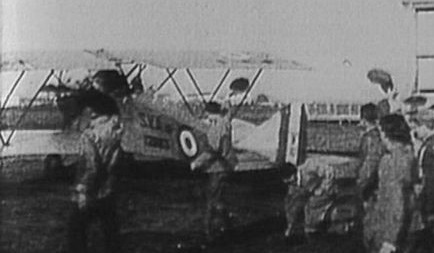
However, it is as a long-range reconnaissance aircraft that it eventually played its major role. Six squadrons and five smaller units received SVA.5s, and the best known being the 87th Squadron, known as ‘La Serenissima’, from Venice, which had the Lion of St.Mark painted on the fuselage of its aircraft. The first operational flights were made in March 1918. Two months later, an SVA.5 made a round trip of 440 miles to photograph the Zeppelin sheds at Friedrichshafen. In August 1918, seven SVA.s, led by a two-seat SVA.9, flew to Vienna and back, a distance of 625 miles, to drop leaflets on the Austrian capitol. On other occasions they dropped bombs.
SVA.5
Altogether 1295 SV.5s were built, including 50 Idro-AM seaplanes.
The SVA.6 was a prototype bomber version of the SVA.2
Reconnaissance Engine: S.P.A. 6A, 220 hp Wingspan: 31 ft Wing area: 261 sq.ft Length: 26 ft 8 in Height: 9 ft 8 in Empty weight: 1533 lb MTOW: 2295 lb Max speed: 136 mph at SL Service ceiling: 22,000 ft
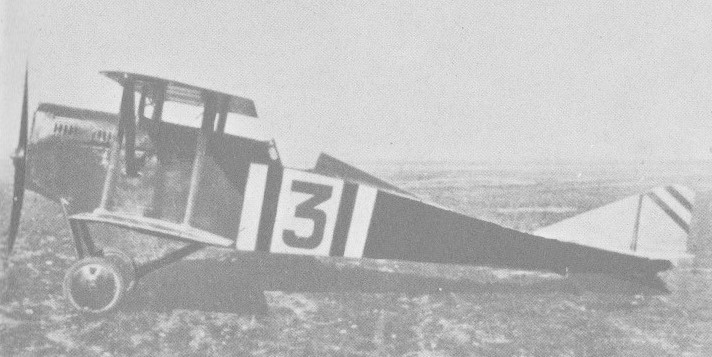
Ansaldo achieved aeronautical eminence in 1917 by providing a single-seat fighter of original Italian design (Italy having previously used French types). The aircraft was the A-1 Balilla (“Hunter”). About 150 built; others, license-built in Poland, served well into 1920s.
The Ansaldo A 1 Balilla was a basic biplane fighter design with a four-blade propeller and a 220 horsepower SPA 6A water-cooled in-line engine. A single pilot saw behind the biplane wing. Armament consisted of two 7.62mm British Vickers machine guns mounted forward of the cockpit seating area in a forward-firing fixed position. Endurance amounted to 1 hour and 30 minutes.
The A 1 appeared in the final stages of the First World War, limiting its use to post-war defence of Italy. Some models found their way into American hands and were converted to air racers fitted with a Curtiss powerplant. Still others would see combat at the hands of Russian and Polish flyers in the Russo-Polish war in 1920.
Ansaldo A 1 Balilla (Hunter) Engine: SAP 6A water-cooled in-line, 220 hp Length: 22.441 ft / 6.84 m Height: 8.301 ft / 2.53 m Wingspan: 25.197 ft / 7.68 m Wing area: 228.197 sqft / 21.2 sq.m Max take off weight: 1951.4 lb / 885.0 kg Weight empty: 1378.1 lb / 625.0 kg Max. speed: 119 kts / 220 km/h / 119kt Service ceiling: 16404 ft / 5000 m Wing load: 8.61 lbs/sq.ft / 42.00 kg/sq.m Range: 324 nm / 600 km Crew: 1 Armament: 2 x 7.62mm Vickers machine guns
The 1910 Edward F Andrews pusher biplane, the first two-engine airplane, powered by two 36hp Adams-Farwell rotary engines, was designed and built by Edward F. Andrews in the USA.
Andrews designed and constructed the single-place open cockpit biplane, which flew at Daytona Beach for about 100 yards at an altitude of six feet before the rear elevators vibrated loose and the machine came apart.
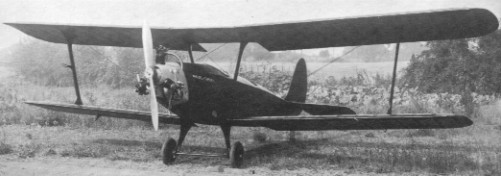
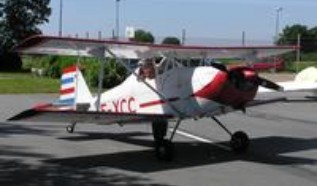
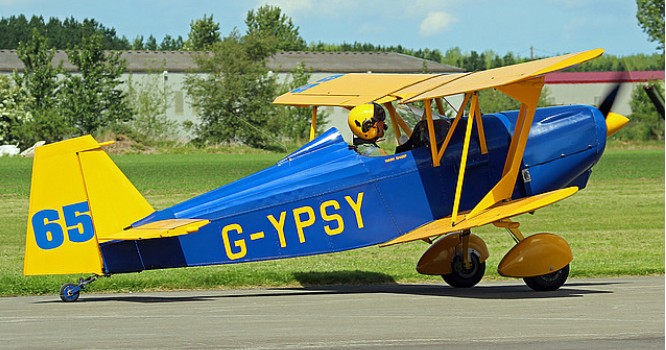
Designed by Björn Andreasson as a homebuilt in 1944 as the single-seat biplane BA-4 was built at Malmo Aviation’s plant at Bulltofta, Sweden.
In 1966 it was designated as the BA-4B c/n 1 registered SE-XBS and was powered by a Continental O-200-A.
The rights to the design were sold to Peter J.C. Phillips who formed Crosby Aviation Ltd to market kits and plans of the BA-4B. The prototype was imported to the UK in 1968 as G-AWPZ.
Andreasson BA-4B
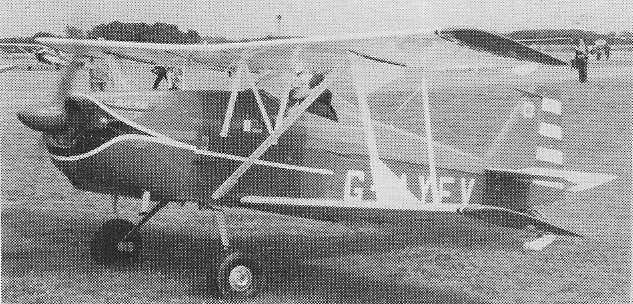
Three aircraft were laid down for initial sales at Knutsford, Cheshire, UK, and all were completed, including G-AYFU, V and W.
Crosby Aviation built G-AYFV
Crosby Aviation offered two versions: the BA-4B with a Rolls-Royce/Continental O-200-A; and the Super BA-4B with a Rolls-Royce/Continental O-240-A.
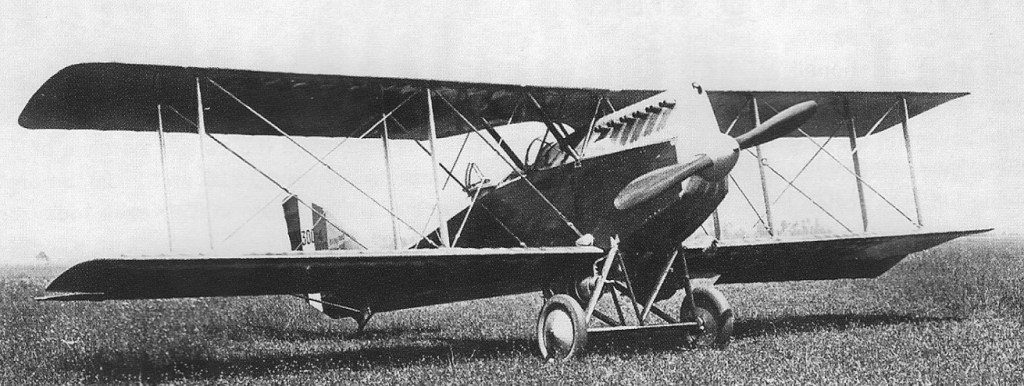
Essentially a developed Voisin 5 (the initial letters signifying ‘Voisin Ivanov’) designed in 1915. From March 1915 one year’s output of VI type was intended to total about 150, though this quantity not completed until mid-1918.
Engine: Salmson 9 U, 148 hp Length: 26.575 ft / 8.1 m Wingspan: 37.467 ft / 11.42 m Wing area: 398.268 sqft / 37.0 sqm Max take off weight: 2566.6 lb / 1164.0 kg Wing load: 6.36 lb/sq.ft / 31.00 kg/sq.m Max. speed: 78 kts / 144 km/h Service ceiling: 14108 ft / 4300 m Endurance: 4 h Crew: 2 Armament: 2x MG
The Anatra D reconnaissance aircraft of 1915 was a German Albatros derivative, with a rotary engine.
Engine: Gnome Monosoupape, 99 hp Length: 25.262 ft / 7.7 m Wingspan: 37.73 ft / 11.5 m Wing area: 376.74 sqft / 35.0 sqm Max take off weight: 1907.3 lb / 865.0 kg Max. speed: 71 kts / 132 km/h Service ceiling: 13123 ft / 4000 m Wing load: 5.13 lb/sq.ft / 25.00 kg/sq.m Endurance: 4 h Armament: 1x MG

 All Aero