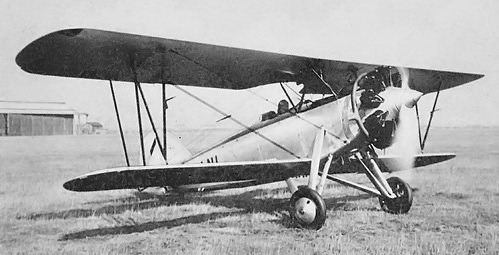
As the Air Force was looking for a new training aircraft, the “Ateliers de Construction Aéronautique Belges” (LACAB) created the T-7. The plane was presented to the authorities on October 17th, 1933, but it is the Avro 626 that won the challenge. In 1934, the LACAB T-7 was bought by the defense ministry and written off on May 31st, 1935. The unique T-7 disappeared completely.
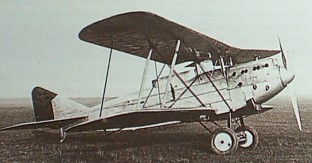
Constructed entirely from Duralumin, the ACAZ C.2 was a two seat fighter reconnaissance aircraft. All four wings were identical and interchangeable. The C.2 was evaluated by the Aeronautique Militaire Belge in early 1926. On 9 March 1928 an attempt was made to fly it to the Belgian Congo. The aircraft was written off on 25 January 1933. The design was not put into production.
Engine: 1 x Hispano-Suiza 12.Ga, 450 hp / 336 kW Wing span: 41 ft / 12.50m Length: 27 ft / 8.25 m Height: 11 ft 2 in / 3.40m Wing area: 436.58 sq.ft / 40.56 sq.m Empty weight: 2778 lb / 1260 kg MTOW: 4563 lb / 2070 kg Max level speed: 155 mph / 250 kph Climb to 19,685 ft / 6000m: 35 min Service ceiling; 24,606 ft / 7500m Endurance: 3.5 hr Armament: 1 x .303 Vickers mg & 2 x .303 Lewis mg
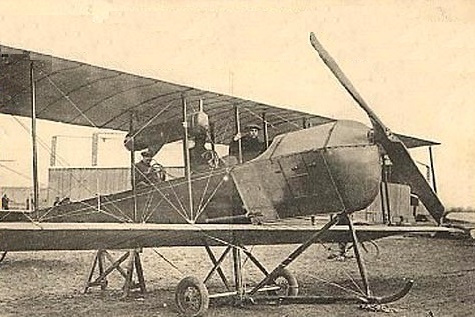
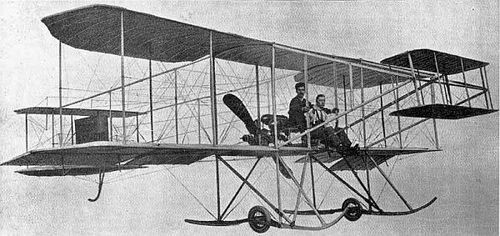
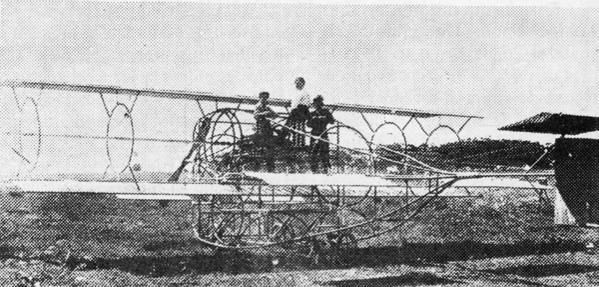
The first aircraft built by the Italian firm of “Asteria” – a Farman-inspired biplane dating from about 1910 – designed by Francesco Darbesio. In this photo Darbesio is accompanied in the cockpit by his mechanic Emilio Pensuti. The machine, presumed to have been powered by a Gnôme rotary engine, was successfully flown.
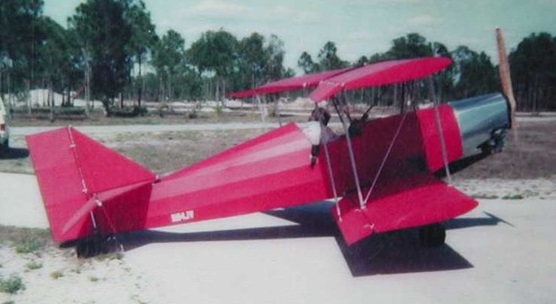
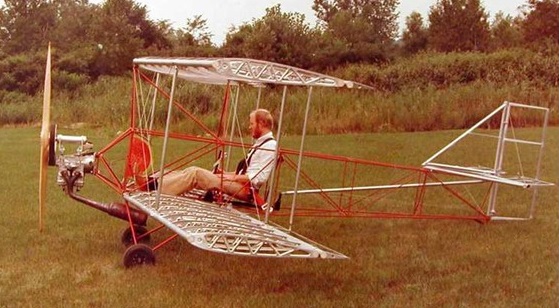
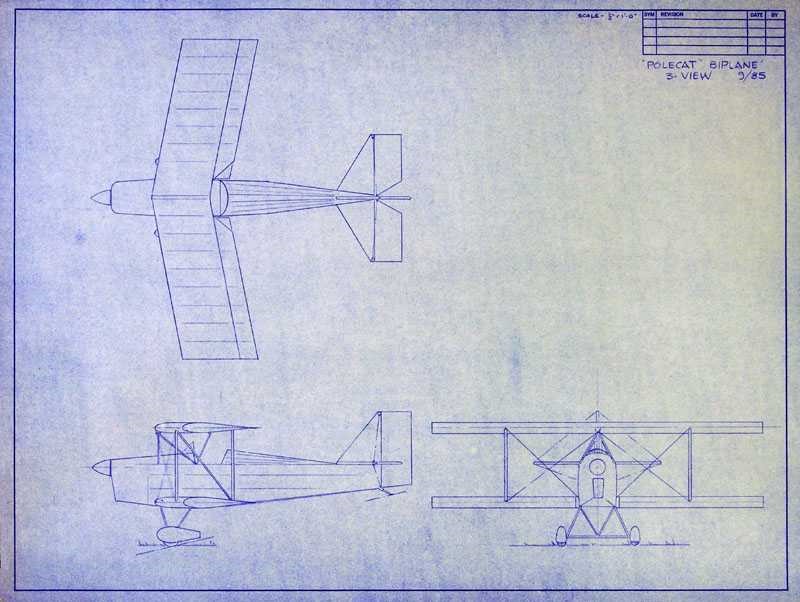
From North Fort Myers, FL, United States, an all-metal, fabric covered single seat aerobatic biplane first flown in September 1984 (Registration N84JV). Intermediate level aerobatic capabilities. Four full span ailerons on swept symmetrical wings (NACA 0012 airfoil) with no stagger and no dihedral. Wing incidence is 0° top and bottom. No aileron differential motion.
Fuselage is welded 4130 tubing, fixed tail surfaces are welded aluminum tubing with formed aluminum ribs, control surfaces are aluminum tube spars with formed ribs and trailing edges. Wings are aluminum tube spars with press-formed aluminum ribs all bonded with aluminum castings at the structural attach points. All control surfaces feature ball bearing hinges. Aileron and elevator controls are pushrod operated, the rudder is cable operated.
All flying and landing wires are fixed length wire rope with swagged fittings. Tension is provided by the interplane struts which feature left and right hand threads allowing them to be length adjusted to tension the wires. This design allows for easy disassembly and reassembly and rigging for trailer transport between airshows.
Various engines including Rotax 532 and Kawasaki 750 Turbo running a 100″ diameter prop through an integral 5:1 gearbox. Fuel tank is wedge-shaped (like a section of a watermelon) welded aluminum with a flop tube for inverted flight. Rigid main landing gear, no brakes, tailskid (later with swiveling/locking tailwheel and brakes). BRS eqiupped.
Engine: Rotax 582 Wing Span: 18 feet Empty Wt: 278 lb for first flight, 425 lb with larger engines and mods Gross Wt: 525 lb with Rotax, later 700 lb Top Speed: 80mph (uncowled Rotax 532) Stall Speed : ~40mph Roll Rate: 180°/sec @ 80mph Fuel: originally 3 USgallons, later 6 USgallons Endurance: Approximately 30 minutes Structure: ± 6g (Limit)
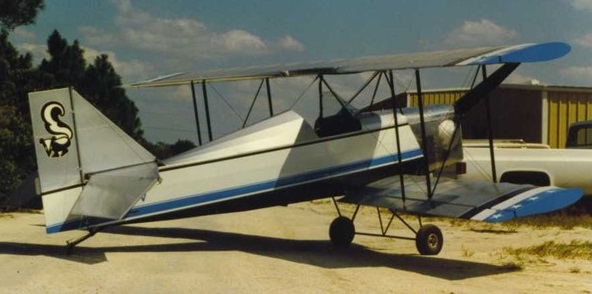
In late 1920s three models of two-seat sport or training biplane (the Arrow Sport and Arrow Sport Pursuit) were being made with steel-tube airframe and wooden wings. The wings were fully cantilever, but have interplane struts to comply with FAA regulations.
Designed by Swen Swanson in 1926, the two-seater had a side-by-side cockpit and no interplane struts. The wing was attached directly to the top of the fuselage, but cosmetic struts were later added to allay the concern of pilots.
The 1928 model offered 60hp Detroit Air Cat and Anzani engines.
About 100 of the Arrow A-2-160 Sport were built, powered by a 60 hp Le Blond engine. The original price was $3485.
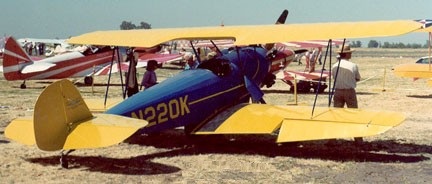
Arrow Sport N220K
The only 1929 Sport Pursuit (ATC 2-110) built, N853H, was priced at $3,485 and renamed Sport K in 1935.
Sport Engine: 35hp Anzani Wingspan: 25’6″ Length: 19’3″ Seats: 2
Arrow A-2-160 Sport Engine: 60 hp Le Blond Prop: Hartzelll 6 ft 10 in / 12.08 m dia. Wingspan: 25 ft 10 in / 7.87 m Length: 19 ft 4 in / 5.89 m Empty weight: 900 lb / 408 kg Max weight: 1260 lb / 572 kg Cruise: 75 mph Seats: 2
Sport K Engine: 100hp Kinner K-5 Wingspan: 25’10” Length: 19’6″ Useful load: 596 lb Max speed: 110 mph Cruise: 95 mph Stall: 35 mph Seats: 2

 All Aero