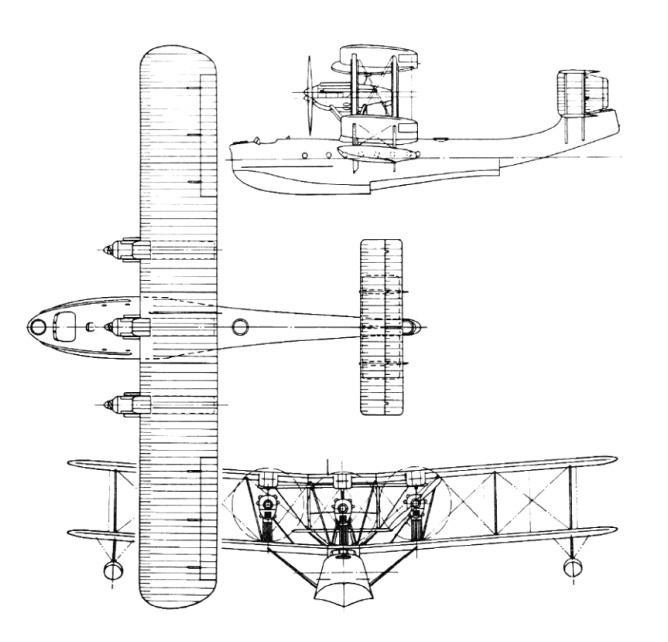
The Blackbrn Iris was designed as a long range, ocean going aircraft to augment the coastal patrol services Supermarine Southamptons. Only one squadron was equipped with Iris aircraft, first with the Mk.III which later, by modification, became the Mk.V, and ultimately with what might have been a later mark, but was designated “Perth”. The Armament of the Iris consisted of Lewis guns in bow and midship positions with a third one at the tail end of the hull which had only a limited arc of fire. In the bow position, a one pounder gun, made by the Coventry Ordnance Works and consequently known as the Cow gun, could be mounted, and was once every year for demonstration purposes. The five-seat Iris was a biplane flying-boat. The first of only eight built flew on 19 June 1926. The single Iris I, powered by three 484.4kW Rolls-Royce Condor III engines, was converted into the II with 503kW Condor IIIA. It was followed by four Iris III with 503kW Condor IIIB engines (entering service with the RAF in 1930); a single Mk IV (the first prototype with 596kW Armstrong Siddeley Leopard Ill, mounted as two tractors and one pusher); and three V with 615kW (825 hp) Rolls-Royce Buzzard IIMS engines. A III was also brought up to V standard and the luxury of a roof over the pilot’s positions. No heating.
Iris I Engines: three 484.4kW Rolls-Royce Condor III
Iris II Engines: 3 x 503kW Condor IIIA
R.B.1B “Iris” III Engine: 3 x Rolls-Royce “Condor” IIIB, 503kW, 675 hp Take-Off Weight: 13376 kg / 29489 lb Empty Weight: 8640 kg / 19048 lb Wingspan: 29.57 m / 97 ft 0 in Length: 20.54 m / 67 ft 5 in Height: 7.77 m / 25 ft 6 in Wing Area: 207.07 sq.m / 2228.88 sq ft Max. Speed: 190 km/h / 118 mph Cruise Speed: 156 km/h / 97 mph Ceiling: 3230 m / 10600 ft Range W/Max.Fuel: 1287 km / 800 miles Crew: 5 Armament: 3 x 7.7mm machine-guns, 900kg bombs
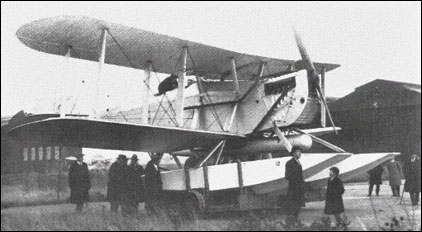
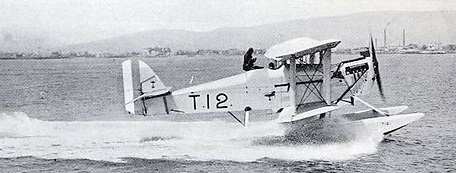
In 1925 the Blackburn Aeroplane & Motor Co concluded an arrangement with the Greek Government to organise an aircraft factory at Phaleron, near Athens, Greece. The EAF / State Aircraft Factory constructed a series of Velos two seat torpedo planes, designed by Blackburn; a series of Armstrong Whitworth Atlas two seat fighters; and a series of Avro 504O and 504N trainers.
Greek built Velos taking off in Phaleron Bay
Engine: 1 x 450hp Napier Lion V Take-Off Weight: 2815 kg / 6206 lb Empty Weight: 1766 kg / 3893 lb Wingspan: 14.78 m / 48 ft 6 in Length: 10.82 m / 35 ft 6 in Height: 3.73 m / 12 ft 3 in Wing Area: 60.76 sq.m / 654.01 sq ft Max. Speed: 172 km/h / 107 mph Ceiling: 4298 m / 14100 ft Range: 580 km / 360 miles Crew: 2 Armament: 1 x 7.7mm machine-gun, 4 x 100kg bombs or a torpedo
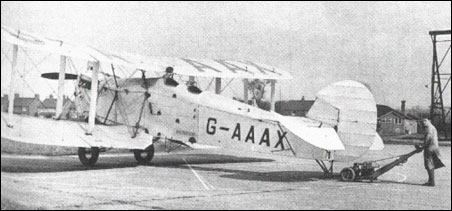
The Blackburn Bluebird was the first British side-by-side two-seater to enter production and 79 were built in various marks with engines ranging from 80 to 100hp.
The Bluebird was of metal frame construction and used a 100 hp de Havilland Gipsy I engine. The streamlined fuselage was fabric covered, and the two seats were side-by-side. Dual controls were fitted.
Not only was the Bluebird manufactured by Blackburn, but also by Saunders-Roe at Cowes. Wings were also sub-contracted by Suanders-Roe to Boulton & Paul Ltd of Norwich. The Saunders-Roe aircraft sales were handled by Auto-Auctions Ltd.
The L.1C Bluebird IV sold for £795, later reduced to £695.
The Hon Mrs Victor Bruce flew one solo around the world between 25 September 1930 and 20 February 1931.
Bluebird IV: Engine: Armstrong Siddeley Genet Major
L.1C Bluebird IV Engine: 100 hp de Havilland Gipsy I Max level speed: 120 mph Cruise speed: 85 mph Max ceiling: 15,000 ft Max range: 320 miles Seats: 2 side-by-side
Two prototypes, first flown in 1924. No production.
Engine: 1 x 1000hp Napier Cub Take-Off Weight: 8635 kg / 19037 lb Empty Weight: 4373 kg / 9641 lb Wingspan: 26.82 m / 87 ft 12 in Length: 16.46 m / 54 ft 0 in Height: 5.89 m / 19 ft 4 in Max. Speed: 185 km/h / 115 mph Ceiling: 3597 m / 11800 ft Range: 2898 km / 1801 miles Armament: 3 x 7.7mm machine-guns, 4 x 250kg bombs or a torpedo
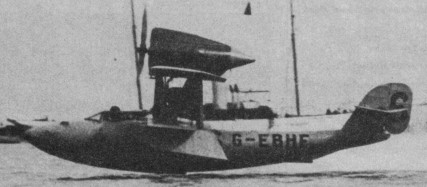
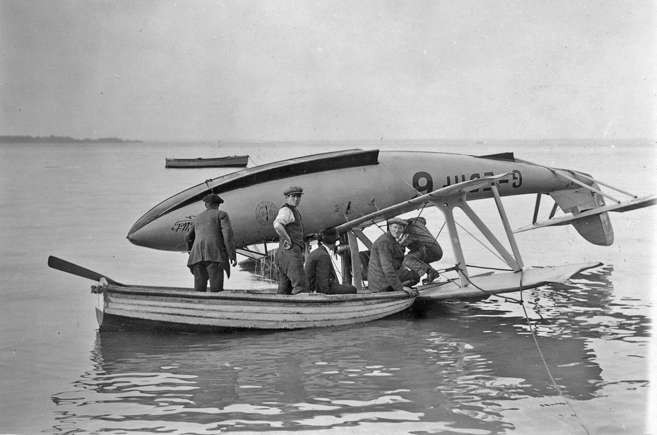
Robert Blackburn announced in March 1923 that his company, the Blackburn Aeroplane and Motor Co Ltd of Leeds, was to build an entry for the 1923 Schneider Trophy Contest, and the event was set for 28 September, with Cowes, on the Isle of Wight, as the starting and finishing point. The aircraft was to be a single-seat flying boat and the company had only worked on one flying boat – before, the NAB single-seat fleet escort bomber of 1918 and that had never been completed. Blackburn’s chief test pilot, Reginald W. Kenthworthy, wanted the aircraft to be ready for test flying in August, a month before the race, so that any problems could be resolved and he could gain some handling experience on an untried prototype.
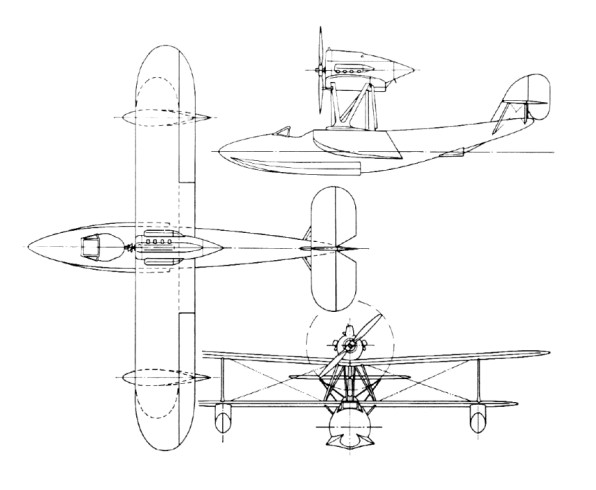
The design of the aircraft was largely determined by the use of the hull of the NAB, a streamlined structure which comprised circular wooden formers separated by stringers and planked with diagonal mahogany strips in two layers crossing each other at right angles. The Pellet’s hull, adapted from the abandoned N.1B fleet escort bomber, featured Linton Hope’s smooth, two-step mahogany construction. The aircraft had a compact biplane layout with a Napier Lion engine perched above the top wing. Flush radiators cooled it, and the pilot sat ahead of the propeller. To this hull was added, a biplane wing structure, comprising single-bay sesquiplane wings, the lower wing being of less span and chord than the upper and having no ailerons. The wing structure was attached to the top of the hull and on the top centre section, supported by N struts, was mounted a 450 hp Napier Lion, in a close fitting, streamlined nacelle. It was the engine from the Gloster Bantel, which had won that year’s Aerial Derby. Wooden wingtip floats were fitted beneath the outboard N struts of the narrow-gap wings. The open cockpit had a well raked windscreen and there was a streamlined fairing behind the he pilot’s head. A strut-braced tailplane was Positioned half-way up to the fin. The flying boat was eventually named the Pellet and the civil registration G-EBHF was allotted to it on 23 July. Despite efforts to complete the Pellet on time, its engine was not available until August and it was not finished until the first week of September. After some engine runs it was launched down the Brough shipway with Kenworthy in the cockpit. Unfortunately, it was caught by the Humber tide and the crosswind, dipped its starboard wingtip float and turned turtle and sank, ejecting Kenworthy into the river. It was only three weeks before the contest, but Robert Blackburn was undeterred. The Pellet was stripped, repaired and given larger wingtip floats and the engine was returned to Napiers for cleaning. Five days before the event, the Pellet was again ready, but, as there was no time to fly it at Brough, it was sent by rail to Fairey’s yard at Hamble, Southampton, for assembly and testing. On 26 September, only two days before the contest and the day before the preliminary tests, the Pellet was relaunched, now displaying the racing number 6 on its fuselage and rudder. During the take-off run it shipped a lot of water, but took off successfully. Kenworthy then found that he needed all of his strength on the control column to prevent the Pellet diving, as it was extremely nose-heavy. To complicate matters, the wing-mounted recessed radiators proved inadequate and the cooling water boiled. With no choice but to alight, Kenworthy put the troublesome machine down on the sea just past the RAF seaplane base at Calshot and was eventually retrieved by a motor boat from S.E. Saunders Lid, which towed it to Cowes. Working through the night, Saunders’ staff fitted a large Lamblin ‘crab-pot’ radiator beneath the engine nacelle and bypassed the wing radiators. The original two-bladed wooden aircrew had been damaged by spray so a two-bladed metal unit was, installed. The fin chines were reinforced and adjustments were also made in an attempt to settle the problem with the centre of gravity. By 11.48 next morning, just before the final launching time for the navigability and watertightness tests, the Pellet was ready, However, as Kenworthy began his takeoff run down the River Medina, a heavy swell turned the machine slightly to the right so that it was heading straight for two rowing boats. Kenworthy tried to change direction: ‘the machine, travelling at about 140 mph jumped and jumped’, Kenworthy told a Daily Graphic reporter. It then left the water in a stalled attitude, coming down twice with great force before it tipped over to starboard. The wingtip float touched the water and the Pellet made a final leap before diving nose down and turning right over.
Kenworthy was picked up unharmed by Lord Montagu of Beaulieu in his motor boat, fainted and was revived by artificial respiration. He had been under the hull for 61 seconds. The Saunders works manager, Mr Newman, recovered the Pellet that night, but this time it was beyond repair. Robert Blackburn never built another Schneider Trophy racer.
Engine: One 450 hp Napier Lion W-12 Upper span: 34 ft Lower span: 29 ft 6 in Length: 28 ft 7 in Height: 10 ft 8 in Maximum speed (estimated): 122 mph
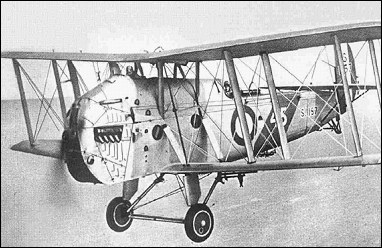
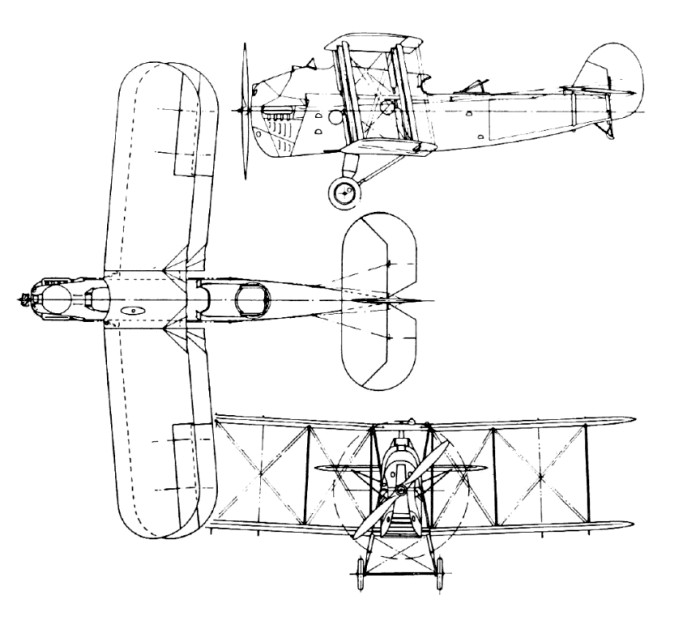
The Blackburn was a 1922 carrier-borne Fleet spotter-reconnaissance biplane, accommodating a pilot in an open cockpit in front of the upper wing leading edge. A wireless operator/gunner and a navigator/observer were provided with a cabin inside the fuselage and only needed to venture out into the open for observation or to use the rear-mounted Lewis machine-gun. Thirty production Blackburn Is, with 335kW Napier Lion IIB engines, were built. The type first entered service on board HMS Eagle in 1923. These were followed by 29 346kW Napier Lion-engined Blackburn IIs, entering service in 1926. All were replaced by Fairey IIIFs in 1931.
Blackburn II Engine: 346kW Napier Lion Take-off weight: 3,022 kg / 6648 lb Wingspan: 13.87 m / 45 ft 6 in Length: 11.02 m / 36 ft 2 in Max. speed: 157 km/h / 98 mph Armament: 2 x 7.7mm machine-guns
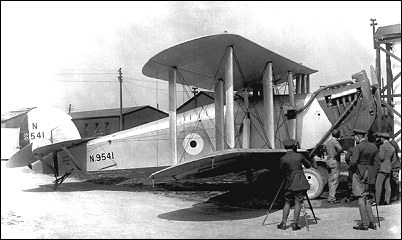
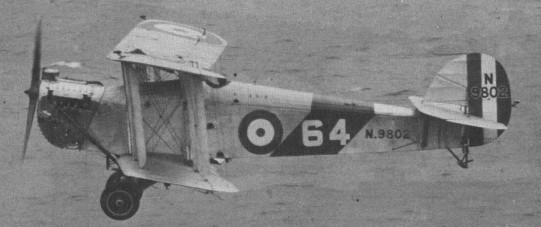
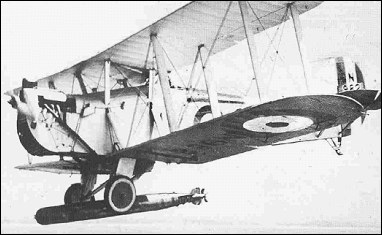
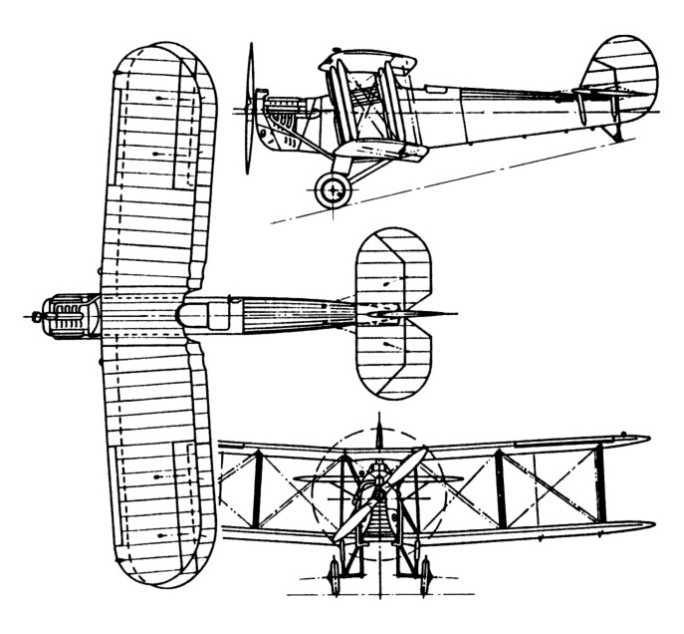
The 1921 Dart was the FAA’s standard single-seat torpedo bomber from 1923 to 1933. Similar to the Blackburn Swift but with reduced wing span, it could carry a torpedo or underwing bombs.
A batch of 32 were ordered by the Fleet Air Arm in August 1924.
The Dart first entered service with No 460 Flight in 1923 on board HMS Eagle, stationed in the Mediterranean; and with Nos 461 and 462 on board HMS Furious, based in home waters. Shore training was by D3 Flight at Gosport. The aircraft’s low stalling speed of 70km/h enabled it to pioneer the technique of deck landing by night on HMS Furious in 1926. In 1928 Nos 463 and 464 Flights embarked on HMS Courageous for service in the Mediterranean and in the following year a single example was delivered to No 36 Squadron, RAF, for smoke-screen trials. Three Darts were also converted into two-seat advanced-training seaplanes for use on the River Humber by Blackburn’s RAF Reserve School, being used between 1925 and 1929.
Production ended in 1928 after the 117th Dart had been completed.
Engine: 1 x Napier Lion IIB, 335kW Take-Off Weight: 2898 kg / 6389 lb Empty Weight: 1634 kg / 3602 lb Wingspan: 13.87 m / 45 ft 6 in Length: 10.77 m / 35 ft 4 in Height: 3.94 m / 12 ft 11 in Wing Area: 60.76 sq.m / 654.01 sq ft Max. Speed: 172 km/h / 107 mph Ceiling: 3109 m / 10200 ft Range: 483 km / 300 miles Armament: 1 x 240kg bomb or a torpedo
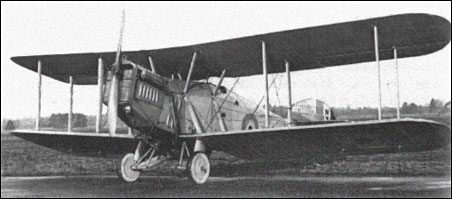
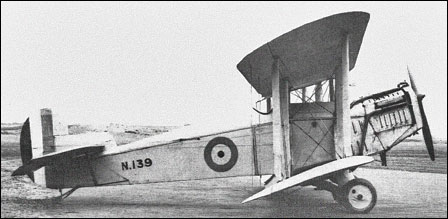
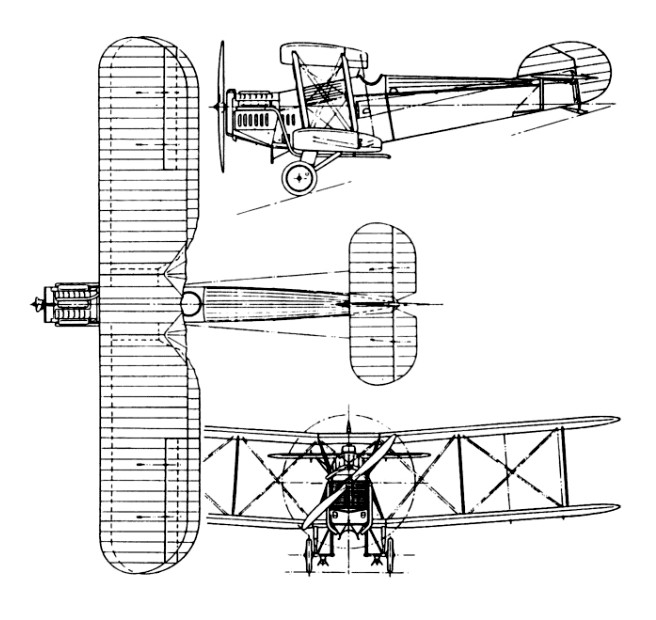
The Blackburn T1 Swift was a private venture torpedo bomber developed by the Blackburn Aeroplane and Motor Company primarily for export sales (whilst having regard to the desire of the Air Ministry to replace the Sopwith Cuckoo). The prototype, designed by Major Frank Arnold Bumpus, was shown in near-complete form at the Olympia Aero Show in July 1920.
The Blackburn T1 Swift was a large conventional single seat two-bay tractor biplane with divided undercarriage legs to accommodate a torpedo. It was also provided with folding wings for stowage aboard ship. The longerons sloped down ahead of the pilot’s cockpit to improve the forward view for deck-landing.
On the first flight in September 1920, the first prototype was found to be seriously tail-heavy and barely controllable. It was safely landed after a wide and flat circuit at low level. The balance of the aircraft was quickly restored by applying a few degrees of sweep to the outboard wing panels.
The prototype was sent for trials at Aeroplane and Armament Experimental Establishment (A&AEE) at Martlesham Heath on 21st December 1920, carrying an RAF serial (N139). At Martlesham, it was tested with the Mk VIII and the Mk IX 15-inch torpedo and these trials resulted in the adoption of a revised rudder geometry. After further minor modifications, it proceeded to conduct deck landing trials on HMS Argus in May 1921.
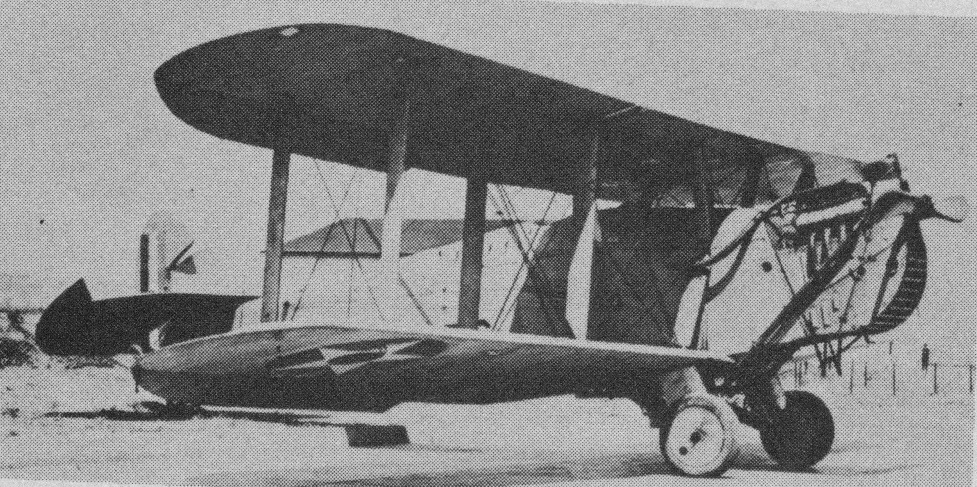
Blackburn then sought export orders for the type, obtaining sales for two aircraft to the US Navy (A-6056 and A-6057) which were to be known the Blackburn Swift F. Later, a further two Blackburn Swift II aircraft were purchased by the Imperial Japanese Navy, as well as a further three (M-NTBA, M-NTBB and M-NTBC) which were sold the Spanish Navy. The export aircraft featured a sloping, front radiator and a further revision to the tail surfaces.
USN A-6056
Such was the promise of the design that it was adopted (following minor modifications such as a 35-inch reduction in wingspan) as the standard Fleet Air Arm torpedo aircraft, subsequently renamed the Blackburn T2 Dart.
Engine: 1 x 450hp Napier Lion IB Take-Off Weight: 2860 kg / 6305 lb Empty Weight: 1612 kg / 3554 lb Wingspan: 14.78 m / 48 ft 6 in Length: 10.82 m / 35 ft 6 in Height: 3.73 m / 12 ft 3 in Wing Area: 66.89 sq.m / 720.00 sq ft Max. Speed: 171 km/h / 106 mph Ceiling: 4572 m / 15000 ft Range: 564 km / 350 miles Armament: 4 x 100kg bombs or a torpedo
In 1916 large and heavy aircraft such as a torpedo-bomber might be able to take off given enough headwind, but not land again on the small ‘flying-off’ decks of the time. Floatplane operations required a ship to stop in potentially dangerous waters. Blackburn’s Blackburd of 1918 was designed to take off from a ship, jettison its wheels (quickly so they could be recovered) and then its axle so the torpedo could be dropped. At the end of its mission, it was to ditch next to the ship and hopefully be recovered. The Blackburd proved unstable in pitch, being nose heavy with or without a torpedo, and the rudder was ineffective, making deck landings virtually impossible.
Engine: 1 x 350hp Rolls Royce Eagle VIII Take-Off Weight: 2586 kg / 5701 lb Wingspan: 15.97 m / 52 ft 5 in Length: 10.64 m / 34 ft 11 in Height: 3.78 m / 12 ft 5 in Max. Speed: 153 km/h / 95 mph Crew: 1
The Blackburn Kangaroo was originally designed as a naval reconnaissance and bomber seaplane in 1916, but was later converted to a landplane.
Two complete prototypes were produced, the first flying in July 1916. These prototype aircraft, known collectively as the Blackburn GP (“GP” for “General Purpose”), featured floats and were designed for use as anti-submarine aircraft
From this, a land-based version was developed as the Blackburn R.T.1 Kangaroo (Reconnaissance Torpedo Type 1). Despite the sub-par performance output of the Rolls-Royce Falcon II series engines (250 horsepower), the Royal Air Force deliveries began sometime in January of 1918 with units made combat-ready the same year. After the sixth production aircraft was complete, an attempt to boost performance was made with the introduction of the Rolls-Royce Falcon III engines developing 270 horsepower each.
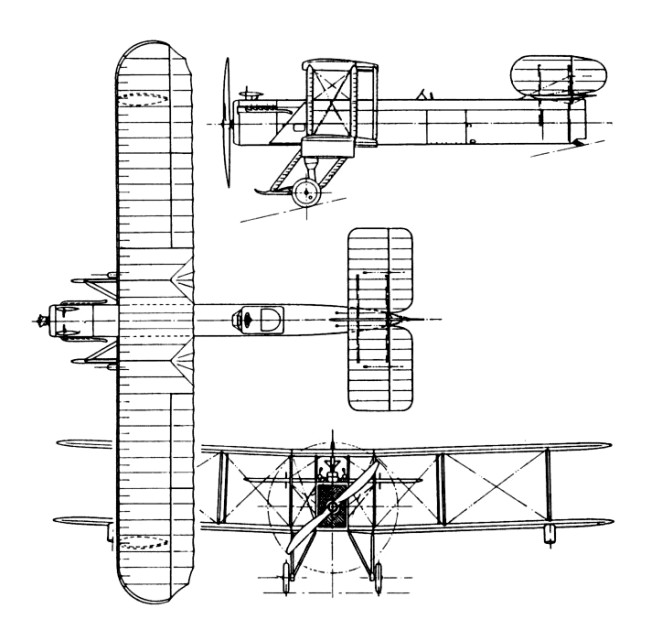
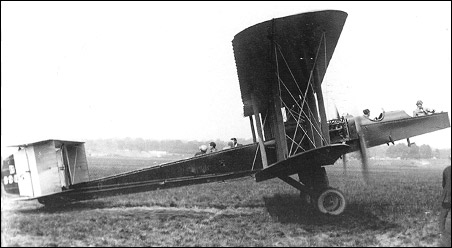
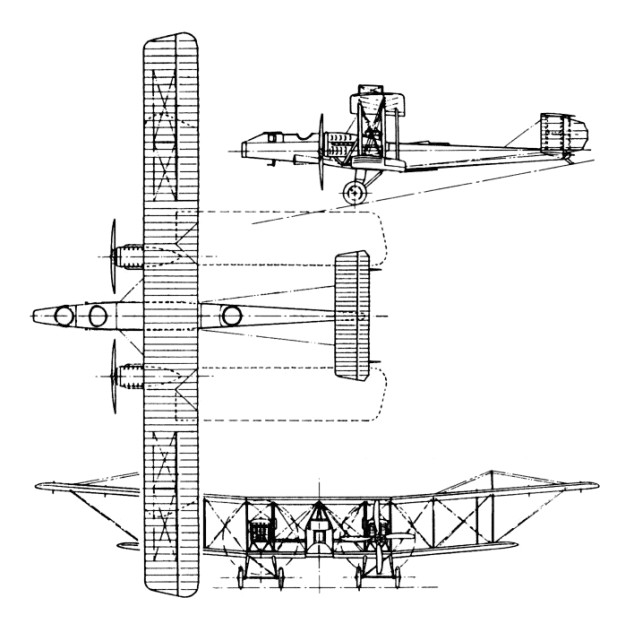
Externally, the Kangaroo featured a long box-type straight fuselage. A crew of three was positioned about the forward portion and consisted of the pilot in the center cockpit, a gunner in the forward cockpit and a rear gunner in the far aft cockpit. All three positions were separated from one another. The fuselage was straddled by two engines with either a two- or four-blade propeller. The undercarriage was fixed and featured individual two-wheel bogie front landing gear systems and a tail skid. The main landing gears were positioned just under the engines. Wings were biplane and featured three bays with parallel struts and associated cabling. The wings were of an unequal span. The wings – outboard of the engines – could be swiveled back via hinges and folded against the tail section. The long empennage was fitted with twin vertical tail fins and horizontal plane.
10 were issued to No 246 Squadron (the only unit to operate the type) at Seaton Carew, on the Durham coast, from January 1918. Operations began on 1 May, the Kangaroos flying more than 600 hours on anti-submarine patrols over the North Sea between then and 11 November. During that time they were credited with 12 U-boat sightings and 11 attacks, one of which, on 28 August, resulted in the shared destruction of UC 70 with the destroyer HMS Ouse.
After the war, Kangaroos were used in limited numbers as dual-control trainers up to 1929, when the aircraft was officially retired from service. Several also made their way into the civilian passenger market for a time, ferrying up to 8 people.
The Blackburn Kangaroo was operated exclusively with No. 246 Squadron of the British RAF as well as the Peruvian Army Flying Service. Only 20 of the type were ultimately produced.
Performance from the twin Rolls-Royce Falcon III liquid-cooled, V-12 270 horsepower engines netted a maximum speed of 98 miles per hour with a range out to 487 miles. A rate-of-climb of 480 feet per minute was possible as was a service ceiling of 12,992 feet. As a bomber the Kangaroo could call upon up to 920lbs of ordnance. Self-defense was handled by two 7.7mm Lewis-type machine guns, one mounted in the forward cockpit and the other in the rear cockpit.
Engine: 2 x 255hp Rolls-Royce Falcon II 12-cylinder inline engines Take-Off Weight: 3636 kg / 8016 lb Wingspan: 22.82 m / 74 ft 10 in Length: 14.02 m / 45 ft 12 in Height: 5.13 m / 16 ft 10 in Max. Speed: 161 km/h / 100 mph Ceiling: 3200 m / 10500 ft Armament: 2 x 7.62mm, 450kg of bombs Crew: 4
Engines: 2 x Rolls-Royce Falcon III V-12, 270hp each. Length: 44.16ft (13.46m) Width: 74.87ft (22.82m) Height: 16.83ft (5.13m) Maximum Speed: 98mph (158kmh; 85kts) Maximum Range: 487miles (784km) Rate-of-Climb: 480ft/min (146m/min) Service Ceiling: 13,000 ft (3,960m) Armament: 1 x 7.7mm Lewis machine gun in forward cockpit 1 x 7.7mm Lewis machine gun in rear cockpit Bombload: 920lbs Accommodation: 3 Hardpoints: 1 Empty Weight: 5,284lbs (2,397kg) Maximum Take-Off Weight: 6,288lbs (2,852kg)






 All Aero