Blanchard Brd.1

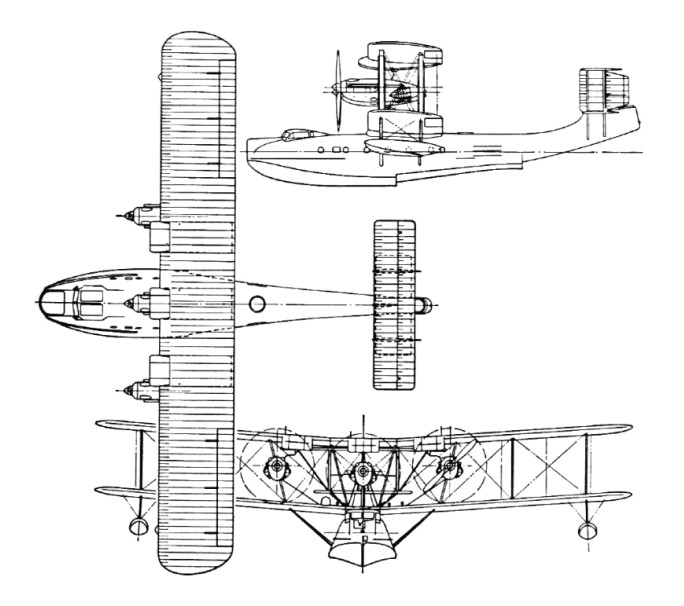
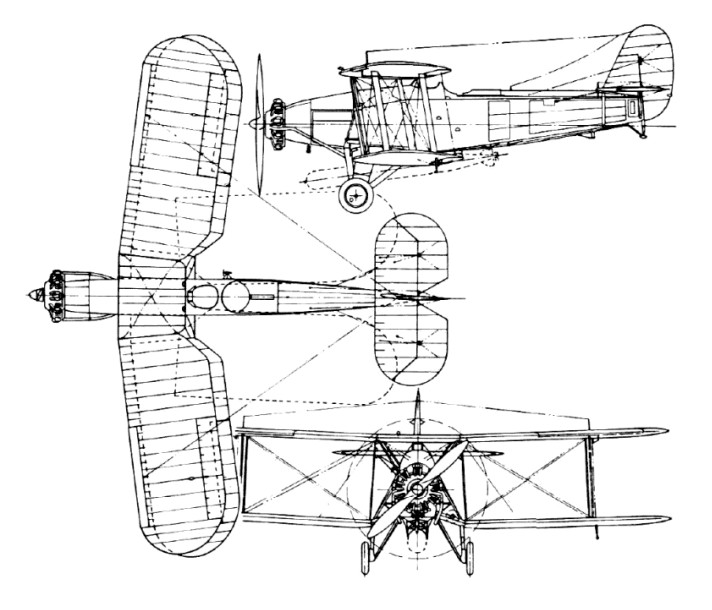
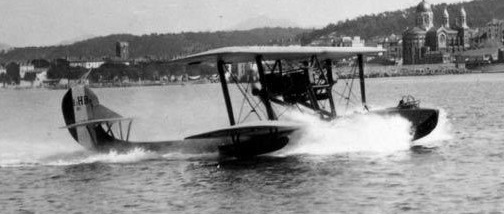
The Blanchard Brd.1 was a French reconnaissance flying boat used by the French navy in the 1920s. It was a large biplane with two engines mounted in the gap between the wings, each engine driving a pusher propeller.

First flown in 1922, twenty-four were built, primarily operated by the French Navy Aéronautique Maritime Escadrille 5R1 from 1923. They were retired in 1926.

In 1924, one Brd.1 was used to set several world altitude records for seaplanes.

Engines: 2 × Hispano-Suiza 8Fe, 205 kW (275 hp)
Wingspan: 19.00 m (62 ft 4 in)
Wing area: 85.0 m2 (914 ft2)
Length: 13.85 m (45 ft 5 in)
Height: 5.00 m (16 ft 5 in)
Empty weight: 2,465 kg (5,434 lb)
Gross weight: 3,930 kg (8,664 lb)
Maximum speed: 170 km/h (106 mph)
Service ceiling: 3,500 m (11,480 ft)
Crew: three, pilot, navigator, and gunner
Armament:
1 × 7.7 mm machine gun in flexible mount in bow
1 × 7.7 mm machine gun in flexible mount in rear fuselage
Bombload: 290 kg (640 lb)

Blanch Biplane / Experimental

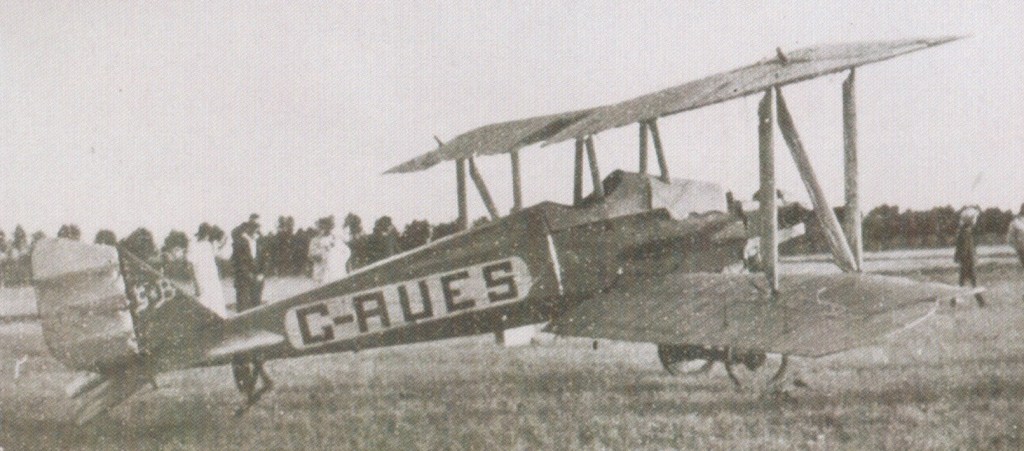
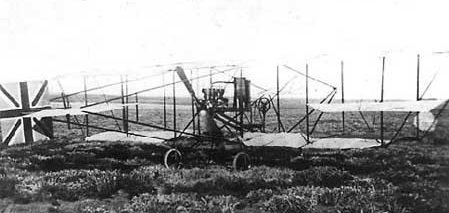
The Blanch Biplane, also known as the Blanch Experimental, was designed and constructed by Mr William James Blanch in the 1920s near Armadale, WA., Australia. Mr Blanch was an engineer who migrated to Australia following the conclusion of World War I. His aim was to design and construct a light biplane demonstrating the feasibility of producing an aircraft with a low powered engine which could be constructed cheaply and sold to future aviators. He was interested in aviation and began construction of a single-seat light biplane for which Certificate of Registration 106 and registration G-AUES (c/n 1) were allotted but not taken up. It was of wooden construction with fabric covering and was to be powered by a 19.3 kw (26 hp) Morehouse engine produced by the E B Heath Company of Chicago, USA, this company also building the popular, at the time, Heath Parasol monoplane.

The Australian Civil Aviation Branch (CAB) was approached by Mr Blanch in 1922 to inform them that material for construction had been ordered and he was founding a business to build and develop the aircraft, being backed for the for the construction of the prototype by Messrs Gordon and Clark who operated as Gordon Motor & Cycle Co of Perth, WA. Construction took place in the rear of a soft-drink shop in Third Avenue, Armadale. The CAB was supplied with technical data, calculations and drawings. In July 1922 Captain Frank Barnwell (1880-1938), Chief designer of the Bristol Aeroplane Company, made a structural analysis of the design. Estimated performance included a speed of 97 km/h (60 mph).

CAB inspections were made in January 1923 of the aircraft and the work was said to be highly creditable but detail workmanship was not up to the standard required for a Certificate of Airworthiness. Further CAB inspections in May and September 1923 required major changes to the construction, including the re-design of the wing with the original solid spars replaced by built-up units. At the latter inspections the fuselage, tailplane and elevators were covered and the fuel tank, instruments, controls and engine were installed but work on the wings had not advanced far.

The wings were completed by June 1924 and the CAB inspector stated the workmanship was in advance of anything done up to that time. By January 1925 the uncovered wings were attached to the fuselage and all controls connected. The aircraft was moved to Cullen’s Field off Railway Avenue where taxiing trials were commenced but it was found the engine would not exceed 1,150 rpm and thus not supply sufficient power.

Mr Blanch then applied to the CAB for £3,000 ($6,000) to set up a facility to build the design but this was not forthcoming. He was offered a 21.6 kw (29 hp) Morehouse engine built in the United States by Wright. In the event this engine was not imported and consideration was given to a chain driven converted Henderson motor-cycle engine. Certificate of Registration No 106 was then allotted. Further modifications to the aircraft were made, including installation of a new carburettor and strengthening of the undercarriage.

Soon after, financial support for the aircraft was withdrawn by the backers and the aircraft was left under a tree on Sherwood Estate. The wings were removed and placed in the loft of a barn but the fuselage suffered some damage from vermin and had to be moved to a shed at Maddington. It seems the aircraft was complete and ready for flight but was never flown.

The Civil Aviation Branch suggested an ABC Scorpion engine be procured to be installed at its cost, which could later be used in the Branch’s de Havilland DH.53s but this did not occur. The aircraft was still in existence during World War II but its final fate is not known. Mr Blanch died in about 1929.

Engine: One 19.3 kw (26 hp) Morehouse two-cylinder horizontally-opposed
Wingspan: 7.92 m (26 ft)
Length: 6.4 m (21 ft)
Max speed: 97 km/h (60 mph)
Initial rate of climb: 61 m/min (200 ft/min)
Loaded weight: 295 kg (650 lb)
Blake Bluetit

W.H.C. Blake and his brother built the little Bluetit monoplane from Simmonds Spartan Two Seater G-AAGN c/n 14, Simmonds Spartan Three Seater G-AAJB c/n 19 and some Avo 504 parts.

It was built at Winchester, UK, in the mid-1930s, powered by a 32 hp Gnat engine. It is not known if it ever flew.

It survived the war and later became part of the Shuttleworth Collection. Allocated BAPC.37 it was stored at Old Warden.

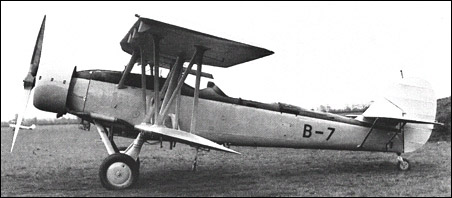
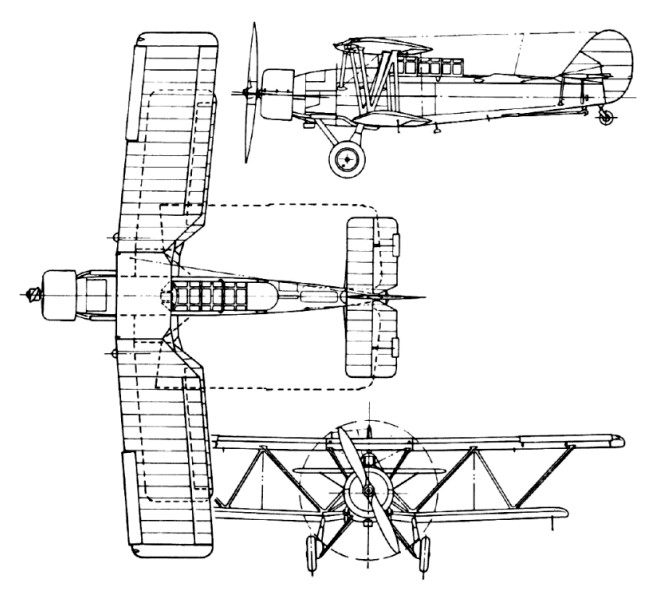
Blackburn B.7

One prototype, first flown on 28 November 1934. No production.

Engine: 1 x 700hp Armstrong Siddeley Tiger IV
Wingspan: 14.02 m / 45 ft 12 in
Length: 10.80 m / 35 ft 5 in
Height: 3.89 m / 12 ft 9 in
Wing area: 774.63 sq.m / 8338.04 sq ft
Max. speed: 233 km/h / 145 mph
Ceiling: 3200 m / 10500 ft
Range: 765 km / 475 miles
Crew: 2-3
Armament: 2 x 7.7mm machine-guns, 1 x 450kg or 2 x 227kg bombs or a torpedo

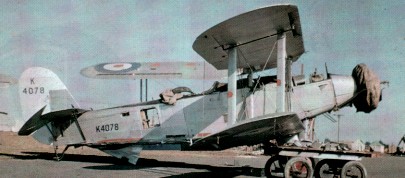
Blackburn B.6 Shark

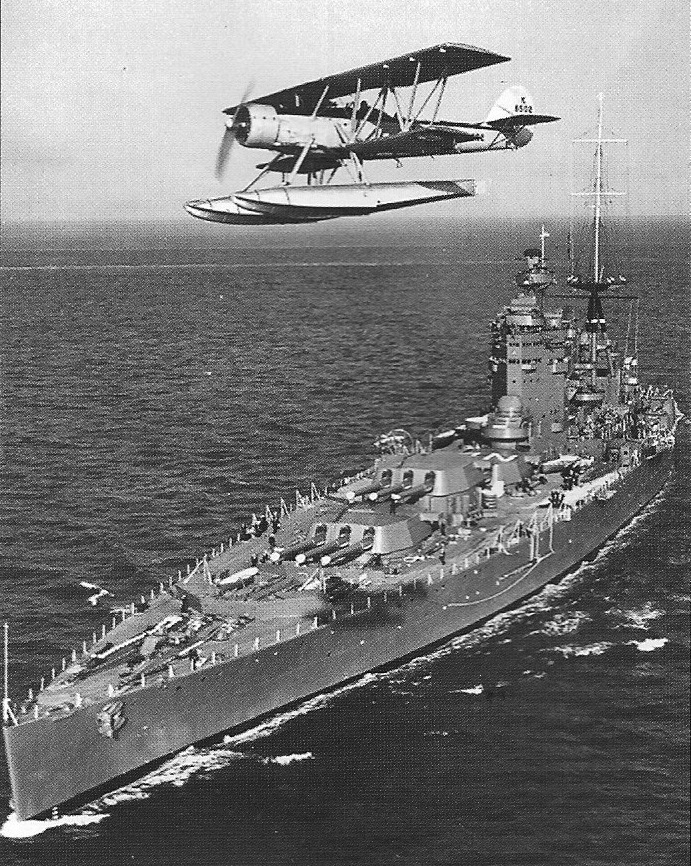
The Shark was a carrier-borne torpedo biplane with a buoyant metal-skinned fuselage and a 750hp Armstrong Siddeley Tiger IV two-row radial engine. Production for the Fleet Air Arm was undertaken between 1934 and 1937, with 238 Shark I, II and III (Pegasus radial engines) being built, many as seaplanes. Accommodation was provided for a crew of two and armament comprised one 680kg torpedo or equivalent bomb load, plus one forward-firing Vickers and one rear-mounted Vickers or Lewis machine-gun. Deck take-offs and landings were aided by the large camber-changing flaps fitted to the aircraft. Sharks served with Nos 820 and 821 Squadrons on board HMS Courageous, No 822 Squadron on board HMS Furious and No 705 (Catapult) Flight on the battleships HMS Repulse and Warspite. The type was also used at Air Gunnery Schools in the UK and Trinidad.
Six Sharks were also delivered to the Portuguese Navy in March 1936 and were based at Bom Succeso on the River Tagus, near Lisbon, where they operated for several years. Four aircraft were built for the Royal Canadian Air Force and 17 IIIs were built under licence by Boeing Aircraft of Canada during 1939-40, mainly for the RCAF.

Blackburn Shark over HMS Nelson

Blackburn B 6 Shark Mk.II
Engine: Armstrong Siddeley Tiger VI, 750 hp, 567kW
Length: 35 ft 3 in / 10.74 m
Height: 12 ft 1 in / 3.68 m
Wingspan: 45 ft 12 in / 14.02 m
Wing area: 489.009 sq.ft / 45.43 sq.m
Max take off weight: 8050.5 lb / 3651.0 kg
Weight empty: 4039.6 lb / 1832.0 kg
Max. speed: 130 kt / 241 km/h
Cruising speed: 103 kt / 190 km/h
Service ceiling: 15994 ft / 4875 m
Wing load: 16.4 lb/sq.ft / 80.0 kg/sq.m
Range: 543 nm / 1006 km
Crew: 2-3
Armament: 2x cal.303 MG (7,7mm), 680kg Torp.

Blackburn R.B.3A Perth

The Blackburn R.B.3A Perth development of the Iris was to replace the earlier flying-boat in service with No. 209 Squadron at Plymouth. The Perth differed from the Iris V primarily in having an, enclosed cockpit, and a hull covered with corrosion-resistant material. An improvement in armament was the installation of a 37mm gun in the bow position for anti-shipping work, but there was also an alternative rail-mounted 7.7mm machine-gun, as on the Iris.
The Perth’s service introduction came in January 1934 when the second aircraft was delivered to Plymouth. At that time the first was still under test at Felixstowe, but by 31 May 1934 all three from the first contract had been delivered. A fourth Perth had been ordered subsequently and flew in April 1934, but this was retained at the MA&EE Felixstowe for experimental work.
Problems with the tail unit required the flying-boats to be modified at Brough, keeping them out of service for several months. The first Perth was lost in heavy seas during September 1935, and two of the remaining three were eventually struck off charge in 1936. The last aircraft survived a further two years at Felixstowe.

Engine: 3 x RR Buzzard IIMS, 615kW
Take-off weight: 14740 kg / 32496 lb
Empty weight: 9500 kg / 20944 lb
Wingspan: 29.6 m / 97 ft 1 in
Length: 21.3 m / 69 ft 11 in
Height: 8.1 m / 26 ft 7 in
Wing area: 233.3 sq.m / 2511.22 sq ft
Max. speed: 213 km/h / 132 mph
Cruise speed: 175 km/h / 109 mph
Ceiling: 3500 m / 11500 ft
Range w/max.fuel: 2780 km / 1727 miles
Range w/max.payload: 1600 km / 994 miles
Crew: 6

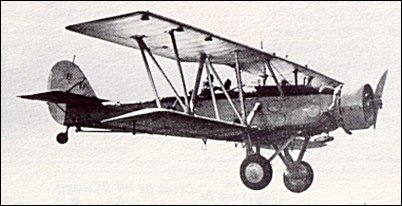
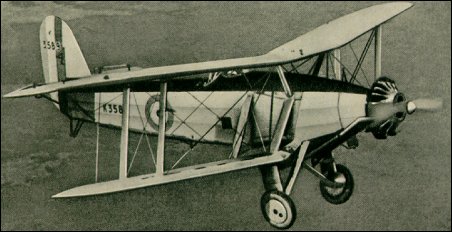
Blackburn B.5 Baffin

The Baffin was an improved version of the Ripon with a 421kW Bristol Pegasus radial engine in place of the water-cooled Napier Lion. Two prototypes and 33 production Baffins served with a single flight at Gosport for dummy deck-landing and torpedo practice and with Nos 810, 811 and 812 Squadrons on board the aircraft carriers HMS Courageous, Furious and Glorious respectively from 1934 until replaced by Sharks in 1936. One batch of 14 Baffins were shipped to Malta as reserve aircraft when the carriers exercised their squadrons in the Mediterranean.
More than 60 Ripons were re-worked and re-engined as Baffins during 1934-35. Twenty-nine surplus Fleet Air Arm aircraft were sold to the RNZAF during 1937-38 for the Wellington, Christchurch and Auckland Territorial GR Squadrons, which combined for wartime coastal patrols.

The Baffin was taken out of RAF service in 1937.

Engine: 1 x Bristol Pegasus IM-3, 405kW
Take-off weight: 3450 kg / 7606 lb
Empty weight: 1900 kg / 4189 lb
Wingspan: 13.9 m / 45 ft 7 in
Length: 11.6 m / 38 ft 1 in
Height: 4.1 m / 13 ft 5 in
Wing area: 63.4 sq.m / 682.43 sq ft
Max. speed: 218 km/h / 135 mph
Cruise speed: 160 km/h / 99 mph
Ceiling: 4500 m / 14750 ft
Range w/max.payload: 725 km / 451 miles

Engine: Bristol Pegasus II M-3, 580-660 hp.
Max speed: 136 mph.
Service ceiling: 15,000 ft.
Range: 450 miles.
Crew: 2
Armament: 2 mg + 2000 lb bombs.