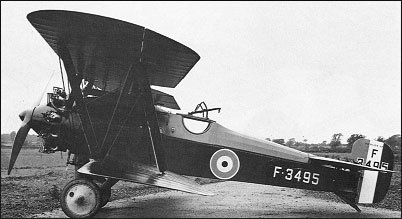
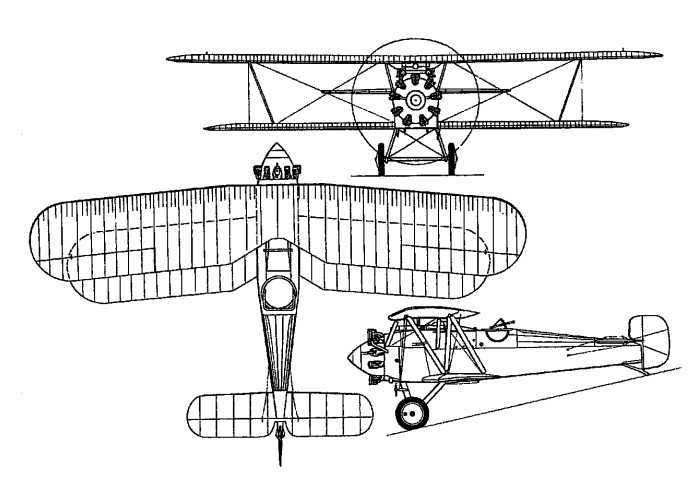
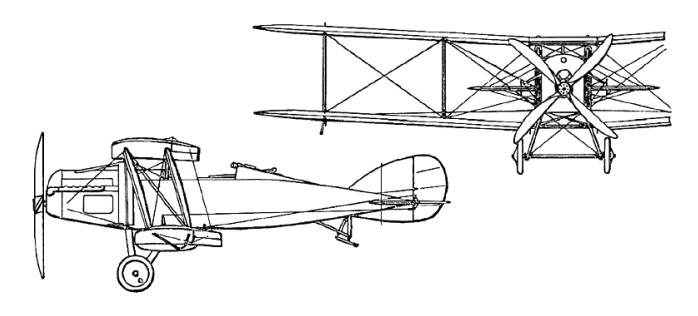
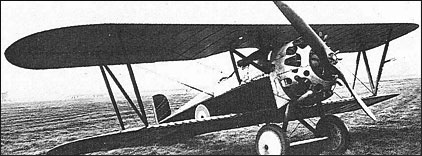
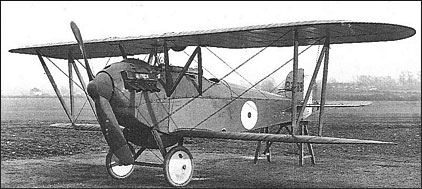
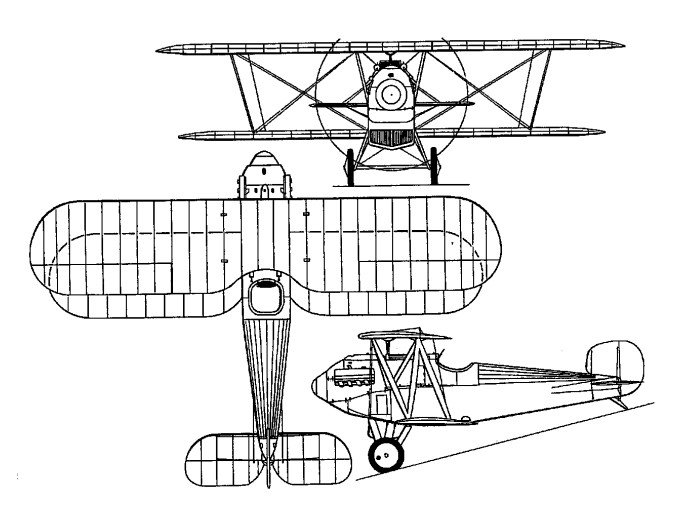
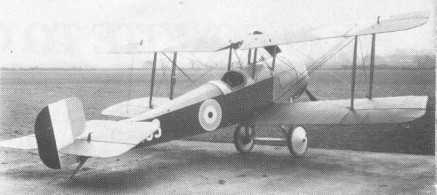
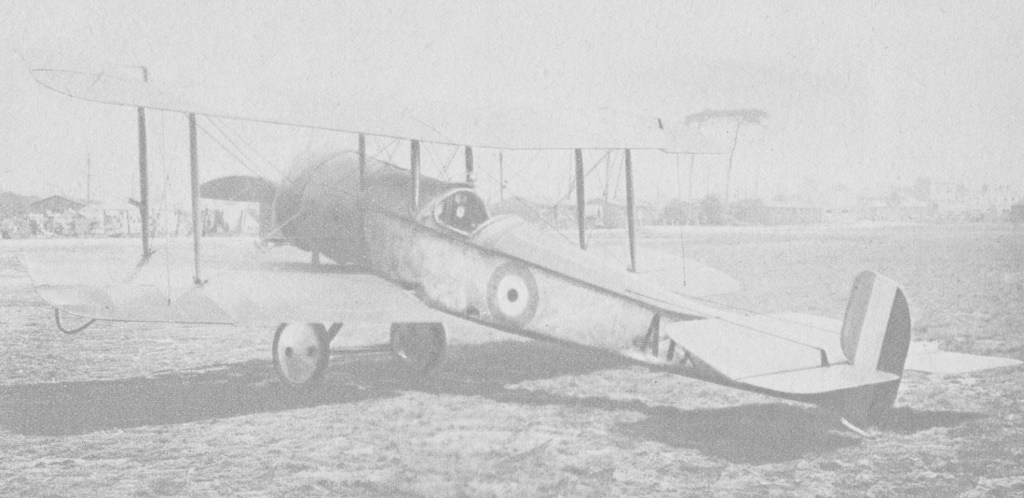
Intended as a successor to the F.2B two-seat fighter-reconnaissance aircraft, the F.2C Badger was designed for the 320hp ABC Dragonfly I nine-cylinder radial. Three prototypes were ordered. Armament comprised two fixed 7.7mm Vickers machine guns and a 7.7mm Lewis gun mounted on a Scarff ring in the rear cockpit. The first prototype suffered a crash landing because of an engine failure during its first take-off on 4 February 1919, but was rebuilt and flown. The second prototype was completed with a nine-cylinder Cosmos Jupiter of 450hp and flew on 24 May 1919, but later had a Dragonfly substituted for the Jupiter. A third aircraft was completed as the Badger II with a Cosmos Jupiter engine and redesigned wings, this being re-engined in 1921 with a 385hp Jupiter II (this power plant having meanwhile been taken over by Bristol) and subsequently being used primarily for engine development purposes.
F.2C Badger Engine: 320hp ABC Dragonfly I nine-cylinder radial Take-off weight: 1430 kg / 3153 lb Empty weight: 884 kg / 1949 lb Wingspan: 11.20 m / 36 ft 9 in Length: 7.21 m / 23 ft 8 in Height: 2.76 m / 9 ft 1 in Wing area: 33.18 sq.m / 357.15 sq ft Max. speed: 217 km/h / 135 mph
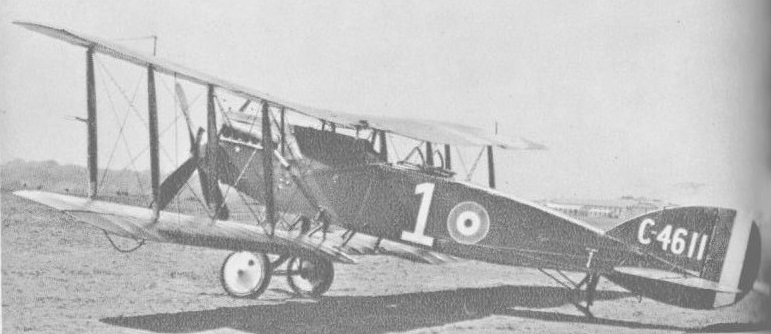
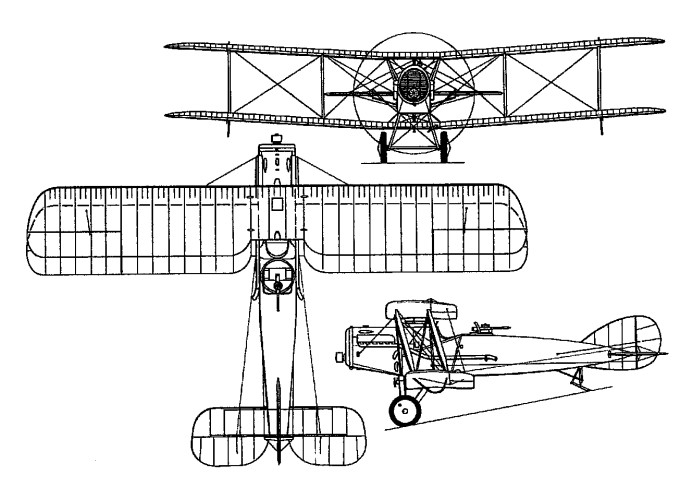
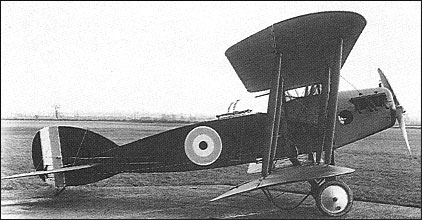
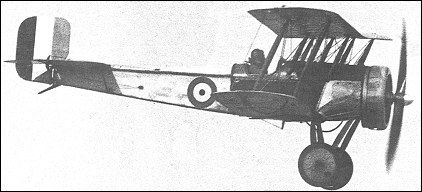
In March 1916 the design was begun of a 120 hp Beardmore powered tractor replacement for the B.E. pusher scouts. The type was designated R.2A and was intended to be armed with one wing mounted Lewis machine gun and another for the observer on a Scarff ring. At the same time a similar design using the 150 hp Hispano Suiza was produced, but lack of power from the Beardmore caused the designer, Captain Frank Barnwell, to produce a new design using the new 190 hp Rolls Royce Falcon and with the designation F.2A. This was an unequal span two bay biplane with its fuselage, tapered to the rear mounted mid way between the wings. Two prototypes were completed by the early autumn of 1916, one with the Rolls-Royce Falcon engine (A3303), the other with the 150 hp Hispano Suiza. Prototype A3303 was first flown at Filton on 9 September 1916, and after successful trials a first batch of 50 Rolls Royce powered production F.2As was ordered with a synchronized Vickers machine gun mounted in the top of the engine cowling in addition to the Scarff mounted Lewis, entering service with No.48 squadron in February 1917.
Meanwhile the second, Hispano Suiza powered, prototype had been modified to improve the pilot’s view and given a larger fuel tank, increased ammunition stowage and a modified lower wing affording a small increase in gross area. New horizontal tail surfaces of greater span and increased aspect ratio were introduced. Further production machines were ordered with the 190 hp Rolls-Royce Falcon I and the designation F.2B; after the first 150 the 220 hp Falcon II was substituted for a further 50, and production was intended to continue with the 275 hp Falcon III. F.2B deliveries began on 13 April 1917, and the success of this type led to the decision to re-equip all RFC fighter-reconnaissance squadrons with F.2Bs. By the autumn of 1917 production of the aircraft was outstripping that of the engine, and the 200 hp Hispano Suiza was substituted in the aircraft intended for reconnaissance squadrons, but this proved unreli¬able and was replaced by the 200 hp Sunbeam Arab in a modified nose. Some later F.2Bs were fitted with the 220 hp Siddeley Puma and a number of subcontractors were given contracts to produce the F.2B, 3050 being completed by the end of 1918.
Production continued until September 1919, by which time a total number of 4,747 had been completed, 3,126 of these by the parent company, the last to the RNZAF. Of the final batch, 153 were delivered with the 200hp Sunbeam Arab engine and 18 with the 230hp Siddeley Puma. When the RAF was re-established on a peacetime footing, the F.2B was adopted as standard for the army co-operation role and reinstated in production for this task as the Mk II, others being refurbished to similar standards. Fifty structurally revised aircraft delivered in 1926 were designated as Mk IIIs, all surviving aircraft of this mark being converted in 1928 as dual control Mk IVs for a final total of 3,576. It was finally withdrawn from RAF service in 1932.
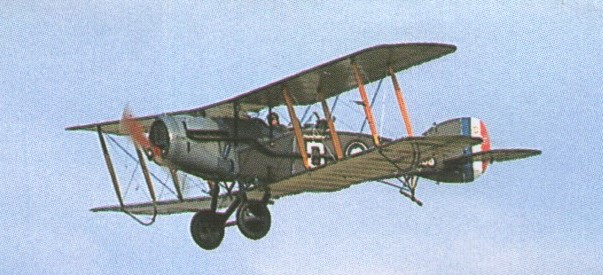
Bristol F.2B Mk IV
The greatest number of F.2Bs used the Falcon engines, however, and it was these fighter/reconnaissance machines which won the Bristol Fighter its reputation though only after some severe early setbacks. The first F.2A unit to arrive in France was 48 Squadron, RFC, in March 1917, and their first patrol ended in disaster. On April 5 six of their fighters were attacked by Manfred von Richthofen’s Jasta 11 and four were shot down. Further combat failures followed before it was realized that the fault lay in the tactics, not in the aircraft. Previous fighting scouts had the observer’s gun as their primary if not only armament, but the F.2As synchronized Vickers was a much more potent combat weapon, and once the pilot’s learned to aim the whole aircraft at the target the Fighter never looked back. F.2Bs of 48 Squadron accounted for 148 enemy aircraft by the time of the Armistice. As well as mounting offensive scouting patrols, F.2Bs were used as bomber escorts and bomber intercepters and on, ground attack missions, for which they could carry up to 12.9 kg (20 lb) fragmentation bombs. Because of their success their introduction to reconnaissance squadrons was delayed almost until the end of the war.
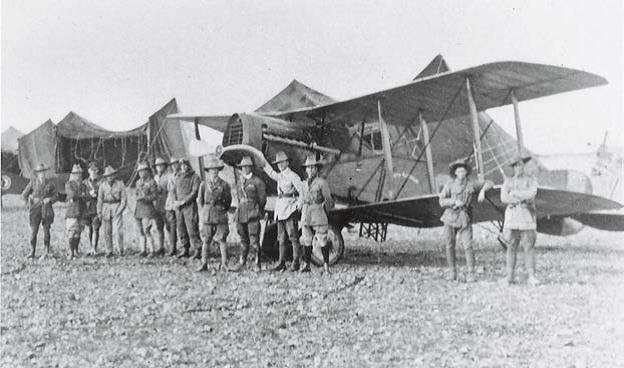
Bristol Fighters also served with distinction in Italy, while in Palestine they equipped 1 Squadron of the Australian Flying Corps. Ross Smith of 1 AFC scored the majority of his victories with the F2B. Numbers were also used by Home Defence squadrons. 3,101 were produced through the end of WW 1.
Personnel of 1 AFC with one of their Bristol Fighters in 1918
In July 1917 the Bristol Fighter was adopted by the British War Office as the standard model for all fighter-reconnaissance squadrons. This led to a greater demand for the aircraft than the British and Colonial Aeroplane Company could handle, so production was undertaken by several other companies. As production of the aircraft increased Rolls-Royce found they could not keep up with the demand for Falcon engines, so several alternative powerplants were tried before the 200 hp Sunbeam Arab was chosen. Although Bristol Fighters fitted with this engine tended to be somewhat underpowered, such was the demand for the aircraft that several hundred were delivered to the Royal Flying Corps.
It proved so successful that it equipped 14 RFC squadrons and remained in RAF service until 1932. After the First World War the F.2B became the standard RAF army cooperation aircraft, serving with the RAF until 1932 in Germany, the Middle East and India. Small numbers were supplied to Belgium, Greece, the Republic of Ireland, New Zea¬land, Norway and Spain, and SABCA in Belgium built 40, with 300 hp Hispano Suiza engines, under licence in 1925. In 1927 a Mexican purchasing commission placed contracts in the UK for 10 new Hispano-Suiza engined Bristol Fighters.
The Bristol Fighter saw service in New Zealand when a pair of First World War standard aircraft (H1557 and H1558) arrived in August 1919. A further five (6856-6859, and 7120) arrived in 1825 and 1926, and together they formed the backbone of the New Zealand Permanent Air Force and later the Royal New Zealand Air Force. Operating as Army co-operation, advanced trainers and aerial survey aircraft, they were used extensively, and for a time in the 1920s and early 1930s they were the only armed aircraft in the country. By the time the surviving four aircraft were withdrawn in 1936 (two had been destroyed in fatal crashes and one was withdrawn in 1930 because of its ago) they were the last Bristol Fighters in service anywhere in the world.
Production of the Bristol Fighter continued until 1919, by which time approximately 4469 had been built. In a modified form and known as the Mark IIIa, it continued in service in RAF Army Co-operation Squadrons until 1932.
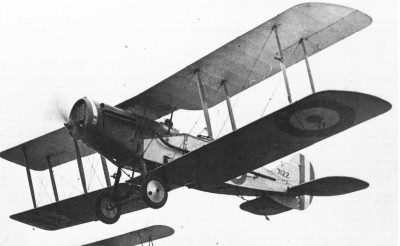
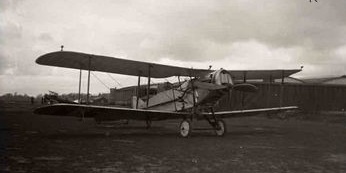
Bristol Fighter (Type 14) F2B Fighter Mk II serial 22 served Baldonnel from 4 Nov 1925 to July 1935.
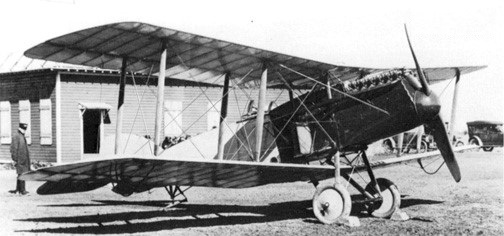
The US Army had become interested in the type when the United States entered the First World War in 1917, and a contract for 1,000 planes placed with Fisher Body Corp was cancelled and reassigned to Curtiss, to be powered by the 400hp Liberty 12. The Liberty proved too heavy for the airframe and was responsible for a series of crashes. McCook Field experiments on the pattern plane supplied by RAF (A7207) showed that its Hispano-Suiza was the ideal match, so the contract was cancelled in July 1918 after 26 planes (AS34232/34257) had been built as O-1. Most of those were rebuilt with a monocoque plywood fuselage and refitted with 300hp Wright-Hisso H, others experimentally with 280hp Liberty 8, and all redesignated as B-1.
Curtiss USAO-1
Further production as B-1 was then handed over to Dayton-Wright. Two prototypes of another modified F.2B design were produced as the B 3 and B 4 (later XB 1 and XB 2), and 40 production aircraft with the designation XB-1A, powered by 300 hp Wright engines and armed with twin Browning machine guns, were built by Dayton-Wright as night observation aircraft.
Bristol F2A Engine: 190 hp Falcon I. Span: 11.96 m (39 ft 3 in). Length: 7.85 m (25 ft 9 in). Gross weight: 1210 kg (2670 lb). Maximum speed: 177 km/h (110 mph).
F2B Fighter Engine: Rolls Royce Falcon III, 275 hp Wingspan: 39 ft 3 in / 11.99 m Wing area: 37.68 sq.m / 405.58 sq ft Wing chord: 5 ft. 6 in. Length: 25 ft 10 in / 7.87 m Height: 9 ft 9 in / 2.97 m Empty weight: 875 kg / 1929 lb Max take off weight: 2593.1 lb / 1176.0 kg Fuel capacity: 45 gal Max. speed: 110 kts / 203 km/h / 125 mph at SL Service ceiling: 10827 ft / 3300 m Absolute ceiling: 21,500 ft Range: 252 nm / 467 km Rate-of-Climb: 869ft/min (265m/min) Climb to 6500 ft: 6.5 min Endurance: 3 hours. Crew: 2 Armament: 1x MG 7,7mm Vickers, 1 or 2 x MG 7,7mm Lewis Bombload: 12 x 20 lb / 240 lb. (110 kg.)
F2B Engine: Sunbeam Arab, 200 hp Empty weight: 1733 lb Loaded weight: 2630 lb Wing area: 406 sq.ft Wing loading: 6.4 lb/sq.ft Armament: 1 x Vickers mg, 1 or 2 Lewis mg Crew: 2
F2B Engine: Hispano-Suiza, 200 hp Span: 39 ft 3 in Length: 24 ft 9 in Height: 9 t 6 in Empty weight: 1733 lb Loaded weight: 2630 lb Wing area: 406 sq.ft Wing loading: 6.4 lb/sq.ft Armament: 1 x Vickers mg, 1 or 2 Lewis mg Crew: 2 Climb to 6500 ft: 8.7 min
In March 1916 the design was begun of a 120 hp Beardmore powered tractor replacement for the B.E. pusher scouts. The type was desig¬nated R.2A and was intended to be armed with one wing mounted Lewis machine gun and another for the observer on a Scarff ring. At the same time a similar design using the 150 hp Hispano Suiza was produced, but lack of power from the Beardmore caused the designer, Captain Frank Barnwell, to produce a new design using the new 190 hp Rolls Royce Falcon and with the designation F.2A. This was an unequal span two bay biplane with its fuselage, tapered to the rear mounted mid way between the wings.
The first of two prototypes was flown on 9 September 1916, one with the Rolls¬-Royce engine, the other with the 150 hp Hispano Suiza. After successful trials a first batch of 50 Rolls Royce powered pro-duction F.2As was ordered on 28 August armed with a single forward-firing 0.393 Vickers machine gun controlled by a Constantinesco interrupter mechanism to fire through the propeller arc, and either single or twin 0.303 Lewis machine guns on a Scarff ring in the observer’s position.
Deliveries began early in 1917 and it entered service in March 1917 as the first British two-seat fighter. Compared to single-seat fighters of the day such as the Sopwith Pup and Camel the Bristol Fighter was huge, with a wingspan of almost 40 feet and weighing almost a ton fully loaded. Initial operational experience in April 1917 was disappointing, due to the combat techniques used. Confidence in the type was restored when newly-evolved methods were proved successful.
Meanwhile, the improved model had been evolved, the 51st and subsequent production aircraft being of this standard, and delivery of the F.2B resulting in the withdrawal from frontline use of the F.2A.
Take-off weight: 1210 kg / 2668 lb Empty weight: 783 kg / 1726 lb Wingspan: 11.96 m / 39 ft 3 in Length: 7.87 m / 25 ft 10 in Height: 2.89 m / 9 ft 6 in Wing area: 36.14 sq.m / 389.01 sq ft Max. speed: 177 km/h / 110 mph
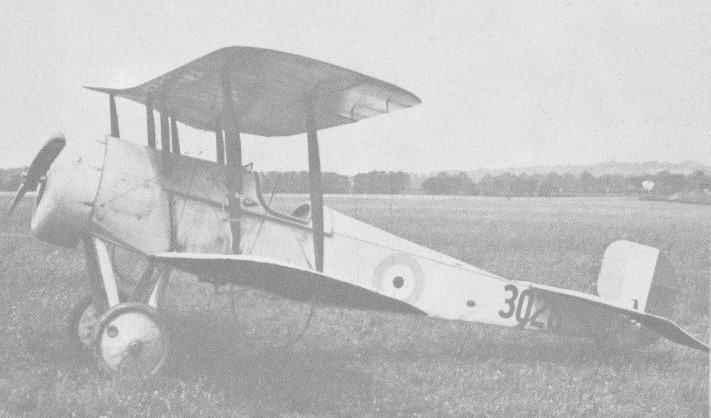
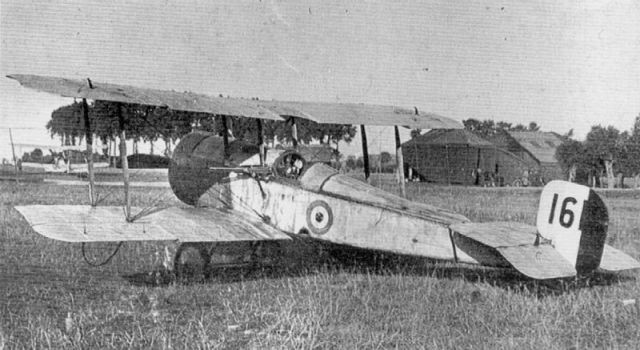
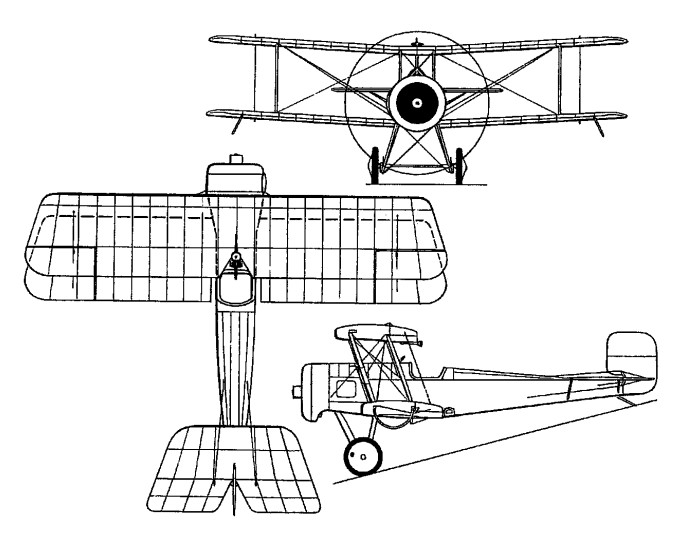
A derivative of the Scout D intended to meet an Admiralty specification for a two-seat fighter, the S.2A had side-by-side seating and was intended to be armed with a single 7.7mm Lewis gun. In the event, it was rejected by the Admiralty in favour of the Sopwith 1/2 Strutter, but work continued on the two prototypes at the request of the War Office which envisaged the type as potential an advanced trainer for the RFC. The two prototypes were completed in May and June 1916 respectively, being powered by the 110hp Clerget engine (although one was later re-engined with a 100hp Gnome Monosoupape), and were delivered to the Central Flying School at Upavon. They were found to be manoeuvrable and fast, but no further development was undertaken.
Take-off weight: 635 kg / 1400 lb Wingspan: 8.58 m / 28 ft 2 in Length: 6.48 m / 21 ft 3 in Height: 3.05 m / 10 ft 0 in Max. speed: 153 km/h / 95 mph
In 1916, Captain Barnwell, not satisfied with the Royal Aircraft Company R.E.8, of the Bristol Aeroplane Company produced the 120 hp Beardmore powered tractor R.2A.
This R.2A was a two-seat machine with a pilot-operated forward-firing synchronised Lewis Gun, and an observer close behind with a folding seat to enable him to stand and fire a single Lewis gun mounted on a rotating ring. To improve the pilot’s view, and the rear gunner’s forward field of fire, the wings were mounted low in relation to the fuselage. Towards the rear of the aircraft, the fuselage was tapered to a small cross section and about a third of the fin and rudder was placed below the horizontal tailplane; increasing the gunner’s field of fire in that direction. After some modification, an engine change and armament rethink, the company received an order for 50 aircraft. The first of these flew on 09 September 1916.
The R.2A was to have been powered by a 120 hp Beardmore engine, but by this stage Rolls-Royce had produced the 190 hp Falcon I. Bramwell decided that with the extra power provided by the Falcon I the R.2A could be transformed from a reconnaissance aircraft to a fighter, so it duly became the F.2A.
The problems with the Arab engine in the Scout F led to an investigation of possible alternative power plants, and it was decided to adapt the third prototype airframe to take a new 14-cylinder two-row Brazil-Straker (later Cosmos Engineering) Mercury radial of 347hp. Designated Scout F.1, the aircraft was first flown on 6 September 1918, and proved to possess an excellent performance, establishing new unofficial climb records in April 1919. By that time, further development of the Mercury engine had been abandoned and no more work on the Scout F.1 was undertaken.
Engine: Brazil-Straker Mercury 14-cylinder radial, 347hp Take-off weight: 1025 kg / 2260 lb Wingspan: 9.03 m / 29 ft 8 in Length: 6.09 m / 19 ft 12 in Height: 2.54 m / 8 ft 4 in Wing area: 24.15 sq.m / 259.95 sq ft Max. speed: 233 km/h / 145 mph
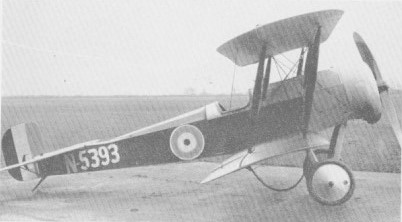
Originally intended for a 200hp Hispano-Suiza engine, the Scout F was initiated by Frank Barnwell in June 1917, subsequently being redesigned to take a 200hp Sunbeam Arab II eight-cylinder water-cooled engine. This power plant had been ordered into large-scale production in January 1917, before adequate testing had been undertaken.
Six prototypes of the Scout F were ordered, the first of these flying in March 1918, by which time it had been decided to complete only the first two aircraft with Arab engines. The Scout F possessed excellent flying qualities, but its Arab engine proved totally unreliable. Nevertheless, the second prototype was completed and flown, flight testing continuing into 1919. Armament comprised two synchronised 7.7mm Vickers guns.
Engine: 200hp Hispano-Suiza Take-off weight: 1002 kg / 2209 lb Empty weight: 651 kg / 1435 lb Wingspan: 9.03 m / 29 ft 8 in Length: 6.35 m / 20 ft 10 in Height: 2.54 m / 8 ft 4 in Wing area: 24.15 sq.m / 259.95 sq ft Max. speed: 222 km/h / 138 mph Armament: 2 x 7.7mm Vickers guns
A single-seat sports biplane designed by Frank Barnwell, was first flown on 23 February 1914, with an 80 hp Gnome engine, and retrospectively known as the Scout A,
Two Scout Bs completed six months later were intended for reconnaissance, were officially unarmed, but one of which was fitted with a rifle on each side of the fuselage and angled outward to avoid hitting the propeller when fired. They were sent to France.
The Scout B was followed by 161 Scout Cs (74 for the RN and 87 for the RFC) which, again, were officially unarmed, although in the field the fitting of pistols, rifles and carbines was common, while some RN Scouts carried 24-round canisters of Ranken darts which it was intended to use against Zeppelins.
Scout C
An installation of cavalry carbine on a later production Scout C enabled Capt. Lanoe Hawker of 6 Sqn to shoot down one enemy aircraft in flames, drive another down and damage a third in quick succession on July 25, 1915. All three enemy aircraft were armed with machine-guns and Capt. Hawker was awarded the Victoria Cross.
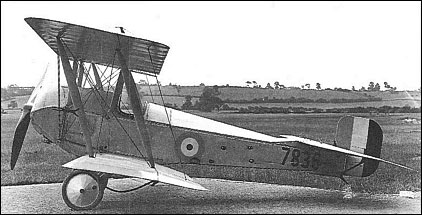
The Scout D was a revised design which, completed in November 1915, had provision for a fixed synchronised 7.7mm Vickers gun. The Scout D was the first model for which armament was officially intended, though relatively few of these had the synchronised Vickers gun and the armament of others varied considerably. Some having a 7.7mm fixed Lewis gun firing straight ahead without synchronising equipment and others having a movable Lewis above the upper wing.
Scout D
A number of modifications were made at Bristol’s and the type was varied from the D-1 to D-5. Engines varied from the 80 hp Gnome and Le Rhone to the 100 hp Gnome Monosoupape, 110 hp Le Rhone, and 130 hp Clerget. Over 200 were built before the type was abandoned.
Of the 210 examples built, 80 went to the RN, of which 50 had 100hp Gnome Monosoupape engines and the remainder the 80hp Gnome. Most of those delivered to the RFC ultimately had the 80hp Le Rhone engines.
The Scout C and D had early limited use by the Australian 1 AFC in Egypt where Lt L.J. Wackett used one in experiments with a synchronised machine gun.
Altogether 236 Scouts were delivered to the RFC, and 137 to the RNAS.
Some RNAS machines had a Lewis gun mounted above the top wing. RFC Scout D’s had a Vickers gun above their front fuselage.
Scout C Engine: 80 hp Le Rhone, or Gnome, or 110 hp Clerget Wing span: 24 ft 7 in Wing area: 198 sq ft Length: 20 ft 8 in Height: 8 ft 6 in Fuel capacity: 16 Gal Endurance: 2 hr Service ceiling: 11,000 ft
Scout C Engine: 80 hp Clerget Wing span: 24 ft 7 in Wing area: 198 sq ft Length: 20 ft 8 in Height: 8 ft 6 in Empty weight: 750 lb MTOW: 1089 lb Fuel capacity: 16 Gal Max speed: 94 mph at SL Endurance: 2 hr Service ceiling: 11,000 ft
Scout D Engine: 1 x Gnome, 80hp. Wingspan: 24 ft 5 in Wing area: 198 sq.ft Length: 20 ft 7 in Height: 8 ft 6 in Empty weight: 757 lb Loaded weight: 1195 lb Max speed: 98 mph at SL Service ceiling: 15,500 ft ROC: 385 fpm to 6500 ft Endurance: 2 hr 30 min Seats: 1
Scout D Engine: 1 x Le Rhone 9, 80hp. Length: 20 ft 8 in (6.02m) Wingspan: 27.33ft (8.33m) Wing area: 18.39 sq.m / 197.95 sq ft Height: 8 ft 6 in (2.59m) Maximum Speed: 100mph (161kmh; 87kts) Rate-of-Climb: 540ft/min (165m/min) Service Ceiling: 13,999ft (4,267m) Armament: 1 x 7.7mm machine gun Crew: 1 Empty Weight: 761lbs (345kg) Maximum Take-Off Weight: 1,250lbs (567kg)
Scout D Engine: 1 x Gnome Monosoupape, 100hp Max speed: 104 mph at SL
After first buying a Zodiac biplane from France, which Bristol proposed to manufacture, they settled on a copy of the Farman III which was a better design and unlike the Zodiac could be made to fly successfully.
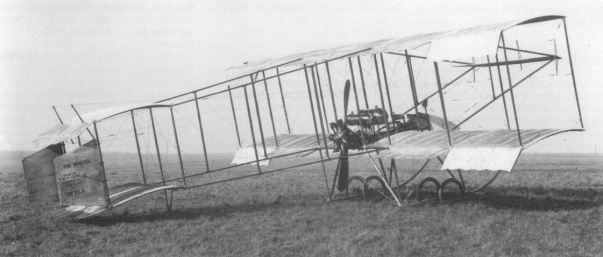
George Challenger, the company’s chief engineer at Filton, sfter seeing detailed drawings of the Farman III in Flight magazine, was pretty sure he could build a copy of the plane. A few weeks later, the first copy was constructed, using materials from the partially built Zodiac aeroplanes. The Farman copy is a tractor biplane having its upper and lower planes equal, directly superposed, and connected by 6 struts. The front struts are rigidly braced by cables; the rear ones free for warping. The fuselage is of quadrangular section. The chassis has four wheels.
The Boxkite, as it was named, was first flown on 31 June 1910 by Maurice Edmond at the company’s flying school on Salisbury Plain with a 37kW Gregoire engine and in September 1910 made the first military flight when it was used in a reconnaissance role during Army manoeuvres on Salisbury Plain, which led to the delivery of the first military aircraft as an army co-operation machine in May 1911.
Farman, not surprisingly, sued the British and Colonial Aeroplane Company for patent infringement. However, White was able to show Farman that they had made significant alterations to Farman’s design to improve it… so Farman dropped the suit. The Bristol Boxkite was the first plane to be built in mass quantity, with four purchased by the British War Office in 1911, and others sold to Russia and Australia.
This plane was simply called the No. 7. Best guess is that the initial Zodiac was No. 1, with the five partially-constructed Zodiac‘s taking the numbering up to No. 6.
The first Boxkite, No. 7, used fitted with a Grégoire 50 horsepower motor, but even before its first test flight, they swapped it out for a same output Gnome motor.
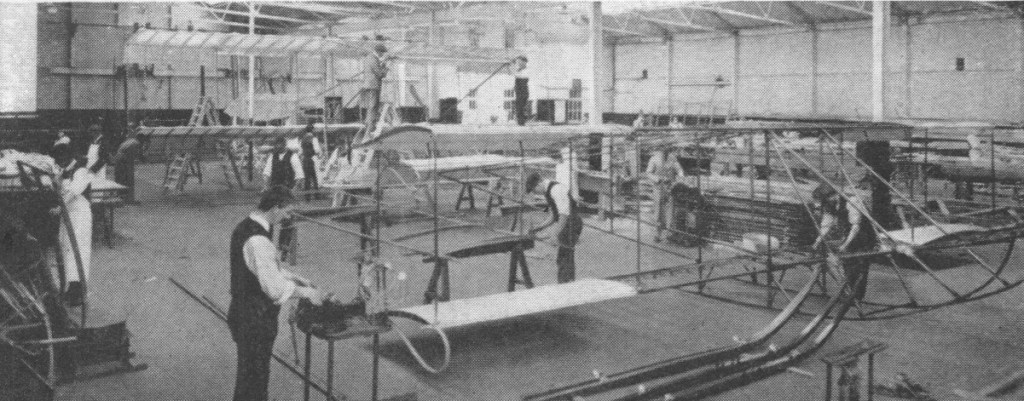
Boxkites under construction
For later trials, they put the Grégoire back in.
Boxkite No. 8 used an E.N.V. 50 horsepower motor.
Still, for almost all other aeroplanes, the company supplied the aeroplanes with the 50 horsepower Gnome rotary engine. Each motor was set just above the lower wing upon sturdy wooden beams, which, also held up the pilot and passenger seats up front.
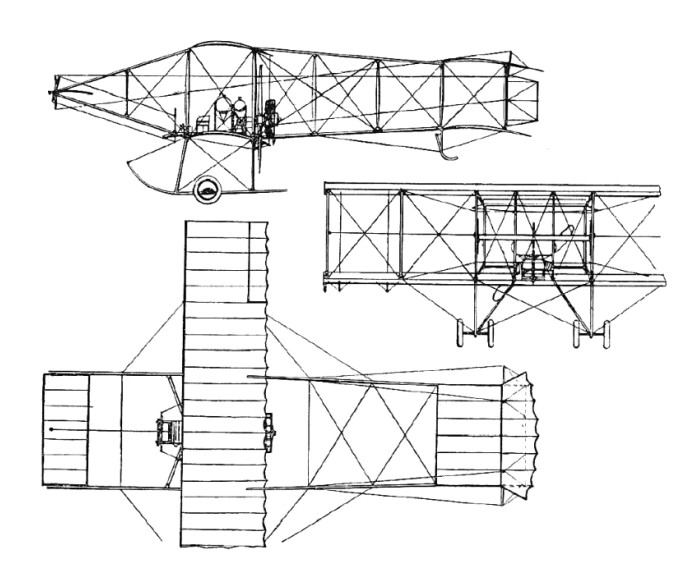
Although early Boxkite examples built had equal upper and lower wingspans, later ones had a longer upper wing (known as the Military version).
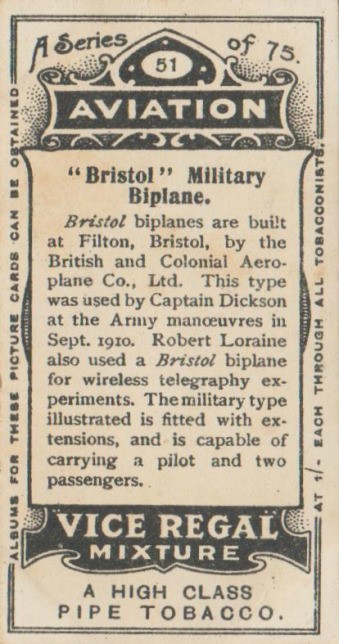
The No. 9, flown by pilot Robert Loraine in late September of 1910, was the first aeroplane to send a radio signal down to the ground, in Great Britain. Loraine, has his diary noted by the Oxford English Dictionary, as the first written example of the word “joystick” to describe aircraft stick controls.
Within a matter of months of the first flight the company was planning for expansion and mounting its first overseas sales drive. Missions were dispatched to Australia, India and other countries with good results. In November 1910 the first export order was placed by Russia for eight Boxkites and subsequently aircraft were also sold to Sweden, Spain, France, Italy, Turkey, Romania and Bulgaria.
The Boxkite has a rich history in the evolution of military aviation in Australia and was the first official military aircraft built in Australia that was used to train Australia’s military aviators.
A Bristol Boxkite was flown in Australia for the first time on 1 March 1914, when Lieutenant Eric Harrison took one into the air at Point Cook. The airfield was then the home of the Australian Flying Corps (AFC).
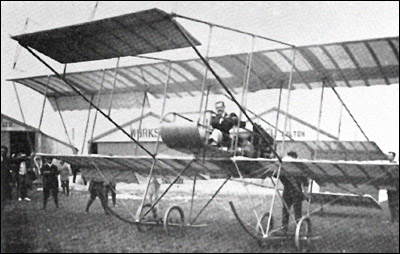
M. Jullerot in November 1911
On March 14, 1911, the British War Office ordered four Bristol Boxkites for its planned Air Battalion Royal Engineers—becoming the first production contract for military aircraft for Britain’s armed forces. A second order of four was made later that year, with them all pretty much being used as trainers for would-be pilots. When WWI broke out, four more were ordered by the British War Office, the last of which was written off in February of 1915, as obsolete. These aeroplanes were used as trainers at the Bristol flying schools at Brooklands and Larkhill, both of which were responsible for giving nearly 50 percent of British pilots their license before WWI.
By the time production of the Boxkite ceased in 1914, the British and Colonial Aeroplane Company had constructed 78 Bristol Boxkite aeroplanes in total, of which 60 were the so-called Military version, one (no. 44) was a Racer version, and one, No. 69, was a an unsuccessful Voisin variant.
Bristol Boxkite‘s No. 73-78 were built at Brislington by the Tramway Company, with all those before it manufactured at the Filton facility.
Three replica aircraft built for the movie Those Magnificent Men In Their Flying Machines. One is at the Bristol City Museum and Art Gallery, another at the Shuttleworth Collection at Bedfordshire, and the third is at the Museum of Australian Army Flying in Australia.
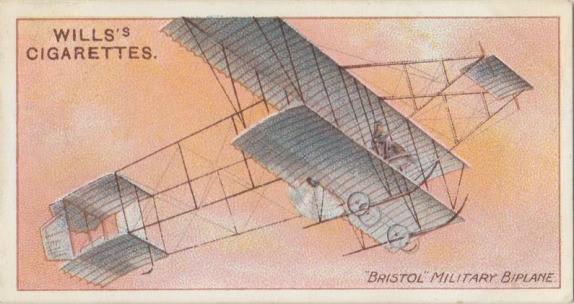
Wills’s Aviation Card #51 – “Bristol” Military Biplane.
Card #51 of 75, W.D.& H.O Wills, Aviation series 1911, Vice Regal Mixture issue
This card shows the Bristol Biplane (official name), though the Wills’s card calls it the Bristol Military Biplane, and the world seems to refer to it as the Bristol Boxkite.
Replica: RAAF Museum Bristol Boxkite Miles Bristol Boxkite
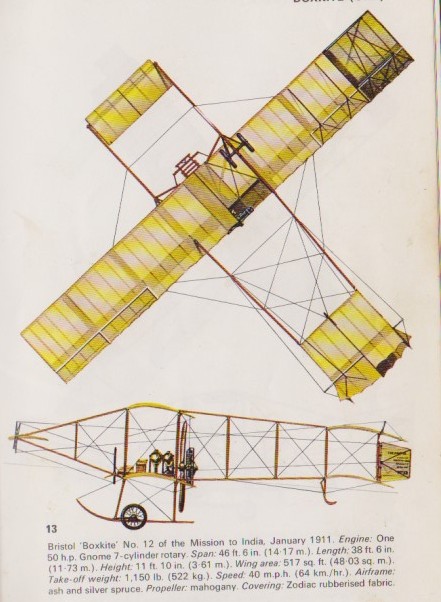
Bristol Boxkite Length: 38.386 ft / 11.7 m Height: 10.827 ft / 3.3 m Wingspan: 46.49 ft / 14.17 m Max take off weight: 1151.0 lb / 522.0 kg Empty weight: 363 kg / 800 lb Max. speed: 35 kts / 65 km/h Engine: Gnôme, 50 hp Crew: 2
Bristol Boxkite Engine: Gnôme, 80 hp Wingspan: 11.3 m Wing area: 40 sq. m Max. speed: 80 km/h
Boxkite Standard Engine: Gnôme, 50 hp Wingspan: 10.52 m / 34 ft 6 in Length: 11.73 m / 38 ft 6 in Height: 11 ft 10 in / 3.61 m Empty weight: 363 kg / 800 lb Wing area: 42.46 sq.m / 457.04 sq ft Max. speed: 64 km/h / 40 mph
Bristol Boxkite Military version Engine: 1 × Gnome Omega, 50 horsepower (37 kW) Wingspan: 14.17 meters (46 feet 6 inches) Wing area: 48.03 square meters (517.0 square feet) Length: 11.73 meters (38 feet 6 inches) Height: 3.61 meters (11 feet 0 inches) Empty weight: 408 kilograms (900 pounds) Maximum takeoff weight: 522 kilograms (1150 pounds) Maximum speed: 64 kilometers per hour (40 miles per hour) Wing loading: 10.9 kilograms per square meters (2.22 pounds per square foot) Power/mass: 70.9 watts per kilogram (0.043 horsepower per pound) Crew: 2
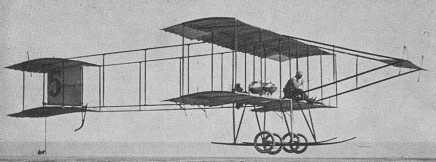
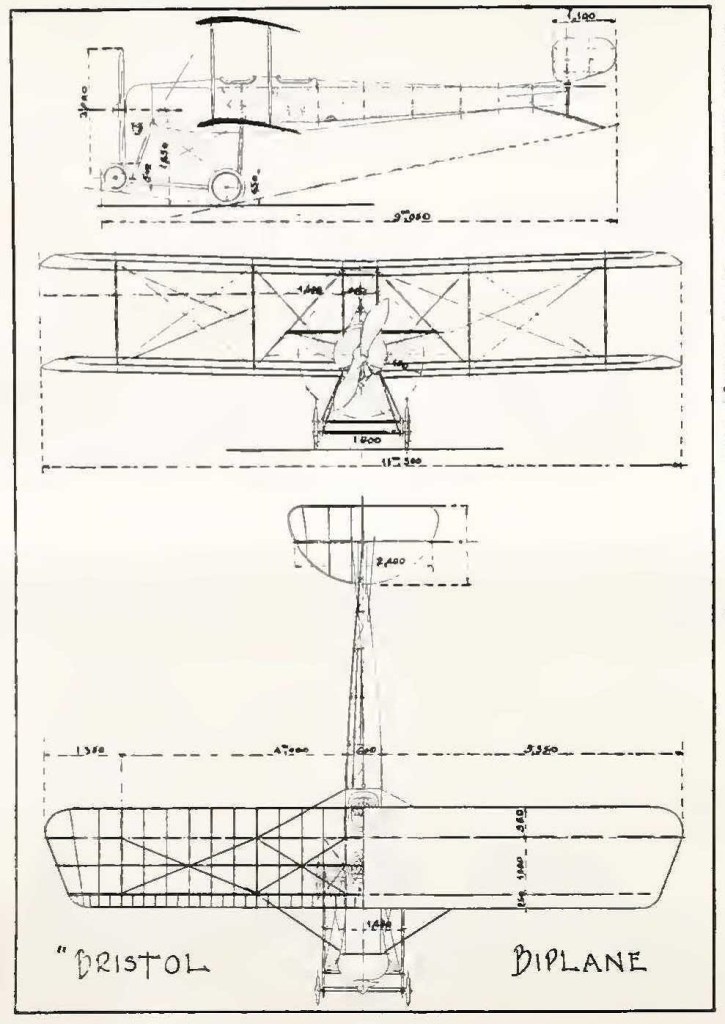
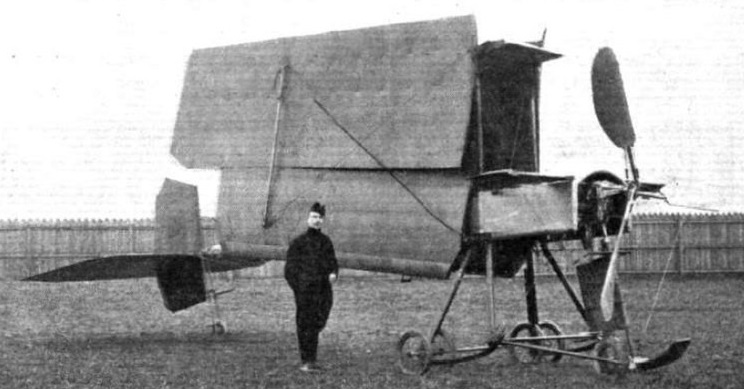
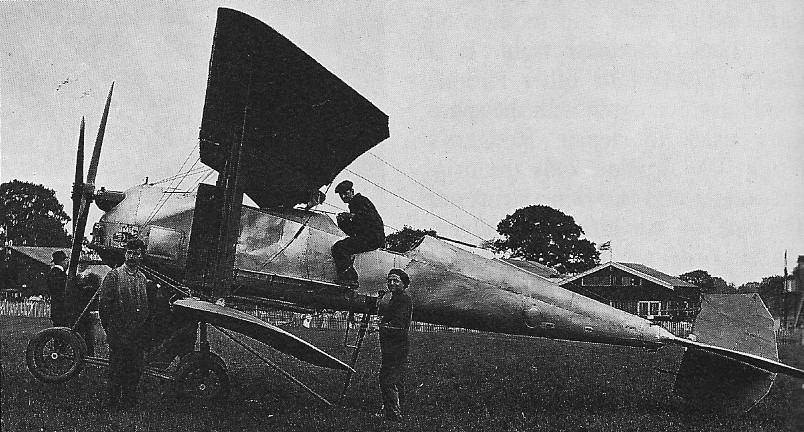
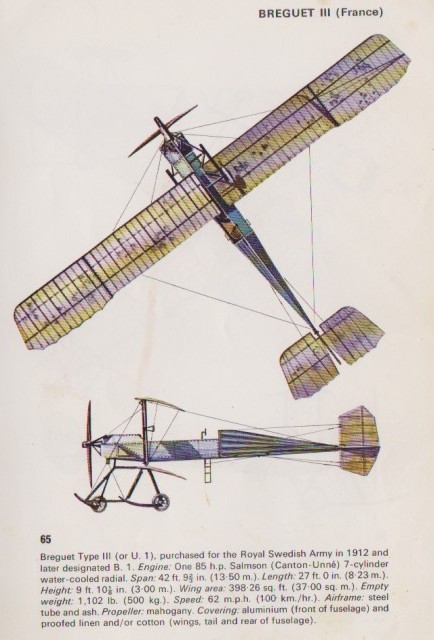
The Bréguet Type III, which first flew in April 1910, was a development of the Type II which Bréguet had built and flown earlier that year. Eliminating the upper booms that had helped to carry the tail surfaces of the earlier aircraft, it had what is now seen as the conventional biplane configuration, with a fuselage containing a front-mounted engine driving a tractor propeller and control and stabilising surfaces mounted at the rear. At the time this was an unusual layout: the Goupy II which had first flown the previous year was the first aircraft of this configuration to be successful. Like Bréguet’s earlier aircraft, extensive use of metal was made in its construction: the structure of the rectangular-section fuselage, wing spars and interplane struts were steel, and the ribs were aluminium pressings.
The lower wings were mounted on a short spar mounted below the lower longerons and the upper wing was supported by only four struts, two inboard supporting the centre section of the wing, and one on either side connecting the mainspars of the wings near the wingtips. The mainspars of the wing panels were connected to the centre-section spar by knuckle joints, so that the wings could easily be folded back for road or rail transport.
Four small vertical stabilisers were mounted below the upper wing, and a pair of supplementary control surfaces were mounted below the fuselage. These were intended for lateral control, and were operated in conjunction with wing-warping The rear-mounted empennage initially consisted of a fixed fin and rudder and a rectangular elevator, with no fixed horizontal surface, but this was soon replaced by a cruciform assembly combining rudder and elevator, connected to the fuselage by a universal joint. This unusual arrangement became a characteristic of the aircraft manufactured by Bréguet before World War I.
The prototype was powered by a 50 hp (37 kW) Gnome Omega driving a three-bladed aluminium propeller through a 2:1 reduction gear. Later aircraft were produced with other powerplants.
A Type III gained fame in August 1910 by being the first aircraft to lift six people.
Specifications (as shown at 1910 Paris Aero Salon) Powerplant: 1 × R.E.P. 1910 60hp 5-cyl. 2-row semi-radial, 45 kW (60 hp) Upper wingspan: 13.2 m (43 ft 4 in) Lower wingspan: 9.9 m (32 ft 6 in) Wing area: 38 m2 (410 sq ft) Length: 9.2 m (30 ft 2 in) Empty weight: 475 kg (1,047 lb)

 All Aero