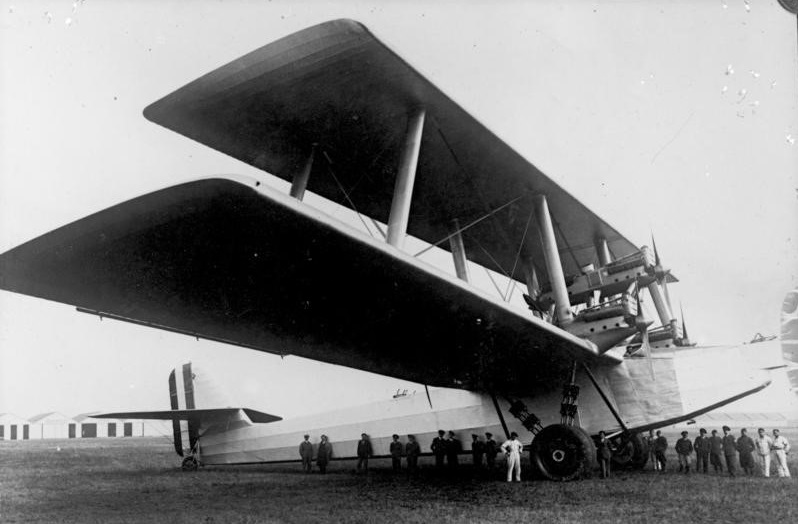
Caproni C.A.90 PB

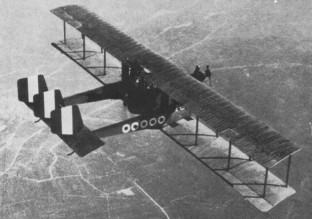
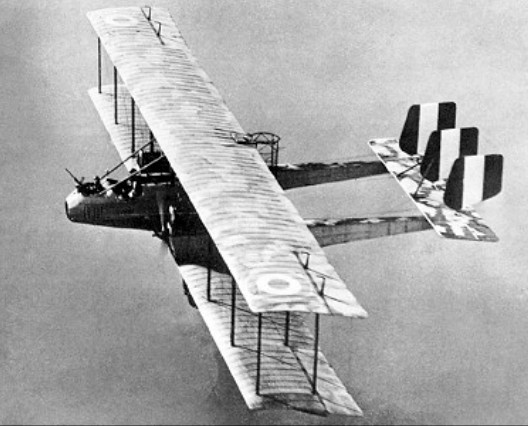
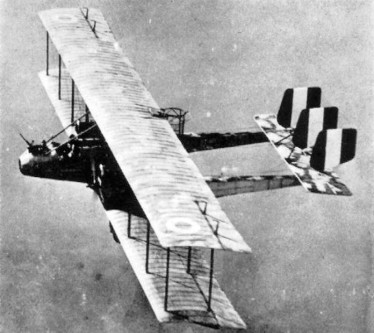
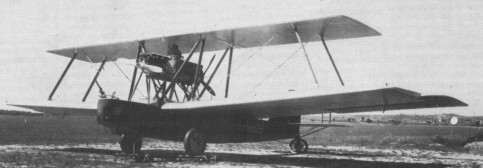
The Caproni Ca.90 was a heavy bomber biplane built by the Italian company Aeronautica Caproni in the late 1920s; while winning some world records relating to the transport of loads at high altitudes, it was built in a single specimen and remained in the prototype stage.

At the time of its construction, the Ca.90 was the largest land aircraft built up to then, a record it held until 1934, surpassed only by the construction of the Soviet Tupolev ANT-20.

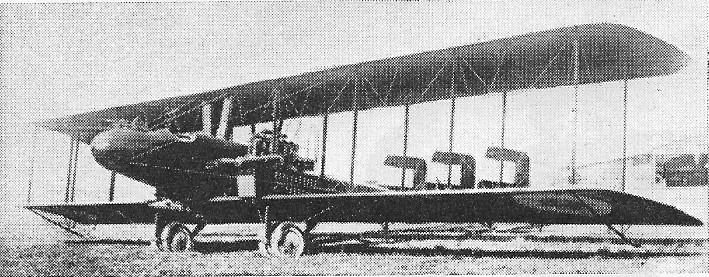
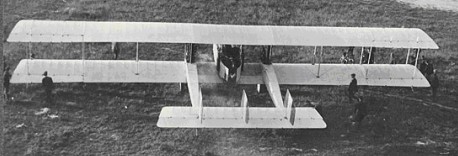
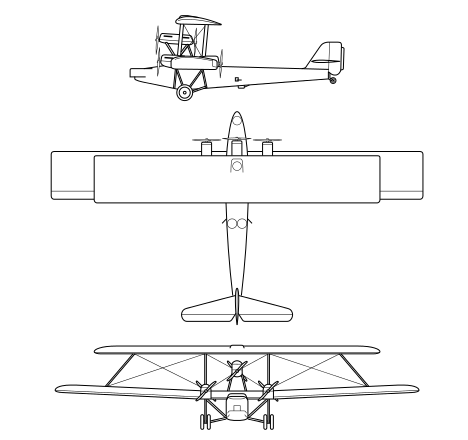
The structure of the Ca.90 was made entirely of steel tubes while the upholstery was in canvas, except in the bow section which was instead covered in corrugated sheet of duralumin. The fuselage, with a rectangular section, housed at the bow end a position for a machine gunner, below which was that of the bomber observer; immediately behind these positions was arranged a first part of the fuel tanks which was followed by the cockpit with dual controls with the two pilots arranged side by side. Other fuel tanks were arranged behind the pilots, followed by the compartments for the bomb launchers and three other positions for the machine gunners (two dorsal and one ventral).

The configuration of the wing planes was of the inverted sesquiplana type, characterized by the significantly greater opening of the lower wing than the upper one (almost 12 metres). The lower wing rested on the upper part of the fuselage and was connected to the upper wing plane by two pairs of uprights integrated by diagonally arranged and crossed metal cables. In the central part of the upper wing plane there was a cockpit position, armed with machine guns. The empennage was of the monoplane and cruciform type.

The landing gear was fixed, with double wheel main elements, of the interrupted axle type; supported by two legs equipped with oil-pneumatic shock absorbers and by two connecting struts with the lower part of the fuselage, it was integrated at the rear by a single-wheel, adjustable, elastically sprung element.

The engines were six Isotta Fraschini Asso 1000: they were liquid-cooled 18-cylinder W engines, each capable of delivering the power of 1,000 HP. They were arranged in groups of two, in tandem, in a push-pull configuration: two groups rested on the lower wings, in correspondence with the undercarriage attachments, while the third group was suspended between the two wing planes, supported by a steel tube frame. The front engines drove a two-bladed propeller, the rear ones a four-bladed type.

Armed with seven machine guns, the Ca.90 was designed to carry up to 8,000 kg of bombs, even if the transportable load could vary according to the flight range required for the type of mission.
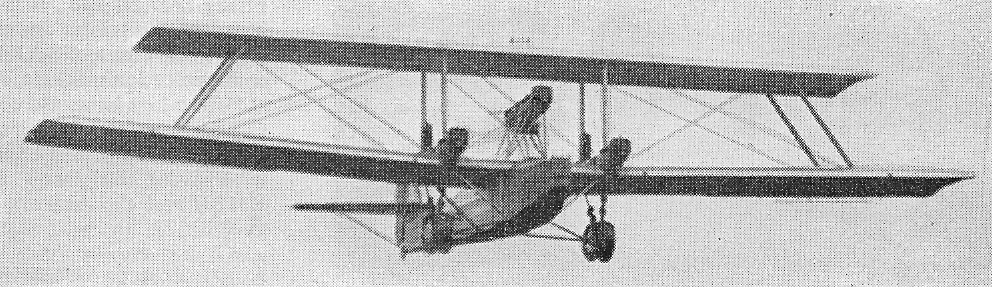
Taken in the air on 13 October 1929, although employed by the Regia Aeronautica in the ambit of the 62nd Squadron “Experimental Heavy Bombardment”, it was unable to fully express its potential: despite the conquest of some world records, it was not commercially successful and was built in a single copy. In essence it was the Air Ministry under the leadership of Italo Balbo that rejected the project, as Balbo was not a supporter of large-scale aerial bombing. Later Caproni attempted to commercialize the Ca.90 in the United States by starting a joint venture with the Curtiss Airplane and Motor Company, but this project also failed due to the great depression.
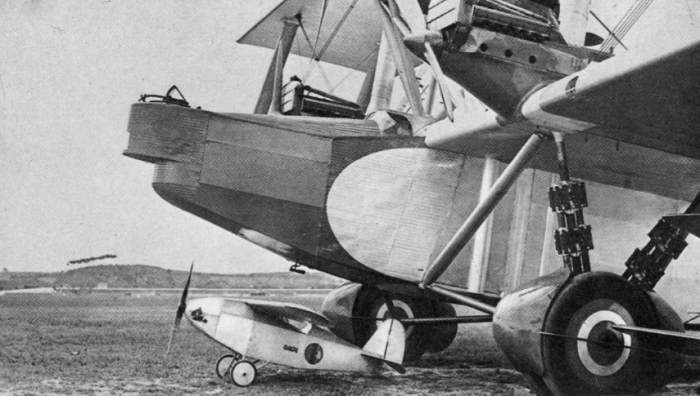
On February 22, 1930, piloted by Domenico Antonini, it won the endurance and climb-to-altitude records with a payload of 10 000 kg flying for 1 h and 31 min and reaching the maximum altitude of 3 231 m (a second, more recent source reports the maximum altitude of 3 256 m).

The operational use of the Ca.90 with the Regia Aeronautica was limited to the 62nd Squadron “Sperimentale Bombardamento Pesante” (also called “Squadriglia Bombardieri Giganti”) with the Italian air force.

From the Ca.90 project, a seaplane version was developed, called Ca.91.

Engines: 6 x Isotta Fraschini Asso 1000, 1000 hp
Wingspan Upper: 34,90 m / 114 ft 6 in
Wingspan Lower: 46,60 m / 153 ft 2.5 in
Length: 26,95 m / 89 ft 9 in
Height: 10,80 m
Wing area: 496,60 sq.m
Empty weight: 15 000 kg
MAUW: 30 000 kg / 66,140 lb
Max speed: 205 km/h / 130 mph
Endurance: 7 h 00 min
Range: 2796 mi
Ceiling: 4 500 m
Bombload: 8 000 kg
Caproni Ca.73 / Ca.82 / Ca.88 / Ca.89

Developed in 1925 from Caproni’s earlier Ca 66, the Ca 73 was a large two bay biplane having with the lower wing mounted on top of the fuselage and the much shorter span upper wing supported above it by struts. The tail unit was biplane horizontal surfaces and a single fin and rud¬der. The power plant, mounted centrally between the wings, was two 400 hp Lorraine engines mounted in tandem, driving a tractor propeller at the front and a pusher propeller at the rear. The Ca 73 carried nose, dorsal and ventral single machine guns for defence and its bombs were attached to the fuselage sides beneath the lower wing.

Subsequent versions included the Ca 73 bis (400 hp Lorraines) and Ca 73 ter (490 hp Isotta Fraschini Asso engines); the latter was later redesignated Ca 82, and carried its bombs attached directly to the lower wing.

Caproni also produced developed versions designated Ca 88 (originally Ca 73 quater) and Ca 89, of which the latter had a cockpit windscreen, glazed bomb aiming panels in the nose, a dorsal turret, and a retractable ventral gun. In over eight years’ service, the Ca 73 series served also as paratroop trans¬ports and ambulance aircraft.

Span: 25.00 m (82 ft 0.25 in)
Length: 15.10 m (49 ft 6.5 in)
Gross weight: 5000 kg (11023 lb)
Maxi¬mum speed: 175 km/h (109 mph)

Ca.88
Engines: 2 x I.F.Asso 500
Wingspan: 25 m
Length: 15.20 m
Weight: 5700 kg
Max speed: 195 kph
Ceiling: 5500 m

Caproni Ca.36

A three-engine biplane bomber of wood and fabric construction, the Ca.36 featured a sectioned wing assembly that could be taken apart into five pieces for easier storage. Armament was 2 x Fiat-Revelli machine guns of 6.5mm or 7.7mm caliber. As a heavy bomber, the Ca.36 could carry up to 1,764 pounds of ordnance. The Ca.36S represented an air ambulance conversion model while the Ca.36M (or “mod”) was a model designed to simplify wartime production.
Operators included Italy, the United Kingdom, France and the United States of America.

Caproni Ca.36
Engines: 3 x Isotta-Fraschini V.4B, 150 horsepower
Length: 36.25ft (11.05m)
Width: 74.61ft (22.74m)
Height: 12.14ft (3.70m)
Maximum Speed: 85mph (137kmh; 74kts)
Maximum Range: 372miles (599km)
Rate-of-Climb: 413ft/min (126m/min)
Service Ceiling: 15,892ft (4,844m; 3.0miles)
Armament: 2 x 6.5mm or 7.7mm Fiat-Revelli machine guns, up to 1,764lbs of bombs
Accommodation: 4
Hardpoints: 8
Empty Weight: 5,071lbs (2,300kg)
Maximum Take-Off Weight: 8,378lbs (3,800kg)

Caproni Ca.6      

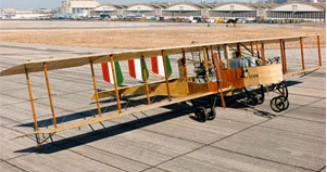
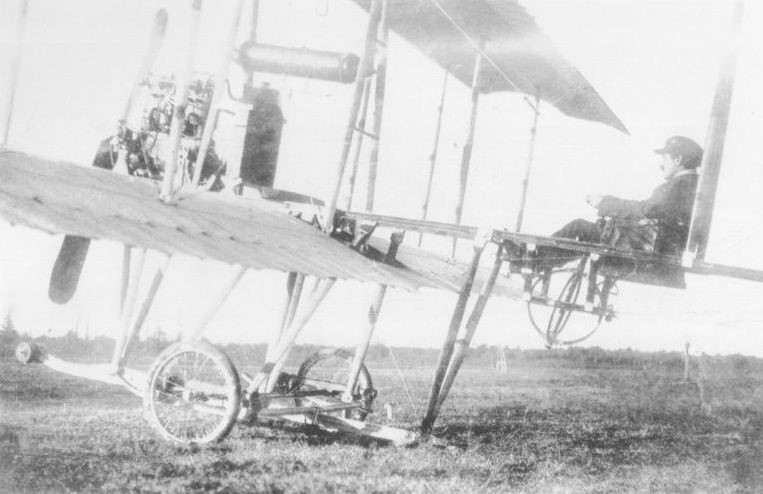
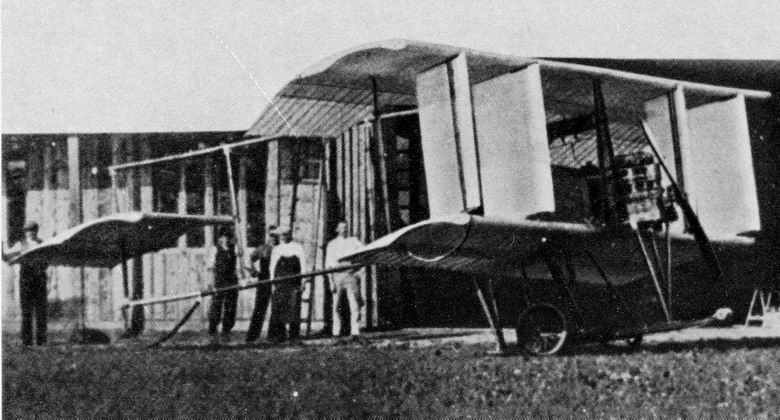
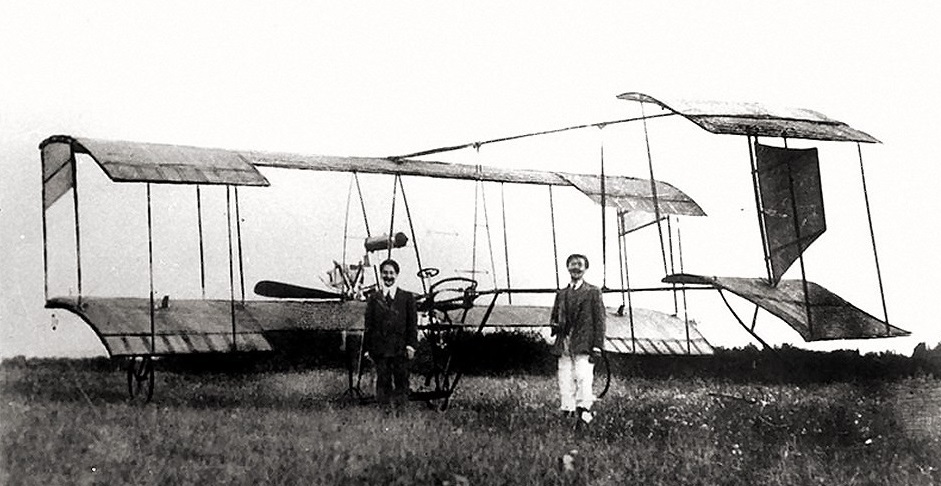
The Ca.6 was a single-engine propeller-driven biplane with a traditional configuration with wings in the bow and tail fletching, but it had no fuselage: it was replaced by a light structure formed by two beams of unshelled wood and some vertical reinforcing uprights that supported the planes of tail. They were composed only of a stabilizer – horizontal balancer; the lack of a vertical drift was compensated by four large interwoven surfaces that, placed between the wings, contributed to the stability of the aircraft around the vertical axis. The wings resumed the double curvature profile that had also characterized Caproni aircraft immediately preceding, but with not very lucky results: the aerodynamic characteristics of this type of profile, which had been suggested to Caproni by his friend and colleague Henri Coandă, proved to be once again unsatisfactory.

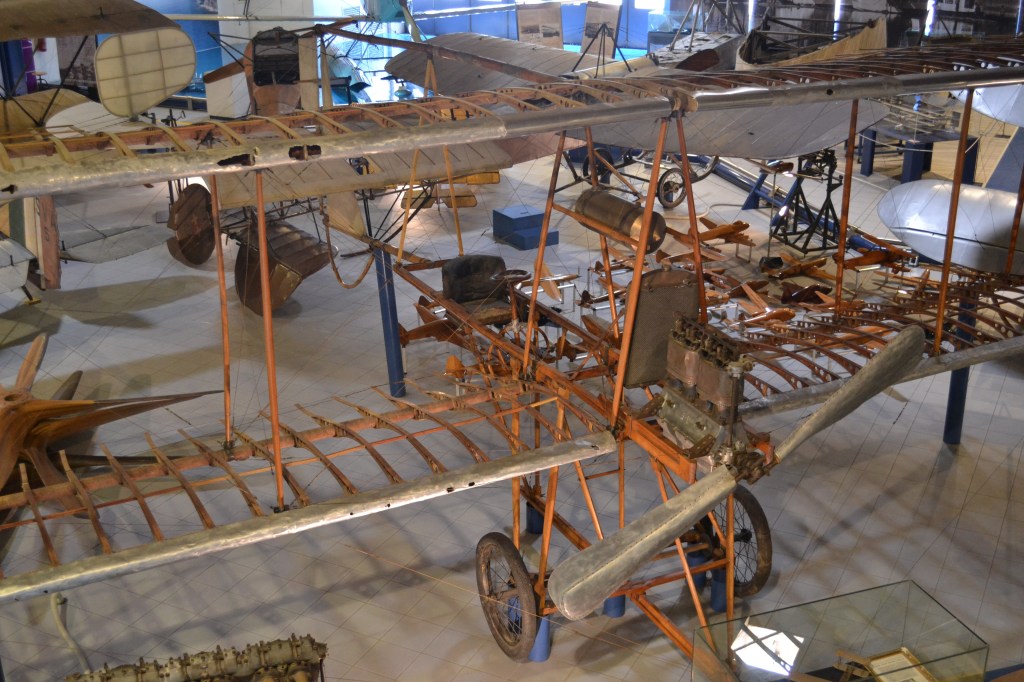
The one built first flew in 1911, The Ca.6, the sixth Caproni biplane, sported the characteristic double curvature airfoil and lightened tailboom, constructed from hollowed-out wooden tubes. Still powered by the 50 hp Rebus, it was modified following some flights in spring 1911.

The Caproni Ca.6 was preserved inside the Caproni workshops until 1934, when it was brought to Milan to be shown to the public on the occasion of the Italian Air Force Exhibition; in the meantime, in 1927, the spouses Gianni and Timina Caproni founded the Caproni Museum, in whose headquarters in Taliedo the Ca.6 found a place starting from the forties. After the vicissitudes linked to the Second World War and the reopening of the museum in Vizzola Ticino, the Ca.6 was again displayed to the public. The definitive position in the Museo dell’Aeronautica Gianni Caproni, reopened in Trento, in the nineties.

The aircraft underwent a first renovation-conservation operation before being displayed in Milan, in the early thirties: it was probably on this occasion that the leading edge of the wings was reinforced with a metal strip and the fuselage and the wings themselves they were shortened. At the time of its transfer to Trento, the Ca.6 has undergone a new intervention; however, due to the lack of availability of reliable technical drawings and other necessary historical documentation, a real restoration did not take place, but only a conservation procedure.

Powerplant: 1 × Rebus 50hp 4-cyl, 37 kW (50 hp)
Propeller: 2-bladed fixed pitch propeller
Wingspan: 12 m (39 ft 4 in)
Wing area: 45 m2 (480 sq ft)
Length: 9.8 m (32 ft 2 in)
Height: 3.27 m (10 ft 9 in)
Gross weight: 318 kg (700 lb)

Caproni Ca.5 / Ca.44 / Ca.45 / Ca.46 / Ca.47 / Ca.50

Ca.5

The Ca 5 series of First World War bombers were a progressive development of the earlier Ca 3 series and, like them, were biplanes. They were slightly larger overall, heavier, and somewhat faster, though their bomb load of 540 kg (1190 lb) remained modest.
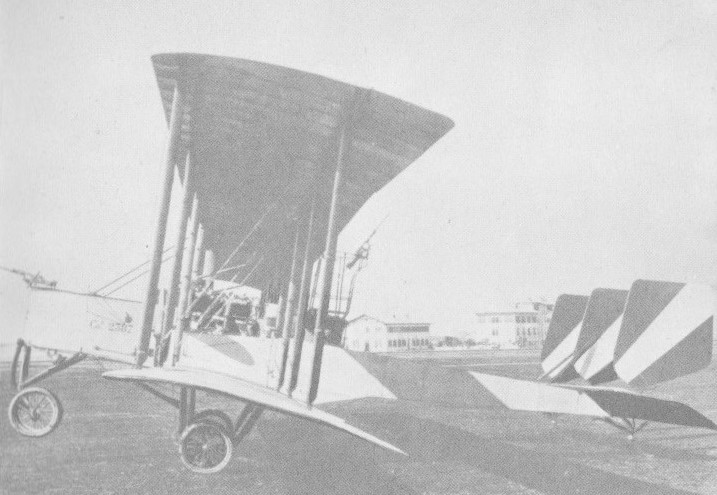
The initial version (Ca 44) was powered by three 200 hp Fiat engines, driving (as in the Ca 3) one pusher and two tractor propellers. Defensive armament was a single machine gun in the nose and a second to the rear. Entering service with the Corpo Aeronautica Militare in early 1918, the initial model was followed by generally similar versions (Ca 45 and Ca 46) having Fiat, Isotta Fraschini or Liberty engines.
The Ca 5 continued to serve until the end of the First World War, though in dimin¬ishing numbers and for the most part on night operations, with many of the Gruppi that had operated the earlier Ca 3. A specialized night bomber variant was later given the post-war designation Ca 50.

Italian production of the Ca 5 series reached 255, to which can be added a small number built in France by Esnault Pelterie.

Two (Ca 46) bombers were delivered to the United States, where it was planned to build the type in quantity for the US Army Air Service, but only three had been completed (two by Standard Aircraft Corporation, AS40070 and 40071, and one by Fisher Body Works, AS42119) before the Armistice.

Ca.46

The American Liberty engine, however, found its way into one other variant: a torpedo and bomber seaplane (Ca 47), with twin Zari floats, of which Piaggio in Italy delivered 10 after the Armistice.

Ca 5
Engines: 300 hp Fiat A.12.
Span: 23.40 m (76 ft 9.25 in)
Length: 12.62 m (41 ft 4.75 in)
Gross weight: 5300 kg (11685 lb)
Maximum speed: 152 km/h (94.5 mph)

Ca.5
Engines: 3 x 250hp Fiat A.12
Wingspan: 22.76 m / 75 ft 8 in
Length: 10.80 m / 35 ft 5 in
Height: 3.80 m / 12 ft 6 in
Max Take-off weight: 3870 kg / 8532 lb
Empty weight: 2450 kg / 5401 lb
Max. speed: 146 km/h / 91 mph
Cruise speed: 121 km/h / 75 mph
Ceiling: 4000 m / 13100 ft
Rate of climb: 114 m/min / 350 ft/min
Range: 650 km / 404 miles
Armament: 4 x 6.5mm mg
Bomb load: 800kg
Crew: 4

Ca 46
Engines: 300 hp Fiat A.12.
Span: 23.40 m (76 ft 9.25 in)
Length: 12.62 m (41 ft 4.75 in)
Gross weight: 5300 kg (11685 lb)
Maximum speed: 152 km/h (94.5 mph)

Standard-Caproni Ca.46
Engines: three 350hp Liberty 12
Wingspan: 76’9″
Length: 41’2″
Useful load: 4650 lb
Max speed: 103 mph
Cruise: 94 mph
Range: c.400 mi
Ceiling: 14,760′
Seats: 3

Caproni Ca.3 / Ca.33 / C3.34 / Ca.35 / Ca.37 / Ca.39 / Ca.56 / Ca.450HP

Ca.3

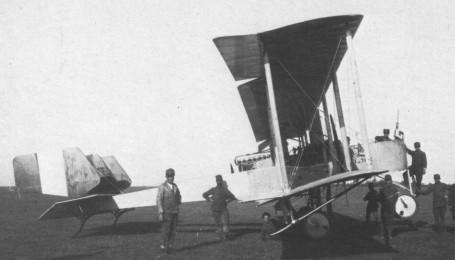
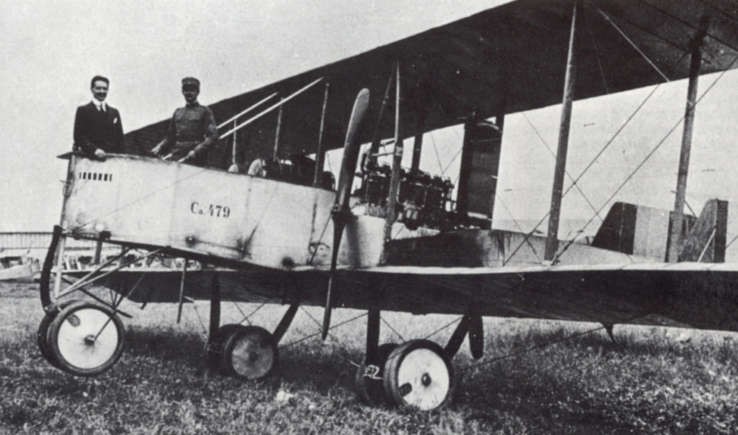
Ca.3 (or Ca.33) of 1917 was the alternative designation of the Ca.450HP, 299 of which were built between 1917 and 1919. Powered by three 112kW Isotta Fraschini V.4B engines, the normal bomb load was 200kg and defensive 7.7mm machine-guns were mounted over the nose cockpit and in a tubular metal structure just behind and slightly higher than the trailing edge of the upper wing centre section.

Caproni Ca.3 Article

Ca.33

Three main versions were built, consisting 166 Ca.31’s with 80-100 hp Gnome engines, eight Ca.32’s with 100 hp Fiat engines, and the Ca.33.

A three-bay biplane of conventional wooden construction, wooden fuselage, the entire airframe was fabric covered. The tail has a fixed central tail-fin and twin outboard rudders. Ailerons are on all four wings. Each main undercarriage unit has two pairs of wheels. In addition, a pair of nose-wheels are fitted.

The Ca 3 (Ca 33) became the major production version, 270 being built. It was characterized by three bay equal span wings, and three rudders mounted above the tailplane.

In Italian service the Ca 3 was operated by the IV, IX, Xl, XIV and XVIII Gruppi Bombardamenti, and one Italian navy squadron in Albania.

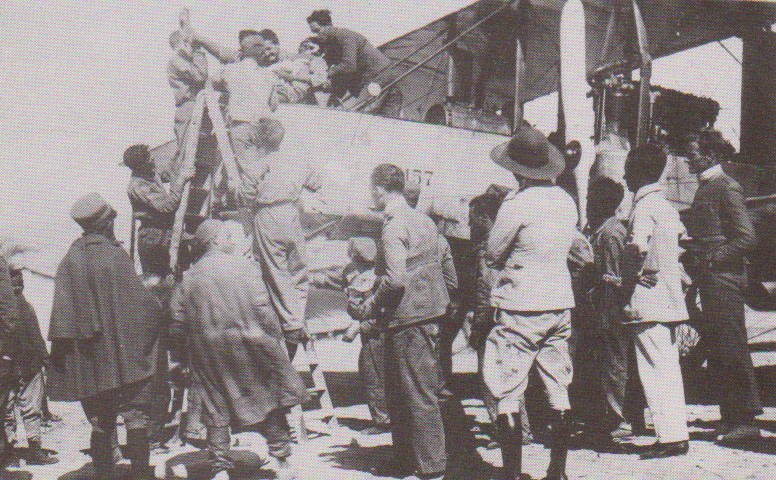
The wounded gunner is lifted from the nacelle of his aircraft.

Licence production of a further 86 was undertaken in France by the Esnault Pelterie and SAIB factories, these serving with the escadrilles of the French Aviation Militaire. In addition, wartime and postwar Italian production figures reached 153 examples of the Ca 3 Mod (Ca 36), of which the CAM received 144. These had detachable outer wing panels, and some were converted as ambulance transports (Ca 36 S), carrying four stretchers and up four sitting casualties.

In 1925 eight machines were sent to Libya in support of the reconquest of that territory. By the end of 1926, however, the last examples had been withdrawn from first-line service.

Ca.33

The mainstream Ca 3 bombers carried a crew of four (two pilots, an observer/front gunner and a rear gunner), with a ring-mounted Revelli machine gun in the front and rear positions. The rear gunner was installed in an exposed, cage like structure below and aft of the upper wing trailing edge, directly ahead of the rear propeller.
Most Ca 3s were used for conventional bombing attacks, but some were also employed briefly as torpedo bombers. Experimental variants included models with modified landing gear (Ca 34), tandem pilot seats (Ca 35), shorter span wings (Ca 37) and a proposed single float seaplane version (Ca 39). A number of Ca 3 Mods were adapted as mail or six passenger civil transports (Ca 56a) after the war.

Gallery

Ca.3
Engines: 3 x Isotta-Fraschini V.4B, 112kW
Max Take-off weight: 3312 kg / 7302 lb
Empty weight: 2300 kg / 5071 lb
Wingspan: 22.2 m / 72 ft 10 in
Length: 10.9 m / 35 ft 9 in
Height: 3.7 m / 12 ft 2 in
Max. speed: 140 km/h / 87 mph
Ceiling: 4100 m / 13450 ft
Range: 450 km / 280 miles
Crew: 4
Armament: 2-4 x 7.7mm machine-guns, 450kg of bombs

Ca,33
Engine: 3 x Isotta-Fraschini V4B, 150 hp
Propellor: 2 x 2-blade tractor, 1 x 2-blade pusher
Wingspan: 72 ft 10 in
Length: 35 ft 9 in
Height: 12 ft 2 in
Empty weight: 5080 lb
MTOW: 8400 lb
Max speed: 85 mph at SL
Service ceiling: 13,400 ft
Endurance: 3 gr 30 min
Armament: 2-4 machine gun
Bombload: 1000 lb

Caproni 260hp / Caproni 300hp / Ca.1 / Ca.2 / Ca.30 / Ca.31 / Ca.32 / Caproni 350hp

Caproni Ca.1 Heavy Day Bomber

The “Societa de Aviazone Ing Caproni” bureau (better known simply as “Caproni”) proved something of a pioneer in the field, resulting in their first impressive attempt sometime in 1913 as the “Caproni 260hp”. This version sported a “pusher” engine and a pair of “pusher” engines – these 80 hp Gnome rotary engines all being mounted in-line along a central fuselage nacelle. The three man crew sat in the forward part of the nacelle, and two slender fuselage booms carried the triple rudder tail unit. The two pusher systems drove propellers mounted at the tail booms via a tractor arrangement. Prior to the first flight, in October 1914, the two forward engines were re installed with direct propeller drive.

In the post-war years, these respective systems came to be designated as the Ca.30 and Ca.31.
After a period of evaluation, it was determined that the new larger bomber platforms were wholly underpowered. Caproni set to achieve better performance from his “giant” and moved the puller engines to the tips of each tail boom, keeping the pusher system in its centralized nacelle approach from earlier. This allowed each wing-mounted engine to directly drive its propeller more efficiently. The French-based Gnome rotary engines were then replaced with Italian FIAT A.10 inline types and produced the new company designation of “Caproni 300hp”.

Ca.1

A contract was signed for 12 Caproni 300HP bombers powered by three 74.5kW Fiat A.10 engines. First flight occurred in late 1914. A further 150 were delivered during the next two years. These aircraft were also known as Ca.1s and were followed by nine Ca.350HP machines (with the third engine replaced by a 112kW Isotta Fraschini) designated Ca.2.
The Ca.1 featured a wide-span, four-bay, biplane wing assembly. At the center of the wings was fitted the crew nacelle containing the four crew and the third engine. The primary engines were fitted ahead of the twin booms extending aft in a “puller” function arrangement. The third engine on the central nacelle operated in a “pusher” format. The crew consisted of two pilots, a forward gunner and a rear gunner – all fielded in tandem positions. The forward gunner sat in the forward-most compartment. Distinctly, the rear gunner stood in an open air, cage-like pulpit behind the upper wing assembly and ahead of the pusher engine at rear. The twin booms extended aft into a tailplane. The tailplane held three vertical tail fins. The undercarriage was a fixed tricycle featuring two single-wheeled main landing gear legs and a single-wheeled nose landing gear, all supported by struts. The rear of the empennage was supported by a tailskid fitted to the extreme end. Construction was mainly wood covered in fabric.
Bombs were suspended under the central nacelle and there were 2 x 6.5mm FIAT-Revelli machine guns used for defense. These machine guns were fitted to the front gunner tub and the rear gunners pedestal cage.
The 3 x Fiat A.10 6-cylinder, liquid-cooled in-line engines delivered up to 100 horsepower output each. This supplied the massive aircraft with speeds of up to 75 miles per hour as well as a range equal to 344 miles. Her service ceiling was listed at approximately 13,000 feet. Her empty weight ranged in at about 7,200lbs with a gross weight tipping the scales at 8,800lbs. Wingspan was nearly 23 feet with an overall running length of 36 feet plus. She stood 12 feet high.
This revised development led to the Italian Army and the first Italian bomber force. The aircraft was designated officially as the Ca.1 by the Italian Army and production increased by the middle of August 1915. A total of 162 were delivered up to December 1916.
Their first true sortie in Italian Army service occurred on August 20th, 1915, in an attack on Austrian targets at an airfield in Aisovizza. Most Ca.1s were committed to such attacks, primarily against the Austro-Hungarian Empire and the new bomber eventually served in some fifteen total Italian air squadrons during the war effort. Three of these Italian squadrons were known to have operated out of France with another stationed for action out of Libya.

A modified version (for which no post war designation seems to have been allotted) was the Ca 2, in which the ‘pusher’ A.10 engine was replaced by a 150 hp Isotta Fraschini V-4B. Only nine of these were completed.

1910 Caproni Ca.2

In the post-war years, the Ca.1 was redesignated Ca.32. The Ca.1/Ca.32s that survived were refurbished to be used as passenger airliners. These could transport up to six passengers in relative comfort and fell under the Caproni designation of Ca.56.
The Caproni Ca.2 (“Caproni 350hp”) was a minor variation (improved engines) on the strengths of the Ca.1 platform. Development ultimately led to the definitive Ca.3 bomber platform.

Caproni Ca.1 / Ca.32
Engines: 3 x FIAT A.10 6-cylinder, 100 hp
Length: 36.25ft (11.05m)
Wing span: 74.61ft (22.74m)
Height: 12.14ft (3.70m)
Maximum Speed: 75mph (120kmh; 65kts)
Maximum Range: 342miles (550km)
Service Ceiling: 13,123ft (4,000m; 2.5miles)
Armament: 2 or 4 x 6.5mm FIAT-Revelli machine guns
Up to 1,874lbs of external ordnance
Accommodation: 4
Hardpoints: 4
Empty Weight: 7,280lbs (3,302kg)
Maximum Take-Off Weight: 8,818lbs (4,000kg)

Ca.2
Span: 34’5″
Length: 32’4″

Caproni Ca 30

Capone Aérogyroplane

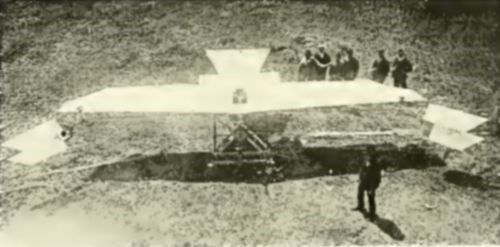
Federico Capone’s machine was called l’Aérogyroplane because of the way it was powered. A small motorcycle engine of 4.5 hp drove double pairs of swinging blades symmetrically disposed at the end of wings. The blades worked like rotors in the initial stage of flight and then their position could be changed from horizontal to vertical. The latter was to give horizontal action to the machine. Built by Ceccarelli in Naples, testing was not very successful, as the machine was partially wrecked by a gale on April 30, 1905. The repaired machine was later sent off from a high launching position and managed to fly a certain distance.

Capital Aircraft Air Trainer / Royal Air Trainer / Derickson Air Trainer

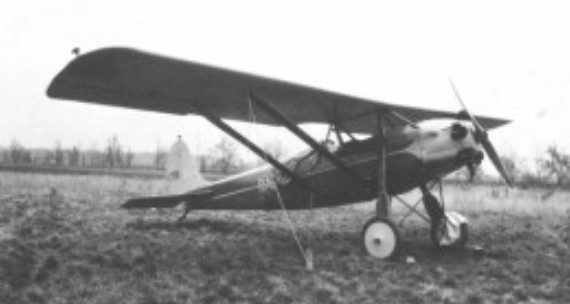
The aircraft was designed by Prof. Peter Altman of the University of Detroit. At that time it was named the Derickson Air Trainer.

John and Donalt Thomas acquired the design rights in 1928 and formed a company under the name Capital Aircraft Corporation located in Lansing, Michigan.

They built only one aircraft, registration number X795K. The airframe was initially built as a seaplane powered with a 60 hp LeBlond 5-D engine, which was exchanged with a 90 hp 7-D when later converted as a landplane. Span was 34 ft, length 25 ft, useful load 535 lbs, Vmax 105 mph, Vc 85 mph, Vso 30 mph, and range 400 miles.

In 1929 Capital Aircraft Corporation was relocated in Royal Oak, Michigan, and was renamed the Royal Aircraft Corporation.