1922 seaplane prototype for detachable-wing biplanes to be carried by submarines.
Biplane
Caspar-Werke LJ.1
Heinkel-designed seaplane prototype for detachable-wing biplanes to be carried by submarines
Carter 1911 biplane
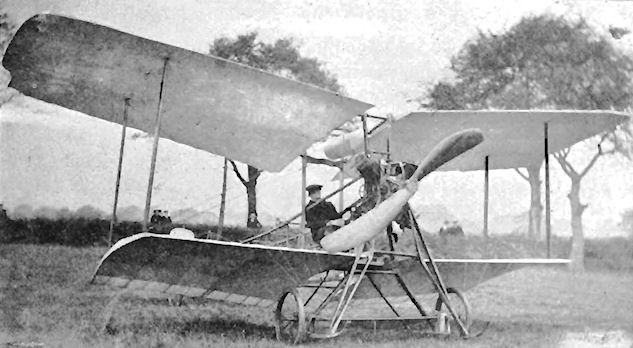
In the UK in 1911 Mr. Carter was out on the new machine and with the engine running fairly well, the machine made a few hops. The machine is of the biplane type of very short span, with the upper planes of slightly greater span than the lower ones. There is no elevator in front, but that position is occupied by the engine and propeller. The engine is an 8-cyl. made by the Nonpareil Motor Fitting Co. at Birmingham. At present it gives about 60-hp, but when properly tuned up it is expected to reach about 80-hp Mr.Carter succeeded in getting the biplane off the ground for short distances.
Mr. Carter was also out with his biplane after having made a few alterations to the tail. The machine rises very rapidly, in one case getting off the ground in 15 ft. but no extended flights were made owing to the fact that the engine was not running up to form.
Carroll and Stupar 1918 biplane
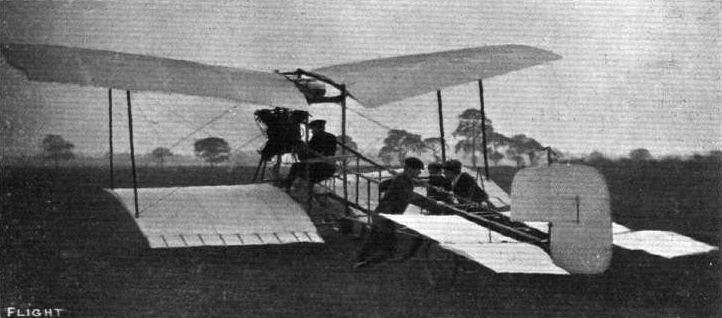
In the latter part of 1918 Carroll and Stupar built a biplane powered with a 15 hp Excelsior motorcycle engine. The span was 26 ft and it weighed 225 lb.
Carlier 1911 biplane
In 1911 Rene Carlier designed and built a biplane in France with a 26’3″ wingspan and 23′ in length.
Carl Belz Doppeldecker
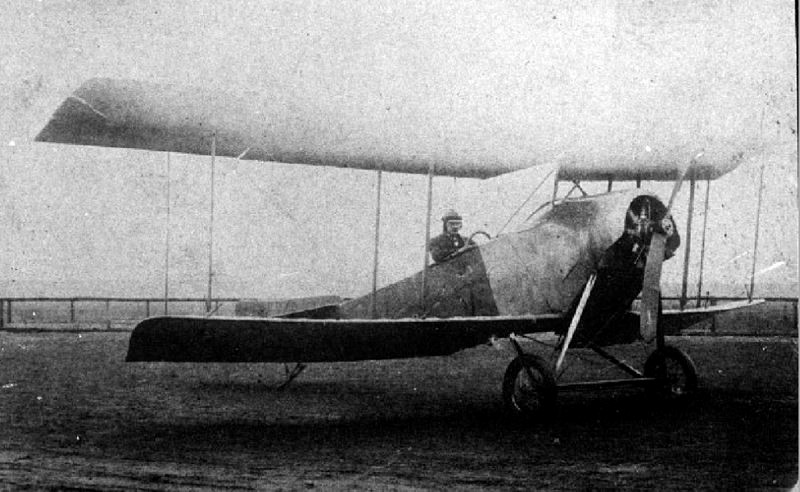
This little biplane with a 50 hp Gnôme rotary was built by Carl Belz Flugzeugbau und Fliegerschule in Berlin-Treptow, Germany, in 1913.
Caproni 1911 Ca-5
The 1911 Caproni Ca-5 biplane was designed and built by Gianni Caproni in Italy.
Span: 41′
Length: 32’4″
Weight empty: 1100 lbs
Caproni Ca.164
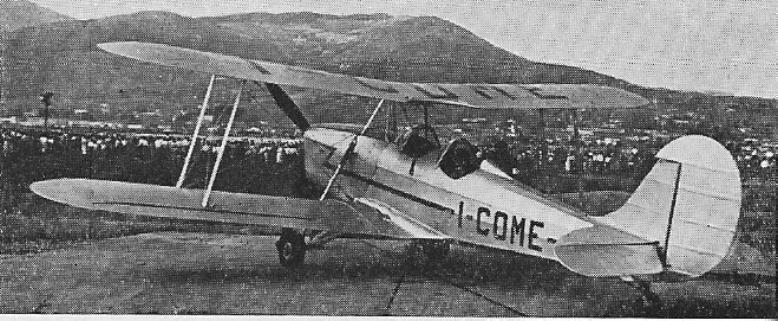
The Caproni Ca.164 was produced by Aeronautic Pedappio S.A., a division of the Caproni Group in 1937.
Powered by a 185 hp Alfa 115-1 engine, the Ca,164 was employed by the Regia Aeronautica during the war years.
Engine: 185 hp Alfa 115-1
Wingspan: 30 ft 10 in
Length: 22 ft 10 in
Height: 8 ft 6 in
Empty weight: 1873 lb
Loaded weight: 2600 lb
Max speed: 13 mph
Cruising speed: 115 mph
Range: 330 mi
Seats: 2
Caproni Ca.113
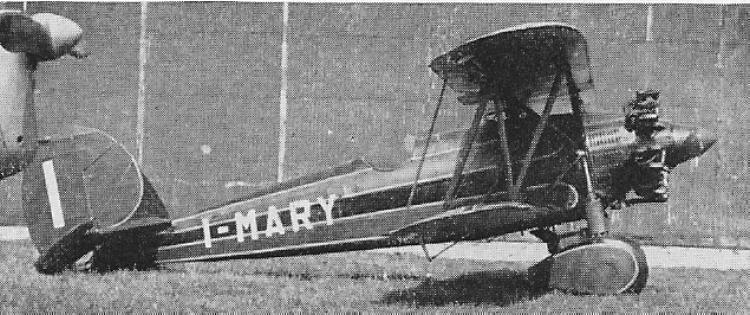
The Caproni Ca.113 two-seat advanced training and aerobatic biplane was produced in the early 1930s. Th wings were wood with fabric covering, and the fuselage and tail assembly had welded steel-tube frame0work covered with fabric. Differentially-controlled ailerons were fitted on the upper plane and small auxiliary balance surfaces were attached to the bottom planes. A special carburetter was fitted for inverted flying, and the type participated in a number of pre-war competitions.
Engine: Piaggio Stella VII, 370 hp
Wing area: 290.5 sq.ft
Wing span: 34 ft 5 in
Length: 23 ft 11 in
Height: ft 11 in
Empty weight: 1870 lb
Loaded weight: 2420 lb
Max speed: 155 mph
Time to 6560ft: 3.5 min
Ceiling: 24,600 ft
Range 186 mi
Seats: 2
Caproni Ca.100 / KN-1

The Ca 100 has a lower wing of noticeably greater span than the upper wing, and about 700 aircraft were built from 1929. The type was bought by civil as well as military operators, and was flown with an assortment of engines including the original Gipsy, 63-kW (85-hp) Fiat A.50, 67-kW (90-hp) Blackburn Cirrus Minor, 86-kW (115-hp) Isotta Fraschini Asso 808, and 108-kW (145-hp) Colombo S.63.
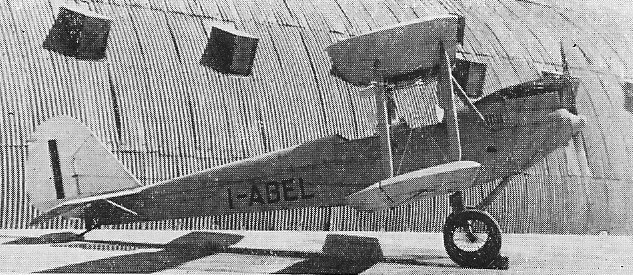
The Ca 100bis is a touring model powered by a 130 hp de Havilland Gipsy. Built by Macchi, the Ca 100 Idro was a twin-float seaplane trainer, and there was also a bomber trainer with a 97-kW (130-hp) radial engine and provision for a quartet of light bombs. The type was built under licence in Bulgaria as the KN-1, and also in Peru.
Ca 100
two-seat primary trainer.
Engine: l x de Havilland Gipsy, 63kW (85hp).
Span: 10m (32ft l0in).
Length: 7.30m (23ft 1.25in).
Max T/O weight: 680 kg (1,499 lb).
Max speed: 102mph at sea level.
Operational range: 435 miles.
Ca 100
Engine: Cirrus, 90 hp
Wingspan: 32 ft 10 in
Length: 23 ft 10 in
Height: 8 ft 11 in
Empty weight: 882 lb
Loaded weight: 1587 lb
Max speed: 102 mph
Cruise: 87 mph
Ceiling: 14,763 ft
Range: 435 mi
 All Aero