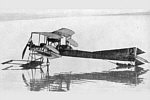
The 1911 Dufaux bi-floatplane was designed and built by Armand and Henri Dufaux in Switzerland.
The 1911 Dufaux bi-floatplane was designed and built by Armand and Henri Dufaux in Switzerland.
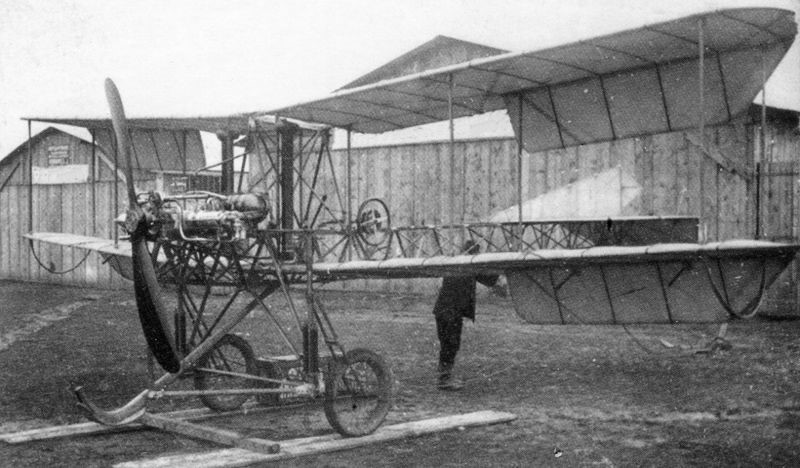
This plane, the first Swiss two-seater, was a 1911 development of the earlier Dufaux-4 and had a similar landing gear and triangular-section fuselage. It was equipped with either 70 hp Gnôme or with Oerlikon 4-cylinder horizontally-opposed engines. Several were built, it was used in the flying school of Ernest Failloubaz, was flown by many of the most famous early Swiss pilots and also made the first Swiss military flights.
Span: 27’3″
Length: 30’6″
Weight: 1224 lbs
Speed: 52 mph
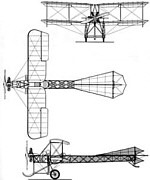
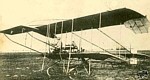
The 1910 Dufour No. 2 biplane was designed and built by Jean Dufour in France.
Span: 35’5″
Length: 32′ 10″
Weight: 682 lbs
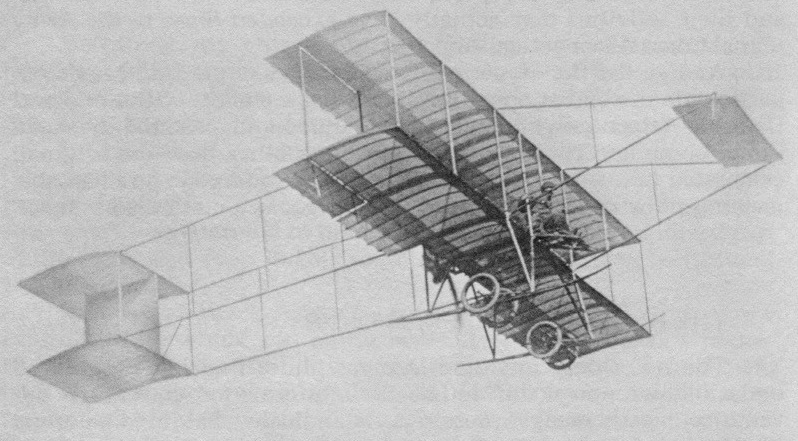
The first of several gliders tested by designer/builder Albert Q. Dufour, “not yet 20 years old”, in Milwaukee, Wisconsin, USA. It was launched from a 40 feet inclined runway ending 15 feet off the ground in 1907 and made flights of up to 100 feet.
The 1909 Dufaux tractor biplane made many flights during 1909 and in 1910. Armand Dufaux flew almost 50 miles in 1 hr 18 mins over water the length of Lake Geneva (almost double the distance over water than Bleriot during his channel crossing)
Span: 27’3″
Length: 27’3″
Weight: 705 lbs
Speed: 30-37 mph
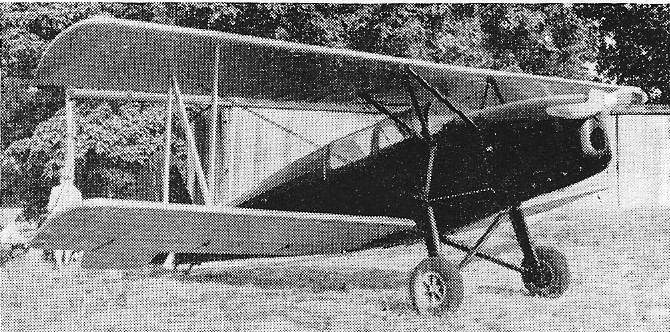
The unique Driggs Skylark N11301 c.n 3016 was built in May 1931.
An enclosed tandem two-seater powered by a 95 hp Cirrus engine, modifications to the tail and canopy addition were carried out in May 1942.
In 1956 it was owned by Morey Cheever of Demotte, Indiana, USA.
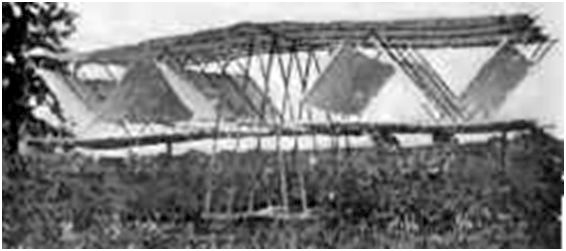
In 1908 there was a group of eight to nine different people in town known as the Douglas flying club, Arizona … and these people built what was known as the Douglas Glider.
The members of the Douglas flying club were A.M. Williams, John C. Wright, Judge Forte, Ben Goodsell, Felipe Mazon, Ted Bowden, Charles M. Ford and Sparks Y. Faucet.
The glider was built in downtown Douglas and flown off of 15th Street between A and Washington Ave. It’s made most of rattan and bamboo, and metal fittings and fabric that covers over the wings.
Initially, to get the glider off the ground, horses would be attached a hitch on the front of the glider that was then attached to harnesses. The horses would then start running and as the glider began to lift off the ground the hitch would come free from the harnesses. It didn’t fly very far but it did get off the ground.
They had people there watching them do this and after they were done they would pass the hat and people would contribute a little money to it and if they had enough money they would make another run.
That evolved into an airplane when they hung a motor on it and put a propeller on the motor and then put wheels on the glider making it an airplane.
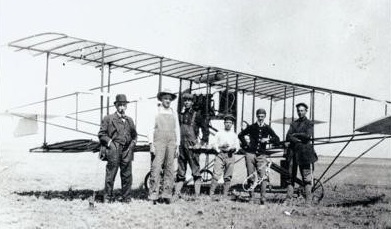
Following 1908 modifications were made to the Douglas Glider, Schultz said. It would later change its name to the Douglas Flyer then The Douglas Bomber and be used in the Border War from 1910-20.
Estimated wing span: 30 feet
Estimated length: 20 feet
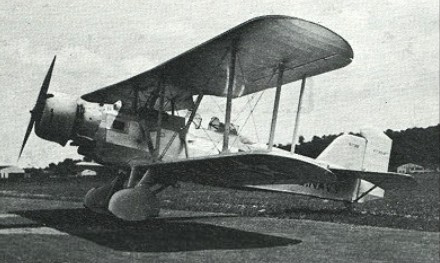
Designed and built to meet a US Navy requirement for a three-seat torpedo-bomber, the Douglas XT3D-1 prototype was first flown in early 1931. A biplane, basically of metal construction with fabric covering, the XT3D-1 incorporated folding wings and arrester gear for carrier-based operations, had fixed tailwheel landing gear, and was powered initially by a Pratt & Whitney S2B1-C Hornet radial piston engine. Accommodation was provided for a crew of three in open cockpits, a bomb-aimer/gunner forward, the pilot in the centre cockpit, just aft of the wing trailing edge, and a second gunner to his rear.
Failing to meet requirements in its initial service trials, the XT3D-1 was returned to Douglas for modification, gaining a more powerful 597kW Pratt & Whitney XR-1830-54 radial engine, wheel fairings for the main units and an enclosed canopy for the two rearmost cockpits. Redesignated XT3D-2, it was returned for further service testing but again failed to attract a production order. It was flown by the US Navy for about 10 years for general-purpose duties before being relegated for use as an instructional airframe in 1941.
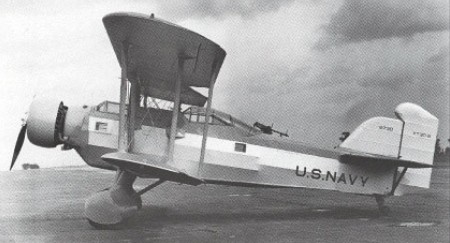
Engine: 2 x Pratt & Whitney S2B1-G Hornet, 429kW
Max take-off weight: 3564 kg / 7857 lb
Empty weight: 1922 kg / 4237 lb
Wingspan: 15.24 m / 50 ft 0 in
Length: 10.79 m / 35 ft 5 in
Height: 4.03 m / 13 ft 3 in
Wing area: 57.97 sq.m / 623.98 sq ft
Max. speed: 206 km/h / 128 mph
Ceiling: 4265 m / 14000 ft
Range: 893 km / 555 miles
Armament: 2 x 7.62mm guns, 832kg of bombs
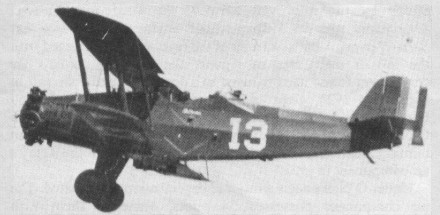
In 1926 as the principal combat element of Mexican Army Aviation, eight Douglas O 2C observation aircraft were procured from the USA these were to be supplemented by nine O 2Ms and three O¬2M 2s.
The excellent flight characteristics of the Douglas O-2 family led to the conversion of 40 O-2Ks in 1930 as basic trainers for the US Army. Dual controls were installed and armament was deleted, the modified aircraft then being designated Douglas BT-1. The only O-32 to be built was given dual controls, also in 1930, and became designated BT-2. Thirty O-32As were modified similarly to the O-2Ks; used by US Army and National Guard units for basic training these were redesignated BT-2A. Some 146 BT-2B aircraft were built as such, the first appearing in 1931. Powered by the 336kW Pratt & Whitney R-1340-11 radial, they survived many years in basic training units.
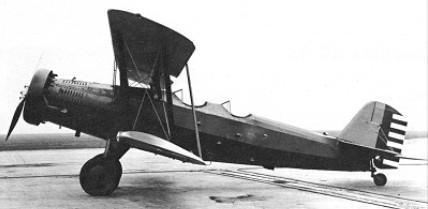
BT-2B was converted in 1940 to Type A-4 target aircraft by installation of radio equipment and conversion to nosewheel undercarriage.
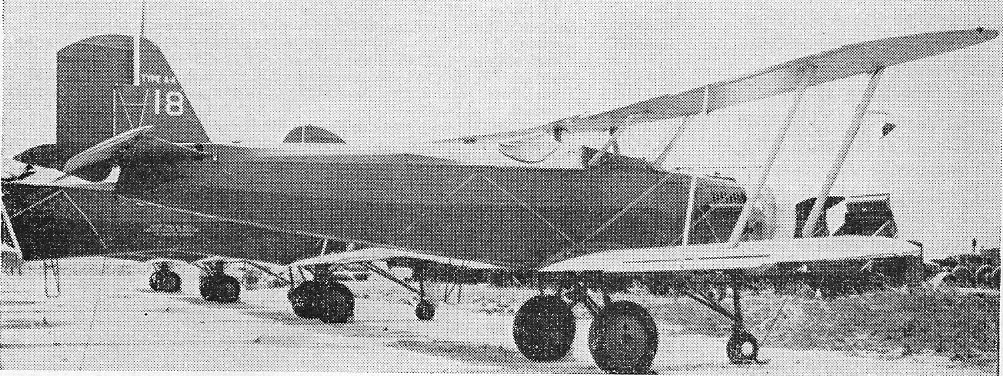
Douglas BT-2B
Engine: 1 x Pratt & Whitney R-1340-11 radial, 336kW
Max take-off weight: 1845 kg / 4068 lb
Empty weight: 1324 kg / 2919 lb
Wingspan: 12.19 m / 39 ft 12 in
Length: 9.5 m / 31 ft 2 in
Height: 3.3 m / 10 ft 10 in
Wing area: 33.63 sq.m / 361.99 sq ft
Max. speed: 216 km/h / 134 mph
Cruise speed: 188 km/h / 117 mph
Ceiling: 5850 m / 19200 ft
Range: 515 km / 320 miles
O-2C
O-2M
O-2M-2
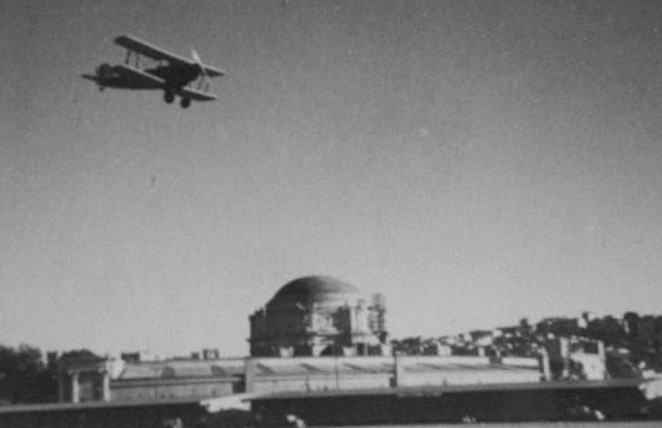
A 10 passenger biplane, circa 1920s.

