Fairey Pintail amphibian of 1920.
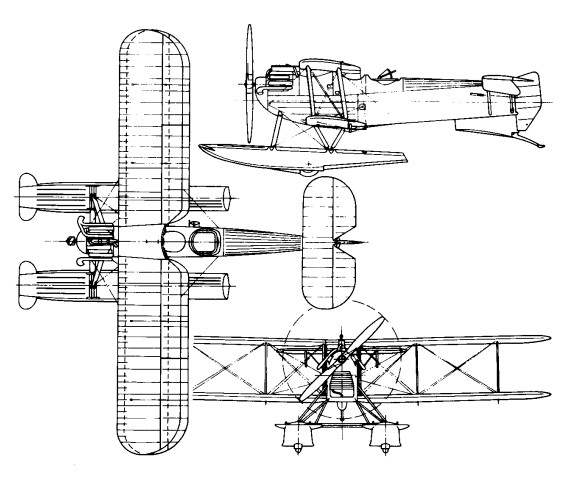
Fairey Pintail amphibian of 1920.
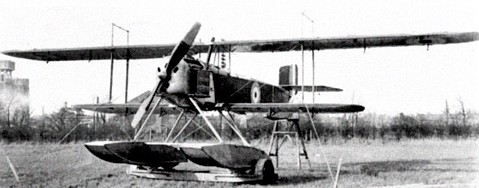
The Fairey N.10 (F.128) was modified in September 1917 as a landplane, with a wheeled undercarriage, and designated Fairey III. This introduced the Fairey Patent Camber Gear evolved for the Hamble Baby, which was then described as a trailing-edge flap and used to increase the lift of the wings. Tested as a two-seat seaplane, the F.128 was known as the Fairey III. With a single frontal radiator behind the propeller and the floats replaced by a wheel landing gear, the designation became Fairey IIIA. One N10 (III) even had its 46 foot wings reduced to about 25 feet, fitted with floats and entered in the 1919 Schneider Trophy Race. The race was flown, but foggy conditions prevented anyone from properly completing the course. This N10 (III) – at one stage G-EALQ – served as a prototype – floats on, floats off – wings long, wings short – 450 hp Napier Lion and so on.
Fifty examples were ordered as ship-borne two seat bombers, and production began in 1918 (N2850-N2899), and the first IIIA was flown on June 6, 1918. Powered by a 260 hp Sunbeam Maori 12 cylinder engine, it had 46ft 2in equal span two bay wings; the variable camber being fitted to the lower wing only. The end of the war prevented any widespread use of the IIIA, however. The IIIB was also produced in small numbers as a two seat floatplane bomber, and a few examples saw active service before the Armistice mainly on coastal patrols around the United Kingdom. The IIIB had float landing gear, increased wing area, and ailerons on the upper wing in addition to the Patent Camber Gear on the lower. Both versions employed a 260 hp Sunbeam Maori engine, and could carry a bombload of approximately 272 kg (600 lb).
The IIIB did have the top mainplane span increased to 62ft 9in was a specially strengthened catapult version. It seems that about eighty-two IIIAs and Bs were built – some later converted to the IIIC.
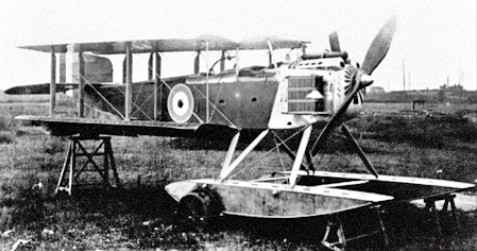
The third variant to be designed and produced during 1918 was the IIIC, a seaplane which had a performance increase of some 14%. Powered by a Rolls Royce Eagle VIII engine, the IIIC total production of 36 machines were all either IIIBs converted on the production line, or built as IIICs from that line. Too late for war service in 1918, at least seven examples saw operational duties with the North Russian Expeditionary Force, based at Archangel, in 1919. Four IIICs appeared on the Civil Register later, one of which, G-EBDI (ex N9253), took part in an attempted global flight in 1922, but finally sank in Far Eastern waters on August 24,1919.
Progression in design next produced the IIID variant, first flown in prototype form in August 1920. An overall total of 227 IIIDs were eventually built, and the type’s adaptability to both float and landplane configurations gave it a relatively long life. The prototype IIID, N9450, retained the Eagle VIII engine and made its first flight in August 1920 as a seaplane, and an initial production batch of 50 machines was put in hand. Of the 207 IIID built for service with the RAF and Fleet Air Arm, 152 were powered by Napier Lion IIB, V or VA engines.
On 30 October 1925, a IIID became the first standard FAA seaplane to be catapulted from a ship at sea.
In landplane form, the IIID was one of the first service aircraft to have oleo-pneumatic (oil/air) shock-absorbers.
Six IIID seaplanes went to the Australian government in August 1921. Several other European coun¬tries purchased a few machines in the same period. Copies were sold to Sweden, Portugal, and Netherlands.
Long distance flights characterised the IIID era; Portugese IIIDs flew across the Southern Atlantic; 4 RAF IIIDs on a Cairo-Cape-Cairo flight in 1926. Led by Wg Cdr C. W. H. Pulford, between 1 March and 21 June 1926 IIIDs completed a flight of almost 22,530km, Cairo-Cape Town-Cairo and thence to Lee-on-Solent. At no time throughout the period of almost four months was any delay caused by mechanical failure of any of the aircraft. They operated from Singapore, Shanghai, British Guiana and Australia. The basic design was still much the same; 46ft span, double bay, variable camber, Napier Lion (or alternating R.R. Eagle VIII). In service from 1924 until 1930 the IIID played a significant part in the development of military aviation.
Last in the III series was the IIIF. Originally designed to meet a 1924 specification which required a 3 seat spotter reconnaissance aircraft for the Fleet Air Arm, the IIIF was a much modified development of the IIID, having an all metal fuselage and propeller, folding wings, and easy change to either wheeled or float undercarriage. The first prototype, N198, first flew on 19 March 1926, and initial deliveries of production aircraft went to various naval units during 1927. The Fairey IIIF had no dual controls and were used extensively on naval co-operation with its two man cockpit aft of the pilot. No raked wings, no stagger, no sweep back, the top wing in perfect symmetry with the bottom. Although many of the same characteristics still applied it was a vastly improved design over the IIID. Nearly 600 of these were built.
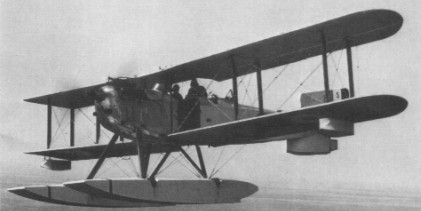
It was in Fleet Air Arm use that the IIIF made its largest contribution, serving aboard every British aircraft carrier of the time, as well as ashore with many naval air stations, training establishments, and specialized naval schools. It also became the vehicle for a variety of experiments and testing in many roles; including catapult trials, landing on a carrier with strengthened float and empennage, and many trials of radio-controlled aircraft. The IIIF was also subjected to many years of scientific tests at the RAE, Farnborough. At least 25 IIIFs were purchased by non British governments, including Russia, Ireland, Argentina, Greece, Chile and New Zealand. In all a total of 622 Fairey IIIFs were built, of which 243 were RAF versions and the rest FAA variants. At least three examples recorded as still in RAF service (as target tugs) as late as February 1941.
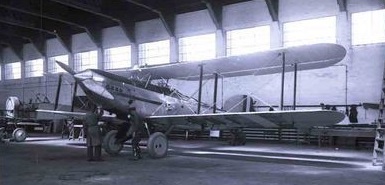
Two further developments, the IIIF Mk V and Mk VI, were to give further service under the designations Gordon and Seal respectively, but were merely the final examples of a line of Fairey III series aircraft which had spanned almost 23 years of service usage.
F.128
Engine; 1 x 260hp Sunbeam Maori II 12-cylinder in-line engine
Max take-off weight; 4159 kg / 9169 lb
Empty weight; 2970 kg / 6548 lb
Wingspan; 46.2 m / 151 ft 7 in
Length; 36 m / 118 ft 1 in
Height; 11.10 m / 36 ft 5 in
Wing area; 476 sq.m / 5123.62 sq ft
Max. Speed; 104 km/h / 65 mph
Ceiling; 14000 m / 45950 ft
Armament; 1 x 7.7mm machine-gun, 2 x 50kg bombs
Crew; 2
IIIA
Span: 14.07 m (46 ft 2 in)
Length: 9.45 m (31 ft)
Height. 3.25 m (10 ft 8 in)
Engines: 260 hp Sunbeam Maori
Maximum speed: 175.4 km/h (109 mph).
Service ceiling: 4572 m (15000 ft).
IIIB
Engine: Napier Lion XIA, 570 hp.
Wing span: 62 ft 9 in.
IIIB
Engines: 260 hp Sunbeam Maori
Span: 19.13 m (62 ft 9 in)
Length: 11.3 m (37 ft 1 in)
Height: 4.27 m (14 ft)
Maximum speed: 152.9 km/h (95 mph)
Service ceiling: 3139 m (10300 ft).
IIIC
Engine: 375 hp RR Eagle VIII
Span: 14 m (46 ft 1 in)
Length: 11.3 m (37 ft 1 in)
Height: 4.27 m (14 ft)
Maximum speed: 177.8 km/h (110.5 mph).
Service ceiling: 2774 m (9100 ft).
IIID
Engine: 375 hp RR Eagle VIII or 450 hp Napier Lion II.
Span: 14 m (46 ft 1 in)
Length: 11 m (36 ft 1 in)
Height. 3.96 m (13 ft)
Maximum speed: 193 km/h / 120 mph
Service ceiling: 6096 m (20000 ft) (Landplane/Lion).
IIIF prototye
Length: 11.07 m (36 ft 4 in)
Height. 3.83 m (12 ft 7 in)
IIIF
Engine: Napier Lion XIA, 570 hp / 425kW.
Span: 13.94 m (45 ft 9 in)
Length 34ft 4in.
Height 14ft 2in.
Wing area; 41.2 sq.m / 443.47 sq ft
Empty weight: 1779 kg / 3923 lb
Loaded weight: 2858 kg / 6301 lbs
Maximum Speed: 120 mph.
Ceiling; 6095 m / 20000 ft
Maximum speed: (Mk 1 landplane) 241.4 km/h (150 mph)
Armament; 2 x 7.7mm machine-guns, 220kg of bombs
IIIM – Engine: Napier Lion XIA, 570 hp.
IIIM/B
Engine; 1 x Napier Lion XIA, 425kW
Max take-off weight; 2858 kg / 6301 lb
Empty weight; 1779 kg / 3922 lb
Wingspan; 13.94 m / 45 ft 9 in
Length; 10.82 m / 35 ft 6 in
Height; 4.26 m / 13 ft 12 in
Wing area; 41.2 sq.m / 443.47 sq ft
Max. speed; 209 km/h / 130 mph
Ceiling; 6095 m / 20000 ft
Armament; 2 x 7.7mm machine-guns, 220kg of bombs
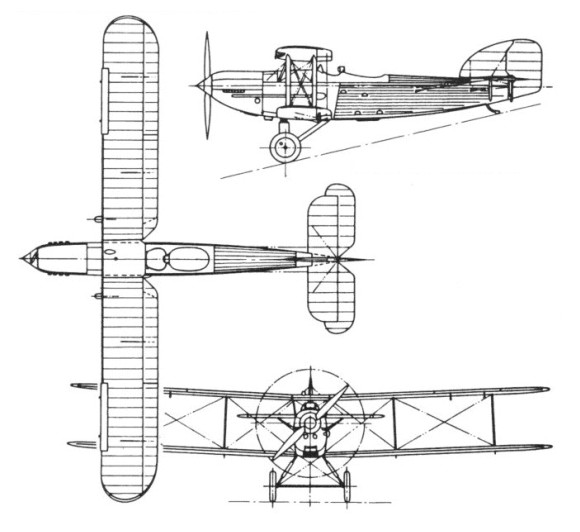
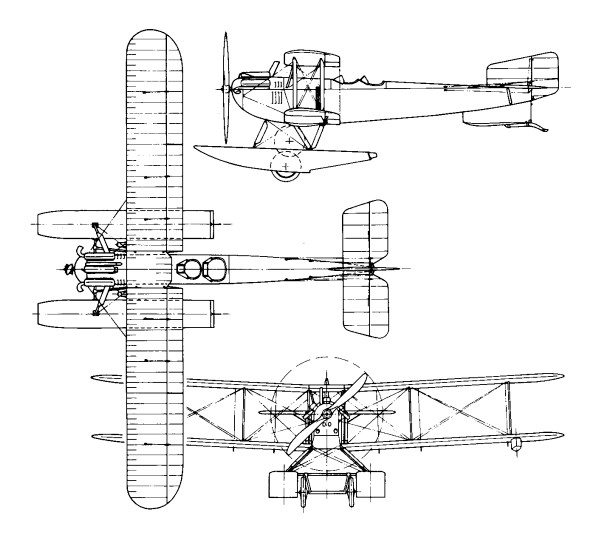
March 1917 – the Fairey N9 designed to meet an Admiralty specification had what was called a camber changing gear wing feature.
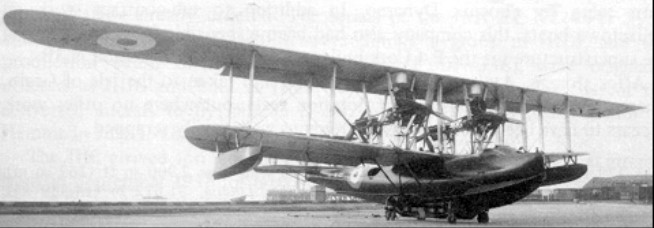
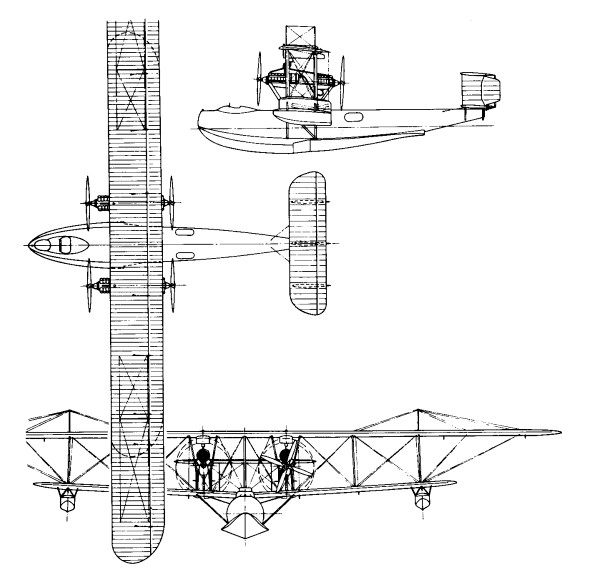
The Fairey N.4 was a 1920s British five-seat long range reconnaissance flying boat. Designed and built by the Fairey Aviation Company to meet an Admiralty requirement for a very large four-engined reconnaissance aircraft, it was the world’s biggest flying boat when it first flew in 1923.
The first N.4 (named Atalanta) first flew in 1923 powered by four 650 hp (485 kW) Rolls-Royce Condor IA piston engines. The hull had been built in Southampton (by boat builders) and delivered to Lytham St. Annes for assembly and the complete aircraft was then dismantled and taken by road to the Isle of Grain for its first flight.
The second N.4 Mk II (named Titania) included improvements and later variant Condor III engines. Titania was not flown straight away and was stored, not flying until 1925.
Engines: 4 × Rolls-Royce Condor III, 650 hp (485 kW) each
Length: 60 ft 0 in (20.12 m)
Wingspan: 139 ft 0 in (42.37 m)
Wing area: 2900 ft2 (269.41 m2)
Gross weight: 31612 lb (14339 kg)
Maximum speed: 115 mph (185 km/h)
Endurance: 9 hours 0 min
Service ceiling: 14,100 ft (4300 m)
Crew: 5
Armament
0.303in (7.7mm) Lewis machine-gun (in nose and beam positions)
1000lb (454kg) of bombs
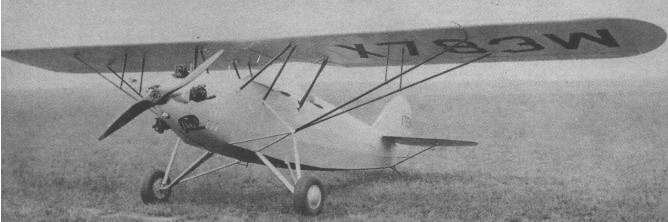
The Kreider-Reisner Division of Fairchild produced this tandem two-seat parasol monoplane in 1931. The F 22 was a parasol winged monoplane, generally being cheaper to build and therefore to buy, even if performance was sacrificed for economy.
The prototype of the new model C-7, X783W, was initially powered by the 80 hp Armstrong Siddeley Genet engine before this was replaced by the inline 75 hp Rover engine, complemented by, a more aerodynamic tail group.
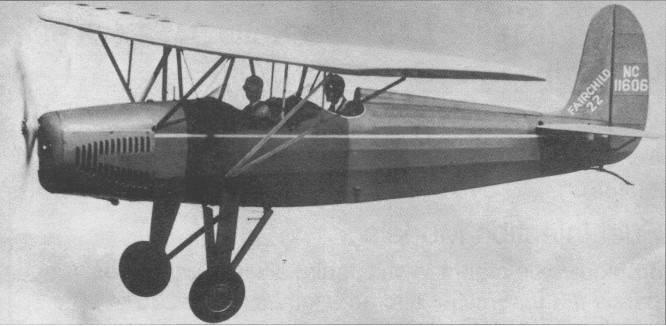
The basic aircraft featured a fabric covered, welded steel tube, truss type fuselage which accommodated a tandem seating arrangement with provision for dual controls. The slender wing featured two spruce spars and truss type ribs and was braced internally with steel tie rods. External bracing was accomplished with sloping Vee streamlined steel struts to the apices of the two steel tube pyramids on the sides of the fuselage, to which were attached the legs of the fixed undercarriage.
The Rover engine in the C-7 produced a reasonable performance. Maximum speed was 107 mph (172 km/h), ceiling 10,000 ft (3048 m) and range 350 miles (563km or 4 hours flying time). 12 examples
were built at the Fairchild Aviation Corp, Hagerstown, MD and they remained popular even with the advent of the more powerful examples.
The C-7A was the first to improve the power of the F 22 and was fitted with a Cirrus Hi-Drive 4 cylinder inverted inline engine, built under licence from Cirrus Aero Engines at Croydon. It provided 20 hp more than its predecessor without altering the lines of the type, and began production during 1935. Several were exported offshore and the aircraft was further developed as a seaplane. Around 60 examples being manufactured fitted with Edo floats, a metal propeller, hand crank-inertia engine starter and navigation lights.
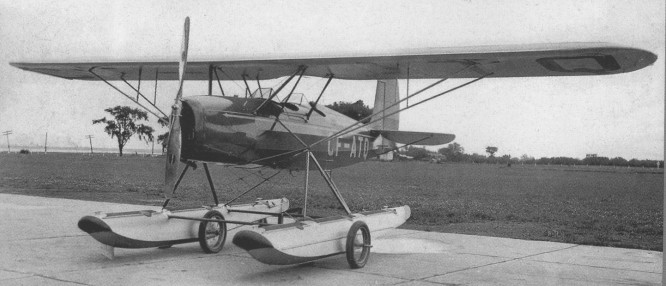
The G7B was specially developed for the more strenuous requirements of the advanced pilot and was powered by the new 4 cylinder ‘Pirate’ inverted inline which produced 125 hp for a maximum speed of 125 mph (201 kph), a ceiling of 18,000ft (5486 m) and a range of some 400 miles (644 kms). Price was still reasonable at US$3,400 from the factory. There were a few refinements over the C-7A – these including streamlined ‘sport type’ landing gear, bucket seats fitted for a parachute pack and the instrument panels were mounted on rubber. The optional one or two piece wing was now fitted with a leading edge spoiler strip to eliminate float and provided a stall warning as a useful bonus. The wing has I box spars and 14 ribs each, with the same plan shape and profile as the F 24, and a 66 inch chord.
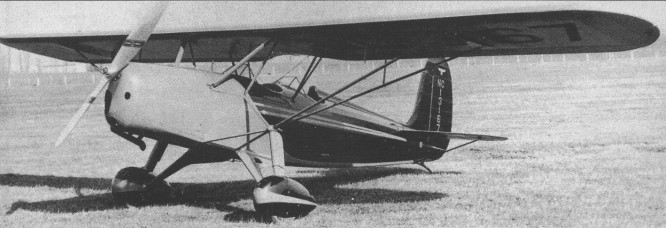
Only one example of the C-7C was built, in 1933, powered by a Wright-Gipsy L-320 engine with a 21 USG fuel tank, for operation in Canada before the C-7D was introduced.
The F22-C7B was powered by a Menasco 125 Super Pirate engine.
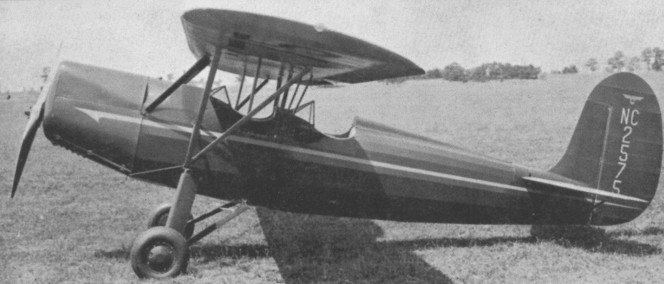
Built during the depression the D model was introduced as the cheapest model available. The C-7D was powered by the 4 cylinder Wright-Gipsy 90 hp upright engine. This necessitated a subtle redesign of the cowl, it being higher in front of the cockpit. Maximum speed was 112 mph (180 kp h) and it had a cruising range, using 6 gallons per hour, of 320 miles (515 km). 21 were manufactured, priced at US$ 2,475 from the factory.
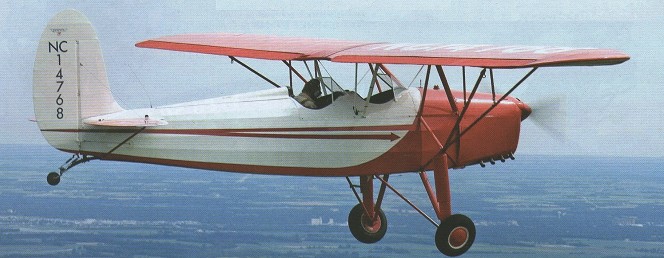
The fitting of the 125 hp Warner Scarab radial engine began with the C-7E and his changed the profile considerably with the fuselage contoured to match the frontal profile of the radial. Around a dozen being built.
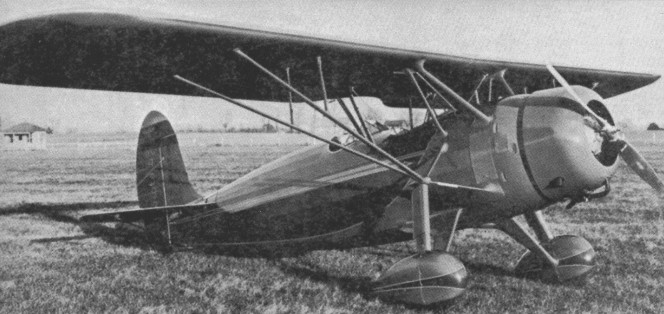
The engine was replaced with the improved ‘Super Scarab’ of 145 hp on the C7F. It is thought that only around nine examples were completed.
With pilots requests for engine starters (rather than propping by hand), radios and other comforts,’ Fairchild designed the 22C7G to accommodate this and still remain true to the sport plane ethos. This model featured a completely new wing, which not only supported the greater weight of the aircraft, but enhanced manoeuvrability and had the strength to withstand unrestricted acrobatics. Strutted together into several rigid sections the slightly contoured fuselage was very strong, and the whole airframe was capable of + 11G and –9G.
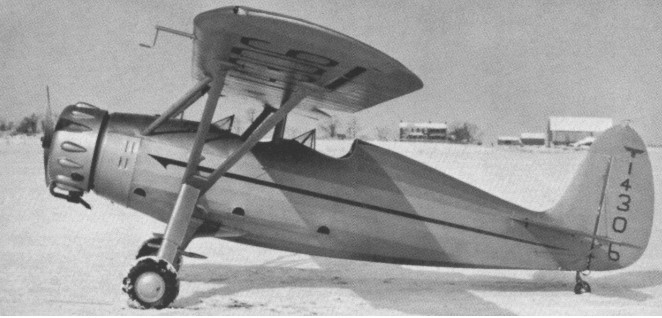
The aircraft had an acceptable but unspectacular performance, attaining a maximum speed of 135 mph (217 km/h), a service ceiling of 16,000 feet (4877 m) and cruising range of 500 miles (804 km).
Production of the F 22 struggled through until the end of the Depression, with the market beginning to improve potential customers turned their attention toward higher performance machines and the comfort of enclosed cockpits. This spelt the end for the F 22, production halting after 127 of all models were built. Fairchild then turned its attention the Fairchild F 24.
C-7 Prototype X783W
Engine: 80 hp Armstrong Siddeley Genet
F 22 C7A
Engine: 75hp Rover
Maximum speed: 107 mph (172 km/h)
Ceiling: 10,000 ft (3048 m)
Range 350 miles (563km)
Endurance: 4 hr
F-22 C7A
Engine: American Cirrus Hi-Drive, 95 hp
F-22 C7B
Engine: Menasco 125 Pirate, 172 hp
Maximum speed: 125 mph (201 kph)
Ceiling: 18,000ft (5486 m)
Range: 400 miles (644 kms)
Price: US$3,400
F 22C7C
Engine: Wright-Gipsy L-320
Fuel capacity: 21 USG
F22-C7D
Engine; Wright-Gipsy L-320, 90 hp
Wing span; 32 ft 10 in
Length; 21 ft 8 in
Maximum speed: 112 mph (180 kp h)
Load; 558 lb
Fuel capacity; 21 USG
Cruising range: 320 miles (515 km)
Fuel burn: 6 USGPH
ATC 503
Priced: US$ 2,475
F22 C-7E
Engine: 125 hp Warner Scarab
Wing span: 32 ft 10 in
Length: 22 ft
Height: 8 ft
Empty weight: 1102 lb
Loaded weight: 1750 lb
Max speed: 128 mph
Cruise: 110 mph
ROC: 700 fpm
Service ceiling: 18,000 ft
Range: 50 mi
F22 C7F
Engine: Warner Super Scarab, 145 hp
Gross weight: 1,750 lbs
Empty weight: 1,102 lb
Top speed: 133 mph
Cruise speed: 115 mph
Initial climb rate: 900 fpm
Service ceiling: 20,000 ft
Range: 350 nm
Seats: 2
22C7G
Load limits: + 11G / –9G
Maximum speed: 135 mph (217 km/h)
Service ceiling: 16,000 feet (4877 m)
Cruising range: 500 miles (804 km).
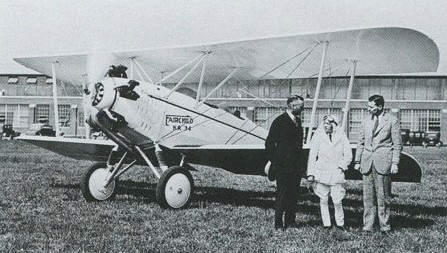
Previously the Kreider-Reisner C-4 Challenger of 1929. Construction was of welded steel tube.
Two were built, NC567K and NC11607A.
The KR-34B built in 1928 and early 1929 was a single engine, open cockpit, two-bay version carrying a pilot and two passengers, with a 130 hp Comet engine. Several examples were built.
One KR 34B2 was built, NC205E, in 1934. It uses a Continental A70 engine of 165 hp. NC205E was owned by David Carpenter in 2017.
KR-34A
Engine: Wright J-6 Whirlwind, 165 hp
Propeller: two-bladed fixed pitch
Wingspan:: 9,17 m
Length: 7,06 m
Height: 2,82 m
Wing area: 26,48 sq.m
Empty weight: 690 kg
MTOW: 1075 kg
Wing loading: 40,596 kg/sq.m
Power loading: 6,515 kg/hp
Max speed: 193 kmh
Cruise speed: 164 kmh
Ceiling: 4265 m
Range: 820 km.
KR-34B
Engine: Wright J-6 Whirlwind, 130 hp
Weight: 485 kg
Max speed: 193 km/h
Cruise: 164 km/h
Stall: 72 km/h
Ceiling: 5029 m
Range: 820 km
Seats: 3
KR-34B
Engine: Comet
KR 34B2
Engine: Continental A70, 165 hp
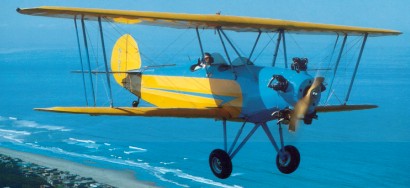
The KR21 C6B received its type certificate on 9 October 1930.
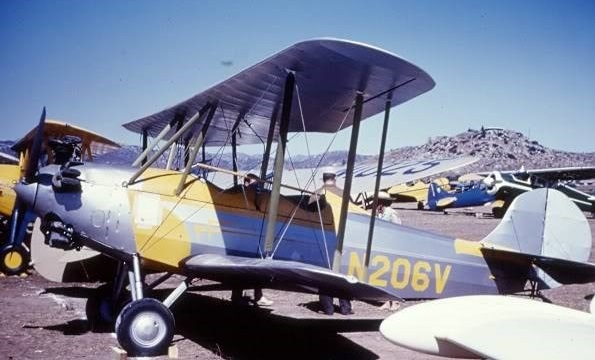
KR21 C6B
Engine: Kinner B5, 125 hp.
The 1911 Faccioli No. 4 was designed and built by Aristide Faccioli (the first technical director of Fiat).
Span: 26’3″
Length: 26’3″
Weight: 550 lb
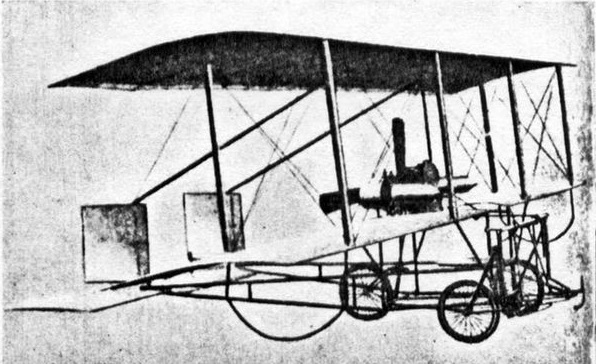
1909 SPA-Faccioli biplane, powered by a 20 hp Faccioli motor. Piloted by its designer Aristide Faccioli, in December 1909 at Turin, Italy, this machine became the world’s 15th aeroplane to make a successful controllable flight.
Designed and built by Aristide Faccioli, he was the first Italian to design and built an aircraft and its engine.
Span: 22′
Length: 11’6″
Weight: 400 lb

The Ezekiel Airship of 1902.

