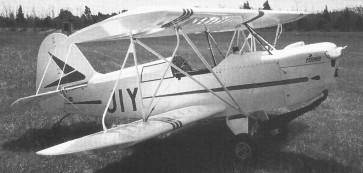
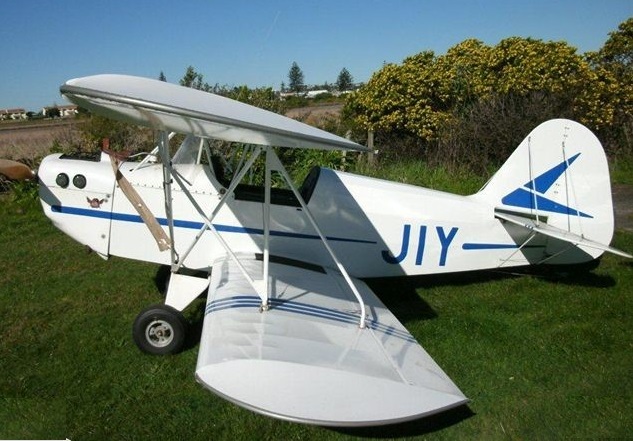
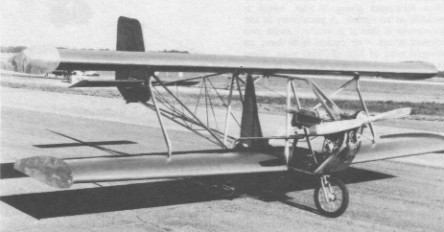
First flown in 1984, the FP-404 is a throw-back to seat-of-the-pants flying, complete with minimal instruments and bare-necessity controls. A single seat biplane amateur-built biplane, the 404 is a version of Fisher Classic, featuring short wings, full-span ailerons and a semisymmetrical airfoil. Geodetic wood construction and additional bracing contribute to structural strength, enough to withstand higher Gs than most lightplanes. For experimental models, a 50 horsepower Rotax engine is more than enough power for 800 feet-per-minute climbs. The plane is as responsive as you are aggressive. By by 2004 350 had been sold.
Single seat single engined negative stagger biplane with conventional three axis control. Wings have unswept leading and trailing edges, symmetrical double-surface, and constant chord; conventional cruciform tail. Pitch control by elevator on tail; yaw control by fin mounted rudder; roll control by full -span ailerons; control inputs through stick for pitch/roll and pedals for yaw. Wings braced by struts; wing profile NACA 23015; double surface. Undercarriage has three wheels in tricycle formation; bungee suspension on all wheels. Flush right go right nosewheel steering connected to yaw control. Brakes on 16-inch main wheels. Aluminium tube framework, without pod. Twin cylinder Kawasaki 440A with 2.0 reduction and recoil restart capability engine mounted below wing driving tractor propeller. Frame: 6061T6 and 2024T3 aluminium. Wing 2.7oz Stits Polyfiber. The prototype of this biplane was shown for the first time at Oshkosh in August 1982. Essentially in-tended for home builders, the Barnstormer has been available from Fisher Flying Pro¬ducts since the end of 1982 as plans for $95 or as a complete kit with Kawasaki TA440 engine for $4355. In order to give greater flexibility to the builder, various sub assem¬bly kits are also available as follows: tail surfaces kit $285; wings kit $1175; fuselage kit for $1050; covering $395; power unit $1650. Options include a ground adjustable two-¬bladed variable pitch propeller and shor¬tened wings down from 20 ft (6.09 m) span to 17.5 ft (5.33 m).
Engine: Kawasaki TA 440A, 38.5 hp at 6000 rpm. Propeller diameter 58 inch, 1.47m. Reduction ratio 2.0/1. Power per unit area 0.21hp/sq.ft, 2.4hp/sq.m. Fuel capacity 1.7 US gal, 1.4 Imp gal, 6.6 litre Optional fuel capacity 5.0 US gal, 4.2 Imp gal, 18.9 litre. Wing span 20.0ft, 6.09m. Constant chord 4.0 ft, 1.21 m. Sweepback 0 degs. Total wing area 176 sq.ft, 16.4 sq.m. Aspect ratio of each wing 4.5/1. Nosewheel diameter overall 16 inch, 40 cm. Main wheels diameter overall 16 inch, 40 cm. Empty weight 220 lb, 100 kg. Wing loading, 2.19 lbs/sq.ft.
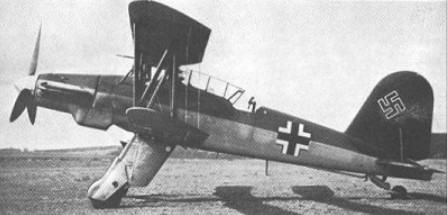
Two-seat torpedo-bombing and reconnaissance biplane of 1938 developed to serve on the German aircraft carrier Graf Zeppelin.
Fieseler Fi.167A-0 Engine: 1 x Daimler-Benz 601B, 820kW Max take-off weight: 4850 kg / 10692 lb Empty weight: 2800 kg / 6173 lb Wingspan: 13.5 m / 44 ft 3 in Length: 11.4 m / 37 ft 5 in Height: 4.8 m / 15 ft 9 in Wing area: 45.5 sq.m / 489.76 sq ft Max. Speed: 325 km/h / 202 mph Cruise speed: 270 km/h / 168 mph Ceiling: 8200 m / 26900 ft Range: 1500 km / 932 miles
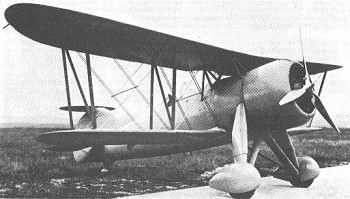
The Fi.98 was a biplane dive bomber that competed with the Hs.123, but was abandoned early. Only one was built, the second prototype was cancelled.
Engine: 1 x BMW 132A-3, 485kW Take-off weight: 2160 kg / 4762 lb Empty weight: 1450 kg / 3197 lb Wingspan: 11.50 m / 37 ft 9 in Length: 7.40 m / 24 ft 3 in Height: 3.00 m / 9 ft 10 in Wing area: 25.5 sq.m / 274.48 sq ft Max. Speed: 295 km/h / 183 mph Ceiling: 9000 m / 29550 ft Range: 470 km / 292 miles Armament: 2 x 7.92mm machine-guns
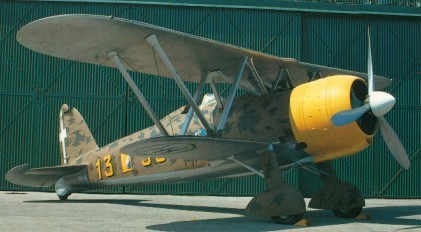
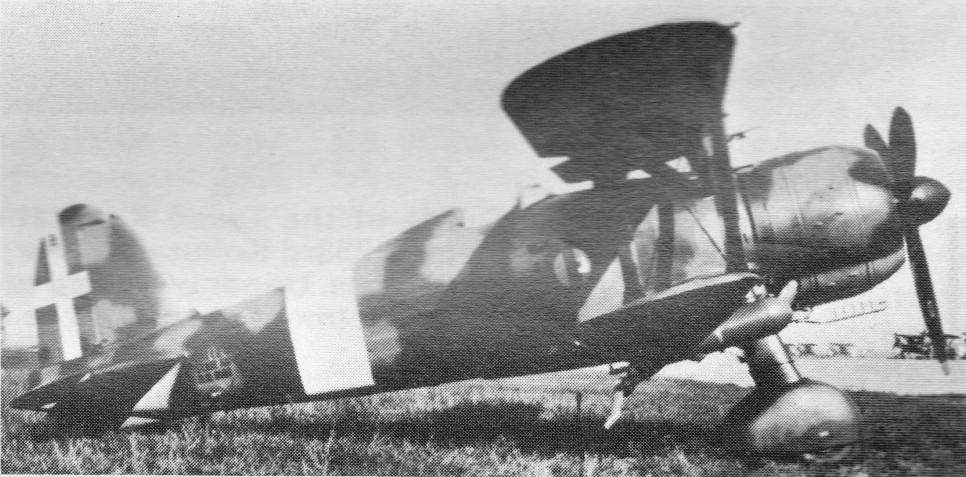
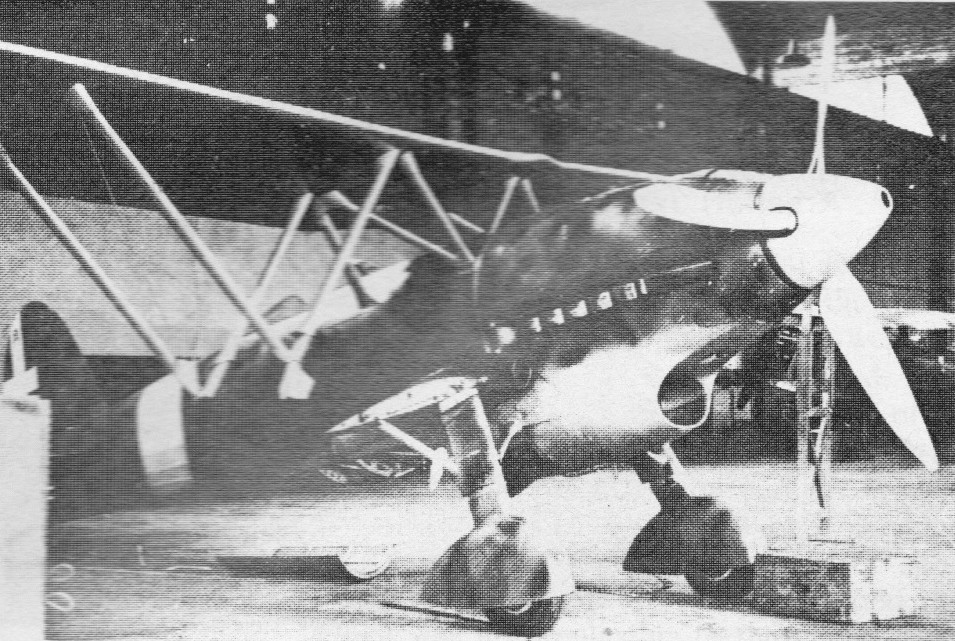
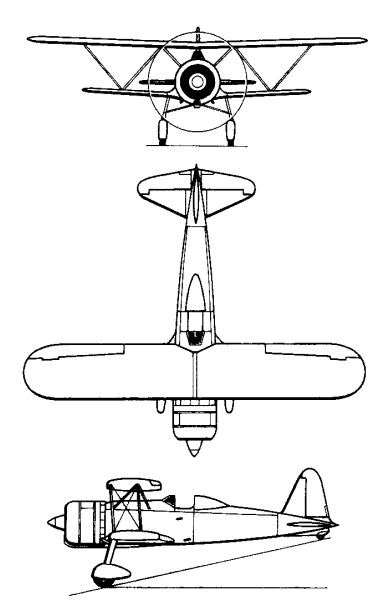
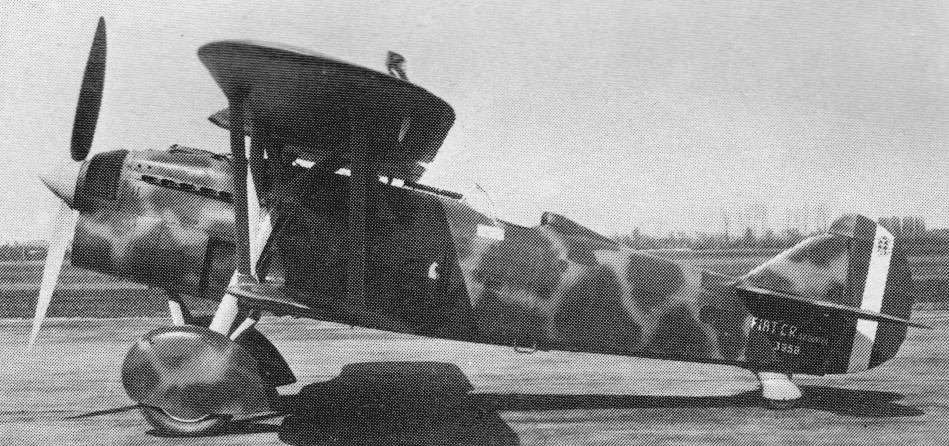
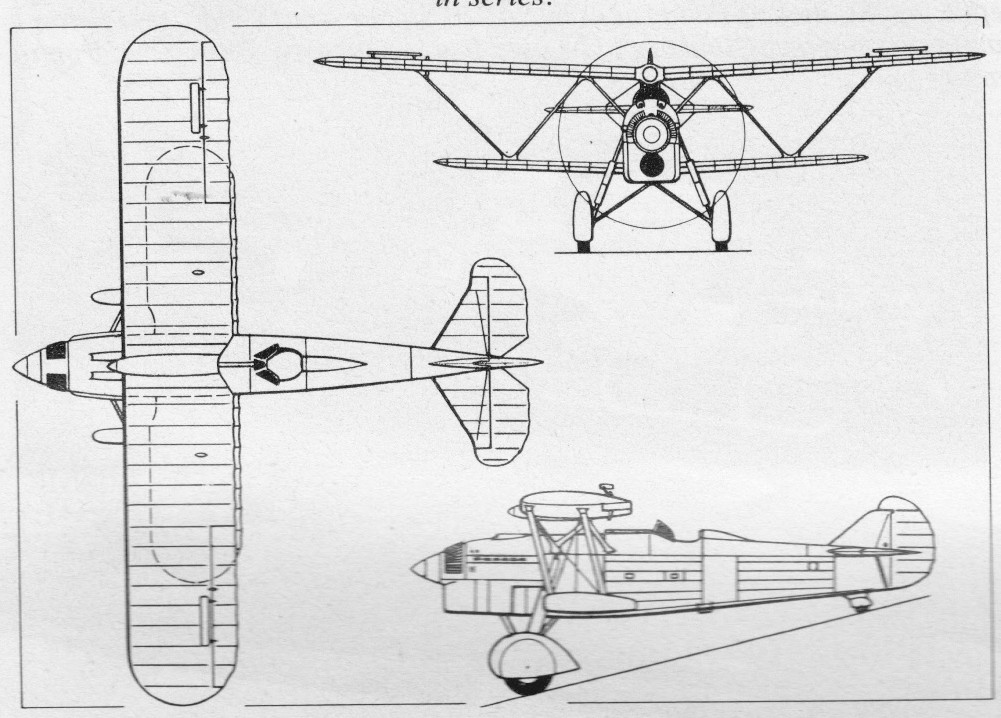
The C.R.42 Falco (Falcon), designed by Celestino Rosatelli, was the last in the family, begun in 1923 with the C.R.20 and 30 series and followed by the C.R.33, 40 and 41 prototypes, to become one of these succes¬ses. It had the distinction of being the last fighter biplane manufactured by any of World War Two’s combatants. It was an unequal span biplane, with an oval section fuselage. Employing the same Warren truss system of interplane struts as the 1933 CR.32, from which it was developed, Celestino Rosatelli’s CR.42 was powered by a 626kW Fiat A74 R1C 38 radial and had a top speed of 441km/h. The fixed two leg undercarriage was fitted with oleo pneumatic shock absorbers and enclosed in streamlined fairings. The tailwheel was retractable on the prototype, but fixed on production aircraft. The CR42 first flew on May 23,1938 and, powered by an 840 hp Fiat A74R.IC. 38 two row radial engine, the prototype proved to be highly manoeuvrable, with a rapid rate of climb and a maximum speed of 441 km/h (274 mph).
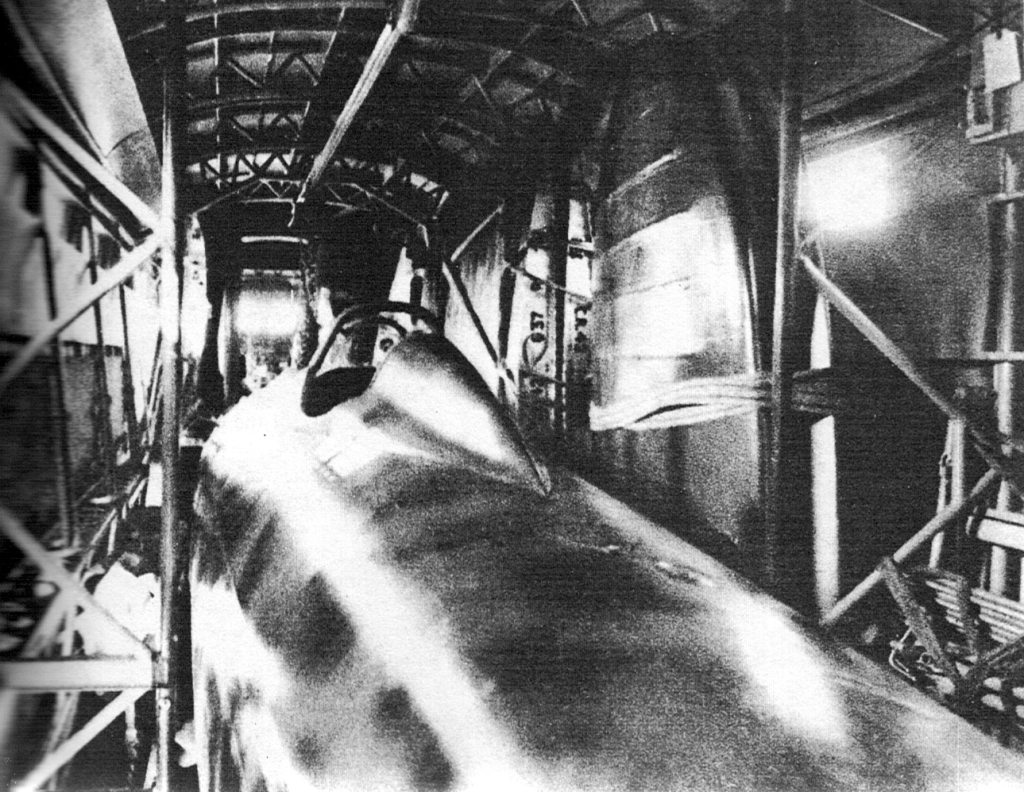
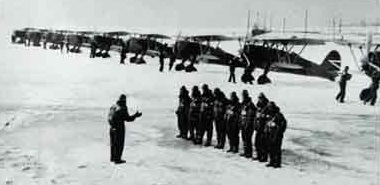
It was put into production the same year deliveries to the Regia Aeronautica commenced in April 1939, and when Italy entered the war on June 10, 1940, a total of some 330 were in front line service with Stormi or Gruppi of the Regia Aeronautica in Italy and in North and East Africa. Armament comprised one 7.7 mm (0.303 in) and one 12.7 mm (0.54in) Breda¬SAFAT machine gun, which both fired through the disc of the Fiat 3D41 propeller, and a rounds counter was fitted in the instru¬ment panel. On later production models, the 7.7 mm (0.303 in) gun was replaced by another of 12.7 mm (0.5 in) calibre. For some inexplicable reason, radio equipment was not installed. Italian C.R.42s drew their first blood on June 13, 1940, attacking air bases at Fayence and Hyeres in southern France; they also escorted Fiat B.R.20s on bombing missions over Toulon harbour during the battle for France. They met opposition from French Dewoitine D 520s and Bloch 152s, but losses were minimal and during the remainder of the campaign they were also used on escort duties with S.M.79 bombers over the Mediterranean and North Africa. On the strength of the achievement in this theatre, the Italian government decided on a closer collaboration with the Luftwaffe, and created the Corpo Aereo Italiano (Italian Air Corps) to assist mainly in the Battle of Britain. Fifty C.R.42s and 48 Fiat G.50s, together with other Italian fighter, bomber and reconnaissance aircraft, formed the con¬tingent. They were sent to Ursel and Maldeghem in Belgium. Unfortunately, the speedier German Bf 109s found it a hard task to keep formation with the biplanes, and the latter’s lack of radio also hampered activities. Nevertheless, it was decided to send the Falcos into combat against Hurricanes and Spitfires. Their first raid was on Harwich on November 11, 1940. They also participated in action off the Kent coast a few days later, and substantial victory claims were made by the Italians, although RAF records give a different picture. Their inefficiency against superior aircraft, together with the Italian need for more air power in the Mediterranean, instigated the return of the Falcos to Italy in January 1941. Falcos served extensively in Libya during 1940 41 and were used for attacks on Malta in the same period, as well as acting as escorts to bombers attacking Allied shipping in the Mediterranean. In October 1940, when Greece entered the war, the three squadrons of C.R.42s (together with other Italian aircraft) sent to the area showed marked superiority over the somewhat motley Greek air arm, which was soon defeated. Falco fighter units then combined with Luftwaffe forces to take the island of Crete, and remained in the Aegean theatre until they were replaced by Fiat G.50s in November 1941. After the Italian conquest of Ethiopia, bases there had, initially, little or no trouble in getting new C.R.42s or spares. However, after June 1941, increased Allied activity in North Africa, bad weather conditions and lack of radio equipment in the aircraft, all took their toll. By November 1941, all Falcos from the region had been either evacuated or destroyed. In the early stages of the desert campaigns in North Africa, during mid 1940 to 1941, C.R.42s were used extensively as fighters, until the advent of more advanced opposition in the form of Hurricanes and Tomahawks. They could not hope to compete against such types and were put to use in the ground attack role. Although improvements and modifications had been made to the original design the C.R.42bis had two additional 12.7 mm (0.5in) guns in underwing fairings (ordered by Sweden as the J 11). Parts of North Africa still covered by the ubiquitous little biplanes included Cyrenaica, where they were fitted with underwing racks for two 100 kg (220 lb) bombs the C.R.42AS (Africa Settentrionale: North Africa) was fitted with a special oil and air sand filter to cope with desert conditions, and a few were armed with two 20 mm (0.79¬in) cannon under the lower wings. As fighter bombers, Falcos also participated in raids around Tobruk, Alexandria and Mersa Matruh and in the siege of Tripoli. Surviving aircraft from this last battle (some 82 Falcos) went back to Italy and were used in attacks on Allied convoys in the Mediterreanean. They were phased out of this duty in favour of more modern types. In October 1941, a C.R.42CN night fighter unit was formed in Sicily and, although it did not see a great deal of active service there, it was reasonably effective later, in 1942 43, against RAF bombers over the industrial areas of northern Italy. In their 1941 battles against the advancing British and their allies in East Africa, the numbers of Italian fighter planes equipped to ward off bombing raids was melting away day by day. The dense sea and land blockade surrounding Italian East Africa made it impossible for the Italians to supply their troops with fresh aircraft from Italy. Soon they had no fighters left except for a dozen Fiat CR.42 Falco biplanes which although they had outstanding flight characteristics were powerless against superior numbers oft the British Gladiator fighters. In this desperate situation they seized on an inspiration of Colonel Galante, and transported the needed fighter planes in dissembled pieces inside the fuselage of Savoia-Marchetti SM.82 Canguro (Kangaroo) transport planes whose range made it possible for them to ferry their cargo to East Africa from Libya. By the Spring of 1941, over 50 Falco fighters had landed in Ethiopia by this method.
Fiat CR.42 inside a Savoia Marchetti SM.82 on the way to East Africa
When used for night attacks, the C.R.42CN (Caccia Notturna) limited night-fighter conversion was equipped with radio and was also fitted with twin underwing searchlights and exhaust flame dampers. One Falco, designated C.R.42B, had a 1010 hp Daimler¬Benz DB 601 inverted V type engine instal¬led, with which it was hoped the aircraft would achieve a speed of 520 km/h (323 mph), but this did not leave the experimental stage. Neither did the CMASA built IC.R.42 (I = Idrovolante: seaplane), which was fitted with twin floats and was much heavier than the landplane, though speed loss from the increased weight was negligible. After the Italian Armistice, 2,000 examples of the slightly modified CR.42LW were ordered from Aeronautica d’Italia (based in Northern Italy) for the Luftwaffe. Intended for nocturnal attack missions, the CR.42LW served with the Nachtschlactgruppen, the Luftwaffe receiving 112 of some 150 completed. These aircraft were used by the Luftwaffe during 1943 44, being flown against the Allies from bases in Austria, Italy and Yugoslavia. The last operations flown by CR.42s took place in May 1945.
CR.42 with smoke screen fitment
Experimental versions included the CR.42DB, which was tested in prototype form with a 753-kW (1,010-hp) Daimler Benz DB 601A engine for a speed of 323 mph, and the ICR.42 (alias CR.42 Idro) twin float fighter.
CR.42DB
The CR.42DB, flown in March 1941, had a 1175 hp Daimler-Benz DB 601E engine and attained a max speed of 323 mph / 20 kph, and climbed to 9840 ft / 3000 m in 3.34 minutes.
Production totalled at least 1,780, and variants included the initial CR.42 Falco (falcon) with one 12.7-mm (0.5-in) and one 7.7-mm (0.303-in) machine-guns for Belgian, Hungarian and Italian orders, and the CR.42ter version of the CR.42bis with two additional 12.7-mm (0.5-in) machine-guns. In 1939, 34 were ordered by the Belgian air force; delivered from January 1940 (although in the event received only 25). Fifty-two were exported to Hungary, appearing on the Eastern Front from mid 1941; and in 1940 41 the Swedish air force took delivery of 72 aircraft. Designated J11, they remained in service until 1945, after which a few remained in civil use.
Production of the type ceased in late 1942 when a total of 1781 had been built. Only 113 remained when the Italians surrendered in September 1943, of which 64 were still ser¬viceable. Most of these were seized by the Luftwaffe or employed with the Repubblica Sociale Italiana, Mussolini’s short lived pup¬pet regime, based at Salo, northern Italy; but a few escaped to join the Italian co-¬belligerent air force that fought on the Allied side, and continued with that Italian air arm until 1945, when they were finally declared obsolete. Some still remained, as modified two seat trainers, until as late as 1950.
FIAT CR 42 Falco Length : 27 ft 2 in / 8.27 m Height: 11 ft 9 in / 3.59 m Wingspan : 31 ft 10 in / 9.7 m Wing area : 241.114 sq.ft / 22.4 sq.m Max take off weight : 5060.5 lb / 2295.0 kg Weight empty : 3929.3 lb / 1782.0 kg Max. speed : 227 kts / 420 km/h Service ceiling : 33465 ft / 10200 m Wing load : 20.91 lb/sq.ft / 102.0 kg/sq.m Range : 418 nm / 775 km Engine : Fiat A. 74 R1C.38, 828 hp / 626kW Crew : 1 Armament : 2x MG 12,7mm Breda-SAFAT
CR.42 Falco Engine: Fiat A.74 R1C.38, 840 hp. Prop: three bladed wooden. Span: 31ft 10in. Length: 27ft 1.5in. Height: 11ft 9.25in. Wing area: 241.12sq.ft. Empty wt: 3,790 lb. Loaded wt: 5,070 lb. Max speed: 267 mph. Service ceiling: 34,450ft. Initial climb: 2,400ft/min. Endurance: 4hr. Armament: 3 x 12.7mm and one 7.7mm machine gun
CR.42AS Falco Engine: l x Fiat A.74 RC 38, 626kW (840 hp). Span: 9.70m (31 ft 9.75in) Length: 8.26m (27 ft 1 in) Armament: 2 x 12.7-mm (0.5-in) mg plus 200 kg (441 lb) bombs Normal T/O weight: 2295 kg (5,060 lb). Max speed: 280 mph at 17,485ft. Operational range: 480 miles.
CR.42B Engine: Daimler-Benz DB 601, 753-kW (1,010-hp). Max speed: 323 mph.
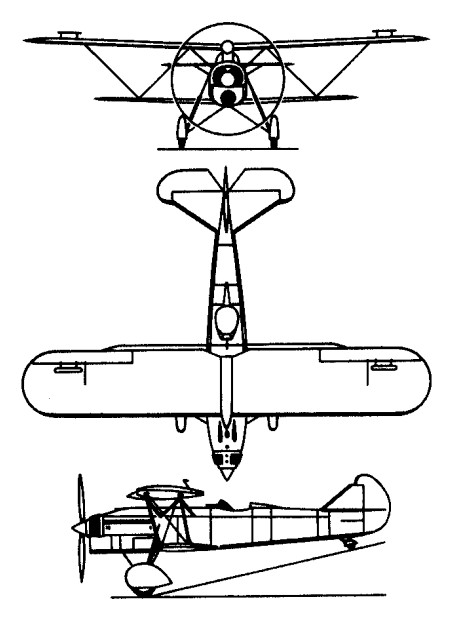
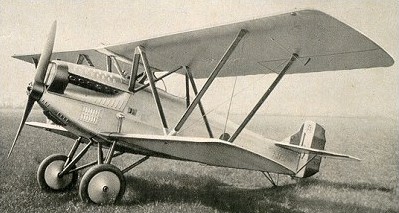
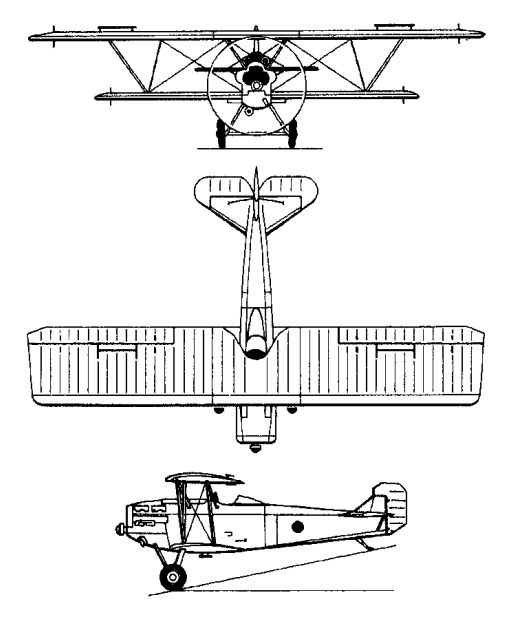
Italy’s most important fighter of the late 1930s, the CR32 biplane was first flown in August 1933 as a development of the CR30 using the same type of metal/fabric-covered all-metal structure and Warren-type interplane bracing but with smaller overall dimensions plus improved performance and agility, and Fiat A 30 RA engine.
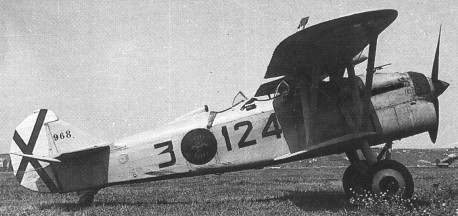
First flown on 28 April 1933, the initial production series of 24 was supplied to China. Between March 1934 and February 1936, 282 CR.32s were delivered to the Regia Aeronautica and this fighter first saw active service in the Spanish Civil War with the Aviacion del Tercio in August 1936.
The CR.32 was numerically and operationally the most important fighter fielded by the Nationalists and their Italian allies in the Spanish Civil War, and the first 12 examples reached Nationalist units in Morocco as early as August 1936. A total of 377 of this type were sent to Spain, where they equipped the Nationalists’ 2-G-3 and 3-G-3 fighter units as well as five Italian gruppi. The CR.32 was faster in level flight and in the dive than the 1-15, and was also better armed when there arrived the CR.32bis and CR.32ter with heavier machine-guns; and by comparison with the -16 the CR.32 was more agile and more heavily armed. By a judicious use of tactics, therefore, Nationalist and Italian pilots were generally able to prevail over the Republican fighters.
The initial CR.32 delivered in 1935 had the 447-kW (600-hp) Fiat A.30 RAbis engine and two 7.7-mm (0.303-in) machine-guns, and these 350 aircraft were followed by 283 examples of the CR.32bis close-support version.
The CR.32bis had the improved 600 hp A 30 Rabis engine, two 12.7 mm and two 7.7-mm (0.303-in) machine-guns
Forty-five similar examples were supplied to Austria and 52 to Hungary (who eventually acquired 38 from Austria).
Next came 150 examples of an improved CR32, the CR.32ter for the Regia Aeronautica in July-December 1937, with revised landing gear and improved equipment, and the final aircraft here 337 CR.32quater fighters essentially similar to the CR.32ter but with a lightened structure and updated equipment.
CR.32quarer
Examples similar to the V were purchased by Paraguay (5) and Venezuela (9).
It was used in the early months of World War II in Greece and East Africa.
Hispano Aviacion SA manufactured over 100 Fiat CR. 32quater biplane fighter as the HA-132-1 Chirri between 1938- 1942. Forty of these later converted as two-seters.
Production of the CR.32 totalled 1211 aircraft.
FIAT CR 32 Chirri Engine: FIAT A.30 RAbis, 592 hp / 440kW Length: 24.442 ft / 7.45 m Height: 8.629 ft / 2.63 m Wingspan upper: 31.168 ft / 9.5 m Wingspan lower: 6.2 m / 20 ft 4 in Wing area: 237.884 sqft / 22.100 sq.m Max take off weight: 4079.3 lb / 1850.0 kg Weight empty: 2921.6 lb / 1325.0 kg Max. speed: 202 kts / 375 km/h / 233 mph Service ceiling: 28871 ft / 8800 m Wing loading: 17.22 lb/sq.ft / 84.0 kg/sq.m Range: 367 nm / 680 km Crew: 1 Armament: 2x MG 7,7mm Breda-SAFAT
CR.32bis Engine: l x Fiat A.30 RAbis, 447 kW (600 hp). Span: 9.50m (3lft 2.25in). Length: 7.47m (24ft 6in) Normal T/O weight: 1975 kg (14,350 lb). Max speed: 224 mph at 9,845 ft. Operational range: 466 miles. Armament: 2 x 12.7-mm (0.5-in) and two 7.7-mm (0.303-in) mg plus 100 kg (220 lb) of bombs
CR.32ter Engine: l x Fiat A.30 RA bis, 447kW (600 hp). Span: 9.50m (31ft 2in). Length: 7.45m (24ft 5.25 in). Height: 2.63m / 8 ft 7.5 in Wing area: 22.10 sq.m / 237.88 sq.ft Empty weight: 3205 lb / 1454 kg Max T/O weight: 1915kg (4,222 lb). Max speed: 295 mph / 330 kph at SL / 220 mph at 9840 ft. / 3000 m Time to 3280ft / 1000m: 1.58min Operational range: 485 m / 780 km at 196 mph / 315 kph Armament: 2 x 12.7-mm (0.5-in) mg plus bombs
Engine: 1 x FIAT A.20, 295kW Max take-off weight: 1400 kg / 3086 lb Empty weight: 940 kg / 2072 lb Wingspan: 9.8 m / 32 ft 2 in Length: 6.6 m / 21 ft 8 in Height: 2.7 m / 8 ft 10 in Wing area: 25.8 sq.m / 277.71 sq ft Max. Speed: 280 km/h / 174 mph Ceiling: 7900 m / 25900 ft Range w/max.fuel: 600 km / 373 miles Armament: 4 machine-guns Crew: 1