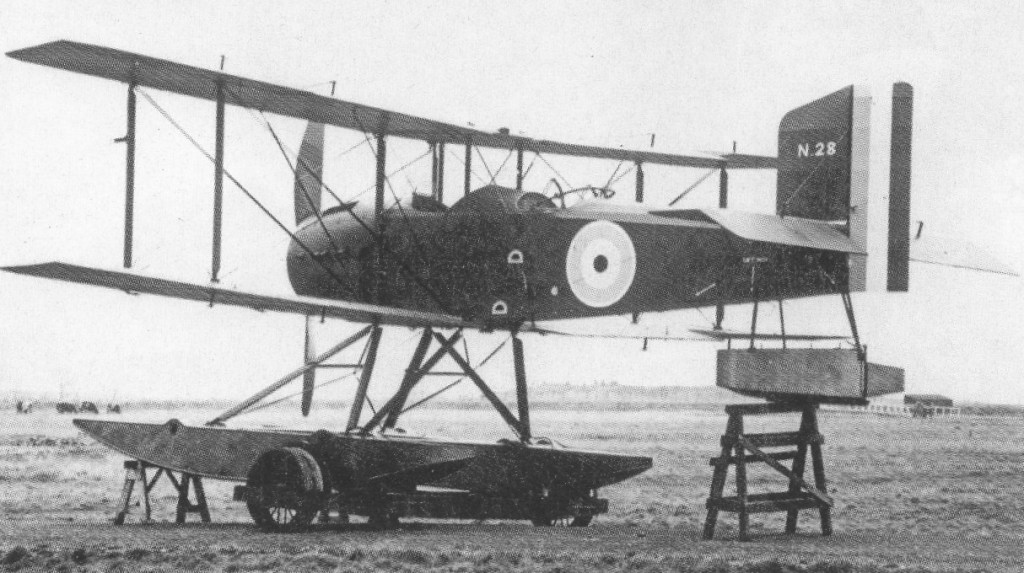
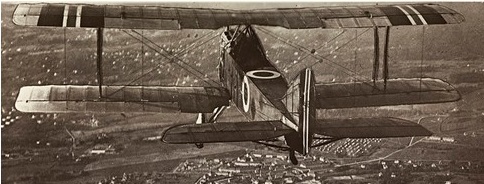
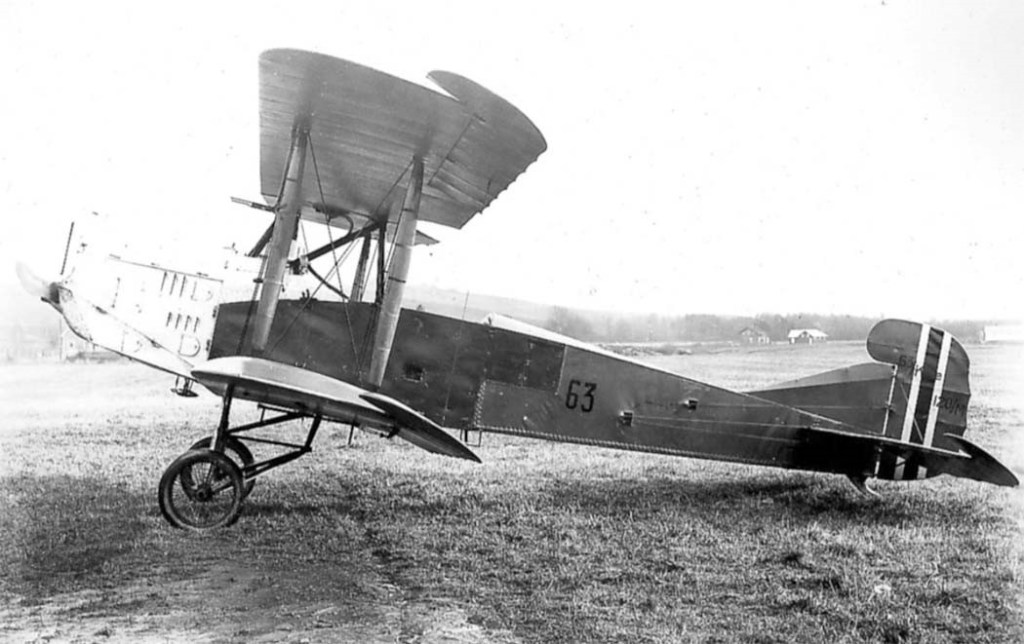
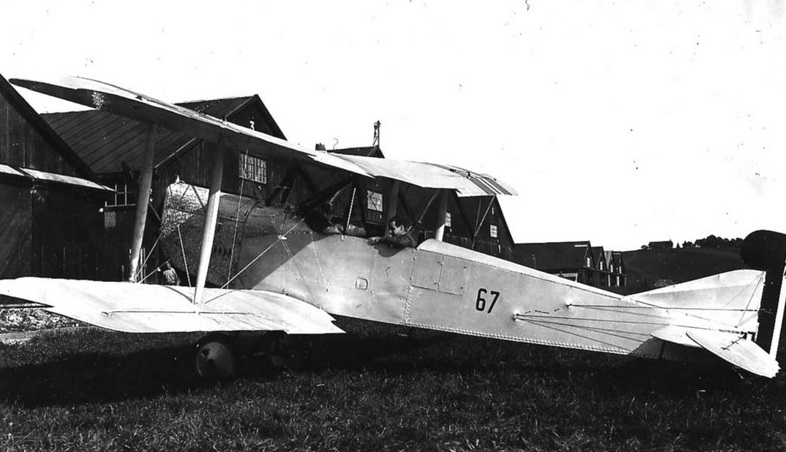
Designed to meet Admiralty requirement N.2a of 1917, the R/200 was a two seat reconnaissance fighter to operate as a seaplane or from the decks of the carriers HMS Furious and Argus. Two prototypes with 200 hp Hispano-Suizas were built. The wing trailing edges were entirely taken up by ailerons and camber changing flaps, all of the same size. To speed production and minimise spares, the left ailerons were interchangable with the right flaps and vice versa, and the fin and each half of the tailplane, and the rudder and each elevator, were identical. The R/200’s performance was undistinguished, and another four prototypes and twenty production aircraft were cancelled.
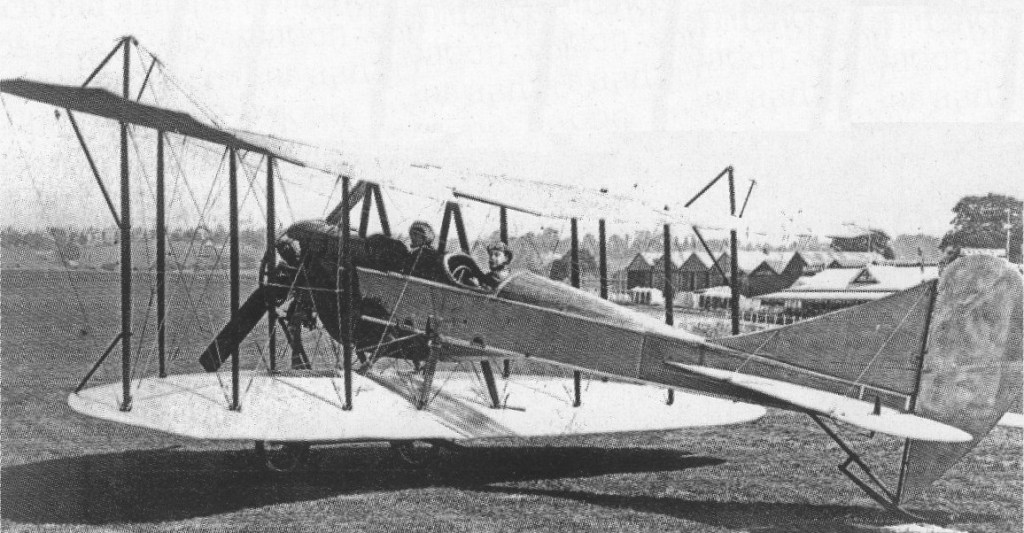
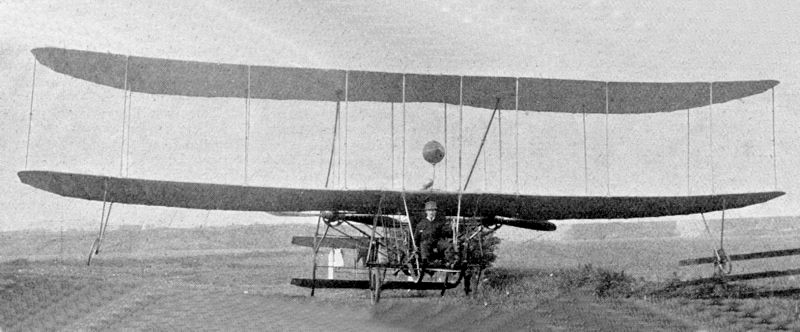
The Type G was the first biplane wholly designed by Handley Page. In 1924 the early Handley Page types were give a retrospective design number and the Type G became the H.P.7.
The Type G used wings of the same plan though of unequal span. It was a three bay biplane having slight wing stagger, with two pairs of separate but wire braced interplane struts per wing. Only the upper wings carried ailerons, which were operated via king posts that appeared as extra interplane struts near the wingtips, but extending above the upper wing and carrying the control wires. The details of this arrangement were modified at least once. The slender fuselage was positioned between the wings with struts above and below. It was flat sided, with a curved decking behind the pilot who sat in the rear seat. An early photo shows a single cockpit opening, but later there were two separate open cockpits for passenger and pilot. The pilot’s upward view was assisted by a small V-shaped trailing edge cutout. The horizontal stabiliser and fin were sharply swept at their leading edges. There were separate elevators and a rudder of half-heart shape, the point extending well below the fuselage to about the level of the lower wing.
In its early form the Type G had a two-wheeled single axle main undercarriage mounted by a pair of struts on each side, one forward to the engine bulkhead and one rearwards to the fuselage via the main spar. Initially the wheels were supplemented by a pair of skids to avoid nosing over, but these were later discarded. A long tail strut positioned a sprung tailskid just below the lower tip of the rudder. The aircraft was powered by a 100 hp (75 kW) Anzani 10 radial engine. The prominent pair of semicircular exhaust tubes characteristic of this engine fed a single exhaust pipe which curved away under the aircraft via a silencer, ending near the trailing edge.
The Type G flew successfully and usefully between 1913 and 1915. It was designed to have inherent stability and for a time, early in its life, demonstrated this by flying without its tailfin.
Before the First World war it was bought by a syndicate headed by Rowland Ding. Flown by Rowland Ding, who later became Blackburn’s main test pilot, he took it to various aviation meetings and also made a cross-channel flight with Princess Lowenstein Wertheim as a passenger. He also made many flights between meetings with his wife and six-year-old daughter in the front seat, qualifying the Type G as a three-seater.
At the outbreak of war in 1914 the Type G was bought by the Royal Naval Air Service and was based at Hendon, being used for training and defence. During its service life it carried a Union Jack and the number 892 on the rudder. On one occasion, mistaken by London ground forces for a German Taube because of the wing shape, it was caught in a “friendly fire” incident but survived. It was finally written off in a ground accident at RNAS Chingford in August 1915.
The 1913 Handley Page Type G biplane was priced at £1500.
Powerplant: 1 × Anzani 10, 100 hp (75 kW) Wingspan: 40 ft 0 in (12.2 m) Wing area: 384 sq ft (35.67 m2) Length: 25 ft 1 in (7.64 m) (without skids) Empty weight: 1,150 lb (522 kg) Gross weight: 1,775 lb (805 kg) Maximum speed: 73 mph (117 km/h, 63 kn) Endurance: 4 hours Rate of climb: 286 ft/min (1.45 m/s) to 3,000 ft (914 m) Crew: one Capacity: one or two passengers
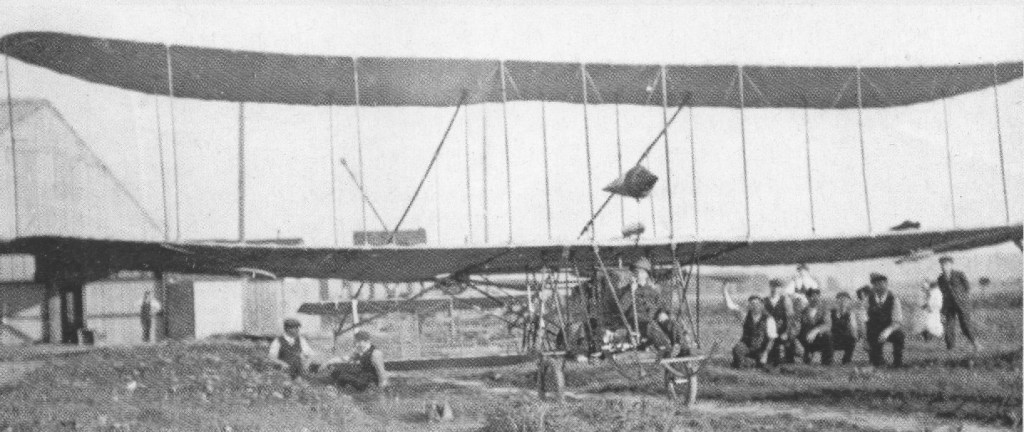
In 1909 Handley Page took a commission to build a prototype biplane aircraft, the concept of W.P.Thompson of Freshfield, Lancashire. Thompson had registered ideas of aircraft control by variable wing area and centre of gravity movement and was keen to build an aircraft with “pendulum stability”, with most of its mass mounted flexibly below the wings. The concept involved having pendulum stability by having the pilot, powerplant, and undercarriage suspended beneath the wing structure.
This was done with input from both Handley Page and Thompson’s assistant Robert Fenwick. The wide gap biplane wings were of two-bay form though in the absence of a fuselage between the wings there were further interplane struts. Two tail booms, each based on a cross-braced pair of members joined to the upper and lower wings, supported a biplane tail. It had no fuselage, the 60 hp Green engine was flexibly mounted below the lower wing and drove a pair of pusher propellers, mounted at lower wing level, via a pair of chains.
Designated the Handley Page Type B, the undercarriage collapsed on the first attempt at flight in late 1909. It was then wrecked when part of the works shed collapsed in a gale. Handley Page decided to have no more to do with what he considered a failure and nicknamed it “The Scrapheap”.
Repaired, it was delivered to Freshfield where Thompson, who had formed Planes Ltd, resumed trials.
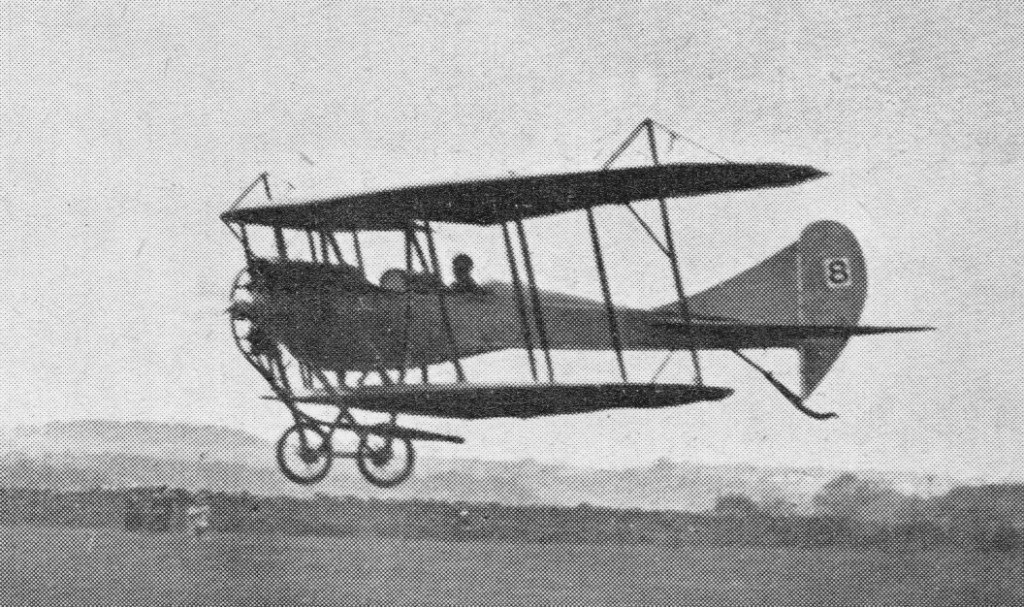
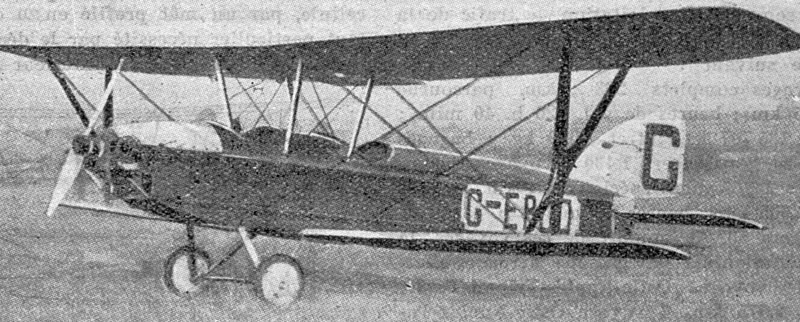
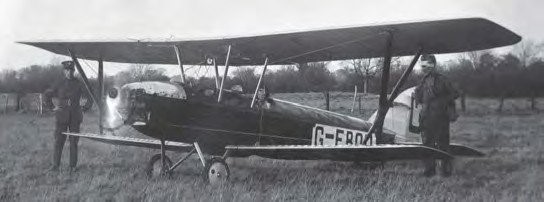
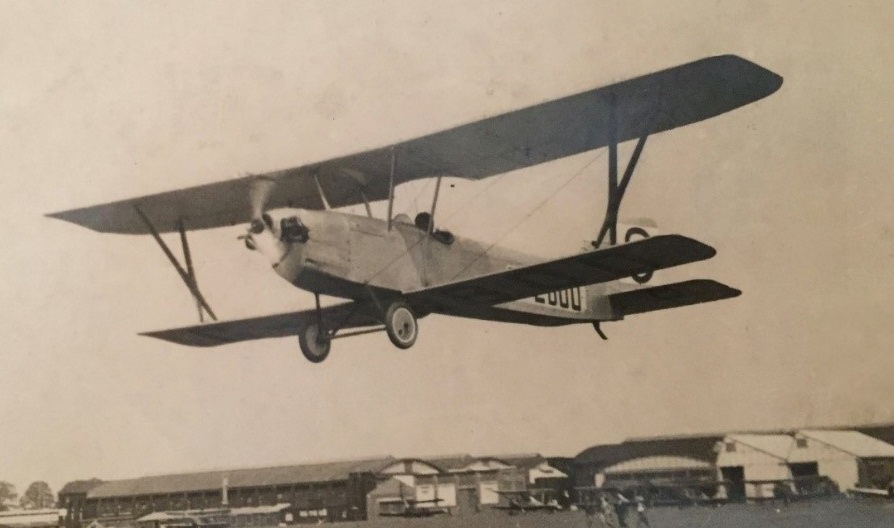
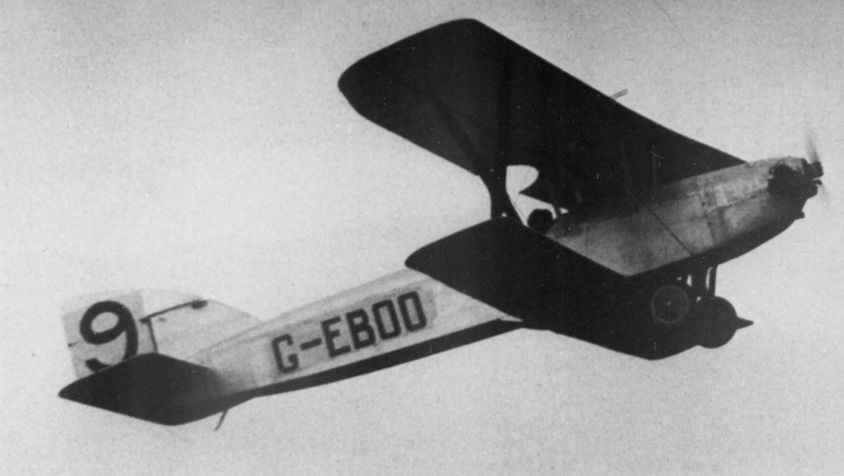
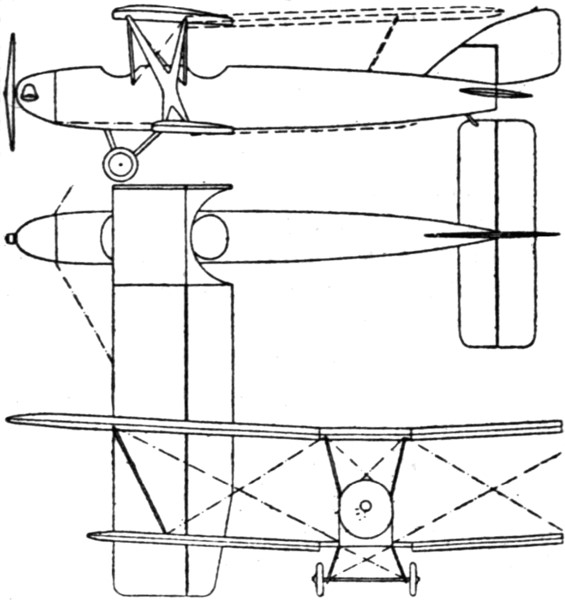
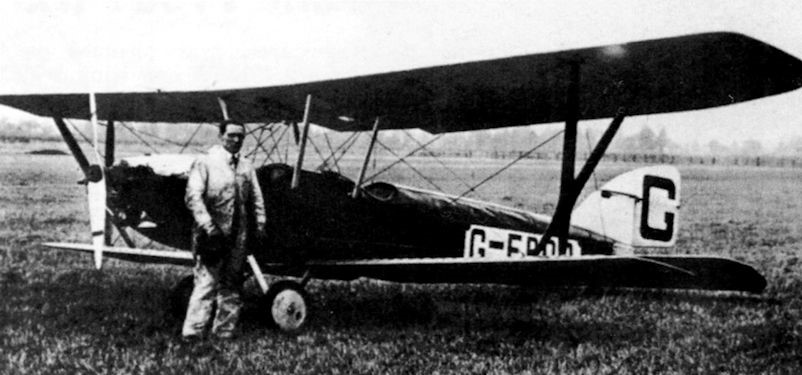
The Halton Mayfly was a British two-seat biplane designed by C.H. Latimer-Needham and built by the Halton Aero Club between 1926 and 1927.
Registered G-EBOO and named the HAC.1 Mayfly it first flew on 31 January 1927.
It was converted to a single-seater and was flown in a number of air races including the King’s Cup Race. It was entered in the 1926 Lympne light aircraft trials as No. 8 but failed to arrive in time for the elimination trials.
By 1928 the aircraft had been converted from a biplane to a parasol monoplane and was renamed the Halton HAC.2 Minus. The lower wings were donated to the Clark Cheetah G-AAJK.
Powerplant: 1 × Bristol Cherub III, 32 hp (24 kW) Upper wingspan: 28 ft 6 in (8.69 m) Lower wingspan: 22 ft 0 in (6.71 m) Wing area: 195 sq ft (18.1 m2) Length: 22 ft 0 in (6.71 m) Empty weight: 480 lb (218 kg) Gross weight: 920 lb (417 kg) Maximum speed: 83.5 mph (134.4 km/h, 72.6 kn) Cruise speed: 75 mph (121 km/h, 65 kn) Crew: one / two
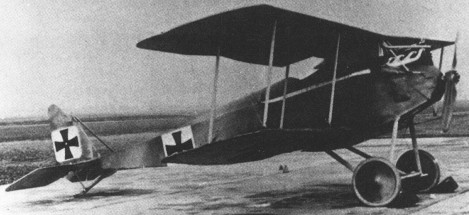
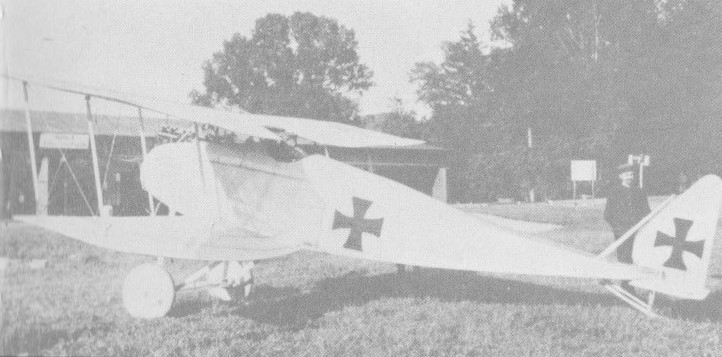
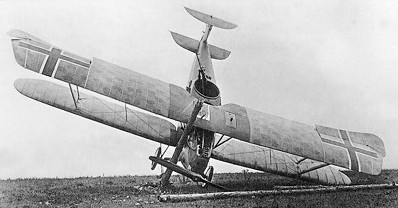
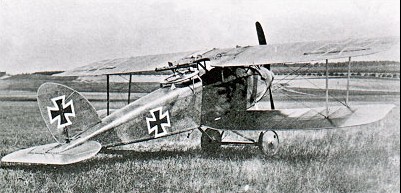
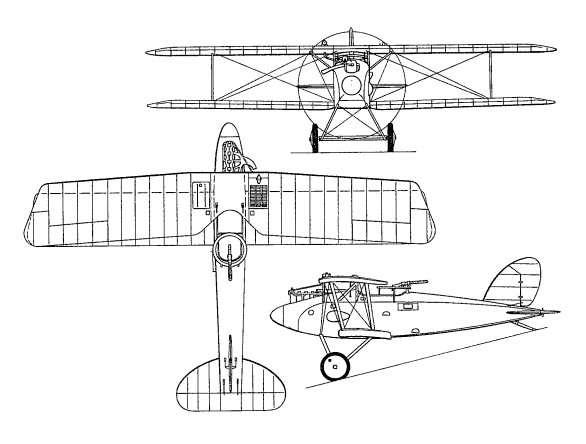
The Halberstadt D-series of single-seat fighters was developed from the unarmed B II reconnaissance two-seater, inheriting that type’s considerable structural strength. The D I appeared late in 1915 with a single interrupted gun and a powerplant comprising one 75-kW (100-hp) Mercedes D.l inline engine.
A two-bay biplane, the wings were of two-spar construction with fabric covering. The wooden fuselage, with plywood covering forward and fabric covering aft. There were no fixed tail surfaces. The ailerons, elevators and rudder were all fabric covered steel tube structures. Ailerons were on the top wing only.
D.II
The production model, of which few were built, was the D II with the more powerful Mercedes DII engine and a wing radiator in place of the original nose-mounted unit. About 100 were in service in January 1917.
The D.II was not easy to fly on account of the absence of any fixed or tailplane surfaces resulting in extremely sensitive controls.
D.II
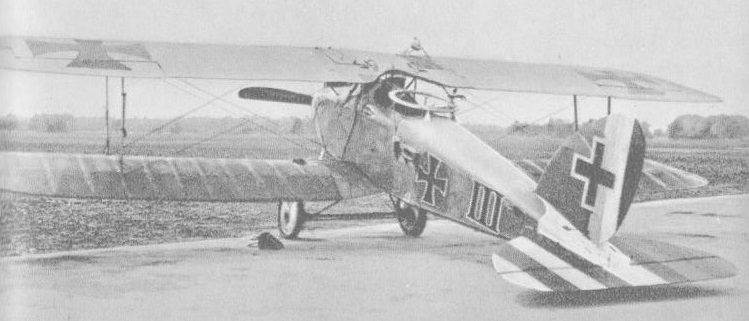
These served for a few months from June 1916 before being supplanted by the D III, which differed mainly in its larger horn-balanced ailerons and as powerplant one 89-kW (120-hp) Argus Ash inline.
A few D IVs were produced for Turkey with twin guns and the 112-kW (150-hp) Benz Bz.III, entering service in 1917 as a single seat fighter. The DV of 1917 was a refined type with a more streamlined plywood-covered fuselage and the As.II engine.
Replica D.VI: Swanson Halberstadt D.VI
Halberstadt D.I Engine: l x Mercedes D.I, 75kW(100hp).
Halberstadt D.II Engine: l x Mercedes D.II, 89kW(120hp). Span: 8.8m (28 ft 10.5 in). Length: 7.3m (23 ft 11.5 in). Height: 8 ft 9 in Empty weight: 1237 lb Max T/O weight: 730kg (1,6l0lb). Fuel capacity: 18.5 Imp.Gal Max speed: 93 mph. Operational endurance: 2 hr. Armament: 1 x 7.92-mm (0.312-in) Spandau LMG 08/15 mg.
Halberstadt D.III Engine: l x Argus Ash, 89kW(120hp). Span upper: 28 ft 8 in Span lower: 25 ft 8 in Wing area: 256 sq.ft Length: 23 ft 10 in Height: 7 ft 9 in Max speed: 90 mph at SL Armament: 1-2 Maxim mg Crew: 1
Halberstadt D.IV Engine: l x Benz Bz.III, 112kW(150hp). Armament: 2 x mg.
Engine: 1 x 134kW Argus As III 9-cylinder liquid-cooled radial engine Max take-off weight: 1081 kg / 2383 lb Wingspan: 11.70 m / 38 ft 5 in Length: 7.58 m / 24 ft 10 in Height: 2.80 m / 9 ft 2 in Max. Speed: 165 km/h / 103 mph Ceiling: 7500 m / 24600 ft Crew: 2 Armament: 3 x 7.92mm machine guns
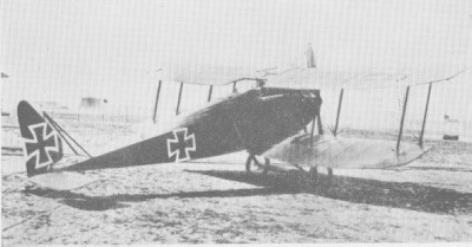
The Halberstadt CL.II was produced in 1917 as a new class of light escort fighter to protest reconnaissance aircraft however its potential as a ground attack fighter was quickly realised. The CL.II was first used to hurl small bombs and hand grenades at advancing British troops in September 1917. They played a major role in the successful German counter attack during the Battle of Cambrai on 30 November 1917.
The crew of two sat in a single elongated cockpit. Their machine guns were supplemented by trays of grenades.
A single-bay biplane, the wings had two spars, with fabric covering, and plywood covered wooden fuselage. Conventional tail surfaces, with wooden fin and tailplane and steel-tube control surfaces, all fabric covered, were fitted. Ailerons of fabric-covered steel-tube construction were on the top wing only.
Engine: 1 x 119kW/160 hp Mercedes D.III water-cooled inline Wingspan: 10.77 m / 35 ft 4 in Length: 7.30 m / 23 ft 11 in Height: 2.75 m / 9 ft 0 in Empty weight: 1755 lb Max take-off weight: 1133 kg / 2498 lb Fuel capacity: 35 Imp.Gal Max. speed: 165 km/h / 103 mph at SL Ceiling: 5100 m / 16750 ft Endurance: 3 HR Armament: 3 x 7.92mm machine-guns, 5 x 10kg bombs Seats: 2.
F.F.9 Kaje was the last in a series of own constructions in wood and canvas at Hærens Flyvemaskinfabrik at Kjeller. Designed and built by the Norwegian Army Air Service’s aircraft manufacturer Haerens Flyfabik, work on the FF9 Kaje trainer aircraft started in 1921. The aircraft body was designed in Norway, designed by Einar Sem-Jacobsen while the wing was licensed by German construction (Göttingen profile). The wings were made of wood paneling fabric covered.
The prototype was ready for test flight in November 1921.
Kjeller FF9 Kaje I in Bodø
The aircraft replaced older school aircraft and became a robust and reliable machine with good flight characteristics. Until June 1924, the designation was for the aircraft type F.F.9, when it was decided that the aircraft should be referred to as “Kaje”.
It was built in three series: the Kaje I of which ten were built in 1921 and 1922, the Kaje II of which four were built in 1925 and five Kaje III in 1926. The models differed slightly in wing profile, wingspan and rudder surfaces, based on experience with the previous model.
Although primarily used as a training plane and for reconnaissance, the aircraft could also carry arms and was tested with radio equipment.
FF.9 III
The aircraft was in use with the Norwegian Army Air Service from 1922 to 1935. A preserved example is at the Norwegian Aviation Museum in Bodø.
Kaje III Engine: 1 × Marabini 6-cyl, 89 kW (120 hp) (license built Mercedes D.II) Length: 8.4 m (27 ft 7 in) Wingspan: 9.5 m (31 ft 2 in) Height: 3.23 m Max weight: 1060 kg Maximum speed: 132 km/h (82 mph; 71 kn) Range: 375 km (233 mi; 202 nmi) Service ceiling: 3,200 m (10,500 ft) Crew: two Five built.
Kaje III Engine: 1 × Marabini 6-cyl, 89 kW (120 hp) (license built Mercedes D.II) Wing span: 10.37 m Length: 8.10 m Height: 3.30 m Max T O weight: 1080 kg Maximum speed: 135 km / h