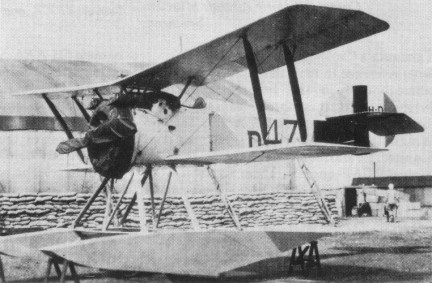
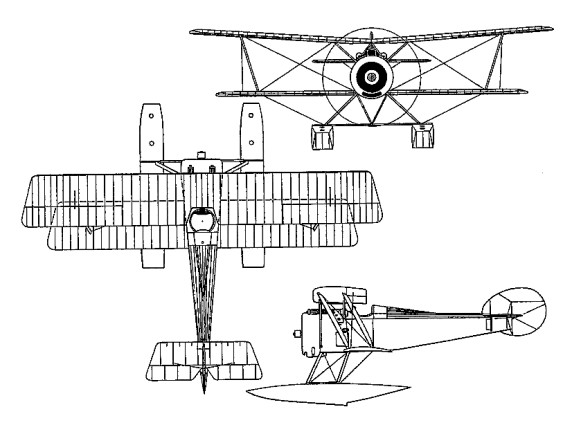
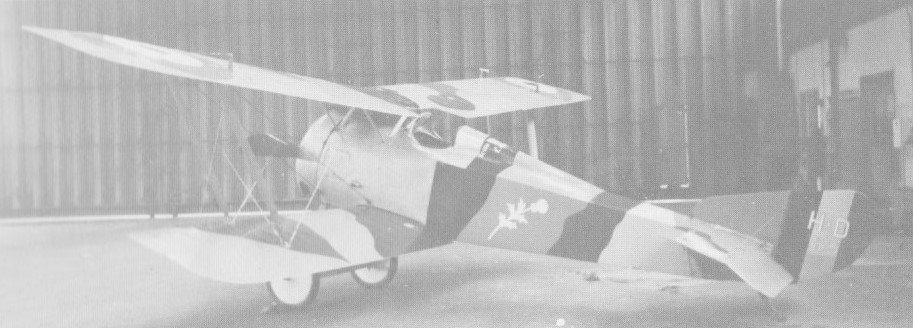
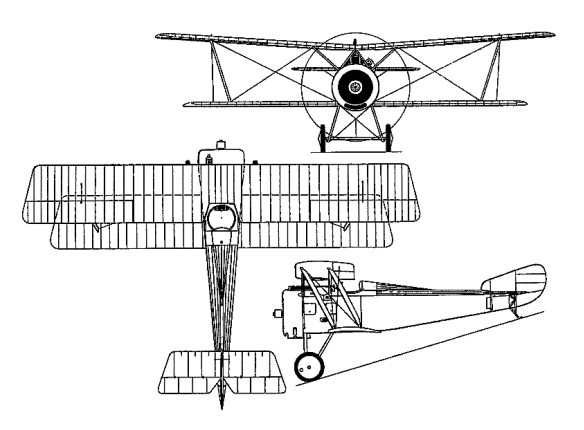
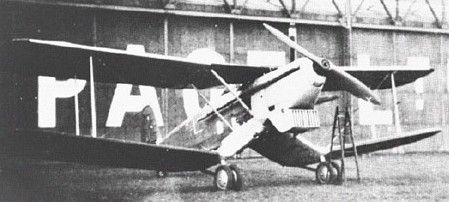
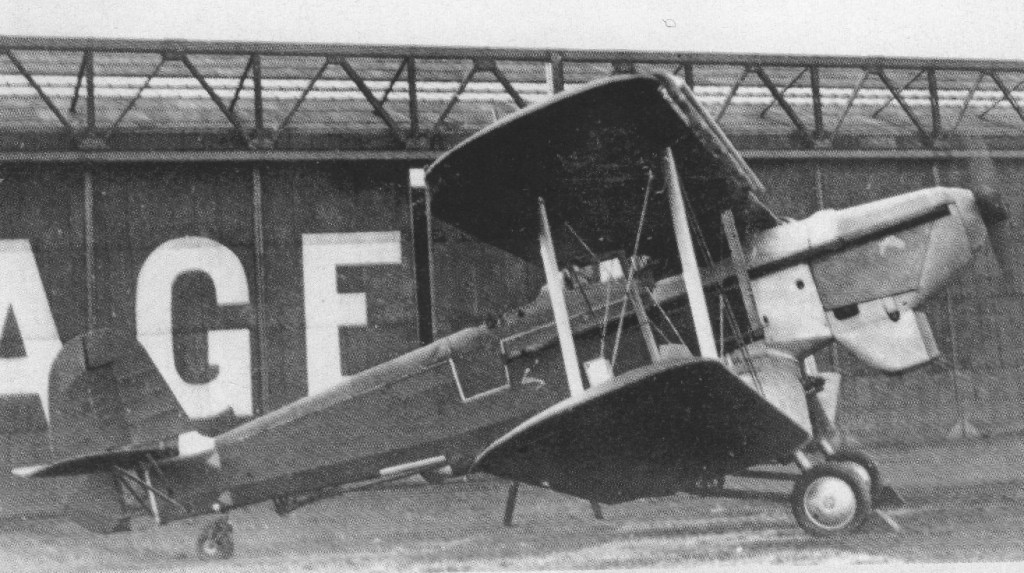
At the end of 1917, a derivative of the HD.1 intended for use by France’s Aviation maritime as a single seat fighter float plane was tested as the HD.2. Possessing an essentially similar airframe to that of the HD.1, the HD.2 was powered by a 130 hp Clerget 9B rotary engine and carried an armament of twin synchronised Vickers machine guns. Two prototypes were tested with float undercarriages of differing lengths, and several HD.2s with wheel undercarriages were delivered to the Aviation maritime at Dunkirk for trials purposes, including trial operations from a 40 ft (12 m) platform mounted above a turret of the battleship Paris in the harbour at Toulon flown by Lieutenant Georges Guierre in October 1918. Later, in August and September 1918, similar trials were conducted at Saint Raphael with one of the HD.2 prototypes converted to landplane form and re engined with a 120 hp Le Rhone. Production exam¬ples, designated HD.2C, were fitted with 130 hp Clerget 9B engines, longer main floats, and a completely revised elliptical fin and rudder assembly. Armament comprised twin 0.303 in (7.7 mm) Vickers guns. Some HD.2Cs were in service with the French navy’s Centre Maritime at Dunkerque before the end of the First World War. The US purchased 26 HD.2s and Japan also bought a number. After the war, ten of the US batch were converted back to HD.1 landplanes by the naval aircraft factory, but continued to be used as trainers aboard at Langley Field, with flotation bags and hydrovanes attached in front of the main wheels. One was employed in August 1919 for trials from a platform mounted on the battleship USS Mississippi.
HD.2 – (float equipped) Max speed, 113 mph (183 km/h). Service ceiling, 15,750 ft (4800 m). Range, 186 mls (300 km). Empty weight, 1,091 lb (495 kg). Loaded weight, 1,594 lb (723 kg). Span, 28 ft 6.5 in (8,70 m). Span upper: 8.7 m (28 ft 6.5 in) Span lower: 7.4 m (24 ft 3.25 in) Length, 22 ft 11.5 in (7,00 m). Height, 10 ft 2 in (3,10 m). Wing area, 195.9 sq ft (18,20 sq.m).
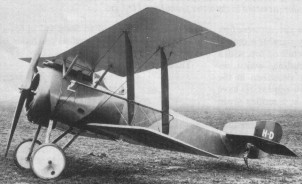
French single seat fighter biplane, prototype first flown 1916. It was designed by Pierre Dupont for the Sociote Anonyme des Appareils d’Aviation Hanriot and built by Hanriot at Billancourt, and was of sesquiplane configuration. The powerplant was a 110 hp Le Rhone 9 J rotary engine (120 hp Le Rhone 9 Jb on production aircraft) and carrying an armament of one synchronised 7,7 mm Vickers machine gun (although a few aircraft were later to be fitted with two Vickers guns). Tests proved it to be compact, manoeuvrable and with a good field of view. Although the HD.1 was accepted by the French government in early 1917, the huge contemporary production of the Spad 7 C1 precluded any production order for the French Aviation Militaire. Neither was the HD.1 considered to be a suitable replacement for the ageing Nieuport single seaters.
However, the HD.1 did impress the Italian and Belgian authorities. It was adopted by Italy as the main Nieuport replacement, and went into licence production by the Societa Nieuport Macchi at Varese. It seems that reports of 1700 being ordered from Nieuport-Macchi may have been exaggerated. Societa Nieuport Macchi delivered 125 to the Aeronautica del Regio Esercito in 1917, 706 in 1918, and a further 70 after the Armistice. 831 were received by the war’s end, the balance coming from French production.
The HD.1 entered Italian service in mid 1917, serving in the Austrian, Macedonian and Albanian theatres. During the latter stages of the war they equipped 16 of the Italian air arm’s 18 fighter squadrons, and some continued in service until 1925. Over nine-hundred were produced for the Italians and they used the type in greater numbers than any other fighter during the First World War.
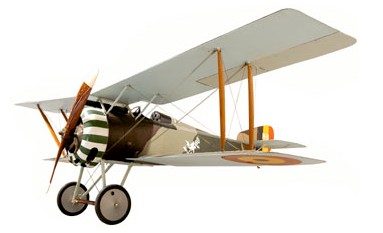
The HD.1 was also adopted by Belgium to which country Hanriot supplied 79 fighters of this type from August 1917. The HD.1 continued in service in both Italy and Belgium into the mid ‘twenties, and in 1921, Switzerland purchased 16 from Italian war surplus stocks and retained these in service until 1930.
Standard armament was a single 0.303 in (7.7 mm) Vickers gun, initially offset but later moved to a central position where the firepower was more effective, although the pilot’s view was slightly impaired. Belgian orders, for French built HD.1s, totalled 125, the first being delivered in August 1917. They were not instantly successful, but later gained popularity. One Belgian HD.1 was fitted with a single 11 mm (0.433 in) gun, which proved highly successful. Belgian HD.1s also served long after the war, some until 1926.
Small numbers were used by the French Aviation Maritime (naval air arm), with 130 hp Clerget 9 B engines and, on some, fin and rudder modifications similar to those of the HD.2. Switzerland purchased 16 HD.1s in 1921, and these remained in service until 1928.
HD 1 Engine: 120 hp Le Rhone 9Jb. Max speed, 115 mph (184 km/h) at sea level, 111 mph (178 km/h) at 6,560 ft (2 000 m). Time to 3,280 ft (1000 m), 2.97 min. Ceiling, 20,670 ft (6 000 m). Range, 224 mls (360 km). Empty weight, 983 lb (446 kg). Loaded weight, 1,437 lb (652kg). ROC: 894 fpm / 272 m/min Span: 8.70 m, (28 ft 6.5 in) upper Span: 7.40 m (24 ft 3.25 in) lower Length, 19 ft 2.25 in (5,85 m) Height, 9 ft 7.5 in (2,94 m) Wing area, 195.9 sq ft (18,20 sq.m) Seats: 1
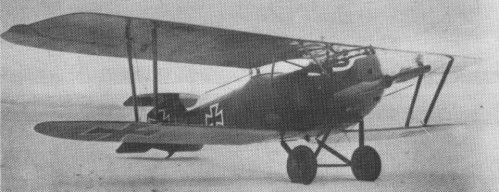
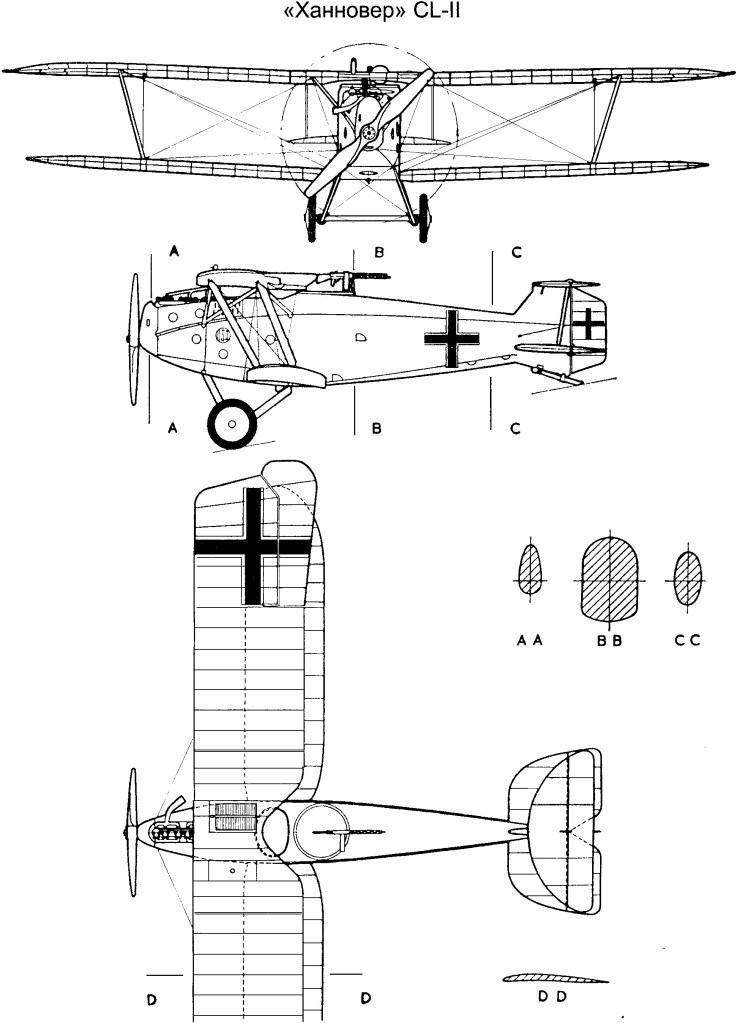
Designed by the Hannoversche Wag¬gonfabrik AG, the Hannover CL.II was produced in mid 1917 in response to an official requirement for a high performance two seat fighter for mainly low level tactical support of ground troops. The CL.II, which first went into operational service in late 1917, was unique for a single engined design in having a biplane tail assembly for greater field of fire by the observer/gunner and for a two seater was relatively small in overall dimensions. Its deep, ply covered fuselage gave the machine great strength, while the close set upper wing and narrow lower wings offered its crew an excellent field of vision both above and below.
A single-bay biplane, the two spar wooden wings were fabric covered. Both elevators, ailerons (on top wings only) and rudder were fabric covered steel tube structures.
In combat the Hannover proved itself as a formidable opponent to the Allied figh¬ters, able to manoeuvre with reasonable agil¬ity at most combat altitudes, and able to absorb battle damage to a high degree with¬out serious results.
A total of 439 Cl.II were built before production switched to an improved version, the CL.III, with a 160 hp Mercedes D.III engine, and incorpo¬rated modifications to the wingtips and ailerons, but only 80 machines were built due to the outstanding demands for Mercedes engines for single seat fighters.
Returning to the original 180 hp Argus engine, the next variant was designated CL.IIIa and saw large quantity production.
First production CL.IIs arrived on the Western Front in October 1917 and, along with the Halberstadt CL.II, became the backbone of the German Schutz¬staffeln (protection flights), escorting, the slower two seat reconnaissance machines. As such Hannovers were initially employed in a variety of roles, including artillery spot¬ting, reconnaissance, and photo sorties, apart from their nominal role of providing fighter cover for the older machines of the patrol flights. Though extremely well constructed, the CL.II was temporarily grounded in May June 1918 due to a rash of wing failures, but after the safety factors of the wing fitting had been improved to double their former figure.
A progressive development of the Cl II designed by Hermann Dorner, the Cl III was intended to offer improved altitude capability with the 160 hp Mercedes D III water cooled engine. Despite some airframe strengthening, the Cl III possessed a slightly reduced structural weight and marginally smaller overall dimensions. The Typenprufung was success¬fully passed on 23 February 1918, and an order placed for 200 aircraft with deliveries to commence in the following month. In the event, as a result of shortages of the Mercedes engine, only 80 Cl IIIs were delivered, the remainder of the order being completed with 180 hp Argus As III(O) licence built by Opel as the Cl IIIa. A total of 537 Argus-powered Cl.IIIa were built, with the biplane tailplane span reduced to give the rear gunner a better field of fire. This version was to remain in production until the end of hostilities, 573 being delivered.
Cl.IIIa
The designation Cl IIIb was allocated to the version that was to have been powered by the 185 hp NAG C III engine, and the Cl IIIc was a twin bay version built specifically as a test bed for the NAG engine. The Cl III and IIIa entered service in April 1918, serving primarily with the Schlachtstaffeln operating in the ground attack fighter role. Oddly, the Hannoversche Waggonfabrik completed a further 100 Cl IIIs and 38 Cl IIIa’s after the Armistice.
Hannovers continued to equip first line units throughout late 1918. A total of 293 CL.IIs and CL.IIIs were in service on September 1 of that year. The C.IV, the next development, did not go into production, but from it was evolved the CL.V. In mid 1918, the Idflieg prepared a specification calling for a Jagdzweisitzer a two seat fighter intended to engage the newer Allied single seaters on even terms, emphasising high speed, diving capability and manoeuvrability, and carrying a fixed forward firing armament of twin synchronised machine guns plus a third gun in the rear cockpit. To meet this requirement, which called for the aircraft to be tested to single¬ seat fighter load requirements, Hermann Dorner produced an extremely rugged and compact airframe. Designated Cl V, the prototype was powered by a 185 hp BMW IIIa engine and, tested against a similarly powered Fokker D VII, demonstrated comparable speed and climb. Twenty examples were ordered for operational evalu¬ation, but instead of being ordered into large production, Hannover’s chief designer, Her¬mann Dorner, was requested to develop the CL.V for a new category of two seat fighter (Jagdzweisitzer) specification. With the original biplane tail replaced by one of monoplane configuration, the Cl V was ordered into production, a contract for 100 aircraft being placed in September 1918, over 80 CL.Vs were thus built and tested to the new specification each armed with two forward and one rear firing machine guns although it is doubtful if any of the 46 completed before the end of hostilities reached the Front, a further 62 being completed after the Armistice. A stripped down example of the Cl V was to establish a world altitude record of 27,355 ft (8 340 m) on 22 November 1919. During 1923 24, the Kjeller Flyvernaskinsfabrik at Halden, Norway, built 14 Cl Vs under licence for the Norwegian Army as the F.F.7 Hauk (Hawk), these remaining in service until 1929.
Kjeller Flyvernaskinsfabrik F.F.7 Hauk (Hawk)
After the war Hannovers continued to be built, mainly as civil passenger machines or for export to other countries.
CL.II Engine: 180 hp Argus As III Seats: 2 Span: 11.70 m (38 ft 4.75 in) Length: 7.58 m (24 ft 10.5 in) Maximum speed: 166 km/h (103 mph) at 5000 m (16400 ft) Service ceiling: 7500 m (24 600 ft)
CL.III Engine: 160 hp Mercedes D.III
Cl. IIIa Engine: 180 hp Argus As III(O) Max speed, 103 mph (165 km/h) at 16,405 ft (5 000 m). Time to 3,280 ft (1000 m), 5.3 min. Endurance, 3 hrs. Empty weight, 1,653 lb (750 kg). Loaded weight, 2,447 lb (1110 kg). Span, 38 ft 4.5 in (11,70 m). Length, 24 ft 10.25 in (7,58 m). Height, 9 ft 2.25in (2,80 m). Wing area, 351.97 sq ft (32,70 sq.m).
CL IIIb Engine: 185 hp NAG C III
Cl. V Engine: 185 hp BMW IIIa Max speed, 109 mph (175 km/h) at 6,560 ft (2 000 m). Time to 9,840 ft (3 000 m). 12 min. Range, 211 mls (340 km). Empty weight. 1588 lb (720 kg). Loaded weight, 2,381 lb (1080 kg). Span, 34 ft 5 in (10,49 m). Length, 22 ft 11.5 in (7,00 m). Height, 9 ft 3.25 in (2,84 m). Wing area, 306.76 sq ft (28,50 sq.m). Seats: 2 Armament: 3 mg
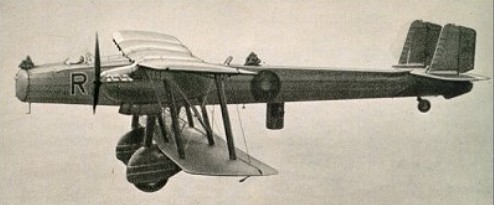
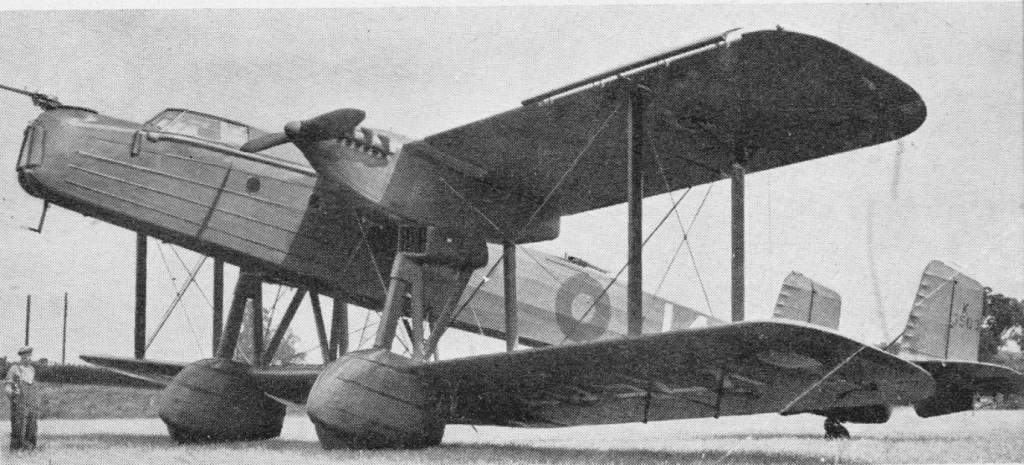
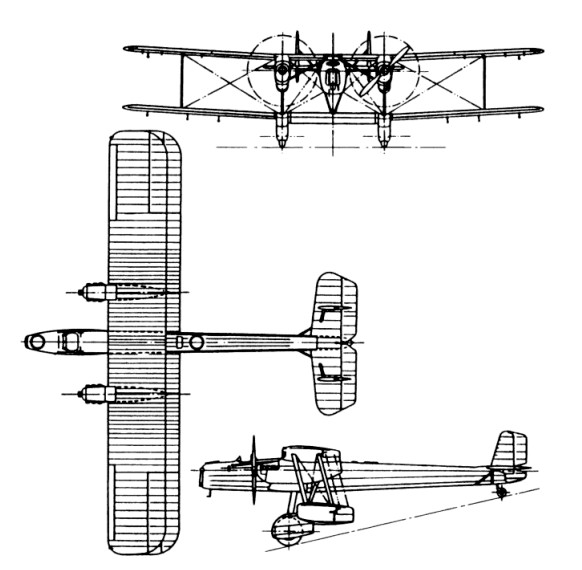
The Heyford was the RAFs last biplane heavy bomber, an unusual type with the fuselage attached to the undersurface of the upper wing and the centre section of the lower wing thickened for internal carriage of the bombload. The long main landing gear units were attached at their upper ends to the engine nacelles, while the wheel spats were attached at their rear to the lower-wing centre section. The Heyford prototype flew in June 1930, and production of 124 aircraft up to July 1936 comprised 38 Mk Is and Mk lAs, 16 Mk Is with de¬rated 391.2kW Rolls-Royce Kestrel VI engines, and Mk IIs and 70 Mk IIIs with fully rated 428.5kW Kestrel VI engines and four-blade propellers.
The Heyford was an equal-span biplane with staggered wings: the upper wing centre-section rested on top of the fuselage, while the lower was positioned well below the fuselage, connected to the under-fuselage by N-type struts. The inner interplane struts supported the engine mountings. Bombs of various sizes were carried inside the thickened centre-section of the lower wing, each bomb being carried in a separate cell closed by spring doors. The fixed landing gear comprised two large wheels faired into the lower wing. The nose and dorsal gun positions of the Heyford were equipped with Scarff mountings for their 0.303 in (7,7 mm) Lewis or Vickers guns. Of the three versions of the Heyford, the Mks I, II and III, the visible differences are primarily in detail, including such items as alternative wheel pants, three and four bladed propellers, and varying radiator intake designs. The main bomb load was housed in the thickened centre section of the lower wing. Additional bombs were carried on external racks. A total of 124 Heyfords were built, made up of 38 Mk I and IA, 1 intermediate Mk IA/II, 16 Mk II and 71 Mk III – including changes made from the original production orders.
The type entered service in November 1933 with No 99 Sqn at Upper Heyford, and equipped a total of 11 squadrons before being phased out from 1937, removed from first-line service in 1939 and finally declared obsolete in July 1941.
Heyford Mk IA Engines: 2 x Rolls-Royce Kestrel IIIS, 429kW/ 575 hp Span: 22.86m / 75 ft Length: 17.68m / 58 ft Height: 5.3 m / 17 ft 5 in Wing area: 136.6 sq.m / 1470.35 sq ft Empty weight: 4580 kg / 10097 lb Max T/O weight: 7666 kg / 16,900 lb Max. speed: 229 km/h / 142 mph at 13,000 ft Ceiling: 6400 m / 21000 ft Range: 1480 km / 920 miles with 726-kg (1,600-lb) bombload Armament: 3 x 7.7-mm (0.303-in) mg, 1588 kg (3,500 lb) bombs
The HP46 was designed to specification M.1/30 for a two seat shipborne torpedo bomber. Powered by an 825 hp Rolls Royce Buzzard III, the HP 46 first flew on 25 October 1932.
The company spent more than £36,000, on the HP46, nearly twice the contract price, but it only flew 5 hr 30 min and was condemned as too dangerous for deck flying. In April 1936 it left Radlett by road for farnborough and was never seen again.
Engine: 1 x 825hp Rolls-Royce Buzzard IIIS Wingspan: 15.24 m / 50 ft 0 in Length: 12.01 m / 39 ft 5 in Wing area: 60.94 sq.m / 655.95 sq ft Max take-off weight: 4812 kg / 10609 lb Empty weight: 2838 kg / 6257 lb Max. speed: 225 km/h / 140 mph Armament: 2 x 7.7mm machine-guns, 1000kg of bombs or a torpedo Crew: 2
The HP.43 was tendered to specification C.16/28 for a three engined bomber / transport. Only one was built, J9833, with three uncowled Bristol Pegasus IM3 radial engines, and it first flew on 21 June 1932. It had heavy and badly harmonised controls and poor performance, and was converted into the HP.51 twin engined monoplane to C.26/31.
Derived from the Hanibal, it had the same wings, with a new fuselage.
Gustav Lachmann took on the technical development of modern methods of aerodynamics and metal construction, and went on to convert the H.P.43 biplane into the H.P.51, with a modern monoplane wing and aircooled engine nacelles. This led to the order for 100 of a production version, the H.P.54 Harrow.
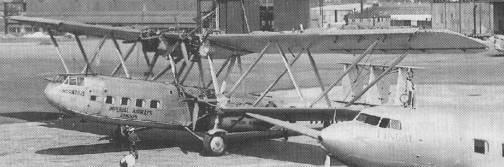
To Imperial Airways fell the task of establishing British commercial air transport on an economic basis, and with government backing it became possible – at least in a modest way – to begin the procurement of new aircraft and the survey and inauguration of air routes to link the British Empire. Needing more capacity than was provided by its 18-20-seat Armstrong Whitworth Argosy or 14-seat Handley Page W.10 aircraft, Imperial Airways acquired from Handley Page eight aircraft designed specifically for use on the European and eastern sections of the Empire air routes.
HP.42 Hannibal
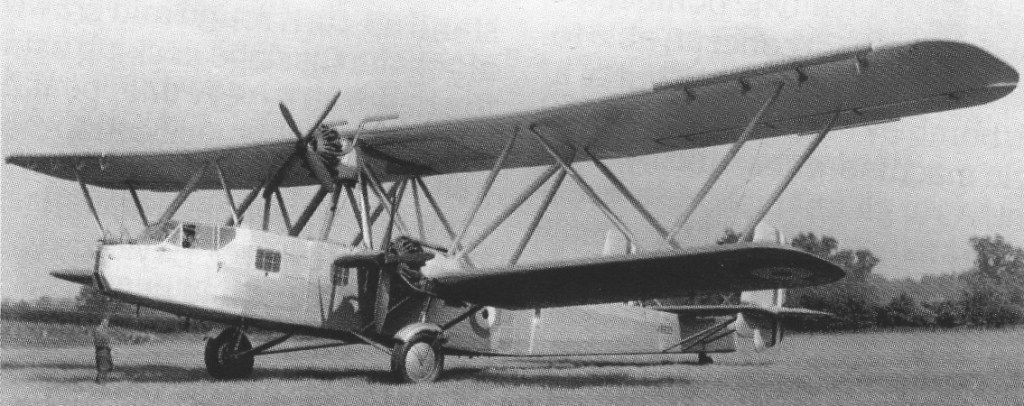
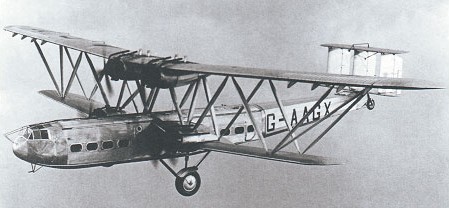
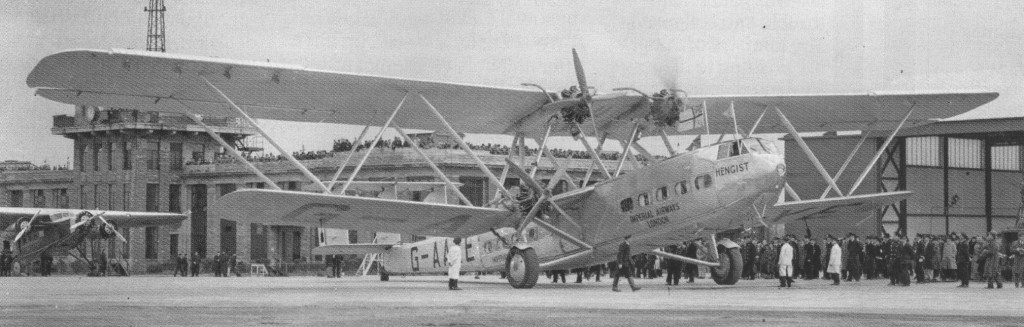
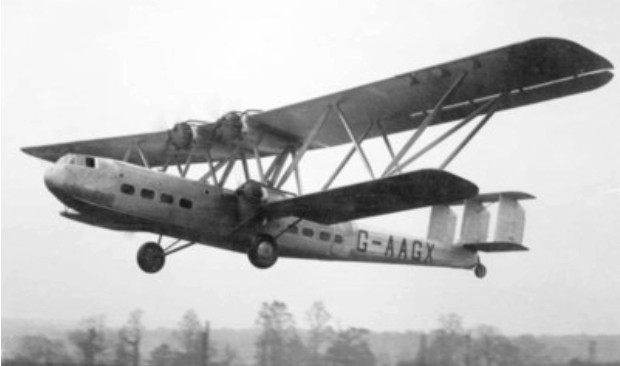
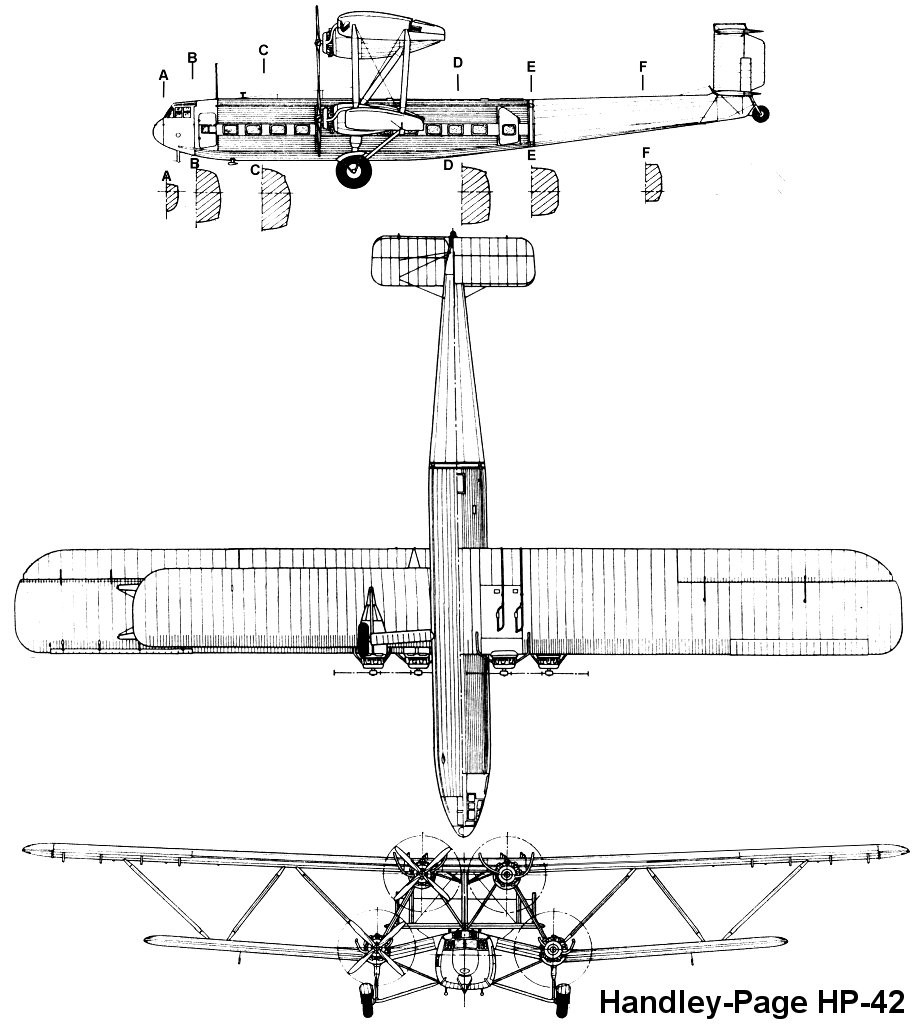
Large biplanes, with a maximum wing loading of less than 48.2 kg/sq.m, they were of all-metal construction except for the aerofoil surfaces and aft fuselage, which were fabric-covered. The unequal-span biplane wings were devoid of flying and landing wires, braced instead by massive Warren girder struts, and having ailerons and Handley Page slots only on the upper wing. The tail unit was also of biplane configuration, with triple fins and rudders, and the heavy landing gear was of fixed-tailwheel type. Power plant comprised four supercharged Bristol Jupiter engines, two mounted on the upper wing and one on each side of the fuselage on the lower wing.
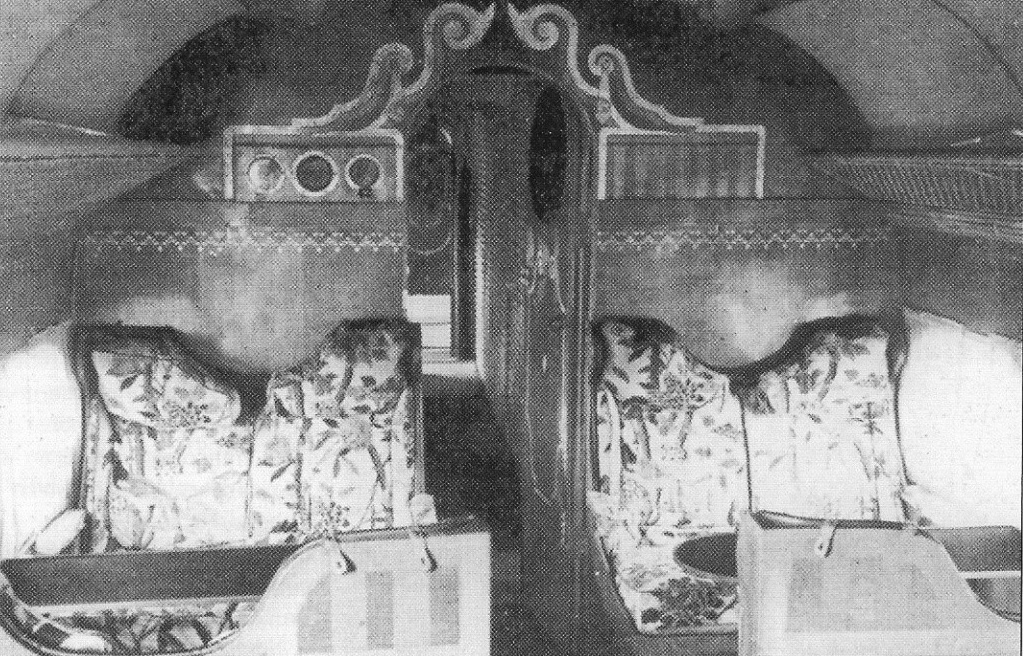
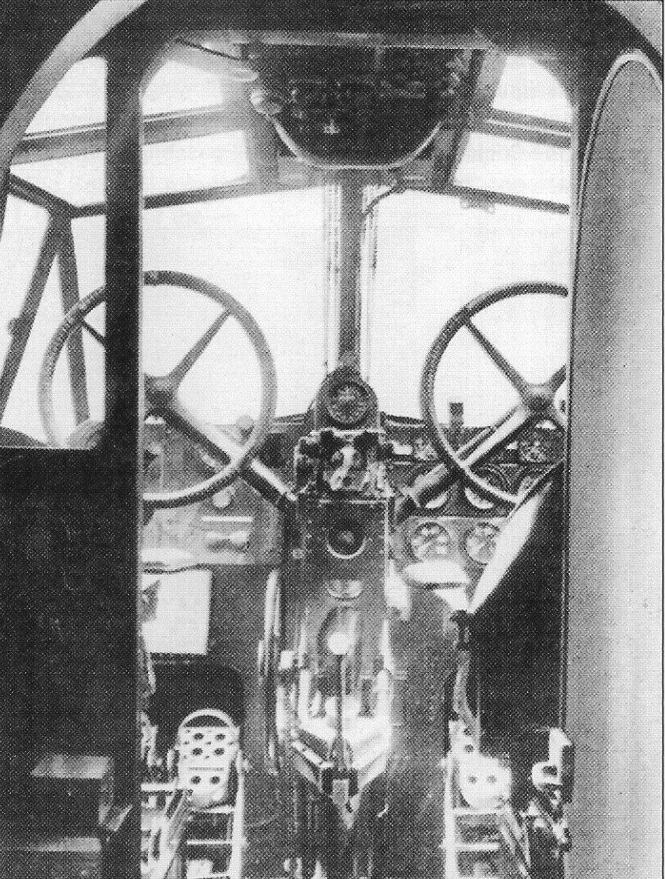
For the first time in any British airliner the crew were accommodated inside the aircraft, in a compartment high in the fuselage nose which we would now call a flight deck. Within the main cabins – fore and aft of the wing area where the engine noise originated – passengers were provided with completely new standards of comfort and spaciousness.
Only four of thes Handley Page H.P.42 were ever built, the biggest biplane aircraft ever built. First acquired by Air Transport and Travel, it first flew from London to Paris in 1919 with a single passenger on board – a newspaper reporter.
Those intended originally for eastern use (on the Indian and South African routes) carried six (later 12) passengers in the forward cabin and 12 in the rear, with space for 14.16cu.m of baggage and mail amid-ships. The four equipped for the European routes (based at Croydon) carried 18 passengers forward, 20 aft and had 7.08cu.m of baggage space. The first HP.42 flew on 14 November 1930. It was equipped subsequently for long-range service (H.P.42E, ‘E’ for Eastern) and named Hannibal.
Handley Page H.P.42
Four Hannibal class H.P.42s, operated in semi-tropical conditions on the long eastern mail routes between Karachi, Cairo and Kisumu.
Anthony Fokker once commented that H.P.42s had built-in headwinds, but their cruising speed of around 161km/h, excellent handling at low speeds and robust structure ensured that they were able to boast a decade of fatal-accident-free flight before being withdrawn from civil airline service on 1 September 1939.
The H.P.42 was developed into two variants: the H.P.42E (Eastern) for long-haul routes to the middle East and beyond, and the H.P.42W (Western or HP.45) for imperial’s flights to Paris and other European cities.
The HP.42E served exclusively in the east, the four HP.42Ws were Croydon-based and differed by being configured for a maximum of 38 passengers, rather than the 24 of the HP.42E.
The HP.42W were first delivered in September 1931.
Hercules, the first HP.42W delivered, by 23 July 1937 had flown 1 million miles / 1.6 million km on routes to Paris, Cologne and Zurich. Just over a year later, it had completed s further 250,000 miles / 400,000 km and had carried 95,000 passengers.
The HP.42Ws were impressed into military service during World War II.
HP.45 Hercules
There were four Heracles class H.P.45s, used on Imperial Air¬ways western routes from Croydon to Europe. First of the H.P.42W (‘W’ for Western) for the European services was delivered in September 1931 and named Heracles. The two versions wore generally similar, except that the Heracles had 550 hp Jupiter X.FBM engines and accommodation for 38 passengers, whereas Hanni¬bal had Jupiter XIs of the same power and seats for only 18 passengers. The remainder of this family of 1930s ‘Jumbo’ airliners had the names Hadrian, Hanno, Helena, Hengist, Horatius and Horsa. Together they flew some ten million miles without ever hurting a passenger, until the last of them disappeared on a wartime flight in the Middle East. With their girder-braced biplane wings and massive fixed undercarriage they had a maximum cruising speed of about 100 mph (161 km/h), but offered standards of comfort and safety that no other transport of the period could equal. As a result, they carried more passengers between London and the Continent in the 1930s than did all other airliners combined, and without ever hurting a passenger until the last of them disappeared during a wartime flight in 1940. Five also serviced the RAF during the Second World War.
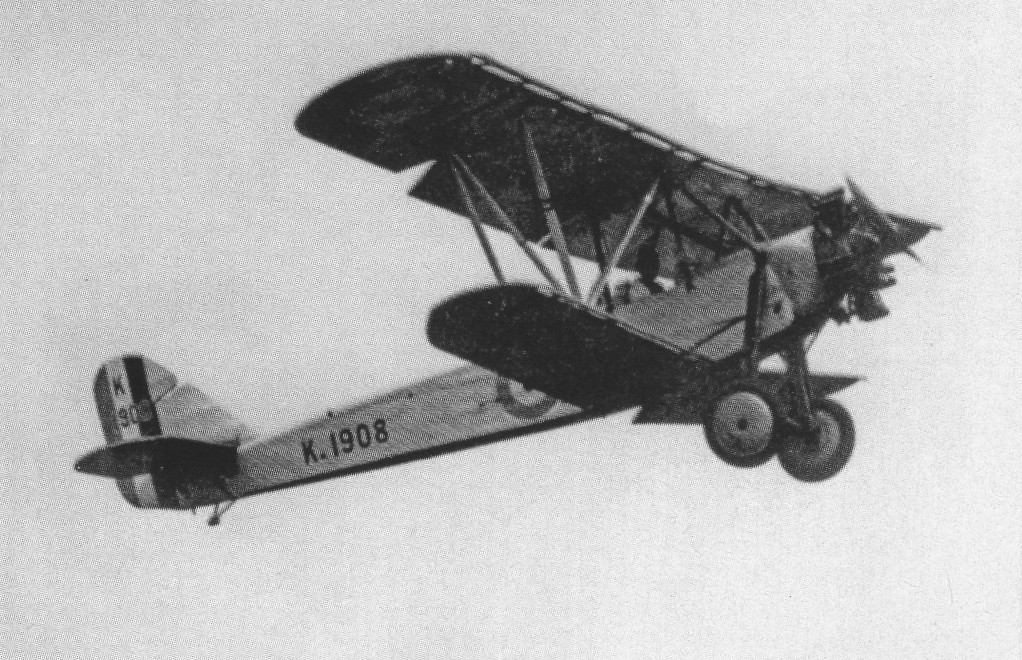
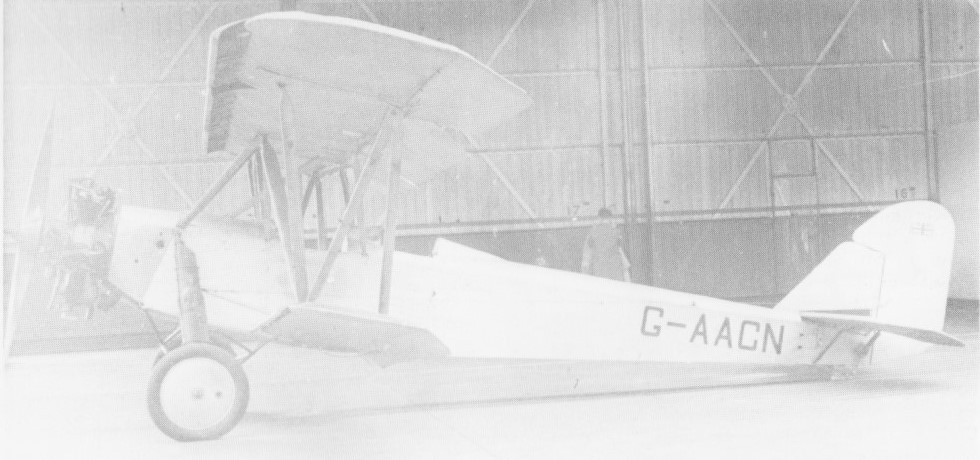
Built to compete in the 1929 Daniel Guggenheim International Safe Aircraft Competition in the USA, the HP.39 Gugnuno was fitted with full span handley page slots and flaps for high angles of attack. Registered G-AACN, the HP.39 was one of only two machines to pass the preliminary tests in the competition, but lost to the Curtiss Tanager. It was then tested at RAE Farnborough as K1908, and became a regular performer at air displays. In 1934 it was presented to the Science Museum, and now resides at Wroughton.
Engine: Armstrong Siddeley Mongoose II, 155 hp Wingspan: 40 ft Length: 26 ft 9 in AUW: 2150 lb Mas speed: 113 mph Min speed: 34 mph
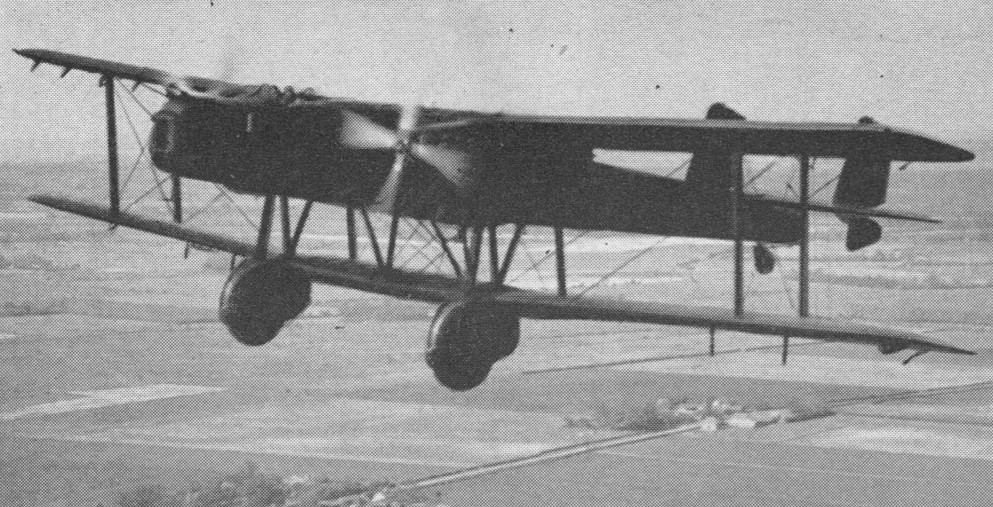
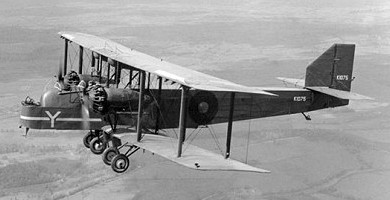
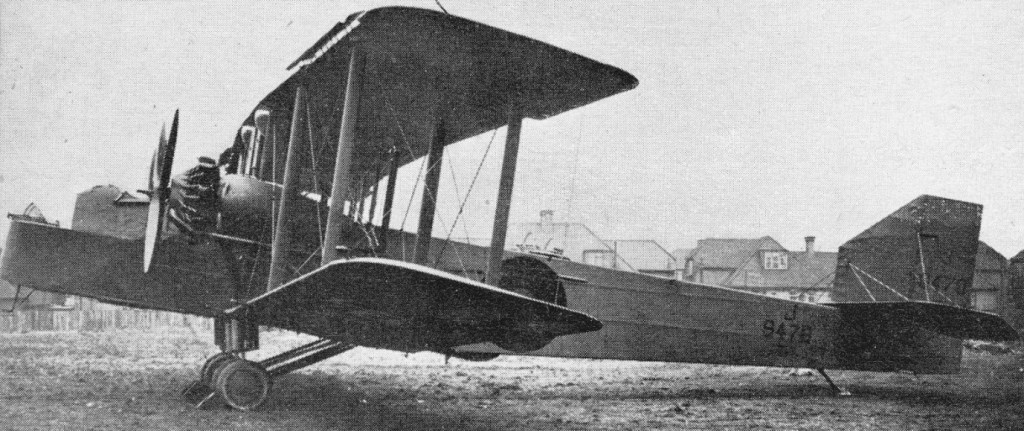
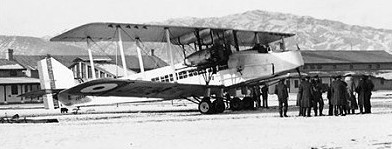
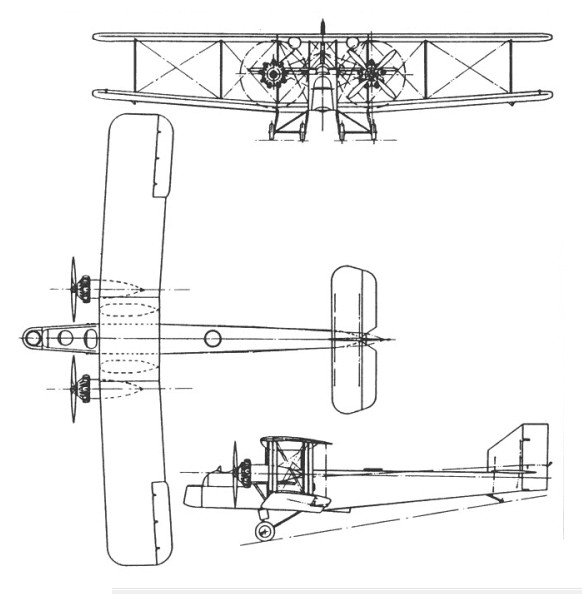
The Hinaidi was a structural rather than aerodynamic development of the Hyderabad (with a primary structure of metal rather than wood in the main production variant) and with Jupiter radials in place of the Lion inlines for slightly better performance with a usefully increased warload. The two Hinaidi prototypes were Hyderabad conversions and thus retained a wooden structure, and first flew in March 1927.
HP.33 Hinaidi
The 12 new-build Hinaidi Mk Is retained the Hyderabad’s wooden construction, and were complemented by seven Hyderabad conversions before the advent of the metal-structured Hinaidi Mk II (first flown 8 Feb 1929), of which 33 were built up to 1932.
The first Hinaidi unit was No. 99 Squadron, which received its aircraft from October 1929. There followed No. 10 Squadron, together with Nos 502 and 503 Squadrons of the Auxiliary Air Force. Hinaidis were replaced by Heyfords from 1933, and declared obsolete during 1937.
The RAF also received three examples of the troop-transport version known as the Clive (formerly Chitral). Each could accommodate 17 fully armed troops, or equivalent freight; folding seats being provided on both sides of the cabin and racks for the rifles. Two gun positions were retained (nose and dorsal). The first Clive was later civil registered G-ABYX and named Youth of Australia (subsequently Astra).
HP.35 Clive
Hinaidi Mk II Engines: 2 x Bristol Jupiter VIII, 328kW (440 hp) Span: 22.86m (75ft). Length: 18.03m (59ft2in). Height: 5.18 m / 16 ft 12 in Wing area: 136.66 sq.m / 1470.99 sq ft Max T/O weight: 6577 kg (14,500 lb). Empty weight: 3647 kg / 8040 lb Max speed: 106 kts / 196 km/h / 122 mph at sea level. Cruise speed: 121 km/h / 75 mph Ceiling: 4420 m / 14500 ft Range: 1368 km / 850 miles Armament: 3 x 7.7-mm (0.303-in) machine-guns, 657 kg (1,4481b) bombs Operational range: 850 miles. Crew: 4
Intended as a Hawker Horsley and Fairey Fawn replacement, the sole Type H (HP.34) Hare high altitude day bomber underwent numerous modifications and engine changes. First flown on 24 February 1928 it underwent official tests at Martlesham Heath in July 1929 powered by a Bristol Jupiter VIII radial and two blade propeller, after being fitted with a divided undercarriage to allow carriage of a torpedo. Two 620 lb bombs were carried beneath the wings.
In 1932 J8622 was sold to a private buyer, registered G-ACEL, and moved to Hanworth, but it never flew again. Its remains were scrapped in 1937.
Engine: 1 x 450hp Gnome-Rhone Jupiter Max take-off weight: 2607 kg / 5747 lb Empty weight: 1485 kg / 3274 lb Wingspan: 15.24 m / 50 ft 0 in Length: 9.80 m / 32 ft 2 in Wing area: 42.18 sq.m / 454.02 sq ft Max. speed: 224 km/h / 139 mph Ceiling: 5029 m / 16500 ft Armament: 2 x 7.7mm machine-guns, 2 x 250kg bombs or a torpedo Crew: 2