Ozone Rush

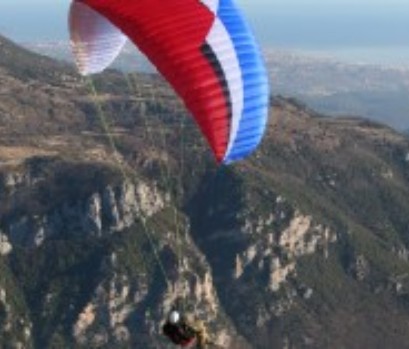
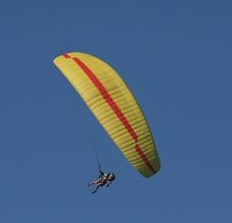
The Rush Power was created circa 2005 for the performance pilot who needs DHV 1-2 security in their DULV certified wing. With a higher aspect ratio and more cells than the Mojo Power, the Rush Power is closer to a DHV2 in performance while remaining well within the boundaries of the DHV 1-2 class. It features sportier, more dynamic handling, along with a higher speed range.

The Rush Power’s launch characteristics are benign for a wing with such performance and dynamic character, and pilots will find that the inflation is simple to control in all conditions. In light wind or no wind, the Rush Power comes up easily overhead, with no tendencies to hang back or slip to one side.

In flight, the handling is direct and well coordinated, and ideal for maneuvering close to the ground or for thermalling with the engine off. Feedback is transmitted to the pilot and it is feedback that the pilot can understand and use, not just turbulence or noise.

The Rush Power is a well proven and ideal intermediate paramotor wing that also flies just as well unpowered. We think that pilots searching for an intermediate wing that is equally capable of powered and unpowered flight need look no further.

The Rush Power is constructed with Porcher Marine Skytex Evolution cloth, and comes standard with Ozone Paramotor Risers which feature double hang points, reinforced trimming system, and trimmer lock-off for free flight.

Small
Cells: 46
Projected Area: 21.18 sq.m
Flat Area: 24.57 sq.m
Projected Span: 8.89 m
Flat Span: 11.27 m
Projected Aspect Ratio: 3.73
Flat Aspect Ratio: 5.17
Root Chord: 2.77
Glider Weight: 12.3 lb
Weight Range: 154-242 lb
DHV: 1-2

Medium
Cells: 46
Projected Area: 23 sq.m
Flat Area: 26.66 sq.m
Projected Span: 9.26 m
Flat Span: 11.74 m
Projected Aspect Ratio: 3.73
Flat Aspect Ratio: 5.17
Root Chord: 2.89
Glider Weight: 13 lb
Weight Range: 187-275 lb
DHV: 1-2

Large
Cells: 46
Projected Area: 25.14 sq.m
Flat Area: 29.16 sq.m
Projected Span: 9.68 m
Flat Span: 12.28 m
Projected Aspect Ratio: 3.73
Flat Aspect Ratio: 5.17
Root Chord: 3.02
Glider Weight: 14 lb
Weight Range: 220-308 lb
DHV: 1-2
Ozone Vulcan

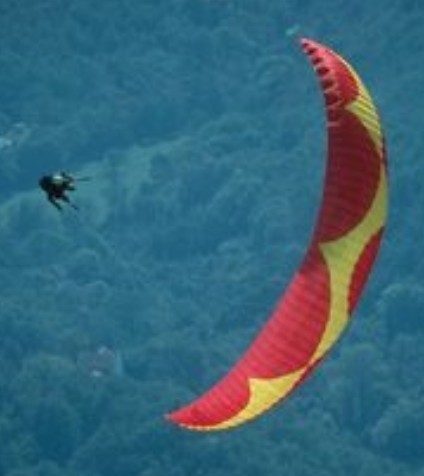
The replacement for the Octane, the Vulcan was announced as a wing for the true sport pilot, which outperforms its predecesor whilst keeping “the feeling”. The glider has a higher aspect ratio of 5,4, a smaller tip area, and also more cells (56) to improve the performance. It was to be available in 3 colors schemes (quite original).

Ozone claims that the Vulcan offers more performance throughout the speed range, “but interestingly it also offers more pitch stability than before”. It also features the brand’s B2 tabs (introduced with the Vibe) which are supossed to offer more stability in flight “and reduce the pitching effect even further making the wing very comfortable to fly even when it’s rough and turbulent”, according to the designers. The Vulcan made an interesting debut in the acro scene at the last Bregenzerwald Cup (Austria) in the hands of Mike Kung.

The Vulcan passed DHV2 certification in sizes S, M, L & XL. The XS size was yet to be certified.

Ozone Mantra

Mantra 2

An evolution of the Mantra, Ozone says the DHV2-3 Mantra 2 is similar in that it has the same excellent handling and user-friendly feel. The big difference is that the Mantra2 is being developed with true 3-Line technology, which Ozone has been experimenting with since the X-Alps of 2003. Combined with an all new internal structure, the Mantra2 has 90 meters less lines than the Mantra! The M size prototype currently has just 290 meters of total line, which Ozone says is a drastic reduction in drag. Other changes include an aspect ratio of 6.22, a new planform to increase stability and performance at speed, and special span-wise reinforcement to moderate sail tension.

Ozone Magnum

A completely new tandem wing designed for professional tandem pilots, the Magnum replaces the McDaddy in the Ozone range. Easy and smooth inflation even in high winds is one of its advantages, but the manufacturer also underlines its stability in pitch and roll for comfortable flights, and the “trademark Ozone handling for precise and dynamic piloting”.

It has a size of 41 sq.m, an aspect ratio of 5.11 and 46 cells, for a clean sail design and efficient performance, with benign launch characteristics and a lightweight sail design.

The Magnum’s profile is a new design, and both the planform and sail tension have been created specially for comfortable brake pressure, easy launches, and performance, according to Ozone. The canopy is made of Porcher Marine cloth, with the new Porcher Skytex 45 Evolution on the topsail, a new material “extremely durable” and stretch resistant, for a more precise feeling in flight and a more durable glider. Weight range for the Magnum is 130-220kg.

Ozone Addict

The replacement of the Vulcan for the intermediate-advanced category is based on Ozone’s high performance model, the DHV2 Mantra, offering “ excellent passive safety ”. With an aspect ratio of 5.6 and 59 cells (like the Mantra), at Ozone announce that this is a ” kilometer eating XC machine “. The Addict has an increased surface area in the wingtips for ” lifty and efficient turn ” that can also be very tight for the weakest and smallest thermals. In the Addict the sail tension has received special attention to obtain a smooth in-flight behavior in rough air and great stability at speed, according to Ozone.

The sail of the Addict is Porcher Marine, with Porcher Marine 45 Evolution Skytex for the outer surface, and the glider weights only 5.6 kg for the M size. The Addict is also available in a thin lines version, the ‘Addict R’, for those looking for a bit extra performance, and 5 sizes.

Ozone Mc Daddy / Mc Daddy Jr.

Ozone have certified their tandem glider for lightweight pilots, the Mc Daddy “Jr”, or 41. They decided to make a smaller size for their tandem model in order to offer the pilots a wing “that will best suit their normal pay load, the conditions they normally fly in and the type of flying they do, whether it be purely pleasure or commercial flying”. This idea makes perfect sense with Ozone’s philosophy: “Size matters!”.

The weight range for the Mc Daddy 41 goes from 130 to 200kg, and the Mc Daddy 44, from 140 to 230kg. According to Ozone, the glider is very easy to fly and launch, with no tendency to overshoot or pull the pilot off his feet as the wing rises. “The handling is pretty bloody good for a tandem. It’s dynamic, you can really through it around and the brake pressure is relatively light so it’s good fun to fly. Performance wise it has enough. Faster than the Cosmic with a better glide should be sufficient for anybody”, says Ozone’s designer Rob Whittal. The Mc Daddy 44 was yet to be certified.

Owl OR-65 Racer

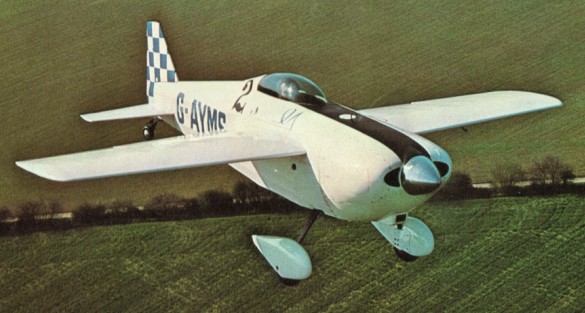
The OR65-2 is a single seat mid-wing aircraft with a bubble canopy and conventional landing gear. The tapered wing uses wood construction with plywood covering. The fuselage is constructed of steel tubing with fabric covering.

The prototype was built by John Alford. A second example, G-AYMS named Ricochet was built by Farm Aviation in the United Kingdom and was first flown at Panshanger Aerodrome Hertfordshire by Squadron Leader M.A.Kelly on 13 April 1971. The aircraft was raced at North Weald Airfield on 31 May 1971 but crashed in the River Thames at Greenwich later that day following propeller failure.

OR65-2
Powerplant: 1 × Continental O-200, 100 hp (75 kW)
Wingspan: 16 ft (4.9 m)
Wing area: 66 sq ft (6.1 m2)
Length: 17 ft 5 in (5.31 m)
Maximum speed: 190 kn (220 mph, 350 km/h)
Crew: 1

Owl, George Allen jr.

Born August 1, 1920, Eastern Band of Cherokee Indians Reservation in North Carolina.

BS Aeronautical Engineering, Parks Air College, East St. Louis, 1940.

Engineer at Curtiss Wright, Aeronca, McDonnell Aircraft, North American Aviation, California. Projects included X-15, B-70, B-1, F108, F-14, F-15, Space Shuttle.

Died December 18, 1981.