
Engine: 2 x Solo 210
Empty wt.: 180 lbs
Max wt.: 400 lbs
Wing span: 30ft 5in
Wing area: 400 sq.ft.
Wing loading lbs/sq.ft: 1
Power loading: 12.5 lbs/hp
Max speed: 26 mph
Cruise: 26 mph
Seats: 1
Engine: 2 x Solo 210
Empty wt.: 180 lbs
Max wt.: 400 lbs
Wing span: 30ft 5in
Wing area: 400 sq.ft.
Wing loading lbs/sq.ft: 1
Power loading: 12.5 lbs/hp
Max speed: 26 mph
Cruise: 26 mph
Seats: 1
A ram air parachute connected to a trike unit.
Engine: 2 x 15 hp
Climb rate: 250 fpm
Rate of descent: 600 fpm
Max payload: 185 lb
Ceiling: 5000 ft

Single seat twin engined motorised parachute with constant chord. Control inputs through pedals for yaw. Pilot suspended below wing in trike unit. Undercarriage has three wheels in tricycle formation. Nosewheel steering. No brakes. Aluminium tube trike unit, without pod. Engines mounted below wing driving pusher propellers.
The ParaPlane, which is listed as an ultralight in the USA, is in fact a motorised parachute. Shown at Sun ‘n’ Fun in March 1983 at Lakeland, Florida, this amazing flying machine only flew once due to difficult weather conditions.
Designed by Steve Snyder, the ParaPlane uses as its ‘wing’ a 28.5 ft (8.69 m) parachute of constant chord giving 375 sq.ft (34.8 sq.m) of lifting surface. For pilots heavier than 185 lb (84kg), it can also be equipped with a 36.0ft ‘wing’ of 450sq.ft (10.97 m, 41.8 sq.m). The contraption is flown like a non powered parachute wing, its pilot steering via lines attached to foot pedals to give directional control. The rear wheels of the trike unit are free to castor and are unbraked, the structure being made of alumi-nium tubes with a hammock seat and shoulder harness. Behind the seat, the engine mount carries the two Solo 210cc 15hp engines driving two twin blade contra rotating prop¬ellers.
Weighing 79 lb (36 kg) empty, the trike unit is foldable down to 50 x 14 x 20 inch (127 x 35 x 51 cm). The aircraft is used like an ascending parachute and it collapses behind the trike unit when it lands. Take off is made at 25 mph (40 kph), which is also the landing speed. ParaPlane Corporation does not quote a stalling speed, though a figure of 8 10mph (13 16kph) is mentioned.
Price: from $3750 in 1983.
During the 1983 Oshkosh ParaPlane rook over 1000 orders for the craft.
Engine: 2 x Solo 215 (2 x 215cc) 33hp
Empty wt: 163 lbs
Wing span: 30’6”
Wing area: 400 sq.ft
Fuel cap; 4.5 USG
Construction: Aluminium, Nylon
Max wt: 360 lbs
Max speed: 26 mph
Climb rate: 250 fpm
Design limit: +9g
Glide ratio: 3-1
Wing loading: 0.9 lbs/sq.ft
Power loading: 11.0 lbs/hp
Engine: 2 x Solo 335, 15 hp each
Propeller diameter 50 inch, 1.27 m
Belt reduction
Power per unit area 0.08 hp/sq.ft, 0.86 hp/ sq.m
Fuel capacity 4.5 US gal, 3.8 Imp gal, 17.0 litre
Length overall 5.7ft, 1.73m
Height overall 5.6ft, 1.70m
Wing span 28.5ft, 8.69 m
Constant chord 13.0 ft, 3.96 m
Total wing area 375 sq.ft, 34.8 sq.m
Empty weight 140 lb, 64 kg
Max take off weight 355 lb, 161 kg
Payload 215 lb, 98 kg
Max wing loading 0.95 lb/sq.ft, 4.6 kg/sq.m
Max pow¬er loading 11.8 lb/hp, 5.4 kg/hp
Max level speed 30 mph, 48 kph
Never exceed speed 30 mph, 48 kph
Max cruising speed 30 mph, 48 kph
Economic cruising speed 25 mph, 40 kph
Best glide ratio with power off 3/1
Range at average cruising speed 41 mile, 66 km
Stephen Snyder and his ParaPlane Corp are credited with developing and marketing the genre, which began in the early 1980s with a single seat foldable powered tricycle that could fit in a car trunk.
During the 1983 Oshkosh ParaPlane took over 1000 orders for the craft.
1983-4: ParaPlane Corporation, 5801 Magnolia Ave¬nue, Pennsauken, New Jersey 08109, USA.
1995-8: 68 Stacey Haines Rd, Medford, NJ 08055, USA.
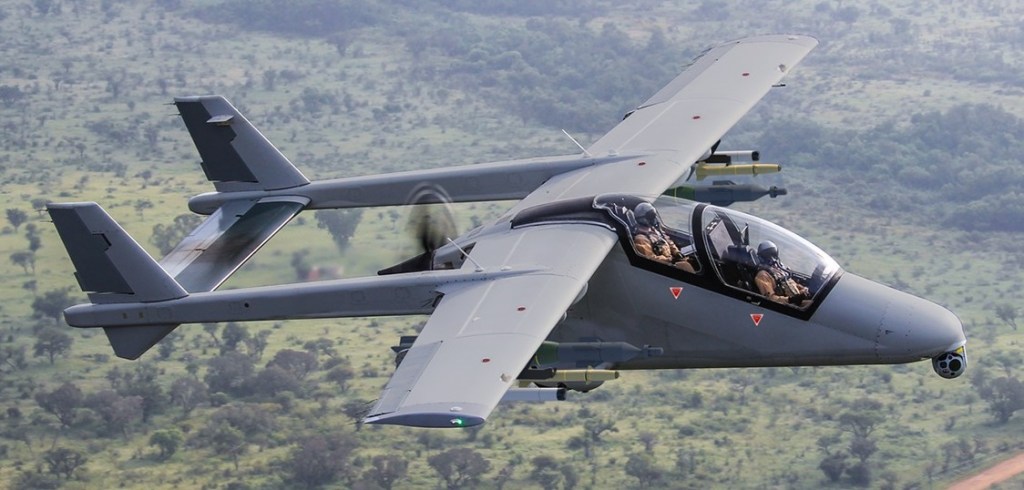
The AHRLAC (Advanced High Performance Reconnaissance Light Aircraft) is a South African light reconnaissance and counter-insurgency aircraft developed by AHRLAC Holdings, a joint venture between the Paramount Group and Aerosud. It is designed to perform as an inexpensive, more versatile substitute for unmanned aerial vehicles (UAVs) and modern light attack aircraft.
In 2009, Paramount Group began working on a new light turboprop-powered counter-insurgency aircraft. The design study examined a fixed-wing aircraft as an affordable platform for both civilian and military applications as an alternative to unmanned aerial vehicles (UAVs). The design of the proposed aircraft drew on the company’s prior experience producing helicopters, and several design elements, such as the steep tandem canopy adopted, have been attributed to this source of inspiration; the aircraft is intended to act as a viable alternative for helicopters. It had been conceived as an affordable intelligence, surveillance, and reconnaissance (ISR) and light-strike platform with a strong emphasis on low-cost operations was established early on.
In September 2011, design work on the AHRLAC project was formally initiated. In 2011, the manufacturer stated that the price of the aircraft was projected at being under US$10 million per aircraft.
In 2011, a full-scale mockup of the AHRLAC was constructed, alongside a quarter-scale flight-capable model that was later used for a total of 80 test flights. The first full-scale prototype, designated as the Experimental Demonstrator (XDM), was completed using design for manufacture technology, which allowed for jigless construction to be performed, thus producing both time and cost savings. Of the aircraft’s 6,000 components, 98 per cent had been designed using CATIA software and were domestically manufactured.
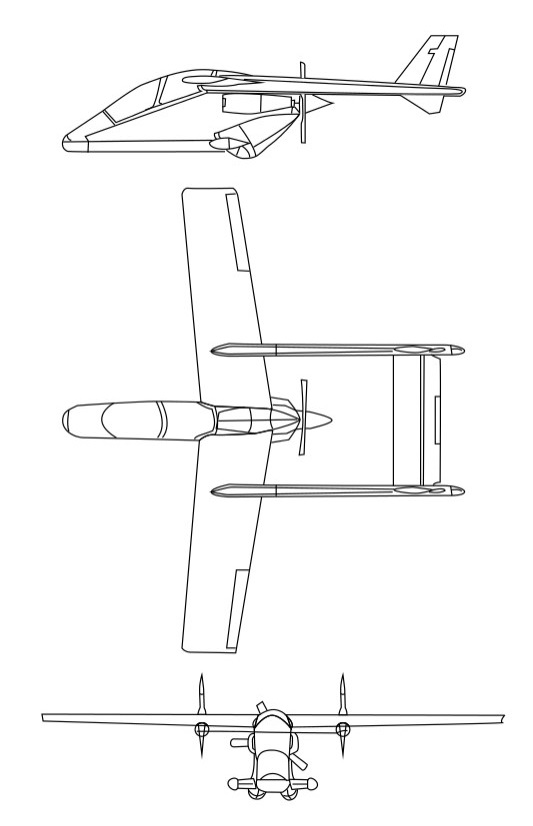
The AHRLAC features a twin-boom, single-pusher-engine, high-mounted forward-swept wing configuration providing for excellent external visibility. It is powered by a single Pratt & Whitney Canada PT6A turboprop engine; it has a top speed of 310 mph along with a flight endurance of seven hours. It is flown by a crew of two, seated in tandem configuration, both being provided with Martin-Baker ejection seats and HOTAS (hands on stick-and-throttle) control functionality. The narrow airframe is composed of a combination of metal and composite construction and is designed to provide maximum crew visibility. The AHRLAC has been designed to be capable of operating from austere runways and rough fields; it also possesses STOL (Short Take Off/Landing) and rapid deployment capabilities.
It features a reconfigurable nose, a large mission bay for avionics beneath the two-person cockpit, and the lower fuselage consists of a variety of interchangeable conformal modular units. These modules allow the aircraft to be outfitted with a variety of sensor systems such as infrared and optical cameras, synthetic aperture radar, electronic intelligence gathering and various electronic warfare packages. Additionally, electro-optical turrets can be installed both on the nose and belly of the aircraft.
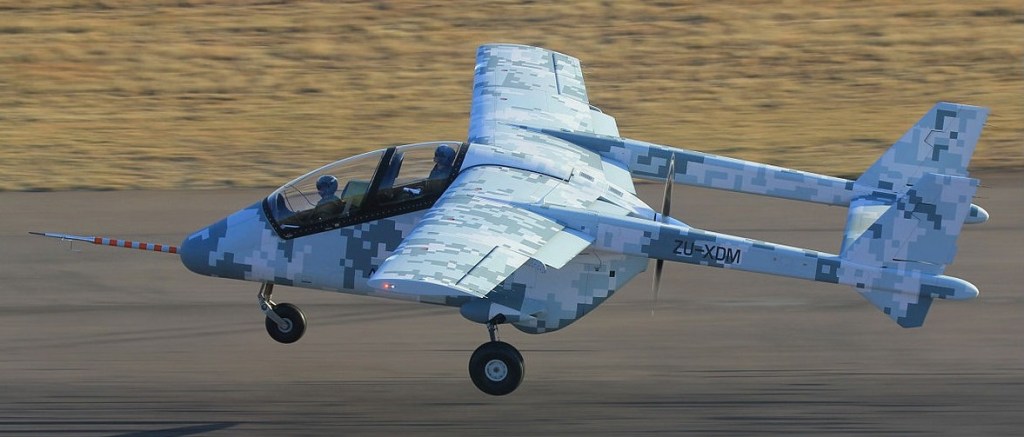
On 26 July 2014, the first AHRLAC prototype conducted its maiden flight from Wonderboom. It was initially deployed on a 20-hour flight test program to contrast computer simulations against data from the prototype’s real-world flight performance; during each of these flights, telemetry data was gathered inflight by a specially-equipped Pilatus PC-12 chase plane. The initial prototype is to be used to prove the flight characteristics and performance of the aircraft, while the second prototype, designated as the Advanced Demonstrator (ADM), shall be for testing armaments and mission systems.
On 13 August 2014, the aircraft performed its first public flight display at Wonderboom Airport.
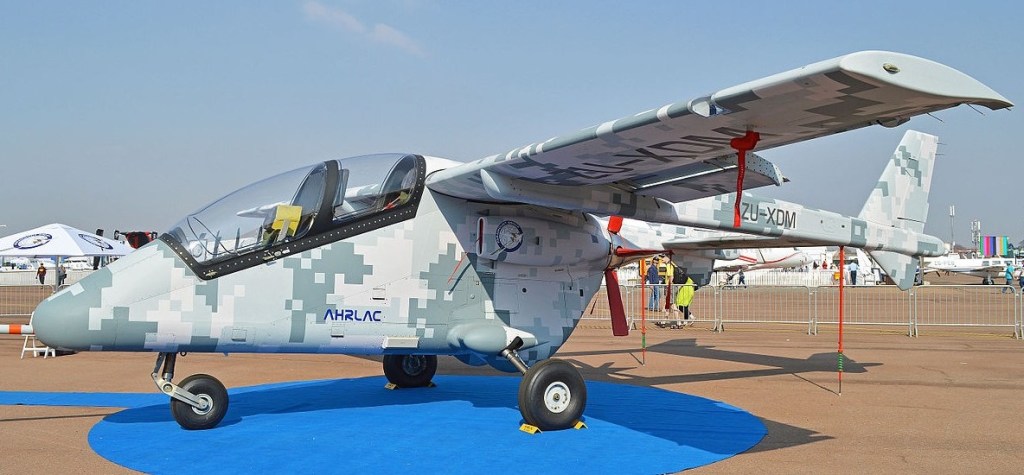
By February 2015, the first prototype had completed 65 hours of incident-free flying; as a result, the test program proceeded to the next phase, under which the flight envelope was progressively expanded to explore and evaluate its handling, center of gravity, flight performance, airframe qualities, and rough field capabilities. According to Paramount, several prospective customers had shown interest in the aircraft, particularly from the Middle East; the construction of the second prototype was also underway.
In March 2016 Boeing announced a partnership with Paramount Group to cooperate on an advanced mission system for the armed variant of the AHRLAC known as “MWARI”.
In May 2014, the flight test program commenced at Wonderboom Airport near Pretoria, the first prototype having been moved there from Aerosud’s facility in Centurion, Gauteng. In July 2014, the ground test phase was reportedly completed.
Mwari is a two-crew C4ISR, F3EAD and precision strike aircraft, capable of carrying a wide range of weapons, sensors and systems in extended airborne mission operations. It uses a pusher propeller and has an open system architecture allowing for the rapid incorporation of current and emerging systems, setting a new standard for mission flexibility and adaptability. The aircraft features open architecture, plug and play systems and carries an interchangeable multi-mission pod system, allowing a single platform to perform multiple missions.

The armed Mwari version is designed to carry a single 20 mm or 30 mm cannon, which is internally mounted into the portside nose section. Additionally, it is fitted with either four or six hardpoints for carrying weapons mounted under the wings. Armour for the aircraft is also modular and can be added or removed entirely dependent on the mission requirements. It has an interchangeable pod that allows reconnaissance and other equipment to be swapped out within two hours so that the aircraft can be used for different purposes.
Conformal fuel tanks carried underneath the tail booms have also been offered as an option for the type; when equipped with external fuel tanks, the AHRLAC is capable of a 2,000 nm ferry range.
By September 2016, the prototype had accumulated 250 flying hours during tests, as well as a total of four deployments to the South African border and to neighbouring Botswana for the purpose of operationally representative trials. An improvised trial flight had also been conducted during an outbreak of civil unrest in South Africa.
By September 2016, the developers were in the process of building a new assembly line at Wonderboom, this facility is expected to produce the initial two production aircraft in 2017. The Wonderboom factory is to be capable of producing up to two aircraft per month; it is reportedly readily expandable to double its current size, dependent on customer demand.
In 2014, the developers revealed that, in addition to the previously-announced crewed model of the AHRLAC, they were also in the process of developing an unmanned variant as well. According to Janes, the unmanned model of the AHRLAC had its origins in the quarter-scale model that had been produced for flight testing purposes, which had revealed favourable tendencies towards such use. By September 2014, a pair of prototype unmanned vehicles, which had received the name “Mwari”, had been produced. The Mwari UAV is considerably smaller than the manned AHRLAC counterpart, possessing a reduced flight endurance of only 4 hours along with a sensor turret in the nose. The UAV was renamed “Mwewe”, as the Mwari name is used for an armed version of the full scale manned AHRLAC.
In March 2016, American aerospace firm Boeing announced that it had entered into a development partnership with Paramount with the aim of producing a militarized version of the Ahrlac. Under this agreement, Boeing shall develop an integrated mission system that will provide the Ahrlac with intelligence, surveillance and reconnaissance (ISR) and weapons system capabilities; this equipment is presented as being optional, and some customers may prefer to opt for simpler systems instead. The militarized version of the Ahrlac shall be marketed under the name “Mwari”.
In February 2018, an announcement was made that the improved AHRLAC design will be marketed in the USA under the name “Bronco II”. In May 2020, BRONCO II, Paramount Group’s Americanized variant of the AHRLAC, in partnership with Leidos and Vertex Aerospace, offered the light attack and surveillance aircraft to U.S. Special Operations Command, or SOCOM, for its Armed Overwatch program.
Paramount announced that it had sold a total of 9 aircraft to two unnamed countries and that the first would be delivered immediately, the announcement was made at Africa Aerospace and Defence show on 21 September 2022. This marks the first sale of the aircraft and South Africa’s first sale of a fixed-wing aircraft in 20 years.
As of 28 February 2019, the AHRLAC program has been placed into business rescue with the Wonderboom factory being shut down and all 140 employees sent home. In August 2019, a business rescue plan was announced for AHRLAC, with Paramount taking full control of the Aerospace Development Corporation (ADC) and its subsidiaries, according to the proposition. In September 2020, ADC stated that production of the Ahrlac had restarted.
The company claims to have made multiple sales of 9 aircraft to two unnamed air forces. The first example was delivered on 23 September to an unnamed air force. A total of 9 Mwari aircraft were on order. Paramount Aerospace Industries claims that they can build three a year or five if demand requires more aircraft.
The Bronco II is designed for ultimate mission flexibility. The aircraft’s unique internal Interchangeable Multi-Mission System Bay (IMSB) allows for a single airframe to be easily and rapidly re-configured to perform multiple roles (e.g. ISR, SCAR, CAS, FACA) incorporating high-performance targeting sensors, network communication systems, precision weapons, an electronic self-protection suite, and mission planning systems.
The Bronco II is designed to “roll-on, roll-off” standards, it can be rapidly disassembled, transported and reassembled in the field by a small crew. Its modular mission systems enable rapid system changes, updates, additions, integration and removal. The Bronco II aircraft was to be manufactured in Crestview, Florida.
AHRLAC
Powerplant: 1 × Pratt & Whitney Canada PT6A-66, 710 kW (950 shp)
Wingspan: 11.9 m (39 ft 0 in)
Length: 10.3 m (34 ft 0 in)
Height: 4.0 m (13 ft 0 in)
Empty weight: 2,000 kg (4,400 lb)
Max takeoff weight: 3,800 kg (8,400 lb)
Maximum speed: 504 km/h (313 mph, 272 kn)
Range: 2,130 km (1,325 mi, 1,150 nmi)
Endurance: 7–10 hrs
Service ceiling: 9,450 m (31,000 ft)
Take-off distance: 550 metres (1,800 ft) with full payload
Guns: GI-2 20 mm cannon
Hardpoints: 6
Mwari
Wing span: 39.4 ft / 12.00 m
Length: 34.4 ft / 10.50 m
Height: 13.1 ft / 4.00 m
MTOW: 8378 lb / 3800 kg
Max speed: 311 mph / 500 kph / 270 kt
Ceiling: 31,004 ft / 9450 m
Max range: 1268 mi / 2040 km / 3778 nm
Range: 960 km / 596 mi
Endurance: 6.5 hr
Armament: opt. 20 or 30mm cannon
Hardpoints: 4
Bombload: 1700 lb
Crew: two (pilot, copilot/observer)
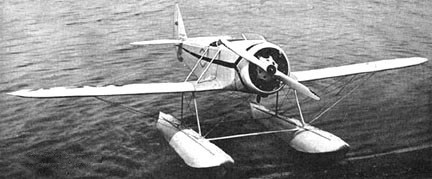
Designed by Ralph Johnson, the 1931 two place side-by-side cockpit Sportster sold for $4,985. Only one was built, N495K, first flying on 10 April 1931 piloted by Stanley Hammond. As a floatplane, it crashed on 16 May 1931, killing Behse and ending Paramount Corp.
Engine: Warner Scarab, 110hp
Span: 29’0″
Length: 22’0”
Seats: 2

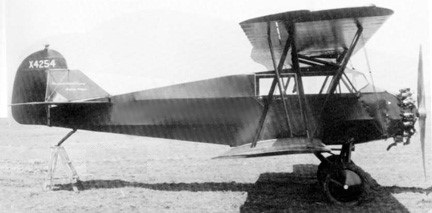
Following the failure of Walter J. Carr’s first aircraft company, the CSC Aircraft Company, Carr worked as a tester for the new Warner Scarab radial engines. Carr flew with Scarabs on a Travel Air 2000, and later cannibalized the test aircraft to produce the first Cabinaire aircraft design.
The prototype Cabinaire was formed around a welded steel tube Travel Air 2000 fuselage modified for an enclosed cabin. A new center section of wing was added and Travel air wings were reinstalled onto the center sections. The biplane aircraft featured a radial engine, and conventional landing gear. The upper wing was mounted several inches above the enclosed cabin. The entire plane was fabric covered with wooden wing spars and ribs. The upscale cabin used two individual upholstered wicker seats in the front and a wicker bench seat for passengers. The interior used velor finishing, nickel plating, mohair rugs, mahogany panels and roll-down windows. It first flew in 1928.
Designed by Walter Carr, the 1929 Cabinaire 110 (ATC 2-164, 2-165) was a four place cabin biplane. The prototype, NX4254 c/n 2, used many Travel Air parts; cabane-mounted upper wing. c/n 1 is generally assumed to have been rebuilt from a Travel Air.
Prototype #2 was made from parts of the first. Each production model differed slightly from each other with choices of engines, and landing gear and aileron improvements.
The Cabinaire was introduced at the 1929 National Aircraft Show.
Only eight were completed before production ceased.
In 1929, Viola Gentry and Jack Ashcroft attempted an endurance record for flight with aerial refueling in a modified Cabinaire SN#5 named ‘The Answer’. The name was chosen in response to the Army aircraft that had completed previous endurance records, the ‘Question Mark’. The aircraft had a 55-gallon cabin tank, and 21 gallon wing tanks installed for the attempt. The Answer crew was unable to refuel after the first ten hours of flight due to fog and crashed 28 June 1929, killing Ashcroft. Carr had been the original choice of co-pilot, but had to pass on the opportunity when struck with pneumonia.
In 1930, a Cabinaire was entered in the 4814 mile long Ford National Reliability Air Tour, placing 15th out of 18. The same aircraft has been restored and was still flown in 2011.
Selling for $6,750 seven were built in total; NC17M, NC387, NC587, NC551V, NC7930/7931. NC587 c/n 6 was repowered with a 150hp Hisso in 1936. (2-164) and (2-165) were 4p and 3p approvals respectively.

Cabinaire 110 NC587 was owned by Universal Engineering of Frankenmuth MI. and the founder of Universal, W.R. Fisher flew the plane for business. It was wrecked and then stored away at the family farm, probably in the early 30’s.
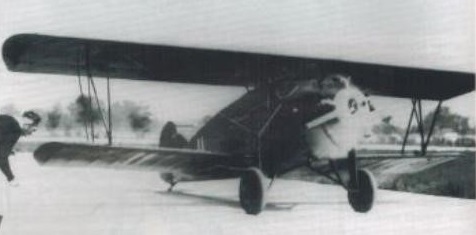
The 1930 Cabinaire 165 (ATC 265) sold for $7,500, and $5,750 in 1931. One was built, NC17M c/n 7, modified from a Cabinaire 110.

NC17M it caught fire during restoration in the ’60s and it was finally restored in the ’90s. Greg Herrick purchased it in 1997, and while flying it from FL to MN, an engine failure stopped the trip near Zebulon GA. The Cabinaire was once again being restored by Nathan Rounds in Zebulon in 2000.
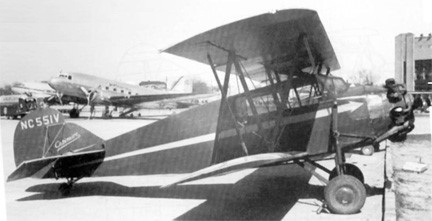
One Cabinaire 110, NC551V c/n 9 was modified to a Cabinaire A-70 in 1930 (ATC 2-233) with a 165hp Continental A-70.
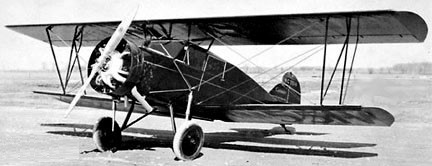
Cabinaire 110
SN#1-6
Engine: Warner Scarab, 110hp (82 kW)
Span (upper): 34’8″
Span (lower): 29’0″
Length: 23’9″
Useful load: 908 lb
Max speed: 103 mph
Cruise speed: 90 mph
Stall: 38 mph
Range: 465 mi
Ceiling: 12,000′
Seats: 4
Cabinaire 165
SN#7
Engine: Wright J-6, 165hp (123 kW) / Wright R-540, 175 hp (130 kW)
Upper wingspan: 33 ft 2 in (10.11 m)
Lower wingspan: 29 ft (8.8 m)
Wing area: 309 sq ft (28.7 m2)
Length: 24’7″ (7.49 m)
Height: 9 ft (2.7 m)
Empty weight: 1,620 lb (735 kg)
Gross weight: 2,630 lb (1,193 kg)
Fuel capacity: 50 U.S. gallons (190 L; 42 imp gal)
Useful load: 1054 lb
Maximum speed: 100 kn (120 mph, 190 km/h)
Cruise speed: 90 kn (103 mph, 166 km/h)
Stall speed: 35 kn (40 mph, 64 km/h)
Range: 350 nmi (400 mi, 640 km)
Service ceiling: 12,000 ft (3,700 m)
Rate of climb: 800 ft/min (4.1 m/s)
Seats: 4
Cabinaire A-70
Originally, SN#3 flown as an aerial survey aircraft, it was rebuilt to meet ATC requirements, with a new engine, becoming SN#9.
Engine: 165hp Continental A-70.
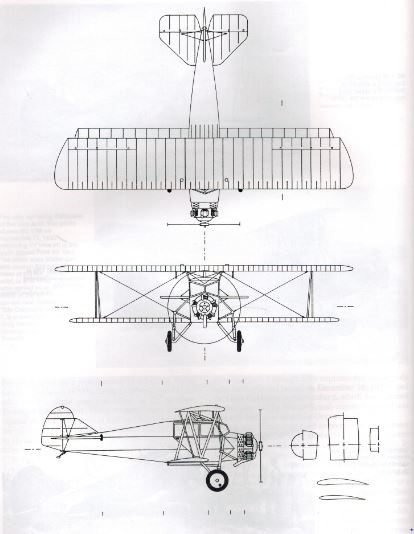
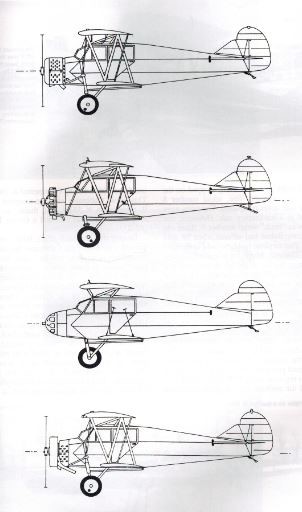
Founded 1928 by Joseph E Behse and Walter J Carr at Saginaw, Michigan, USA.
Airplane builder
Ended operations in 1932.
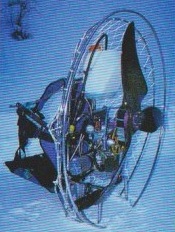
The Paramotor chassis design was a variation of Marbella’s PAP.
Circa 1998 the range was imported into the UK by Trekking.
M3
Empty weight: 21.5 kg
Engine: Solo, 16 hp
Reduction: 1:2.2
Prop diameter: 100 cm
Fuel capacity: 8 lt
Price (1998): 33 000 SEK
M3 ES
Empty weight: 23.5 kg
Engine: Solo, 16 hp
Reduction: 1:2.2
Prop diameter: 100 cm
Fuel capacity: 8 lt
Price (1998): 38 000 SEK


