1998: Delnicha 17, CZ-17000 Prague, CZECH REPUBLIC
Paraglider manufacturer
1998: Delnicha 17, CZ-17000 Prague, CZECH REPUBLIC
Paraglider manufacturer
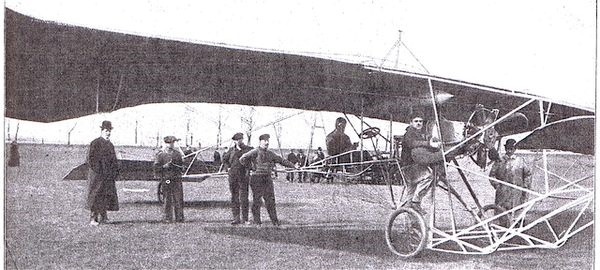
A tractor monoplane designed and recorded as a Deutsche Sommer aircraft, in respect to Pega & Emich (Griesheim am Main) being sold to the Deutsche Sommer-Flugzeugwerke early in 1911. Unsuccessfully powered by a 60 hp Hoffmann-Rotor engine, sporting an uncovered fuselage and elevator section in front.
1998
Cycle: turboed 4 stroke
No cylinders: 2
Bore: 77 mm
Stroke: 67.79 mm
Compression: 8.8
Displacement: 650 cc
Cooling: Air / oil
Ignition: Elctronic
Reduction: Hydromechanical Epicyclic 3/1
Dimension: 750 x 485 x 650 mm
Weight: 70.75 kg complete
Max pwr: 80 hp at 6500 rpm
Max torque: 120 at 3500 rpm
Price 1998: 67 400 Fttc
1998:
315, av. Aristide Briand
F 33700 Merignac
France
LSA engine builder
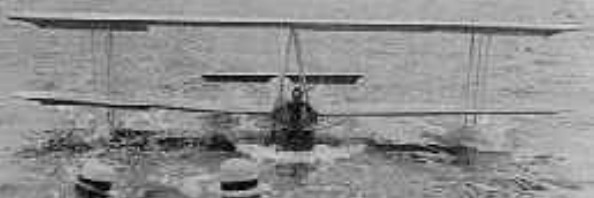
The Peel Glider Boat Company of Flushing Bay, NY was in business around 1930, designing and building the Glider Boat, a biplane glider with stepped flying boat hull and wingtip floats. A number of examples were sold.
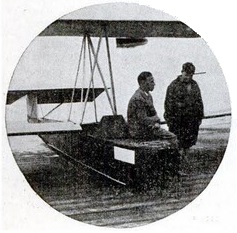
The two occupants sat in tandem in an open cockpit with conventional controls, but without instruments. The structure was wooden spar, steel ribs, fabric covered, and a duralumin hull.
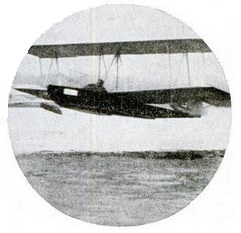
Normal method of launch was behind a motor boat, the towrope being joined to a bridle which attached to either side of the nose outside the front cockpit.
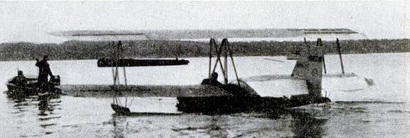
One example belongs to the National Soaring Museum.
Wing span: 9.45 m / 31 ft
Wing area: 25.08 sq.m / 270 sq.ft
Empty Weight: 113 kg / 250 lb
Payload: 159 kg / 350 lb
Gross Weight: 272 kg / 600 lb
Wing Load: 10.84 kg/sq.m / 2.2 lb/sq.ft
L/DMax: 15
Seats: 2
The Peel Glider Boat Company of Flushing Bay, NY was in business around 1930, designing and building the Glider Boat, a biplane glider with stepped flying boat hull and wingtip floats.
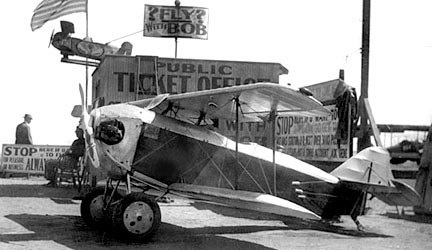
In the late 1920s a single-place biplane was built by, or for Garland Jr & Florence Patrica Kelley Peed.
Santa Monica CA.
USA
Peed was a graduate of the Army Flying School at Kelly Field (TX), later stunt pilot for movies in “Lilac Time” and “Hell’s Angels.” Also a test pilot for Alexander Co on the Bullet.
In the late 1920s a single-place biplane was built by, or for Garland Jr & Florence Patrica Kelley Peed.
Built by Pedal Aeronautics at the Handley-Page plant at Radlett, the Toucan used a Mellinex covered metal tube fuselage of egg-shaped section. Two pilots were seated in tandem under a fully enclosed canopy in the extreme nose.
The mid-set, high aspect ratio wing, was tapered from mid-span. Fitted with a four-unit tails surfaces, with a pusher propellor mounted behind them. A tandem undercarriage was fitted.
It was first flown from Radlett on 23 December 1972.
Wingspan: 123.00 ft
Wing area: 600 sq.ft
Aspect ratio: 25:1
Empty weight: 145 lb
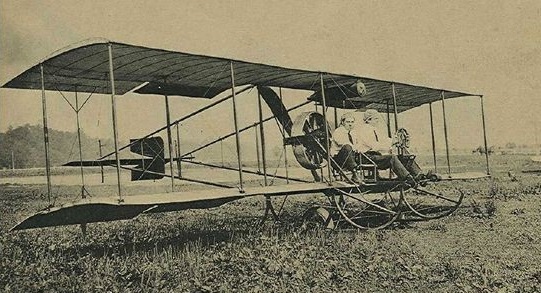
The Columbia Biplane designed by Colonel Paul Peck was fitted with a seven-cylinder, air-cooled rotary rated at 50 hp at 1500 rpm, built by the Gyro Motor Company (Washington), sponsored by, and designed under the direction of Emile Berliner.
A Gordon Bennett Cup entry did not compete.
In American Air Mail Catalogue, Vol 1, 6th Edition, Entry 3: Sep 23-Oct 1, 1911, Garden City-Mineola, NY, International Aviation Tournament. The first official US airmail was flown during the (event) at the Aerodrome on Nassau Boulevard in Garden City. Postmaster General Frank H Hitchcock authorized mail to be flown and Earle L Ovington was sworn in as the first official airmail pilot. T O M Sopwith and Capt Paul W Peck also flew mail during the meet. Ovington flew mail on the first day, and most covers and cards received a circular “Aeroplane Station #1” postmark and a 3-word (“Aerial Special Despatch”) cachet. Covers were postmarked during each day of the meet, but no mail was flown on Sep 29 or Oct 1 due to poor weather conditions. A total of 43,247 pieces of mail was serviced during the meet.
[ibid.] Entry 41: July 19-21, 1912, Coney Island [an amusement park clone in Cincinnati; note roller coaster in background on postcard], Ohio. Paul Beck [spelling error] flew mail each of three days from Coney Island to California, Ohio [the town’s Post Office existed 1865-1935 on the outskirts of Cincinnati, about 1.5 miles from the park]. A Columbia biplane was used and the service was designated as Route 631,003.
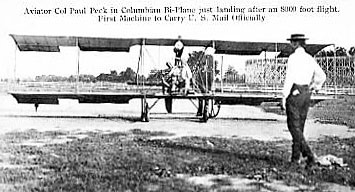
The heavy Gyro motor was fatal to Peck (and passenger) in his crash on Cicero Field, Chicago on September 11, 1912. Peck held American pilot licence No.57 and had set the American duration record at 4 hours 23 minutes, 15 seconds set on May 24, 1912.
Engine: 50hp Gyro rotary pusher
Wingspan 30’0″
Seats: 1

