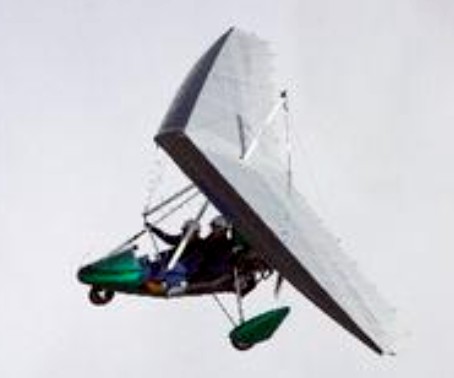
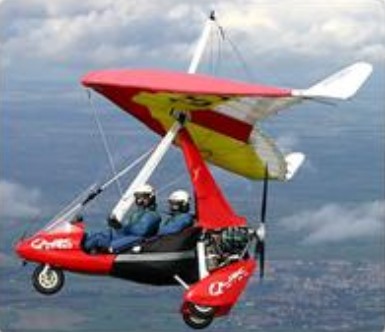
The QUIK is a light handling small wing with a hands off trim speed in excess of 80 mph, and a level speed of 100 mph making distance touring a reality and ground handling simplicity itself. The Quantum’s 409 kg MAUW is retained, but the payload has increased due to the aircraft’s lighter weight. The Quik has larger seating, more rearward headroom for the passenger and more wind protection compared to the Quantum.
Publicly owned Pegasus Aviation bought the rights to the French edition of a highly modified Weedhopper. Some of these alterations were completed to bring the machine to a contemporary description. Others were done srictly to meet the demands of British certification under BCAR-S.
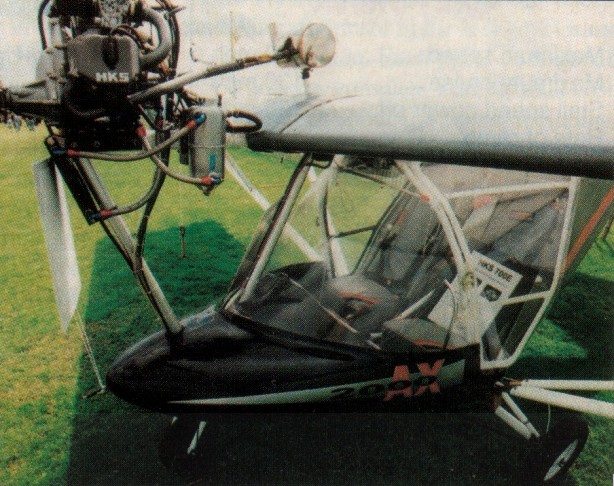
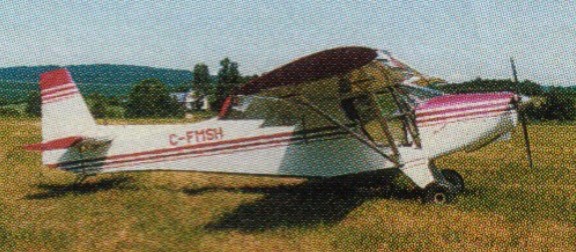
The AX2000 (previously known as the AX-3, for 3 axis) is now a fully enclosed, conventional three axis machine.
H-Power introduced the AX2000 to the US at Oshkosh 1997.
In 1998 the Rotax 582 powered version cost £17,619.
Engine: HKS 700, 60 hp Wing span: 10.3 m Wing area: 15.6 sq.m MAUW: 390 kg Empty weight: 202 kg Fuel capacity: 64 lt Max speed: 145 kph Cruise speed: 105 kph Minimum speed: 50 kph Climb rate: 3 m/s Seats: 2 Fuel consumption: 7.5 lt/hr Certification: BCAR S
UK Markets the AX2000 two-seat very light monoplane and several flex-wing microlights as the single-seat Chaser- S, two-seat Quantum Sport and Supersport, two-seat Quantum LITE Basic 503TC and two-seat Quasar. Publicly owned Pegasus Aviation bought the rights to the French edition of a highly modified Weedhopper.
1998: Elm Tree Park Manton SN8 1PS Marlborough United Kingdom
In 1931 Pegasus Aircraft Mfg Co built a two-place, open cockpit, high wing monoplane, registered N11145 c/n 1A1. Powered by a 60hp LeBlond engine, after it crashed the registration was cancelled on 18 October 1932.
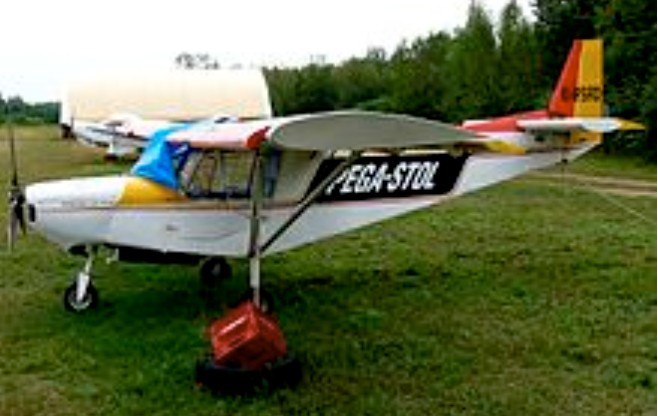
Development of the Pegazair started in 1985 by Serg Dufour of Mont-Saint-Michel, Quebec. Originally it consisted of a new set of Pega-STOL wings with retractable leading edge slats to be installed on Zenair CH 701 STOLs to replace its wing which has fixed leading edge slots, first flown in June 1991.
Zenair CH 701 STOL with the original Pega-STOL wing
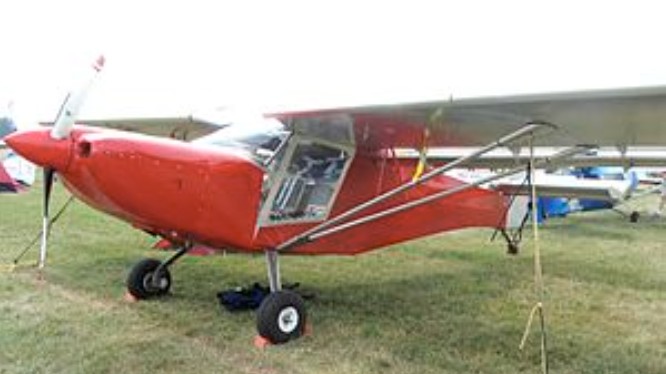
Dufour went on to develop a new fuselage and tail to match the wings. The Pegazair is a two seats in side-by-side configuration, strut-braced, high-wing monoplane with conventional landing gear. Fuselage construction is welded steel tubing with aluminum skins. The wings employ full length flaperons and leading edge slats that deploy automatically. The tailplane is slotted for slow speed authority. The prototype was outfitted with a 65 hp (48 kW) Continental A-65 engine.
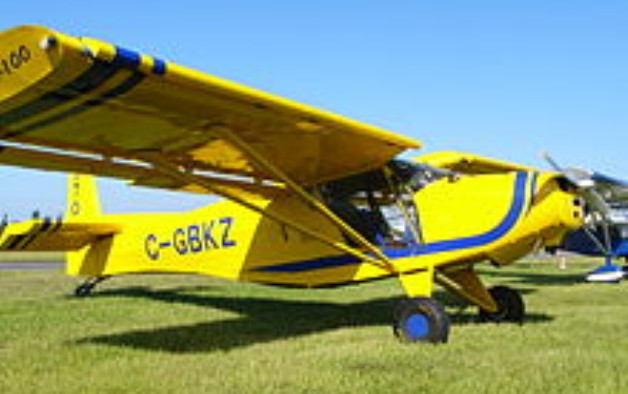
The aircraft was built as the Tapanee Pegazair-100 and the design was later developed into the four seat Tapanee Levitation 4.
Tapanee Pegazair-100 / slats extended
Variants
Pegazair P80 Powered by a 80 hp (60 kW) Rotax 912UL
Pegazair P100 Powered by a 80 hp (60 kW) Continental O-200 or 115 hp (86 kW) Rotax 914
Specifications:
P-80 Engine: Rotax 912 Seats: 2 side by side Length: 22.5 ft Wingspan: 29.0 ft Wing area: 150 sq/ft Max.flaps: 30 deg MAUW: 1200 lbs Empty Weight: 625 lbs Usefull load: 575 lbs VSO: 23 mph Min.speed 50 % pwr: 15 mph Cruise speed: 95 mph VNE: 110 mph Gross takeoff dist: 175 ft Climb rate at Gross: 900 ft / min. Usable fuel: 52 litres Range: 325 milles Ultimate Load: +6 -3,3 G
Pegazair-100 STOL Engine: 1 × Continental O-200, 75 kW (100 hp) Length: 6.83 m (22 ft 5 in) Wingspan: 9 m (29 ft) Wing area: 14 m2 (150 sq ft) Airfoil: NACA 2415 Max.flaps: 30 deg Empty weight: 374 kg (825 lb) Gross weight: 658 kg (1,450 lb) Usable Fuel capacity: 134 litres (29 imp gal; 35 US gal) Cruise speed: 169 km/h; 91 kn (105 mph) Stall speed: 45 km/h; 24 kn (28 mph) Never exceed speed: 201 km/h; 109 kn (125 mph) Min.speed 50 % pwr: 18 mph Gross takeoff dist: 300 ft Climb rate at Gross: 800 ft / min. Range: 1,014 km; 547 nmi (630 mi) g limits: +6/-3.3 Wing loading: 47 kg/m2 (9.7 lb/sq ft) Seats: 2 side by side
P-100 Engine: Rotax 914, 115 hp Seats: 2 side by side Length: 22.5 ft Wingspan: 29.0 ft Wing area: 150 sq/ft Max.flaps: 30 deg MAUW: 1350 lbs Empty Weight: 760 lbs Usefull load: 690 lbs VSO: 28 mph Min.speed 50 % pwr: 18 mph Cruise speed: 115 mph VNE: 125 mph Gross takeoff dist: 225 ft Climb rate at Gross: 950 ft / min. Usable fuel: 134 litres Range: 793 milles Ultimate Load: +6 -3,3 G
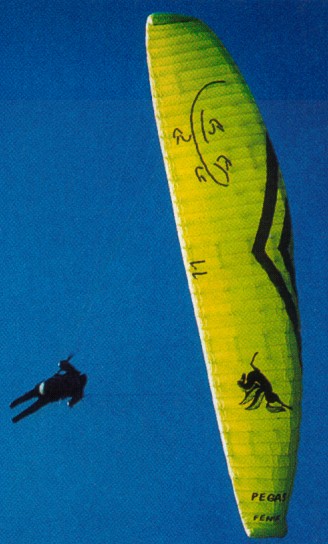
A glider for experienced and XC pilots, the Fenix 2 (Afnor/Cen Performance) is based on a new profile that “allows high performance and resistance to collapses” according to the manufacturer. During its development the goal was to obtain high performance with “exceptional” stability even at top speed, together with easy and dynamic handling. The glider incorporates internal diagonals ribs and a reduced number of lines in two cascades for less drag. It has a partially closed leading edge, and aspect ratio of 5,7. Among its qualities, Pegas mention easy and intuitive handling that makes coring even the tightest thermals an easy task, a wide and usable speed range, and a stability similar to paragliders of Standard category.
The Fenix 2 was constructed with fabric Skytex S9017 for the sail, reinforcements in Dacron W-382/175g and Mylar Scrim, and Dyneema lines 1.1mm and Superaramid 1.7mm.
It was available in 5 sizes, the smallest aimed at Acro; and there’s also a “race” version in two sizes.
Pegas Fenix 2
Fenix 1 Paraglider circa 1998. Wing area: 24.1 sq.m Pilot weight: 65-85 kg No. of cells: 98 Wing span: 12.1 m Aspect ratio: 6 Min sink: 1 m/s
Fenix 2 Paraglider circa 1998. Wing area: 27 sq.m Pilot weight: 80-100 kg No. of cells: 98 Wing span: 12.8 m Aspect ratio: 6 Min sink: 1 m/s
Fenix 3 Paraglider circa 1998. Wing area: 29.5 sq.m Pilot weight: 95-115 kg No. of cells: 98 Wing span: 13.3 m Aspect ratio: 6 Min sink: 1 m/s
Fenix XR Paraglider model new in 1998. Wing area: 29.6 sq.m Pilot weight: 75-85 kg No. of cells: 98 Wing span: 13.8 m Aspect ratio: 6.4