Back to Piper PA28 Cherokee


Back to Piper PA28 Cherokee


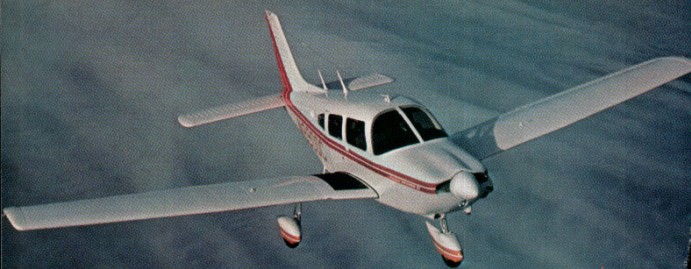
The original concept of a modem, metal, low wing replacement for the high wing, fabric Tri Pacer came from Fred Weick but it was left to John Thorp to design the PA-28.
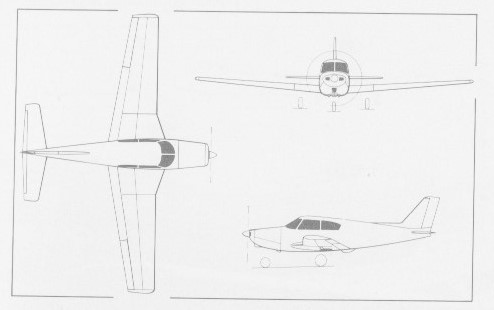
Piper first flew the prototype of the four-seat Piper PA-28-150 Cherokee sporting/training monoplane on 14 January 1960. The type started life as a cantilever low-wing monoplane of all-metal construction with fixed tricycle landing gear and four-seat accommodation in an enclosed cabin, with power provided by a 150 hp / 112kW Avco Lycoming O-320.
The first production Cherokee was flown on 10 February 1961 (TC 2A13), and the type was available from the beginning in Standard, Custom, Super Custom and AutoFlite models, and a scheme of optional models. 6,442 of the -140 and -140-4 Cherokee were built.
Initial Cherokees were either 150 hp or 160 hp models, with the 160 hp / 119kW O-320-B2B in the PA-28-160 Cherokee.
There are few Cherokee 150s around, since Piper produced only 300 of them. Without a contender in the trainer arena, the solution was a de-rated Cherokee 150. A change of propeller pitch converted it from a 150 hp, 2,700rpm family machine into a 140 hp, 2,450 rpm trainer. The rear seats were removed, and the list price was lowered from $13,700 to $10,700. Thus, the Cherokee 140 was born.
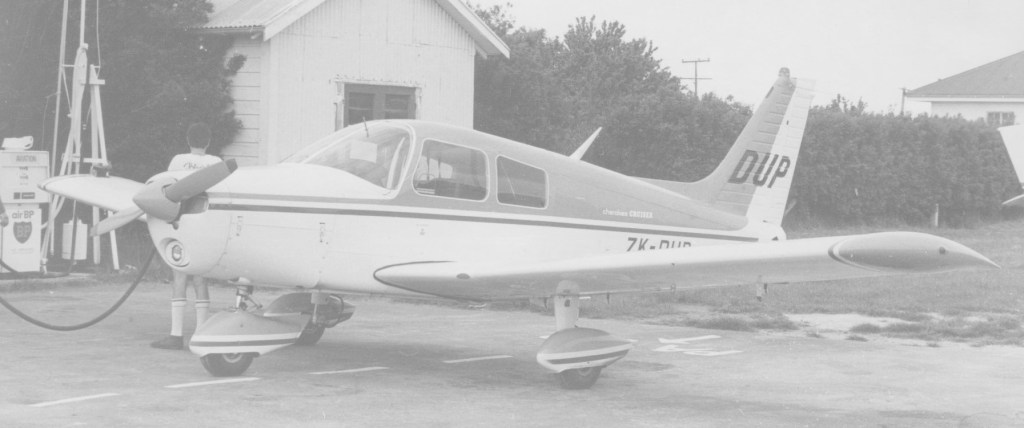
But Piper soon discovered that a substantial number of customers liked the idea of being able to carry two additional passengers. Beginning with the 1965 model, the company returned the 140’s prop pitch to 2,700 rpm and its horsepower to 150, and installed a pair of detachable rear seats. The new airplane, basically a Cherokee 150, was called the 140 4.
As a two place aircraft, the 140 has a maximum gross weight of 1,950 pounds and is licensed in the utility category, which means it can be spun legally. A kit is available from Piper dealers to convert a two-place 140 into a four seater, although the seats themselves were not included in the kit. The conversion includes a prop change, an increase in gross weight to 2,150 pounds and licensing in the normal category (no spins).
The more powerful 180 hp / 134kW O-320-A2A engine model was introduced in 1962 as the Cherokee B. The lower powered models were phased out in 1967 and the Cherokee 180 D made up the middle of the Cherokee range from then on.
Piper launched a new assault on the 150 in 1971 with the Flite Liner, a bare bones Cherokee 140. Out went the frills and most of the options. Instead of 100 hour inspections, the company recommended a progressive maintenance program, which was supposed to halve hourly shop expenses and greatly reduce out of service time. “Instructional cruise” at 60 percent power, Piper said, would further lower operating costs, with little effect on performance, and it marked the appropriate settings on the power pedestal and tachometer. These measures did indeed result in a more economical competitor that cost $2,300 less to buy then the previous model Cherokee 140. Still, the Flite Liner, and other Cherokee 140 models, never caught up with the Cessna’s popularity.
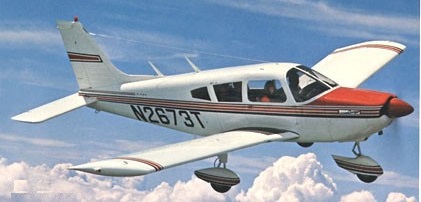
Top of the range was the Cherokee 235 hp version which offered a much better performance and actually had a larger wing than the other models. First flown on 9 May 1962, all told 2822 of these higher-powered Cherokees were built, including 1383 -235 Charger, 712 of the 5 inch longer -235 Charger (re-named Pathfinder in 1974), and 78 of the 235D. The 1963 PA-28-235 had structural strengthening and installation of a 175kW Avco Lycoming O-540-B2B5 flat-six engine for operation at a higher gross weight.
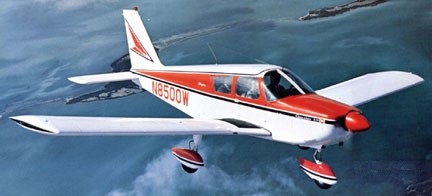
In 1964 Piper introduced the cheap trainer version known as the Cherokee 140 with the 104kW O-320-A2B. 10,089 Cherokee 140s 150s and 160s were sold from 1964 to 1977.
With introduction of the PA-28-180R Cherokee Arrow on 19 June 1967 came a significant change, with retractable tricycle landing gear, fuel-injection engine and a constant-speed propeller as standard; at this time production of the PA-28-150 and PA-28-160 versions came to an end.
In 1971 new models of the PA-28-140 appeared as the Cherokee Flite Liner, a two-seat trainer for use by Piper-sponsored training schools, and the Cherokee Cruiser 2 Plus 2, which was a de luxe two/four-seat version which in the following year became the standard production model. For 1973 the long-standing PA-28-180 was renamed as the Cherokee Challenger, with slight increases in wing span and fuselage length, and improved interior and standards of equipment; at the same time similar changes were introduced on the PA-28-235 which was renamed as the Cherokee Charger.
In 1974 there came a number of changes in the Cherokee line, the Cherokee 2 Plus 2 being renamed Cherokee Cruiser, the Cherokee Challenger the Cherokee Archer, and the PA-28-235 the Cherokee Pathfinder.
In 1974 the PA-28-151 Cherokee Warrior (160 hp / 112kW O-320-E3D) and PA-28-181 Cherokee Archer (180 hp) models were introduced. They had an entirely new wing with tapered outer wing sections and the lower powered Warrior had the lengthened fuselage of the Archer 180 as well. The max fuel payload of the Archer was increased by 105 pounds. By the Spring of 1974 99 production Warrior had been built.
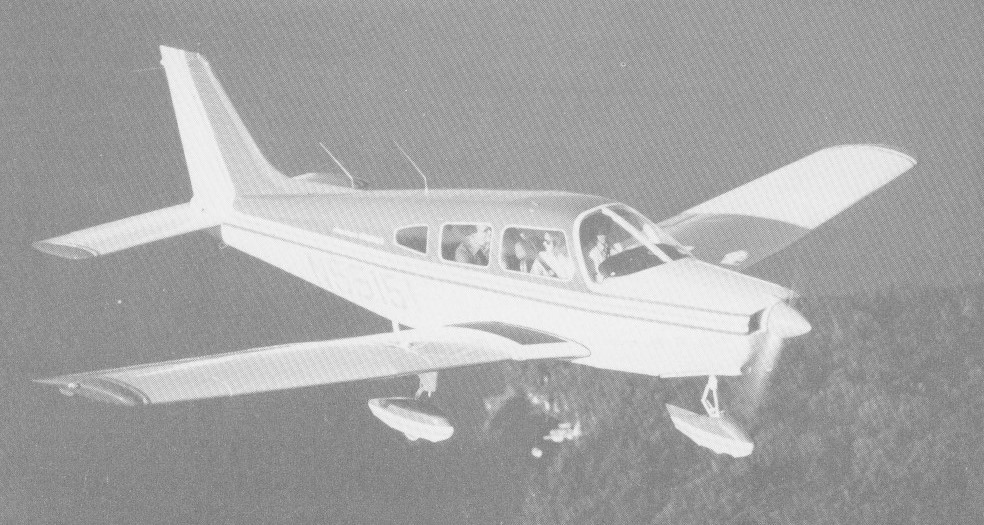
In 1977 Piper ended production of the Cherokee Cruiser and Cherokee Pathfinder, but introduced at the same time the PA-28-236 Dakota which, generally similar to the Archer, was powered by the 175kW O-540-J3A5D flat-six engine and had the new wing of increased span.
New from Piper in 1978 was the Dakota (a Cherokee 235 with a Warrior wing and other improvements). A 235-hp single-engine workhorse that should give the Cessna Skylane some direct competition, replacing the Cherokee 235 in 1979. The Dakota is 11 inches longer than the Archer II, and all of the added length is for¬ward of the firewall. The Lycoming six cylin¬der powerplant takes most of the extra space, with some of the space reserved for the enlarged spinner required for the Hart¬zell constant speed propeller. Standard price 1979: $39,910. A total of 851 were built.
In 1978 a version of this aircraft with a 149kW Continental TSIO-360-FB turbocharged engine became available as the PA-28-201T Turbo Dakota, but only limited demand meant that its production ended in 1980.
Production of the Cherokee family continued in the 1980s with the introduction of the PA-28-161 Warrior II with a 119kW Avco Lycoming O-320-D3G engine, alongside the PA-28-181 Archer II with a 134kW Avco Lycoming O-360-A4M. At the higher performance end of the scale the PA-28RT-201T Turbo Arrow IV in corporated the same powerplant as used in the Turbo Dakota. EMBRAER also continued to build aircraft under licence in Brazil. Financial problems and the crisis of product liability acted as a severe brake on sales, but a trickle of late model aircraft continue to be built. By January 1991 2,985 PA-28-161s had been sold along with 9,894 Cherokee 180/ Archers IIs, and small numbers of Arrows and Turbo Arrows.
Certification of all models is under FAA 2A13.
Embraer EMB-712 Tupi was a livence built Piper PA-28-181 Cherokee, with more than 140 units manufactured in Brazil.
The Embraer EMB-710 “Carioca” is a Piper’s Cherokee 235 Pathfinder produced in Brazil by Embraer and later by its subsidiary Neiva, under license from Piper Aircraft during 1975 – 1983. A total of 288 were manufactured.

Equipped with a semi-tapered wing, the single – engine EMB-710 Carioca can reach the speed of 237 km / h with its engine Lycoming of 235 HP (175 kW).
In July 1964, Sorenson Aircraft Co, Washington, Minnesota, was marketing a spray rig for all Cherokee models. A fibreglass belly tank was on the centre of gravity, holding 110 USG. The ag unit applied a swath width of up to 45 ft. Cost varied with a variety of pumps and nozzles from US$945-1339.
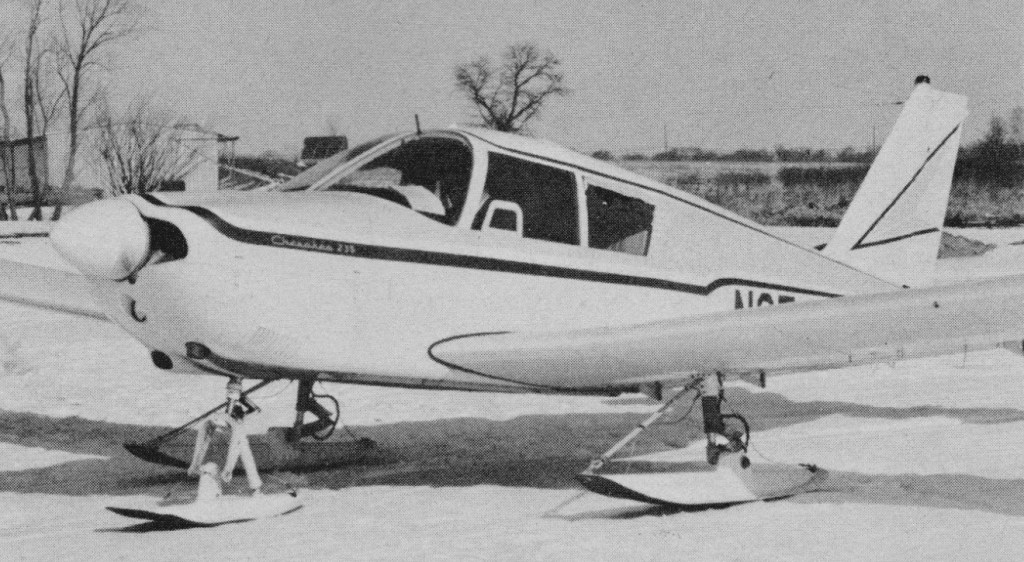
In 1964 Federal Ski & Engineering, Minneapolis, received FAA approval for aircraft skis to replace wheels on new PA-28-180s and 28-235 Cherokees.
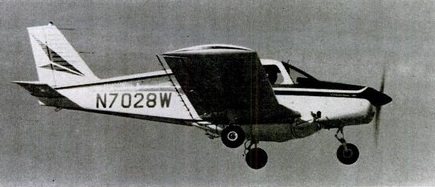
1965 Cherokee PA28-140
Engine make/model: Lycoming O320-E2A, 150 hp @2700 rpm
TBO: 2000 hr
Fuel type: 100/100LL
Propeller: Sensenich Fixed / 74 in
Landing: Tri/Fixed
Max ramp weight: 2150 lb
Gross weight: 2150 lb
Landing weight: 2150 lb
Empty weight, std: 1230 lb
Useful load, std: 920 lb
Payload, full std. fuel: 632 lb
Usable fuel: 48 USgal
Oil capacity: 8 qt
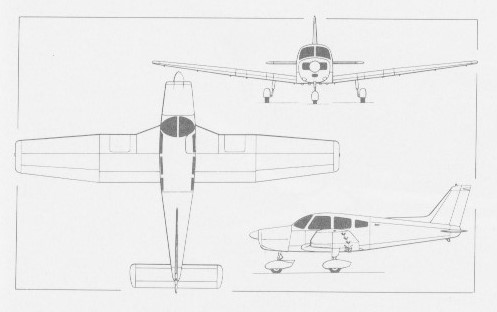
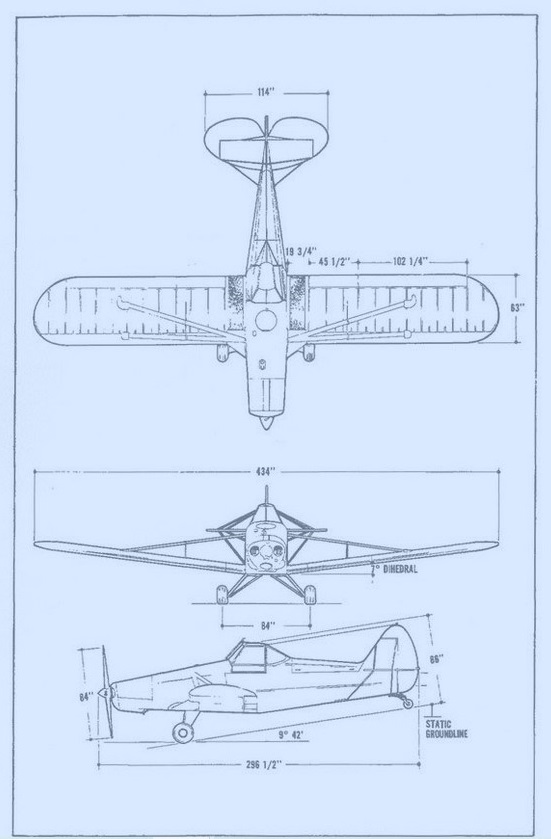
Wingspan: 30 ft
Overall length: 23 ft. 3 in
Height: 7 ft. 3 in
Wing area:160 sq. ft
Wing loading: 13.4 lbs./sq. ft
Power loading: 14.3 lbs./hp
Wheel base: 6 ft. 2 in
Wheel track: 10 ft
Wheel size: 6.00 x 6 in
Seating capacity: 2+2
Cabin doors: 1
Cabin width: 42 in
Baggage capacity: 200 lb
Cruise speed 75% power @ 7,800 ft: 115 kt
Cruise speed 65% power @ 10,200 ft: 108 kt
Cruise speed 55% power @ 12,000 ft: 102 kt
Max range (w/ reserve) 75% power: 470 nm
Max range (w/ reserve) 65% power: 522 nm
Max range (w/ reserve) 55% power: 583 nm
Fuel consumption 75% power: 8.4 USgph
Fuel consumption 65% power: 7.3 USgph
Fuel consumption 55% power: 6.2 USgph
Stall speed (flaps up): 52 kt
Stall speed (flaps down):48 kt
Best rate of climb (SL): 660 fpm
Best rate of climb, 8000ft: 350 fpm
Service ceiling (ft.): 14,300
Takeoff ground roll: 800 ft
Takeoff over 50-ft. obstacle: 1700 ft
Landing ground roll: 495 ft
Landing over 50-ft. obstacle: 850 ft
PA28-140 Cruiser
Engine: 1 x Lycoming O-320-E3D, 150 hp
Prop: 6 ft 2 in (1.88 m) dia 2 blade
Wing span: 30 ft 0 in (9.14 m)
Length: 23 ft 6 in (7.16 m)
Wing area: 160 sq ft (14.86 sq.m)
Seats: 2/4
Wing loading: 13.4 lb/sq.ft
Pwr loading: 14.3 lb/hp
Gross wt: 2150 lb (975 kg)
Empty wt: 1275 lb
Equipped useful load: 834 lb
Payload max fuel: 546 lb
Range max fuel/75% pwr: 597nm/5hr
Range max fuel / 55% pwr: 702 nm/ 7 hr
Service ceiling: 10,950 ft
Max cruising speed: 133 mph (214 kph) at 7,000 ft (2,135 m)
75% cruise: 118 kt
55% cruise: 101 kt
Stall: 41-49 kt
1.3 Vso: 53 kt
ROC: 631 fpm
Min field length: 1700 ft
Fuel cap: 288 lb
PA-28-140 Flightliner
PA-28-150 Cherokee B
Engine: 150hp Lycoming O-320E
Wingspan: 30’0″
Length: 23’4″
Useful load: 830 lb
Max speed: 142 mph
Cruise: 133 mph
Stall: 54 mph
Range: 535 mi
Ceiling: 14,300′.
PA-28-150 Cherokee C
1961-67
Engine: 150hp Lycoming O-320E
Wingspan: 30’0″
Length: 23’4″
Useful load: 830 lb
Max speed: 142 mph
Cruise: 133 mph
Stall: 54 mph
Range: 535 mi
Ceiling: 14,300′.
1900 built
PA-28-150 Cherokee
Engine: 150hp Lycoming O-320-A2A
300 built
PA-28-160 Cherokee C
1970
Engine: 160hp Lycoming O-320-D2A
810 built
PA28-151 Warrior
Engine: 1 x Lycoming O-320-E3D, 150 hp
Wingspan: 35 ft 0 in / 10.67 m
Length: 23 ft 10 in / 7.26 m
Wing loading: 13.7 lb/sq.ft
Pwr loading: 15.5 lb/hp
MTOW: 2325 lb / 1054 kg
Empty wt: 1301 lb / 590 kg
Equipped useful load: 882 lb
Payload max fuel: 594 lb
Fuel cap: 288 lb
Range max fuel/75% pwr: 583nm / 5hr
Range max fuel / 55% pwr: 667 nm/ 7 hr
Service ceiling: 12,700 ft / 3870 m
75% cruise: 115 kt
55% cruise: 96 kt
Stall: 44-51 kt
1.3 Vso: 57 kt
ROC: 649 fpm / 198 m/min
Min field length: 1760 ft
Seats: 4
Cabin length: 9 ft 0 in / 2.74 m
Cabin width: 3 ft 6 in / 1.07 m
Cabin height: 4 ft 0 in / 1.22 m
Cabin volume: 92 cu.ft / 2.61 cu.m
Baggage compartment: 15 cu ft / 0.42 cu.m
PA28-161 Warrior II
First built: 1973
Engine: 1 x Lycoming O-320-D3G, 160 hp
Fuel: 100 Octane
TBO: 2000 hrs
Prop: Sensenich 2 blade, fixed pitch 74 in DM-0-60
Seats: 4
Length: 23.8 ft
Height: 7.3 ft
Wingspan: 35 ft
Wing area: 170 sq.ft
Wing aspect ratio: 7.2
Max ramp wt: 2325 lb
Max take off wt: 2325 lb
Standard empty wt: 1348 lb
Max useful load: 977 lb
Max landing wt: 2325 lb
Wing loading: 13.7 lbs/sq.ft
Power loading: 14.5 lbs/hp
Max useable fuel: 48 USG / 288 lb
Climb rate: 710 fpm @ 75 kt
Climb gradient: 568 ft/nm
Rate of climb @ 8000 ft: 338 fpm
Best angle of climb: 63 kt
Service ceiling; 13,000 ft
Max level speed: 127 kt
Never exceed speed: 160 kt
Cruise speed 75% pwr 9000 ft Best pwr: 127kts
Cruise speed 75% pwr 9000 ft Best econ: 123kts
Cruise speed 65% pwr 12,500 ft Best pwr: 118kts
Cruise speed 65% pwr 12,500 ft Best econ: 116kts
Cruise speed 55% pwr 12,500 ft Best pwr: 107kts
Cruise speed 55% pwr 12,500 ft Best econ: 103kts
Max range (with 45 min res) 75% pwr 9000 ft Best pwr: 525nm
Max range (with 45 min res) 75% pwr 9000 ft Best econ: 590nm
Max range (with 45 min res) 65% pwr 12,500 ft Best pwr: 553nm
Max range (with 45 min res) 65% pwr 12,500 ft Best econ: 633nm
Max range (with 45 min res) 55% pwr 12,500 ft: Best pwr 565nm
Max range (with 45 min res) 55% pwr 12,500 ft Best econ: 640nm
Fuel consumption 75% pwr 9000 ft Best pwr: 10.0 US Gal/hr
Fuel consumption 75% pwr 9000 ft Best econ: 8.5 US Gal/hr
Fuel consumption 75% pwr 9000 ft Best pwr: 10.0 US Gal/hr
Fuel consumption 65% pwr 12,500 ft Best econ: 7.5 US Gal/hr
Fuel consumption 55% pwr 12,500 ft Best pwr: 7.8 US Gal/hr
Fuel consumption 55% pwr 12,500 ft Best econ: 6.6 US Gal/hr
Endurance @ 65% power @ 8,000ft: 6.1 hr
Stalling speed clean: 56 kts
Stall speed flaps down: 50 kts
Turbulent air penetration speed: 108 kt
Take-off ground run: 975 ft
Take-off over 50 ft obstacle: 1490 ft
Landing ground roll: 595 ft
Landing over ft obstacle: 1115 ft
Fixed undercarriage
Wheel base: 6 ft 8 in
Wheel track. 10 ft
Wheel size mains: 6.00×6 / nose 5.00×5
Cabin doors: 1
Cabin length: 97 in
Cabin width: 41.5 in
Cabin height: 49 in
Baggage capacity: 200 lbs / 24 cu.ft
Trims: Elevator/ Rudder
PA28-161 Warrior III
Engine: Lycoming O-320-D3G, 160 hp
Length: 23.786 ft / 7.25 m
Height: 7.316 ft / 2.23 m
Wingspan: 35.007 ft / 10.67 m
Wing area: 169.964 sq.ft / 15.79 sq.m
Max take off weight: 2447.6 lb / 1110.0 kg
Weight empty: 1490.6 lb / 676.0 kg
Max. payload weight: 957.0 lb / 434.0 kg
Wing loading: 14.35 lb/sq.ft / 70.0 kg/sq.m
Max speed: 127 kts / 235 km/h
Max cruising speed: 126 kts / 233 km/h
Cruise: 115 kt
Service ceiling: 11,000 ft / 3353 m
Endurance: 5.8 hr
Landing speed: 44 kts / 82 km/h
Take off distance: 1650 ft / 503 m
Landing distance: 1161 ft / 354 m
Range: 520 nm / 963 km
Crew: 2+2
PA-28-180 Cherokee C
1962-67
Engine: 180hp Lycoming O-360-A3A
Length: 23’6
speed: 152 mph
Range: 845 mi
No built: 1,118
PA28-181 Archer II
Engine: 1 x Lycoming O-360-A4M, 180 hp
TBO: 2000 hrs
Fuel: 100 Octane
Prop: Sensenich 2 blade, fixed pitch 76 in
Seats: 4
Length: 23.8 ft
Height: 7.3 ft
Wingspan: 35 ft
Wing area: 170 sq.ft
Wing aspect ratio: 7.2
Max ramp wt: 2550 lb
Max take off wt: 2550 lb
Standard empty wt: 1413 lb
Max useful load: 1137 lb
Payload full std fuel; 690 lb
Max landing wt: 2550 lb
Wing loading: 15 lbs/sq.ft
Power loading: 14.2 lbs/hp
Fuel Capacity std; 50 US Gal
Max useable fuel: 48 US Gals / 288 lb
Climb rate: 735 fpm @ 76 kt
Climb gradient: 580 ft/nm
Rate of climb @ 8000 ft: 370 fpm
Service ceiling; 13,650 ft
Max Level speed: 129 kt
Take-off Ground Run; 870 ft
Take-off 50 ft; 1625 ft
Landing Ground Roll; 925 ft
Landing 50 ft; 1390 ft
Cruise @ 65% power @ 8,000ft: 118 kts.
Cruise Speed 75% 8,000 ft Best Power: 129 kt /148 mph
Cruise Speed 75% 8,000 ft Best Economy: 126 kt /145 mph
Cruise Speed 65% 12,000 ft Best Power: 125 kt /143 mph
Cruise Speed 65% 12,000 ft Best Economy: 122 kt /140 mph
Cruise Speed 55% 12,500 ft Best Power: 111 kt /128 mph
Cruise Speed 55% 12,500 ft Best Economy: 107 kt /123 mph
Max Range (with res) 75% 8,000 ft Best Power: 520 nm /598 sm
Max Range (with res) 75% 8,000 ft Best Economy: 600 nm /690 sm
Max Range (with res) 65% 12,000 ft Best Power: 565 nm /650 sm
Max Range (with res) 65% 12,000 ft Best Economy: 645 nm /742 sm
Max Range (with res) 55% 12,500 ft Best Power: 580 nm /667 sm
Max Range (with res) 55% 12,500 ft Best Economy: 670 nm /771 sm
Fuel Consumption 75% Best Power: 10.5 US Gal/hr
Fuel Consumption 75% Best Economy: 8.8 US Gal/hr
Fuel Consumption 65% Best Power: 9.0 US Gal/hr
Fuel Consumption 65% Best Economy: 7.6 US Gal/hr
Fuel Consumption 55% Best Power: 7.8 US Gal/hr
Fuel Consumption 55% Best Economy: 6.3 US Gal/hr
Fuel flow @ 65% power @ 8,000ft: 46 pph
Endurance @ 65% power @ 8,000ft: 6 hr
Stalling speed clean: 59 kts
Stall speed flaps down: 53 kts
Turbulent air penetration speed: 111 kts
Fixed undercarriage
Wheel base; 6.6 ft
Wheel Track; 10.0 ft
Wheel Size; 6.00 x 6
Cabin Doors; 1
Cabin Length; 97 in
Cabin Width; 41.5 in
Cabin Height; 49 in
Baggage Capacity; 200 lbs / 26 cu ft
Trim; Elevator / Rudder
1978 Piper PA-28-181 Archer II
Engine: Lycoming O-360-A4M, 180 hp @ 2700 rpm
TBO: 2000 hr
Fuel type: 100LL
Propeller: Sensenich metal, FP/76 in
Landing gear: Tri./Fixed
Max ramp weight: 2550 lb
Gross weight: 2550 lb
Landing weight: 2550 lb
Empty weight, std: 1416 lb
Useful load, std: 1134 lb
Payload, full std. fuel: 637.5 lb
Useful fuel, std: 48 USG
Oil capacity: 8 qt
Wingspan: 35 ft. 5 in.
Overall length: 24 ft.
Height: 7 ft. 3 in
Wing area: 170 sq. ft
Wing loading: 15 lb/sq. ft
Power loading: 14.2 lbs./hp
Wheel size: 6 ft. 7 in
Seating capacity: 4
Cabin doors: 1
Baggage capacity: 200 lb
Cruise speed 75% power: 125kt
Cruise speed 65% power: 116 kt
Cruise speed 55% power: 102 kt
Range (w/ res) 75% power: 565 nm
Range (w/ res) 65% power: 600 nm
Range (w/ res) 55% power: 670 nm
Fuel consumption 75% power: 10.5 USgph
Fuel consumption 65% power: 9.0 USgph
Fuel consumption 55% power: 7.8 USgph
Vs: 55 kt
Vso: 49 kt
Best rate of climb: 667 fpm
Best rate of climb, 8,000 ft: 280 fpm
Service ceiling: 13,236 ft
Takeoff ground roll: 870 ft
Takeoff over 50-ft. obstacle: 1210 ft
Landing ground roll: 925 ft
Landing over 50-ft. obstacle: 1390 ft
PA28-181 Archer III
Engine: Lycoming IO-360-A4M, 180 hp
TBO: 2000 hr
Fuel type: 100/100LL
Propeller: Sensenich FP
Landing gear: Tri/Fixed
Max ramp weight: 2558 lb
Gross weight: 2550 lb
Landing weight: 2550 lb
Empty weight, std: 1703 lb
Zero fuel wt: 2364 lb
Useful load, std: 847 lb
Payload, full std. fuel: 559 lb
Usable fuel: 48 USG
Fuel cap: 194 lbs
Oil capacity: 8 qt
Wingspan: 25 ft. 6 in
Overall length: 24 ft
Height: 7 ft. 4 in
Wing area: 171.8 sq. ft
Wing loading: 14.8 lbs./sq. ft
Power loading: 14.2 lbs./hp
Wheel base: 6 ft. 7 in
Wheel track: 10 ft
Wheel size: 6.00 x 6
Seating capacity: 4
Cabin doors: 1
Cabin width: 42 in
Cabin height: 45 in
Baggage capacity: 200 lb /26 cu. ft
Cruise speed 75% power @ 7,900 ft: 128 kt
Cruise speed 65% power @ 12,000 ft: 125 kt
Cruise speed 55% power @ 12,500 ft: 111 kt
Max range (w/ res) 75% power: 444 nm
Max range (w/ res) 65% power: 487 nm
Max range (w/ res) 55% power: 522 nm
Fuel consumption 75% power: 10.0 USgph
Fuel consumption 65% power: 8.6 USgph
Fuel consumption 55% power: 7.3 USgph
Endurance: 5.7 hr
Vs: 46 kt
Vso: 45 kt
Best rate of climb (SL): 667 fpm
Service ceiling: 13,240 ft
Takeoff ground roll: 1135 ft
Takeoff over 50-ft. obstacle: 1608 ft
Landing ground roll: 920 ft
Landing over 50-ft. obstacle: 1400 ft
PA28-235 Pathfinder
Engine: 1 x Lycoming O-540-B4B5, 235 hp
TBO: 2000 hr
Fuel type: 100/100LL
Propeller: Hartzell CS
Landing gear type: Tri/Fixed
Wingspan: 32 ft
Overall length: 24 ft
Height: 7 ft. 10 in
Wing area:170 sq. ft
Seats: 4
Pwr loading: 12.8 lb/hp
MTOW: 3000 lb
Empty wt: 1565 lb
Max ramp weight: 3000 lb
Landing weight: 3000 lb
Equipped useful load: 1359 lb
Payload max fuel: 867 lb
Wing loading: 17.6 lb/sq.ft
Wheel size: 6.00 x 6
Cabin doors: 1
Cabin width: 44 in
Cabin height: 47 in
Baggage capacity: 200 lb
Range max fuel/75% pwr: 748nm/5.6hr
Range max fuel / 55% pwr: 930 nm/ 7.8 hr
Service ceiling: 13,550 ft
75% cruise: 133 kt
55% cruise: 120 kt
Stall: 53-57 kt
1.3 Vso: 69 kt
ROC: 800 fpm
Takeoff ground roll: 850 ft
Takeoff over 50-ft. obstacle: 1410 ft
Landing ground roll: 1040 ft
Landing over 50-ft. obstacle: 1740 ft
Min field length: 1740 ft.
Fuel cap: 492 lb / 82 USG
Oil capacity: 12qt
PA28-235 Charger
Useful load: 1340 lbs
Cruise @ 75% pwr: 130 kts
Fuel cap: 319 lt
Seats: 5
1968 Piper Cherokee 235C
Engine: Lycoming O-540-B4B5, 235 hp
TBO: 2000 hr
Fuel type: 100/100LL
Propeller: Hartzell CS
Landing: Tri/Fixed
Max ramp weight: 2900 lb
Gross weight: 2900 lb
Landing weight: 2900 lb
Empty weight, std: 1467 lb
Useful load, std: 1433 lb
Payload, full std. fuel: 929 lb
Usable fuel, std: 84 USG
Oil capacity: 12 qt
Wingspan: 32 ft
Overall length: 23 ft. 9 in
Height: 7 ft. 1 in
Wing area: 171.6 sq. ft
Wing loading: 17 lbs./sq. ft
Power loading: 12.4 lbs./hp
Wheel size: 6.00 x 6
Seating capacity: 4
Cabin doors: 1
Cabin width: 44 in
Cabin height: 47 in
Baggage capacity: 200 lb
Cruise speed 75% power @ 8,000 ft: 136 kt
Cruise speed 65% power @ 8,000 ft: 130 kt
Cruise speed 55% power @ 8,000 ft: 122 kt
Stall speed (flaps up): 57 kt
Stall speed (flaps down): 52 kt
Best rate of climb (SL): 825 fpm
Service ceiling: 14,500 ft
Takeoff ground roll: 800 ft
Takeoff over 50-ft. obstacle: 1360 ft
Landing ground roll: 680 ft
Landing over 50-ft. obstacle: 1300 ft
PA28-235D
1970
PA28-235E
1971
PA28-236 Dakota
First built: 1978
Engine: 1 x Lycoming O-540-J3A5D, 235 hp
TBO: 2000 hrs
Prop: Hartzell 2 blade, constant speed 80 in
Seats: 4
Length: 25 ft / 7.52 m
Height: 7.4 ft / 2.18 m
Wingspan: 35 ft / 10.8 m
Wing area: 170 sq.ft / 15.79 sq.m
Wing aspect ratio: 7.2
Max ramp wt: 3000 lb / 1361.0 kg
Max take off wt: 3000 lb/ 1361.0 kg
Standard empty wt: 1608 lb / 730.0 kg
Max useful load: 1392 lb
Max landing wt: 3000 lb
Wing loading: 17.6 lbs/sq.ft
Power loading: 12.8 lbs/hp
Max useable fuel: 432 lb
Climb rate: 1110 fpm @ 85 kt
Climb gradient: 784 ft/nm
Rate of climb @ 8000 ft: 550 fpm
Service ceiling; 17,500 ft / 5334 m
Max speed: 148 kt / 274 km/h
Cruise @ 65% power @ 8,000ft: 137 kt
Fuel flow @ 65% power @ 8,000ft: 65 pph
Endurance @ 65% power @ 8,000ft: 6.3 hr
Range: 750 nm / 1389 km
Stalling speed clean: 63 kts
Stall speed flaps down: 56 kt
Turbulent air penetration speed: 122 kt
Fixed undercarriage
Take off distance: 1217 ft / 371 m
Landing distance: 1726 ft / 526 m
Landing speed: 56 kts / 104 km/h
Piper 1979 PA-28-201T Turbo Dakota
Engine: Continental TSIO 360 FB, 200 hp
TBO: 1,800 hrs
Prop: two blade, constant speed, 76 in. dia
Length: 25 ft
Height: 7 ft 7 in
Wingspan: 35 ft. 5 in
Wing area: 170 sq.ft
Max ramp wt: 2,900 lb
Max takeoff wt: 2,900 lb
Standard empty wt: 1,563 lb
Max useful load: 1,337 lbs
Max landing wt: 12,900 lb
Baggage capacity: 200lb
Wing loading: 17 lbs. per sq.ft
Power loading: 14.5 lb/hp
Max usable fuel: 72 USG/432 lb
Max rate of climb, sea level: 880 fpm
Max rate of climb, 8,000 ft: 820 fpm
Max operating altitude: 20,000 ft
Max speed (15,000): 162 kts
Cruise, 65% power at 8,000 ft: 132 kt
Cruise, 65% power at 18,000 ft: 148 kt
Max range (w/ res) 75% power: 729 nm
Max range (w/ res) 65% power: 766 nm
Fuel consumption 75% power: 12.0 US gph
Fuel flow at 65% power: 10.8 USG/hr
Endurance at 65% power, no res: 7 hrs
Stalling speed, clean: 67 kt
Stalling speed, flaps down: 59 kt
Turbulent air penetration speed: 122 kt
Seats: 4
U/C: fixed.
Cabin width: 42 in
Cabin height: 49 in
Takeoff ground roll: 963 ft
Landing ground roll: 861 ft
Avcon Cherokee 140 / 180
Engines: 1 x Lycoming O-360-A1A, 180 hp
Seats: 4
Wing loading: 12.9 lb/sq.ft
Pwr loading: 12.2 lb/hp
Max TO wt: 2200 lb
Empty wt: 1367 lb
Equipped useful load: 768 lb
Payload max fuel: 468 lb
Range max fuel/ 75% cruise: 592 nm/4.4 hr
Service ceiling: 17,300 ft
75% cruise: 116 kt
Stall: 48-54 kt
1.3 Vso: 62 kt
ROC: 950 fpm
Min field length: 550 ft
Fuel cap: 300 lb
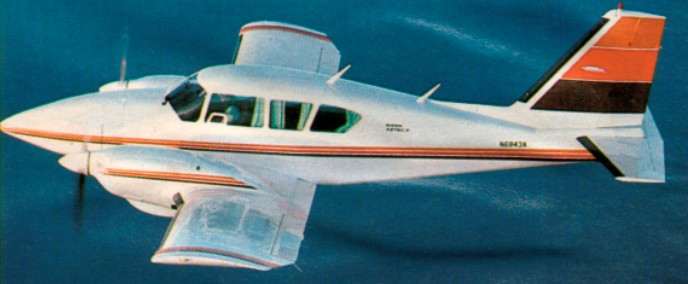
Basically an improved Apache, the Aztec was a full six-seater and had more powerful engines (250 hp) than the Apache. The first models were later named Aztec A. A major change came in 1962 with the introduction of the Aztec B, which had a lengthened nose giving the Aztec a completely different look from its Apache fore¬runner. Improvements were made year by year and the models were given letters until 1976 when the Aztec F was marketed. By then the Aztec had longer “tiger shark” shaped engine nacelles and an even longer and sharper nose. When production ceased in 1981 a total of 4929 Aztecs had been built.
Aztec F
Engines: Lycoming TIO 540 ClA, 250 hp
Props: two blade, constant speed, full feathering 77 in dia
Length: 31 ft. 3 in
Height: 10ft. 1 in
Wingspan: 37 ft. 4 in
Wing area: 207 sq. ft
Max takeoff weight: 5,200 lb
Standard empty weight: 3,319 lb
Max useful load: 1881 lb
Max landing weight: 4,940 lb
Max zero fuel weight: 4,500 lb
Power loading: 10.4 lbs/hp
Wing loading: 25.1 lbs/sq.ft
Max usable fuel: 177 gals./ 1,062 lb
Max rate of climb, sea level: 1,480 fpm
Max rate of climb, 8,000 feet: 1,330 fpm
Certificated ceiling: 24,000 ft
Single engine rate of climb, sea level: 226 fpm
Single engine climb gradient: 154 ft. per nm
Single engine service ceiling: 13,250 ft
Max speed: 210 kts
Cruise, normal at 8,000 ft: 116 kts
Cruise, normal at 18,000 ft: 191 kts
Fuel flow at normal cruise: 29.3 gph
Endurance at normal cruise, no res: 5.8hrs
Stalling speed, clean, power off: 60 kts
Stalling speed, flaps down, power off: 67 kts
Turbulent air penetration speed: 131 kts
Back to Piper PA-25 Pawnee


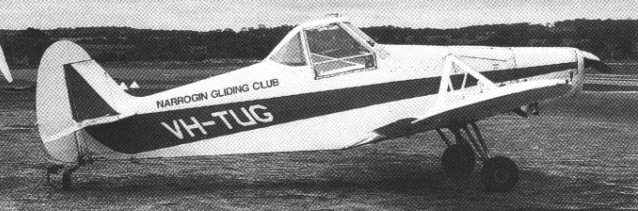
The rapid expansion of Piper’s operations in the 1950s meant that new facilities were soon required, and in 1957 the company opened a new aircraft development centre at Vero Beach, Florida, to be responsible for design, development and testing of new projects. The Vero Beach facility began its operations on a new specialised agricultural aircraft, designated Piper PA-25 Pawnee, for experience with the PA-18A configured for agricultural use had shown the active market for this category of aeroplane. Designed by Fred Weick and a development of a specialised ag-aeroplane called the AG-1, the Pawnee entered produc-tion in 1959 powered by the same 150 hp engine as in the Super Cub, Tri-Pacer and Apache.
A braced low-wing monoplane with fixed tailwheel landing gear, the PA-25 was powered initially by a 112kW Avco Lycoming O-320 flat-four engine, and this version was later redesignated PA-25-150 Pawnee. It had a glass-fibre chemical hopper installed forward of the cockpit, this having a volume of 0.57 cu.m, and the dust/spray distribution system was the same as that which had been proven on the PA-18A. Further forward of that again was a compartment for the loader driver that had a pop-up canopy. The passenger got in through the starboard side and sat in the compartment between the hopper and the firewall.
Advanced design features were intended to reduce the likelihood of an accident and to give the pilot a far better chance of survival in a crash; thus he was given a high sitting position to ensure an excellent all-round view, above average strength seat restraints, and a specially designed structure that was installed to leave the cockpit substantially undamaged in the usual type of low-speed crash associated with agricultural dusting/spraying operations.
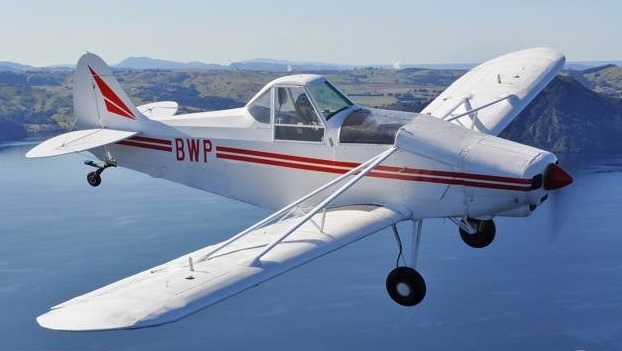
In all, seven hundred and thirty one Pawnee 150s, plus two prototypes, were built between 1957 and 1963. To improve the 150 hp Pawnee’s performance Airwork installed the larger Lycoming 0 360 A2A engine of 180 horsepower. On the advice of Civil Aviation of New Zealand, the Pawnee fuel system was rede¬signed by Airwork and the fuel tanks situated far out in the wings. This mod proved to be excellent and no further troubles were encountered.
The 235 hp / 175kW Avco Lycoming O-540-B2B5 Pawnee with structural strengthening came on the market in 1962, including some with the more powerful 260 hp / 194kW O-540-E engine. Its hopper/ lank can carry 150 US gallons (568 litres) of liquid or 1,200 lb (544 kg) of dry chemi¬cal, and it can be changed over from dus¬ter to sprayer (or vice versa) in less than five minutes.
Some 235 hp models were converted by Airwork to have a 250 hp engine.
In 1965, Hazair at Orange modified a Pawnee 235 to incorporate side by side seating within he existing cockpit by widening the fuselage it several stations. A number of Pawnee 235s were converted in a similar fashion and other operators made comparable conversions.
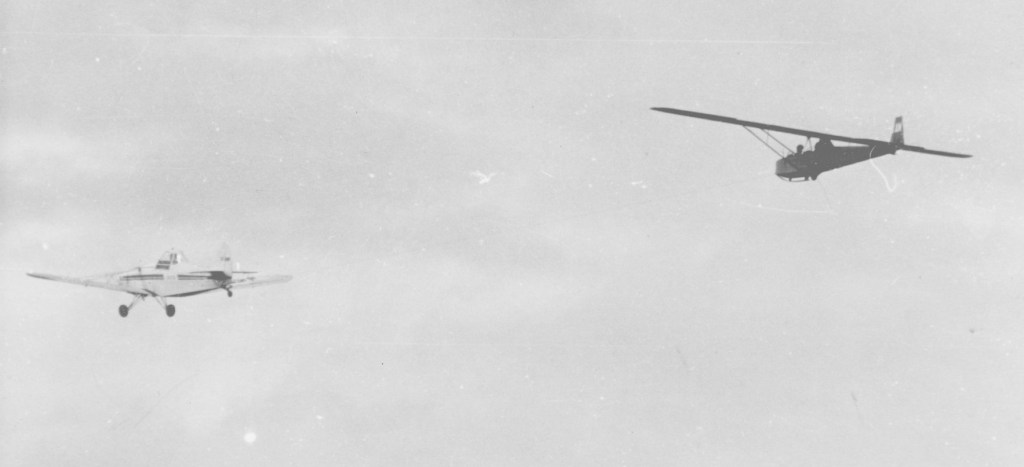
The PA 25¬-235A/1 series was modified by widening the fuselage at the rear of the cockpit. Added to the top of the rear fuselage was the shaped turtledeck. The cockpit was fitted with dual controls and new side doors were “bulged” to provide more shoulder room. The hopper was removed and glider towing attachments and a release mecha¬nism were fitted. Air Express was responsible for the conversion and the company had the aircraft certified in 5 June 1970. VH KLA was then listed as a Piper PA 25 180A/1 and was re registered to the Gliding Club of Victoria and Benella, Australia.
A total of 5167 Pawnees of all types were built from 1959 to early 1982.
PA-25-150 – 731
PA-25-235 – 2,906
PA-25-260 – 251
Certification for the PA-25, 25-3 to 25-731, and all PA-25-235 was under FAA 2A10.
In 1998 Laviasa acquired from the New Piper Aircraft Company of the USA the Type Certificates (CCTT’S) No. 2 A 8 and 2 A 10 issued by the Federal Aviation Administration of the USA (FAA) in 1998 and the Certificates of Type No. AV-0004, AV-9901 and Production Certificate No. A-0801 issued by the National Civil Aviation Administration of Argentina (ANAC). These documents gave Laviasa the exclusive rights for the manufacture of PA-25-235 / 260 (formerly called “Pawnee” and renamed “Puelche”) and its parts.
Derivatives:
Gippsland Aeronautics GA-200 Fatman
Specifications:
PA25-150
Engine: Ly¬coming O-320
PA25-235
Engine: Ly¬coming O 540 B2B5, 235 hp / 175kW
Prop: 7 ft 0 in (2.13 m) dia 2 blade
Wing span: 36 ft 2 in (11.02 m)
Length: 24 ft 8.5in (7.53 m)
Height: 2.21 m / 7 ft 3 in
Wing area: 183 sq ft (17.0 sq.m)
Gross weight: 2,900 lb (1,315 kg)
Empty weight: 725 kg / 1598 lb
Max cruising speed (duster/sprayer): 100/105 mph (161/169 kph)
Max range (duster/sprayer): 255/270 miles (410/434 km)
Accommodation: Crew 1
Pawnee B
1965
Improved -235 with larger hopper
Pawnee C
1966
Engine: optional Lycoming O-540-E from 1968
Oleo shock absorbers
PA25-235D
Engines: Lycoming O-540-B2C5, 235 hp
Wing loading: 15.8 lb/sq.ft
Pwr loading: 12.3 lb/hp
Max TO wt: 2900 lb
Empty wt: 1420 lb
Equipped useful load: 1433 lb
Payload max fuel: 1202 lb
Range max fuel/ 75% pwr: 203 nm/ 2.1 hr
Service ceiling: 13,000 ft
Hopper cap: 150 USG
75% cruise: 99 kt
Working speed: 75 kt
Working endurance: 2.8 hr
Stall: 53 kt
ROC: 700 fpm
Min field length: 1350 ft
Fuel cap: 231 lb
Seats: 1
PA25-260 Pawnee C
Engine: 260 hp
Prop: CSU
Hopper cap: 145 USG
PA25-260D
Engines: Lycoming O-540-G1A, 260 hp
Seats: 1
Wing loading: 15.8 lb/sq.ft
Pwr loading: 11.2 lb/hp
Max TO wt: 2900 lb
Empty wt: 1472 lb
Equipped useful load: 1381 lb
Payload max fuel: 1150 lb
Range max fuel/ 75% pwr: 195 nm/ 2.0 hr
Service ceiling: 14,000 ft
Hopper cap: 150 USG
75% cruise: 100 kt
Working speed: 75 kt
Working endurance: 2.7 hr
Stall: 53 kt
ROC: 755 fpm
Min field length: 1250 ft
Fuel cap: 231 lb
Back to Piper PA-24 Comanche


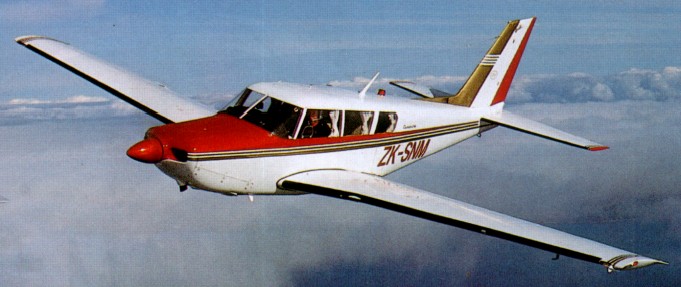
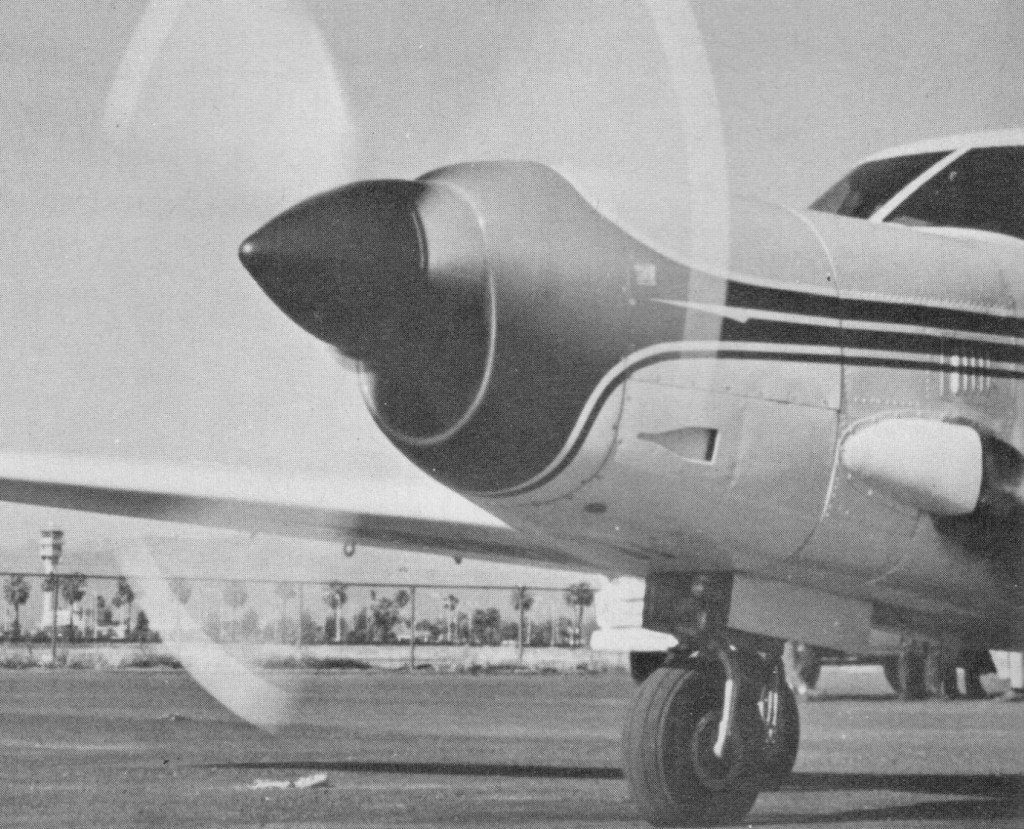
On 24 May 1956 Piper flew the prototype of a new single-engine four-seat cabin monoplane that it designated initially Piper PA-24 Comanche, but which later became known as the PA-24-180 Comanche. A cantilever low-wing monoplane of all-metal construction, this very clean looking aircraft had such features as retractable tricycle landing gear, an all-moving tailplane and a 180 hp / 134kW Avco Lycoming O-360-A1A engine. The first production aircraft was flown on 21 October 1957, and from the outset it was available in four versions, the Standard with basic essential equipment, the Custom, Super Custom and AutoFlite having progressively more sophisticated equipment, the last of them introducing a two-axis autopilot.
The capability of the PA-24-180 Comanche was demonstrated by American pilot Max Conrad in establishing FAI-accredited world class distance records of 11211.83km in a straight line and 11138.72km in a closed circuit during 1959 and 1960 respectively. And flying a PA-24-250 Comanche in 1959 over a straight-line distance of 12341.26km; these records remained unbroken in 1983.
The PA-24-250 Comanche which soon supplemented the PA-24-180 (1,143 built) and while basically similar differed by having the 186kW O-540-A1A engine; this variant was built to a total of 2,537.
This was followed in 1964 by the PA-24-260 Comanche B with a 194kW version of the O-540 engine increasing performance, cleaned up landing gear, and a single-fork main gear was used. This model was used by the UK’s Sheila Scott between 18 May and 20 June 1966 to establish a new round-the-world class speed record, covering a distance of 46759km.

The pressurized Comanche design may be Piper’s most lamented failure. The sole prototype was destroyed in a freak takeoff roll accident in 1966, when the pilot got out of synch with the touchy electric nosewheel steering. But the heavy single had already run into problems meeting certification requirements that demanded a 61 knot stalling speed.
One day, Pug Piper was sitting in a friend’s 450 hp Staggerwing, and thought, ‘Gee, we can do better than this by putting a 400 Lycoming in the nose of the Comanche.’ Delayed by engine problems, the Comanche 400 went on sale just as the Twin Comanche became available for not much more money. The Interceptor 400 was a PA-24 Commanche with a six cylinder Lycoming engine built in 1964-65.
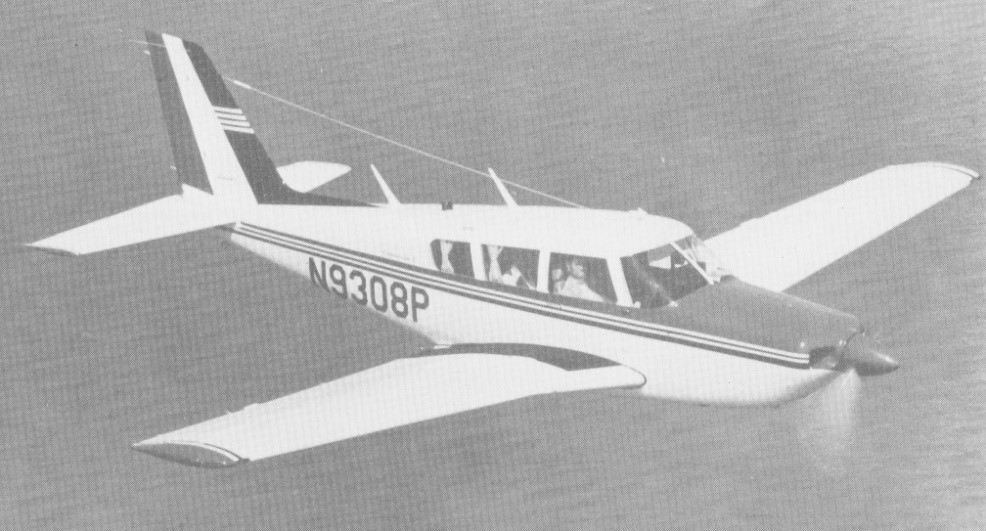
Last of the single-engine Comanches was the PA-24T-260 Turbo Comanche which introduced an IO-540 engine with a Rayjay turbo-charger to give considerably improved performance, and when production of the PA-24-260s ended in 1972 a total of 1,028 had been built, giving a Comanche grand total of 4,708. Production ended in 1972 due to the floods at Piper’s factory, Lock Haven. Certification for the PA-24, 24-2 to 24-3687 and PA-24-260, 24-4247 and 24-4300 to 24-5034, was under FAA 1A15.
A Commanche 400 owned by Garrett-AiResearch, powered by their TPE 331 turboprop engine, was flown to a new altitude record for light turboprops by company pilot Jack Womack, reaching 41,320 ft in 70 minutes.
Comanche 180
Engine: Lycoming O-360-A1A, 180 hp
TBO: 2000 hr
Fuel type: 80/87
Propeller: Hartzell CS
Landing gear: Tri/Retr.
Max ramp weight: 2550 lb
Gross weight: 2550 lb
Max landing weight:2550 lb
Empty weight: 1530 lb
Useful load: 1020 lb
Payload, full std. fuel: 660 lb
Wingspan: 36 ft. 11 in
Overall length: 24 ft. 9 in
Height: 7 ft. 4 in
Wing area:178 sq. ft
Wing loading: 14.3 lbs./sq. ft
Power loading: 14.2 lbs./hp
Wheel base: 6 ft. 7 in
Wheel track: 9 ft. 8 in
Wheel size: 6.00 x 6 in
Seating capacity: 4
Cabin doors: 1
Cabin width: 44 in
Cabin height: 45 in
Baggage capacity: 100 lb
Cruise speed 75% power @ 8,000 ft: 139 kt
Cruise speed 65% power @ 11,500 ft: 133 kt
Cruise speed 55% power @ 14,000 ft: 122 kt
Max range (w/ reserve) 75% power: 682 nm
Max range (w/ reserve) 65% power: 771 nm
Max range (w/ reserve) 55% power: 860 nm
Fuel consumption 75% power: 9.5 USgph
Fuel consumption 65% power: 8.2 USgph
Fuel consumption 55% power: 6.9 USgph
Stall speed (flaps up): 53 kt
Best rate of climb: 910 fpm
Service ceiling: 18,500 ft
Takeoff ground roll: 750 ft
Takeoff over 50-ft. obstacle: 2240 ft
Landing ground roll: 600 ft
Landing over 50-ft. obstacle: 1025 ft
1964 Piper Comanche 250 PA-24-250
Engine: Lycoming IO-540-C, 250 hp
TBO: 2000 hr
Fuel type: 100LL
Propeller: Hartzell two-blade CS / 77 in
Landing gear: Tri/Retr.
Gross weight: 2900 lb
Max landing weight: 2900 lb
Empty weight, std: 1690 lb
Useful load, std: 1210 lb
Useful load – equipped: 1073 lb
Payload, full std. fuel, 60 USgals: 850 lb
Payload – full opt. fuel, 90 gals: 670 lb
Usable fuel: 37 USgal
Oil capacity: 12 qt
Wingspan: 36 ft
Overall length: 24 ft. 10 in
Height: 7 ft. 5 in
Wing area: 178 sq. ft
Wing loading: 16.3 lbs./sq. ft
Power loading: 11.6 lbs./hp
Wheel base: 6 ft. 6 in
Wheel track: 9 ft. 10 in
Wheel size mains: 6.00 x 6 in
Wheel size nose: 6.00 x 6 in
Seating capacity: 4
Cabin doors: 1
Cabin length: 108 in
Cabin width: 45 in
Cabin height: 47 in
Baggage capacity: 200 lb /20 cu. ft
Max level speed: 165 kt /190 mph
Cruise speed 75% power: 157 kt / 181 mph
Cruise speed 65% power: 154 kt / 177 mph
Cruise speed 55% power: 142 kt /164 mph
Max. range opt. fuel, 45-min. res 75% power: 928 nm / 1068 sm
Max. range opt. fuel, 45-min. res 65% power: 1000 nm / 1151 sm
Max. range opt. fuel, 45-min. res 55% power: 1040 nm / 1197 sm
Max. range opt. fuel, 45-min. res 45% power: 1108 nm / 1275 sm
Fuel consumption 75% power: 13.7 USgph
Fuel consumption 65% power: 12.3 USgph
Fuel consumption 55% power: 11.0 USgph
Fuel consumption 45% power: 9.5 USgph
Stall speed (gear, flaps up): 61 kt / 70 mph
Stall speed (gear, flaps down): 55 kt/63 mph
Best rate of climb (SL): 1350 fpm
Service ceiling: 20,000 ft
Takeoff ground roll: 750 ft
Takeoff over 50-ft. obstacle: 1650 ft
Turbo Comanche C
Engine: Lycoming TIO 540 RIA5, 260 hp
TBO: 1,500 hrs
Prop: 77 in Hartzell constant speed
Wing span: 35 ft. 11.75in
Airfoil: NACA 642A215
Aspect ratio: 7.28:1
Wing area: 178 sq. ft
Wing loading: 18 lb/sq.ft
Seats: 6
Empty weight: 1,894 lbs
Useful load: 1,306 lbs
Payload with full opt fuel: 702 lbs
Gross weight: 3,200 lbs
Power loading: 12.3 lb/hp
Fuel capacity (std.): 60 USG
Fuel capacity (opt): 90 USG
Baggage capacity: 250 lbs
Baggage area: 20 cu.ft
Takeoff dist over 50 ft: 1,800 ft
Rate of climb: 1,320 fpm
Service ceiling: 25,000 ft
Max speed: 242 mph/210 kts
Cruise (75% @ 25,000ft): 228 mph/198 kts
Econ cruise (55% @ 25,000ft): 209 mph/182 kts
Range @ max cruise (45 min. res, opt tanks): 1,120 sm/970 nm
Range (@ econ cruise (45.min. res, opt tanks): 1,330 sm/1,155 nm
Duration @ max cruise (opt tanks): 5 hr 40 min
Stall speed (gear & flaps down): 67 mph/58 kts
Landing dist over 50 ft: 1,200 ft.
PA-24T-260
Engine: 1 x Avco Lycoming IO-540 turbocharged, 194kW
Wingspan: 10.97 m / 36 ft 0 in
Length: 7.62 m / 25 ft 0 in
Height: 2.29 m / 8 ft 6 in
Wing area: 16.54 sq.m / 178.03 sq ft
Max take-off weight: 1451 kg / 3199 lb
Empty weight: 859 kg / 1894 lb
Max. speed: 389 km/h / 242 mph
Ceiling: 7620 m / 25000 ft
Range: 2398 km / 1490 miles
PA24 Interceptor 400
Engine: Lycoming IO-720, 400 hp
Top speed: 233 mph
Cruise: 202 mph
1964 Piper Comanche 400
New price (1964): $36,890
Engine: Lycoming IO-720 A1A, 400 hp
TBO: 1800 hr
Fuel type: 100
Propeller type: CS
Landing gear: Tri./Retr
Max ramp weight: 3600 lb
Gross weight: 3600 lb
Landing weight: 3600 lb
Empty weight, std: 2110 lb
Useful load, std: 1490 lb
Useful fuel, std: 130 USG
Payload, full std. fuel: 710 lb
Wingspan: 36 ft
Overall length: 25 ft. 8 in
Height: 7 ft. 10 in
Wing area: 178 sq. ft
Wing loading: 20.2 lbs./sq.ft
Power loading: 9.0 lbs./hp
Wheel size: 6.00 x 6 in
Seating capacity: 4
Cabin doors: 1
Cabin width: 44 in
Cabin height: 45 in
Cruise speed 75% power: 185 kt
Cruise speed 65% power: 180 kt
Cruise speed 55% power: 171 kt
Fuel consumption 75% power: 22 USgph
Fuel consumption 65% power: 19 USgph
Fuel consumption 55% power: 16 Usgph
Vso: 59 kt
Best rate of climb, SL: 1600 fpm
Service ceiling: 19,500 ft
Takeoff ground roll: 980 ft
Takeoff over 50-ft obstacle: 1500 ft
Landing ground roll: 1180 ft
Landing over 50-ft. obstacle: 1820 ft
Back to Piper PA-23


