Back to Piper PA-32 / Embraer EMB-720 / EMB-721


Back to Piper PA-32 / Embraer EMB-720 / EMB-721
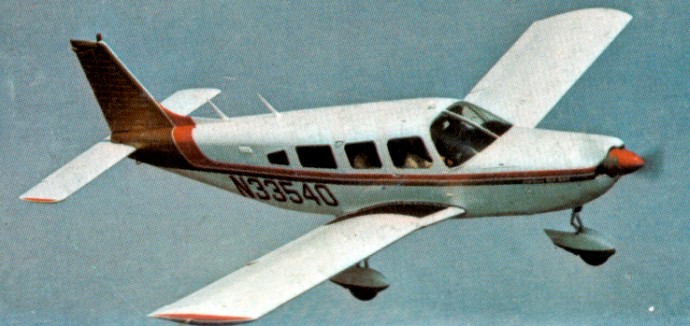
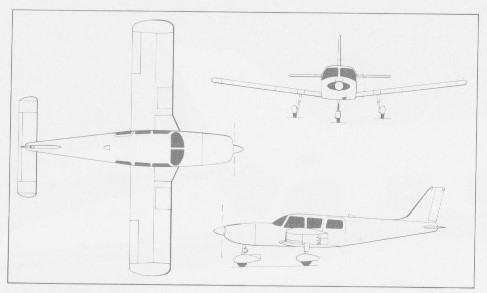
On 6 December 1963 Piper flew the prototype of a six-seat version of the PA-28 Cherokee, retaining the same general configuration but differing primarily by having a slight increase in wing span, the fuselage lengthened by 1.35m, and the installation of the 194kW Avco Lycoming O-540-E4B5 engine. These were the wings, rear fuselage and tail of the Cherokee 235. Designated Piper PA-32-260-6 Cherokee Six, it was available initially in Standard, Custom, Executive and Sportsman versions with differing standards of installed equipment. By 1966 the company designation had changed to PA-32-260 and the Cherokee Six was then available as an optional six/seven-seat aircraft and, as the PA-32-300, with an optional 224kW IO-540-K engine.
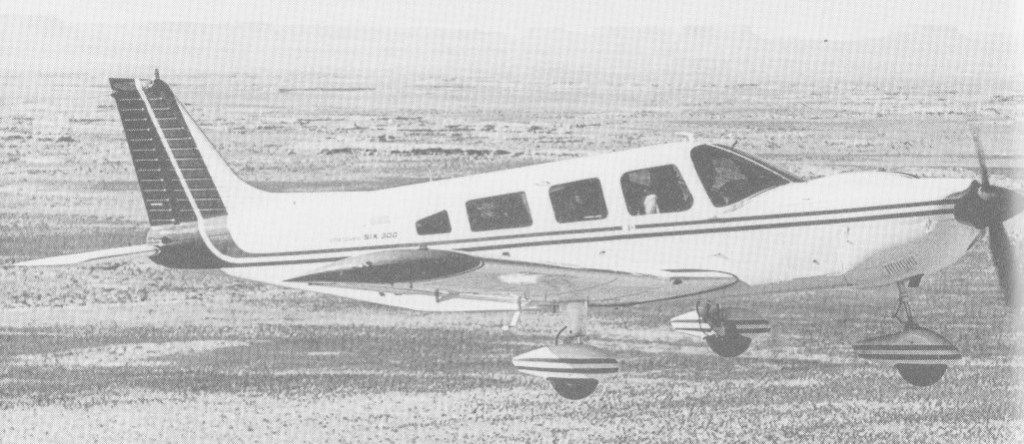
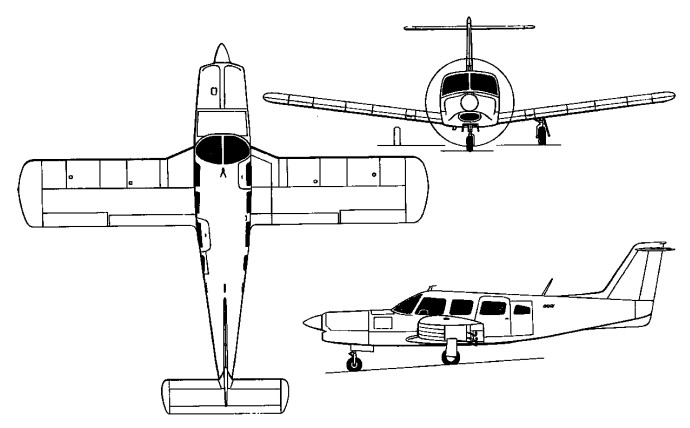
In 1971 Piper restyled the name to Cherokee SIX, but apart from annual product improvement, there were no changes until 1975 when a new version designated PA-32R-300 Cherokee Lance entered production to complement the Cherokee SIX, differing by introduction of a new fuselage structure and retractable tricycle landing gear. The Lance carries 66 pounds more fuel than the similarly powered but fixed gear Cherokee Six, yet it has a 48 pound higher max fuel useful load, and it can produce nearly nine percent more nmpg than the Six at 75 percent power in spite of its 200 pound ¬higher gross weight.
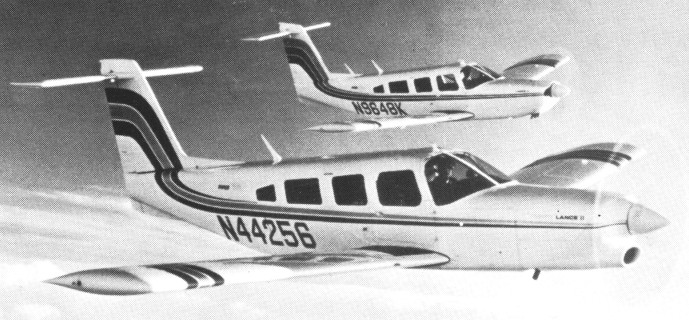
The 1978 version of the Lance had the conventional tail unit replaced by a T-tail, the designation then changing to PA-32RT-300 Lance II and, at the same time, a model with 224kW TIO-540-S1AD turbocharged engines became available under the designation PA-32RT-300T Turbo Lance II.
Production of PA-32-260 Cherokee SIX ended in late 1978, the remaining version then being redesignated PA-32-300 SIX 300, but in the following year this also disappeared, together with the Lance II and Turbo Lance II. These aircraft were superseded by the six/seven-seat PA-32-301 Saratoga (the basic member of the new related family) in 1980 which had an increased-span tapered wing, reversion to a conventional tail unit, fixed tricycle landing gear, and a 224kW IO-540-K1G5D engine driving a constant-speed propeller.
Made available simultaneously was the generally similar PA-32-301T Turbo Saratoga, which had a turbocharged version of the same engine, and the corresponding PA-32R-301 Saratoga SP and PA-32R-301T Turbo Saratoga SP which differed by having retractable tricycle landing gear. Only very low volume production continued into the early 1990s.
The Embraer EMB-720 “Minuano” is the Piper PA-32 Cherokee Six produced in Brazil by Embraer and later by its subsidiary Neiva, under license from Piper Aircraft. Equipped with Lycoming engine with direct injection of fuel and 300 HP of power, it develops 270 km / h. Its electronic communication and radionavigation system was considered modern for the time. It can carry up to six people (1 pilot + 5 passengers) with ample luggage space.
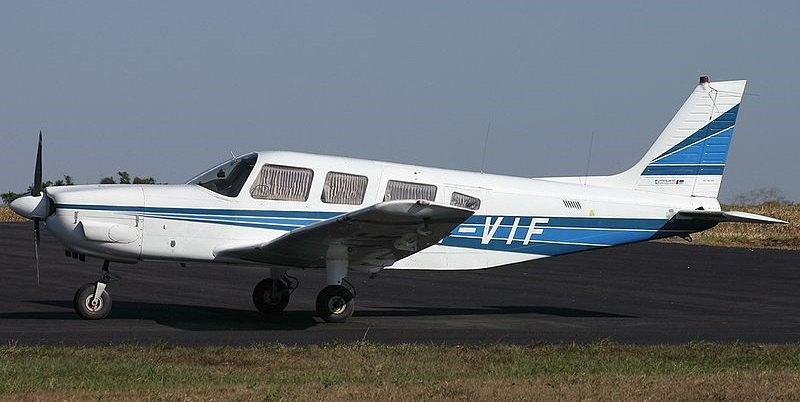
293 Minuano aircraft were marketed between 1975 and 1996. Designed to operate in regions with short and unpaved runways, it was widely used to link cities to farms and remote regions, such as garimpo areas.
The Embraer EMB-721 “Sertanejo” is a PA-32R, produced in Brazil by Embraer and later by its subsidiary Neiva, under license from Piper Aircraft.
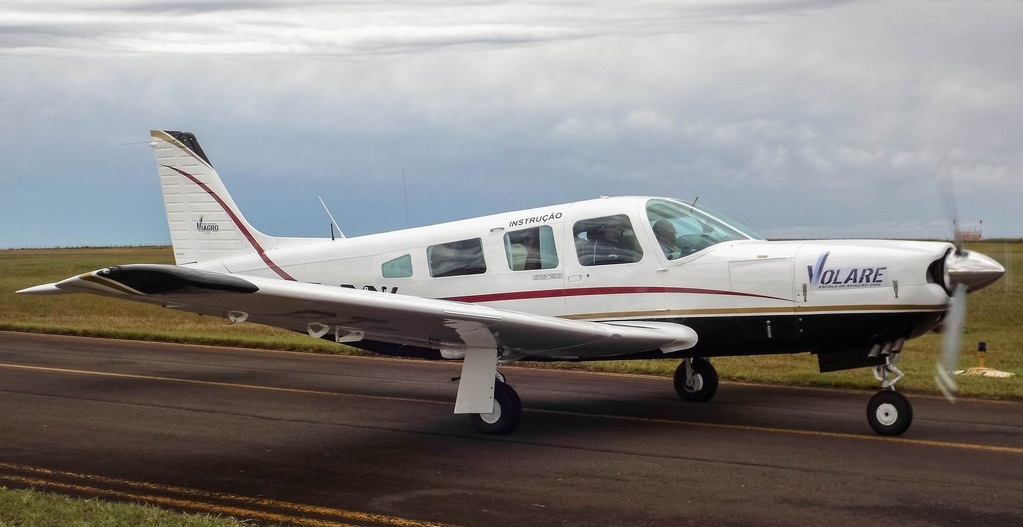
Chincul SACAIFI manufactured aircraft under license from Piper Aircraft Corporation. The company was a wholly owned subsidiary of “La Macarena S.A.”, Piper’s Argentine agent. Production included 26 Piper PA-32R.
Produced from 1975 to 2000, 208 Sertanejo were built by Embraer in Brasil.
Certification is under FAA A3SO for models:
PA-32-260
32-1111 to 32-7200045
32-740001 to 32-7600024
32-770001 to 32-7800008
PA-32-300
All
PA-32R-300
32R-7780001 to 32R-7880066
PA-32R-301
Up to 3213041
PA-32-301T
Up to 32-8424002
PA-32R-301T
Up to 3229003
PA-32S-300
32S-40566 to 32S-7240137
Specifications:
PA32-260
Engine: 1 x Lycoming O-540-E4B5, 260 hp
Seats: 6/7
Wing loading: 19.5 lb/sq.ft
Pwr loading: 13 lb/hp
Gross wt: 3400 lb
Empty wt: 1767 lb
Equipped useful load: 1556 lb
Payload max fuel: 1054 lb
Range max fuel/75% pwr: 712nm/5.3hr
Range max fuel / 55% pwr: 834 nm/ 7.3 hr
Service ceiling: 12,800 ft
75% cruise: 133 kt
55% cruise: 115 kt
Stall: 47-54 kt
1.3 Vso: 61 kt
ROC: 775 fpm
Min field length: 1800 ft
Fuel cap: 502 lb
PA 32 Cherokee Six D
Engine: Lycoming O 540 E, 260 hp
Length: 27 ft 8.75 in
Wingspan: 32 ft 9.5 in
Speed: 166 mph
Ceiling: 14,500 ft
Range: 550 mls
Seats: 6
PA32-300
Engine: 1 x Lycoming O-540-K1G5, 300 hp
Seats: 6/7
Wing loading: 19.5 lb/sq.ft
Pwr loading: 11.3 lb/hp
Gross wt: 3400 lb
Empty wt: 1824 lb
Equipped useful load: 1509 lb
Baggage cap: 28 cu.ft
Payload max fuel: 1007 lb
Range max fuel/75% pwr: 658nm/4.5hr
Range max fuel / 55% pwr: 844 nm/ 6.3 hr
Service ceiling: 16,250 ft
75% cruise: 146 kt
55% cruise: 135 kt
Stall: 47-54 kt
1.3 Vso: 61 kt
ROC: 1050 fpm
Min field length: 1350 ft
Fuel cap: 502 lb
1977 Piper Cherokee Six 300
Engine: Lycoming IO-540K, 300 hp @2700 rpm
TBO: 2000 hr
Fuel type: 100/100LL
Propeller: CS two-blade
Landing gear: Tri/Fixed
Max ramp weight: 3400 lb
Gross weight: 3400 lb
Landing weight: 3400 lb
Empty weight, std: 1822 lb
Useful load, std: 1578 lb
Payload, full std. fuel: 1080 lb
Usable fuel: 84 USG
Oil capacity: 12 qt
Wingspan: 32 ft. 9 in
Overall length: 27 ft. 9 in
Height: 8 ft. 3 in
Wing area: 174.5 sq. ft
Wing loading: 19.5 lbs./sq. ft
Power loading: 11.3 lbs./hp
Wheel base: 6 ft. 10 in
Wheel track: 10 ft. 7 in
Wheel size: 6.00 x 6 in
Seating capacity: 6-7
Cabin doors: 2-3
Cabin width: 49 in
Cabin height: 49 in
Baggage capacity (nose): 100 lb
Baggage capacity (rear): 100 lb
Cruise speed 75% power @ 8,000 ft.: 146 kt
Cruise speed 65% power @ 11,300 ft.: 142 kt
Cruise speed 55% power @ 14,000 ft.: 134 kt
Fuel consumption 75% power: 16.0 USGph
Fuel consumption 65% power: 13.8 USGph
Fuel consumption 55% power: 11.9 USGph
Stall speed (flaps up): 61 kt
Stall speed (flaps down): 55 kt
Best rate of climb: 1225 fpm
Best rate of climb (8,000 ft): 680 fpm
Service ceiling: 16,250 ft
Takeoff ground roll: 1050 ft
Takeoff over 50-ft. obstacle: 1500 ft
Landing ground roll: 630 ft
Landing over 50-ft. obstacle: 1000 ft
Cherokee Six 300
Engine: Lycoming IO-540-K, 300 hp
Wingspan: 32 ft 9.5 in / 9.99 m
Length: 27 ft 8.25 in / 8.45 m
Empty weight: 1818 lb / 824 kg
MTOW: 3400 lb / 1542 kg
Max cruise 75%: 145 kt / 168 mph / 270 kph
ROC SL: 1050 fpm / 320 m/min
Service ceiling: 16,250 ft / 4950 m
Cruise range 65%: 738 nm / 850 mi / 1368 km
Cruise range 55%: 894 nm / 1030 mi / 1658 km
Seats: 6
Cabin length: 9 ft 11 in / 3.02 m
Cabin width: 4 ft 1 in / 1.24 m
Cabin max height: 4 ft 0.5 in / 1.23 m
Cabin volume: 110 cu.ft / 3.11 cu.m
Forward baggage compartment: 8 cu.ft / 0.23 cu.m
Rear baggage compartment: 22 cu.ft / 0.62 cu.m / 100 lb / 45 kg
PA-32-300 B Cherokee Six
Engine: Lycoming IO-540-K1A5, 300 hp
Prop diameter: 80 in
Wingspan: 32.8 ft
Wing area: 174.5 sq.ft
Wing loading: 19.5 lb/sq.ft
Length: 27.7 ft
Height: 7.9 ft
Power loading: 11.3 lb/hp
Empty weight: 1777 lb
Useful load: 1623 lb
Empty weight seats out: 1707 lb
Useful load seats out: 1693 lb
Fuel capacity inboard: 50 USG
Std Aux fuel: 34 USG
Fuel: 100/130 Octane
Max baggage fwd/aft: 100/100 lb
Baggage space: fwd/aft: 8/20 cu.ft
Door size: 16in x 22in
TO run: 700 ft
TO 50 ft: 1140 ft
ROC speed: 105 mph
ROC: 1050 fpm
Service ceiling: 16,250 ft
Absolute ceiling: 18,000 ft
Top speed: 174 mph
Cruise 75% 7000ft: 168 mph
Cruise range 55% std fuel: 630 mi
Cruise range 55% Aux fuel: 1060 mi
Cruise range 75% std fuel: 525 mi
Cruise range 75% aux fuel: 880 mi
Stall 40deg flap: 63 mph
Stall flap up: 70 mph
Landing roll: 630 ft
Landing dist 50 ft: 1000 ft
Piper 1976 PA-32-300 Lance
Engine: Lycoming IO-540-K1A5D, 300 hp
TBO: 2000 hr
Propeller: Const. spd.
Landing gear: Tri/Retr.
Gross weight: 3600 lb
Empty weight, std: 1973 lb
Useful load, std: 1627 lb
Fuel: 94 USG
Wingspan: 32 ft. 8 in
Overall length: 27 ft. 7 in
Height: 7 ft. 9 in
Wing area: 174.5 sq. ft
Seating capacity: 6-7
Cabin width: 49 in
Cabin height: 48.5 in
Baggage capacity: 200 lb
Cruise speed 75% power: 158 kt
Cruise speed 65% power: 148 kt
Max range (w/ res) 75% power: 700 nm
Max range (w/ res) 65% power: 800 nm
Fuel consumption 75% power: 16.5 USgph
Fuel consumption 65% power: 14.0 USgph
Stall speed (gear, flaps down): 61 kt
Best rate of climb: 1000 fpm
Service ceilin): 14,600 ft
Takeoff ground roll: 970 ft
Landing ground roll: 870 ft
Cherokee Lance
Engine: 1 x Lycoming IO-540-K1G5D, 300 hp
TBO: 2,000 hr
Prop: constant speed, two blade, 80 in dia
Seats: 6/7
Length: 27 ft. 9 in
Height: 8 ft. 2 in
Wingspan: 32 ft. 10 in
Wing area: 174 ft. 6 in
Wing loading: 20.6 lb/sq.ft
Pwr loading: 12 lb/hp
Gross wt: 3600 lb
Empty wt: 1910 lb
Equipped useful load: 1623 lb
Payload max fuel: 1059 lb
Range max fuel/75% pwr: 828 nm/5.2 hr
Range max fuel / 55% pwr: 994 nm/ 7.2 hr
Range at max cruise (45 min res): 780 nm
Range at economy cruise (45 min res): 880 nm
Service ceiling: 14,600 ft
Maximum speed: 165 kt
Max cruise (best economy): 156 kt
Economy cruise (55 % power @ 10,000 ft.): 134 kt
Duration max cruise, no reserve: 5.75 hrs
Stall speed (clean): 66 kt
Stall speed flaps, gear down: 61 kt
1.3 Vso: 68 kt
ROC: 1000 fpm
Min field length: 1708 ft
Fuel cap: 94 USG/564 lb
Undercarriage: Retractable nose
Lance II
Engine: Lycoming IO 540, 300 hp
Prop: 80 inch, two blade, constant speed
TBO: 2,000 hr
Length: 27 ft. 8 in
Height: 9 ft. 6 in
Wingspan: 32 ft. 10 in
Wing area: 174.5 sq. ft
Wing loading: 20.6 lb/sq.ft
Power loading: 12 lb/hp
Seats: 6
Empty wt: 2,228 lb
Useful load: 1,372 lb
Payload with full fuel: 808 lb
Gross weight: 3,600 lb
Usable fuel cap: 94 USG/564 lb
Max rate of climb: 1,000 fpm
Service ceiling: 14,600 ft
Certificated ceiling: 16,200 ft
Max speed: 165 kt
Max cruise, 75% power (2,400 rpm) at 7,500 ft: 158 kt
Econ cruise, 55% power at 13,500 ft: 138 kt
Duration at max cruise: 5.2 hr
Duration at econ cruise: 7.9 hr
Stalling speed, clean: 77 kt
Stalling speed, full flaps: 70 kt
Turbo Lance
Engine Lycoming TIO 540 S1AD, 300 hp
TBO 1,800 hr
Prop Hartzell, constant speed, 80 in
Length 29 ft
Height 9 ft. 6 in
Wingspan: 32 ft 9 in
Wing area 175.4 sq.ft
Wing loading 20.6 lb/sq.ft
Power loading 12 lb/hp
Seats 6
Empty weight 2,382 lb
Useful load 1,217 lb
Payload with full fuel 653 lb
Gross weight 3,600 lb
Usable fuel capacity 94 USG/564 lb
Maximum landing weight 3,600 lb
Maximum rate of climb 1,000 fpm
Service ceiling 20,000 ft
Certificated ceiling 20,000 ft
Maximum speed 193 kt
Max cruise, 75% power (2,400 rpm) at 20,000 ft 176 kt
Econ cruise, 55 % power 142 kt
Duration at max cruise 3.45 hr
Duration at econ cruise 4.3 hr
Stalling speed, clean 57 kt
Stalling speed, full flaps 52 kt
Turbo Lance II
Engine: turbocharged, 300 hp
Seats: 6/7
Cruise: 158 kts
Range: 864 nm
PA32-301 Saratoga
First built: 1980
Engine: 1 x Lycoming IO-540-K1G5D, 300 hp
TBO: 2000 hrs
Prop: Hartzell 2 blade, constant speed 80 in
Seats: 6/7
Length: 28.3 ft
Height: 9 ft
Wingspan: 36 ft
Wing area: 178 sq.ft
Wing aspect ratio: 7.3
Max ramp wt: 3615 lb
Max take off wt: 3600 lb
Standard empty wt: 1940 lb
Max useful load: 1675 lb
Max landing wt: 3600 lb
Wing loading: 20.2 lbs/sq.ft
Power loading: 12 lbs/hp
Max useable fuel: 612 lb
Climb rate: 990 fpm @ 90 kt
Climb gradient: 660 ft/nm
Rate of climb @ 8000 ft: 535 fpm
Service ceiling; 14,100 ft
Max speed: 152 kt
Cruise @ 65% power @ 8,000ft: 140 kt
Fuel flow @ 65% power @ 8,000ft: 96 pph
Endurance @ 65% power @ 8,000ft: 6.2 hr
Stalling speed clean: 66 kt
Stall speed flaps down: 60 kt
Turbulent air penetration speed: 132 kt
Fixed undercarriage
PA-32-301T Turbo Saratoga
Engine: 1 x Avco Lycoming TIO-540-S1AD, 224kW / 300 hp
TBO: 1800 hr
Prop: Hartzell 2 blade, constant speed 80 in
Length: 29 ft
Height: 9 ft
Wingspan: 36 ft
Wing aspect ratio: 7.3
Wing area: 16.56 sq.m / 178.25 sq ft
Max ramp wt: 3617 lb
Max take off wt: 3600 lb
Standard empty wt: 2003 lb
Max useful load: 1614 lb
Max landing wt: 3600 lb
Wing loading: 20.2 lbs/sq.ft
Power loading: 12 lbs/hp
Max useable fuel: 612 lb
Max. speed: 330 km/h / 205 mph / 182 kt
Climb rate: 1075 fpm @ 90 kts
Climb gradient: 717 ft/nm
Rate of climb @ 8000 ft: 950 fpm
Cruise @ 65% power @ 8,000ft: 140 kt
Cruise @ 65% pwr @ 18,000 ft: 152 kt
Fuel flow @ 65% power @ 18,000ft: 103 pph
Endurance @ 65% power @ 18,000ft: 5.7 hr
Stalling speed clean: 67 kt
Stall speed flaps down: 60 kt
Turbulent air penetration speed: 132 kt
Certificated ceiling: 6095 m / 20,000 ft
Range: 1593 km / 990 miles
Seats: 6/7
Retractable undercarriage.
PA32 Saratoga SP
Engine: 1 x 300 hp Lycoming
Seats: 6
Empty Wt: 1999 lbs
Gross wt: 3600 lb
Useful load: 1601 lb
Max Cruise: 190 mph
Max range: 996 sm
1998 Piper PA-32R-301 Saratoga HP
Price: $378,900
Engine: Lycoming IO-540-K1G5, 300 hp @2500 rpm
TBO: 2000 hr
Fuel type: 100/100LL
Propeller: Hartzell 2 blade, constant speed 80 in
Landing gear: Tri/Retr
Max ramp weight: 3615 lb
Gross weight: 3600 lb
Max landing weight: 3600 lb
Empty weight: 2407 lb
Useful load, std: 1208 lb
Payload, full std. fuel: 596 lb
Usable fuel: 102 USG / 612 lb
Oil capacity: 12 qt
Wingspan: 36 ft. 2 in
Overall length: 27 ft. 10 in
Height: 8 ft. 6 in
Wing area: 178.3 sq. ft
Wing aspect ratio: 7.3
Wing loading: 20.2 lbs./sq. ft
Power loading: 12.0 lbs./hp
Wheel base: 7 ft. 11 in
Wheel track: 11 ft. 1 in
Wheel size: 6.00 x 6
Seating capacity: 5/6
Cabin doors: 2
Cabin width: 49 in
Cabin height: 42 in
Baggage capacity: 200 lb /24.3 cu.ft
Cruise speed 75% power @ 6,000 ft.: 163 kt
Cruise speed 65% power @ 9,000 ft.: 158 kt
Cruise @ 65% power @ 8,000ft: 149 kts
Cruise speed 55% power @ 11,000 ft.: 154 kt
Max range (w/ res) 75% power: 740 nm
Max range (w/ res) 65% power: 800 nm
Max range (w/ res) 55% power: 860 nm
Fuel consumption 75% power: 18.5 USgph
Fuel consumption 65% power: 16.5 USgph
Fuel flow @ 65% power @ 8,000ft: 96 pph
Fuel consumption 55% power: 14.5 USgph
Endurance @ 65% power @ 8,000ft: 6.2 hr
Climb rate: 1010 fpm @ 91 kt
Climb gradient: 666 ft/nm
Rate of climb @ 8000 ft: 540 fpm
Service ceiling: 15,588 ft
Stalling speed clean: 65 kt
Stall speed gear/flaps down: 59 kt
Turbulent air penetration speed: 132 kt
Takeoff ground roll: 1200 ft
Takeoff over 50-ft. obstacle: 1800 ft
Landing ground roll: 640 ft
Landing over 50-ft. obstacle: 1520 ft
1983 Piper PA-32-301T Saratoga SP
Engine: Lycoming TIO-540-S1AD, 300 hp
TBO: 1800 hr
Propeller: Hartzell 2 blade, constant speed 80 in
Landing gear: Tri/Retr.
Max ramp wt: 3617 lb
Max take off wt: 3600 lb
Standard empty wt: 2066 lb
Max useful load: 1551 lb
Max landing wt: 3600 lb
Wing loading: 20.2 lbs/sq.ft
Power loading: 12 lbs/hp
Fuel: 102 USG / 612 lb
Wingspan: 36 ft. 2 in
Overall length: 28 ft. 4 in
Height: 8 ft. 6 in
Wing area: 178 sq. ft
Wing aspect ratio: 7.3
Seating capacity: 6-7
Cabin width: 49 in
Cabin height: 49 in
Baggage capacity: 200 lb
Max speed: 191 kts
Cruise speed 75% power: 172 kt
Cruise @ 65% power @ 8,000ft: 149 kt
Cruise @ 65% pwr @ 18,000 ft: 164 kt
Max range (w/ res) 75% power: 845 nm
Max range (w/ res) 65% power: 920 nm
Fuel consumption 75% power: 16.5 USgph
Fuel consumption 65% power: 14.0 USgph
Fuel flow @ 65% power @ 18,000ft: 103 pph
Endurance @ 65% power @ 18,000ft: 5.8 hr
Climb rate: 1120 fpm @ 92 kt
Climb gradient: 730 ft/nm
Rate of climb @ 8000 ft: 1000 fpm
Stalling speed clean: 63 kt
Stall speed gear/flaps down: 60 kt
Turbulent air penetration speed: 132 kt
Service ceiling: 20,000 ft
Takeoff ground roll: 1110 ft
Landing ground roll: 732 ft
Saratoga II HP
Engine: Lycoming IO-540-K1G5
Useful load: 546 kg
Endurance: 6.3 hr
Cruise: 166 kt
2007 Piper PA32-301T Saratoga II TC
Engine: Lycoming TIO-540-AH1A, 300 hp @SL to 18,000 ft
TBO: 2000 hr
Fuel type: 100/100LL
Propeller: Hartzell CS/3-blade
Landing gear type: Tri./Retr.
Max ramp weight: 3615 lb
Gross weight: 3600 lb
Empty weight, std: 2475 lb
Useful load, std: 1140 lb
Payload, full std. fuel: 513 lb
Useable fuel, std: 102 USG
Wingspan: 36.2 ft
Overall length: 27.9 ft
Height: 8.5 ft
Wing area: 178.3 sq. ft
Wing loading: 20.2 lbs./sq. ft
Power loading: 12 lbs./hp
Wheel size: 6.00 x 6
Seating capacity: 6/7
Cabin doors: 2/3
Cabin width: 48.75 in
Cabin height: 42 in
Baggage capacity: 200 lb
Cruise speed (kts.): 75% power: 185
Fuel consumption 75% power: 18.5 USgph
Fuel consumption 65% power: 16.5 USgph
Range 55% power: 950 nm
Vso: 63 kt
Best rate of climb, SL: 1120 fpm
Service ceiling: 20,000 ft
Takeoff ground roll: 1110 ft
Takeoff over 50 ft obstacle: 1810 ft
Landing ground roll: 880 ft
Landing over 50 ft obstacle: 1700 ft
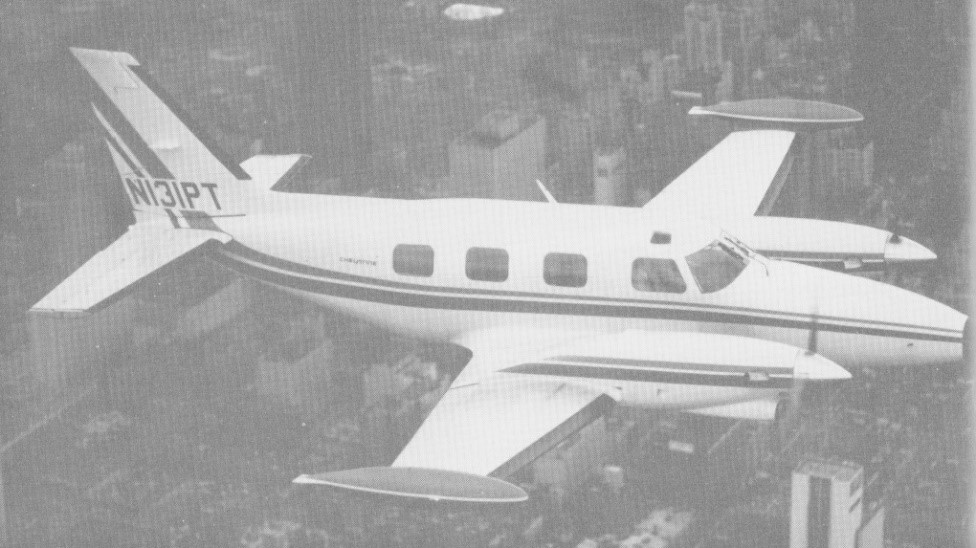
First flown on 20 August 1969, four production PA-31T aircraft were completed and eight ordered by the spring of 1974.
198 PA-31T Cheyenne I were built
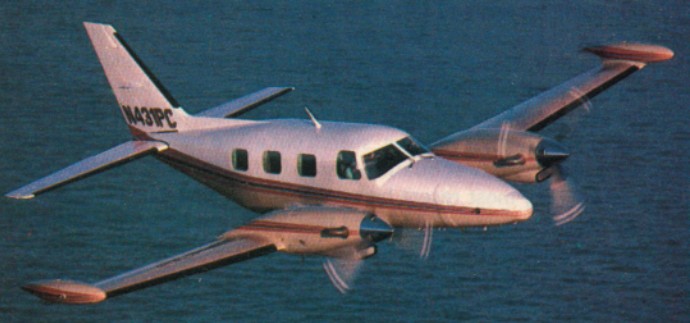
The T-1040 (PA-31-T3) is a turbine powered hybrid combining the fuselage of the Navajo Chieftain with the wing, tail and engines of the Cheyenne 1 A to create a new commuter airliner. Dual controlled and not pressurized, it can carry nine to 11 passengers, the T-1040 was introduced on 25 May 1980.

The first production type flew on 17 July 1981, FAA certification was received on 25 February 1981, and deliveries into service during May 1982. The use of wing tip fuel tanks was approved during November 1982. A rear utility door is fitted as standard and an optional 30 cu.ft belly cargo pod was available.
The prototype T-1020 flew for the first time on 25 September 1981, the type was delivered into service during December 1981. Twenty-one T-1020 airliner versions were built.
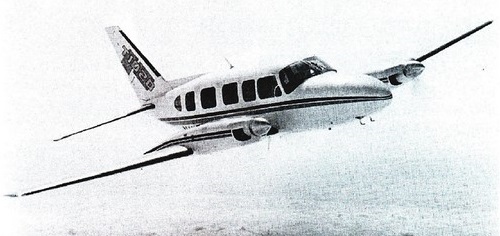
A significant advance in the Navajo family came on 22 October 1973 when Piper flew the first production example of the PA-31T Cheyenne, which combined an airframe generally similar to that of the Pressurized Navajo with two 462kW Pratt & Whitney Aircraft of Canada PT6A-28 turboprop engines. The Piper Cheyenne was certificated in 1974, just as the new surge in turboprops started, the Cheyenne is a product of proven airframe and powerplant technology that dates back to the mid 1960s.
A piston-engined version of the turbine Cheyenne I known as the Mojave was introduced but production ceased that same year after only 50 had been completed.
The first of these models to be marketed was the Cheyenne in 1974 (renamed the Cheyenne II in 1978) when a simplified version known as the Cheyenne I was introduced. Seventeen of the 1983 Cheyenne IA were built.
Production of the PA-31P Pressurized Navajo ended during 1977, at which time a total of 248 had been built, but at the same time the company introduced a new version of the Cheyenne, the PA-31T-1 Cheyenne I, the original Cheyenne then becoming redesignated PA-31T Cheyenne II. Deliveries of the new Cheyenne I, which differed primarily from its predecessor by having 373kW Pratt & Whitney Aircraft of Canada PT6A-11 turboprop engines, began towards the end of April 1978.
When Piper mated the 680 hp Pratt & Whitney PT6A 28 with the airframe of their pressurized Navajo, they produced a turboprop that had an instant heritage. The PT6A 28, which is derated to 620 hp in the Cheyenne II so that takeoff power can be maintained up to 4,800 feet, also powers three models of the King Air. Because of its long and reputable service record, the PT6A 28 is authorized to operate 3,500 hours between overhauls in the Cheyenne. That figure was stipulated principally because Pratt & Whitney felt that the 6,500 hour TBO authorized for commuter aircraft, such as the Beech 99 and the Twin Otter, would allow too long a calendar time between internal inspections, considering that typical business aircraft in the Cheyenne class fly about 600 hours per year.
Since the Cheyenne uses the fuselage design of the pressurized Navajo, the reliability of the pressure vessel and its environmental units (35,000 BTU heater, 23,000 BTU vapor cycle air conditioning system and dehumidifier) has been established, and that should mean reduced maintenance worries for the Cheyenne owner. Furthermore, pressurizing a turboprop is less complicated than is pressurizing a turbosupercharged aircraft, because high pressure bleed air from the engine’s compressor can be mixed with the cool outside air to produce the desired pressure differential, which for the Cheyenne is 5.5 psi.
The thirsty turbine powerplants of the Cheyenne necessitated a redesign of the fuel system, and the result was more than just an increased capacity. The Cheyenne’s 382 USG of usable fuel are contained in two multi celled wing tanks one per side. Although each fuel tank consists of four separate but interconnected tanks, the pilot’s fuel control options are reduced to a simple on/ off/cross-feed arrangement. The three fuel cells located within each wing are filled through an opening in each engine nacelle; they must be serviced before the tip tank, which constitutes the fourth fuel cell for each wing. Gravity causes fuel from the 22 USG tip tank to flow into the wing fuel cells. Therefore, opening a nacelle filler cap when the tip tanks are full will result in some spilling, usually on the offending preflighter. However, checking that the tip tanks are full assures that all the cells are topped, and fuel in the neck of the nacelle filler indicates that the corresponding three wing cells are full to their combined capacity of 173 USG.
Installing 1,240 total horsepower in the Pressurized Navajo’s airframe, which was originally designed to accept 850 hp, necessitated either a larger horizontal stabilizer or an innovative redesign of the flight control system if the required stability criteria were to be met. Piper chose the latter course and installed a relatively simple stability augmentation system that varies the tension in the Cheyenne’s elevator downspring as a function of the aircraft’s angle of attack. Although the Cheyenne’s SAS initially caused some consternation among Piper’s salespeople, who were forced to explain why their machine required an operative stability augmentation system to be airworthy while the competition’s aircraft didn’t, the Cheyenne’s SAS has proved to be a successful and cost effective way of engineering a solution to the classic problem of maintaining stability while increasing the horsepower of an existing design. Price 1976: $623,805.
The T-1040 is a turbine powered hybrid combining the fuselage of the Navajo Chieftain with the wing, tail and engines of the Cheyenne 1 A to create a new commuter airliner. Not pressurized, it can carry nine to 11 passengers.
632 of the Cheyenne II were built, including 24 T-1040 airliner versions.
The Cheyenne range was extended for 1981 by introduction of the PA-31T-2 Cheyenne IIXL, with the fuselage lengthened by 0.61m and 559kW Pratt & Whitney Aircraft of Canada PT6A-135 engines flat-rated to 462kW.
Schafer Aircraft Modifications Inc was founded 1977, and from 1979 developed modifications for other aircraft. Included was installing higher rated turboprops to Piper Cheyenne II as the Schafer Comanchero 750.
Certification:
FAA A8EA
PA-31T & PA-31T3
31T-740002 to
31T-7620057
31T-7720001 to
31T-7920094
31T-8275001 and up
Specifications:
PA-31T
Engines: 2 x PW PT5A-28, 620 shp
Wingspan over tip tanks: 42 ft 8.75 in / 13.02 m
Length: 34 ft 8 in / 13.02 m
Empty weight: 4870 lb / 2209 kg
MTOW: 9000 lb / 4082 kg
Max cruise at 11000 ft / 3350m at 7600lb/3447kg: 283 kt / 326 mph / 525 kph
Econ cruise at 25000 ft / 7620m at 7600lb/3447kg: 184 kt / 212 mph / 341 kph
Max ROC SL: 2800 fpm / 853 m/min
Service ceiling: 29,000 ft / 8840 m
Range max fuel 45min res: 1350 nm / 1555 mi / 2500 km
Seats: 8
Cabin length: 16 ft 1 in / 4.90 m
Cabin width: 4 ft 3 in / 1.30 m
Cabin height: 4 ft 4 in / 1.31 m
Cabin volume: 244 cu ft / 6.91 cu.m
Front baggage compartment: 20 ft ft / .057 cu.m / 200 lb / 90.7 kg
Rear baggage compartment: 22 cu.ft / 0.62 cu.m / 200 lb / 90.7 kg
PA-31T-500T1 Cheyenne I
First built: 1978
Engines: 2 x P&W PT6A-11, 500 shp
Props: Hartzell 3-blade, 93-in
Seats: 7
Length: 34.7 ft
Height: 12.8 ft
Wingspan: 40.7 ft
Wing area: 229 sq.ft
Wing aspect ratio: 7.2
Maximum ramp weight: 8750 lb
Maximum takeoff weight: 8700 lb
Standard empty weight: 4904 lb
Maximum useful load: 3843 lb
Zero-fuel weight: 7200 lb
Maximum landing weight: 8700 lb
Wing loading: 38 lbs/sq.ft
Power loading: 8.7 lbs/hp
Maximum usable fuel: 2559 lb
Best rate of climb: 1750 fpm
Service ceiling: 28,200 ft
Max pressurisation differential: 5.5 psi
8000 ft cabin alt @: 25,000 ft
Maximum single-engine rate of climb: 413 fpm @ 110 kt
Single-engine climb gradient: 225 ft/nm
Single-engine ceiling: 12,500 ft
Maximum speed: 243 kt
Normal cruise @ 24,000ft: 234 kt
Fuel flow @ normal cruise: 412 pph.
Endurance at normal cruise: 5.5 hr
Stalling speed clean: 84 kt
Stalling speed gear/flaps down: 72 kt
Turbulent-air penetration speed: 180 kt
Cheyenne IA
Engines: two 500hp P&W PT6A
Wingspan 42’8″
Length: 34’8″
Useful load: 3846 lb
Cruise: 296 mph
Stall:83 mph
Ceiling: 29,000′
Price: $1,124,117
PA-31T-620 Cheyenne II
First built: 1974
Engines: 2 x P&W PT6A-28, 620 shp
TBO: 3,500 hr
Props: Hartzell 3-blade, constant speed reversing and full feathering, 93-in
Seats: 8
Length: 34 ft. 8 in
Height: 12 ft. 9 in
Wingspan: 42 ft. 8 in / 13.01 m
Wing area: 229 sq.ft / 21.3 sq.m
Airfoil: NACA 632-415 at root, 63A212 at tip
Aspect ratio: 7.96
Maximum ramp weight: 9050 lb
Maximum takeoff weight: 9000 lb
Empty weight: 5,331 lb
Useful load: 3,719 lb
Payload with full fuel: 1,427 lb
Ramp weight: 9,050 lb
Zero-fuel weight: 7200 lb
Maximum landing weight: 9000 lb
Wing loading: 39.3 lbs/sq.ft
Power loading: 7.26 lb/hp
Usable fuel capacity: 382 USG/2,292 lb
Baggage capacity: 400 lb
Baggage area: 42 cu.ft
Best rate of climb: 2710 fpm
Certificated ceiling: 31,600 ft
Service ceiling: 29,000 ft
Single engine service ceiling: 14,600 ft
Max pressurisation differential: 5.5 psi
8000 ft cabin alt @: 25,000 ft
Maximum single-engine rate of climb: 660 fpm @ 113 kt
Single-engine climb gradient: 350 ft/nm
Maximum speed: 283 kt
Maximum cruise (@ 11,000 ft.): 279 kt
Economy cruise (@ 25,000 ft.): 212 kt
Range @ maximum cruise (45 min res). 883 nm
Range @ economy cruise (45 min res): 1,350 nm
Normal cruise @ 24,000ft: 248 kt
Fuel flow @ normal cruise: 454 pph
Endurance at normal cruise: 5.1 hr
Stall speed (clean): 89 kt
Stall speed (gear, flaps down): 77 kt
Turbulent-air penetration speed: 180 kt
Minimum runway requirement: 2,480 ft.
PA-31T-2XL620 Cheyenne IIXL
First built: 1981
Engines: 2 x P&W PT6A-135, 620 shp
Props: Hartzell 3-blade, 93-in
Seats: 6/8
Length: 36.7 ft
Height: 12.8 ft
Wingspan: 42.7 ft
Wing area: 222 sq.ft
Wing aspect ratio: 8
Maximum ramp weight: 9540 lb
Maximum takeoff weight: 9474 lb
Standard empty weight: 5112 lb
Maximum useful load: 4428 lb
Zero-fuel weight: 7600 lb
Maximum landing weight: 9000 lb
Wing loading: 41.4 lbs/sq.ft
Power loading: 7.6 lbs/hp
Maximum usable fuel: 2292 lb
Best rate of climb: 1750 fpm
Service ceiling: 30,000 ft
Max pressurisation differential: 5.5 psi
8000 ft cabin alt @: 25,000 ft
Maximum single-engine rate of climb: 470 fpm @ 122 kt
Single-engine climb gradient: 231 ft/nm
Single-engine ceiling: 14,900 ft
Maximum speed: 276 kt
Vmca: 91 kt
Normal cruise @ 29,000ft: 246 kt
Fuel flow @ normal cruise: 394 pph
Endurance at normal cruise: 5.3 hr
Stalling speed clean: 89 kt
Stalling speed gear/flaps down: 80 kt
Turbulent-air penetration speed: 187 kt
PA31 T-1020 Commuter
First built: 1981
Engine: 2 x Lycoming TIO-540, 350 hp
TBO: 1800 hr
Prop: Hartzell 3 blade, constant speed 80 in
Seats: 11
Length: 34.6 ft.
Height: 13 ft
Wingspan: 40.7 ft
Wing area: 229 sq.ft
Wing aspect ratio: 7.2
Max ramp wt: 7045 lb
Max take off wt: 7000 lb
Standard empty wt: 4450 lb
Max useful load: 2550 lb
Max landing wt: 7000 lb
Wing loading: 30.6 lbs/sq.ft
Power loading: 10 lbs/hp
Max useable fuel: 636 lb
Climb rate: 1120 fpm @ 101 kt
Climb gradient: 665 ft/nm
Rate of climb @ 8000 ft: 950 fpm
Certificated ceiling; 24,000 ft
SE rate of climb: 230 fpm @ 106 kt
SE climb gradient: 128 ft/nm
SE ceiling: 13,700 ft
Max speed: 231 kt
Cruise @ 65% power @ 8,000ft: 181 kt
Fuel flow @ 65% power @ 8,000ft: 185 pph
Endurance @ 65% power @ 8,000ft: 3.2 hr
Stalling speed clean: 77 kt
Stall speed gear/flaps down: 74 kt
Turbulent air penetration speed: 160 kt
Retractable undercarriage
Cabin length: 12 ft 7 in
Cabin width: 50 in
Cabin height: 51.5 in
Cabin floor area: 45.4 sq.ft
Cabin volume: 203 cu.ft
Cabin door: 46 in x 27.5 in
Opt. utility door: 38 in x 17.5 in
Nose baggage: 17 cu.ft
Nacelle lockers: 13.25 cu.ft each
No built: 21
T-1020
Max speed: 272 mph
Cruise 10,000ft: 231 mph
Cruise 10,000ft eco: 196 mph
Stall: 85 mph
Climb rate: 1120 fpm
Climb rate SE: 230 fpm
Service ceiling: 24,000 ft
SE service ceiling: 12,100 ft
Takeoff run: 1850 ft
Takeoff run to 50 ft: 2400 ft
Landing run 50ft: 1680 ft
Range loaded: 558 mi
Fuel capacity: 108 USG
Fuel capacity opt: 182 USG
Wingspan: 40 ft 8 in
Length: 34 ft 7.5 in
Height: 13 ft 0in
Wing area: 229 sq.ft
Empty weight: 4450 lb
Loaded weight: 7000 lb
Max baggage weight: 700 lb
T-1040 / PA-31-T3
Engine: 2 x Pratt & Whitney PT6A-11, 500 shp
Props: Hartzell CS, fully feathering 7 ft 9 in
Wingspan: 41 ft 1 in
Wing area: 229 sq.ft
Wing aspect ratio: 7.4
Length: 36 ft 8 in
Height: 13 ft 0in
Maximum ramp weight: 9050 lb
Maximum takeoff weight: 9000 lb
Standard empty weight: 4624 lb
Maximum useful load: 2976 lb
Zero-fuel weight: 7600 lb
Maximum landing weight: 9000 lb
Wing loading: 39.3 lbs/sq.ft
Power loading: 9 lbs/hp
Fuel capacity: 300 USG
Fuel capacity opt: 66 USG
Tip tank capacity; 336 USG
Maximum usable fuel: 2010 lb
Max baggage weight: 700 lb
Max speed: 280 mph / 243 kt
Cruise 11,000ft: 272 mph / 236 kt
Fuel flow @ normal cruise: 580 pph
Endurance at normal cruise: 3.7 hr
Cruise 11,000ft eco: 230 mph
Stall clean: 90 mph / 88 kt
Stalling speed gear/flaps down: 78 kt
Turbulent-air penetration speed: 183 kt
Climb rate: 1610 fpm
Climb rate SE: 325 fpm @ 115 kt
Single-engine climb gradient: 169 ft/nm
Service ceiling: 27,900 ft
Single-engine ceiling: 12,100 ft
Takeoff run to 50 ft: 2650 ft
Landing run 50ft: 2100 ft
Range loaded: 680 mi
Range opt: 1150 mi
Nose baggage: 25.0 cu.ft
Nacelle lockers: 9.0 cu.ft each
Seats: 11
Back to Piper PA-31 Navajo / Chieftain


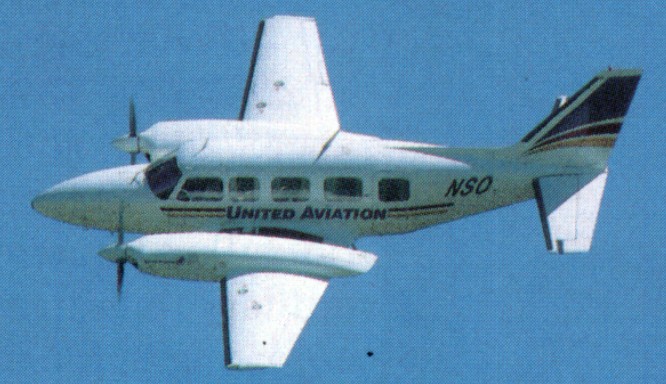
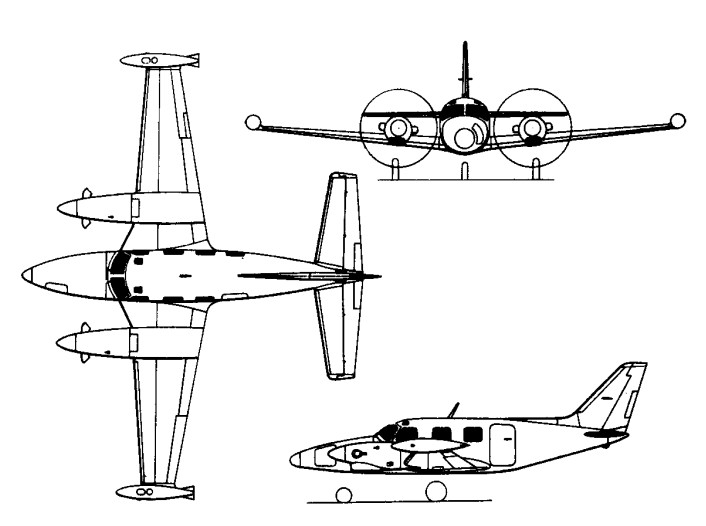
On 30 September 1964 Piper flew the prototype of a new twin-engine executive aircraft which was then the largest built by the company. Identified at first as the Piper PA-31 Inca, the aircraft had been redesignated as the PA-31 Navajo when deliveries began on 17 April 1967.
Piper PA-31 Navajo / Chieftain Article
A six/eight-seat corporate/ commuter transport of cantilever low-wing monoplane configuration with retractable tricycle landing gear, it was powered by two 224kW Avco Lycoming IO-540-K flat-six engines, and was available in optional Standard, Commuter and Executive versions with differing interior layouts.
The internal cabin is 15 ft 10in long and 51.5in high and a nose baggage compartment has 14 cu.ft for 150 lb of luggage, and the aft compartment has 16 cu.ft for 200 lb.
The Standard version has accommodation for six passengers, rear baggage compartment, wardrobe and optional seating arrangements for seven or eight, plus a toilet.
The Executive and VIP version accommodates six passengers, with a pilot/passenger divider, curtained off area, refreshment unit, foldaway tables and a toilet, plus the optional seventh or eighth seat.
The Commuter version accommodates eight passengers, with a curtain divider, foldaway tables, refreshment unit, magazine racks, fasten seatbelts and no smoking signs, plus a luggage capacity of 350 lb.
Piper PA31 Navajo Owner’s Handbook
Made available at the same time was the optional PA-31T Turbo Navajo, which differed only by having two 310 hp /231kW TIO-540-A turbocharged engines.
In 1974 an additional model of the Turbo Navajo was made available, the PA-31-325 Turbo Navajo C/R, which introduced a 242kW version of the counter-rotating engines installed in the Chieftain.
The Turbo Navajo B, cruising at 251 mph at 24,000 feet (404 km/h at 7000 meters); 223 mph at 12,000 feet (359 km/h at 3600 meters), featured new nacelle compartments increased luggage space 42 percent – 62 cubic feet (1.76 cu.m) and hold an additional 300 pounds (136 kg) total 650 pounds (295kg.), seating for up to nine people.
Production of the PA-31 Navajo ended and at the same time the company introduced for 1973 the PA-31-350 Navajo Chieftain which had the fuselage lengthened by 0.61m so an extra pair of seats could be fitted to the cabin, and was powered by two 350 hp / 261kW TIO-540-J2BD turbocharged engines driving counter-rotating propellers.
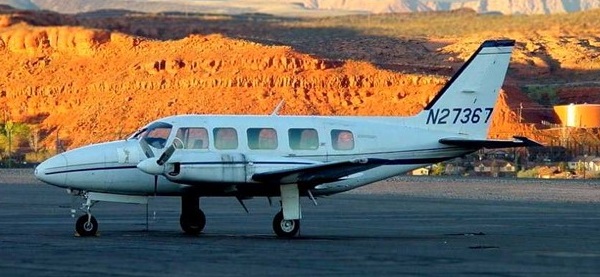
Piper expanded their 1976 medium twin line by offering the Navajo C/R. This airplane has 325 hp engines that eliminate the critical engine characteristics that stem from both propellers rotating in the same direction; the Navajo C/R’s left propeller turns in the conventional clockwise direction, but the right prop rotates counter-clockwise. The Navajo CR had wing lockers.
The basic model remained in production until 1983 by which time 1785 were built. Included in this total were the higher powered (325 hp) models which featured contra-rotating engines.
The engine variations provide the main performance difference among the models. The plain Navajo is a 3500 gross, 2,174 useful airplane, with a 310 hp turbo¬charged but otherwise unfettered TIO 540. The Navajo CR is the same airplane, with the same engine for that matter, except that the horsepower rating has risen to 325, magnetos are pressurized, and the right hand engine turns its propeller inboard, which the left one does anyway. The benefits of counter-rotation are minutely improved single engine performance and speeds, largely theoretical improvement from the neutralization of slipstream and prop wash effects, and the minimization of P factor. Gross weight remains the same, while useful weight drops a tad as a result of the CR’s capacious wing lockers.
The range was extended in 1970 by introduction of the PA-PA-31P Pressurized Navajo (First flying in March 1968) with a fail-safe fuselage structure in the pressurised section and two 317kW Avco Lycoming TIGO-541-E1A engines. The pressurised PA31P seated six was marketed for business high-fliers: 259 were built from 1970 till 1977.
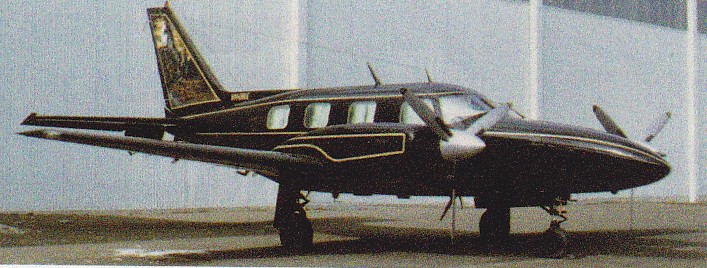
The Chieftain is 24 inches longer than the CR, has a 7,000 gross and a 350 pound greater useful and the same engine. But horsepower has now been boosted to 350 with a tuned induction system and a slightly larger compressor.
One hundred and sixty seven Navajo Chieftains were licence built in Brazil by Embraer circa 1981, as the EMB-820.
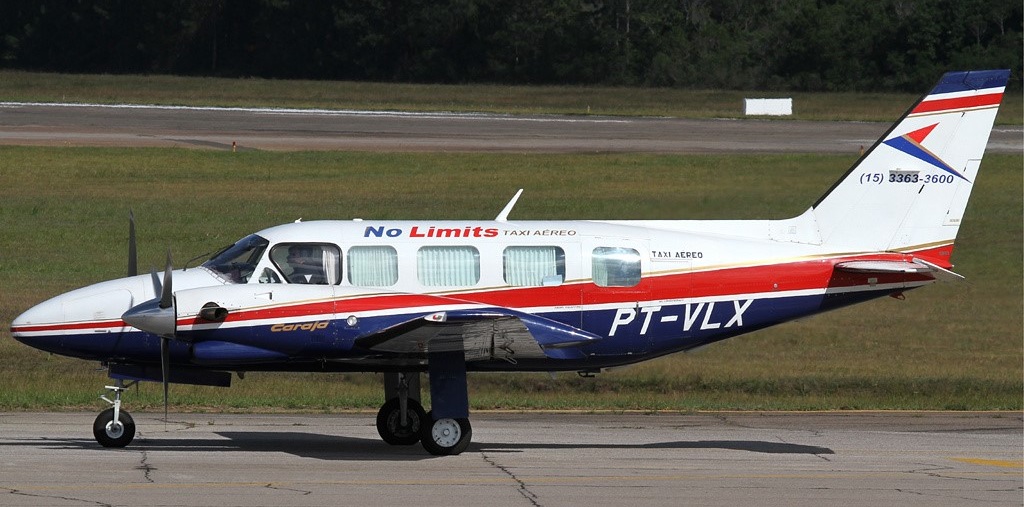
Fifty Embraer EMB-820C Navajos were converted to turboprop configuration with Pratt & Whitney Canada PT6A-27 engines flat-rated to 550shp, being named Neiva NE-821 Caraja. The Carajá’s MTOW of 8,003 pounds (3,630 kg) was 1,000 pounds (454 kg) more than that of the Chieftain.
In 1984 a piston-engined version of the turbine Cheyenne I known as the PA31P-350 Mojave was intro-duced but production ceased that same year after only 50 had been completed. It incorporated the Chieftain II wings, pressurised Cheyenne I fuselage, and a Chieftain tail, with the powerplant of the PA-315-350 Chieftain. With increased wingspan and fuel capacity, plus airstairs, production of the PA-31P Pressurized Navajo ended during 1977, at which time a total of 248 had been built.
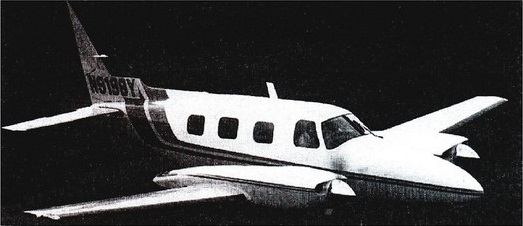
Schafer Aircraft Modifications Inc was founded 1977, and from 1979 developed modifications for other aircraft. Included were installing turboprop engines to Piper Navajo as the Schafer Comanchero, turboprop engines to Piper Chieftain as the Comanchero 500.
Chincul SACAIFI manufactured aircraft under license from Piper Aircraft Corporation. The company was a wholly owned subsidiary of “La Macarena S.A.”, Piper’s Argentine agent. Production included Piper PA-31 Navajo.
Production of the PA-31 Navajo started in 1973 and, after 1825 were built, ceased in 1983.
Certification:
FAA A20SO
PA-31
31-1 to 31-659
31-661 to 31-711
31-752 to 31-7612110
31-7712001 to 31-7912124
31-8012001 to 31-8312019
FAA A20SO
PA-31-325
31-7300932 to 31-7612110
31-7712001 to 31-7912124
FAA A20SO
PA-31-350
31-5000 to 31-7652176
31-7752001 to 31-7952250
FAA A8EA
PA-31P
31P-1 to 31-7630019
FAA A8EA
PA-31P-350
31P-8414001 to 8414050
Specifications:
PA31-300 Navajo
Engine: 2 x Lycoming IO-470-M, 300 hp
PA31-310 Navajo
First built: 1967
Engine: 2 x Lycoming TIO-540-A2C, 310 hp
TBO: 1800 hrs
Fuel; 100/100LL
Prop: Hartzell 3 blade, constant speed 80 in
Seats: 6/8
Length: 32.6 ft
Height: 13 ft
Wingspan: 40.7 ft
Wing area: 229 sq.ft
Wing aspect ratio: 7.2
Max ramp wt: 6536 lbs
Max take off wt: 6500 lbs
Standard empty wt: 4003 lbs
Equipped Weight; 4529 lbs
Max useful load: 2533 lbs
Max landing wt: 6500 lbs
Payload full std Fuel; 1650 lbs
Baggage Capacity; 350 lbs
Wing loading: 28.4 lbs/sq.ft
Power loading: 10.5 lbs/hp
Fuel Capacity; 192 US gals
Usable Fuel; 187.3 US Gals / 1124 lb
Climb rate: 1300 fpm @ 94 kt
Climb gradient: 830 ft/nm
Rate of climb @ 8000 ft: 1220 fpm
Best Angle of Climb; 80 mph
Absolute Ceiling; 27,300 ft
Certificated ceiling; 24,000 ft
SE rate of climb: 245 fpm @ 94 kt
SE climb gradient: 157 ft/nm
SE ceiling: 15,200 ft
Max speed: 227 mph
Never exceed ; 236 mph
Cruise @ 65% power @ 8,000ft: 176 kts
Cruise @ 65% pwr @ 18,000 ft: 192 kts
Cruise 75% 22,000 ft Best Power: 213 mph
Cruise 75% 22,000 ft Best Economy: 208 mph
Cruise 65% 24,000 ft Best Power: 202 mph
Cruise 65% 24,000 ft Best Economy: 196 mph
Cruise 55% 24,000 ft Best Power: 182 mph
Cruise 55% 24,000 ft Best Economy: 171 mph
Max Range (with res) 75% 22,000 ft Best Power: 870nm
Max Range (with res) 75% 22,000 ft Best Economy: 1005 nm
Max Range (with res) 65% 24,000 ft Best Power: 910 nm
Max Range (with res) 65% 24,000 ft Best Economy: 1052 nm
Max Range (with res) 55% 24,000 ft Best Power: 922 nm
Max Range (with res) 55% 24,000 ft Best Economy: 1068 nm
Fuel Consumption 75% Best Power: 37.5 US gph
Fuel Consumption 75% Best Economy: 29.7 US gph
Fuel Consumption 65% Best Power: 33.0 US gph
Fuel Consumption 65% Best Economy: 26.0 US gph
Fuel Consumption 55% Best Power: 28.7 US gph
Fuel Consumption 55% Best Economy: 22.7 US gph
Fuel flow @ 65% power @ 18,000ft: 172 pph
Endurance @ 65% power @ 18,000ft: 6.3 hr
Stalling speed clean: 78 kt
Stall speed gear/flaps down: 74 kt
Turbulent air penetration speed: 159 kt
Retractable undercarriage
Trims; Elevator, Rudder, Aileron
Min Control (Vmc); 74 mph
Take-off Ground Run; 1720 ft
Take-off 50ft; 2290 ft
Landing 50 ft; 1521 ft
Accelerate/stop; 2450 ft
PA31-325 Navajo C/R
First built: 1975
Engine: 2 x Lycoming TIO-540-F2BD, 325 hp
TBO: 1600 hr
Prop: Hartzell 3 blade, constant speed 80 in
Seats: 6/8
Length: 32.6 ft
Height: 13 ft
Wingspan: 40.7 ft
Wing area: 229 sq.ft
Wing aspect ratio: 7.2
Max ramp wt: 6540 lb
Max take off wt: 6500 lb
Standard empty wt: 4099 lb
Max useful load: 2441 lb
Max landing wt: 6500 lb
Wing loading: 28.4 lbs/sq.ft
Power loading: 10 lbs/hp
Max useable fuel: 1425 lb
Climb rate: 1220 fpm @ 100 kt
Climb gradient: 720 ft/nm
Rate of climb @ 8000 ft: 1100 fpm
Certificated ceiling; 24,000 ft
SE rate of climb: 255 fpm @ 97 kt
SE climb gradient: 157 ft/nm
SE ceiling: 15,300 ft
Max speed: 228 kts
Cruise @ 65% power @ 8,000ft: 180 kt
Cruise @ 65% pwr @ 18,000 ft: 196 kt
Fuel flow @ 65% power @ 18,000ft: 195 pph
Endurance @ 65% power @ 18,000ft: 7.1 hr
Stalling speed clean: 72 kt
Stall speed gear/flaps down: 70 kt
Turbulent air penetration speed: 159 kt
Retractable undercarriage and counter-rotating prop
PA31-350 Navajo Chieftain
Engine: 2 x Lycoming TIO-540-J2BD, 350 hp
TBO: 1600 hr
Prop: Hartzell 3 blade, constant speed 80 in
Seats: 6/10
Length: 34.6 ft
Height: 13 ft / 3.96 m
Wingspan: 41 ft 8 in / 12.4 m
Wing area: 229 sq.ft / 21.27 sq.m
Wing aspect ratio: 7.2
Max ramp wt: 7045 lb
Max take off wt: 7000 lb / 3175 kg
Standard empty wt: 4421 lb
Max useful load: 2824 lb
Max landing wt: 7000 lb
Wing loading: 30.6 lbs/sq.ft
Power loading: 10 lbs/hp
Max useable fuel: 1416 lb
Climb rate: 1120 fpm @ 101 kt
Climb gradient: 665 ft/nm
Rate of climb @ 8000 ft: 980 fpm
Certificated ceiling; 24,000 ft / 7315 m
SE rate of climb: 230 fpm @ 106 kt
SE climb gradient: 130 ft/nm
SE ceiling: 13,700 ft
Max speed: 231 kt / 428 km/h / 266 mph
Cruise @ 65% power @ 8,000ft: 181 kt
Cruise @ 65% pwr @ 18,000 ft: 197 kt
Fuel flow @ 65% power @ 18,000ft: 185 pph
Endurance @ 65% power @ 18,000ft: 7.4 hr
Stalling speed clean: 77 kts
Stall speed gear/flaps down: 74 kts
Turbulent air penetration speed: 162 kt
Retractable undercarriage
PA31P
Engines Lycoming TIGO-541 ElA, 425 hp
TBO 1,200 hr
Propellers Hartzell three blade, constant speed, full feathering, 93 in. dia
Length 34 ft. 6 in
Height 13 ft. 3 in
Wingspan 40 ft. 8 in
Wing loading 34.1 lbs./sq.ft
Seats 6/8
Empty weight 5,611 lb
Useful load 2,189 lb
Payload with full fuel 773 lb
Gross weight 7,800 lb
Power loading 9.18 lbs./hp
Fuel capacity, equipped 236 USG/1,416 lb
Baggage area 42 cu. Ft
Minimum runway requirement 2,700 ft
Rate of climb 1,740 fpm
Single engine rate of climb 240 fpm
Single engine service ceiling 12,100 ft
Maximum speed 280 mph/243 kt
Endurance, maximum cruise (incl. allowance for climb) 4 hr
Normal cruise (@ 24,000 ft.) 244 mph/212 knots
Endurance, normal cruise (incl. allowance for climb) 5 hr
Long range cruise (@) 24,000 ft.) 222 mph / 193 kt
Endurance, long range cruise (incl. allowance for climb) 6.3 hrs
Stall speed (clean) 92 mph/80 knots
Stall speed (gear, flaps down) 83 mph/72 knots
PA31P-350 Mojave
Engines: 2 x Lycoming TIO-540-V2AD, 350 hp
Props: Hartzell 3 blade CS 6ft 8in
Wingspan: 44 ft 6 in
Length: 34 ft 6 in
Height: 13 ft 0 in
Wing area: 237 sq.ft
Max speed: 278 mph
Cruise eco: 224 mph
Cruise norm: 270 mph
Stall: 83 mph
ROC: 1220 fpm
Service ceiling: 30,400 ft
SE service ceiling: 14,300 ft
TO run: 1625 ft
TO to 50ft: 2469 ft
Ldg from 50 ft: 2300 ft
Ldg run: 1390 ft
Range loaded: 679 mi
Range normal: 1280 mi
Range econ: 1405 mi
Pressure differential: 5.2 lb
Empty weight: 5065 lb
Loaded weight: 7200 lb
Useful load: 2516 lb
Fuel capacity: 243 USG
Cabin: 14 ft 5.75 in x 50 in x 51.5 in high
Left rear cabin door: 46in x 28in
Cabin baggage: 22 cu.ft
Nose baggage: 22.5 cuf.t
Nacelle lockers: 18 cu.ft
Seats: 7
EMB-820C Navajo Chieftain
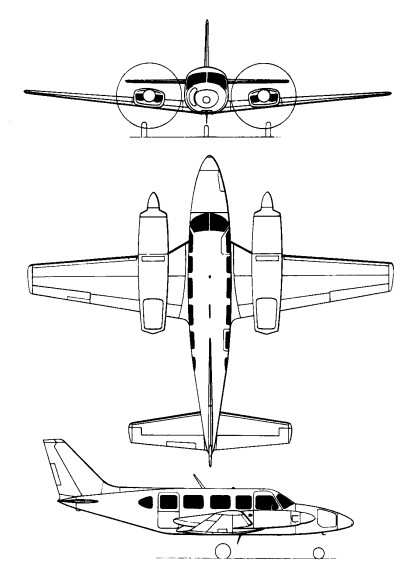
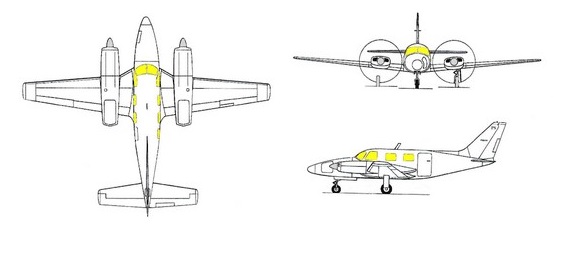
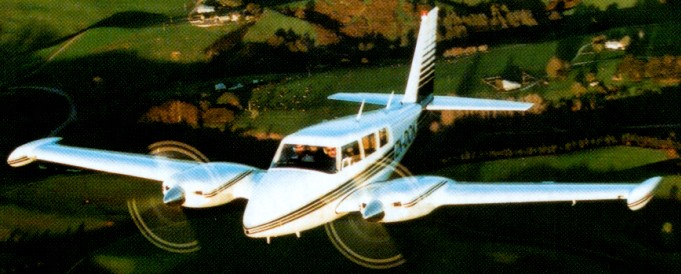
The Twin Comanche was a derivative of the single engine Comanche and was introduced in 1963 as a replacement for the Apache H. Little was done to the original Comanche fuselage when it was adapted for use in the Twin Comanche in order to simplify tooling and assembly operations. A cantilver low-wing monoplane with retractable tricycle landing gear and powered by two 160 hp / 119kW Avco Lycoming IO-320-B engines.
First flown in 7 November 1962, then production form flew on 3 May 1963, the PA-30 was superseded in 1965 by an improved four/six-seat PA-30B-160 Twin Comanche, and made available also at the same time was the PA-30B Turbo Twin Comanche with Rayjay-turbocharged IO-320-C1A engines.
In total 2,001 were built.
Delivering the first Twin Comanche to Europe in September 1963, Max Conrad spanned the 2100 miles from Gander to Shannon in 9 hr 21 min averaging 206 mph, at 50% power, burning 11 USG/hr. The co-pilot was Winston S. Churchill, 22 year old grandson of Sir Winston Churchill.
The PA-30 was offered in four models: Standard, Custom, Sportsman, and Turbo. The latter differed in engine power, and the rest contained different interior appointments, electronics, and instrumentation.
Both were replaced in 1970 by generally similar versions which introduced a powerplant with counter-rotating propellers. Designated PA-39 Twin Comanche C/R and PA-39 Turbo Twin Comanche C/R, manufacture of these two models ended in 1972, when total production of all versions amounted to 2,142. Piper announced the end of PA-30 production in 1970 and introduced a new PA-39 line.
Certification was under FAA A1EA.
One of these aircraft was used by Max Conrad to establish a new world class distance record when he flew non-stop from Cape Town, South Africa, to St Petersburg, Florida, during 24-26 December 1964. The distance of 12,678.83km remained a record in its class in 1993.
Its responsive handling earned it an airworthiness directive that raised Vmc from 70 to 78 knots.
The Super Twin Comanche was “Kind of a nice little bomb,” Pug muses, recalling the time he put two 300 hp Lycomings on the little Twin Comanche, almost doubling its horsepower. Even Piper, however, seriously questioned whether an airframe originally developed to hold a single four cylinder, 180 hp engine was quite ready for 12 jugs and 600 horses.
Piper PA-30 1964 Twin Comanche
Engine: Lycoming IO-320-B1A, 160 hp
TBO: 2000 hr
Fuel type: 100LL
Propeller: Hartzell two-blade CS
Landing gear type: Tri/Retr.
Max ramp weight: 3600 lb
Max gross weight: 3600 lb
Max takeoff weight: 3600 lb
Empty weight: 2160 lb
Max landing weight: 3600 lb
Useful load, std: 1390 lb
Payload, full std. fuel: 900 lb
Usable fuel, std: 86 USgal
Wingspan: 36 ft. 0 in
Overall length: 25 ft. 2 in
Height: 8 ft. 3 in
Wing area:178 sq. ft
Wing loading: 19.56 lbs./sq. ft
Power loading: 11.25 lbs./hp
Wheel base: 7 ft. 4 in
Wheel track: 9 ft. 10 in
Wheel size, mains: 6.00 x 6
Wheel size, nose: 6.00 x 6
Seating capacity: 4
Cabin doors: 1
Cabin width: 44 in
Cabin height: 46 in
Baggage capacity: 200-250 lb
Cruise speed 75% power @ 8,000 ft: 168
Cruise speed 65% power @ 12,000 ft: 161 kt
Cruise speed 55% power @ 14,000 ft: 148 kt
Max range (w/ res) 75% power @ 8,000 ft.: 823 nm
Max range (w/ res) 65% power @ 12,000 ft.: 890 nm
Max range (w/ res) 55% power @ 14,000 ft.: 970 nm
Fuel consumption 75% power: 17.2 USgph
Fuel consumption 65% power: 15.2 USgph
Fuel consumption 55% power: 13.4 USgph
Stall speed (gear, flaps down, power off): 66 kt
Stall speed (gear, flaps down, power on): 60 kt
Best rate of climb: 1460 fpm
Service ceiling: 18,600 ft
Takeoff ground roll: 950 ft
Takeoff over 50-ft. obstacle: 1530 ft
Landing ground roll: 1215 ft
Landing over 50-ft. obstacle: 1875 ft
Service ceiling: 18,600 ft
Single-engine service ceiling: 6600 ft
Takeoff ground roll: 950 ft
Takeoff over 50-ft. obstacle: 1570 ft
Landing ground roll: 700 ft
Landing over 50-ft. obstacle: 1875 ft
PA-30B Twin Comanche B
1965
Engines: 2 x160hp Lycoming IO-320-B
Wingspan: 36’0″
Length: 25’2″
Useful load: 1440 lb
Max speed: 205 mph
Cruise: 194 mph
Stall: 65 mph
Range: 948-1200 mi
Seats: 5
PA-30C Twin Comanche C
1968
Engines: 2 x 160hp TSIO-320-C1A
1966 PA-30B Turbo Twin Comanche
Engine: Lycoming IO-320-CIA, 160 hp
TBO: 1800 hr
Propeller: Const. spd.
Landing gear: Tri/Retr.
Gross weight: 3725 lb
Empty weight, std: 2408 lb
Useful load, std: 1317 lb
Fuel: 120 USgal
Wingspan: 36 ft
Overall length: 25 ft. 2 in
Height: 8 ft. 2 in
Wing area: 178 sq. ft
Seating capacity: 4
Cabin width: 44 in
Cabin height: 46 in
Baggage capacity: 250 lb
Cruise speed 75% power: 194 kt
Cruise speed 65% power: 179 kt
Max range (w/ res) 75% power: 812 nm
Max range (w/ res) 65% power: 948 nm
Fuel consumption 75% power: 17.2 USG
Fuel consumption 65% power: 14.9 USG
Stall speed (gear, flaps down): 60 kt
Best rate of climb: 1460 fpm
Service ceiling: 30,000 ft
Takeoff ground roll: 950 ft
Landing ground roll: 1700 ft
1969 Piper Twin Comanche
Engine: Lycoming IO-320-B1A, 160 hp @2700 rpm
TBO: 2000 hr
Fuel type: 100/100LL
Propeller: CS
Landing gear: Tri/Retr.
Max ramp weight: 3600 lb
Gross weight: 3600 lb
Landing weight: 3600 lb
Empty weight, std: 2210 lb
Useful load, std: 1390 lb
Payload, full std. fuel: 850 lb
Usable fuel: 90 USG
Optional fuel – std. (tip tanks): 120 USG
Oil capacity: 8 qt
Wingspan: 36 ft
Overall length: 25 ft. 2 in
Height: 8 ft. 3 in
Wing area: 178 sq. ft
Wing loading: 20.2 lbs./sq. ft
Power loading: 11.3 lbs./hp
Wheel base: 7 ft. 3 in
Wheel track: 9 ft. 10 in
Wheel size: 6.00 x 6
Seating capacity: 4-6
Cabin doors: 1
Cabin width: 44 in
Cabin height: 46 in
Baggage capacity: 250 lb
Cruise speed 75% power @ 8,000 ft: 169 kt
Cruise speed 65% power @ 12,000 ft: 162 kt
Cruise speed 55% power @ 10,000 ft: 144 kt
Max range (w/100 nm reserve) 75% power: 724 nm
Max range (w/100 nm reserve) 65% power: 791 nm
Fuel consumption (@ .42 lbs./hp/hr. sfc) 75% power: 16.8 USgph
Fuel consumption (@ .42 lbs./hp/hr. sfc) 65% power: 14.6 USgph
Fuel consumption (@ .42 lbs./hp/hr. sfc) 55% power: 12.3 Usgph
Vs: 66 kt
Vso: 60 kt
Best rate of climb (SL): 1460 fpm
PA-30C Turbo Twin Comanche C
Engines: 2 x IO-320-C1A
Miller Twin Commanche 200 / Piper Twin Commanche
Engines: 2 x Lycoming IO-360-C1C, 200 hp
Seats: 6
Wing loading: 20.2 lb/sq.ft
Pwr loading: 9.5 lb/hp
Max TO wt: 3780 lb
Empty wt: 2366 lb
Equipped useful load: 1315 lb
Payload max fuel: 403 lb
Range max fuel 75% cruise: 1353 nm/7.1 hr
Range max fuel / 55% cruise: 1455 nm/ 8 hr
Service ceiling: 21,000 ft
Max cruise: 191 kt
55% cruise: 183 kt
Vmc: 72 kt
Stall: 60-66 kt
1.3 Vso: 78 kt
ROC: 1900 fpm
SE ROC: 500 fpm @ 91 kt
SE ceiling: 11,500 ft
Min field length: 1875 ft
Fuel cap: 504/912 lb
Miller Turbo Twin Commanche 200
Engines: 2 x Lycoming IO-360-C1F, 200 hp
Seats: 6
Wing loading: 20.2 lb/sq.ft
Pwr loading: 9.5 lb/hp
Max TO wt: 3780 lb
Empty wt: 2406 lb
Equipped useful load: 1275 lb
Payload max fuel: 363 lb
Range max fuel/ 75% cruise: 1332 nm/5.9 hr
Range max fuel / 55% cruise: 1587 nm/ 7.5 hr
Service ceiling: 30,000 ft. 75% cruise: 226 kt
55% cruise: 213 kt
Vmc: 72 kt
Stall: 60-66 kt
1.3 Vso: 78 kt
ROC: 1900 fpm
SE ROC: 500 fpm @ 105 kt
SE ceiling: 22,000 ft
Min field length: 1875 ft
Fuel cap: 504/912 lb
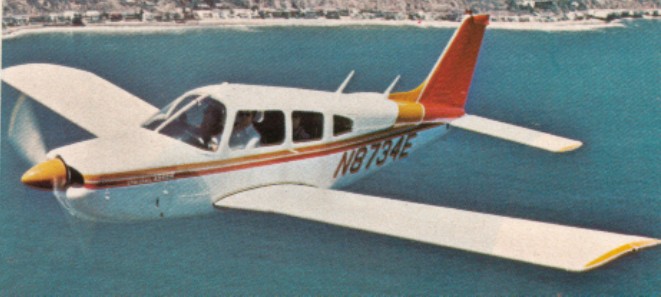
While the Arrow might look like a Cherokee and the design is almost identical, it does differ in being a retractable undercarriage four-seater powered by a 180 or 200 hp engine. First flown on 1 February 1967, sales began slowly in 1967, gaining impetus when the 200 hp version was introduced two years later. In 1969 Piper made available an optional PA-28-200R Cherokee Arrow with a 149kW IO-360-C1C engine.
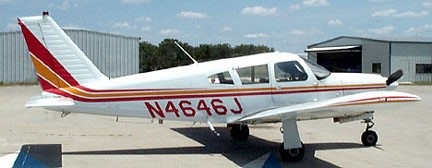
The 1976 Arrow II evolved from the original 180 hp model built and introduced in 1967 with a useful load of 1120 lbs. 20 more hp were added in 1969, upping the useful load to 1119 lbs. and the service ceiling by 1700 ft. to a maximum of 17,000. Improvements came year by year with significant changes in 1980 (longer fuselage and wider door), 1977 the new wing with tapered outer sections (as the Arrow II) and in 1979 a T-Tail. 2,850 were built.
Although Piper retained the Lycoming IO 360 for the normally aspirated Arrow III (491 built), they redesigned the cowling of the Turbo Arrow III (793 built) to accommodate the Continental TSIO-360 F, a slightly modified version of the Seneca II’s six cylinder engine. The turbocharged Continental brings considerable added performance to the Arrow. In addition to producing full power to 12,000 feet and 75 percent to the aircraft’s maximum approved operating altitude of 20,000 feet, the engine is rated at 200 hp with its exhaust system in place. This additional power allowed Piper to up the Turbo Arrow III’s gross to 2,900 pounds compared with 2,750 pounds for the normally aspirated Arrow III and 2,650 pounds for the Arrow II.
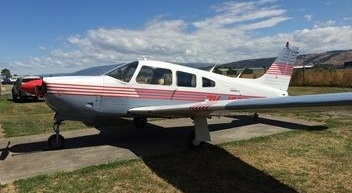
The turbocharged Continental gives the Turbo Arrow III a 10 to 25 knot true airspeed advantage over the normally aspirated Arrow III when both aircraft are operating at their best altitudes at roughly equivalent power settings. Producing approximately 75 percent power at 10,000 feet, the Turbo Arrow will cruise at 154 knots; 143 knots is the best the straight Arrow III can do at 75 percent. Top speed for the turbocharged Piper is 178 knots at 14,000 feet, while for the Arrow III, it’s 152 knots at sea level.
The Turbo Arrow III’s semi tapered wing improves the aircraft’s takeoff, climb and altitude performance. Although the new wing has the same surface area as the wing on older Arrows (170 square feet), the area of the Arrow III’s new mainplane and the lift it generates are distributed over a longer span. Also, more lift is produced along the main portion of the wing, where the adverse effect of the wingtip vortices is not felt. The geometric difference between the old and new Arrow wings is expressed in their aspect ratios: 6.02 for the old Arrow and 7.21 for the Arrow III. The positive effect of the Turbo Arrow III’s longer span and better lift distribution is about 20 percent less induced drag.
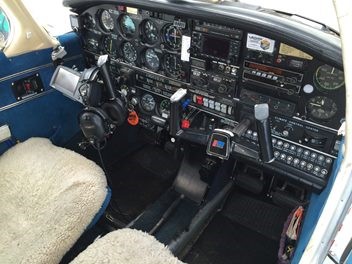
The new wing also enhances the Turbo Arrow III’s roll control. The ailerons are long¬er, and the tapered wing responds well to their influence, even though these ailerons are not the nicely balanced Frise type used on the original Warrior wing. In the interest of manufacturing simplicity, and since there was very little deterioration in roll performance, Piper returned to the old simple hinged aileron that they used on the original Cherokee models.
Each of these major developments received a distinctive title such as Arrow IV for the T-tailed version.
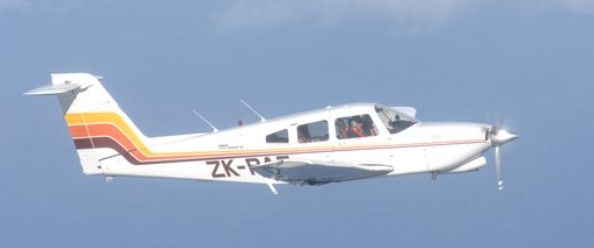
Production continued after nearly 7000 Arrows had been delivered by 1988.
The Piper Arrow project was licensed in the 1970s to be manufactured in Brazil by Brazilian manufacturer Embraer and later years later by its subsidiary Neiva and the project was renamed Corisco by Embraer in Brazil. At that time there was a strong interest of the Brazilian Government to stimulate the Brazilian aeronautical industry and executive air transport in Brazil and other Piper projects were also licensed for manufacturing in Brazil.
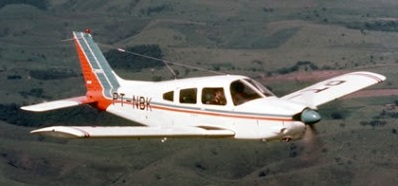
The Embraer Corisco, in all its versions, managed to establish itself for about two decades in the Brazilian market, with almost 480 units sold.
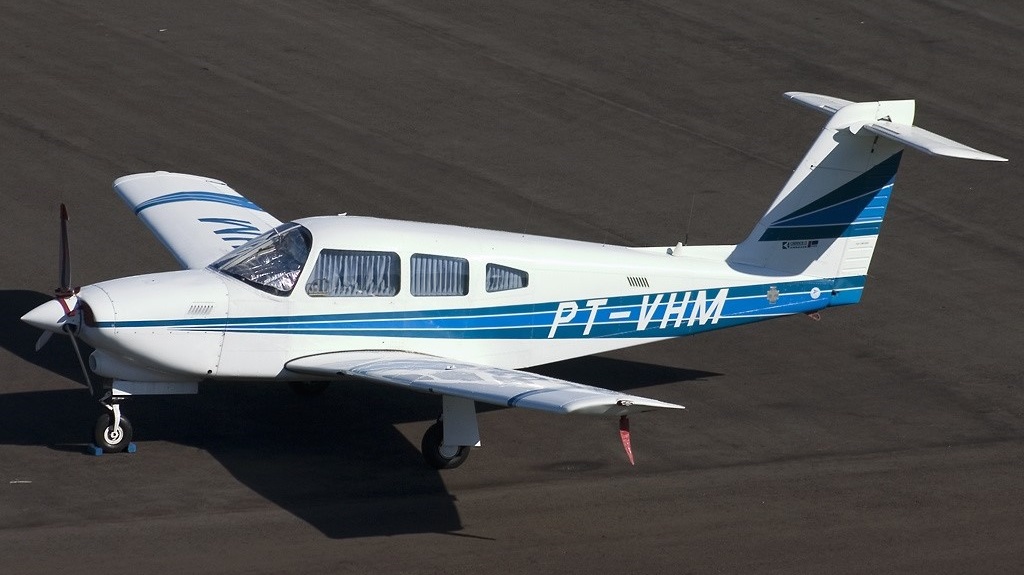
An improved version of the Embraer Corisco, manufactured from the 1980s by Embraer and Neiva as EMBRAER EMB-711 ST Corisco Turbo was manufactured in Brazil. The Embraer Corisco Turbo is a modernized version of the modest Embraer Corisco, with a few touches of sophistication and refinement, including turbocharger, variable pitch propeller, retractable landing gear, improved sound insulation, leather seats, among other items.
Chincul SACAIFI manufactured aircraft under license from Piper Aircraft Corporation. The company was a wholly owned subsidiary of “La Macarena S.A.”, Piper’s Argentine agent. Production included 960 PA-28 Cherokee.

Chincul-built PA-28 Arrow
PA28-180S Arrow
Engine: 180hp Lycoming O-360-A3A
Length: 23’6
Speed: 152 mph
Range: 845 mi
PA28-180 Cherokee Arrow I
Engine: 180hp Lycoming IO-360-B1E
Useful load: 1120 lb
Max speed: 170 mph
Cruise: 162 mph
Range: 995 mi
Ceiling: 15,000′
PA-28R-200 Arrow
Engine: Lycoming IO-360-C1C6, 200 hp
TBO: 2000 hr
Fuel type: 100/100LL
Propeller: McCauley CS
Landing gear type: Tri/Retr.
Gross weight: 2750 lb
Landing weight: 2750 lb
Empty weight, std: 1790 lb
Useful load, std: 960 lb
Payload, full std. fuel: 572 lb
Usable fuel: 72 USgal
Oil capacity: 8 qt
Wingspan: 35 ft. 5 in
Overall length: 24 ft. 8 in
Height: 7 ft. 10 in
Wing area: 170 sq. ft
Wing loading: 16.18 lbs./sq. ft
Power loading: 13.75 lbs./hp
Wheel base: 7 ft. 10 in
Wheel track: 10 ft. 6 in
Wheel size: 6.00 x 6
Seating capacity: 4
Cabin doors: 1
Cabin width: 41 in
Cabin height: 45 in
Baggage capacity: 200 lb
Cruise speed 75% power @ 6,000 ft.: 137 kt
Max range (w/ res) 55% power @ 9,000 ft: 880 nm
Fuel consumption (.42 lbs./hp/hr. @ sfc) 75% power: 10.5 USgph
Stall speed (flaps up): 60 kt
Stall speed (flaps down): 55 kt
Best rate of climb (SL): 831 fpm
Service ceiling: 16,200 ft
Takeoff over 50-ft. obstacle: 1600 ft
Landing over 50-ft. obstacle: 1520 ft
PA28R-200 Arrow II
Engine: Lycoming IO-360-C1C, 200 hp
Wingspan: 32 ft 0 in / 9.75 m
Length: 24 ft 7.25 in / 7.50 m
Empty weight: 1517 lb / 688 kg
MTOW: 2650 lb / 1202 kg
Useful load: 1133 lb
Equipped payload (750 miles fuel, 75 % power): 730 lb
Cruise (75% pwr): 165 mph / 143 kt / 266 kph
Stall speed (Vso): 64 mph
ROC: 900 fpm / 274 m/min
Service ceiling: 15,000 ft / 4575 m
Range (max fuel, 75% pwr): 740 sm / 642 nm / 1191 km
Seats: 4
Baggage capacity: 200 lb / 90.7 kg
Cabin width (elbow to elbow): 42.0in
PA28R-201 Arrow III
Engine: Lycoming IO 360 C1C6, 200 hp
TBO: 1,600 hr
Prop: constant speed, two blade, 74 in dia
Length: 27 ft
Height: 8 ft 3 in
Wingspan: 35 ft 5 in
Wing area: 170 sq.ft
Max ramp wt: 2,750 lb
Max takeoff wt: 2,750 lb
Std empty wt: 1,627 lb
Max useful load: 1,123 lb
Max landing wt: 2,750 lb
Wing loading: 16.2 lb/sq.ft
Power loading: 13.7 lb/hp
Max usable fuel: 72 USG/432 lb
Max ROC @ SL: 831 fpm
Max ROC @ 8,000 ft: 480 fpm
Max operating alt: 17,000 ft
Max speed: 152 kt
Max cruise, 75 % power (2,400 rpm) at 6,500 ft: 143 kt
Cruise, 65 % pwr at 8,000 ft: 131 kt
Fuel flow 65 % pwr: 9.2 USG/hr
Endurance at 65 % pwr, no res: 7.5 hr
Econ cruise, 55% power at 13,000 ft: 122 kt
Duration at max cruise: 6.7 hr
Duration at econ cruise: 8.5 hr
Stalling speed, clean: 60 kt
Stalling speed, flaps dn: 55 kt
Turbulent air penetration speed: 121 kt.
PA28R-201 Turbo Arrow III
Engine: Continental TSIO 360 E, 200 hp
TBO: 1,400 hr
Propeller: Hartzell Constant speed, 76 in. diameter
Length: 25 ft
Height: 7 ft. 10 in
Wingspan: 35 ft. 5 in
Airfoil: NACA 652415
Aspect ratio: 7.21
Wing area: 170 sq.ft
Wing loading: 17.1 lb/sq.ft
Power loading: 14.5 lb/hp
Seats: 4
Gross weight: 2,900 lbs
Empty weight: 1,910 lb
Useful load: 990 lb
Payload with full fuel: 528 lb
Fuel capacity: 77 USG/462 lbs
Baggage area: 24 cu.ft
Baggage capacity: 200 lb
Minimum runway requirement: 1,620 ft
Rate of climb: 940 fpm
Service ceiling: 20,000 ft
Maximum level speed: 178 knots
Maximum cruise (75 % @ 18,800 ft.): 172 knots
Economy cruise (55 % @ 20,000 ft.): 154 knots
Range @. maximum cruise (45 min res): 675 nm
Range @ economy cruise (45 min res): 860 nm
Duration @ maximum cruise (no res): 6.5 hr
Duration @.economy cruise (no res): 8.3 hr
Maneuvering speed: 121 knots
Stall speed (clean): 63 knots
Stall speed (gear, flaps down): 58 knots
Engine: Continental TSIO 360 F, 200 hp
TBO: 1,400 hr
Prop: two blade, constant speed, 76 inch diameter
Length: 24 ft. 8in
Height: 7 ft. 10 in
Wingspan: 35 ft. 5 in
Wing area: 170 sq.ft
Wing loading: 17 lb/sq.ft
Power loading: 14.5 lb/hp
Seats: 4
Empty weight: 1,815 lb
Useful load: 1,085 lb
Payload with full fuel: 653 lb
Gross weight: 2,900 lb
Usable fuel capacity: 72 USG/432 lb
Maximum rate of climb: 940 fpm
Service ceiling: 20,000 ft
Maximum speed: 178 kt
Max cruise, 75% power (2,575 rpm) at 19,000 ft: 172 kt
Econ cruise, 55 % power at 20,000 ft: 154 kt
Duration at max cruise: 6.2 hr
Duration at econ cruise: 8.1 hr
Stalling speed, clean: 63 kt
Stalling speed, full flaps: 57 kt
Piper PA-28RT-201T Turbo Arrow
Engine: 1 x Teledyne Continental TSIO-360-FB, 149kW
TBO: 1800 hours / 6 Years
Propeller: HARTZELL PHC-C3YF-1RF
Max take-off weight: 1315 kg / 2899 lb
Empty weight: 767 kg / 1691 lb
Wingspan: 10.8 m / 35 ft 5 in
Length: 8.33 m / 27 ft 4 in
Height: 2.52 m / 8 ft 3 in
Wing area: 15.79 sq.m / 169.96 sq ft
Max. speed: 330 km/h / 205 mph
Ceiling: 6095 m / 20000 ft
Range: 1665 km / 1035 miles
Piper 1978 PA-28R-201T Turbo Arrow III
Engine: Continental TSIO-360F, 200 hp
TBO: 1400 hr
Propeller: Const. spd.
Landing: Tri/Retr.
Gross weight: 2900 lb
Empty weight, std.: 1663 lb
Useful load, std: 1237 lb
Fuel: 72 Usgal
Wingspan: 35 ft
Overall length: 25 ft
Height: 8 ft
Wing area: 170 sq. ft
Seating capacity: 4
Cabin width: 41.5 in
Cabin height: 49 in
Baggage capacity: 200 lb
Cruise speed 75% power: 172kt
Cruise speed 65% power: 167 kt
Max range (w/ res) 75% power: 760 nm
Max range (w/ res) 65% power: 830 nm
Fuel consumption 75% power: 12 USgph
Fuel consumption 65% power: 10.8 USgph
Stall speed (gear, flaps down): 57.5 kt
Best rate of climb: 940 fpm
Service ceiling: 20,000 ft
Takeoff ground roll: 1110 ft
Landing ground roll: 645 ft
PA28R-201 Arrow IV
Engine: 1 x Lycoming IO-360-C1C6, 200 hp
TBO: 1600 hr
Prop: Hartzell 2 blade, constant speed 76 in
Seats: 4
Length: 27 ft
Height: 8.3 ft
Wingspan: 35.4 ft
Wing area: 170 sq.ft
Wing aspect ratio: 7.2
Max ramp wt: 2750 lb
Max take off wt: 2750 lb
Standard empty wt: 1637 lb
Max useful load: 1113 lb
Max landing wt: 2750 lb
Wing loading: 16.2 lbs/sq.ft
Power loading: 13.8 lbs/hp
Max useable fuel: 432 lb
Climb rate: 831 fpm @ 87 kt
Climb gradient: 573 ft/nm
Rate of climb @ 8000 ft: 440 fpm
Service ceiling; 17,000 ft
Max speed: 149 kts
Cruise @ 65% power @ 8,000ft: 131 kt
Fuel flow @ 65% power @ 8,000ft: 58 pph
Endurance @ 65% power @ 8,000ft: 7.2 hr
Stalling speed clean: 58 kt
Stall speed flaps/gear down: 53 kt
Turbulent air penetration speed: 121 kt
Retractable undercarriage
2005 New Piper Arrow IV
Base price: $292,400
Engine: Lycoming IO-360-C1C6, 200 hp
TBO: 2000 hr
Fuel type: 100/100LL
Propeller type: McCauley CS
Landing gear: Tri./Retr
Max ramp weight: 2758 lb
Gross weight: 2750 lb
Landing weight: 2750 lb
Empty weight, std: 1787 lb
Useful load, std: 971 lb
Usable fuel, std: 72 USG
Payload, full std. fuel: 539 lb
Oil capacity: 8 qt
Wingspan: 35 ft. 5 in
Overall length: 24 ft. 8 in
Height: 7 ft. 10 in
Wing area: 170 sq. ft
Wing loading: 16.2 lbs./sq.ft
Power loading: 13.8 lbs./hp
Wheel size: 6.00 x 6
Seating capacity: 4
Cabin doors: 1
Cabin width: 41 in
Cabin height: 45 in
Cruise speed, 75%: 137 kt
Fuel consumption, 75%: 10.6 USgph
Vso: 53 kt
Max range, 55%: 880 nm
Best rate of climb, SL: 831 fpm
Service ceiling: 16,200 ft
Takeoff over 50-ft obstacle: 1600 ft
Landing over 50-ft. obstacle: 1520 ft
PA28RT-201T Turbo Arrow IV
First built: 1978
Engine: 1 x Continental TSIO-360-FB, 200 hp
TBO: 1800 hrs
Fuel; 100 Octane.
Prop: Hartzell 2 blade, constant speed 76 in
Seats: 4
Length: 27.3 ft
Height: 8.3 ft
Wingspan: 35.4 ft
Wing area: 170 sq.ft
Wing aspect ratio: 7.2
Max ramp wt: 2912 lb
Max take off wt: 2900 lb
Standard empty wt: 1896 lb
Max useful load: 1004 lb
Payload (Full std Fuel); 497 lb
Baggage Capacity; 200 lbs / 24 cu.ft.
Max landing wt: 2900 lb
Wing loading: 17 lbs/sq.ft
Power loading: 14.5 lbs/hp
Fuel Capacity (std); 77 US gal
Usable Fuel; 72 US gals. / 432 lb
Climb rate: 940 fpm @ 97 kt
Climb gradient: 581 ft/nm
Rate of climb @ 8000 ft: 850 fpm
Certificated ceiling; 20,000 ft
Max speed: 178 kt
Cruise @ 65% power @ 8,000ft: 140 kts
Cruise @ 65% power @ 18,000ft: 161 kts
Cruise Best Economy Power 75% 19,000 ft: 168 kts
Cruise Best Economy Power 65% 20,000 ft: 164 kts
Cruise Best Economy Power 55% 20,000 ft: 152 kts
Max Range 55% pwr (with res, best economy); 780 nm
Max Range 65% pwr (with res, best economy); 830 nm
Max Range 55% pwr (with res, best economy); 860 nm
Fuel Consumption 75%: 14.0 US Gal/hr
Fuel Consumption 65%: 12.7 US Gal/hr
Fuel Consumption 55%: 11.0 US Gal/hr
Fuel flow @ 65% power @ 18,000ft: 76 pph
Endurance @ 65% power @ 18,000ft: 5.5 hr
Stalling speed clean: 66 kts
Stall speed flaps/gear down: 61 kt
Turbulent air penetration speed: 121 kt
Retractable undercarriage
Wheel base; 7 ft 10 in
Wheel Track; 10 ft 6 in
Wheel Size; 6.00 x 6 in
Cabin Doors; 1
Cabin Width; 42 in
Cabin Height; 46 in
Take-off Ground Roll; 1110 ft
Take-off Over 50ft; 1620 ft
Landing Ground Roll; 645 ft
Landing over 50 ft; 1555 ft


