Pliska 1912 Biplane

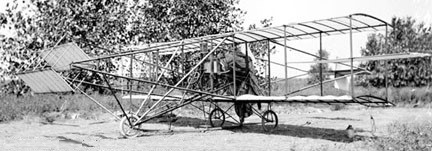
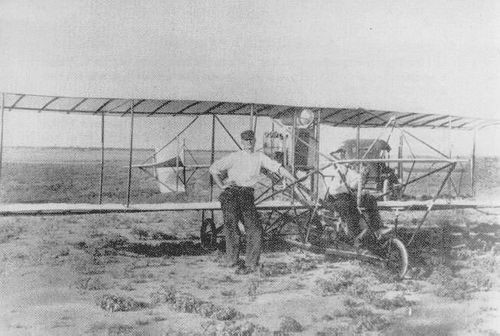
A Curtiss-pusher influenced design built by John V. Pliska and Gray Coggin of Midland, Texas; famed as being the first aeroplane to be built and flown in that state. In the photo, Pliska is on the left: his partner in the aviation project, Coggin, is in the pilot’s seat. Pliska was claimed to have been inspired by a Wright Flyer II (piloted by Robert G. Fowler) that landed in the area on November 19, 1911, and that he and Coggin carefully studied. It flew only once, but not very well, so was stored until rediscovery in 1962 and donation to a museum at Midland-Odessa airport and today is on exhibit at the Midland International Airport.

Engine: 50hp converted Roberts marine
Seats: 1

Pliable Moose Delta Wings Thermal Shark

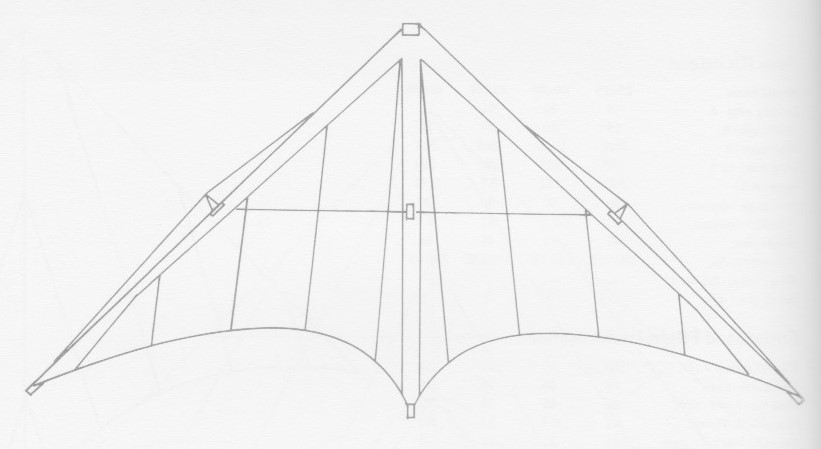
The Thermal Shark is a high performance medium aspect ratio Rogallo. Tip drag has been reduced by the mildly cylindrical leading edge and trailing edge cut.

The knucle-saving control bar has a special shape. Side spar camber, reflex and dihedral can be adjusted to suit flying conditions. The is an adjustable pilot point for quick centre of gravity changes.

The air frame is made fro 1 5/8in and 1 ¾ x .058 aircraft grade aluminium tubing. Tubing is double and triple reinforced at all stress points, hard-wood doweled and solid aluminium bushed. All exposed tubing members are black anodised.

All bolts, nut and turnbuckles are aircraft grade 8 through 11 depending on application. Wrap around nose plat, tangs and shackles are polished stainless steel.

Rigging cable is 3/32in 7 x 7 stainless steel, with lower rigging plastic coated.

The sail is 4.5oz stabilised dacron, double lock stitched. A double reflex airfoil camber is sewn in. The pilot support was either seated or prone harness.

Thermal Shark I
Leading edge: 19.3 ft
Keel length: 15.8 ft
Wing span: 28 ft
Wing area: 210 sq,ft
Aspect ratio: 3.85
Nose angle: 90˚
Sail billow: 3.5˚
Weight: 45 lb
Pilot weight: 125-210 lb
Takeoff speed: 17 mph
Stall speed: 14 mph
Max speed: 45 mph
Best glide ratio (L/D): 6.25-1
Best L/D speed: 26 mph
Min sink: 225 fpm

Thermal Shark II
Leading edge: 21.3 ft
Keel length: 15.8 ft
Wing span: 31 ft
Wing area: 195 sq,ft
Aspect ratio: 5.1
Nose angle: 92˚
Sail billow: 3.35˚
Weight: 47 lb
Pilot weight: 135-210 lb
Takeoff speed: 14 mph
Stall speed: 12 mph
Max speed: 40 mph
Best glide ratio (L/D): 7.25-1
Best L/D speed: 19 mph
Min sink: 180 fpm
Pletnyov Zhuravlic

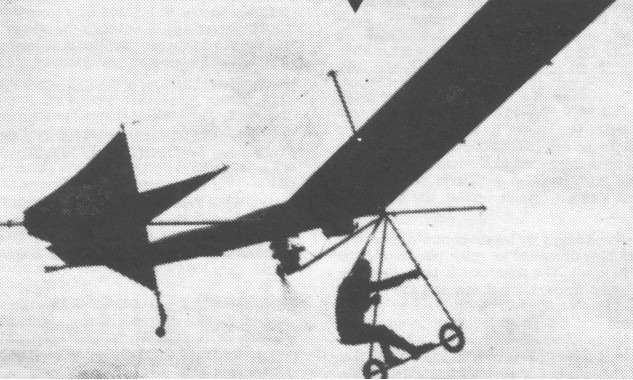
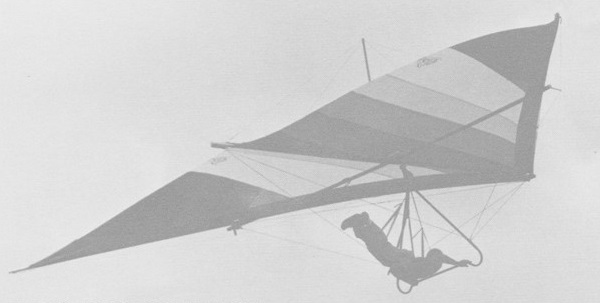
A single seat single engine, high wing mono¬plane with hybrid control circa 1983. Wing has unswept leading and trailing edges, and constant chord; cruciform tail. Pitch control by weight shift; yaw control by fully flying rudder; no separate roll control; control inputs through weight shift for pitch/yaw/roll. Wing braced from above by kingpost and cables, from below by cables; wing profile single ¬surface. Undercarriage has three wheels in tail dragger formation. Metal tube framework, without pod. Engine mounted below wing driving pusher propeller.

It appears to have a rudder to assist the weight-shift in yaw, a combination which is sufficient to class the Zhuravlic as a hybrid, but it is not clear whether a similar arrangement is used for pitch control or whether the pilot relies solely on weight shift for up/down control.

No details are given of the power unit, except that it is of 350 cc and is coupled to a two blade propeller.

Wing span 31.5 ft, 9.60 m
Engine: 350 cc
Empty weight 121 lb, 55 kg
Max level speed 37.5 mph, 60 kph
Best glide ratio with power off: 30/1
Take off distance 66ft, 20m
Landing distance 33ft, 10m
Service ceding 6600ft, 2000m

Player 1941 monoplane

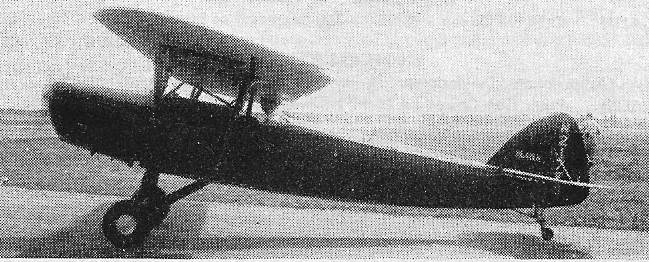
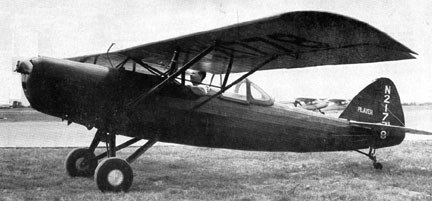
The 1941-built Player monoplane N21778 was fabric covered geodetic construction. Design based on Long Longster and Corben Super Ace plans published in Mechanix Illustrated. Wing modified from a Long Longster, tail from a Curtiss-Wright Junior. Fuselage was first of Player’s geodetic incorporations.

Player Sport N21778

Canopy cockpit. Later repowered with 65hp Continental A-65. Still flying in the 1960s

c.1936
Engine: 45hp Ford A
Seats: 1

Engines: Continental A-65, 65 hp
Span: 30 ft 0 in
Length: 10 ft 0 in
AUW: 740 lb
Max speed: 95 mph
Cruise: 87 mph

Player

William Earl Player & Harry Thalman, Salt Lake City UT.

1940: Plxweve Aircraft Co div of Aero Industries
(pres: John Greenleaf)
620 W Olympic Blvd
Los Angeles CA.
USA

1941:
(pres: Ralph Hemphill)
5245 W San Fernando Rd,
Los Angeles
USA

Involved in the Greenleaf CT-6A

Platzer P.5 Kiebitz

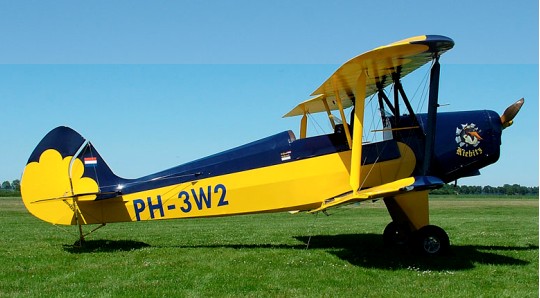
Based on the 1927 Focke-Wulf S-24 “Kiebitz”, the modern Kiebitz was designed by Michael Platzer and has been available as an UL-biplane kit since 1984. Almost 300 Kiebitz biplanes had been built by homebuilders throughout the world.

Various engine options have flown, including Rotax 2 and 4 stroke, Limbach 2000, Sauer 2100, Nissan MA12, and English built 100 hp Mid-West rotary.

Engine: Nissan 12 P, 50 hp
Wing span: 7.6 m
Wing area: 18.3 sq.m
MAUW: 400 kg
Empty weight: 200 kg
Fuel capacity: 50 lt
Max speed: 140 kph
Cruise speed: 125 kph
Minimum speed: 50 kph
Climb rate: 3 m/s
Certification: Vz
Seats: 2
Fuel consumption: 9.5 lt/hr
Plan price (1998): 1500 DM

Engine: Nissan MA12
Seats: 2 Tandem
Wing Span: 7,6 m
Wing Area: 18,3 sq.m
Length: 6,9 m
VNE: 77 kts
Cruise: 60 kts
Stall speed: 38 kts
Empty Weight: 220 kg / 485 lbs
Max. take-off weight: 472 kg