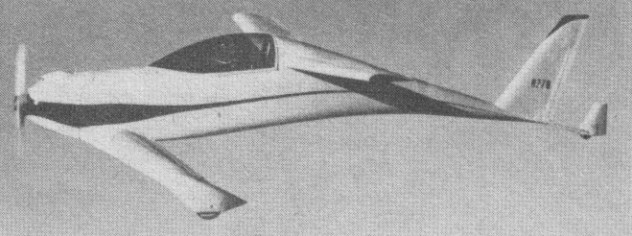
Quickie Aircraft Quickie

In 1974, Tom Jewett and Gene Sheehan began designing an airplane that would provide “more flying enjoyment for less money” than other homebuilt aircraft designs. Burt Rutan assisted Jewett and Sheehan in the design work and the first Quickie was finished, tested in flight, and ready for a public introduction by April 1978.

Developed around a heavy but durable modified industrial en¬gine, the prototype was designed and built in less than three months and returns incredible performance figures for its minimal power: 201 kph (125 mph) cruise speed and 145 km (90 miles) on a single gallon of fuel. It has no tail surface, just a pair of sharply staggered wings with wheels set into the tips of the lower wing.

The original aircraft was awarded “Outstanding New Design” by the Experimental Aircraft Association in 1978. The aircraft is technically a canard design, however the nearly equal size of each wing makes it appear to be a biplane.
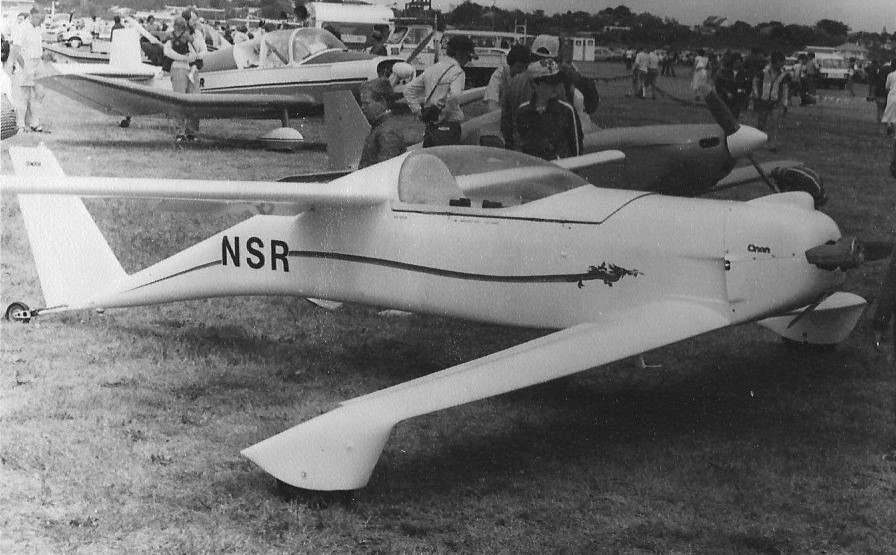
Rutan Quickie ZK-NSR

This revolutionary design incorporated state of the art materials, and proved to be highly efficient and forgiving. Sold in kit form for production by amateurs in 400 hours, the full kit (in 1977) cost only $6,395 (Cdn), about one-third the cost of a basic 2-seat factory production aircraft at the time. The Onan engine is a modified two cylinder, air-cooled industrial engine.

Basic to the Quickie’s economy is the 16-hp Onan flat, horizontally opposed, four-stroke engine commonly used to power lawn mowers and RV generators, modified to produce 22 hp. The wide canard of the Quickie carries the main landing wheels at each end, and a tiny tailwheel at the rear end is covered with a small rudder. Complete kits include engine, prefabricated cowling, canopy, all machined parts, all welded parts and some of the tools in an effort to limit building time for the inexperienced builder. Construction is from composite materials, and the cockpit is suitable for one pilot up to 210 pounds.

Price 1982: $4,995 (excludes paint and battery). Units delivered to June 1981: 550.
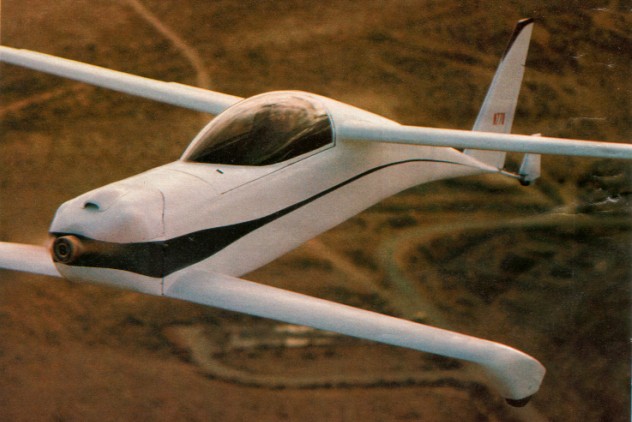
Engine Onan two-cylinder, 22-hp
MTOW: 820 lb
Empty Wt: 240 lb (109 kg)
Fuel cap: 8 USG
Wingspan 16’8”
Length 17 ft 4 in (5.3 m)
Wing area: 55 sq.ft
Height 4 ft 6 in (1.4 m)
Top speed: 140mph
Cruise: 130 mph (210 km/h)
Stall: 52mph
Climb rate 550 fpm
Ceiling: 14,800 ft
Takeoff run: 660 ft
Landing roll: 838 ft
Range 525 miles
Seats: 1
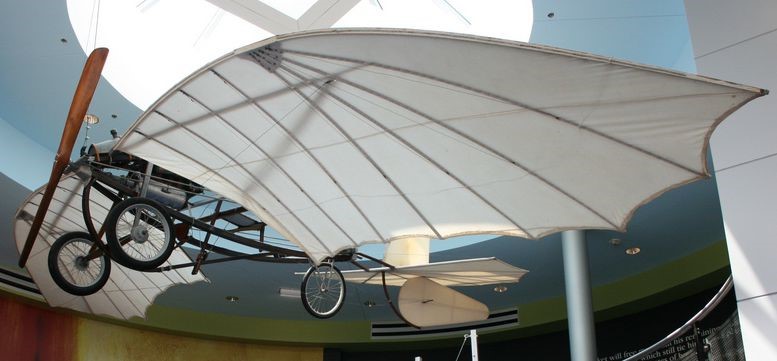
Quick 1908 Monoplane

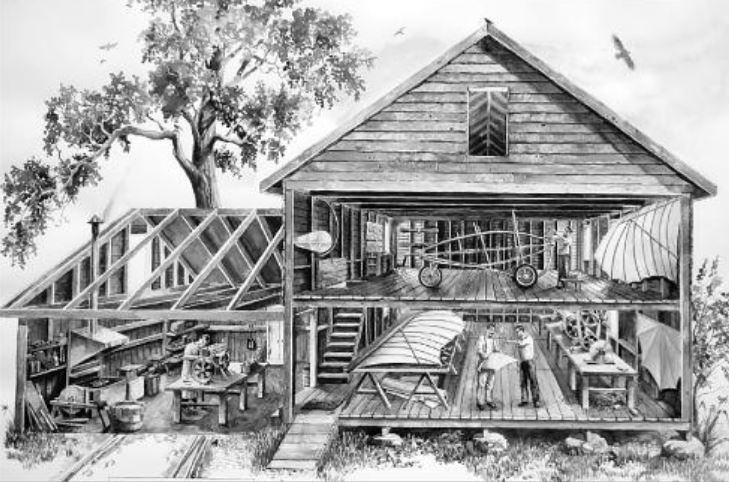
This monoplane was designed and built by William Lafayette Quick and apparently made a single flight in April, 1908 in Hazel Green, Alabama, making it the first aircraft to have flown in that state. The builders’ son, William Massey Quick, was the pilot. When the craft actually took to the air, the pilot leaned forward in order to admire the view below him. That pitched the nose down, and the craft crashed. It ended up being stored in a barn for 54 years. It’s now been restored and is on display at the U.S. Space & Rocket Center in Huntsville.

Quest Aircraft Kodiak / Daher Kodiak

The company was officially launched in May 2001, and by that summer employed a staff of 14. On October 16, 2002, the 27,000 square foot new Quest facility was officially dedicated and the team moved the production work to its current home at the Sandpoint (ID) Municipal Airport. Work began on the prototype aircraft.

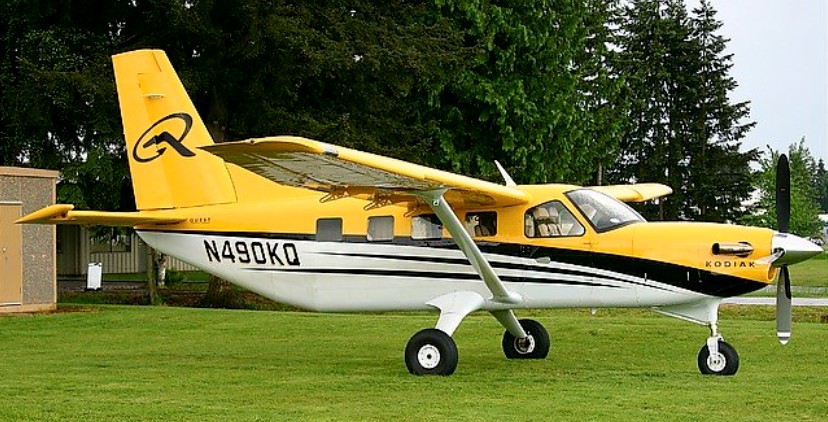
In 2004, two years later to the day, the first flight of the Kodiak (N490KQ) took place. Within three months, the Kodiak had completed its 50th flight. In March 2007 s/n 001, the first fully conforming production aircraft, made its initial flight and joined the Kodiak prototype in the flight test program.

The Kodiak received FAA Type Certification on May 30 2007, and began customer deliveries in December of that year.

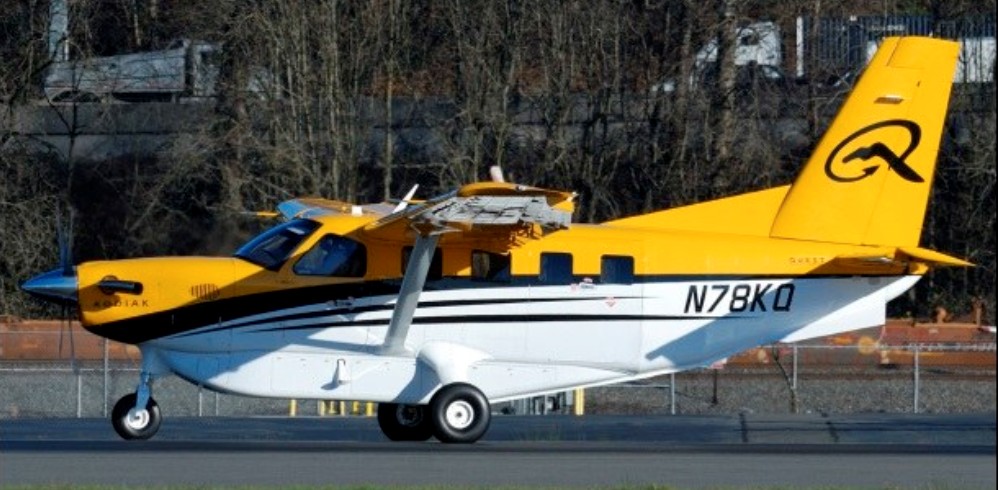
The 10 place Kodiak turboprop can take off in under 1,000 feet at full gross weight and climb at over 1,300 feet per minute. The landing gear and 19 inch propeller clearance allow the Kodiak to handle unimproved airstrips. The discontinuous leading edge technology brings control at slow speeds. At touchdown, the Kodiak only needs 705 feet to bring the full gross weight of 7,305 pounds to a stop–even on rough, bumpy strips.

Powered is by a Pratt and Whitney PT6-34 of 750shp with a 4,000TBO.

A wide range of options are available such as the external cargo compartment, TKS ice protection, Stormscope, Weather Radar, TCAS, and a jump package.

Kodiak is certified under Part 23 of the Federal Aviation Regulations in the Normal Category for day, night, VFR, and IFR flight operations, and certified for flight into known icing when equipped with the optional TKS Ice Protection System.

Kodiaks are in service with charter operators, corporate operators, personal owners, skydiving operations, governments, and humanitarian organizations.

Daher took over Quest Aircraft and the Kodiak in 2019.

Gallery

Engine: P&W PT6A-34, 750 hp Takeoff @ 2200 RPM
Max. Continuous Power: 700 hp
Propeller: 96 in constant speed, feathering, reversible
Tip Clearance: 19 in
Cabin Width: 4’6″
Cabin Height: 4’9″
Cabin Length: 15’10″
Cargo Volume (exc. cockpit): 248 cu ft
Overall Length: 34’2″
Seats: 1-10
Doors: 3
Door Sill Height: 38 in
Cargo Door (LH side): 49.25 x 49.25 in
Cockpit Doors (both sides): 31 x 51 in
Wing Area: 240 sq ft
Span: 45′
Dihedral: 3°
Flap Type: Fowler, single-slotted
Flap Horizontal Span: 20′
Overall Height: 15’3″
Max. Ramp Weight: 7,305 lbs
Max. Takeoff Weight: 7,255 lbs
Base Aircraft Empty Weight: 3,770 lbs
Base Aircraft Useful Load: 3,535 lbs
Fuel Capacity: 320 USgal
Max. Wing Loading: 30.1 lbs/ sq ft
Max. Power Loading: 9.67 lbs/hp
Stall Speed Vs1 (flaps up): 77 kcas
Stall Speed Vs0 (flaps down): 60 kcas
Rate of Climb (max. cont. at SL): 1,371 ft/min
Rate of Climb (10,000 ft): 874 ft/min
Takeoff Ground Roll: 934 ft
Braked Roll (w/o reverse): 705 ft
Certified Ceiling: 25,000 ft
Cruise Performance: 183 ktas / 339 kph
Landing Gear: Fixed, faired leg, no pants
Main Gear: 8.5 x 10 Cleveland, spring steel
Nose Gear: 6.5 x 8 Cleveland, air-oleo, steel
Range w/ 45 min. reserve: (without Cargo Pod):
Max Cruise, at 174 ktas, 12,000 ft, fuel consumption 48 USgph – 1,005 nm / 5.8 hr
Max Range Cruise, at 135 ktas, 12,000 ft, fuel consumption 33 USgph – 1,132 nm / 8.4 hr

Quest Aircraft Company

The origins of Quest Aircraft Company began in 1998 with the start of Idaho Air Group — the product of co-visionaries Tom Hamilton and David Voetmann. Both men recognized the need for a modern backcountry aircraft designed to meet the demands of humanitarian aviation. Along with an early group of visionaries, they put the Kodiak on paper and went out in search of funding.

Hamilton, a well-known aviation entrepreneur, had extensive aircraft design experience, and Voetmann had more than 40 years of flying experience with humanitarian and relief organizations, as well as raising funds to support these efforts. After years of dreaming and planning, the two launched the Idaho Air Group in 1998, and the origins of Quest Aircraft Company began.

Along with an early group of supporters, they put the Kodiak on paper and went out in search of funding. In May 2001, the company was official launched and a Board of Directors was chosen. Bruce Kennedy, retired CEO of Alaska Airlines, was Quest’s Founding Chairman.

The company was officially launched in May 2001, and by that summer employed a staff of 14. On October 16, 2002, the 27,000 square foot new Quest facility was officially dedicated and the team moved the production work to its current home at the Sandpoint (ID) Municipal Airport. Work began on the prototype aircraft.

Quest Aircraft Company, headquartered in Sandpoint, Idaho, manufactures the Kodiak 10-seat single engine turboprop airplane. The next-generation Kodiak combines aluminum construction, STOL performance and high useful load.

The Quest facility has since expanded to over 84,000 square feet. In 2011, Quest expanded its worldwide sales network and added strategically-located Authorized Service Centers to better support the growing fleet of Kodiaks in the field.

Daher took over Quest Aircraft in 2019.

Questair Venture / Sprint

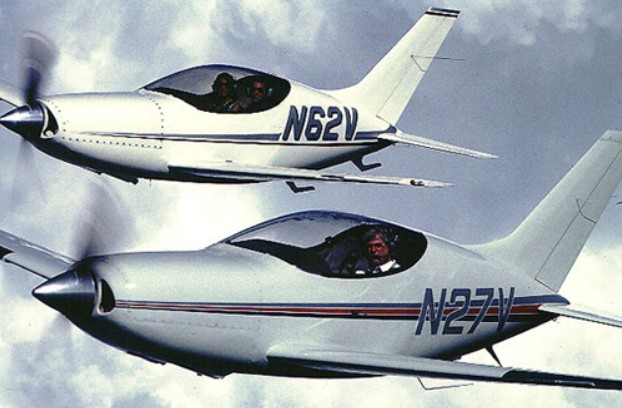
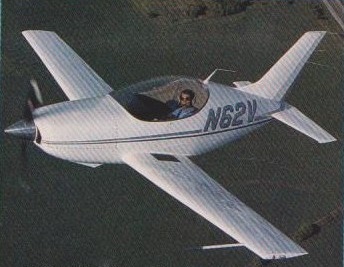
Designed by Jim Griswold, the prototype had only 50 hours on it when it arrived at Oshkosh 1988. Griswold’s company, Questair, was tooled up and nearly through the flight test program. The structural and flight test programs were the same as the FAA specified for factory certified planes.

The Venture uses stretched form fuselage skins that come as part of the kit ($49,950 1988). The cockpit was designed to be wider than a twin engined Beechcraft Baron.

The all-metal, roomy, fast, kit-built NuVenture (formally Questair Venture) was the winner and fastest plane at the Aircraft Spruce-sponsored 1998 Sun ’n Fun Sun100 race with an average speed of 303 mph.

The NuVenture flies on a Cont. I0-550-G with empty weight of 1240 lbs. The fuel tank holds 56 gallons. Vso is 61 KIAS. Range 12,000’ is 1,000Nm, VFR w/reserves or a cruise of 240 KTAS of 138 lb/h of fuel.

The Spirit derivative has fixed undercarriage.

Engine: Continental IO-550N6B, 310HP @ 2700 RPM
Propeller: McCauley BlackMac, 68″
Wing span: 27.5 ft
Wing area: 72.5 sq ft
Wing loading: 27.6 lb / sq ft
Structural limits: +5 G, -2.5G @ 2000 lb
Fuel capacity: 56 USG std, 88 optional
Gross weight: 2000 lb
Empty weight, equipped: 1300 lb
Payload: 700 lb
Cruise speed: 240 kt, 276 mph
Cabin width: 46 inches
Sea level top speed: 250 knots
Max rate of climb: 2500 ft / min
Takeoff to 50 ft: 1000 ft
Landing over 50 ft: 1600 ft
Range: 1000 nm, VFR reserves
Vx (best angle of climb): 90 knots
Vy (best rate of climb): 130 knots
Vne (never exceed): 300 knots
Va (maneuvering speed): 156 knots
Vso (stall in landing configuration): 61 knots
Vs1 (stall, clean): 68 knots
Gear speed (all): 170 knots
Seats: 2

Questair

Has marketed kits to build the metal Venture side-by-side two-seat low-wing monoplane with retractable undercarriage, first flown in 1987, and the Spirit derivative with fixed undercarriage.

1987-91: Questair Inc, Box 18946, Greensboro, NC27419, USA.