Replica Plans SE-5A

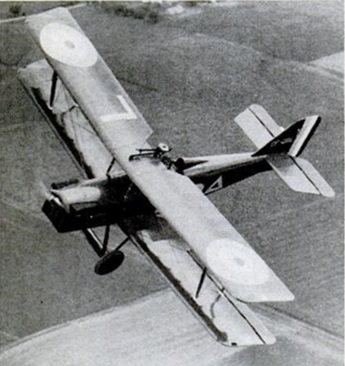
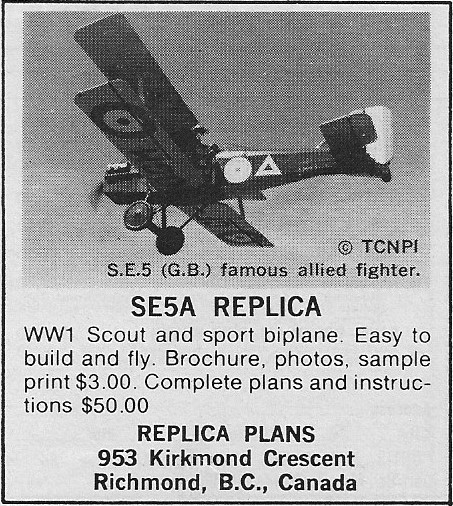
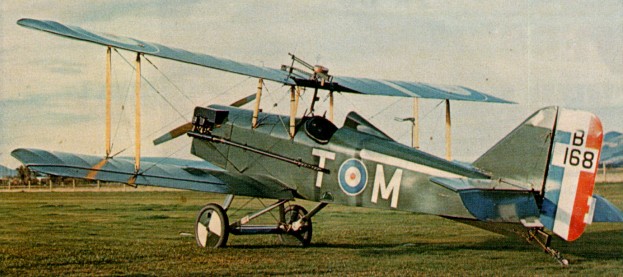
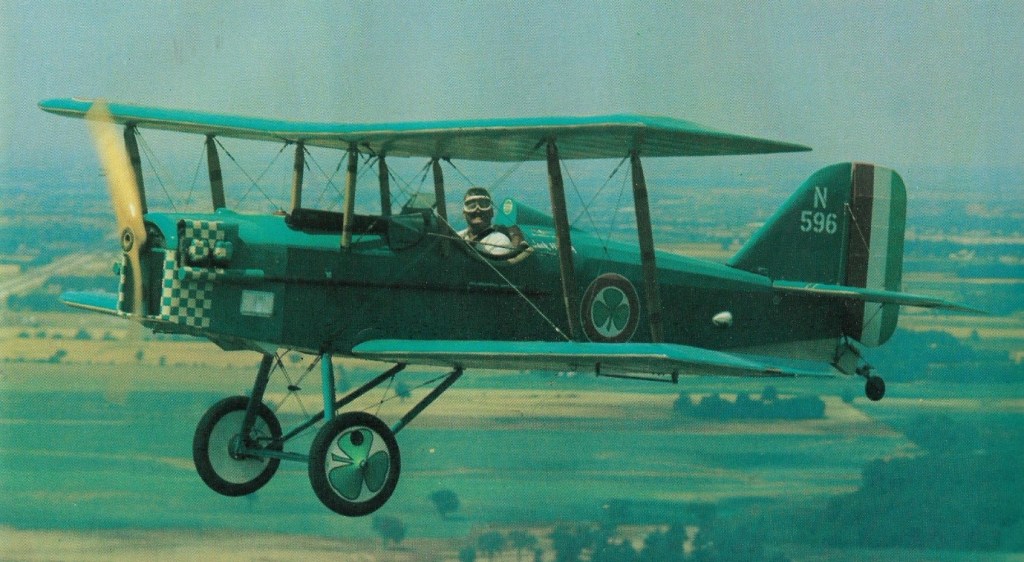
The 5/6th scale replica was designed as an easy and inexpensive representation of this famous First World War Fighter using modern materials and engines. The reduced scale allows for the use of 65 to 100 hp “flat four” engines although some examples have more powerful engines. Wood and fabric construction.

The prototype flew in Canada in 1970 and there were two flying in New Zealand with at least two more under construction. The wooden wing has a leading edge covered with either fibreglass or aluminum, the rest being fabric-covered. The plywood-covered box fuselage has a fabric-covered turtle-deck and aluminum-covered forward section. Performance from an 85 hp powered SE-5A Replica are a cruise speed of 135 km/h and 150 m/min climb rate.

Dec 73

Gallery

Engine: Continental O-200, 100 hp
HP range: 85-125
Height: 7.67 ft
Length: 18.18 ft
Wing span: 23.33 ft
Wing area: 146 sq.ft
Fuel cap: 18 USG
Weight empty: 750 lb
Gross: 1150 lb
Speed max: 110 mph
Cruise: 80 mph
Range: 250 sm
Stall: 35 mph
ROC: 900 fpm
Take-off dist: 400 ft
Landing dist: 550 ft
Service ceiling: 10,000 ft
Seats: 1
Landing gear: tail wheel

Renard & Krebs La France / Chalais-Meudon La France

In 1884, under the direction of Renard and Krebs of the French army aeronautical establishment at Chalais Meudon, successful experiments were made employing electrical power with the airship La France.

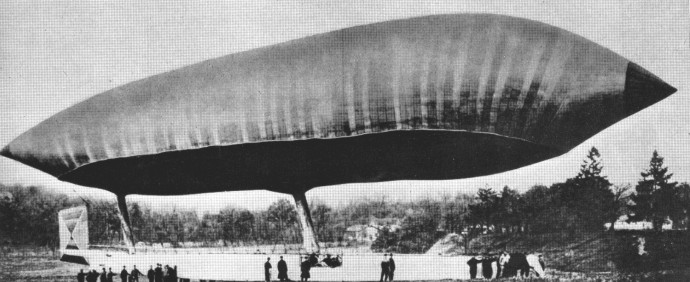
At the French military balloon establishment at Chalais Meudon, in 1884, engineers Charles Renard and Captain A.C.Krebs designed and constructed the airship La France which was to prove capable of steady, navigable flight, and eas able to describe circular flights against the wind and return to its departure point.

La France, with a capacity of 66,000 cu.ft, was 165 ft long with a diameter of 28 ft, the envelope being made from Chinese varnished silk and of streamlined form. Below the envelope an enclosed car, 108 ft in length, contained a Gramme electric motor, developing 8.5-9 hp for a weight of 210 lb, together with the chromium-chloride batteries that drives a cloth covered tractor airscrew of 23 ft diameter. The battery weighed 435 kg.

The France was thirty-two feet in maximum diameter and nearly 200 feet long, the empennage planes aggregating about 400 square feet were placed forward of the stern.

Steering in the horizontal plane was effected by a large rectangular rudder at the stern, while vertical movement and attitude were controlled by a sliding weight mounted within the body of a car assistd by an ‘elevating rudder’.

In a series of trials the airship demonstrated controlled flight, achieved a speed of 14 mph and made several flights over Paris. The weight of the batteries, limited range and carrying capacity prevented further development.

The first trial of La France took place on 9 April 1884. The flight proving a limited success: making a circular flight of 5 miles in twenty-three minutes at a speed of around 12.5 mph in still air, then returning to its starting point, Chalais-Meudon – the first time this had ever been done. Six other flights were made during 1884-85, including two over Paris.

Chalais-Meudon Renard-Krebs “La France”
Engine: 1 x Elektromoteur Gramme electric: 9 hp
Batteries: Chromium chloride
Contained volume: 65,695 cu.ft / 1860 cu.m
Length: 165 ft / 50.0 m
Width of hull: 27.887 ft / 8.5 m
Height: 60 ft
Gross lift: 2.0 ton
Useful lift: 0.1 ton
Max. speed: 13 mph / 11 kt / 20 km/h
Crew: 3
Renard & Krebs

In 1884, Charles Renard and Arthur Krebs, achieve the first closed circuit flight aboard the airship « La France » starting from Meudon, depot Y

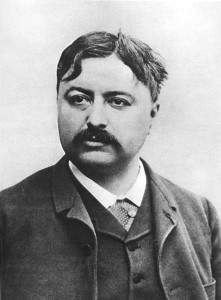
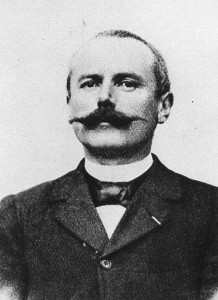
Charles Renard

Charles Renard was born at Damblain, Viosges, France, 23 November 1847. In 1873, he had developed an unmanned glider which was controlled by a pendulum device linked to its control surfaces. The glider was flown from a tower at Arras.

Renard also developed the powered Renard Road Train, in which the trailers were powered by drive shafts from the forward power car, and each car was steered through a system of linkages attached to the car ahead of it. He also developed the concept of preferred numbers.

Charles Renard remained in charge of the aeronautical establishment at Chalais-Meudon until his death. He committed suicide, 13 April 1905.

Charles Renard Article

Arthur Constantin Krebs was born 16 November 1850 at Vesoul, France.

Arthur Constantin Krebs

Krebs was a prolific inventor. Following his work with La France, he completed the development of Gymnote (Q1), the world’s first all-electric submarine. His work on automobiles was extensive. He developed the concept of the front engine/rear wheel drive (Systeme Panhard); engine balancing; caster in the steering and suspension system, which allowed the steering wheels to self-center; the steering wheel; shock absorbers; four-wheel drive and four-wheel steering, etc. He invented the electric brake dynomometer which is used to measure power output of engines.

Arthur Krebs died 22 March 1935.

Renard R-38

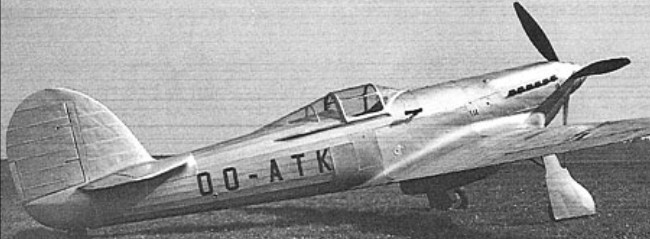
Developed in parallel with the R-37, the R-38 was essentially similar to the R-36 apart from having a 1030hp Rolls-Royce Merlin II engine. It was originally proposed with wings of two different sizes, but the sole prototype retained a similar wing to that of the R-36 and R-37. Armament comprised four wing-mounted 7.7mm or 13.2mm machine guns.

The R-38 flew for the first time on 4 August 1939, and gave excellent results during its test programme, which was still in process when German forces occupied Belgium. The sole prototype was flown to Bordeaux when the final collapse of Belgian resistance became inevitable, but was scrapped after capture in France by German forces.

Max take-off weight: 2600 kg / 5732 lb
Empty weight: 1950 kg / 4299 lb
Wingspan: 11.64 m / 38 ft 2 in
Length: 8.80 m / 29 ft 10 in
Height: 2.90 m / 10 ft 6 in
Wing area: 20.00 sq.m / 215.28 sq ft
Max. speed: 545 km/h / 339 mph
Range: 1350 km / 839 miles

Renard R-37

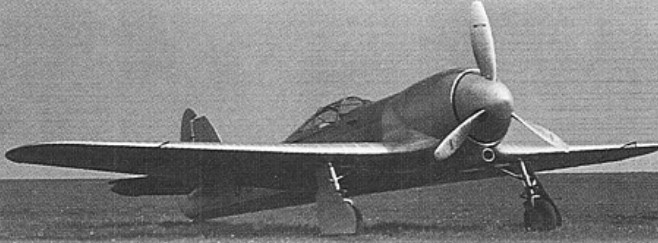
With an airframe fundamentally similar to that of the R-36, the R-37 differed primarily in having a close cowled 1100hp Gnome-Rhone 14N-21 14-cylinder radial engine. Cooling air reached the engine via a narrow annulus, was mixed with exhaust gases and ejected through two groups of nozzles to provide some thrust augmentation.

The proposed armament consisted of four 7.7mm or two 13.2mm machine guns mounted in the wings.

Although the R-37 was displayed statically at the Salon de Bruxelles in July 1939, no attempt had been made to fly this prototype before the German occupation of Belgium in May 1940. The R-37 was discovered at Evere by the occupation forces and a Luftwaffe pilot – possibly unaware that the aircraft had not previously been flown – flew the aircraft to Beauvechain. There is no record of any subsequent flight testing, although it is known that the R-37 was taken to Germany. Prior to the German occupation, Alfred Renard had prepared a project for a two-seat version, the R-37B, for use as a ground attack aircraft.

Max take-off weight: 2460 kg / 5423 lb
Empty weight: 1810 kg / 3990 lb
Wingspan: 11.64 m / 38 ft 2 in
Length: 8.40 m / 28 ft 7 in
Height: 2.90 m / 10 ft 6 in
Wing area: 20.00 sq.m / 215.28 sq ft
Max. speed: 510 km/h / 317 mph

Renard R-37

Renard R-36

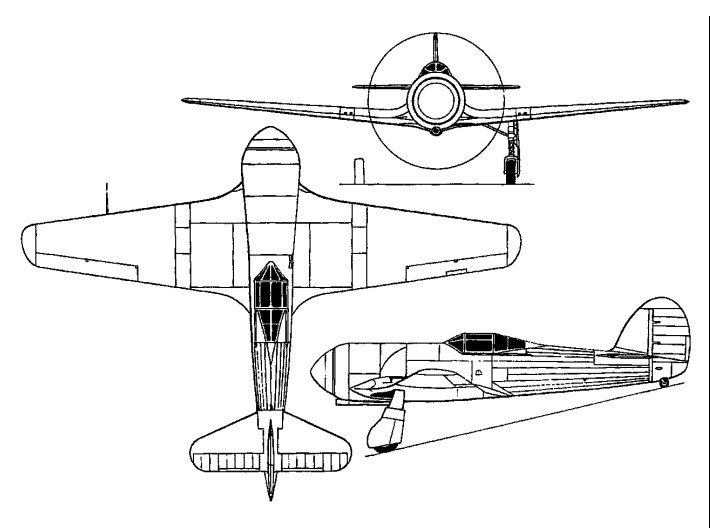
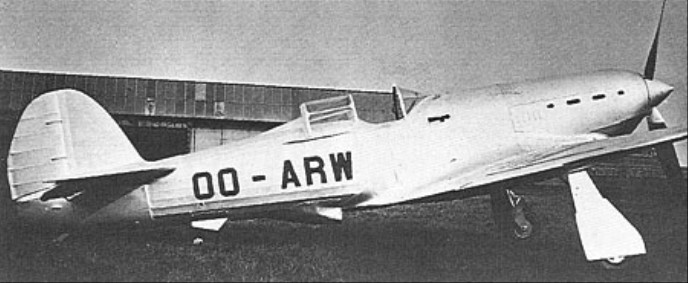
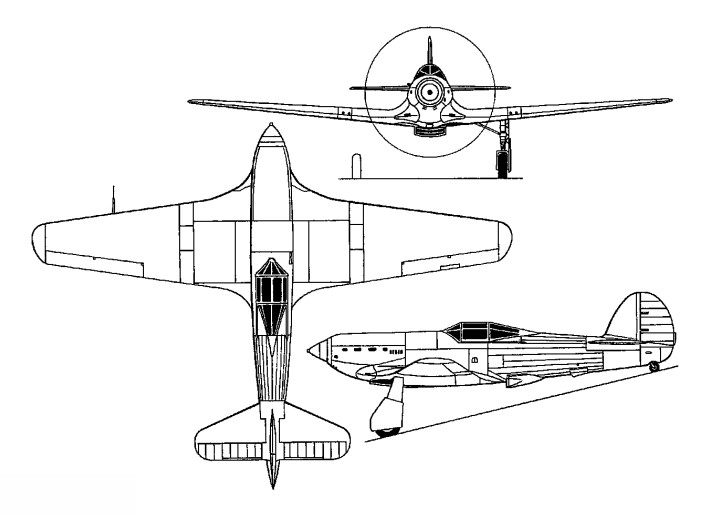
Designed by Alfred Renard as a replacement for the Fairey Firefly in service with the Aviation Militaire, the R-36 was flown for the first time on 5 November 1937.

An advanced low-wing single-seat fighter, the R-36 with Hispano-Suiza engine was exhibited at the 1937 Brussels Aero Show.

Of all-metal construction and carrying an armament of one engine-mounted 20mm cannon and four wing-mounted 7.7mm machine guns, the R-36 was powered by a 910hp Hispano-Suiza 12Ycrs 12-cylinder Vee-type liquid-cooled engine. Various modifications were introduced during the test programme – notably the relocation of the radiator bath and the enlargement of the rudder.

Late in 1938, the government took an option on a batch of 40 aircraft. The loss of the prototype on 17 January 1939 resulted in the programme being placed in abeyance and then dropped when the decision was taken to procure Hawker Hurricanes.

Max take-off weight: 2470 kg / 5445 lb
Empty weight: 1770 kg / 3902 lb
Wingspan: 11.64 m / 38 ft 2 in
Length: 8.80 m / 29 ft 10 in
Height: 2.90 m / 10 ft 6 in
Wing area: 20.00 sq.m / 215.28 sq ft
Max. speed: 505 km/h / 314 mph
Range: 1000 km / 621 miles

Renard R-36

Renard R-31 Aircraft Histories

Back to Renard R-31

Serial: N-1
C/N: 25001
Date In: 1935
Date Out: May 1940
History: N-1, 11/VI/1Aé, destoyed during German bombing raid on Goetsenhoven on 10 May 1940.

Serial: N-2
C/N: 25002
Date In: 1935
Date Out:
History: converted with Lorraine “Petrel” engine, returned to its original configuration, 11/VI/1 Aé, fate unknown.

Serial: N-4
C/N: 25004
Date In: 1935
Date Out:
History: 11/VI/1Aé, fate unknown

1938.
Serial: N-5
C/N: 25005
Date In: 1935
Date Out:
History: 11/VI/1Aé, fate unknown

Serial: N-11
C/N: 25011
Date In: 1935
Date Out: March 1938
History: 9/V/1Aé, 11/VI/1Aé, fatal crash at Beverlo on 15 Mar

Serial: N-13
C/N: 25013
Date In: 1935
Date Out: May 1940
History: 11/VI/1Aé, made unclear at Oostende/Stene on 28 May 1940.

Serial: N-15
C/N: 25015
Date In: 1935
Date Out:
History: 1Aé Bierset

Serial: N-17
C/N: 25017
Date In: 1935
Date Out: May 1940
History: 9/V/1Aé, destroyed at Lombardsijde airfield on 26 May 1940.

Serial: N-18
C/N: 25018
Date In: 1935
Date Out: May 1940
History: Pilot School, 11/VI/1Aé, shot down at Bilzen on 11 May 1940

Serial: N-21
C/N: 25021
Date In: 1935
Date Out:
History: 11/VI/1Aé, fate unknown

Serial: N-31
C/N: 25031
Date In: 1936
Date Out: March 1940
History: 11/VI/1Aé, Destroyed in emergency landing on beach at Den Haan on 06 Mar 1940.