Back to Rutan 31 Varieze


The same basic concept of the model 27 was retained in the Model 31 VariEze. The type was designed in 1974, and the construction of a prototype GRP two-place tandem design took Rutan just 10 weeks to complete. Rutan built two prototypes in succession; the second incorporated several major changes. When the larger O 200 engine was installed on the second prototype (the first had a VW), the additional torque produced an unpleasant wing heaviness under power. So Rutan added an electric trim tab on the right wing, rudder trim, a fuselage mounted drag brake, and a pair of small inboard spoilers on the rear wing roots that both quicken the roll response and eliminate the unwanted pitch. With a manually retractable nosewheel, its handling and approach qualities are now more or less conventional, with a bit more reliance on rudder for roll, and a bit less concern with keeping the ball centered, than we’re used to.
A lot of experimental work was necessary, but the VariEze is a radical departure from conventional methods in aerodynamic and structural design. An alteration was the replacement of the VariViggen’s electrically retracted tricycle landing gear arrangement by a tricycle arrangement with a mechanically retracted nose unit and fixed main units with glassfibre legs. The nose unit can be retracted on the ground, a feature that eases access to the cockpit, provides greater propeller clearance for manual starting, and removes the need for chocks. The complete airframe is made of unidirectional glassfibre over a foam core.

This sleek, fast, lightweight homebuilt is capable of achieving a top speed of 210 mph with Continental’s 100-hp engine. The unusual aircraft combines the use of a NASA GA (W)-1 airfoil with Whitcomb winglets and was actually the first aircraft to fly with the latter. The wing is a nonlaminar flow airfoil optimized for good lift and stall qualities. The ship’s low induced drag lets the pilot negotiate steep, 90-degree banks with strong spiral stability. First flew, in prototype form, in May 1975. In its refined form, with its retractable nose leg which had to be retracted to gain cabin entry, could cruise comfortably at 140 mph when propelled by 100 horsepower.
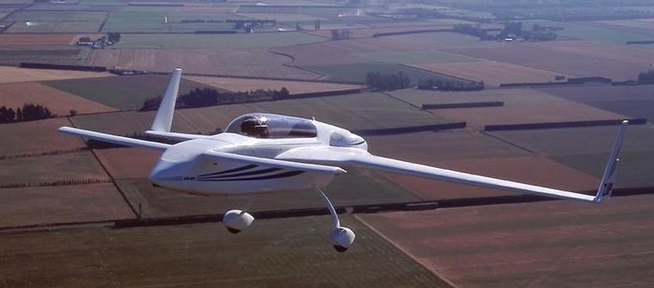
Rutan claimed that a VariEze could be built in 600 hours. By contrast, 2,000 to 3,000 hours had always been the average for completing a conventional homebuilt. Structural strength was provided by epoxy fiberglass skins and spars that were laid up over cores of light plastic foam. The wings consisted of several foam cores cut from blocks with an electrically heated wire and joined end to end. A chunk the shape of the box spar was cut out of the assembled wing core, and the spar webs laid up around it. Then the still wet spar core was reinserted in the wing core, the multilayer spar caps laid down, and the wing skins laid down over the whole works. One side of a wing was skinned and allowed to cure. Then the wing was flipped over and the other side laid up. Rather than conventional plans, Rutan put out an instruction book in which verbal instructions replaced blueprints, and the builder was led, step by step, from the beginning of the project to the end.
First offered to homebuilders in the summer of 1976, VariEze plans were bought by more than 2,000 prospective homebuilders within six months; and in that same period, the first buyer built airplanes were already flying.
In the meantime, several companies put portions of VariEze kits on the market.
By 1979, of the 3,000 buyers of plans, 1,800 have bought some sort of kit; about 100 VariEzes were flying, and hundreds more are near completion.
The hot wire cut polystyrene foam cores used for flying surfaces were easy to work with, though a few errors in the plans did lead to irritating minor discrepancies in final assembly. These were corrected piecemeal in Rutan’s frequent newsletter.
The VariEze’s performance is not a free lunch. You pay for it in somewhat peculiar handling qualities. The seating is comfortable but quite supine; that plus a narrow bubble canopy makes it difficult to turn your head. The pi¬lot, who sits in front and commands the only controls, can barely communicate with the passenger, even using simple ideas and loud shouts.
The pilot’s controls in the first of the two prototypes were uniquely simple: a small side stick on the right armrest was connected directly to movable surfaces on the canard to provide both pitch and roll control. There were no movable surfaces on the main wings. Rudder pedals controlled outward going rudders on each wingtip; pressed farther, they activated wheel brakes as well. A simpler, lighter control system could not be devised. But the plane was hard to fly; its glide was so flat and it floated so far in experienced hands that it required a 3,500 foot runway; roll response was liable to be nullified completely by a touch of the wrong rudder and apt to include a bit of unwanted pitch in the bargain.
By 1990 the Rutan design stable of VariEze, LongEze, Defiant and Solitaire were no longer offered for sale.
Prototype N7EZ
Propeller type: fixed pitch wood
Wingspan: 21 ft
Useful load: 481 lb
Fuel capacity: 14 USG
Cruise (75 %): 173 mph
Stall: 76 mph
Max tinge (75 %): 580 sm
Best climb rate: 1100 fpm
Service ceiling: 14,000 ft
Wing loading: 14.9 lb/sq.ft
Landing gear type: fixed main, ret. nose
Seats: 2
Engine: Rolls Royce 0200A
Prop: Hendry 56×70
Cruise: 130-150 kt
Engine: 1 x 100-hp (74.5kW) Continental 0-200-B
Seats: two seated in tandem.
Maximum cruising speed 195 mph (313 km/h) at optimum altitude
Initial climb rate 1600 ft (487 m) per minute
Range 850 miles (1368 km)
Empty weight: 580 lb (263 kg)
Maximum take-off 1050 lb (476 kg)
Wingspan 22 ft 2.5 in (6.77 m)
Length 14 ft 2 in (4.32 m)
Wing area 53.6 sq.ft (4.98 sq.m)
Canard foreplane area 13 sq.ft (1.21 sq.m)
Fuel capaci¬ty 26 USG
Takeoff run 900ft
Landing roll 900ft
Range 700miles
Engine: Lycoming O 235
Max speed: 180 kt at sea level
ROC: 800 fpm
Gross wt: 1,050 lb
Engine: Lycoming O 320
Empty weight: 772 lb
Gross wt: 1,350 lb
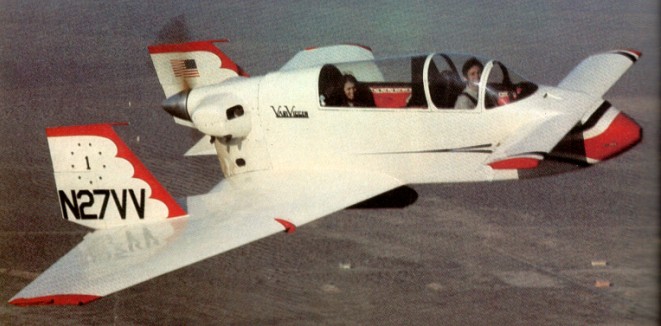
In 1968 Rutan began the design of his Model 27, which first flew on 27 February 1972 and then became the VariViggen canard lightplane for the homebuilder market. The VariViggen is a tandem two- or four-seat lightplane of canard layout with a cropped delta main wing, and the 150 hp (112 kW) of its Avco Lycoming 0-320-A2A flat-four piston engine provides a sea-level maximum speed of 163 mph (262 km/h) at a maximum take-off weight of 1700 lb (771 kg), together with a range of 400 miles (644 km) on 35 US gal (132 litres) of fuel. The VariViggen is an application of the low speed aerodynamics of the Viggen ca-nard arrangement, with various changes, to a general aviation purpose: a tandem two seat pusher with a 150 hp Lycoming engine and a fixed pitch wood propeller. It is an old proj¬ect; Rutan started developing the configura¬tion when he was still at Cal Poly. He tested models on a “car top wind tunnel” of his own invention, flew Styrofoam gliders and an 18¬percent scale, radio controlled model to in¬vestigate his design’s flying qualities and fi¬nally completed the full size prototype at Lan¬caster, California. It flew almost exactly as his scale tests had predicted it would.
Optimized for low-¬speed maneuverability, it is not a particularly fast airplane 130 knots cruise on 113 hp ¬and its climb performance is only just ade¬quate, because its low aspect ratio lifting sur¬faces produce a lot of drag at high lift coeffi¬cients. What makes the VariViggen unique is its low speed handling, in which it has little in common with conventional airplanes.
On the face of it, it appears that what makes the VariViggen a slow climber and mediocre cruiser is simply its short span. The canard, which is only eight feet across, car¬ries a quarter of the airplane’s weight while the main wing, carrying the rest, has a span of 19 feet. The aspect ratios of the fore and main-planes are 3.5 and three, respectively. The wing loading is 14.3 lb/sq.ft. and the power loading is 11.31 lb/hp. The weighted average of spans (weighted in proportion to surface loading) is only 16.25 ft. giving a linear span loading of more than 100 lb/ft.
The VariViggen is not stressed for aero¬batics in the RA’s limited definition of the term. The limit load factor is five. The air¬plane will roll nicely, Rutan says, but is too draggy for high G maneuvers like loops and is characteristically incapable of snapping or spinning.
Its cruising range is short: 326 nm, with no reserve on internal tankage. The cockpit is reasonably comforta¬ble (25 inches wide and amply long and high) and its noise level is moderate, at least partly thanks to the wooden structure and the placement of the engine and prop at the rear. There is a large baggage compartment be¬hind the back seat with a 180 pound capacity.
Approach and landing are quite conven¬tional, until the time comes to flare; then the airplane seems to give itself over completely to ground effect and to want to go on gliding forever, unless you simply drive it down onto the runway. Rutan is able to achieve remark¬able accuracy in his landings, and he wins all the spot landing contests he enters, because he can maneuver widely on final approach in order to position himself and can also land at any of a variety of speeds. The brakes are very powerful; Rutan gives the landing roll as 400 feet.
The VariViggen’s low speed maneuvera¬bility is of limited usefulness in everyday transportation flying as is obvious from the fact that most airplanes don’t have it, and one hardly even notices the lack. A gusty crosswind during landing is about the only normal circumstance in which low speed ma¬neuverability comes in handy; here the Vari¬Viggen’s high roll rate at low speed and its ability to turn and sidestep sharply give it the advantage over a conventional airplane.
The Model 27 version of the VariViggen proved incapable of stalling or spinning in the conventional sense of the words, though the stall was restored in the Model 32 version with revised outer wing panels (of urethane foam/unidirectional glassfibre rather than aluminium alloy construction) for higher performance.
The VariEze had well over 4000 sets of plans sold and in various stages of construction; some 400 are already flying in 1980.
Variants:
Microstar Variviggen
Gross Wt. 1700 lb
Empty Wt. 950 lb
Fuel capacity 25 USG
Wingspan 19’
Length 19’
Engine 150-hp Lycoming
Top speed 160 mph
Cruise 150 mph @ 7000 ft
Stall. 53 mph
Climb rate 800 fpm
Takeoff run 800 ft
Landing roll 500 ft
Range 400 sm
Founded by Elbert (Burt) L Rutan in 1969, Rutan Aircraft Factory first flew the VariViggen two/four-seat canard monoplane for construction by amateur builders from plans in 1972. Other aircraft followed, including VariEze two-seater (first flown 1974), Defiant four-seater (first flown 1978), Grizzly joined-wing/canard STOL transport (first flown 1982), and Voyager.
Rutan opted for a basic canard configuration, and has succeeded in developing several canard lightplanes with first-class flight characteristics.
1984: Rutan Aircraft Factory, Building 13, Mojave Airport, Mojave, CA 93501, USA.
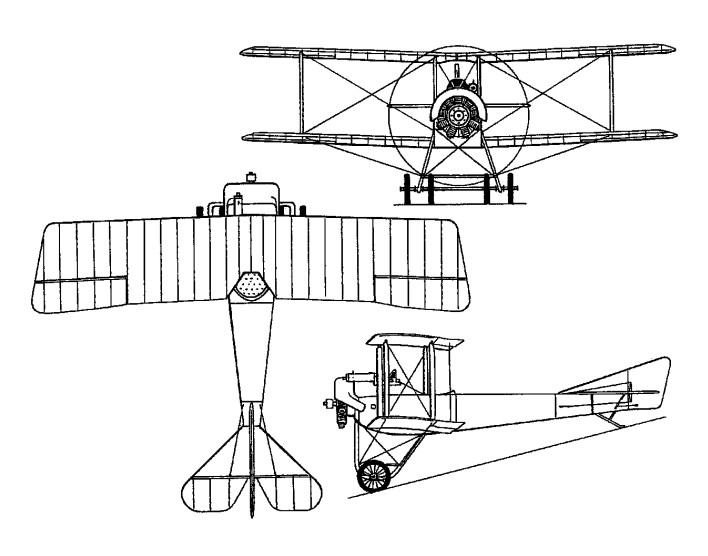
The Russo-Baltic Wagon Works built the 1910 biplane designed by Jacob Hackel.
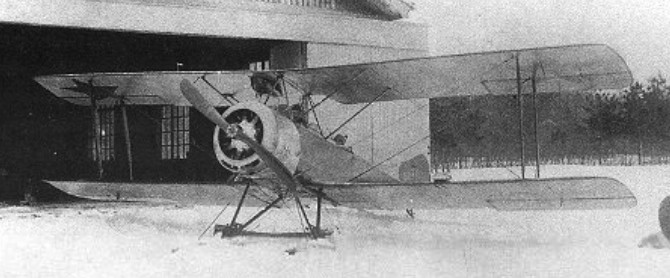
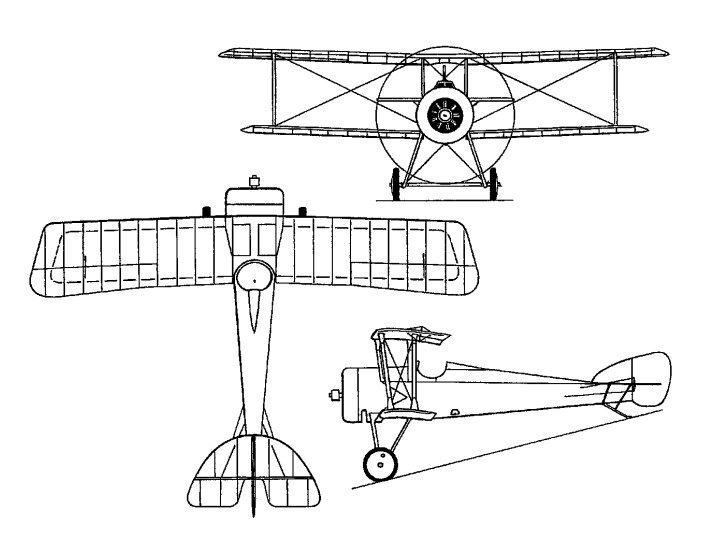
The last of the RBVZ’s First World War fighters, the S-20, embodied lessons learned from licence manufacture of the French Nieuport 17. The production version, with a 120hp Le Rhone engine, was said by its pilots to be faster than the Nieuport, with a top speed of 190km/h; but only five were ordered, leaving the RBVZ free to concentrate on production of its Ilya Mourometz bombers.
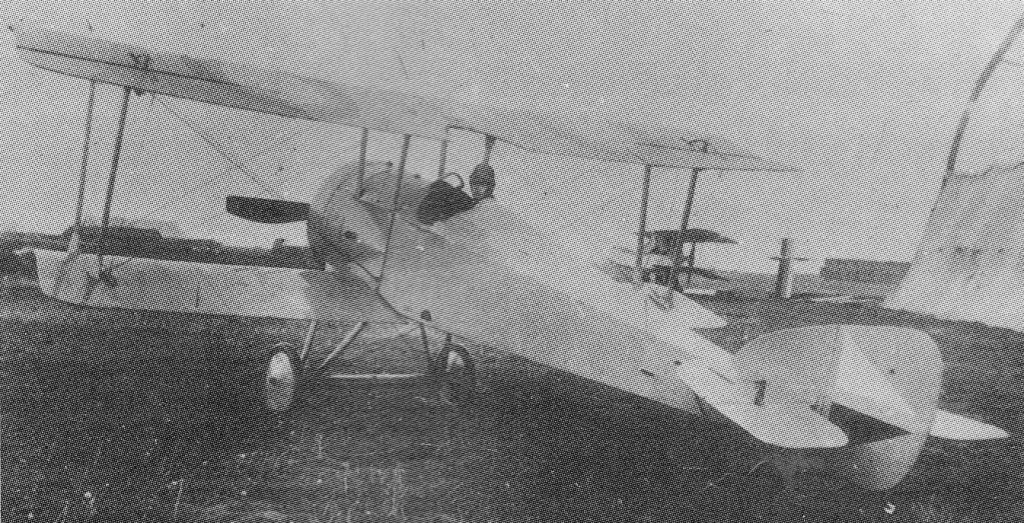
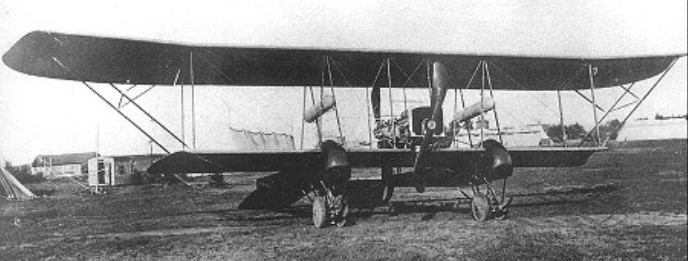
The S-19 had two 150hp Sunbeam engines in tandem and a cockpit in the nose of each of the twin tailbooms that projected slightly forward of the lower wings. The design seems to have emanated from the Russian War Department, which ordered the RBVZ to match German experiments with twin-boom combat aircraft. The prototype was completed in late 1916.
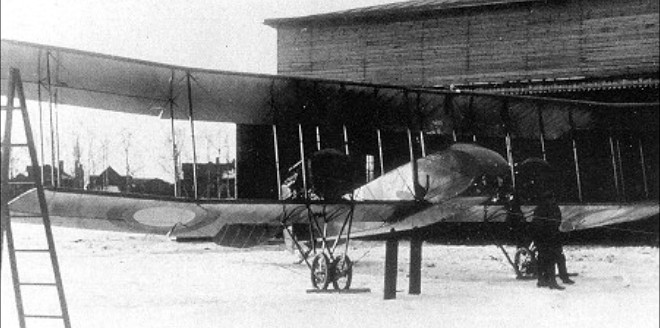
Intended as a twin-engined fighter capable of inflicting heavy blows on enemy aircraft penetrating Russian airspace, the S-18 had a cockpit in the nose for an observer-gunner. Two 150hp Sunbeam pusher engines failed to lift it off the ground at its maximum weight of 2100kg.

During the First World War most Russian squadrons flew French-designed aircraft, many of them built under licence. Sikorsky’s single-seat S-13 and S-14 biplanes were probably not completed. Three two-seat S-16s were built as trainers for bomber crews of the Squadron of Flying Ships in 1915, followed by about twenty-four more as two-seat S-16-2 and single-seat S-16-3 bomber escort and reconnaissance scouts with 80hp Gnome engines in 1916-17. A machine-gun was mounted under the top wing, firing clear of the propeller, until Engineer Lavrov invented an interrupter gear for a fuselage-mounted gun.
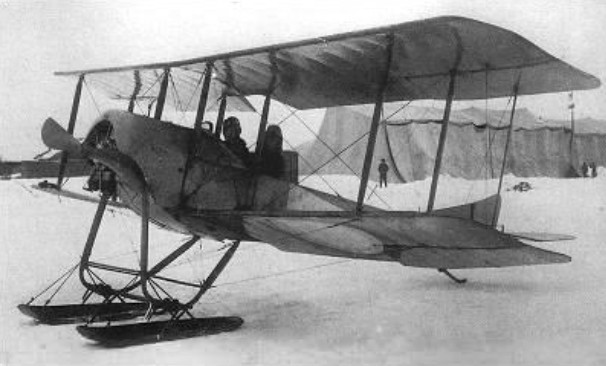
For winter operation, a number of S-16s were flown on skis in place of the standard four-wheel landing gear; at least one was fitted with twin floats in 1916. Contemporary accounts show that pilots enjoyed the stability, manoeuvrability and delicate controls of the S-16s, but they were outclassed by German fighters of the time.
The S-15 was a seaplane of the S-10 family.

