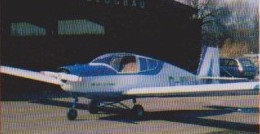
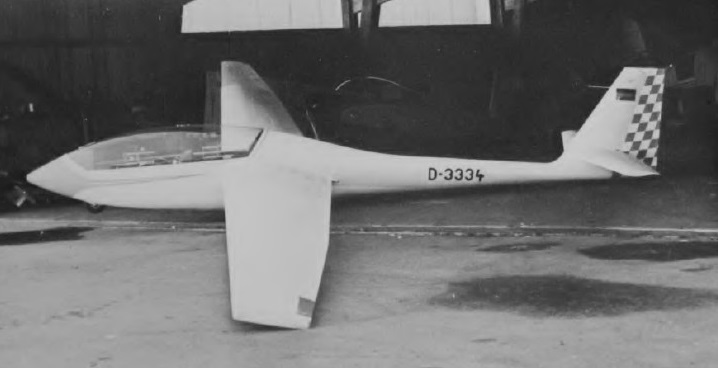
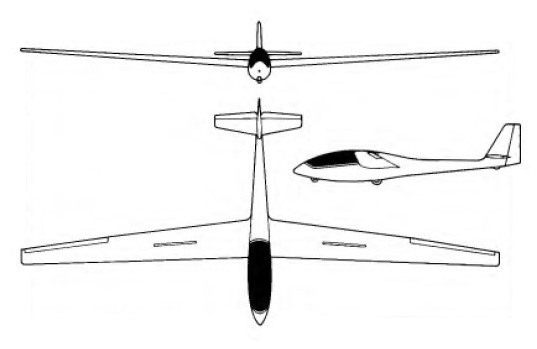
Scheibe Sperber

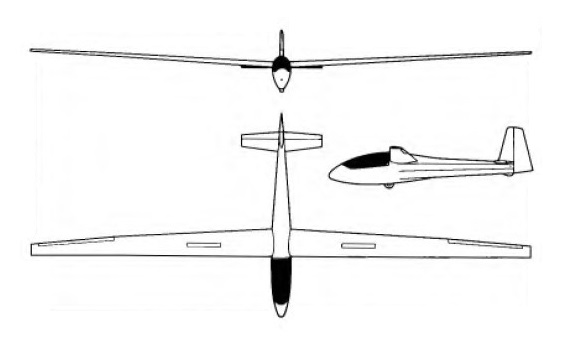
The third postwar design of Scheibe-Flugzeugbau GmbH, following the Mu-13E Bergfalke and the Spatz, was the Specht (or Woodpecker) tandem two-seater training glider, which was completed in prototype form in March 1953.
This featured the usual Scheibe construction of fabric-covered steel tube fuselage and two-spar braced wooden wings, which had a span of 44 ft 3.5 in and an aspect ratio of 11.

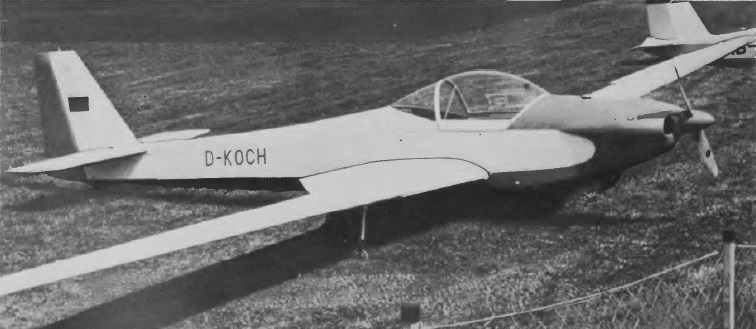
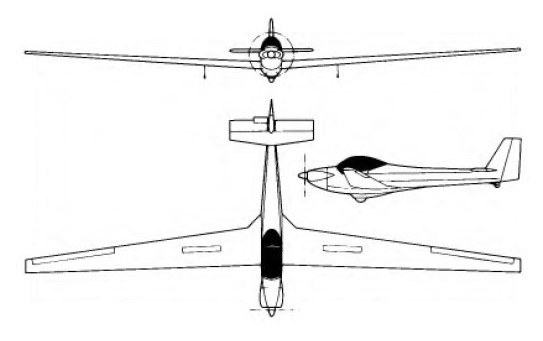
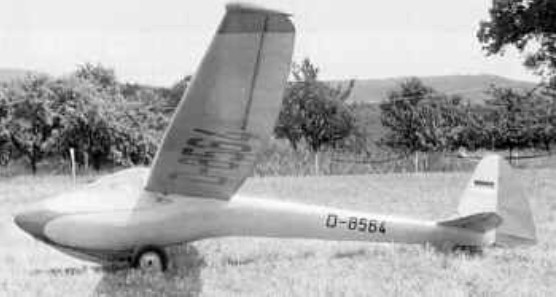
The Specht was developed into the Sperber (or Sparrowhawk), also a two-seat trainer but with enclosed side-by-side instead of tandem seating, and this first flew on 7 March 1956, later going into small-scale production. It also had a fabric-covered steel tube fuselage and braced fabric-covered wooden wings of 14% Mȕ section. The landing gear consists of a fixed monowheel and a spring steel tailskid.

Span: 46 ft 7 in
Length: 24 ft 3 in
Height: 4 ft 7 in
Wing area: 187.3 sq ft
Aspect ratio: 11.6
Empty weight: 485 lb
Max weight: 882 lb
Max speed: 106 mph
Min sinking speed: 3.05 ft/sec
Best glide ratio: 19:1

Scheibe Uli II

Tandem two seat single engined high wing mono¬plane with conventional three axis control. Wing has unswept leading and trailing edges and constant chord; conventional tail. Pitch control by fully flying tail; yaw control by fully flying rudder; roll control by half span ailer¬ons; control inputs through stick for pitch/roll and pedals for yaw. Wing braced from above by kingpost and cables; wing profile double surface. Steel tube framework, with optional pod. Engine mounted below wing driving pusher propeller. Wings use two aluminium tubes as spars, with ribs in foam, capped top and bottom with wood; all flying surfaces covered in Ceconite.

This tandem two seater version of the Uli made its first flights in February 1983 and by 1983 two prototypes had been built, which were undergoing certification. The aircraft is fitted with the four cylinder Konig 570cc engine and uses either a two blade or a three blade design of 51 inch (1.30 m) dia¬meter.

Length overall 18.1ft, 5.52m
Wing span 35.4 ft, 10.80 m
Constant chord 4.4 ft, 1.33 m
Sweepback 0 deg
Tailplane span 7.2 ft, 2.20 m
Total wing area 161 sq.ft, 15.0 sq.m
Wing aspect ratio 7.8/1
Wheel track 4.6 ft, 1.40 m
Engine: Konig SD570, 28 hp at 4200 rpm
Propeller diameter 58 inch, 1.47 m. 2-blade
Belt reduction, ratio 1.8/1
Max static thrust 177 lb, 80 kg
Power per unit area 0. 17 hp/sq.ft, 1.9hp/sq.m
Fuel capacity 5.3 US gal, 4.4 Imp gal, 20.0 litre
Empty weight 221 lb, 100kg
Max take off weight 618 lb, 280kg
Payload 397 lb, 180kg
Max wing loading 3.81 lb/sq.ft, 18.7 kg/sq.m
Max power loading 22.1 lb/hp, 10.0kg/hp
Load factors; +6.0, 3.0 ultimate
Economic cruising speed 37 mph, 60 kph
Stalling speed 28 mph, 45 kph
Best glide ratio with power off: 9/1
Take off distance 260 ft, 80 m

Scheibe Uli I

Single seat single engined high wing mono¬plane with conventional three axis control. Wing has unswept leading and trailing edges and constant chord; conventional tail. Pitch control by fully flying tail; yaw control by fully flying rudder; roll control by half span ailer¬ons; control inputs through stick for pitch/roll and pedals for yaw. Wing braced from above by kingpost and cables; wing profile double surface. Undercarriage has two wheels side by side with tailskid (three wheels in tricycle formation optional); glass fibre tails¬kid and glass fibre suspension on main wheels. No brakes. Steel tube framework, with optional pod. Engine mounted below wing driving pusher propeller. Wings use two aluminium tubes as spars, with ribs in foam, capped top and bottom with wood; all flying surfaces covered in Ceconite.

The prototype of the single seater Uli microlight flew for the first time at the end of 1982 and was shown at Aero 83 Salon at Friedrichshafen. At Aero 83 the Uli I was given a pod, as an option, and a tailwheel had replaced the tailskid. This machine uses welded steel tubes for the framework.

Length overall 18.0ft, 5.50m
Wing span 31.8 ft, 9.70 m
Constant chord 4.4 ft, 1.33 m
Sweepback 0 deg
Tailplane span 7.2 ft, 2.20 m
Total wing area 140 sq.ft, 13.0 sq.m
Wing aspect ratio 7.2/1
Wheel track 4.6 ft, 1.40 m
Engine: Hirth 383cc, 22 hp at 4000 rpm
Propeller diameter 51 inch, 1.30 m
Belt reduction, ratio 1.88/1
Power per unit area 0.16 hp/sq.ft, 1.7 hp/sq.m
Fuel capacity 5.3 US gal, 4.4 Imp gal, 20.0 litre
Empty weight 221 lb, 100kg
Max take off weight 442 lb, 200kg
Payload 221 lb, 100 kg
Max wing loading 3.25 lb/sq.ft, 15.9 kg/sq.m
Max power loading 20.1 lb/hp, 9.1kg/hp
Load factors; +6.0, 3.0 ultimate
Max level speed 50mph, 80kph
Never exceed speed 56mph, 90kph
Max cruising speed 37mph, 70kph
Economic cruising speed 30mph, 48kph
Stalling speed 27 mph, 43 kph
Max climb rate at sea level 400 ft/min, 2.0 m/s
Min sink rate 310 ft/min at 35 mph, 1.6 m/s at 56 kph
Best glide ratio with power off 9/1
Take-off distance 150ft, 45m
Landing dis¬tance 100 ft, 30 m
Range at average cruising speed 112 mile, 180km
Scheibe SF-40

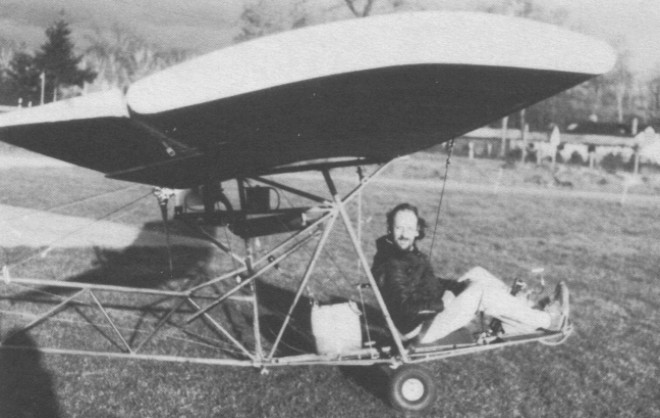
A side by side two seater with a spaceframe fuselage, the wings are constructed in wood.

The SF-40 two-seat lightplane (first flown 1994), the originally offered in A and B versions with tailwheel undercarriages, but the later version was the SF-40-C with a nosewheel undercarriage.

Engine: Sauer, 60 hp
Wing span: 10.8 m
Wing area: 13.4 sq.m
MAUW: 450 kg
Empty weight: 220 kg
Fuel capacity: 40 lt
Max speed: 170 kph
Cruise speed: 150 kph
Minimum speed: 55 kph
Climb rate: 3 m/s
Certification: VZ
Seats: 2
Fuel consumption: 13 lt/hr

Scheibe SF-36

The SF-36 two-seater motor glider was developed from the SF-H34 and uses the letter’s wings and tail unit married to a new fuselage, seating two side by side instead of the SF-H34’s tandem seating. The wings are low-mounted with Schempp-Hirth air brakes, and are detachable for hangarage; folding wings were planned for the SF-36.

Engine is an 80hp Limbach SL2000 driving a fixed-pitch or a three-position variable-pitch airscrew. Construction is of glassfibre-reinforced plastic, and a two mainwheel undercarriage similar to that of the C-Falke ’80 is featured, although a single monowheel with small outrigger wheels under the wings was also offered to customers. The latter was featured on the prototype, which first flew in the summer of 1980, and a retractable single-wheel undercarriage was planned for a later version; in all cases the tailwheel is steerable. The forward-sliding canopy allows entry to be made over the wings.

First SF-36 deliveries were due to start in the spring of 1981. The SF-36 R two-seat motorglider was expected to go into production in France.

Span: 53 ft 6 in
Length: 23 ft 10 in
Wing area: 166 sqft
Aspect ratio: 17.2
Empty weight: 950 lb
Max gross weight: 1,390 lb
Min sinking speed: 3.0 ft/sec at 50 mph

Scheibe SF-H34 Delphin / S.N. Centrair Alliance 34

Intended to succeed the Bergfalke, the SFH34 tandem two-seater training and sporting sailplane can be used for ab initio and advanced training and cross-country flying, and is Scheibe’s first unpowered design of all-glassfibre construction.

Design work, headed by Dipl-lng Hoffman, began in 1978 and the SF-H34 prototype first flew on 28 October 1978; production began early in 1979. The cantilever two-piece mid-set wing has a glassfibre roving main spar and is of glassfibre honeycomb sandwich construction, as is the tail unit with its low-set tailplane; there are Schempp-Hirth air brakes in the wing upper surfaces, and production aircraft have no leading edge sweepback. The fuselage is a glassfibre honeycomb sandwich shell, and there are towing hooks fitted under the nose and at the centre of gravity. Landing gear consists of a fixed semi-exposed monowheel directly below the cg and a nosewheel, plus a tailskid. The pilots sit in semi-reclining seats with dual controls under a large one-piece frameless flush canopy that opens sideways; the seat backrests and rudder pedals are adjustable in flight.

The SF-34B Delphin was produced in France as the S.N. Centrair Alliance 34 two-seat glider.

Wing span: 15.8m / 51.9ft
Wing area: 14.8sq.m / 159.3sq.ft
Empty Weight: 330kg /727lb
Payload: 210kg / 463lb
Gross Weight: 540kg / 1190lb
Wing Load: 36.49kg/sq.m / 7.47lb/sq.ft
Aspect ratio: 17
Airfoil: Wortmann FX-61-184
MinSink: 0.70 m/s / 2.3 fps / 1.36 kt
Seats: 2
L/Dmax: 35 @ 95 kph / 51 kt / 59 mph
No. Built: 40

Scheibe SF-H34
Span: 15.8 m / 51 ft 10 in
Length: 7.5 m / 24 ft 7.25 in
Height: 1.45m / 4 ft 9 in
Wing area: 14.8 sq.m / 159.3 sq.ft
Wing section: Wortmann FX-61-184/FX-60-126
Aspect ratio: 16.9
Empty weight: 290 kg / 675 lb
Max weight: 490 kg / 1,102 lb
Water ballast: None
Max wing loading: 33.2 kg/sq.m / 6.8 lb/sq.ft
Max rough air speed: 86 kt / 160 km/h
Max speed: 155 mph / 135 kt / 250 km/h (in smooth air)
Stalling speed: 35 kt / 65 km/h
Min sinking speed: 2.30 ft/sec / 0.70 m/sec at 47 mph / 40 kt / 75 km/h
Best glide ratio: 35:1 at 59 mph / 52 kt / 95 km/h

Scheibe SF-33

This single-seater motor glider was developed from the earlier SF-29 and is intended especially for training and powered cross-country flying, and for use by clubs as well as private owners.

It made its first flight in 1977, and although it did not go into production it was aimed at filling the gap between the two-seater SF-25 Falke variants and the higher performance single-seat powered gliders such as the PIK-20E and Nimbus 2M; it was also designed for ease of handling by the less experienced pilot. Like the earlier SF-25 Falke variants which it resembles, the SF-33 is a cantilever low-wing monoplane of basically wooden construction; the fuselage is a steel tube framework covered with plywood and fabric, and the engine cowling panels are of glassfibre reinforced plastic. The two-piece wings have plywood leading edges and wooden ailerons, and there are spoilers in the wing upper surfaces. The wooden tail unit has a trim tab in the starboard elevator. The landing gear consists of a fixed monowheel, a steerable tailwheel linked to the rudder for taxying, and two detachable outrigger wheels under the wings. The pilot sits under a large blown canopy that opens sideways to starboard and gives excellent all-round visibility. Powerplant is a 900cc BMW two-cylinder motorcycle engine derated to 35hp and driving a Hoffman two-blade variable pitch propeller; total fuel capacity is 4.8 Imp gallons.

The SF-33 is self-launching, and its gliding performance is claimed to be comparable to that of the Schleicher Ka 8.

Engine: BMW 900 cc, 26 kW (35 hp)
Span: 15.0 m / 49 ft 2.5 in
Length: 6.75 m / 22 ft 1.75 in
Height: 4 ft 9 in
Wing area: 12.5 sq.m / 134.5 sq.ft
Aspect ratio: 18.0
Wing section: Scheibe
Empty weight: 300 kg / 661 lb
Max weight: 410 kg / 904 lb
Water ballast: None
Max wing loading: 32 kg/sq.m / 6.55 lb/sq.ft
Max speed: 106 mph / 92 kt / 170 km/h (in smooth air, power off)
Max cruising speed: 93 mph (power on)
Stall speed: 36 kt / 67 km/h
Min sinking speed: 0.85 m/sec / 2.79 ft/sec at 50 mph / 43 kt / 80 km/h
Best glide ratio: 29:1 at 47 mph
Take-off run: 150-200 m / 490-655 ft
Rate of climb: 150 m/min / 492 ft/min
Range with max fuel: 186 miles / 300 km / 162 nm

Scheibe SF-30 Club-Spatz

Although bearing the same name as the earlier LSpatz-III, the SF-30 Club-Spatz single-seater Club Class sailplane was developed from the SF-27A Zugvogel, which it resembles, and was designed to the German Club Class requirements intended to meet the need for simple and easy to fly gliders for inexperienced pilots, which would also be strong and easy to rig.

Design work started in 1973 and the prototype Club-Spatz first flew on 20 May 1974; eight had been built by the spring of 1977 but production has now ended.

The fuselage is of traditional Scheibe welded steel tube construction with fabric covering, except that the forward fuselage is glassfibre-covered. The pilot sits under a one-piece sideways-hinging flush-fitting blown Plexiglas canopy, and his seat and rudder pedals are adjustable. Landing gear consists of a fixed unsprung monowheel with brake, and a sprung tail skid. Wings and tail surfaces are of composite glassfibre construction, with the outer surfaces made wholly of glassfibre supported by plastic foam; there are spoilers in the wing upper surfaces. Instead of the SF-27 Zugvogel’s all-flying tailplane, the Club-Spatz has a conventional tailplane and damped elevators, the latter having an adjustable spring for trimming.

Span: 15.0 m / 49 ft 2.5 in
Length: 6.1 m / 20 ft 0 in
Wing area: 9.3 sq.m / 100.1 sq.ft
Aspect ratio: 24.0
Wing section: Wortmann
Empty weight: 185 kg / 408 lb
Max weight: 295 kg / 650 lb
Water ballast: None
Max wing loading: 31.7 kg/sq.m / 6.49 lb/sq ft
Max speed: 131 mph / 114 kt / 211 km/h
Stalling speed: 35 kt / 65 km/h
Min sinking speed: 0.59 m/sec / 1.9 ft/sec at 47 mph / 40.5 kt / 75 km/h
Best glide ratio: 37:1 at 57 mph / 49 kt / 91 km/h