In 1960s Schempp-Hirth built the Milan 656 light tourer.
Author: Terry
Schempp-Hirth GS-6a Milan
The connection to the aviation industry was implemented post war with the production of the Matteson M-1 glider, the production of the powered aircraft GS-6a “Milan” and with works on engine pod and tail section of the “Trumpf” airship D-LEDA.
Schempp-Hirth Matteson M-1
The connection to the aviation industry was implemented post war with the production of the Matteson M-1 glider, the production of the powered aircraft GS-6a “Milan” and with works on engine pod and tail section of the “Trumpf” airship D-LEDA.
Goppingen Habicht
During the war, the production was forcefully expanded to build parts for, amongst other things, the ME-109, the “Giant” and for the Bachem “Natter”. Alongside the GÖ-4 there were also complete aircraft which were built, like the GÖ-8 and the 13,6m-“Habicht”.
Goppingen GÖ-8
During the war, the production was forcefully expanded to build parts for, amongst other things, the ME-109, the “Giant” and for the Bachem “Natter”. Alongside the GÖ-4 there were also complete aircraft which were built, like the GÖ-8 and the 13,6m-“Habicht”.
Goppingen GÖ-4
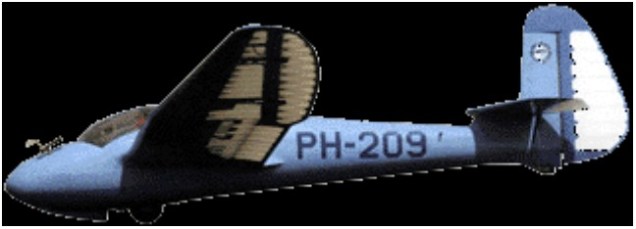
In 1938 the company moved to Kirchheim/Teck and employed more than 300 people during the war time.
The first serial gliders were the aerobatic single seat trainer GÖ-1 ‘Wolf’ from Wolf Hirth and the renown GÖ-3 ‘Minimoa’ as well as the two seat GÖ-4 from Wolfgang Hütter.
Wing span: 14,8 m
Length: 6,74 m
Wing area: 19 sq.m
Empty weight: 180 kg
Max AUW: 350 kg
Wing load: 18,4 kg/m²
Min. sink rate: 1 m/sec
max L/D: 1:19
Schempp-Hirth / Göppingen Mini-Moazagotl / Minimoa Goppingen GÖ-3 Gallery


Schempp-Hirth Mini-Moazagotl / Minimoa Goppingen GÖ-3
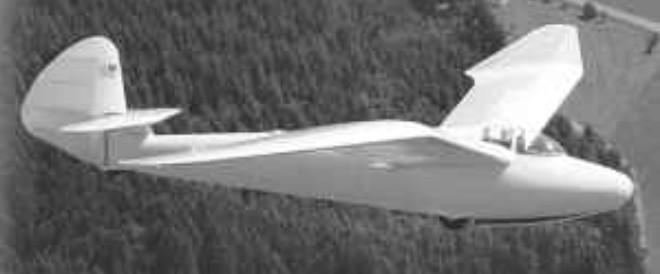
In 1938 the company moved to Kirchheim/Teck and employed more than 300 people during the war time.
The first serial gliders were the aerobatic single seat trainer GÖ-1 ‘Wolf’ from Wolf Hirth and the renown GÖ-3 ‘Minimoa’ as well as the two seat GÖ-4 from Wolfgang Hütter.
One of Germany’s leading high performance single seaters before the war, this gull-winged glider was designed by two of Germany’s leading sailplane pilots, Martin Schempp and Wolf Hirth. They designed and developed the Minimoa from the 20m span Moazagotl, and the name Minimoa is a contraction of miniature Moazagotl, although the design was also known as the Goppingen 3.
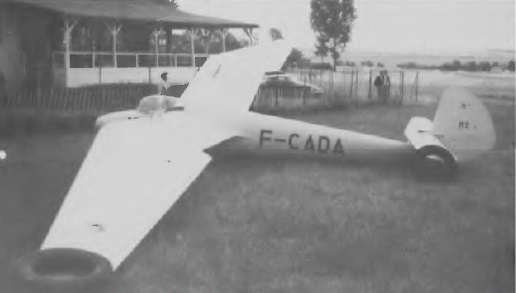
In its original form it had cantilever shoulder-mounted gull wings, and it was built by Wolf Hirth and Dipl-lng Wolfgang Mutter. Of conventional wood and fabric construction, the Minimoa is characterised by swept back wing outer panel leading edges and large ailerons with trailing edges projecting beyond those of the wing itself; air brakes of the same basic Schempp-Hirth type later to be featured on many other sailplanes are fitted. The tailplane is mounted ahead of the fin and is raised above the fuselage top line. The pilot sits under a one-piece hinged cockpit canopy that opens to starboard, and by prewar standards the cockpit was roomy. Landing gear consists of a non-retractable monowheel and a skid under the nose, plus a small tailskid. By 1938 the Minimoa 3B was introduced with the gull wings now in the mid position with a modified aerofoil section, and reduced weight. From July 1935 to 1939 a total of 110 Minimoas were built, of which 13 were sold abroad to Britain, France, the USA, Argentina, South Africa and Japan; a few survived the war and are still flying.
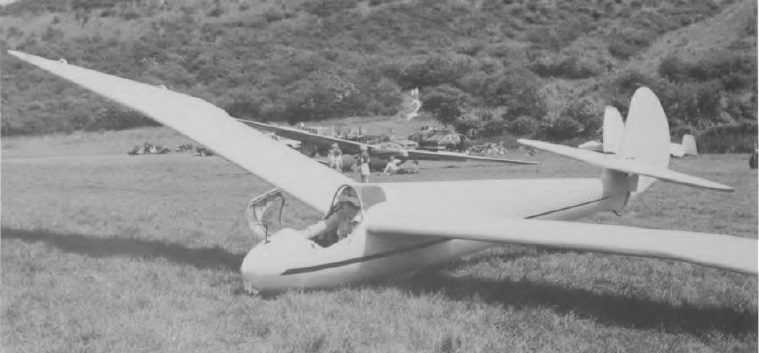
First flown in 1935, the Minimoa made its mark in contest flying, taking third place at the 1937 International Competition at the Wasserkuppe in Germany flown by Wolfgang Spate. Richard du Pont and Chet Decker flew Minimoas to win the U.S. Championships in 1937 and 1939. The Minimoa established a number of records, including the world altitude record in 1938 (using lift in cumulo nimbus cloud) of 6,687 m/ 21,939 ft. The name was an abbreviation of its original nickname, Mini- Moazagotl, as it was a smaller successor of Hirth’s earlier 20 m. Moazagotl.
Distinctive in many respects, the Minimoa was stable, but with poor roll control by later standards. It was the first sailplane to carry water ballast, in a tank behind the cockpit. Structure: wood/ fabric wings and tail, wood fuselage
Göppingen Gö 3 Minimoa
Wing span: 17m /55.7ft
Wing area: 19.05sq.m / 205sq.ft
Length: 23.261 ft / 7.09 m
Empty Weight: 200kg
Payload: 105kg / 230lb
Gross Weight: 275kg
Wing Load: 14.5kg/sq.m
Length: 6,9 m
Wing chord: 1,3 m
Aspect ratio: 16
Airfoil: Go 681, 693
L/DMax: 28 @ 72 kph / 39 kt / 45 mph
MinSink: 0.61 m/s / 2.0 fps / 1.18 kt
Seats: 1
Schempp-Hirth Minimoa
Span: 17.0 m / 55 ft 9.25 in
Length: 7.0 m / 22 ft 11.5 in
Wing area: 19.0 sq.m / 204.5 sq ft
Wing section: Gottingen 681
Aspect ratio: 15.2
Empty weight: 216 kg / 476 lb
Max weight: 350 kg / 772 lb
Water ballast: None
Max wing loading: 18.42 kg/sq.m / 3.77 lb/sq ft
Max speed: 136 mph / 119 kt / 220 km/h
Stalling speed: 32.5 kt / 60 km/h
Min sinking speed: 0.65 m/sec / 2.1 ft/sec at 39.5 mph / 34 kt / 63 km/h
Best glide ratio: 26:1 at 53 mph / 46 kt / 85 km/h
Schempp-Hirth Moazagotl
The Minimoa name was an abbreviation of its original nickname, Mini-Moazagotl, as it was a smaller successor of Hirth’s earlier 20 m Moazagotl.
Goppingen GÖ-1 Wolf 1
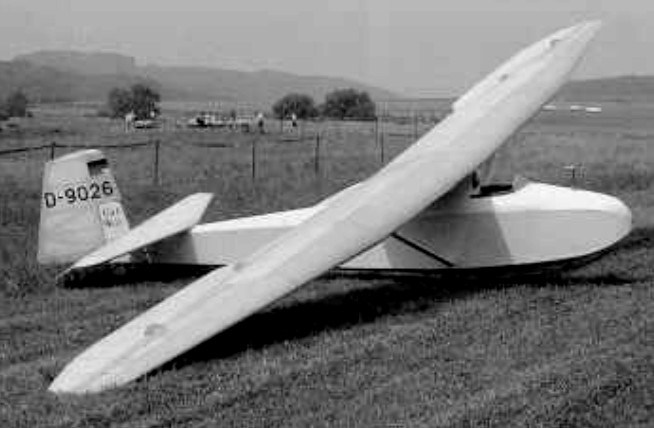
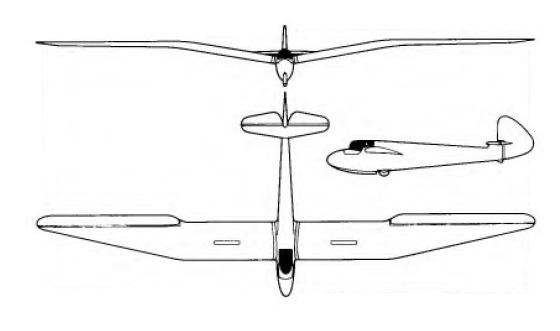
The Wolf was named after Wolf Hirth, partner with Martin Schempp in the then new firm of Sportflugzeugbau Goppingen (now Schempp-Hirth). It was produced in 1935 as a rival to the Schneider Grunau Baby as a utility (rather than a high performance) sailplane. It lacks any approach control devices but has a built-in wheel, an unusual feature for the time. It was used widely for aerobatic displays, for which it could be fitted with an extra strut (making a V- strut) to permit inverted maneuvers.
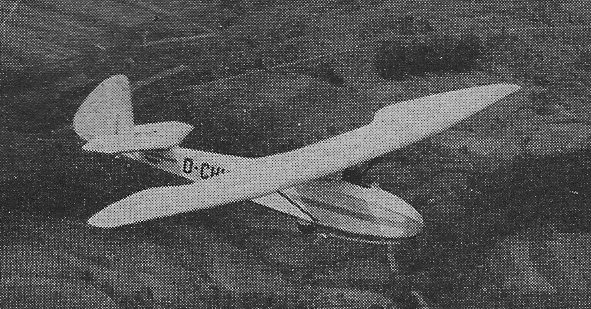
It had poor spinning characteristics, and in 1938 all those flying in Germany were grounded until modifications were incorporated in the wingtip and ailerons.
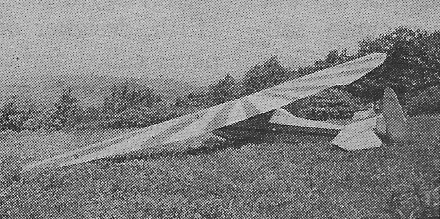
Structure: I-strut-braced wood/ fabric wings and tail, wood fuselage.
Göppingen Gö 1 Wolf
Wing span: 14m / 45ft
Wing area: 14.5sq.m
Length: 20.669 ft / 6.3 m
Empty Weight: 145kg / 330lb
Max Payload:100kg
Gross Weight: 220kg
Wing Load: 14.6kg/sq.m
Aspect ratio:13.1
Airfoil: Gottingen 535
Seats: 1
L/DMax: 17 @72 kph / 39 kt / 45 mph
MinSink: 0.91 m/s /3.0 fps / 1.78 kt
Crew: 1

