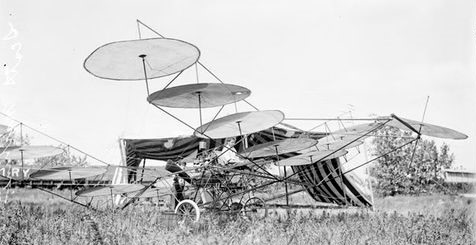
James F Scott’s 1910 smaller craft looked like a helicopter, but wasn’t. It consisted of an open structure bearing two V-frames on which 16 discs were mounted in fore and aft V-frames. The 8′ diameter disks were built of radially ribbed fabric, like umbrellas. There was no drive-shafting or other driving mechanisms for the disks, but a 40hp water-cooled engine drove a pusher propeller. Apparently, the disks were supposed to produce some form of lift. It is not known if the contraption was ever flown.
Construction of the aircraft was started by Ron Scott in the mid 1960s starting with a model rather than a drawing.
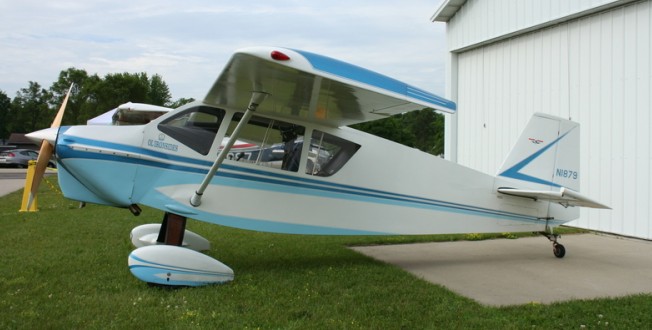
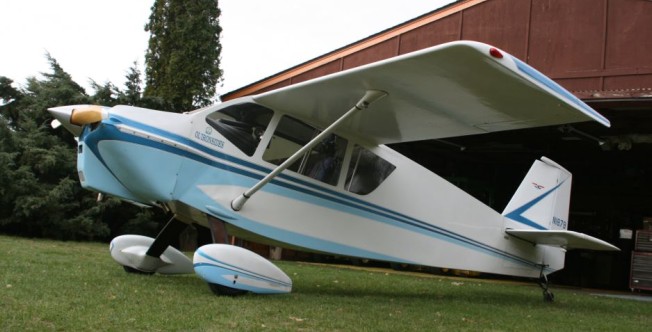
The Scott Ol’ Ironsides is an early homebuilt aircraft using wood construction with stressed fiberglass panel construction. Ol’ Ironsides is a strut-braced high-wing aircraft with conventional landing gear arrangement. The wooden fuselage is made of Sitka Spruce. Fiberglass composite skins were formed in 4 x 8 sheets using two layers of cloth with resin over a waxed Masonite table. The landing gear legs, fuel tank, wink tips, wheel pants, and cowling were also formed out of fibre-glass. Scott integrated elements of the Bowers Fly Baby and Champion J-1 Jupiter construction with the Wittman Tailwind airfoil and general layout into the design. The craft cost US$1530 in 1969.
Ol’ Ironsides first flew on 22 November 1969 with a Continental C-85 engine sourced from a Cessna 140. In 1985 the prototype aircraft was restored and re-engined with a Continental O-200 and Sterba wooden propeller.
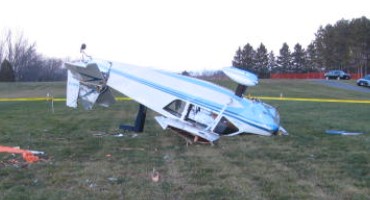
A 79-year-old pilot suffered head injuries after crashing his single-engine airplane at an airstrip in East Troy on Saturday, November 24th 2012. The crash happened just before 3:30 p.m. It occurred on a privately-maintained grass airstrip known as Air Troy Estates. Many residents who reside nearby have planes and hangars adjacent to the runway. The pilot, identified as Ronald Scott, was attempting to land his plane on the runway when he crashed. He had to be removed from the plane — which ended upside down. He was taken to a Waukesha Hospital to be treated for his injuries. Scott was flying an experimental 1969 Scottbuilt (he designed and built this plane) fixed wing XS-1 known as “Old Iron Sides”. The Walworth County Sheriff’s Office and the FAA were coordinating this investigation.
Ol’ Ironsides Construction Number (C/N): 1 Registration Number: N1879 Engine: 1 × Continental C-85, 85 hp (63 kW) Engine: 1 × Continental O-200, 100 hp (75 kW) Wingspan: 19 ft 6 in (5.94 m) Wing area: 79.2 sq ft (7.36 m2) Length: 17 ft (5.2 m) Empty weight: 720 lb (327 kg) Gross weight: 1,125 lb (510 kg) Fuel capacity: 18 USgal Cruise speed: 117 kn; 217 km/h (135 mph) , 145 mph (233 km/h) with O-200 Stall speed: 48 kn; 89 km/h (55 mph) Rate of climb: 1,200 ft/min (6.1 m/s) Seats: 1
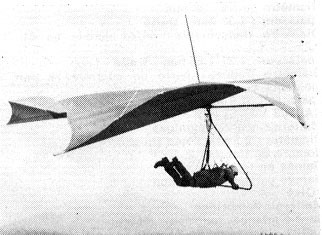
The Scott Firefly was described as a nice machine, very docile, and easy to take off and land.
Firefly 19/16 Wing area: 17 m² Wing span: 8.33 m Aspect ratio: 4 Hang glider weight: 19 kg Minimum pilot weight: 55 kg Packed length: 5.8 m Number of battens: 8 Nose angle: 91°
Firefly 20/17 Wing area: 19 m² Wing span: 9.07 m Aspect ratio: 4.14 Hang glider weight: 19 kg Minimum pilot weight: 78 kg Packed length: 6.1 m Number of battens: 10 Nose angle: 91°
A division of Scintex SA, a mechanical and electrical equipment manufacturer, held an exclusive license to build improved versions of the Piel Emeraude. Built the CP301C, also in C1, C2 and C3 versions; the two-seat Super Emeraude with fixed landing gear as the CP1310/CP1315; and the 4/5-seat ML 250 Rubis, with retractable landing gear, which first flew on June 1962.
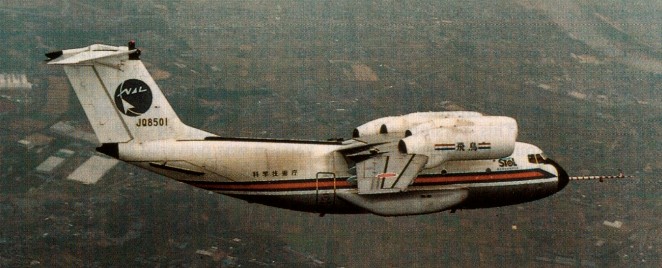
The Asuka, which first flew in October 1985, is a derivative of the Kawasaki C-1 tactical transport. The original P&W JT8D engines have been replaced by four Ishikawajima-Harima Heavy Industries FJR710/600S high bypass ratio turbofans.
The engines are mounted above and ahead of the wing leading edges. The exhaust airflow is directed across the wing extrados and attaches to the trailing edge flaps in whathas been termed “Upper Surface Blowing”. The resulting depression caused by the Coanda effect produces the desired lift force.
The STOL conversion takeoff run to 15m on the first flight was 509m, including a 394m ground run. Takeoff speed was 72 kts. The landing run from 15 m was 439 m, including 320 m on the ground.
STA claims the plane is only experimental and that there are no immediate development prospects.
Der Fledermaus is a one-of-a-kind homebuilt designed and built by E. Alvin Schubert with specific parameters: ease of entry good visibility stability in flight, economy of building and operation, single-place only able to use a VW engine. He picked up a used 25-hp VW in 1960 and rebuilt it to deliver 36-hp with 88-mm cylinders and heads. All goals were achieved. Built circa 1975, it was registered N7873.
Gross weight 745 lbs Empty weight 441 lb Fuel capacity 7 Usgal Wingspan 21 ft Length 16 ft Engine 25-hp VW uprated to 36 hp with 88mm cylinders Vmax 120 mph Cruise speed 90 mph IAS Climb rate 600-800 fpm Ceiling 10,000 ft Takeoff run 600 ft Landing roll 800 ft