Back to Scottish Aviation Pioneer
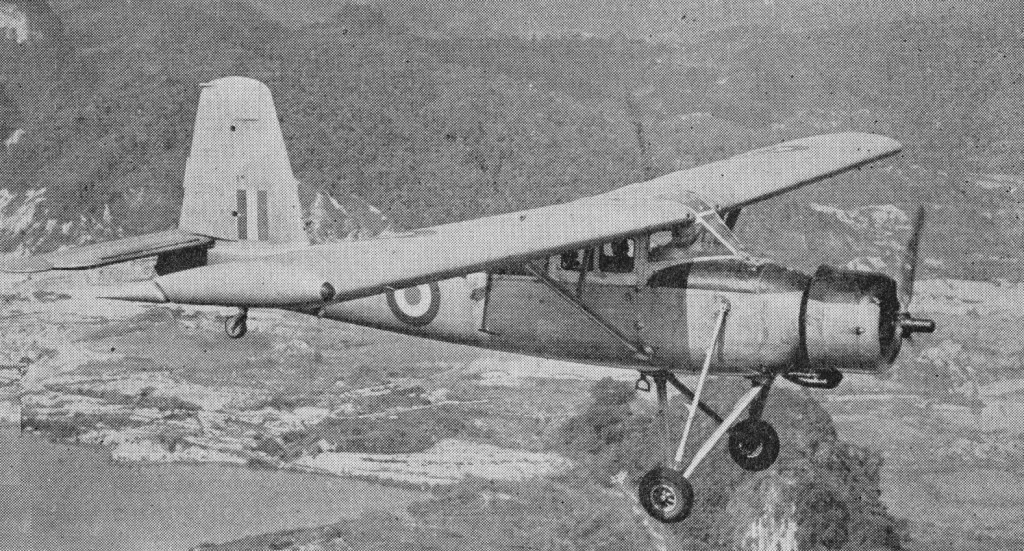
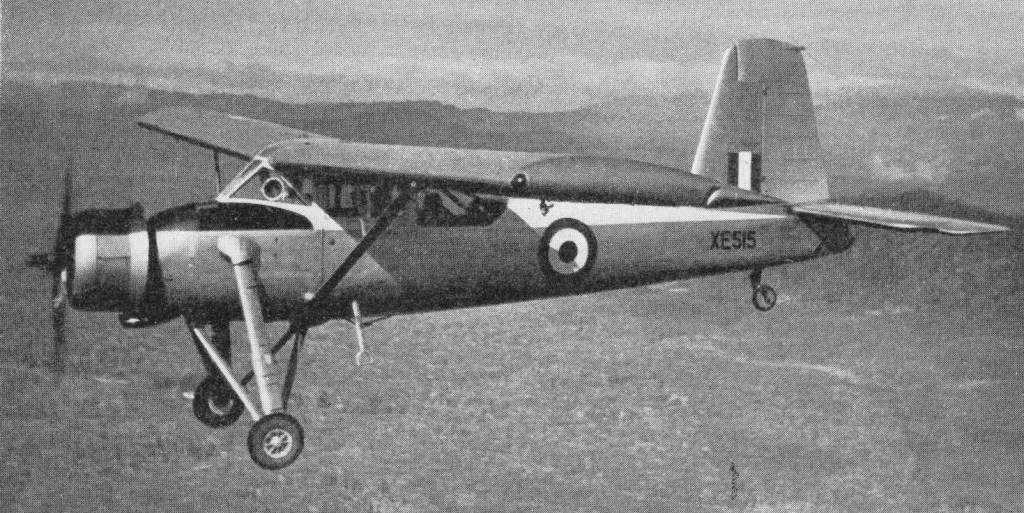
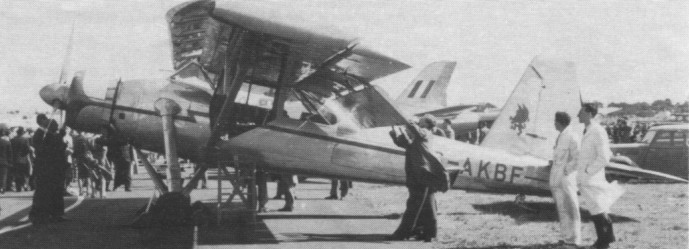
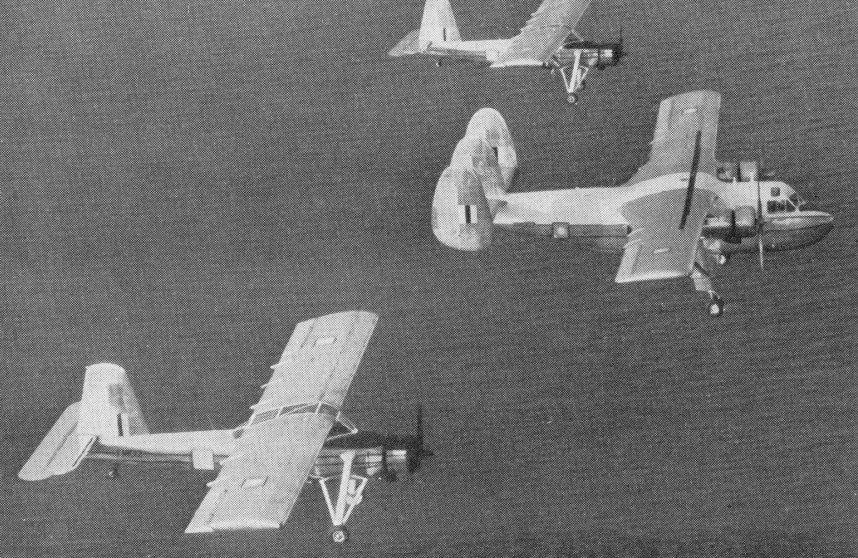
First aircraft produced by Scottish Aviation was the Prestwick Pioneer single-engined five-seat STOL monoplane, first flown 1950. For counter insurgency the Scottish Aviation A.4/45 Prestwick Pioneer 2 was to fill the niche. It came about via the Pioneer 1 and was re engined with the more powerful Alvis Leonides engine.
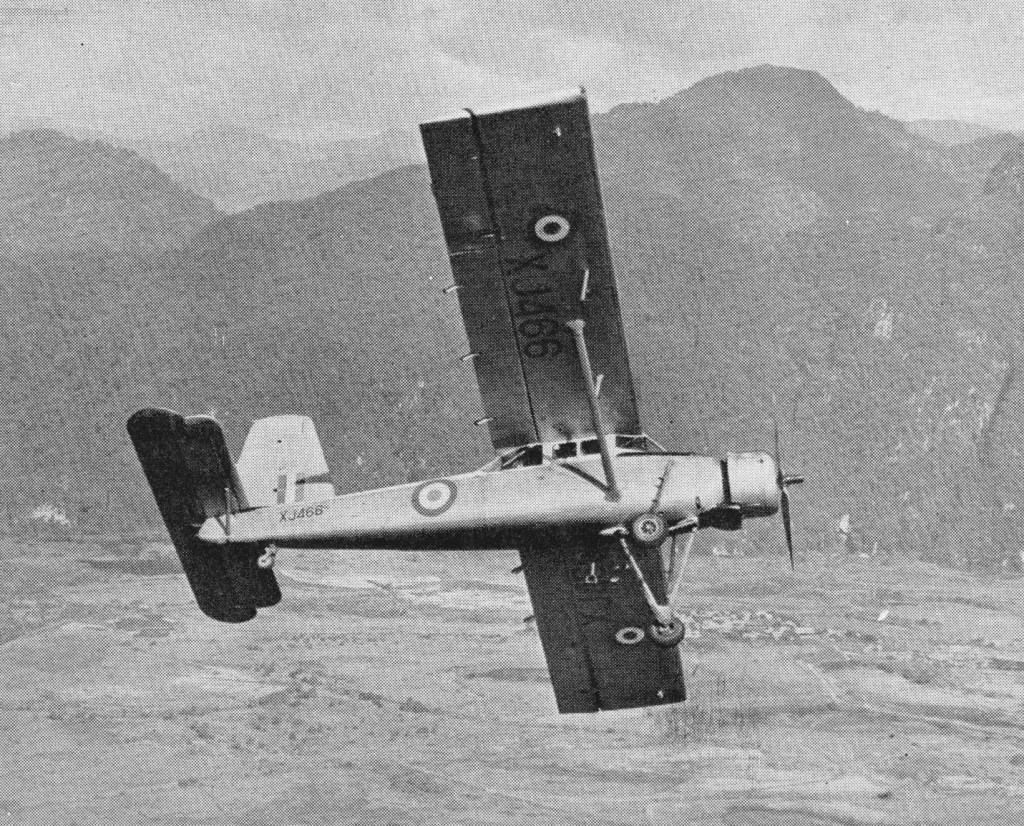
In service with the RAF as the CC.Mk.1, the Pioneer was in Malaya, Aden, and the UK.
Scottish Aviation Pioneer
Engine Alvis Leonides 504/1
Span 49 ft 9 in
Length 34 ft 6 in
Mauw 5400 lb
Cruising speed 120 mph
Formed 1935, but for several years was concerned mainly with aircraft repair work and management of flying school and airport (Prestwick, Scotland).
First aircraft produced was Prestwick Pioneer single-engined five-seat STOL monoplane, first flown 1950. Twin Pioneer of 1957 first appeared as 16-passenger civil type, but was used also by RAF.
Company re-engaged in important repair, maintenance and modification work, involving Lockheed aircraft, and made freighter conversion of Vickers Viscount. Has made large components for Lockheed Hercules over long period. Final aircraft under its own name were Bulldog (flown originally in 1968 as military trainer version of Beagle Pup); Bullfinch with retractable landing gear, first flown August 1976; and twin-turboprop Jetstream, developed 1966-1970 by Handley Page and continued by BAe.
The Beagle Aircraft Ltd Bulldog was taken up by Scottish Aviation Ltd after Beagle went into receivership in 1970 and finally found its last home with British Aero¬space in 1978.
Handley-Page, through Jetstream Aircraft, became part of Scottish Aviation in 1970.
Merged into British Aerospace in April 1977; as a British Aerospace company offered support facilities for Beagle Pup, B.206, and Basset.
The Scott Viking 2 is a two-seat side-by-side sailplane of conventional wooden construction. The cantilever gull wing was fitted with spoilers and variable droop ailerons. The undercarriage consisted of a main skid, main wheel of fixed centre, and tail bumper.
The first flight was at Dunstable on 27 August 1939.
Wing span: 18.60 m / 51 ft 0 in
Length: 6.73 m / 22 ft 1 in
Wing area: 21.83 sq.m / 235 sq.ft
Aspect ratio: 16.4
Empty weight: 231.34 kg / 510 lb
AUW: 412.77 kg / 910 lb
Wing loading: 18.55 kg/sq.m / 3.80 lb/sq.ft
Max L/D: 24
Min sink: 0.63 m/sec at 56 kph / 2.3 ft/sec at 35 mph
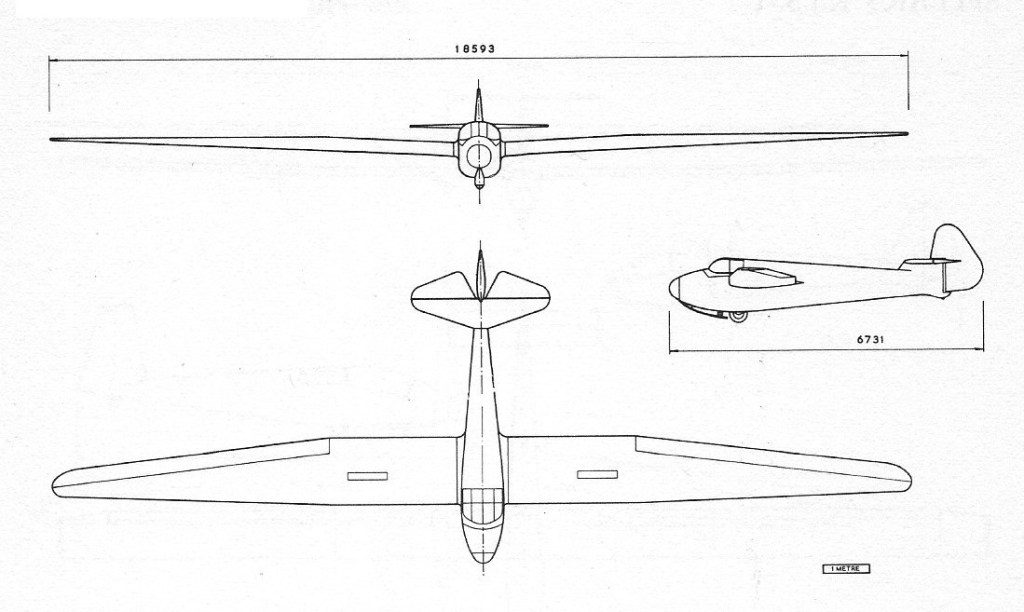

The Scott Light Aircraft Ltd of Dunstable, UK, built four Viking 1 during 1938/39. The first flew at Dunstable on 6 November 1938. Of wood construction, they feature a cantilever wing, fitted with spoilers and variable droop ailerons. They were priced at £265 ex-works. The outbreak of WW2 in Sept 1939 ceased production.
The third built, c/n 114 Registration marks BGA 416, G-ALRD, AHU, survived. History Bought new by W.E. Filmer of the Southdown GC in 1939, flew in the 1939 Camphill Nationals.
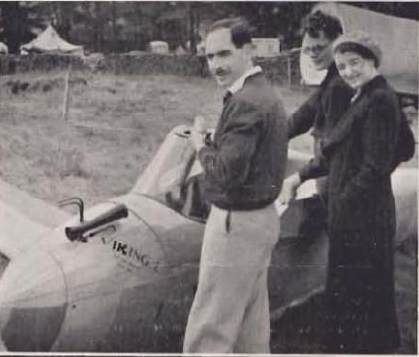
Believed to have been stored during WW2 and thus was never in RAF/ATC ownership. Passed to the ownership of R.D. Dickson in 1948.
Bought by the Coventry GC in 1951 and then to Lou Glover in 1962 who owned it for 40 years before selling it to Mike Beach in 2001. Sold to Willem den Baars in May 2004 and acquired by the GHC in August 2015.
Notable flights: The logbook starts in 1948. We know it went to 15,000 ft in wave at Sutton Bank, otherwise no details. Was at the 1972 Firle Beacon meeting which commemorated the famous 1922 Itford Hill event. Also at the Sept 1999 Percy Pilcher memorial meeting close to Husbands Bosworth.
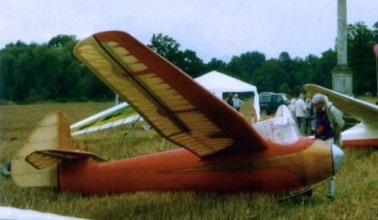
Major restorations in 1948 and 1960 and the last, including recovering, in 1992 done by Lou Glover. The last C of A expired 19th Sept 2012. The Viking flew at Lasham for the first time on Sunday 15th May 2016 flown by Gary Pullen.
Owned by the Gliding Heritage Centre, Lasham, following funds being raised for its purchase by a substantial number of Vintage Gliding Club members.
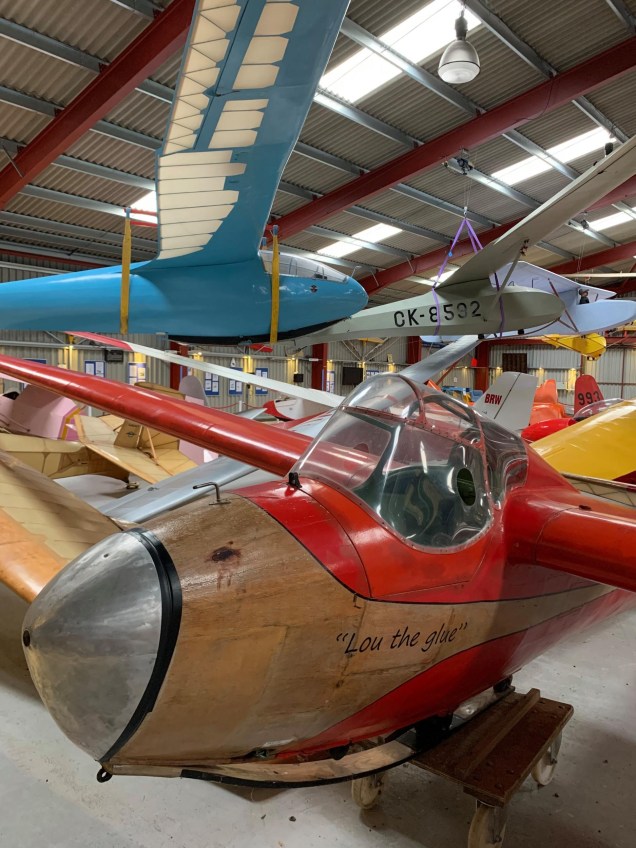
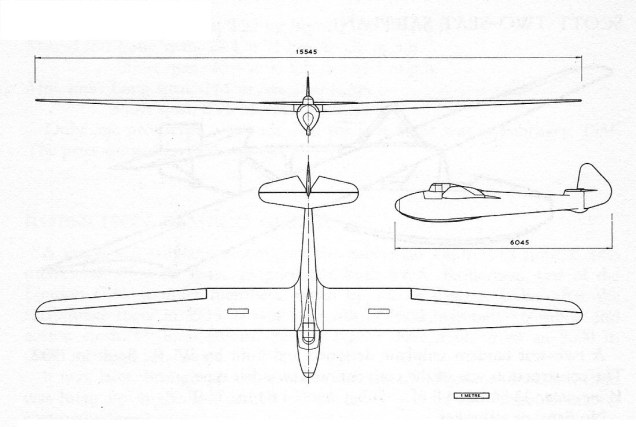
Wing span: 15.54 m / 51 ft 0 in
Length: 6.05 m / 19 ft 10 in
Wing area: 15.89 sq.m / 171 sq.ft
Aspect ratio: 15.4
Empty weight: 167.83 kg / 370 lb
AUW: 245 kg / 540 lb
Wing loading: 15.38 kg/sq.m / 3.15 lb/sq.ft
Max L/D: 20
Min sink: 0.76 m/sec at 53 kph / 2.5 f/sec at 33 mph
Undercarriage: main and tail skid
Albion St
Dunstable
Bedfordshire
UK
W.R. Scott built his first glider at the age of 13 after seeing a film about gliding at the local cinema in his home town of Thetford. This was a hang-type glider of about 30 feet wingspan, and was built out of materials costing 3/- saved out his weekly money. The glider was covered with thick brown paper proofed with terobene paint drier thinned with petrol.
On its first flight the glider was found to be unstable and it crashed after covering a distance of twenty to thirty feet at a height of four feet.
Several more gliders were built, with progressive results, and the last was shown to the Duke of Grafton who offered Scott facilities on his estate at Euston Hall Park near Thetford. Scott then designed and built a tandem two-seat glider which took eighteen months to complete whilst he was serving an apprenticeship in a local garage. The glider flew quite well, being towed by the Duke in one of his racing cars, until it was crashed by an RAF test pilot in Euston Hall Park in November 1933.
Scott built a similar version, using the wings salvaged from the crashed machine, and this was sold to the Duke of Grafton and made several flights on the owner’s estate near Newmarket.
The next glider Scott designed was one similar to the Abbott-Baynes Scud sailplanes. Scott completed the fuselage and some of the wing details, but he sold the incomplete machine to a club at North Walsham, Norfolk.
Scott went to work with Zander & Weyl at their newly established works at Dunstable. Whilst working there he began to build in his spare time three Hutter 17 gliders, two to sell and one for himself. Due to the financial insecurity of the Dart company Zander suggested to Scott that they should set up their own company to build these gliders, and in August 1937 they formed Zander & Scott. Initial production centered around the Hutter 17, for which they held the sole building rights for England, although several primary gliders were also built.
In 1938 Scott designed a high-performance single-seat sailplane. This was named Viking and first flew in November. By then Zander and Scott had run their capital to a very low level but Lord St. Davids offered assistance. He was therefore appointed Chairman of a Board of Directors and the company was renamed Scott Light Aircraft Ltd in December 1938. Several Vikings were then put into production and a two-seat version was designed and built in 1939. This flew for the first time one week before the war started and was therefore the only one of its type to be built.
After the outbreak of the war gliding ceased and Scott Light Aircraft Ltd only ever managed to produce parts and precision tooling.
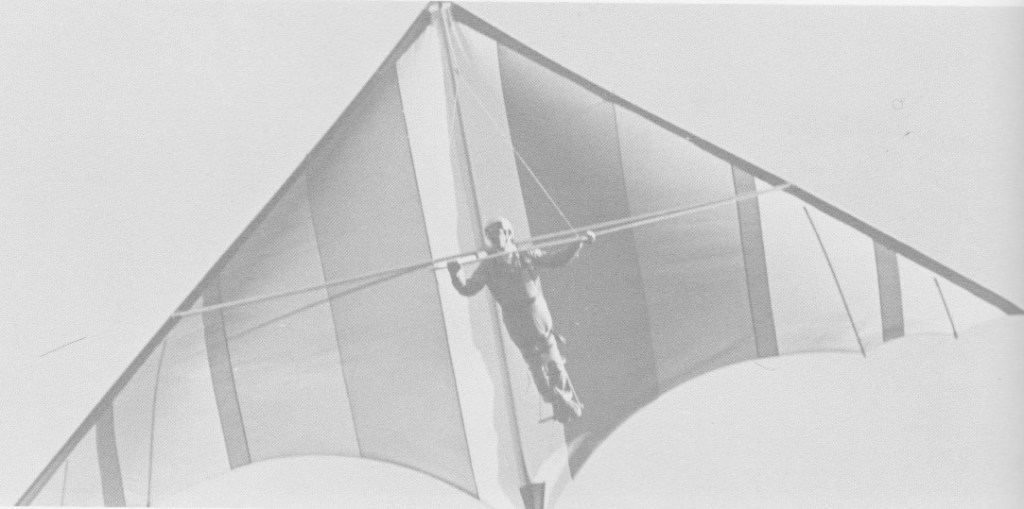
The Champ is designed for intermediate to advanced flying, either free flight or towing. Competition rated, the Champ has a very precise, sensitive control and rapid dive recovery.
Cambered lead spars give a semi-cylindrical edge and this model features a vertical stabiliser for tighter turns. The unique two-piece cross spar hinges in the centre and is held in place by a centre wing nut. This eliminates disassembly of wing bolts and rolling up of cable allowing speedy set-up and take-down. An optional kit converted it for water towing.
The airframe is made from 6061-T6 and 6063-T832 anodised aluminium. All rigging cable is 3/32in 7×7 aircraft type and is double swagged. All bolts, rigging and fittings are aircraft quality. The sail was either 3.0 or 3.8oz dacron, custom designed in colours.
The Champ came with a seat that featured a foot rest, spreader bar, and a wide backrest plus a 6000 lb test pilot support system. The control bar is padded.
Leading edge: 17.5 ft
Keel length: 14 ft
Wing span: 30 ft
Wing area: 190 sq,ft
Aspect ratio: 4.74
Nose angle: 102˚
Sail billow: 6˚
Weight: 40 lb
Pilot weight: 150-200 lb
Takeoff speed: 11 mph
Stall speed: 9 mph
Max speed: 30 mph
Best glide ratio (L/D): 7-1
Best L/D speed: 16 mph
Min sink: 180 fpm
Leading edge: 18.5 ft
Keel length: 15 ft
Wing span: 31 ft
Wing area: 215 sq,ft
Aspect ratio: 4.47
Nose angle: 102˚
Sail billow: 6˚
Weight: 41 lb
Pilot weight: 185-225 lb
Takeoff speed: 11 mph
Stall speed: 9 mph
Max speed: 30 mph
Best glide ratio (L/D): 7-1
Best L/D speed: 16 mph
Min sink: 180 fpm
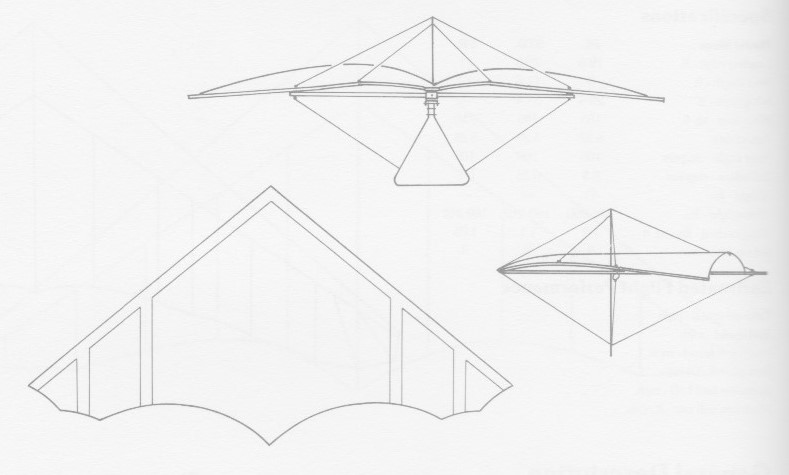
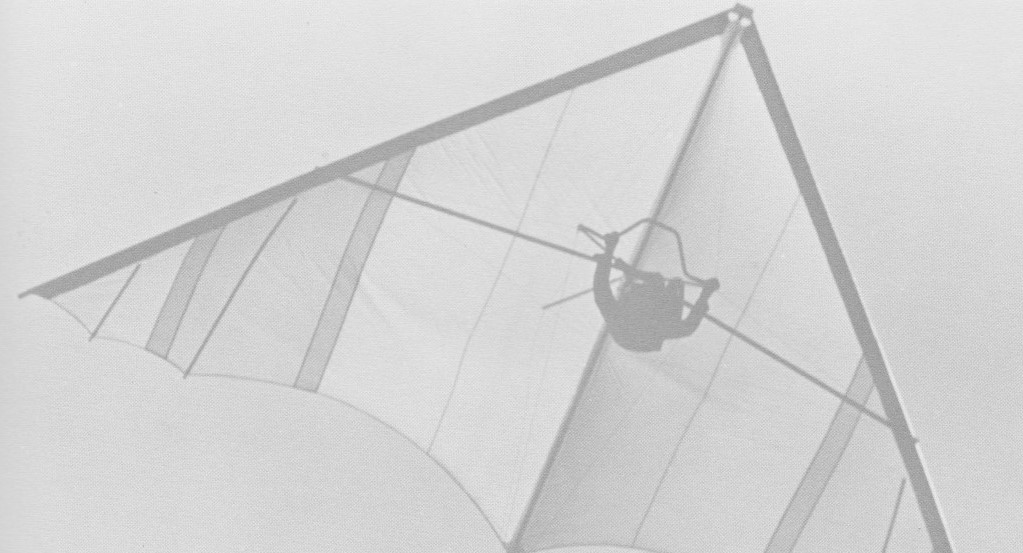
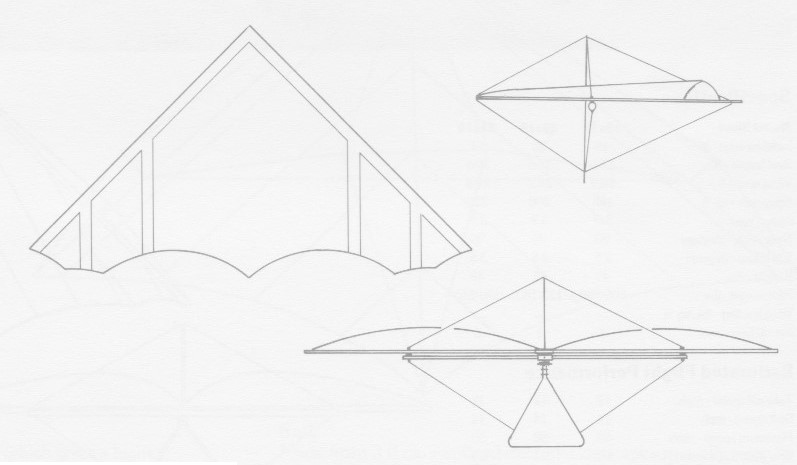
The World Cup Standard features a cambered keel. It also has a curved belly bar that allows for greater body movement, better control and more comfort. A unique twopiece cross spar hinges in the centre and is held in place by a centre wing nut. This eliminated disassembly of wing bolts and rolling up of cables which allows speedy set-up and take-down. An optional kit was available for water towing.
The airframe is made of 6061-T6 and 6063-T832 anodised aluminium. All cables are 3/32in 7×7 aircraft type and is double swaged. All bolts, rigging and fittings are aircraft quality. The sail is either 3.0 or 3.8oz dacron which could be customised in colours.
The pilot support was a seat that features a foot rest, spreade bar and a wide backrest. The control bar is padded.
18×15
Leading edge: 18.5 ft
Keel length: 15 ft
Wing span: 28 ft
Wing area: 190 sq,ft
Aspect ratio: 4.13
Nose angle: 90˚
Sail billow: 7˚
Weight: 39 lb
Pilot weight: 150-200 lb
Takeoff speed: 14 mph
Stall speed: 12 mph
Max speed: 30 mph
Best glide ratio (L/D): 5.5-1
Best L/D speed: 16 mph
Min sink: 250 fpm
19×16
Leading edge: 19.5 ft
Keel length: 16 ft
Wing span: 29 ft
Wing area: 220 sq,ft
Aspect ratio: 3.82
Nose angle: 90˚
Sail billow: 7˚
Weight: 40 lb
Pilot weight: 185-225 lb
Takeoff speed: 14 mph
Stall speed: 12 mph
Max speed: 30 mph
Best glide ratio (L/D): 5.5-1
Best L/D speed: 16 mph
Min sink: 250 fpm
1928:
(Leland L) Scott Aircraft Motors
Kansas City MO.
USA
1939:
L L Scott & Luther Shelton, partnership
Kansas City MO.
USA
1928 = 40hp two-stroke unknown type. Production assumed through 1949 as company is listed in city directories.
1939 = A light plane power plant of the two-stroke variety said to have only nine moving parts and to be featured by its excellent scavenging. The engine could be adapted to use oil as fuel according to claims. Specific weight is said to be 2 lb per hp, but in larger sizes a specific weight of 1 lb per hp could be obtained, according to contentions of the designer. (— 1939 Aerosphere)
A Colonel J F Scott “flew” a weird contraption briefly in 1909 that was launched by towing it with a motorcycle. A Cincinnati paper on 3/31/09 reported: “The ‘Purple Flier’ Airship almost flew this morning when its inventor, Col J F Scott, took it out for a trial around the 500-acre field on the farm of Henry A Bobrink, but the engine failed to work properly. The machine also rose a few inches from the ground, but two of the four cylinders refused to work. Col Scott believes that with the machinery properly working the airship will fly. His machine weighs a little less than 1,000 pounds and has a 40 horsepower eight-cylinder air-cooled engine. The aeroplane is started with a motorcycle that is compelled to run at the rate of 25 miles an hour in order to raise the airship in the air.”
Engine: 40-45hp water-cooled
Wingspan: 35’0″
Gross wt: 900 lb
Empty wt: 675 lb
Seats: 1

