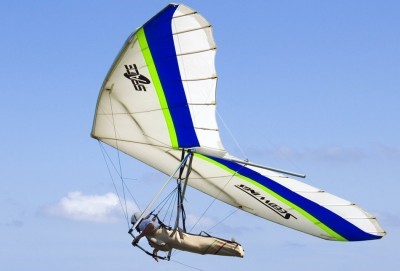
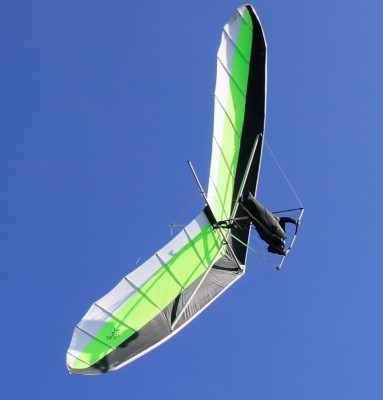
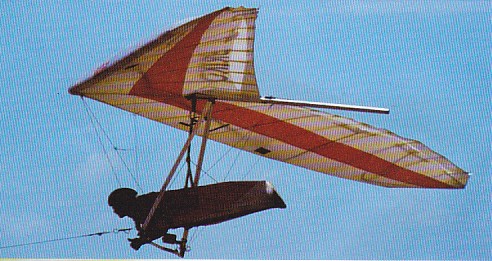
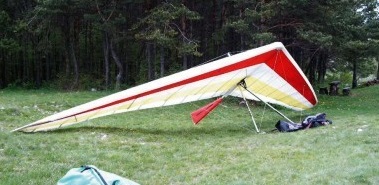
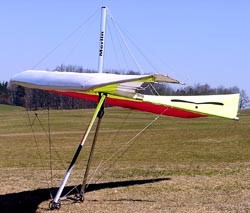
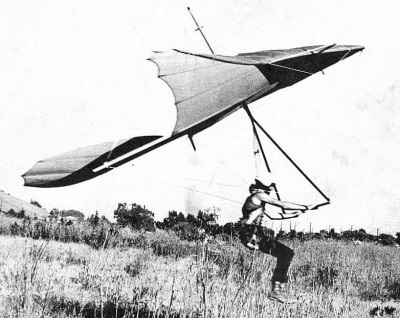
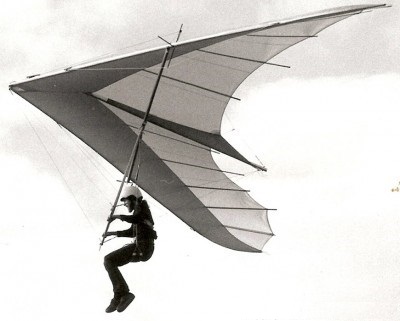
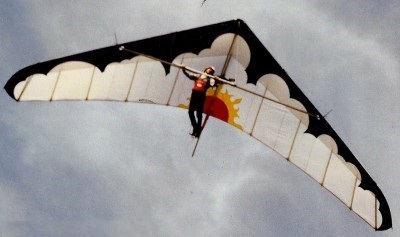
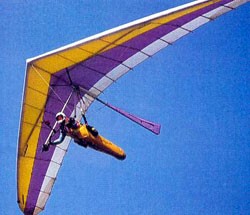
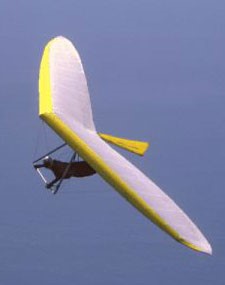
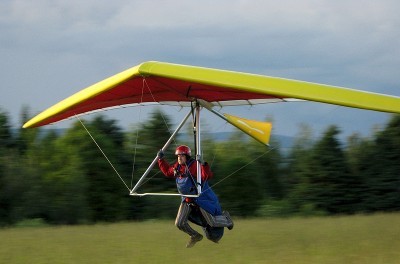
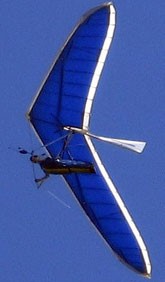
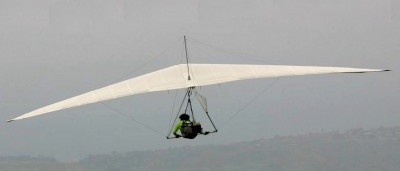
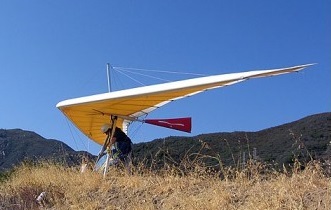
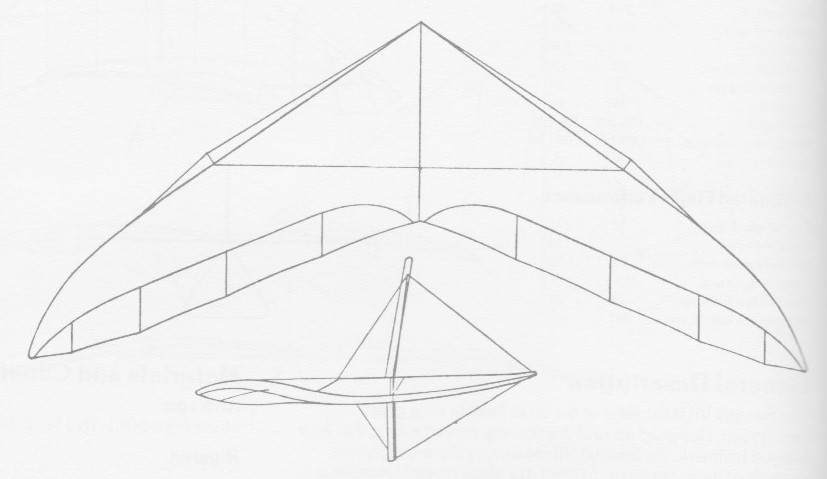
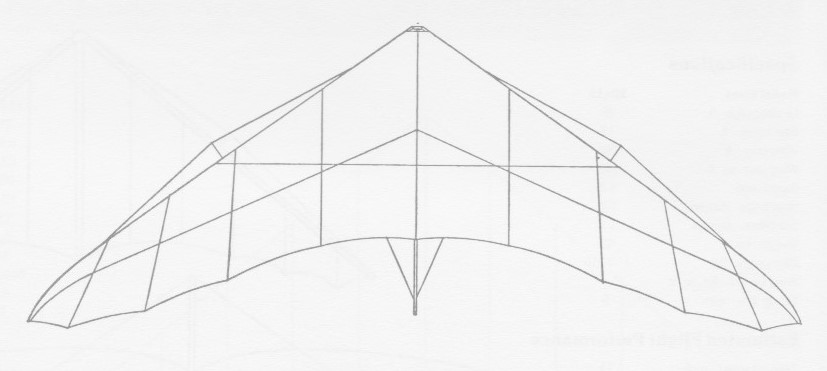
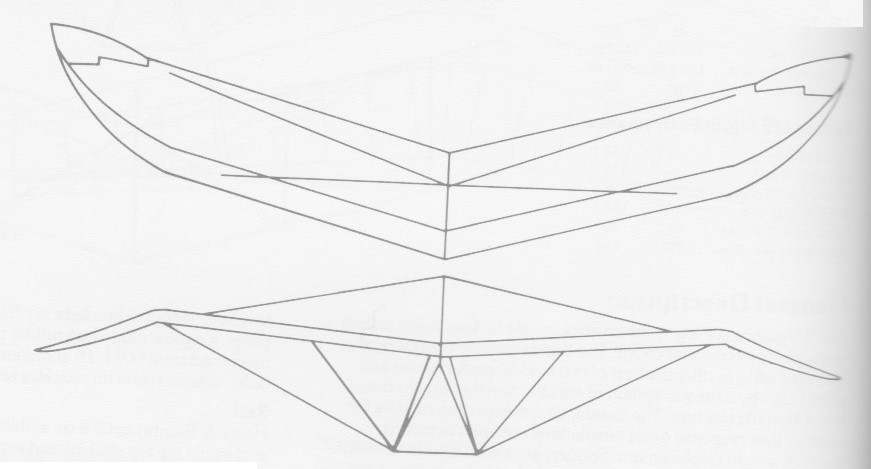
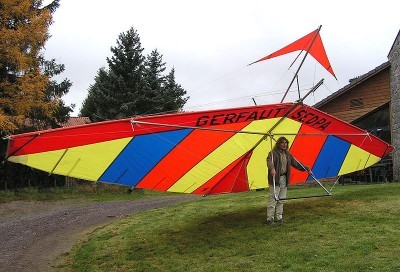
The 2007 Seedwings Europe Space for Intermediate pilots is a curved tip 75% double surface glider with mylar leading edge and aerofoil uprights. Equipped with VG. It has 12 slats of extrados and 2 slats of intrados. 3 inner velcros keep the profile at high speeds.
Very easy handling. DHV rated almost like a training glider but with 80% double surface and VG.
Manufactured by Austrian company Seedwings Flugsport GmbH commonly known as Seedwings Europe, from 2007. Compared to the earlier versions of the Space the newer ones have been improved slightly. The VG system has an extra pulley to make pulling easier. And the sidewires have been shortened by approx. 1.5 centimeters to make the roll response easier / faster.
Wing very light and quickly mounted (6 slats on each side and 2 rods easy to put and C all) … in terms of flight, take-off and posed are very easy (it poses at less than 25 km / h ). Towing at 25% VG it tows easily and keeps a straight line. It dampens bumps and is comfortable. In still air the sink rate is 1.2 meters at 0% VG. Just pulling 25% VG decreases this to 0.9 meters. At 0% VG the glider has relatively high bar pressure telling you that the glider wants to stabilize itself all the time. At just 25% VG this becomes significantly lighter and the glide improves. You can hear the stall of the glider. When the glider stalls you can hear the wing “buzzing”. For the landing, no problem, the margin for the final push is very large.
The wing can have an unpleasant behavior at the bend turn with a tendency to dive and slip at too low speed. The manufacturer unveiled their explanation that this characteristic comes from the curved wingtip design: All glider with curved wing tips must steered different – instead of classical weight shifting “steering like a handlebar of a bicycle” must be performed.
The wing is indeed a bit slow at roll but nothing crazy. The wing is otherwise very easy to launch and land, very good building quality and great attention to detail.
Space 14 14.0 sq.m Pilot Weight: 55-85 kg
Space 16 Wing area: 16 m² Wing span: 10 m Aspect ratio: 6.25 Hang glider weight: 24 kg Minimum pilot weight: 70 kg Maximum pilot weight: 100 kg Maximum speed: 85 km/h Number of battens: 14
The 2005 Funky is a single surface hang glider 165sq ft, 30% double surface approx 35 hours airtime. Mint condition, top quality sailwork. Suit beginner or experienced pilot returning to the sport wanting great handling but better performance than a basic sky floater.
According to the manufacturer apart from a few tweaks the Funky is basically a Seedwings Space without the double sail and without VG.
Modern, curved tip single surface glider with mylar leading edge and aerofoil uprights. Similar to the Icaro Relax which some call an “advanced” single surface.
Funky 15 Wing area: 15.3 m² Hang glider weight: 21 kg Minimum pilot weight: 55 kg Maximum pilot weight: 85 kg Packed length: 4.90 m Packed length short: 3.50 m
Funky 17 Wing area: 17.3 m² Hang glider weight: 23 kg Minimum pilot weight: 80 kg Maximum pilot weight: 105 kg Packed length: 5.15 m Packed length short: 3.75 m
Merlin 133 Wing area: 12.4 sq.m Wing span: 9.9 m Pilot weight: 60-80 kg Nose Angle: 132 deg Aspect ratio: 8 Certification: DHV 3 Price (1998) 64000 ÖS
Merlin 133 Wing area: 12.4 m² Wing span: 9.95 m Aspect ratio: 8 Hang glider weight: 28 kg Minimum pilot weight: 50 kg Maximum pilot weight: 75 kg Nose angle: 127°
Merlin 148 Wing area: 13.8 sq.m Certification: DHV 2-3 Pilot weight: 70-90 kg Wing span: 10.25 m Nose Angle: 133 deg Aspect ratio: 7.6 Price (1998) 65800 ÖS
Merlin 148 Wing area: 13.8 m² Wing span: 10.25 m Aspect ratio: 7.6 Hang glider weight: 30 kg Minimum pilot weight: 70 kg Maximum pilot weight: 90 kg Nose angle: 127°
Merlin 158 Wing area: 13.8 sq.m Certification: DHV 2-3 Pilot weight: 80-110 kg Wing span: 10.4 m Nose Angle: 133 deg Aspect ratio: 7.4 Price (1998) 66000 ÖS
Merlin 158 Wing area: 14.6 m² Wing span: 10.4 m Aspect ratio: 7.4 Hang glider weight: 33 kg Minimum pilot weight: 80 kg Maximum pilot weight: 105 kg Nose angle: 127°
1998: Schlichterstrasse 63, A-6262 Schlichter, AUSTRIA
Seedwing Europe was authorized to produce the model Sensor 510E160 and 610-144 by Seedwings Inc (USA) until July 1993. At the end of the contract, Andreas and Manfred Bangheri continued to produce the “Sensor” under the name of “Seedwings Europe” without the agreement of Bob Trampenau.
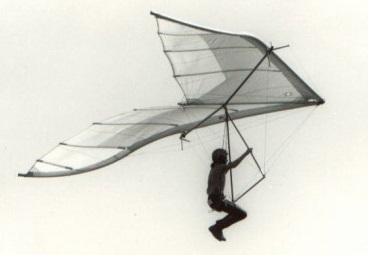
The Sensor 1 was a 1975 hang glider which featured a double surface sail and swept truncated tips. It was very stable in comparison to most high performance gliders, faster than most standards, and with good penetration. It has positive dive recovery with full sail deflation because of rigid truncated washout. This glider has been the test bed for diffusor tip theory in flex membrane wings.
Sensor I
The Sensor I airframe is made from 6061-T6 1.75in x .049 anodised aluminium tubing and all rigging cable is 3/32in 7 x 7 vinyl coated stainless steel aircraft quality. All hardware is aircraft quality, and the sail is made from 4.25oz and 3.0oz stabilised dacron, then available in white only.
There was the option of seated or prone harness.
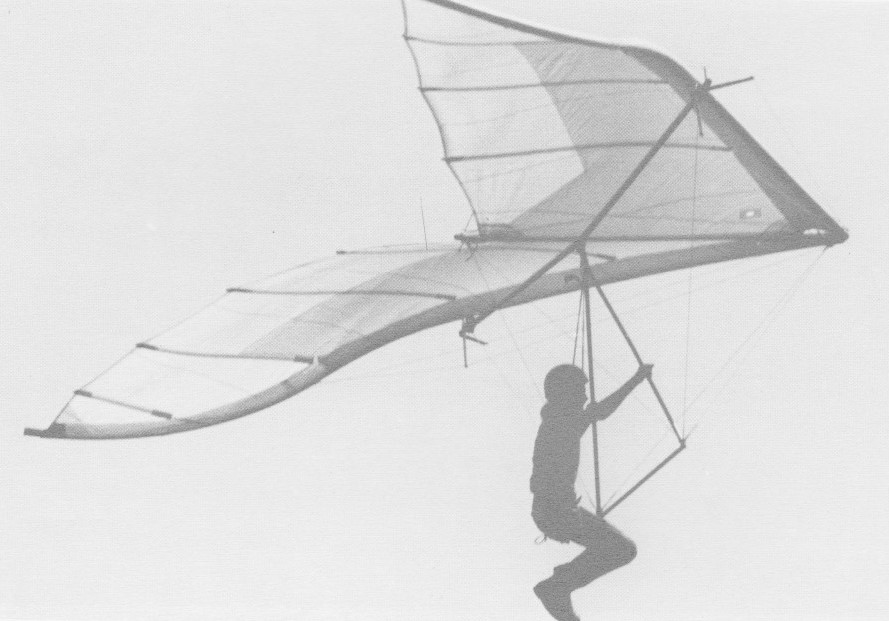
The Sensor 2 was from 1976 featured Flare Tips advanced tip design. This eliminates tip stall during steep banked turns and parachuting. The wingtips are extended with a Flare Tip Batten which allows the tip to flex in the angle of attack. The airfoil is a semi-double surface inflated type.
Sensor II
The Sensor II’s Flare Tips gives it a tip inertia that is lower than most. This is very light and flexible concept allows for rapid turn response, light tip gust effects, lower induced drag and improved washout distribution. The airfoil gives high L/D and low moment. The keel is reflexed and cambered for positive pitch moment.
The airframe is made from 6061-T6 and 2024-T3 aluminium tubing that is doweled and bushed. All rigging cable is 3/32in 7 x 7 vinyl coated stainless steel aircraft quality. All hardware is aircraft quality.
The sail is made from 3.8oz Howe & Bainbridge stabilised dacron with reinforcement in stress areas and double zig-zag stitched. The sail is fully battened. Seated or prone harness support sysems were options.
Sensor 2
The Sensor 210B is from 1976.
Sensor 210B
The Sensor 210C is from 1977.
Sensor 210C
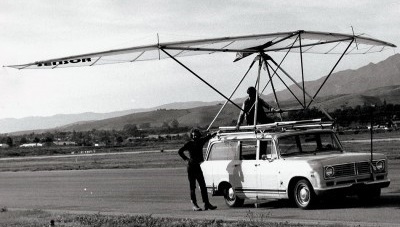
The Sensor 210E is from 1979.
Sensor 210E
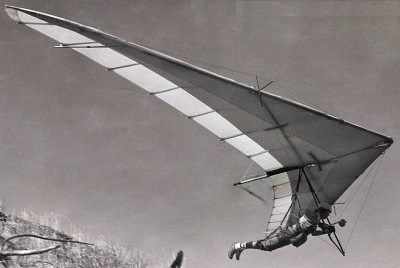
Construction plans were available for the Sensor 210E, all in inches and AN standards, and available in two sizes. The Sensor at that time was “the ultimate flying machine”. Bob Trampenau has been the inventor of curved flexible wingtips. Despite the fixed crossbars (floating crossbars) and big span it was easy to roll. Now, it handles like an ocean vessel.
Both the Sensor 310A and Sensor 310B were 1977 models.
Sensor 310A
The Sensor 411A was also a 1977 hang glider, followed by the Sensor 411B in 1978.
Sensor 411A
Sensor 411B
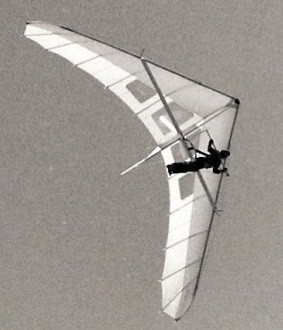
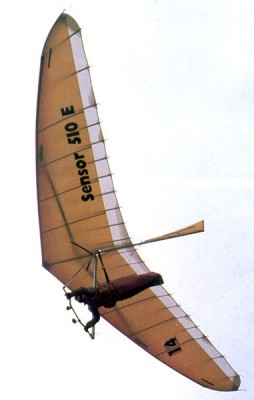
The 1985 Sensor 510 was for advanced pilots.
Sensor 510
The Sensor 610 came in 1992.
Sensor 610
Seedwing Europe was authorized to produce the model “Sensor 610-144” until 1993. At the end of the contract, they continued to produce the “Sensor” under the name of “Seedwings Europe” without the agreement of Bob Trampenau.
The Sensor 610 CF3 was a 2000 version for advanced pilots.
Sensor 610 CF3
The 2005 Sensor 610 CF4 was for advanced pilots.
Sensor 610 CF4
The 2007 Sensor 610 CF5 was for advanced pilots.
Sensor 610 CF5
The 2008 Sensor 610 F5 was for advanced pilots.
Sensor 610 F5
Seedwings produced the Sensor 610 and, in 1993, the Sensor 611.
Sensor 611
The 1986 Sensor 710 was for advanced pilots.
Sensor 710
Sensor I Keel length: 7.5 ft Wing span: 29.5 ft Wing area: 145 sq,ft Aspect ratio: 6 Nose angle: 110˚ Sail billow: .025˚ Weight: 45 lb Pilot weight: 130-160 lb Takeoff speed: 15 mph Stall speed: 16 mph Max speed: 45 mph Best glide ratio (L/D): 8-1 Best L/D speed: 25 mph Min sink: 275 fpm
Sensor II Keel length: 9.2 ft Wing span: 32.8 ft Wing area: 165 sq,ft Aspect ratio: 6.5 Nose angle: 110˚ Sail billow: 0.5˚ Weight: 36 lb Pilot weight: 140-180 lb Takeoff speed: 12 mph Stall speed: 14 mph Max speed: 45 mph Best glide ratio (L/D): 9-1 Best L/D speed: 25 mph Min sink: 225 fpm
Sensor 210E 183 Wing area: 17m² Wingspan: 10,5m
Sensor 510 Wing area: 14.96 m² Wing span: 10.6 m Aspect ratio: 7.5 Hang glider weight: 30 kg Number of battens: 20
Sensor 610 Wing area: 13.5 m² Wing span: 10.4 m Aspect ratio: 8 Minimum pilot weight: 60 kg Maximum pilot weight: 85 kg Nose angle: 127°
Sensor 610 CF3 135 Wing area: 12.63 m² Wing span: 10 m Aspect ratio: 8 Hang glider weight: 30 kg Minimum speed: 32 km/h Maximum speed: 104 km/h Max glide ratio (L/H): 15 Minimum sink rate: 0.76 m/s Packed length: 5.2 m
Sensor 610 CF3 142 Wing area: 13.19 m² Wing span: 10.4 m Aspect ratio: 8.1 Hang glider weight: 32 kg Minimum speed: 32 km/h Maximum speed: 104 km/h Max glide ratio (L/H): 15 Minimum sink rate: 0.76 m/s Packed length: 5.3 m
Sensor 610 CF3 150 Wing area: 13.93 m² Wing span: 10.7 m Aspect ratio: 8.2 Hang glider weight: 33 kg Minimum speed: 32 km/h Maximum speed: 104 km/h Max glide ratio (L/H): 15 Minimum sink rate: 0.76 m/s Packed length: 5.5 m
Sensor 611 Wing area: 14.4 m² Wing span: 10.85 m Aspect ratio: 8.2 Minimum pilot weight: 75 kg Maximum pilot weight: 105 kg Nose angle: 127°
Sensor 710 145 Wing area: 10.12 m² Wing span: 13.47 m Aspect ratio: 7.6 Hang glider weight: 29 kg Minimum pilot weight: 70 kg Maximum pilot weight: 85 kg Packed length: 5 m Number of battens: 14 Nose angle: 132°
Sensor 710 152 Wing area: 10.43 m² Wing span: 14.12 m Aspect ratio: 7.7 Hang glider weight: 30 kg Minimum pilot weight: 77 kg Maximum pilot weight: 102 kg Packed length: 5.2 m Number of battens: 14 Nose angle: 132°
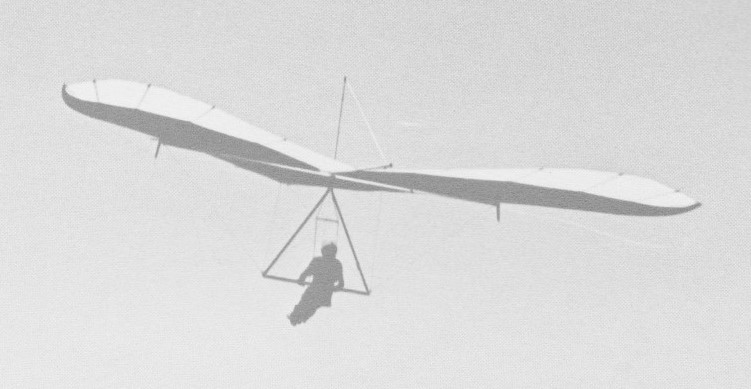
The 1975 Sunseed is a double surface, diffuser tip flying wing. It has outboard control surfaces. Canted tip wings provide self righting characteristic. It has a fibreglass leading edge with an aluminium trailing edge wedge. Draggons on the wing tips can be operated as glide path control devices to reduce glide angle from 12-1 to 5-1. The wing tip design provides induced drag and tip vortex reduction. The lower wing surface is ribless.
The airframe is made from 2024-T3 anodised aluminium. Rigging cable is 3/32in 7 x 7 stainless steel aircraft qualiy, vinyl coated. Hardware is all aircraft quality parts. The sail is 1.8oz stabilised dacron and is fitted with zippers and Velcro tapes. There was the option of seated or prone harnesses.
The Sunseed dissembles to a bundle 10 ft long and 1 ft in diameter.
The Sunseed has a stable stance even in steep turns with no tendency to dive or stall.
The run out distance before touchdown is about four times that of a Rogallo. It has a 13.7% airfoil and a load factor of 6G.
Wing span: 32.8 ft Wing area: 128.5 sq,ft Aspect ratio: 8.36 Wing sweep: 15˚ Weight: 50 lb Pilot weight: 125-180 lb Takeoff speed: 15 mph Stall speed: 16 mph Max speed: 40 mph Best glide ratio (L/D): 12-1 Best L/D speed: 25 mph Min sink: 275 fpm
Do not confuse with “Seedwing Europe” who was authorized to produce the model Sensor 510E160 and 610-144 until July 1993. At the end of the contract, Andreas and Manfred Bangheri continued to produce the “Sensor” under the name of “Seedwings Europe” without the agreement of Bob Trampenau.
A 1976 hang glider for advanced pilots. The duck design was supposed to prevent luffing dives, but according to Vol Libre, the wing was not flyable at speed.
Hang glider weight: 25 kg Packed length short: 5.30 m