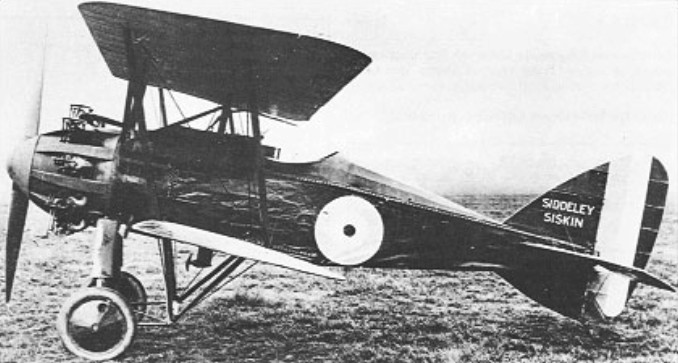
Siddeley S.R.2 Siskin

When, in January 1917, Capt F M Green became chief aeronautical engineer of the Siddeley-Deasy Motor Car Company, he began the design of a single-seat fighter, the S.R.2. A compact single-bay sesquiplane predominantly of wooden construction with fabric skinning, the S.R.2 was powered by a 320hp A.B.C. Dragonfly nine-cylinder radial engine. Armament comprised two synchronised 7.7mm machine guns.

A contract for six prototypes was reduced to three in mid 1918, the first of these flying in April 1919, by which time the fighter had been officially named Siskin. The first prototype Siskin was subsequently re-engined with an Armstrong Siddeley Jaguar, development in this form continuing after Siddeley Deasy acquired in 1921 the name and goodwill of Sir W G Armstrong Whitworth & Co Ltd, and the Armstrong Whitworth Siskin II emerging in 1922.

Max take-off weight: 989 kg / 2180 lb
Empty weight: 664 kg / 1464 lb
Wingspan: 8.38 m / 27 ft 6 in
Length: 6.48 m / 21 ft 3 in
Height: 2.97 m / 9 ft 9 in
Wing area: 22.95 sq.m / 247.03 sq ft
Max. speed: 233 km/h / 145 mph
Ceiling: 7255 m / 23800 ft

Siddeley Deasy Motor Car Co. Ltd

In 1909, J. D. Siddeley resigned from Wolseley and took over the Deasy Motor Co and the company became known as Siddeley-Deasy. During World War I the company produced trucks, ambulances, and staff cars. In 1915 airframes and aero-engines started to be produced as well.

Major F.M. Green served as chief engineer at the Royal Aircraft Factory and then become a part of the Siddeley-Deasy Motor Car Company. Not limited to the production of motor vehicles, the Siddeley-Deasy brand also delved into manufacture of engines and aircraft. The company was based out of Coventry and was founded by Henry Hugh Peter Deasy. While Deasy left in 1908, J D Siddeley came aboard and changed the company name to Siddeley-Deasy. From there, the company would gradually morph into the Armstrong Whitworth Aircraft firm (known formally as the Sir W.G. Armstrong Whitworth Aircraft Co. Ltd after their 1920 merger with Armstrong Whitworth) and became responsible for a large portion of Siskin production thereafter.

In April 1919 Siddeley-Deasy was bought out by Armstrong Whitworth Development Company of Newcastle upon Tyne and in May 1919 became Armstrong Siddeley Motors Ltd a subsidiary with J. D. Siddeley as Managing Director.

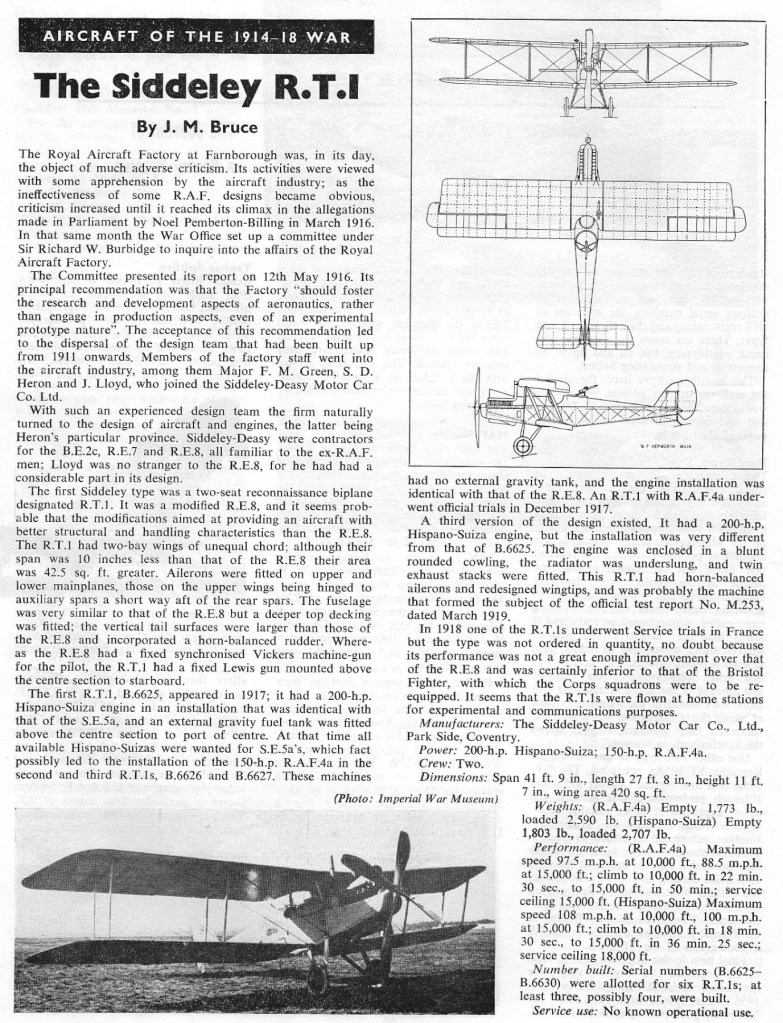
Based at Coventry, Warwickshire; was concerned in production of RAF R.E.7 and R.E.8 and Airco D.H.10 during First World War. Own experimental types included R.T.1 of 1917-1918, a redesigned R.E.8; S.R.2 Siskin, developed from ideas of Major F. M. Green and precursor of famous Armstrong Whitworth line of fighters; and Sinaia twin-engined bomber, completed 1921, also associated with Armstrong Whitworth. In 1919 Armstrong Whitworth and Siddeley-Deasy combined to form in 1920 Sir W. G. Armstrong Whitworth Aircraft Ltd.

Sibnia / Chaplygin TVS-2

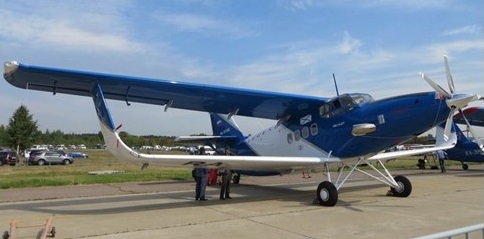
TVS-2-DT RA-2519G at MAKS, Zhukovsky, Moscow, Russia, August 26, 2015

Another organization working on a “better” An-2 is SibNIA (Siberian Aeronautical Research Institute) in Novosibirsk, Russia. In this version, the An-2MS (An-2MC in Russian) and later usually referred to as the TVS-2MS), the radial engine was replaced by a 1,100 hp Honeywell TPE331-12UHR turbine, driving a five-bladed Hartzell propeller. The first An-2MS/TVS-2MS was first flown on September 5, 2011 and by 2015 well over fifteen examples had been delivered by SibNIA and Rusaviaprom JSC, all built, from existing An-2 airframes retaining the An-2 wings and tail feathers.

SibNIA went a step further and also developed an upgraded An-2 with an entirely new composite construction high-lift, high-aspect-ratio wing. This new wing was first tested on an An-2MS which flew as a high wing monoplane. The aircraft, designated TVS-2-DT, first flew in December 2014 and had the TPE331 engine and old style tail. It then received curved wingtips on the upper wing and a new lower wing with wingtips acting as interconnecting struts. In this guise it flew on June 10, 2015, initially also with the old tail, but this was soon replaced by a new design larger and squared vertical tail as shown in the photo.

Sibnia / Chaplygin

Russia
Siberian aeronautical research institute founded in 1940s as reserve organization in war for TsAGI. In addition to aerodynamics testing and other work has developed (with Rastr Scientific-Technical Centre) the Dzhinn two-seat lightplane and builds replicas of the Polikarpov 1-16 and 1-153 fighters of the 1930s.

Savoia-Marchetti SM.101

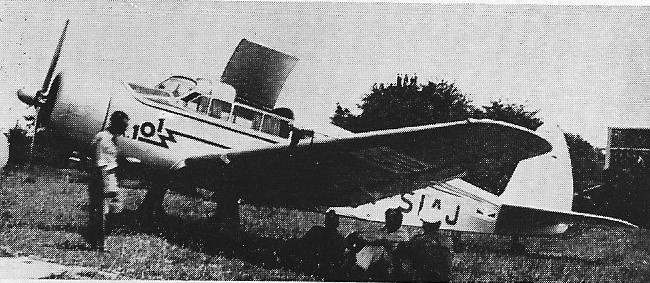
Flown for the first time on 20 December 1947, the SM.101 was designed as a six-seat light transport and is powered by a 235 hp Walter Bora radial engine.

Welded steel-tube construction is used with fabric covering. Fowler-type flaps are fitted to the wing and dual controls are fitted.

Engine: 235 hp Walter Bora
Wingspan: 54 ft 1 in
Wing area: 322 sq.ft
Length: 33 ft 6 in
Height: 9 ft 9.5 in
Empty weight: 2910 lb
Loaded weight: 4828 lb
Max speed: 149 mpg at SL
Cruise: 140 mph at 9020 ft
Range: 777 mi
Service ceiling: 15,750 ft

SIAI-Marchetti SV-20

As a result of the seeming success of the SH-4, SIAI-Marchetti’s Sezione Volo Verticale (Vertical Flight Division) was formed in 1968 under the leadership of Dr. Emilio Bianchi.

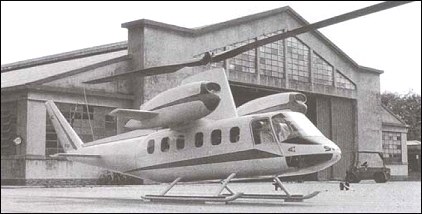
In July of that year, development began of the SV-20A (A = Alato or “winged”) – a 14-seat twin-engine, winged, high-speed helicopter – as well as the SV-20C (C = “compound”) – an improved performance version with a pusher propeller. The SV-20 was a project to design a helicopter that weighed 4,000kg when carrying a load greater than its empty weight and cruised at 390km/h.

In December 1968, fabrication of dynamic components and major dynamic assemblies, as well as a number of airframes, was begun (first flight was originally expected in 1970). A full-scale mock-up of the SV-20A was also completed and was shown at the Paris Air Show. By the end of 1972, about 200,000 manhours had been spent on the SV-20 design, including wind tunnel testing at the Universities of Turin, Milan, and Pisa, but a prototype was not completed.

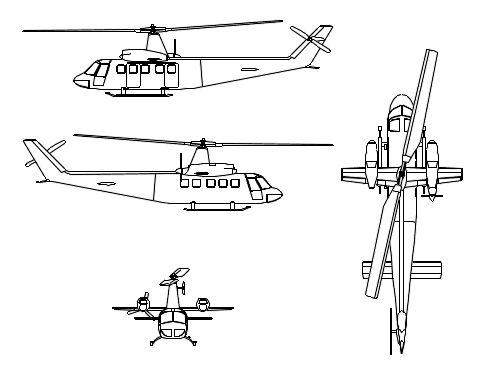
The SIAI-Marchetti SV-20 had a two-blade teetering-hub main rotor, anti-torque rotor and a high mounted cantilever wing. The SV-20C compound added a three-blade variable pitch pusher propeller driven by the right engine. The two United Aircraft of Canada PT6C engines would have been built under license by Motoren-und-Turbinen-Union (the successor to MAN) in Germany. Each engine had a maximum rating of 900hp, and were located in two nacelles on the wing; the Turbomeca Astazou XIVA or Rolls-Royce RS.360 were considered as alternates based on customer preferences. The cabin was designed to transport 12 passengers or 1250kg of cargo in addition to the two pilots. The SV-20C was projected to be about 80kg heavier than the SV- 20A, but about 110km/h faster.

The wings of the SV-20 had movable surfaces acting as flaps or ailerons, allowing the pilot to vary the load between the rotor and the wing. During high speed flight, the rotor was to be partially unloaded by the wing and the surfaces were used to augment roll control. A version with a “Fenestron” type tail rotor was planned in 1970.
Production jigs reportedly had produced numerous examples of many components by the end of 1972. A market of 500 units was expected, producing 40-60 SV-20s per year. Three prototypes were planned, but, despite initial talks with the FAA and the Registro Aeronautico Italiano (RAI) in January 1972, none of the prototypes were ever completed and the project was abandoned the following year. Agusta, which had acquired 30% of SIAI-Marchetti in 1970, had increased its stake to about 60% by 1973 and reached complete ownership in 1983.

CV-20C
Engines: 2 x PT6C-30, 671kW
Main rotor diameter: 12.86m
Tail rotor diameter: 2.50m
Length overall: 15.63m
Height overall: 3.55m
Wing span: 6.0m
Max take-off weight: 4000kg
Empty weight: 1950kg
Max speed: 390km/h
Cruising speed: 352km/h
Hover ceiling, OGE: 4400m
Hover ceiling, IGE: 6000m
Rate of climb: 9.65m/s
Range: 815km
Endurance: 3.7h
SIAI-Marchetti XY / SH-4 / Silvercraft SH-4

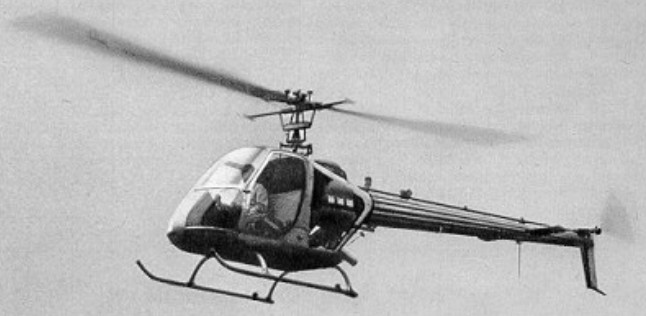
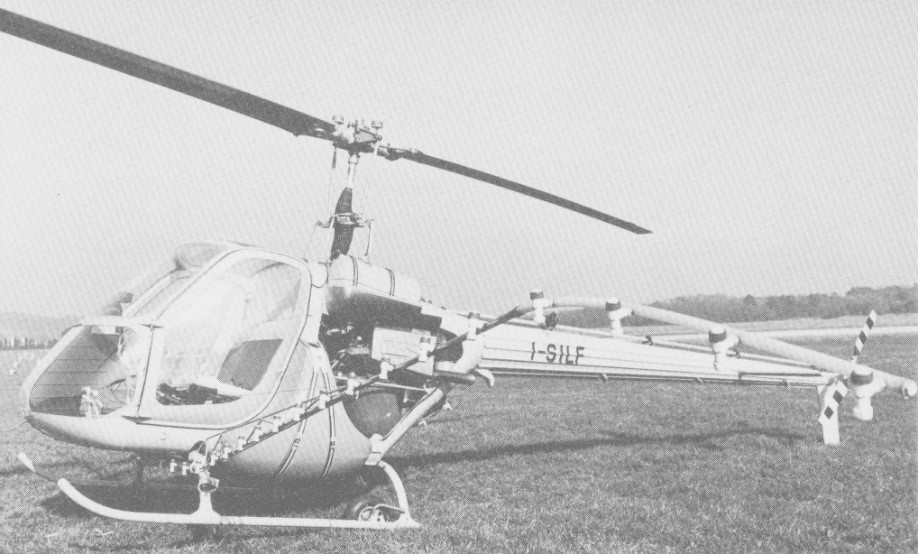
n October 1963 Silvercraft SpA flew the XY prototype light helicopter further developed with financial and technical assistance of shareholder SIAI-Marchetti as the all-metal three-seat SH-4, the prototype of which (I-SILX) made its first flight in March 1965.

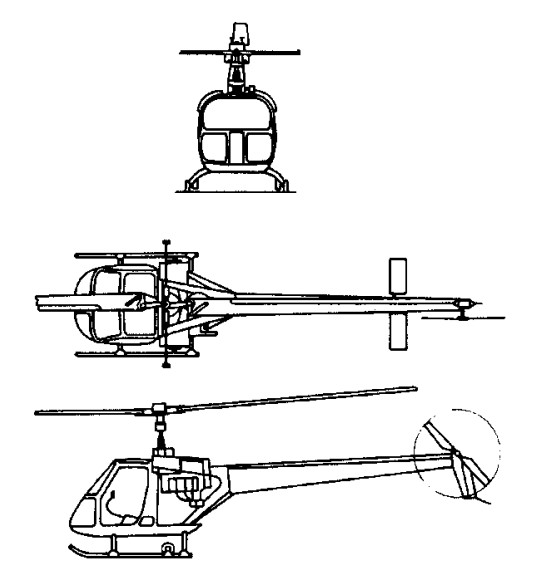
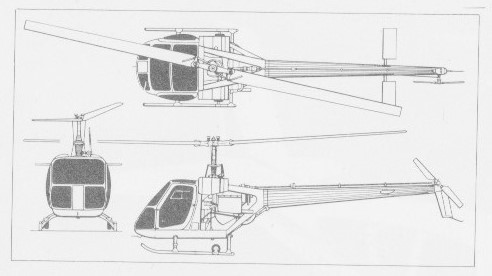
The SH-4 had a skid undercarriage and a high-set tubular corrugated tailboom with a small fin and tailplane and a two-blade tail rotor and powered by a 235hp (derated to 170hp) Franklin 6A-350-D1B piston engine. The main rotor had two blades and a transverse mass-balanced stabiliser bar.

A pre-production model was displayed at the 1967 Paris Air Show, certification was achieved in September 1968. The first helicopter of all-Italian design and construction to receive both Italian and U.S. certification. The SH-4 went into production at Silvercraft’s works at Sesto Calende in basic form. Variations were the SH-4/A for agricultural use and as the SH-4/C with a supercharged Franklin 6AS-350-D1 engine.

SH-4A

Serious production had begun as SIAI-Marchetti/Silvercraft SH-4, but under name Silvercraft alone deliveries began 1970. Production ceased 1977. Production of a batch of about 50 SH-4s was started at the Sesto Calende works with the aid of Fiat Aviazione (Motori), who manufactured mechanical parts for the rotor transmission, but the firm ran into difficulties over the Franklin engine, which had gone out of production.

A total of 21 SH-4s were completed with individual examples being exported to Brazil, South Africa, France and Holland. One aircraft was delivered to the Italian Air Force.

The company ceased operations in the late 1970s.

SH-4 / SH-4A
Engine: Franklin 6AS-350-S1, 235 hp de-rated to 170 hp
Main rotor diameter: 29 ft 7.5 in / 9.03 m
Fuselage length: 25 ft 1.25 in / 7.65 m
Empty weight: 1142 lb / 518 kg
MTOW norm: 1900 lb / 862 kg
Max cruise: 70 kt / 81 mph / 130 kph
ROC: 1180 fpm / 360 m/min
Service ceiling: 15,100 ft / 4600 m
Range max fuel: 173 nm / 200 mi / 320 km
Seats: 3
SH-4A ag capacity: 54 USG / 200 lt / 441 lb / 200 kg
External cargo hook: 441 lb / 200 kg
Cabin length: 4 ft 9.75 in / 1.47 m
Cabin height: 4 ft 0.25 in / 1.24 m

SH-4

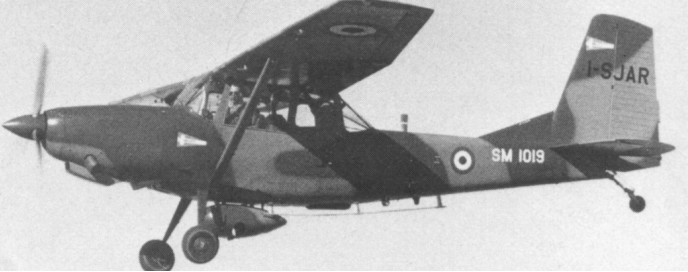
Savoia-Marchetti SM.1019

SM.1019

The Cessna O-1 provided the basis for the Italian development of a turboprop version. A two-seat STOL light monoplane powered by a 298kW Allison 250-B17 turboprop engine, the prototype first flew on 24 May 1969.

Savoia-Marchetti SM.1019 Article

The SM 1019 was evaluated by the Italian Army Light Aviation, which ordered 80 SM.1019E1s, under the designation AL-2. Optional armament or equipment is carried on two underwing hardpoints.

Engine: Allison 250-B15G, 317 shp
Wingspan: 10.97 m / 36 ft 0 in
Max. speed: 280 km/h / 174 mph