Sobkow, Stanisław

Stanisław Sobkow was born in 1924, probably in Lviv. When he was a boy, his parents often took him to the Lviv airport. He admired the acrobatics there. Fascinated by this sight, he began to build wooden models of airplanes.

In 1939, as a 16-year-old young man, he tried to build a glider (probably named WS-1) and a small amateur WS-2 aircraft according to his own designs. However, these plans were interrupted by the war.

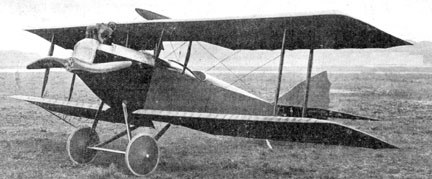
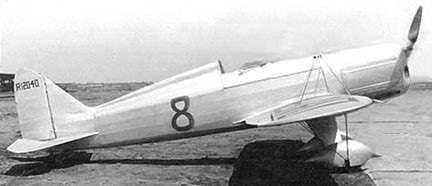
After World War II, Stanisław Sobkow worked as a technician at WSK-Okęcie . Despite the many and various difficulties that prevailed after the end of the war. In 1951 he started building an amateur plane, which he called WS-3 “Czajka”. The works were not completed until 1956. In the summer of 1956, “Czajka” made the first flight. Sobków’s plane was also demonstrated at the air shows in Kielce and Mielec. Unfortunately, the construction and piloting of own aircraft were strictly forbidden in Poland at that time.

Fortunately, the burning of “Czajka” did not break Stanisław Sobków, who again started working on a new structure. It was a helicopter named WS-4 “Świerszcz”. Its construction was completed in 1967.

Stanisław Sobkow also developed other constructions, such as a 3-seater snowmobile, a motor boat, the “Żbik” tricycle (that is, the conversion of the “Komar” moped into a 4-seater vehicle!) And a modification of the “Syrena-103” car.
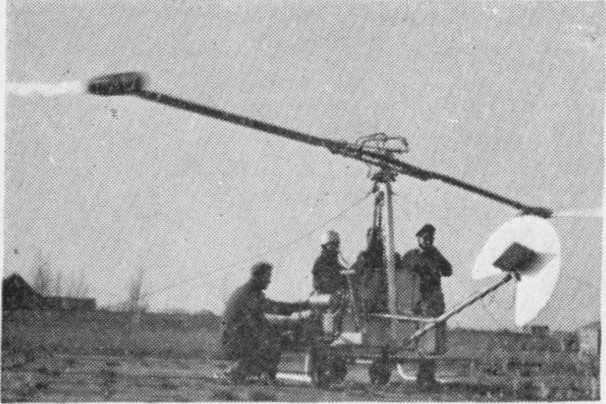
Sobeh H.2

The first post-War Dutch-built helicopter the Sobeh-l, was developed into the Sobeh H-2. Its all-metal, all-bonded rotor had automatic stability and transfers automatically into auto-rotative pitch in case of engine failure. The rotor was turned initially by a separate 1 hp bicycle engine.

Sobeh H.2
Power: 2 x 50 h.p. ramjet
Rotor diameter: 30 ft
Rotors: 2- blade tip-powered
Loaded weight: 1,350 lb
Max. speed: 70 mph
Seats: 2

Soarmaster Trike

Single seat single engined flex wing aircraft with weight shift control. Rogallo wing. Pilot suspended below wing in trike unit, using bar to control pitch and yaw/roll by altering relative positions of trike unit and wing. Undercarriage has three wheels in tricycle formation. Nosewheel steer¬ing independent from yaw control. Aluminium tube trike unit, without pod. Engine mounted below wing driving pusher propeller.

The main activity for Soarmaster is trike unit manufacture, its product being simply known as the Trike.

The company is proud of the fact that the trike unit has withstood a static load of 1145 lb (519 kg) applied to the seat, though it has to be said that there are other trike units around which could comfortably exceed this figure. What this translates to in terms of load factors does of course depend on the wing used, which can be any suitable Rogallo.

Various engines are available, ranging from Chrysler units to a 15hp Solo single (with or without a tuned exhaust) and a twin cylinder Lloyd producing 23hp. The Lloyd has the unusual feature of being provided with both manual and electric start, and all three use belt reduction drives and Soarmaster’s own propeller, made from 6061T6 aluminium and featuring replaceable blades. Main wheels diameter overall 20 inch, 51 cm.

Price for the Lloyd engined trike unit in October 1982 was $1595.

Engines:
Lloyd LS400, 23 hp
Solo, 15 hp
Chrysler
Belt reduction
Fuel capacity 1.2 US gal, 1.0 Imp gal, 4.5 litre in main tank
Optional res fuel: 1.2 US gal, 1.0 Imp gal, 4.5 litre

Soarmaster C5A

One of the 1980 crop of powered hang gliders that were the latest rage among homebuilders was the Soarmaster C5A. Cost for building one was a bit over $1,000. A Chrysler two-stroke engine swings a prop with folding blades. The craft is completely foot-launched, and the pusher prop is driven by an extended drive shaft that places it to the rear of the wing.

Snyder-Macready Baby Bomber

The 1921 Snyder-Macready Baby Bomber designed by O H Snyder was a single-place, open cockpit biplane, powered by a chain-driven 18hp Indian engine The Indian motor which had previously been in the builder’s motorcycle. The propeller was driven through a chain and sprocket reduction gear.

The landing speed was 20 mph and the plane usually stopped within 40 feet after touching the ground.

Of all-wood construction, it was popular with home-builders of the time, with plans published in magazines.

Engine: 18hp Indian
Wingspan: 21’7″
Length: 16’6″
Useful load: 186 lb
Max speed: 62 mph
Cruise: 50 mph
Stall: 35 mph
Seats: 1