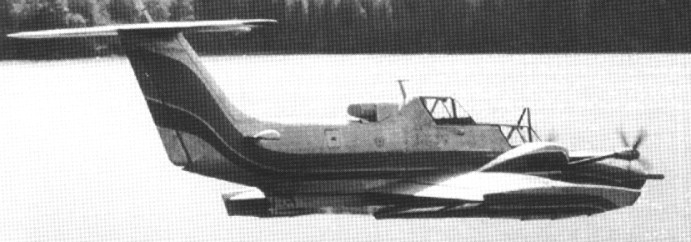
The Strizh was built in 1989 as a two-seat wing in surface effect trainer for Russian naval pilots.
Seats: 2
The Strizh was built in 1989 as a two-seat wing in surface effect trainer for Russian naval pilots.
Seats: 2
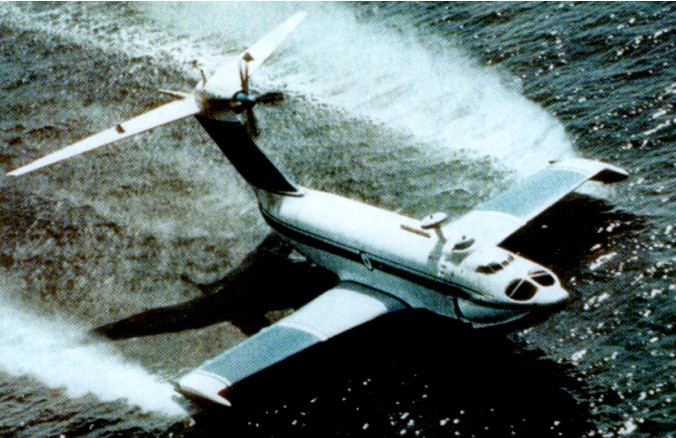
A 125-tonne, 200-knot troop transport and assault wing in surface effect craft for the Soviet forces. The development of ekranoplans was supported by Dmitri Ustinov, Minister of Defence of USSR. About 120 ekranoplans (A-90 Orlyonok class) were initially planned to enter military service in the Soviet Navy.

In 1972, the first really working military “Orlyonok” was built, intended for the transfer of amphibious assault forces to a range of up to 1,500 km.

The figure was later reduced to less than thirty vehicles, planned to be deployed mainly for the Black and the Baltic Soviet navies. Marshal Ustinov died in 1985, and the new Minister of Defence Marshal Sokolov effectively ceased the funding for the program. The only three operational A-90 Orlyonok ekranoplans built (with renewed hull design) and one Lun-class ekranoplan remained at a naval base near Kaspiysk.
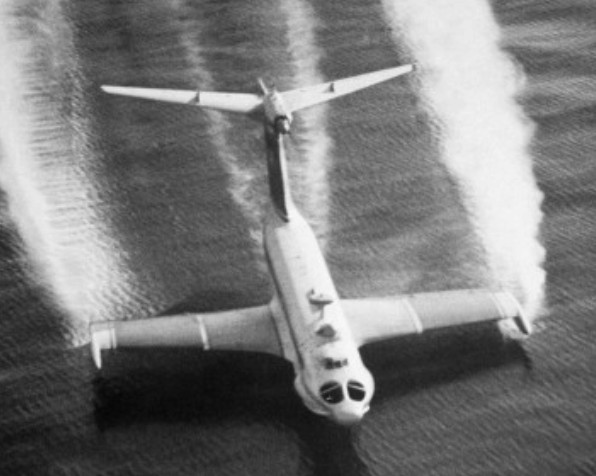

The Central Design Bureau for Hydrofoil named after R.Ye. Alekseev (Central Design Bureau for SEC) was developing a project for an ekranoplan ocean zone with a take-off weight of about 500 tons. About this on Tuesday at the forum “Marine Industry of Russia” said the director and chief designer of the concern “Morinformsystem-Agat” Georgy Antsev.
The International Forum “Marine Industry of Russia” takes place from May 19 to 21, 2015 in Moscow, in the Gostiny Dvor exhibition complex. The forum presented a project of a coastal zone WIG with a take-off weight of 60 tons.
“We need WIG ocean zone with a take-off weight of 500 tons. Such developments are conducted in the CDB Alekseev. Today there is a reboot of the Soviet period, a search is underway for the customer, certain research and development, modeling, and prototyping, ”said Antsev. – It has a very good direction – it is necessary both for passenger transportation, and for northern tasks, and for tasks of protecting state borders. He can use the airfield infrastructure and be at some point, in essence, an airplane. “
The ekranoplan, or a ship on a dynamic air cushion is a high-speed vehicle flying at a height of up to several meters from the surface of water, land, snow or ice. This is a kind of hybrid between an airplane and a watercraft, with equal mass and speed, the winged surface of an ekranoplan is much smaller than that of an airplane, and according to the international classification it belongs to sea vessels. Ekranoplans capable of tearing themselves off the surface for a long time and moving into “airplane” flight mode are called echo flight.
The very first developments, as well as actually operating samples, were obtained by designers of the USSR. The direction was developed by two independent teams. One, under the leadership of Rostislav Alekseev, who, as early as October 1, 1941, defended his thesis “Hydrofoil Glider”. After that, he devoted his life to the development and creation of ekranoplanes. The CDB for SEC was founded in the early 50s.
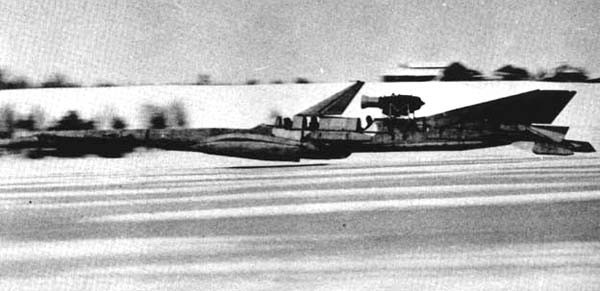
In the early 60s, a test base for these devices was built on the Gorky Reservoir. In 1961, the first flight of the SM-1 / CM-1 screening vehicle took place, and the following year, the SM-2 / CM-2.

Developed by the Soviets from the 1960s onwards, particularly by Dr Rostislav Alexeyev’s Central Hydrofoil Design Bureau, the leading exponents in the design and operation of Wing in Surface Effect types are now located in the Russian Federation. Far ahead of the West in terms of construction and flying experience, the Soviets planned a fleet of 120 surface skimming WISE military transports in the 1980s and four prototypes were built. However, with the end of the Cold War the funds and the cause for the manufacture of the planned balance-of-power-altering transport fleet ceased.
Thruxton Airfield
Andover
Hampshire
UK
Southern Sailplanes proprietor Ralph Jones was the agents in Britain for Schempp-Hirth KG.
Southern Sailplanes were converting a 17.6m span Cirrus to have a wing of 24m, with a centre-section of 5m span having spars constructed with carbon-fibre reinforced plastic. The estimated competition date was 1971.
The commercial rights of the Helicom H-1 were sold to Southern Pacific Aircraft Co and then to International Helicopter Inc of Mayville, New York, with the machine being refined along the way as the Commuter II.
SMD/Flexiform Sky Sails Gazelle/Medium Striker is a single seat single engined flex wing aircraft with weight shift control. Rogallo wing with keel pocket. Pilot suspended below wing in trike unit, using bar to control pitch and yaw/roll by altering relative positions of trike unit and wing. Wing braced from above by kingpost and cables, from below by cables; bowsprit construction with >70% double-surface; pre formed ribs. Undercarriage has three wheels in tricycle formation; no suspension on any wheels. Push right go left nosewheel steering independent from yaw control. Optional brakes on main wheels. Aluminium -tube trike unit, without pod. Engine mounted below wing driving pusher propeller.
Chris Scoble of Southern Microlight Developments builds only the trike unit, and normally mates it to a Flexiform Sky Sails Medium Striker wing, which he strengthens in a similar fashion to the one plus one Striker wing used on the Mainair Rapier.
Gazelles tend to be tailored to the customer’s own requirements and therefore vary in specification, but they are all double pole machines with the poles placed at the extreme ends of the axle for maximum strength, rather in the manner of a UAS Storm Buggy. Normal engine fitment is a 440 cc Robin, with electric start. Heavy duty alloy main wheels are standard.
Living near the sea has encouraged Chris to take an interest in float flying and in spring 1983 he introduced them as an option. The SMD floats can be fitted without disturbing the wheels and are constructed from glass-reinforced polyester in a colour to the customer’s choice. Each has three separate compartments to minimise the effect of leakage. Along the top of each float is a GRP beam which allows the fixing points to be moved at will until correct weight distribution is attained.
Engine: Robin EC44, 40 hp at 6500 rpm
Propeller diameter 58 inch, 1.47 m
V belt reduction, ratio 2.4/1
Max static thrust 270 lb, 122 kg
Power per unit area 0.20 hp/sq.ft, 2.2 hp/sq.m
Fuel capacity 6.0 US gal, 5.0 Imp gal, 22.7 litre
Length overall 11.0ft, 3.35m
Wing span 34.5ft, 10.52m
Sweepback 15 deg
Total wing area 200 sq.ft, 18.6 sq.m
Wing aspect ratio 7.5/1
Wheel track 5.0 ft, 1.52 m
Wheelbase 5.6ft, 1.70 m
Nosewheel diameter overall 13 inch, 33 cm
Main wheels diameter overall 16 inch, 41 cm
Optional floats: length 12.5 ft, 3.81 m; weight 38 lb, 17 kg each
1982: Southern Microlight Developments, 121 Sandybourne, Upton, Poole, Dorset BH16 5LT, Great Britain.
Trike builder
Designed by R S Crowley, the 1933 Southern Eagles model A was a two-place open cockpit biplane, built by Southern High School students under the guidance of aircraft-mechanic instructors.
The one built, NC2392 c/n 1, was powered by a Salmson engine, and the registration was cancelled on 31 August 1934.
Baltimore MD.
USA
Built the Southern Eagle A biplane in 1933.
The 1929 monoplane was a two-place open cockpit, powered by a 60hp Anzani engine, replaced by a Chevrolet in December 1930. As NX817N it was sold to J C Norris of Collierville in November 1932, who may have reverted to an Anzani.
The registration was cancelled by the CAA in September 1934.
This could be the Fleming, according to findings by John M Jarratt, but this enigma has yet to be solved as the name of Fleming is not apparent. Mann Co officials of record also included Ricardo Houstee, Mann Jr, and E F Moreland.

