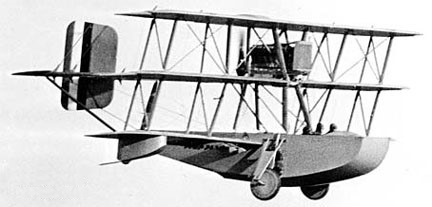
The 1919 Sperry Light Bomber amphibian, possibly A-5243, went to the US Navy. Only the one was built.
Engine: 400hp Liberty 12
Wingspan: 48’0″
Length: 31’6″
Max speed: 90 mph
Cruise: 85 mph
Bombload: 1000 lb
Seats: 3
The 1919 Sperry Light Bomber amphibian, possibly A-5243, went to the US Navy. Only the one was built.
Engine: 400hp Liberty 12
Wingspan: 48’0″
Length: 31’6″
Max speed: 90 mph
Cruise: 85 mph
Bombload: 1000 lb
Seats: 3
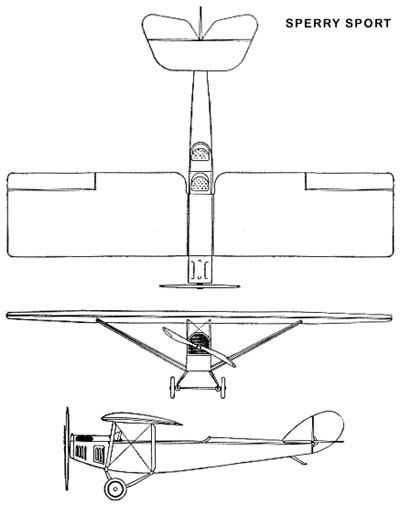
The 1921 Sperry Sport was a two-place, open cockpit, high-wing monoplane. It was a JN-4 fuselage and strut-braced Sperry wing.
Engine: 110hp Curtiss OXX
Wingspan: 38’0″
Length: 26’0″
Max speed: 85 mph
Cruise: 75 mph
Stall: 37 mph
Seats: 2
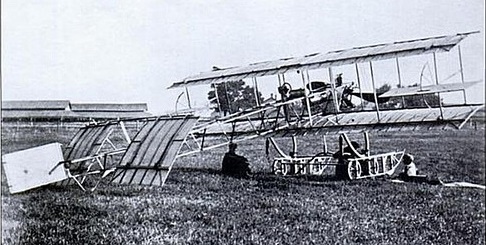
Lawrence Sperry first became interested in aviation after seeing Henri Farman make a short flight in Brooklyn in 1908. In the summer of 1910, at age 17, he built an aircraft from an original design on the second floor of his parents’ house in Flatbush.
First flown as a glider, a 60 hp Anzani engine was then procured and the aircraft was successfully flown at the Sheepshead Bay racetrack. Certainly one of the first tractor biplanes constructed in the United States, it was equipped with an unusual multi-wheeled lattice skid undercarriage meant to help the aircraft operate from rough terrain.
A communications aircraft designed by Alfred Verville and built by the Sperry Aircraft Company
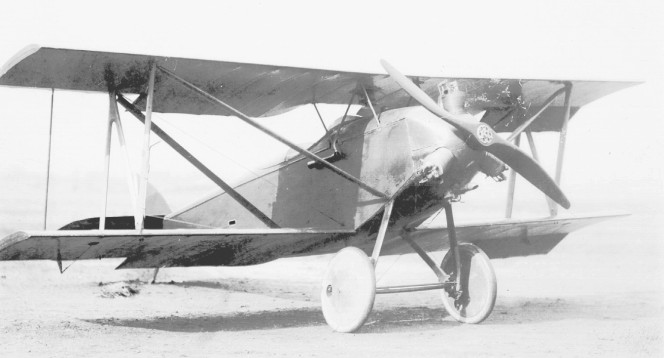
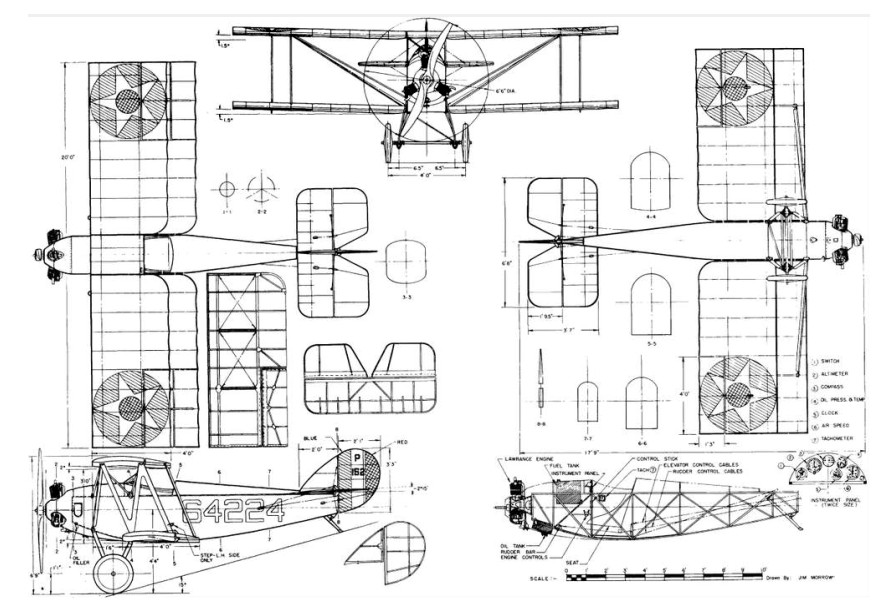
Designed at McCook Field by Alfred Verville of the Engineering Division, U.S. Air Service, and called also Verville-Sperry, the Sperry Messenger M-1
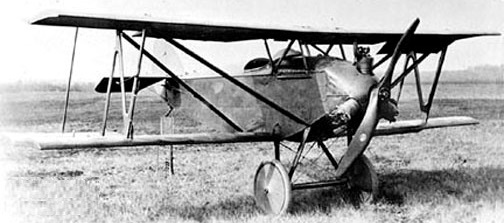
The Messenger M-1 open cockpit biplane was powered by a 60hp Lawrance L-4S and, later, L-3 (as Wright Gale) engine and had ailerons on all wings.
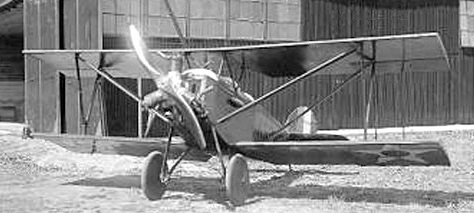
First flown on 1 November 1920 (piloted by John A Macready) from 1921 tiny Messenger single-seat biplane was in production as an Army liaison and utility aircraft. Alfred V. Verville is best known for his later Verville-Packard and Verville-Sperry racing aircraft of the early 1920s.
Twenty-two were built as military M-1, and twenty as M-1A (AS64223-64227, AS68472-68477, and AS68528-68533), plus 1 civil sport version that failed to spark any public interest, and the idea was never pursued.
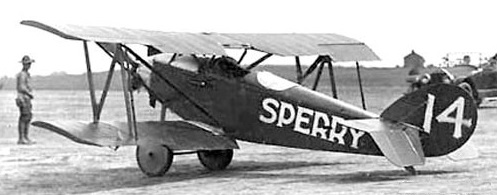
Of the first twelve, eight were modified as remote-control flying bombs with the designation MAT (“Messenger Aerial Torpedo”).
With a hook mounted above the upper wing, Messenger AS68533 piloted by Lt Rex K Stoner “landed” on a trapeze suspended from the D-3 Army Air Service airship in the first successful contact between an airplane and an airship while in flight, on 18 September 1923, over Langley Field VA.
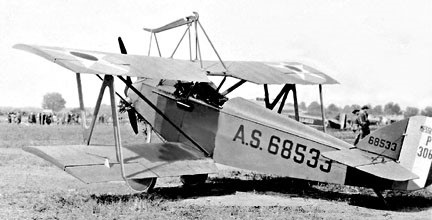
Sperry lost his life on 13 December 1923, crashing in the English Channel while demonstrating this plane, which was later rebuilt and modified by Clarence Chamberlin in 1928 for use in demonstrations to publicize lightplane aviation.
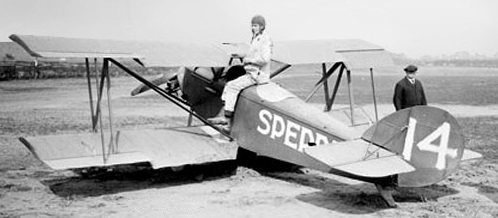
Aeromarine modified a Sperry Messenger with an experimental variable-camber in 1924.
Several ex-military aircraft appeared later in civil roles, as well.
M-1 Messenger, M-1A, MAT
Engine: 60hp Lawrance L-4S, later, L-3 (as Wright Gale)
Wingspan: 20’0″
Length: 17’9″
Max speed: 97 mph
Cruise: 80 mph
Stall: 37 mph
Ceiling: 13,400 ft
Seats: 2
Sperry, Lawrence, Aircraft Co
1918: Lawrence Sperry Aircraft Co, Farmingdale NY.
Lawrence Sperry was son of Elmer Sperry (Sperry Gyroscope Co.). Worked on aeroplanes from 1911; company founded named Lawrence Sperry Aircraft Co in 1919. In 1920 made cantilever monoplane wing for Curtiss JN, and built experimental triplane amphibian. From 1921 tiny Messenger single-seat biplane (designed by Engineering Division, U.S. Air Service, and called also Verville-Sperry) was in production. Also to official designs built Verville-Sperry Racers. A Messenger brought to England by Lawrence Sperry in 1923 came down in the Channel and Sperry lost his life, after which the company closed.
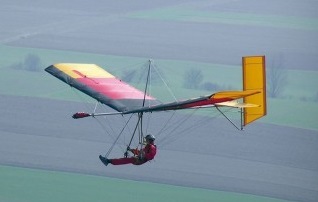
Dädalus 1
Wing area: 10.39 m²
Wing span: 15.5 m
Aspect ratio: 6.9
Hang glider weight: 30 kg
Packed length: 5.5 m
Dädalus 2
Wing area: 12.10 m²
Wing span: 18 m
Aspect ratio: 8
Hang glider weight: 34 kg
Packed length: 6.4 m
USA
Formed 1937 by P. H. Spencer (formerly of Amphibions Inc) and V. A. Larsen (previously with Fokker, Standard and Sikorsky) to develop two-seat amphibian with remotely-driven pusher propeller.
Spencer and Vincent A. Larsen design the single engine SL-12C amphibian.
Spencer leaves Spencer-Larsen in September 1940 and starts the work on his own S-12 Air Car amphibian design.
The Spencer S-12 Amphibian Air Car, NX29098, takes to the air for the first time on 8 August 1941, from sea on Belmore, Great South Bay, Long Island.
Spence accepts a job offer from The Mills Novelty Company, Chicago, IL, in 1943. In April the Air Car is flown from Long Island to Chicago, Illinois.
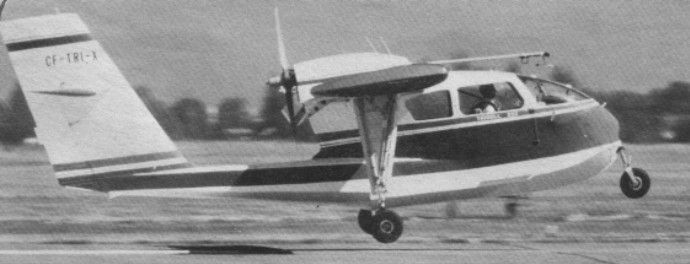
P. H. Spencer and Bob Dent decided the world needs is a new and better Seabee, so they dreamed up the Trident. That was back in the 1960s. Spencer and Dent started their work, in Los Angeles, with only $125,000 which soon ran out. Hazelwood bought the project, took it to Vancouver where the idea for it had been born. He has been at it for six years. After a brief romance with the Canadian Federal Government, which loaned Hazelwood’s company money through the prototype stages, the project by 1976 had moved under the wing of Canadian Aircraft Products, a manufacturer of aircraft floats and subassemblies in Vancouver. That company’s president, D. C. Cameron, says that the airplane is “on the back burner, and we’re not doing too well in our attempts to find a backer for production.” Cameron says certification of the initial prototype is within a few percent of completion. The airplane has flown about 275 hours and needs to fly another 40 or so. A second conformity prototype is 75 percent complete, he says, and will have to fly off its own approval program under the regulations of Canada’s Ministry of Transport.
Hazelwood is an indefatigible supporter of the airplane, and although each year seems to bring only the minimally sustaining increments for progress toward his goal of a full production airplane, his enthusiasm is unflagging or at least he must be very good at hiding any discouragement he may feel. All specs are being met or exceeded, and the abandonment of the Tiara 320 engine at the insistence of the government backers in favor of the certificated 285 (the 320 wasn’t certificated) has resulted in little loss of performance. He is delighted with the progress of the certification flights, he says. The production prototype is coming nicely, with engineering changes incorporated to cut the number of parts in half, eliminate many machined parts, use fiberglass instead of aluminum for the cabin enclosure (which is nonstructural) and add some beading in the skin. “Technically and physically, the airplane is just great. What we need is ‘trigger’ money to kick us off; we have plenty of follow on funds once we get past. . . . There is little chance of finding that kind of funding in the commercial loan market in Canada; they are mostly keyed to mortgages and are no help at all. It will take government help, and we feel we’re entitled to part of the support that’s being given the airframe industries right now.”
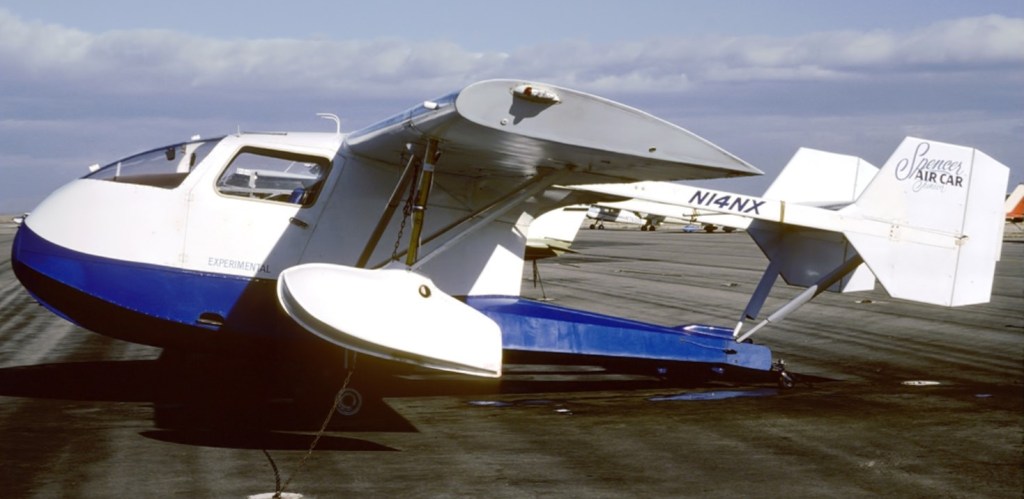
In 1980, the two seat S-14 Junior program began, as a reduced version of the previous S-12C / D / E with folding wings for road transport, with composite materials.
Registered N14NX and powered by a Lycoming O-320, Spencer went on a maiden flight on November 4, 1983, at the age of 86. Even with modifications, the design did not meet expectations and the program was terminated in 1984.
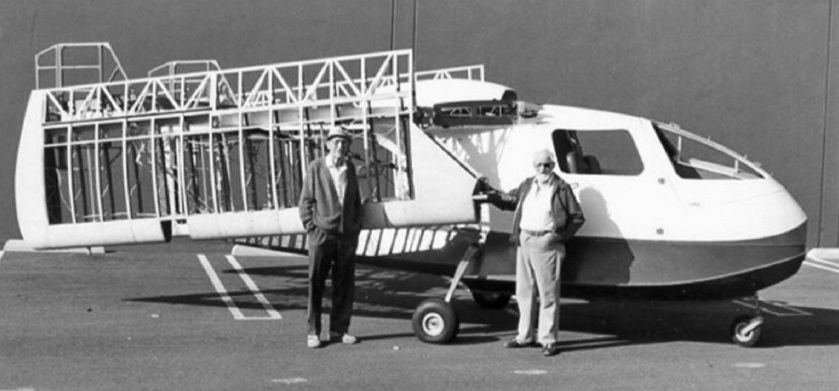
Spencer and Anderson had invested nearly $85,000 in the project, but friend William Randolph Hearst Jr purchased the Junior for salvage price of $25,000 and donated it to EAA Museum in 1984.

