M H Spinks Sr
Ft Worth TX.
USA
Designed and built the Spinks Akromaster in 1968.
M H Spinks Sr
Ft Worth TX.
USA
Designed and built the Spinks Akromaster in 1968.
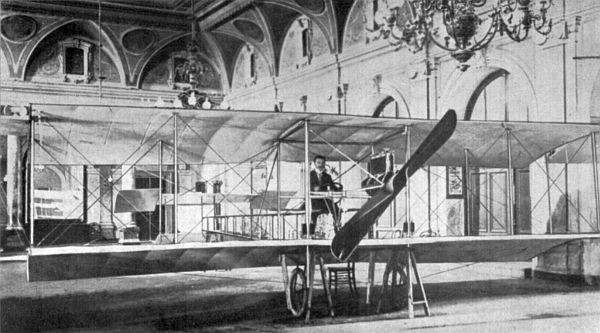
The first design of brothers Franz and Josef Spiller in Graz, Austria. It was exhibited in Graz in June 1910 before tests on the Graz flying field Thalerhof. The engine was a 50 hp Austro-Daimler automobile motor similar with that which Etrich also had no joy in Spring 1910 (before Ferdinand Porsche designed an aero engine of it). The Spillers later that year changed to a Puch aero engine, also built in Graz. Details of their achievements are almost undocumented, but they were experimenting at Thalerhof at least until 1912, with more or less success.
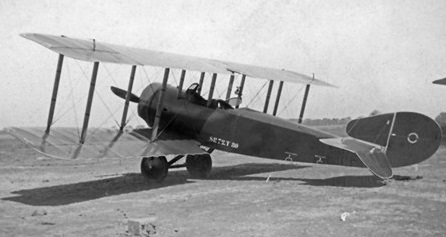
Between 1918 and 1925 the Royal Netherlands Navy used the Spijker-Trompenburg biplane for training duties.
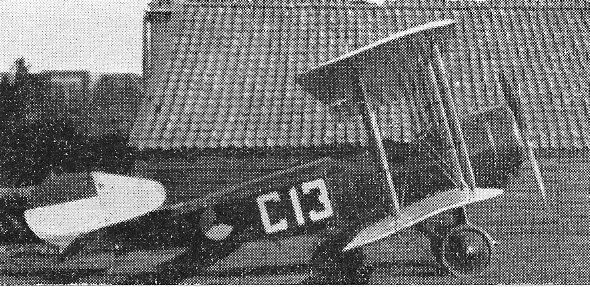
Designed by Henry Wijnmalen, the Spijker was first publicly displayed at the Amsterdam Aircraft Exhibition in August 1919.
The 1940 Spier Pursuit Trainer was a single-place cabin, low wing monoplane. unsuccessful prototype for military evaluation.
Engine: 175hp Lycoming O-435
Wingspan: 26’0″
Length: 21’0″
Useful load: 300 lb
Max speed: 190 mph
Cruise: 165 mph
Stall: 62 mph
Seats: 1
(Siegmund) Spier Aircraft Corp
Jersey City, NJ
Brooklyn NY
USA
Martin Spear vice-pres
Bernard Spier secy
Nathan Spier, treas
Built the Spier Pursuit Trainer in 1940.
1956: W K Foss, Schenectady NY, and Spibec Corp, Philadelphia PA.
Spibec’s original intent was to experiment with fiberglass in lightplane construction, but poor sales of a fiberglass model introduced by Taylorcraft compelled the company to cancel its plans.
1958: Acquired rights for Luscombe Gullwing.
Spibec’s goal was to incorporate as Colt Aviation & Engr Corp.
1964: Sold rights to Swallow Aircraft Corp, Covina CA.

The Spezio DAL-1 Tuholer stems from a design by Tony Spezio in the late 1950s and is said to have been based loosely on the Howard Ike racer of the 1930s. As the Tuholer name implies, it is a two-seat, open cockpit, strut-braced, low-wing taildragger. The original was built using parts collected from various surplus and wrecked sources, and with no hangar space the wings were designed to fold. The first flight of the type occurred on 2 May 1961.

Marketed plans for home-builders. Mechanix Illustrated Golden Hammer Award c.1961 for design.

The fuselage and tail structure are welded steel tubing. Its large center section, supporting the folding wing mechanism is fashioned from a trio of one-inch .049 tubing with end plates, fittings and large bolts that allow the wings to fold for storage. The wings are wood with fabric cover.


Engine: Lycoming GO-290-G4, 125 hp
Wingspan: 24’9”
Length: 18’3”
Gross Wt: 1400 lb
Empty Wt: 810 lb
Fuel capacity: 23 USG
Useful load: 590 lb
Top speed 160 mph
Cruise 128 mph
Stall 45 mph
Climb rate 2000 ft
Takeoff run 160 ft
Landing roll 300 ft
Range 400 sm
Ceiling: 12,000 ft
Seats: 2
1980:
25 Madison Ave,
Northampton,
MA 01060,
USA.
Tony & Dorothy Spezio
Bethany
OK.
USA
Dorothy Spezio
211 Dennis Drive
Absecon Highlands
New Jersey 08201
LSA builder
The 1919 Sperry Sportplane was a two-place, open cockpit biplane, powered by two 38hp air-cooled, 2-cycle, 4-cyl Sperry WBB engines. The aircraft was fitted with folding wings.
Engines: 2 Sperry WBB, 38hp
Wingspan: 27’0″
Length: 21’0″
Useful load: 475 lb
Max speed: 88 mph
Stall: 36 mph
Seats: 2
The 1922 Hi-Lift was an experiment by Sperry in modifying a Curtiss JN-4D into a monoplane with an internally-braced, one-piece high-wing with I-beam spars, to produce a craft capable of carrying five, when it was originally designed for two. Despite successful trials and demonstrations, nothing came of the idea.
Engine: 90hp Curtiss OX-5
Wingspan: 36’0″
Length: 26’0″
Useful load: 800 lb
Max speed: 85 mph
Stall: 42 mph
Range: 200 mi
Seats: 5

