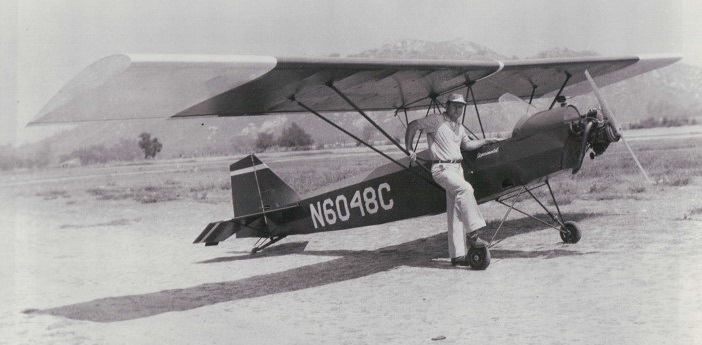
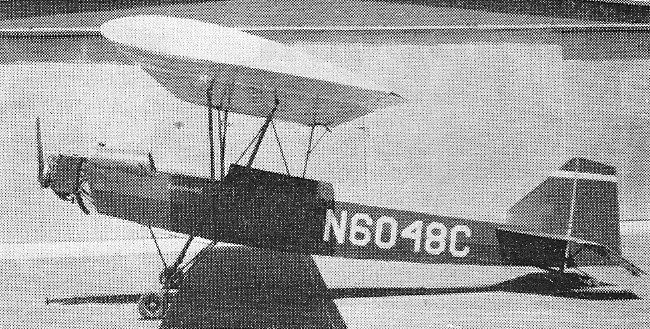
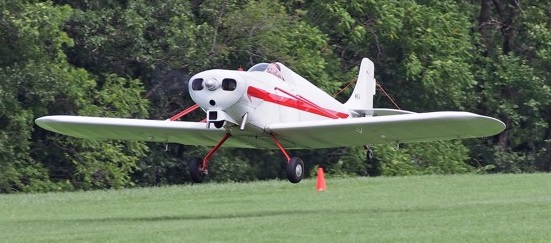
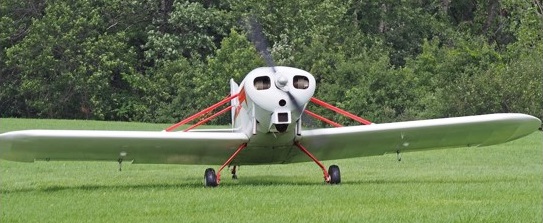
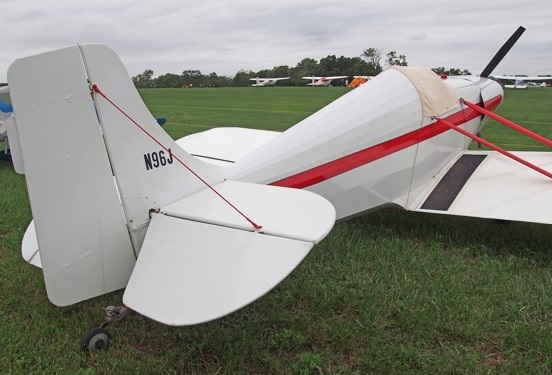
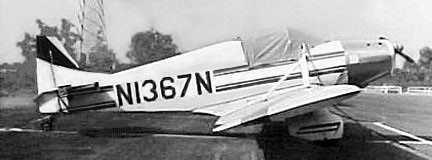
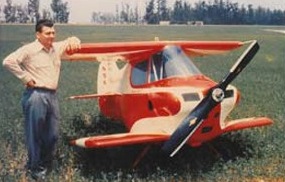
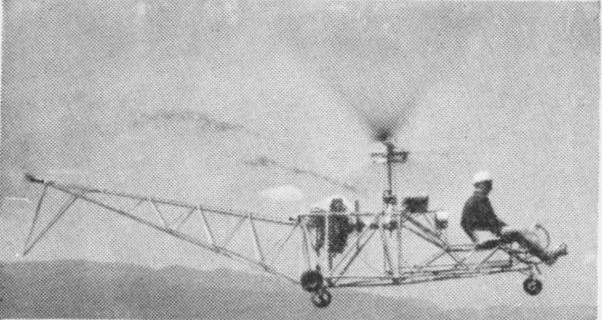
The Stits SA-8A Skeeto is an early homebuilt ultralight design by Ray Stits initially intended to be an affordable light aircraft that could be built complete for under $500 in 1957. The fuselage was welded steel tubing, with mostly fabric covered wood construction for the wings and control surfaces. The engine for this kit venture was to be an off-the shelf low cost model.
Test model 1 was a 4 hp (3 kW) Continental modified for 6 hp (4 kW). Test model 2 was a two cycle 3.5 hp (2.6 kW) engine with a belt reduction. Test model 3 used two engines on a single v-belt making it a 4 hp (3 kW) twin engine which flew at 25 mph. Test model 4 had a homelite chainsaw engine at 7.5 hp (5.6 kW) Test model 5 used a Disston chain saw engine at 9 hp (7 kW) Test model 6 used a Disston chain saw engine mounted inverted. Test model 7 used an Inverted Evinrude 25 hp (19 kW) outboard boat motor. Test model 8 used a right-side up Evinrude.
SA-8A Skeeto c/n 301
Test flights were limited to the length of the runway after the aircraft was registered as a “research and development” project. The roll rate was so low at 20-30 mph, that rudder turns were preferred. The 3-4 pound wing loading was considered impractically light for handling. An example of a SA-8 Skeeto was donated to the Claremont, California Air Museum in 1958, it is now in the EAA AirVenture Museum in Oshkosh, Wisconsin.
Stits SA-8A Skeeto) Length: 18 ft (5.5 m) Wingspan: 30 ft (9.1 m) Height: 7 ft (2.1 m) Wing area: 120 sq ft (11 sq.m) model 1 Empty weight: 175 lb (79 kg) 175lb test one model. Gross weight: 400 lb (181 kg) model 1 Fuel capacity: 2.5 gal (9.5 litres) Powerplant: × Evenrude , 25 hp (19 kW) Maximum speed: 48 kn; 89 km/h (55 mph) Cruise speed: 39 kn; 72 km/h (45 mph) Service ceiling: 50 ft (15 m) This aircraft was only certified to fly up to 50 feet. Rate of climb: 250 ft/min (1.3 m/s)
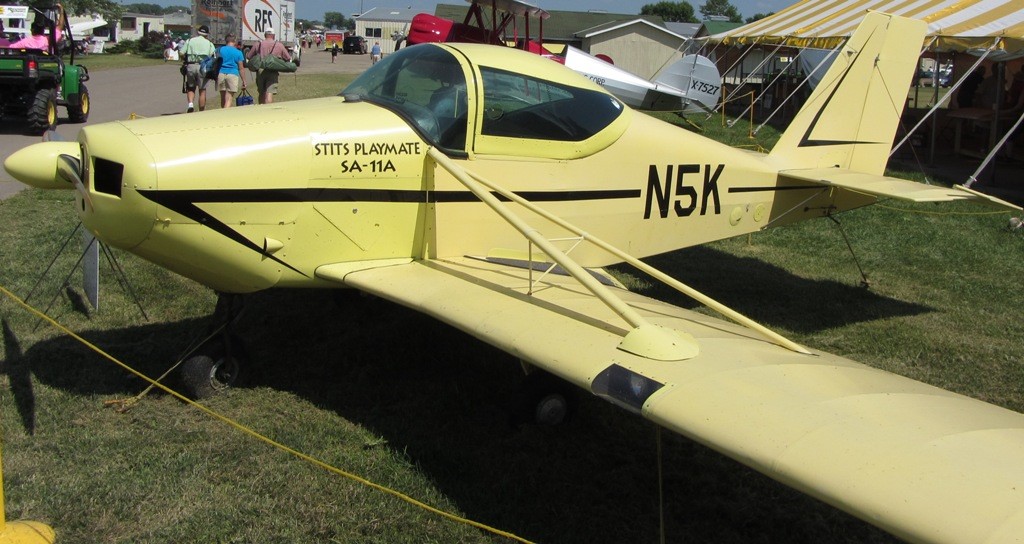
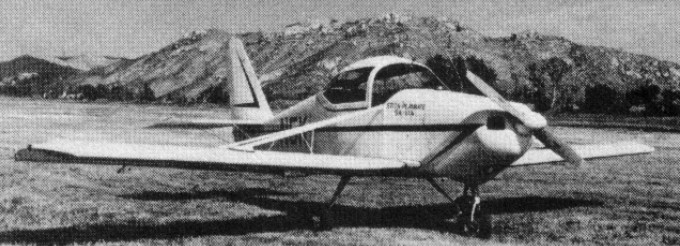
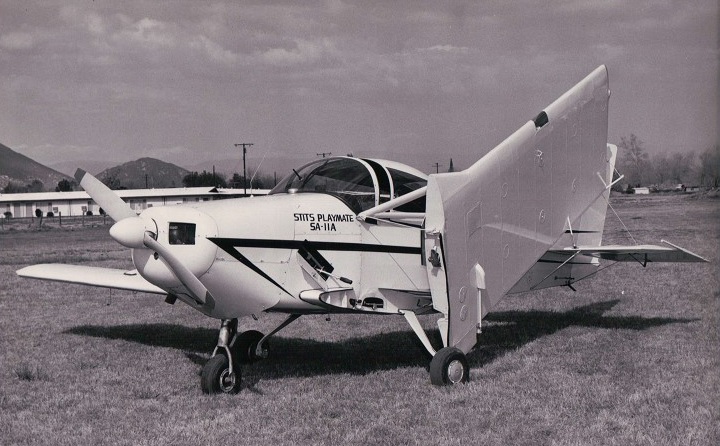
Designed by Ray Stits, the SA-11A is a single engine, side-by-side configuration seating, tricycle gear, strut-braced, low wing monoplane. The fuselage is welded steel tubing with aircraft fabric covering. The wings have a quick release mechanism that allows them to fold and lock alongside the fuselage in 15–30 seconds. Safety mechanisms were put in place so pilots could visually inspect that the wings were locked in place. A small sideways seat in the rear can accommodate 150 lb (68 kg) of luggage or a light passenger.
The prototype was donated by Ray Stits in 1969 to the EAA AirVenture Museum in Oshkosh, Wisconsin. Its engine went into the Stits SA-9A “Skycoupe” prototype for testing and development.
Courtesy Don Stits
In 1971 the Playmate cost approximately $3650 to build.
SA11A Playmate Courtesy Don Stits
SA-11A Playmate Engine: 1 × Lycoming O-320, 150 hp (110 kW) Wing area: 120 sq ft (11 sq.m) Length: 18 ft 4 in (5.59 m) Height: 6 ft 9 in (2.06 m) Empty weight: 886 lb (402 kg) Gross weight: 1,500 lb (680 kg) Fuel capacity: 24 U.S. gallons (91 L; 20 imp gal) Maximum speed: 115 kn; 212 km/h (132 mph) Cruise speed: 104 kn; 193 km/h (120 mph) Range: 369 nmi; 684 km (425 mi) Service ceiling: 17,500 ft (5,300 m) Rate of climb: 1,625 ft/min (8.26 m/s) Crew: 1 Capacity: 1
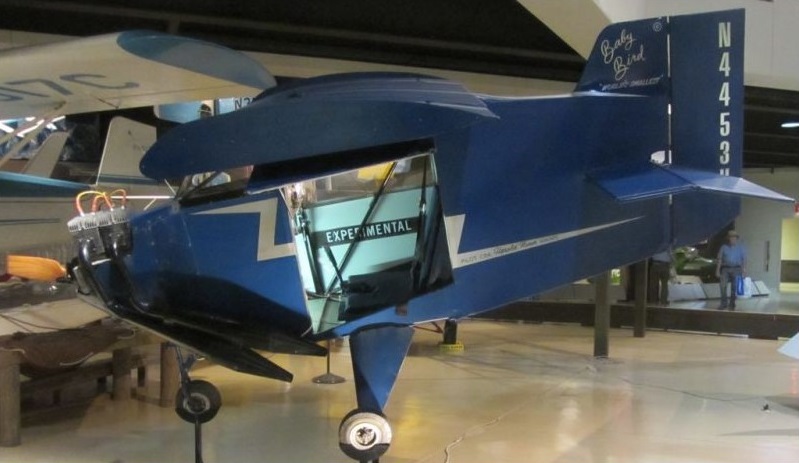
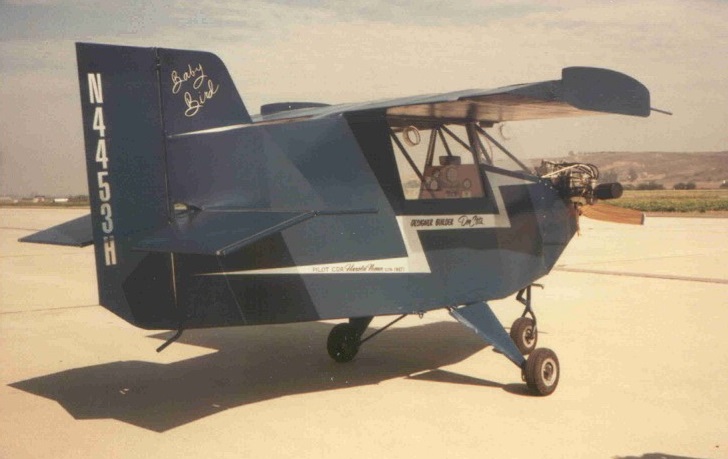
In 1980, Don Stits began the design the Baby Bird, a tiny high-wing monoplane, with the goal of setting a new “Worlds Smallest Airplane” record. With the help of his wife, Lori, and their two children Ray and Jennifer, construction began in the family garage.
The Baby Bird’s fuselage and tail were constructed of steel tubing, the 6 ft 3 inch wing of spruce, and completed with fabric covering. Baby Bird was powered by a 55hp Hirth engine swinging a ground-adjustable wood prop.
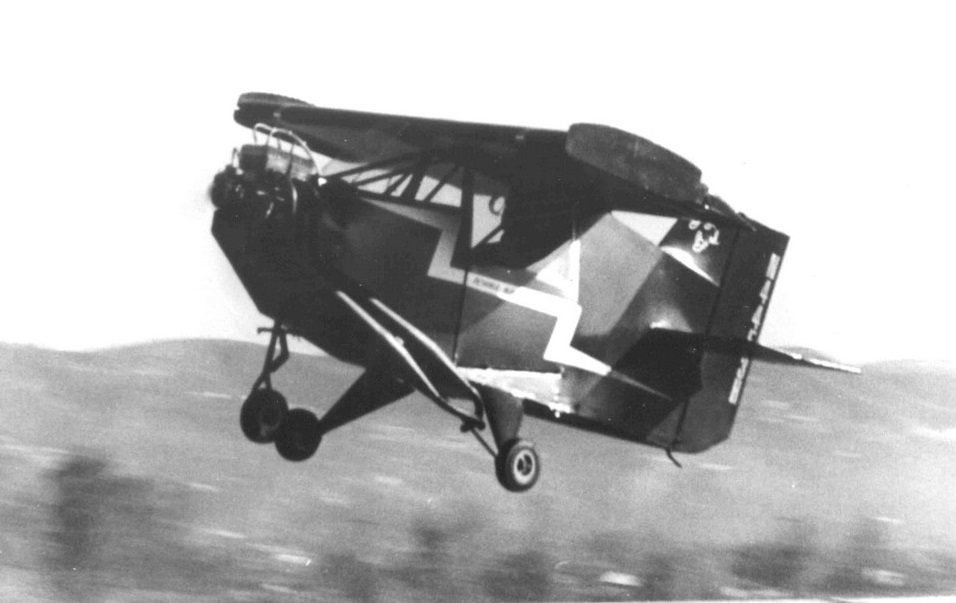
By the summer of 1984, the Baby Bird was ready for taxi tests. Don’s friend, Harold Nemer, was chosen to pilot the Baby Bird based on his experience and size. In August 1984, Baby Bird completed taxi test and made its first flight. Over the course of time, Nemer completed 35 flights before Don retired the Baby Bird having reached his goal of resetting the record with a monoplane.
August 1984 courtesy Don Stits
In 1986, the Baby Bird was registered in the Guinness Book of World Records as the “Smallest Monoplane in the World”.
Don donated the Baby Bird to the EAA AirVenture Museum in 1989.
Courtesy Don Stits
Engine: Hirth Wingspan: 6 ft 3 in Overall length: 11 ft Empty weight: 252 lb Gross weight: 425 lb Top speed: 110 mph Lift off: 70 mph Stall: 60 mph Load: 9 g
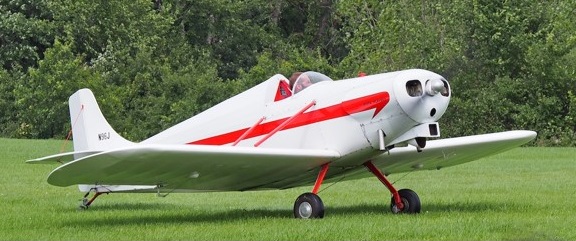
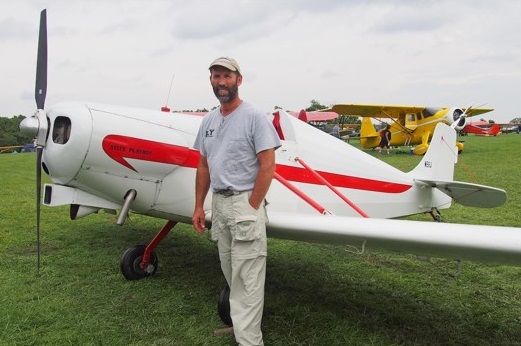
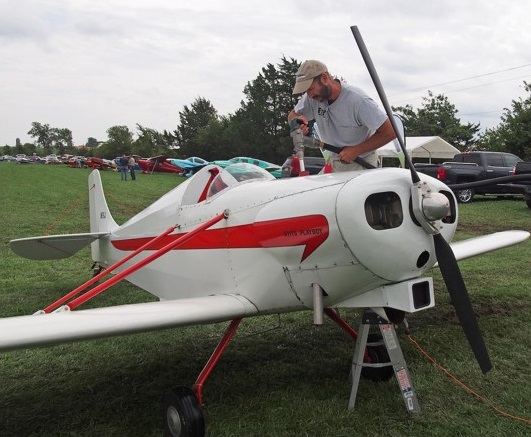
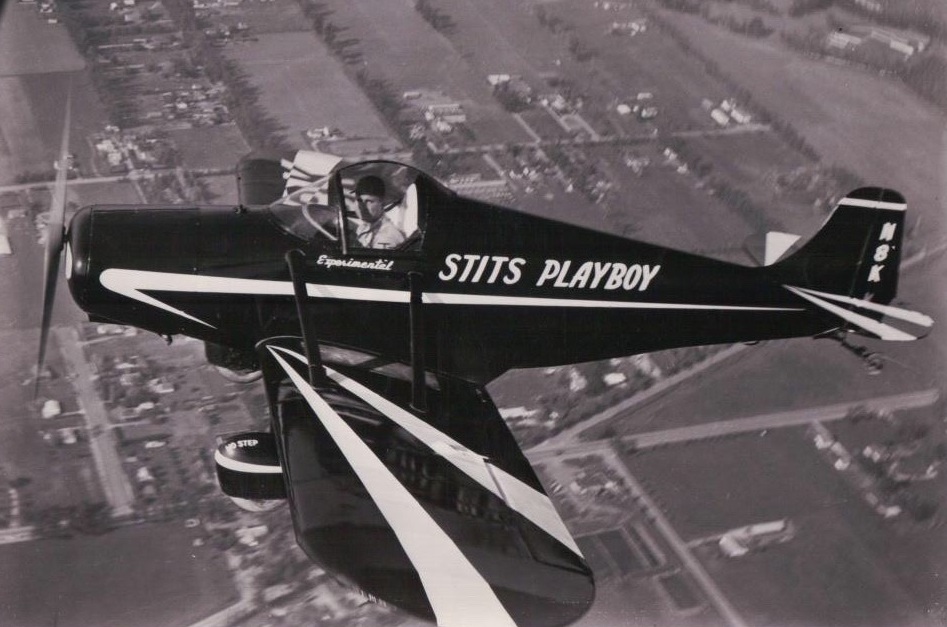
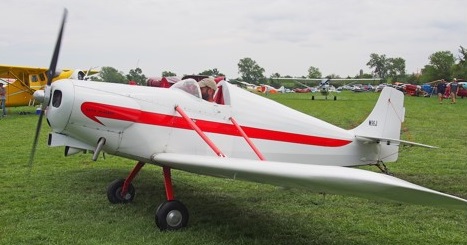
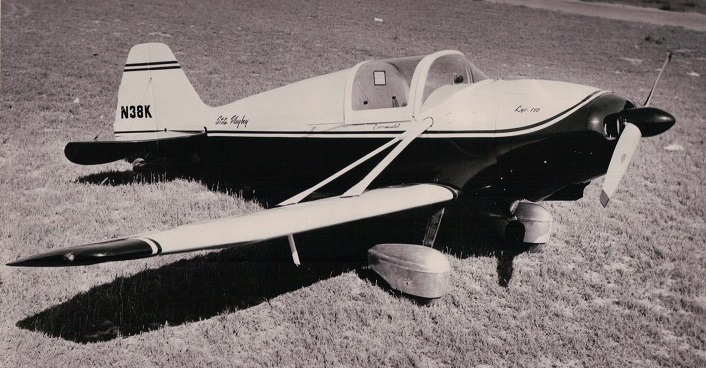
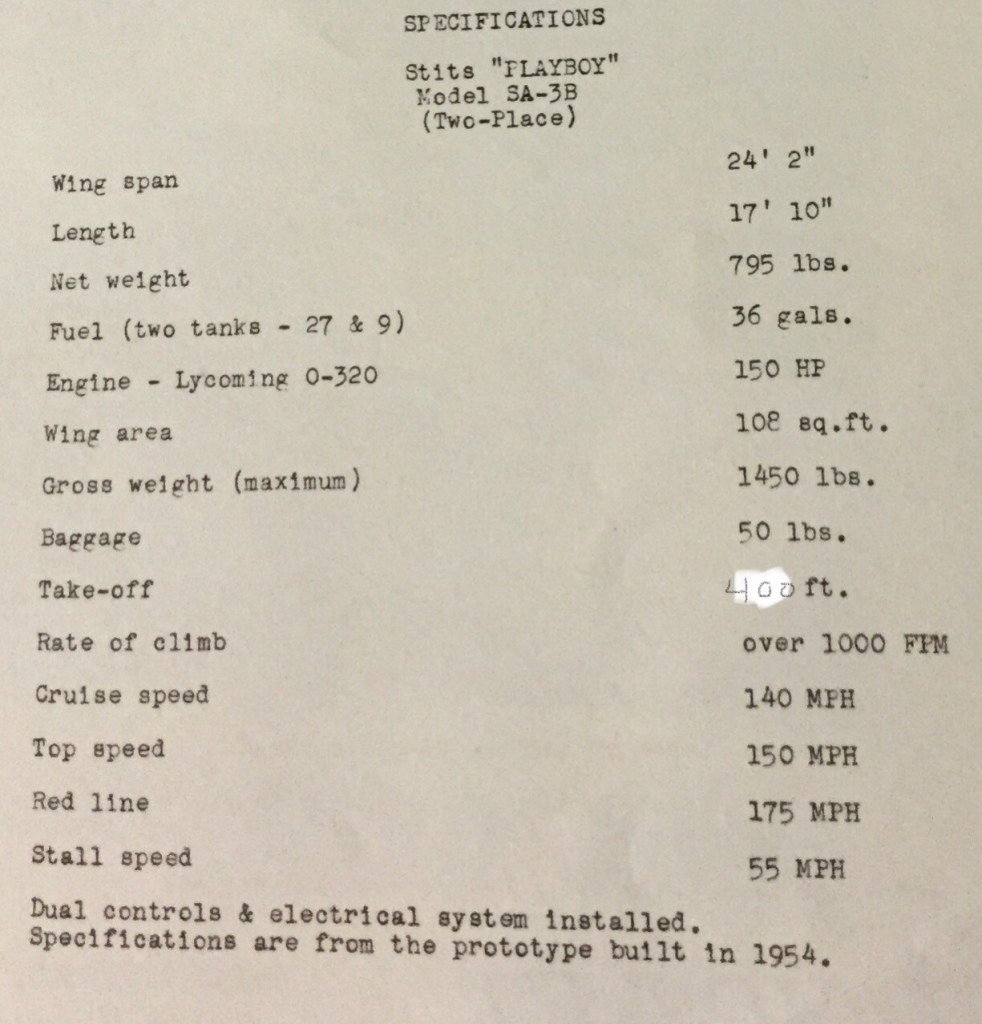
In 1952 Ray Stits designed and built the single-place Stits SA-3A Playboy. It was his third aircraft design. A subsequent variation was the two-place, side-by-side Stits SA-3B Playboy (his fifth design) in 1954.
SA-3A
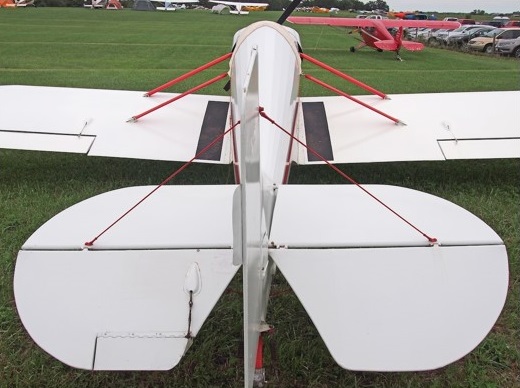
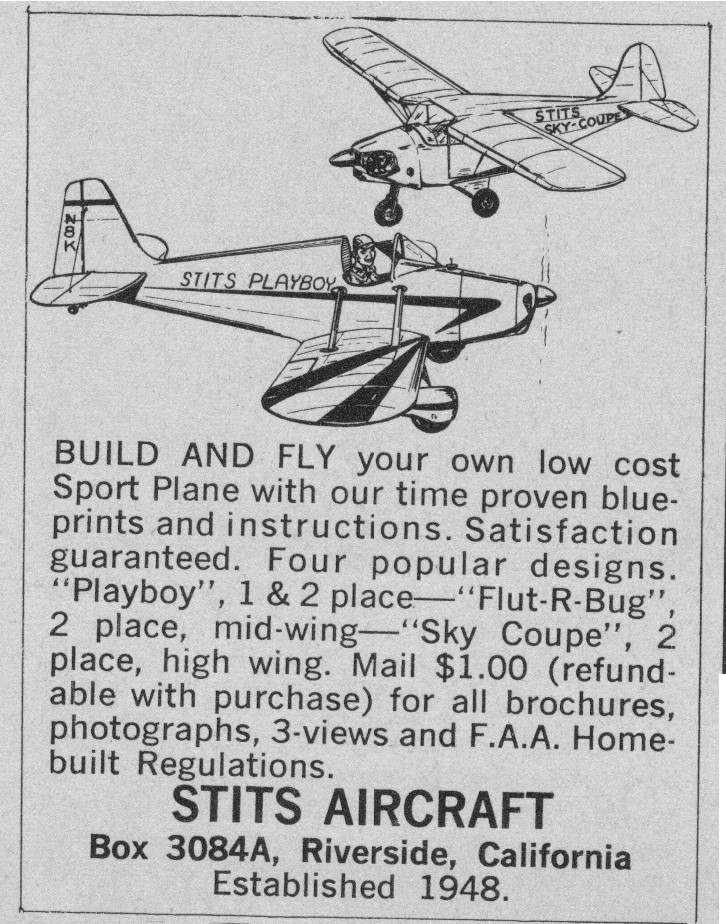
One of the more popular designs by Ray Stits, the Playboy was designed for backyard builders to construct from easy-¬to-follow plans or simple-to-do work kits. The Playboy can handle any one of several four-cyclinder engines in the 85- to 160-hp class. Probably the most common is the 85-hp Con¬tinental. Construction is mixed, with wooden wings and a steel-tube fuselage. All surfaces are fabric covered. The Playboy is easily recognizable because of its sliding canopy and strut-braced low-wing design.
SA-3A
The Playboy is rated for aerobatics, but it doesn’t have inverted fuel or oil, so you’d have to stay with positive Gs, and with 65 horses there are limits to what it can do. It’s responsive, but yet not light on the controls, but the tail is extremely light, so even on run up you have to be careful to hold the tail down, or she’ll want to nose over.
SA3B Two Place Playboy Courtesy Don Stits
The original Playboy N38K has been rebuilt and now resides in the EAA museum.
Original SA3B Two Place Playboy Data Sheet
The Stits SA-3A Playboy served as a catalyst for Richard VanGrunsven, who, after modifying and improving the Playboy in 1965 (and calling it an RV-1), was further inspired to build an airplane of his own design — the RV-3.
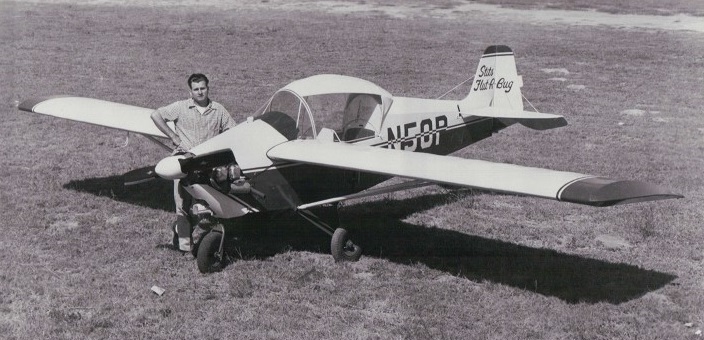
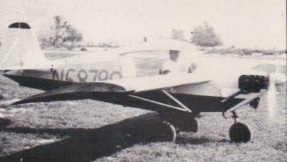
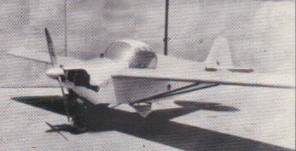
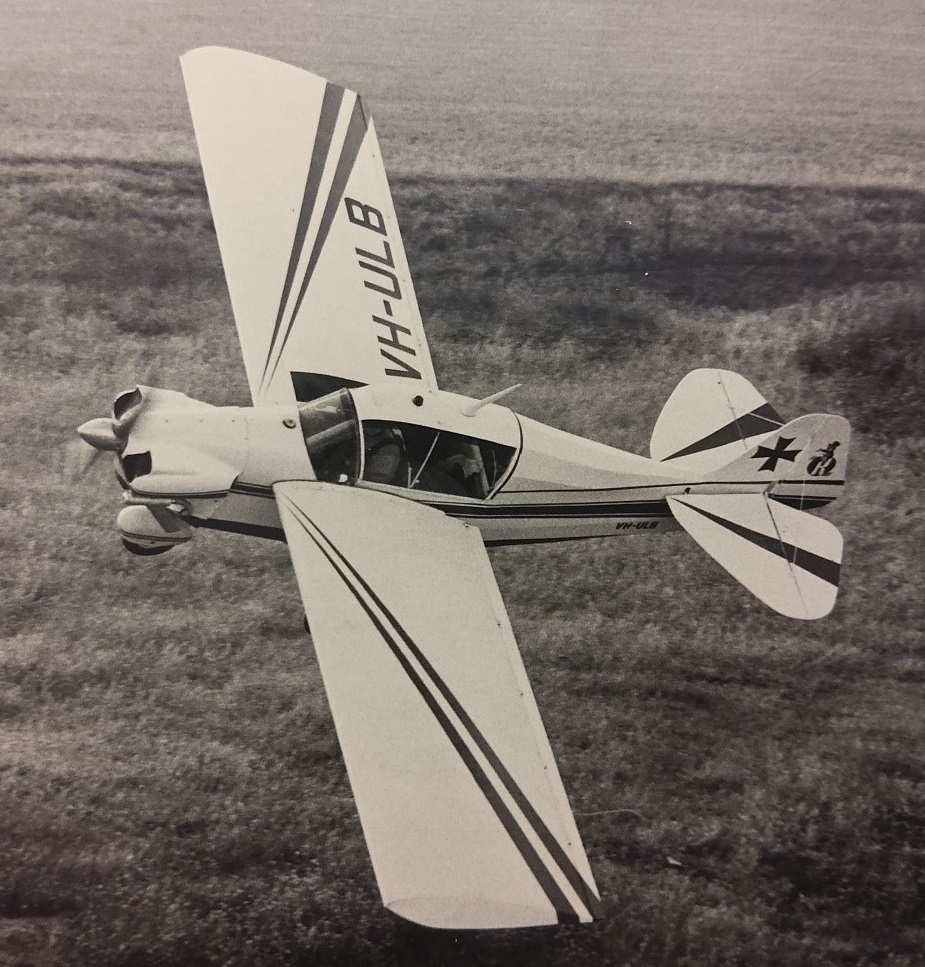
The two-seat Flut-R-Bug was designed in 1955 by Ray Stits for homebuilding projects. The improved SA-6B model was built in considerable numbers including two in Australia where they were to act as prototypes for a local version known as the Hamilton Jackaroo. This never eventuated. The steel-tube fuselage and wooden wings are fabric-covered. Fitted with a tricycle undercarriage and with a 75 hp motor the Flut-R-Bug can cruise at 135 km/h for about 400 km.
SA-6B Flut-R-Bug Courtesy Don Stits
The first Flut-R-Bug was the Model SA-5A, followed by the SA-5B. Stits also designed tandem versions (SA-6A and SA-6B) and then the two-place, side-by-side SA-6C. The Flut-R-Bug was typically powered by either a small Continental or Lycoming engine.
SA-6C Flut-R-Bug Courtesy Don Stits
There were possibly two aircraft (VH-ULA & ULB) built in Australia by Norman Hamilton with a view to producing them commercially. Further production did not eventuate. VH-ULB written off in a ground accident in 1984.
VH-ULB – the second Stits manufactured in Australia courtesy David Whitten
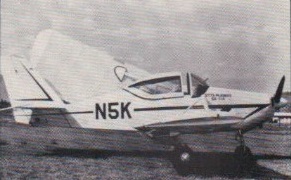
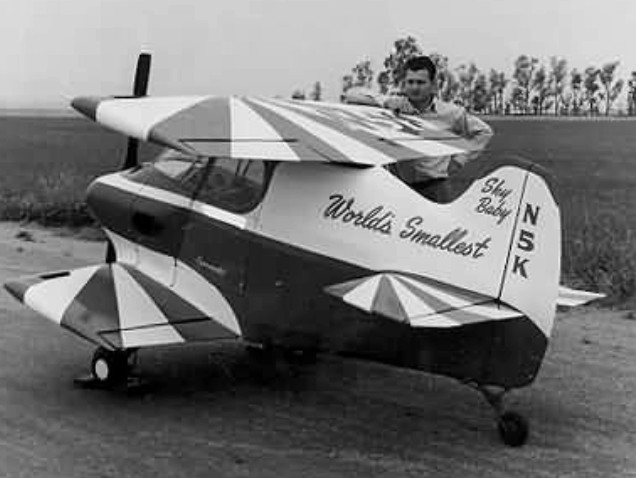
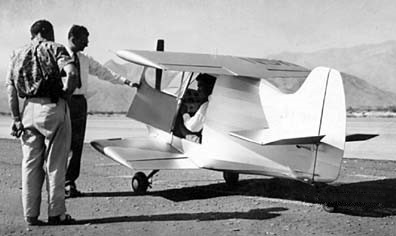
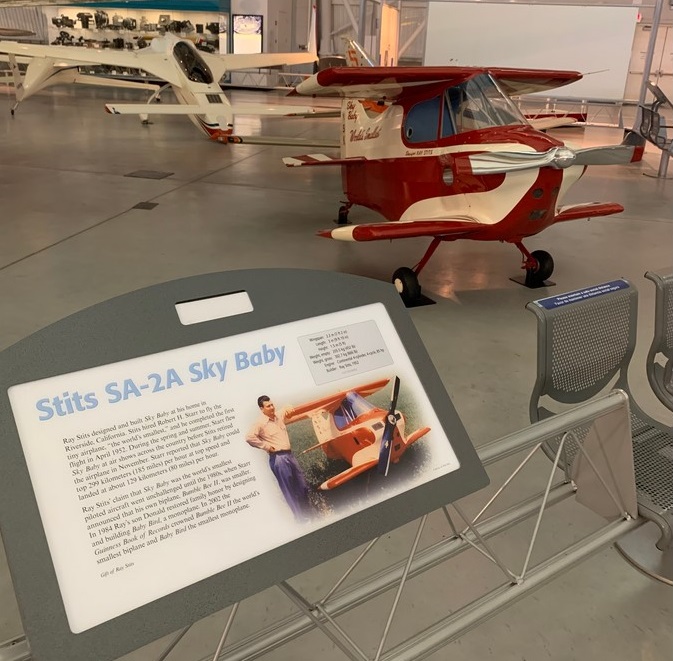
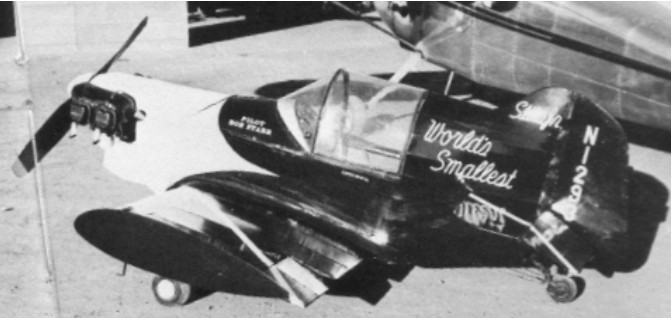
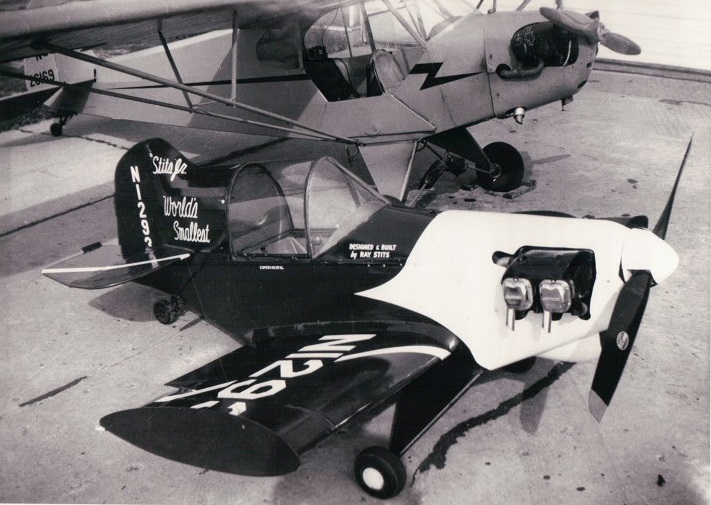
The Sky Baby was designed by Ray Stits, who built his Junior in 1948. No sooner had Stits completed it than word spread that someone was working on a design just a fraction smaller. Not about to be inched out of his record, Stits set to work again and finished the Sky Baby at his Riverside, California workshop in the summer of 1952.
Stits Sky-Baby N5K
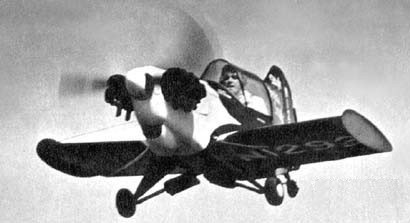
It was incredibly small, with biplane wings 2.18 m (7 ft 2 in) in span. The Sky Baby was powered by a 112 hp Continental engine, race tuned, which gave it a maximum speed close to 322 kph (200 mph).
Bob Starr, Ray Stits’ partner, flew it and had the experience and outstanding piloting qualities which the tricky midget apparently demanded. There was a second pilot, Lester Cole of Cole Bros Airshows.
Courtesy Don Stits
The Sky Baby still holds the title of world’s smallest aircraft in 1980. It was preserved at the Experimental Aircraft Association’s museum in a suburb of Milwaukee, Wisconsin, then on display at Smithsonian Air & Space museum.
Ray Stits built his first small plane in 1948, the Junior. The incentive to build “Junior”, the monoplane, came from a discussion about the world’s smallest airplane. Someone mentioned Steve Wittman’s little racer with a 13’ span and Ray Stits queried whether or not he could fly something with a 10’10” wingspan. One of the participants in that conversation said it wouldn’t be possible and that was all it took. Ray started building. He’d actually been thinking about it for a long time and proceeded with a 40hp engine from an Aeronca. That got changed to a 65 hp Continental. The plane was a handful and after the third crash on the fifth test flight, Ray shortened the wings to 8’10” and attached tip gates to generate more lift and better aileron control. He found a new pilot, Bob Starr, a former P-51 pilot. In 1950, Junior was a big hit in airshows. He began thinking about a larger sport plane that would be easy to build and fly, but he got side-tracked with another design: his quest to create the world’s smallest biplane.
SA1A Junior Courtesy Don Stits
Junior wound up on a scrap heap after an off airport landing.
Engine: 65 hp Wingspan: 8 ft 10 in Length: 11 ft 4 in Empty weight: 393 lb
Ray Stits developed the Stits covering and coatings process, now known as Poly-Fiber. He eventually sold the Poly-Fiber business to Alexander Aeroplane Company, owned by Ron Alexander at the time.
Stits established EAA Chapter One at Flabob Airport in Riverside, California. In 1962, he received the August Raspet Memorial Award and in 1994, he was inducted into the EAA Homebuilders Hall of Fame.
Between 1948 and 1965, he designed and built 15 airplanes. Except for the first two designs, he test flew them all. The reason for not flying the first two relates to the nature of the aircraft: they were the world’s smallest monoplane and then the world’s smallest biplane. Ray was too big/heavy to fit into them.
In May of 1952, he introduced the Stits Sky Baby, a biplane with a 7’2” wingspan. Once again he drew tremendous response from newspapers, magazines and the newsreel companies. And once again he got busy on the airshow circuit…but not for long. After one season, and 25 hours of flying time, the Sky Baby was given to the Smithsonian Institute. In 1963 it was sent to the Experimental Aircraft Association’s museum where it remains on long term loan. Requests were pouring in for plans for both of his midget aircraft, but Ray knew most people couldn’t handle the complexities of construction or the flying limitations of the two designs. Not being one to pass up an opportunity, however, he designed, built and test flew the Stits Playboy. It was a single seat, low wing, strut braced, aerobatic airframe that was designed to fly with 85 hp to 160hp engines.
Capitalizing on his fame for the miniature, Ray began selling plans. Realizing that a lot of builders were having problems securing aircraft grade materials, he started stocking and selling materials. He was into his second decade as an aircraft mechanic when the homebuilt movement began to take off and he slowly transitioned into an early version of Aircraft Spruce & Specialty.
In 1953, Ray got a letter from a man named Poberezny. The letter sat in an office at the airport for six weeks before someone finally delivered it to Ray. Paul Poberezny had heard of Ray’s work with homebuilts and had written to invite him to join a new organization he’d founded called the Experimental Aircraft Association.
Ray liked the concept and suggested to Paul that he be allowed to establish a Chapter of the EAA at Flabob. A couple months later, EAA had amended their bylaws to allow for Chapters and Ray was authorized to set up the first one. He got a dozen friends together and founded Chapter One. It’s still very active and leads all the other chapters in the number of Young Eagles they fly annually.
Around 1961, Ray went out to the back of his shop to dispose of some scrap aircraft covering that had been removed from an airplane. Disposal in those days was done with a match. But when he bent over to torch the nitric dope covered fabric, the stuff blew up in his face. The flammability of the covering got him thinking and he began a course of study that made him a chemist, leading over several years to the creation of a new covering material and a form of paint that was fire-resistant. Stits Polyfiber was born and it became such a hit in the homebuilt and restoration communities that Ray stopped selling all other forms of aircraft materials and by 1969, he removed all of his aircraft plans from the market. He spent the next couple of decades selling fabric and paint of his own creation. Ray retired and Jon Goldenbaum runs Polyfiber, which is still based on the famous “Stits Process”.
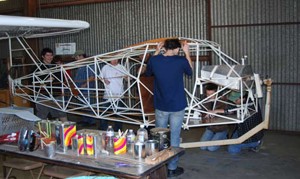
Ray Stits went on to become recognized as a Master Mechanic and became one of a handful of people who has also earned the title of Master Pilot. He still flies an LSA and stays involved with events going on at Flabob Airport. His latest gesture was an offer to install a 12,000 gallon fuel tank on the airport’s fuel farm so that Flabob can become the first airport in the state of California to offer mogas to homebuilders and those who own a certificated aircraft with the proper STC. He’s also involved in working with students at the Flabob Airport Preparatory Academy who are rebuilding a Stits Skycoupe.
At the age of 90, he was still going strong as a pilot, mentor, and founding member of EAA Chapter One at historic Flabob Airport. Ray