Stoddard Hamilton SH-2 Glasair

Glasair RG

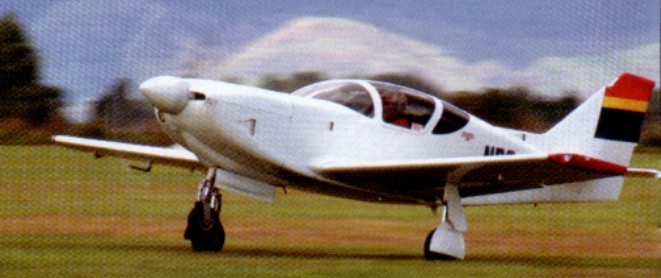
Designed in 1976 and first built in 1979, the Glasair is an all-composite, side-by-side two-place airplane which makes use of female molds to fabricate kit parts. The Glasair is con¬structed from preformed composite shells provided by Stoddard Hamilton Aircraft. Such a technique offers structural integrity without use of steel tubes or aluminum. A one-piece wing was designed to take advantage of skin strength without joints. A one-piece spar is made in a mold at the factory out of unidirectional glass for spar caps and bidirectional glass on a 45-degree bias for the shear webs. This is then bonded into the lower wing shell to save amateur builders time. The fuselage is built from three main pieces and requires no jigging but only three bulkheads, the firewall, seatback and a small aft bulkhead. The landing gear legs are pressure-molded unidirectional glass. A 160-hp version can also be built.

Tom Hamilton began flight testing the Glasair TD in 1979. Originally powered by a 115 h.p. Lycoming O-235 powerplant, the TD prototype featured conventional landing gear and a gross weight of 1,600 lbs.
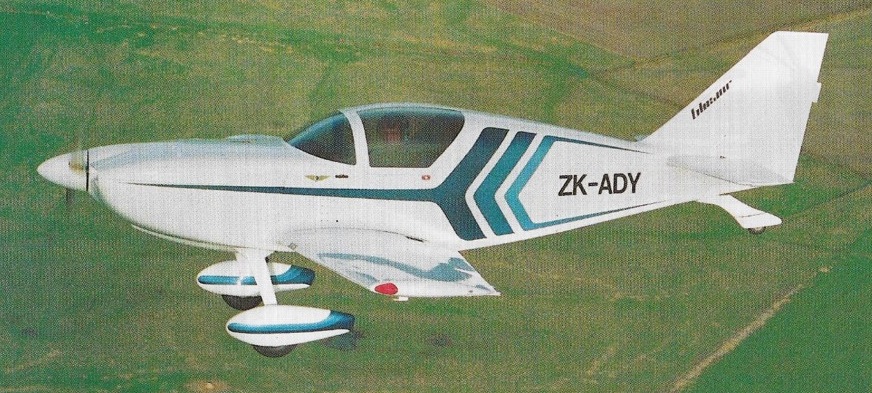
Glasair TD

Glasair debuted at the EAA Convention in Oshkosh 1980 with the first premolded composite kit aircraft ever offered. All the major airframe components pieces such as the fuselage, wing, cowling, and tail feathers were already fabricated in two halves. All the builder needed to do was install the ribs or bulkheads and seam the halves together. All the parts came direct from the factory with a mirror-smooth gel coated finish. Thus, the Glasair kit offered tremendous time savings compared to the scratch-built projects that were then available.

In addition, the production kits featured a 3″ higher canopy for improved cockpit comfort and visibility, as well as the more powerful 160 h.p. Lycoming O-320 engine. 150 builders in 1980 alone ordered the Glasair as their kitplane. The Glasair, powered by a Lycoming 0-320, returned a cruise speed of 221 mph at 75 per cent power. Winning the EAA’s prestigious “Outstanding Aircraft Design” Award in 1981, it was only a short time before Stoddard-Hamilton captured a large share of the GRP kitset market.

Units delivered to June 1981: 78. Price 1982: $8,600 (Excludes engine).

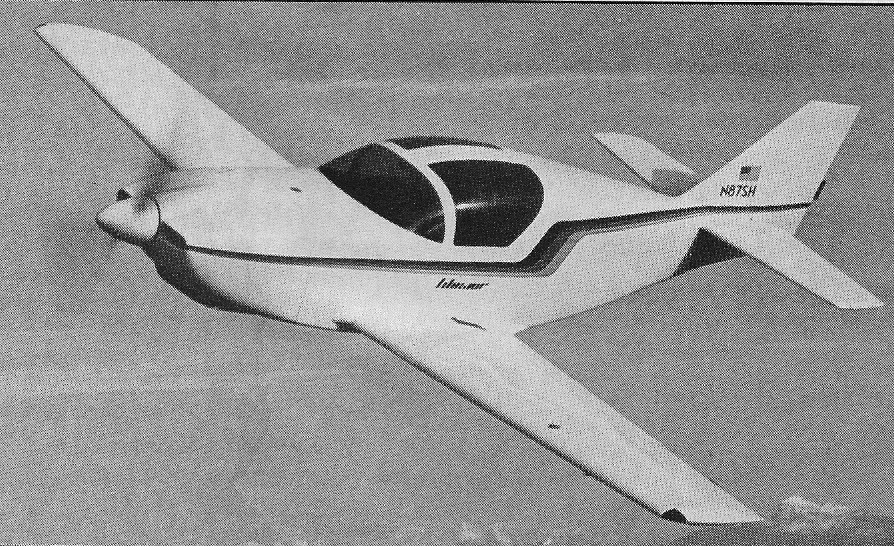
The retractable tricycle gear Glasair RG was introduced in 1983, and at the same time, kit completeness for both the RG and the TD was greatly improved. The introduction of prefabricated rudder pedal assemblies, aileron and elevator bellcranks, control stick yokes and various other metal parts completely eliminated the need for welding or complex metalworking skills on the part of the Glasair builder. The retractable undercarriage version has a 1.5 square foot frontal area and 234 mph cruise on 160 hp.

Apart from the undercarriage, the TD and RG models are otherwise fairly identical, the latter naturally featuring the higher performance.
Glasair RG

John Murphy of Cocoa, Florida, showed up at Oshkosh 1983 with a fixed tri-gear Glasair. Although Stoddard-Hamilton offered a fixed gear conventional and a retractable tricycle, they did not offer a fixed tri-gear version. Stoddard-Hamilton were impressed and planned to add the option to their line.

In 1984, working from a new 80,000 square foot factory, the company produces 3 Glasair kits a week. More than 600 kits had already been sold.

The fixed tricycle gear Glasair FT was developed in 1984. Making the new landing gear retrofittable to existing TDs, S-H converted the original production prototype, N89SH, to the new gear configuration. The new FT gave up only 2 m.p.h. of speed to the tail dragger.

With some 700 Glasair kits in the field in 1986, enter the Glasair II, which was simultaneously introduced in TD, FT and RG models. The main areas of improvement over the original Glasair I centered on cockpit ergonomics and labor savings. A complete retooling of most of the composite parts resulted in an additional 3″ of cabin width and 1-1/2″ of cabin height.

These changes also resulted in a larger baggage compartment. S-H’s labor-saving campaign resulted in, among other things, premolded mounting joggles for such components as the wingtip fairings, cowling, and so on; factory-made cutouts for the canopies and windshield; and premolded scribe lines in parts that required builder cutting. The end result was a more comfortable, more practical, better engineered aircraft that was more enjoyable to build as well as to fly.

In 1989 the Glasair II-S models were introduced — ‘S’ for stretched. The original II fuselage was lengthened by 14″, providing easier installation of the more powerful 180 and 200 h.p. engines builders were installing, as well as improving the appearance of the aircraft.

As before, tail dragger, fixed tricycle and retractable tricycle gear were all offered on the II-S. 1989 also marked the founding of Stoddard International, Inc., a sister company organized to produce composite parts for the Boeing Company.

Original manufacturer of the Glasair and Glastar, Stoddard Hamilton closed its doors in 2000 after more than 20 years in business. Both aircraft types were split from the Stoddard Hamilton camp when the closure occurred.

Thomas W. Wathen, former Chairman and CEO of Pinkerton’s, Inc., purchased the assets of Stoddard-Hamilton and AADI and formed Glasair Aviation, LLC in 2001 for the continued manufacturing and sale of both the Glasair and Glastar product lines.

New owner Thomas Walthem was committed to getting all three kits back into production. He initially purchased the Glasair side of the business but after finding the overheads of the line were not self supporting approached Arlington Aircraft Development Inc (AADI) to purchase the GlaStar line. As a single entity, the Glasair and Glastar kit aircraft under the banner of New Glasair/GlaStar.

In 2009 produces kits to construct the very popular Glasair in various models.

Gallery

Engine 150-160hp Lycomlng
Gross Wt. 1500 lb
Empty Wt. 910 lb
Fuel capacity 42 USG
Wingspan 23’3”
Length 18’7”
Top speed 230 mph
Cruise 221 mph
Stall 57 mph
Climb rate 1700 fpm
Takeoff run 450 ft
Landing roll 640 ft

SH-2 Glasair TD
Engine: Lycoming O-320-E2D
Cruise: 115 kt

RG
Engine 150-160hp Lycomlng
Gross Wt. 1800 lb
Empty Wt. 1100 lb
Fuel capacity 42 USG
Wingspan 23’3”
Length 18’7”
Top speed 243 mph
Cruise 233 mph
Stall 59 mph
Climb rate 2100 fpm
Takeoff run 375 ft
Landing roll 650 ft
Stoddard Hamilton

Tom Hamilton began flight testing the Glasair TD in 1979. Originally powered by a 115 h.p. Lycoming O-235 powerplant, the TD prototype featured conventional landing gear and a gross weight of 1,600 lbs.

Glasair debuted at the EAA Convention in Oshkosh 1980 with the first premolded composite kit aircraft ever offered. All the major airframe components pieces such as the fuselage, wing, cowling, and tail feathers were already fabricated in two halves. All the builder needed to do was install the ribs or bulkheads and seam the halves together. All the parts came direct from the factory with a mirror-smooth gel coated finish. Thus, the Glasair kit offered tremendous time savings compared to the scratch-built projects that were then available.

In addition, the production kits featured a 3″ higher canopy for improved cockpit comfort and visibility, as well as the more powerful 160 h.p. Lycoming O-320 engine. 150 builders in 1980 alone ordered the Glasair as their kitplane.

In 1981 the EAA awarded Tom Hamilton the prestigious Raspet Award for outstanding contribution to the design of light aircraft.

The retractable tricycle gear Glasair RG was introduced in 1983, and at the same time, kit completeness for both the RG and the TD was greatly improved. The introduction of prefabricated rudder pedal assemblies, aileron and elevator bellcranks, control stick yokes and various other metal parts completely eliminated the need for welding or complex metalworking skills on the part of the Glasair builder.

The fixed tricycle gear Glasair FT was developed in 1984. Making the new landing gear retrofittable to existing TDs, S-H converted the original production prototype, N89SH, to the new gear configuration. The new FT gave up only 2 m.p.h. of speed to the tail dragger.

With some 700 Glasair kits in the field in 1986, enter the Glasair II, which was simultaneously introduced in TD, FT and RG models. The main areas of improvement over the original Glasair I centered on cockpit ergonomics and labor savings. A complete retooling of most of the composite parts resulted in an additional 3″ of cabin width and 1-1/2″ of cabin height.

These changes also resulted in a larger baggage compartment. S-H’s labor-saving campaign resulted in, among other things, premolded mounting joggles for such components as the wingtip fairings, cowling, and so on; factory-made cutouts for the canopies and windshield; and premolded scribe lines in parts that required builder cutting. The end result was a more comfortable, more practical, better engineered aircraft that was more enjoyable to build as well as to fly.

1986 also marked the introduction of the Glasair III, two-place sportplane on the planet. Powered by its 300 h.p. Lycoming IO-540 to cruise speeds in excess of 265 m.p.h., the kit featured all the new labor-saving innovations of the Glasair II kits.

Also in 1986, S-H became an employee-owned company, Arlington, Washington.

1988: Stoddard-Hamilton Aircraft Inc
18701 58th Ave NE
Arlington
WA 98223
USA

In 1989 the Glasair II-S models were introduced — ‘S’ for stretched. The original II fuselage was lengthened by 14″, providing easier installation of the more powerful 180 and 200 h.p. engines builders were installing, as well as improving the appearance of the aircraft.

As before, tail dragger, fixed tricycle and retractable tricycle gear were all offered on the II-S. 1989 also marked the founding of Stoddard International, Inc., a sister company organized to produce composite parts for the Boeing Company.

SI has manufactured a variety of parts for the 737, 747, 757, 767 and the new 777. SI was one of the first companies in the nation to be approved under the new D1-9000 specification, a manufacturing quality control specification.

S-H introduced the Glasair III Turbo in 1990. A complete firewall-forward package, this option pushed the standard Glasair III airframe up into the Flight Levels at speeds of well over 300 m.p.h.

GlasFloats were developed in 1992. Available in straight and amphibious versions, these all-composite, leak-proof floats opened up new vistas of adventure for builders of light aircraft such as the Kitfox and Avid Flyer.

The Glasair III LP was displayed at the NASA exhibit in Oshkosh in 1993. The result of S-H’s participation in a NASA-funded Small Business Innovation Research (SBIR) grant, the LP was the first lightning-protected composite kit aircraft. Under the terms of the SBIR grant, the research results produced in the course of this project became part of the public domain, and future certified composite aircraft such as the Cirrus and the Kestrel utilize technology based on S-H’s findings. S-H continues to participate in several other SBIR grants and NASA advanced research programs on such topics as composite manufacturing techniques and aircraft crashworthiness.

The Glasair Super II was also introduced in 1993. The II-S fuselage was lengthened by 6″, the wing was moved aft 1-1/2″, and the horizontal tail surfaces were increased in size by 30%, producing an aircraft of peerless handling characteristics with a CG envelope wide enough to accommodate a wide variety of engine and equipment choices. Available in any of three gear configurations, the Super II offers an unbeatable combination of performance, utility and economy.

The new GlaStar was announced at the 1994 Sun n’ Fun airshow in Lakeland, Florida, and first displayed as an almost-finished prototype at Oshkosh. Featuring a foldable high wing, convertible landing gear options and a baggage compartment. More than 100 builders placed deposits on the new kit in advance of the prototype’s November first flight.

The Glasair III Prop Jet also debuted at Oshkosh ‘94. Built by Composite Turbine Tech, Inc., of Toledo, Washington, this aircraft mated a 450 s.h.p. Allison 250 B-17 turbine engine to a standard Glasair III airframe.

Behind its original 125 h.p. Continental IO-240 engine, the GlaStar prototype exceeded its design goals on every parameter in 1995. By the fall of 1995, complete GlaStar kits were being shipped, and the first customer-built GlaStar took flight after less than three-months of construction. 1995 also saw major enhancements to all models of the Glasair.

Kits for both the III and the Super II underwent upgrades, as previously optional equipment was incorporated into the standard kits. Ever-increasing degrees of factory prefabrication, part quality and kit completeness continue to be the hallmark of the Glasair line.

In 1996, the GlaStar prototype, having logged some 400 trouble-free hours in its first eighteen months, was equipped with a new 160 h.p. Lycoming O-320 engine installation. With a constant-speed propeller, this powerplant gave better cruise speed, climb performance and short-field wizardry. In 1997 the GlaStar was tested on floats — both Aerocet 2200 straight floats and Wipline 2100 amphibs. Designed from the outset as a floatplane, the GlaStar exceeded all expectations. In addition, the 180 h.p. Lycoming O-360 engine was installed in the GlaStar.

1997: 18701 58th Ave, N.E. Arlington, WA 98223, USA.

Following a sophisticated computational fluid dynamics analysis of its aerodynamic qualities at speeds in the Mach .6–.7 range, the Glasair III got an enlarged rudder, a new cowling and a mighty turbocharger to become the Glasair Super III in 1998. Designed to produce 350 h.p. at altitudes of up to 37,000 feet, the new powerplant testing on the prototype had been flown to 35,000 feet at airspeeds of greater than 320 knots. At 32,000 feet, the aircraft was still capable of climbing at over 2,000 feet per minute.

GlaStar builders got a tremendous boost in 1998 with the introduction of new “Jump-Start” accelerated-assembly options. Taken together, the Jump-Start Wing and Fuselage options shaved up to 50% off the typical build-time.

Original manufacturer of the Glasair and Glastar, Stoddard Hamilton closed its doors in 2000 after more than 20 years in business. Both aircraft types were split from the Stoddard Hamilton camp when the clo-sure occurred.

Thomas W. Wathen, former Chairman and CEO of Pinkerton’s, Inc., purchased the assets of Stoddard-Hamilton and AADI and formed Glasair Aviation, LLC in 2001 for the continued manufacturing and sale of both the Glasair and Glastar product lines.

New owner Thomas Walthem was committed to getting all three kits back into production. He initially purchased the Glasair side of the business but after find¬ing the overheads of the line were not self supporting approached Arlington Air¬craft Development Inc (AADI) to purchase the GlaStar line. As a single entity, the Glasair and Glastar kit aircraft under the banner of New Glasair/GlaStar.

Mr. Wathen, who sits on the President’s Counsel of the EAA and owns historic Flabob Airport in Riverside, California, selected Mikael Via to be President and Chief Operating Officer (COO) of the new companies. According to Mr. Wathen, Via is to be responsible for daily operations of Glasair Aviation and will help Wathen determine the long-term direction and growth of the company. Via, is a private pilot and builder/owner of a Glasair Super II RG.

More than 3,000 kits were in the field and some 1,700 aircraft flying in countries around the world by 2008.

In 2009 produces kits to construct the very popular Glasair two-seat low-wing monoplane in various models (first flown 1979 and thought to have been the first pre-molded composite kitplane), plus kits for the GlaStar two-seat high-wing cabin monoplane (first flown 1994 and many hundreds sold). Other aircraft have included the Turbine 250/III turboprop two-seater, and T-9 Stalker two-seat turboprop variant of Glasair III as trainer (first flown 1988).

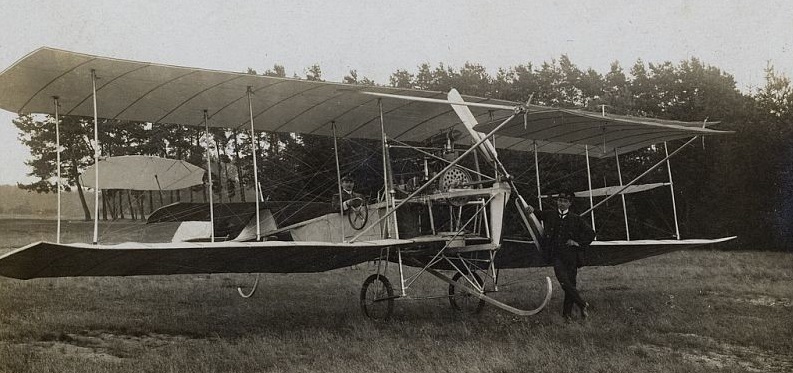
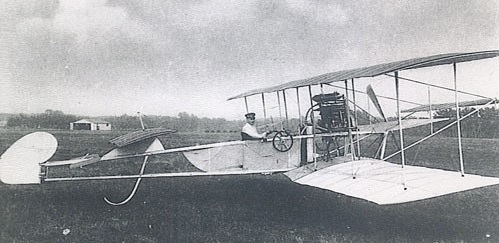
Stockhausen 1912-1913 biplane

In 1910-1911, a small group of aviation enthusiasts from Paderborn, Johann Stockhausen, Oskar Martini, Paul Schröder, Karl Vogt and Anton Bickmeier built their tents on the edge of the parade ground at Dörenkamp in Paderborn, Germany, working on their projects for the conquest of the air, but nothing further is known.

In February and March 1911, Stockhausen and Schröder leased on the edge of today’s airfield Bad Lippspringe, the former parade ground, a land on which they built the first Paderborn aircraft hall proudly bearing the name “Aeroplanhalle Joh. Stockhausen”. For the 17 May 1912 Stockhausen invited pilot Gustav Tweer. The biplane of Stockhausen had a 60 hp engine.

St-Just Aviation Super Cyclone

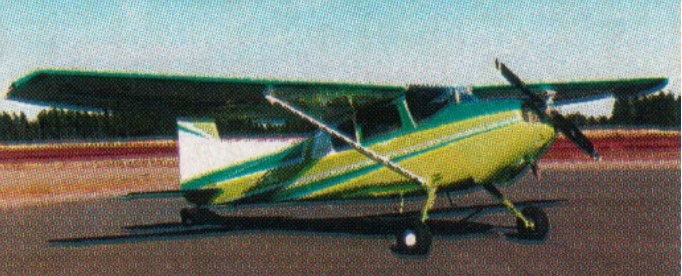
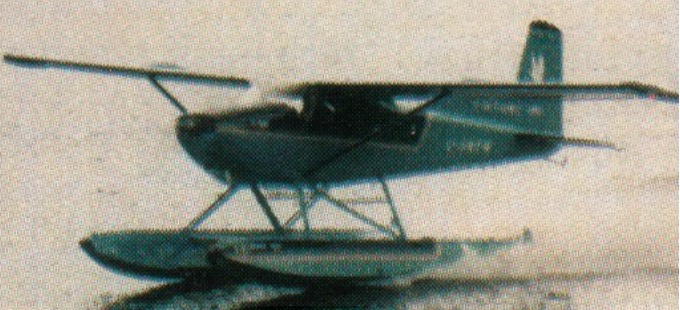
Based on a light Cessna, the Super Cyclone has longer flaps and shorter ailerons with long a chord.

Kit price was US$26,800.

Engine: Continental, 300 hp
HP range: 300-350
Height: 7.5 ft
Length: 26 ft
Wing span: 38 ft
Wing area: 191sq.ft
Fuel capacity: 90 USG
Empty weight: 1800 lb
Gross weight: 3500 lb
Top speed: 175 mph
Cruise: 165 mph
Stall: 37 mph
Range: 1000 sm
Rate of climb: 1500 fpm
Takeoff dist: 250 ft
Landing dist: 650 ft
Service ceiling: 17,700 ft
Seats: 4
Landing gear: tailwheel

St-Just Aviation Cyclone

The Cyclone replic of the Cessna 180/185 range was offered in six versions. It is all metal in construction and equipped with a high performance wing and butterfly type doors.

The US$26,000 kit included engine mount, cowling, wingtips and fairings.

A Lycoming engine was optional.

Engine: Continental, 230 hp
HP range: 145-350
Height: 7.5 ft
Length: 26 ft
Wing span: 38 ft
Wing area: 181 sq.ft
Fuel capacity: 65 USG
Empty weight: 1700 lb
Gross weight: 3000 lb
Top speed: 178 mph
Cruise: 158 mph
Stall: 37 mph
Range: 870 sm
Rate of climb: 1300 fpm
Takeoff dist: 250 ft
Landing dist: 950 ft
Service ceiling: 17,700 ft
Seats: 4
Landing gear: tailwheel

Engine: Continental O-470, 230 hp
Wing span: 11.60 m
Wing area: 16.2 sq.m
MAUW: 1585 kg
Empty weight: 770 kg
Fuel capacity: 340 lt
Cruise speed: 255 kph
Minimum speed: 65 kph
Climb rate: 6.5 m/s
Seats: 4
Plan price (1998): Can$650
Kit price (1998): Can$26,500

Stits SA5 Flut-R-Bug

Courtesy Don Stits

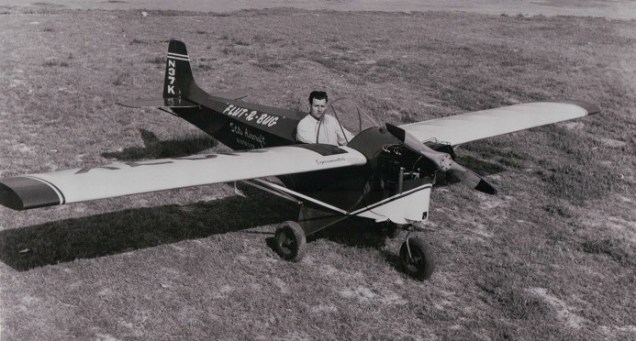
In 1955 Ray Stits designed the Flut-R-Bug, his sixth design. It was originally a single-place, mid-wing, nosewheel airplane and several variants followed.

The first Flut-R-Bug was the Model SA-5A, followed by the SA-5B. Stits also designed tandem versions (SA-6A and SA-6B) and then the two-place, side-by-side SA-6C. The Flut-R-Bug was typically powered by either a small Continental or Lycoming engine.

SA-5B Courtesy Don Stits

Stits SA-5 Flut-R-Bug
Engine: 1 × Continental A65, 65 hp (48 kW)
Propeller: 2-bladed Sensenich, 6 ft 0 in (1.83 m) diameter
Length: 17 ft (5.2 m)
Wingspan: 23 ft (7.0 m)
Wing area: 103.5 sq ft (9.62 sq.m)
Airfoil: NACA 4412
Empty weight: 528 lb (239 kg)
Fuel capacity: 9 U.S. gallons (34 L; 7.5 imp gal)
Maximum speed: 87 kn; 161 km/h (100 mph)
Cruise speed: 70 kn; 129 km/h (80 mph)
Stall speed: 35 kn; 64 km/h (40 mph)
Range: 174 nmi; 322 km (200 mi)
Service ceiling: 12,000 ft (3,700 m)
Rate of climb: 1,000 ft/min (5.1 m/s)
Wing loading: 6.4 lb/sq ft (31 kg/sq.m)
Crew: 1
Capacity: 1 passenger

Stits SA-5B Flut-R-Bug
Engine: 65 hp
Seats: 1

Stits SA-4A Executive / Stits-Besler Executive

SA4A Stits Besler Executive Courtesy Don Stits

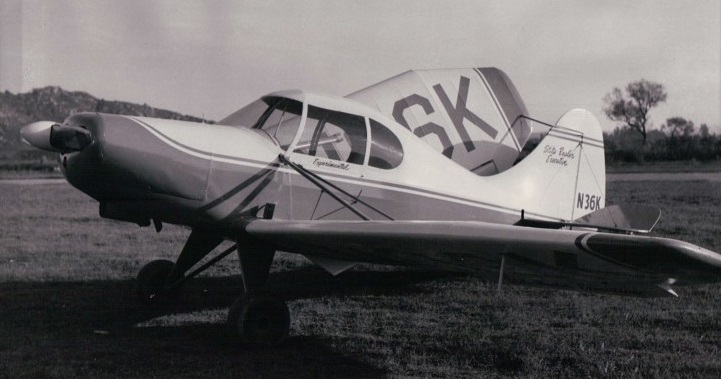
The 4th design of Ray Stits, the Stits-Besler Executive project was initiated when William Besler of Besler Corp. contracted Ray Stits to design a three-place homebuilt aircraft with folding wings. Besler was an early aviation experimenter, who had mounted a steam engine of his own design on a Travel Air 2000 in 1933.

Ray Stits designed the three place Stits SA-4A Executive, developed from the Stits Playboy. Only one was built, costing $6000 in 1955.

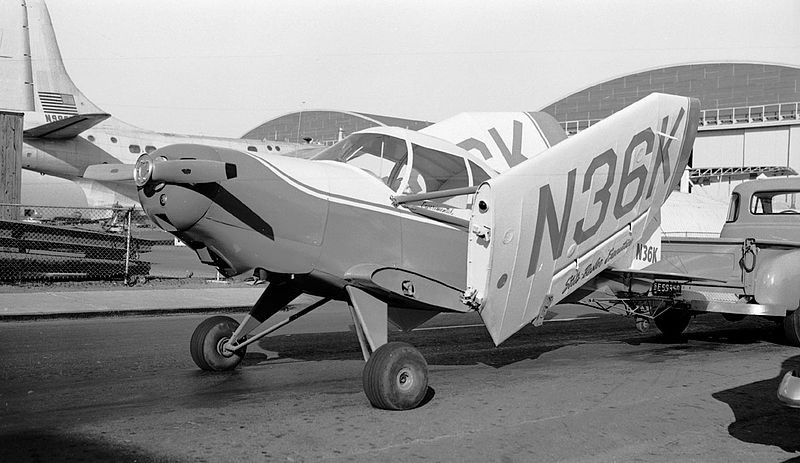
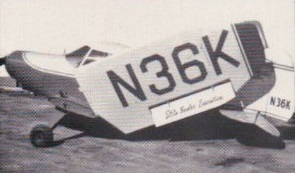
The wings on the Executive fold aft and upward. Fuel tanks are embedded in the non-folding wing roots. The fuselage is welded steel tube with fabric covering. The ailerons are mounted in the center of the wing rather than the tips.

The sole Executive, (registration no. N36K), has been used as a test bed for Besler-designed engines; a 150 hp (112 kW) steam engine and a two cycle, four cylinder Vee rated at 100 hp (75 kW).

Stits-Besler Executive
Engine: 1 × Lycoming O-320, 150 hp (110 kW)
Wingspan: 25 ft 6 in (7.77 m)
Wing area: 120 sq ft (11 sq.m)
Length: 18 ft 6 in (5.64 m)
Width: 7 ft 5 in (2.26 m) with wings folded
Height: 6 ft 11 in (2.11 m)
Empty weight: 800 lb (363 kg)
Gross weight: 1,450 lb (658 kg)
Fuel capacity: 24
Maximum speed: 143 kn; 266 km/h (165 mph)
Cruise speed: 130 kn; 241 km/h (150 mph)
Stall speed: 43 kn; 80 km/h (50 mph)
Rate of climb: 2,500 ft/min (13 m/s)
Range: 350 mi
Seats: 2-3

Stits SA-7 Skycoupe / SA-9 Skycoupe

SA9A Skycoupe Courtesy Don Stits

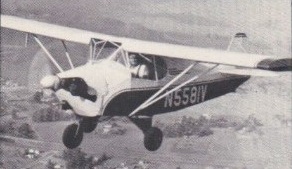
The Stits SA-7 Skycoupe was one of the most common homebuilts in the early 1960s. It could be built for around $3,000 back then.

SA7B Skycoupe Courtesy Don Stits

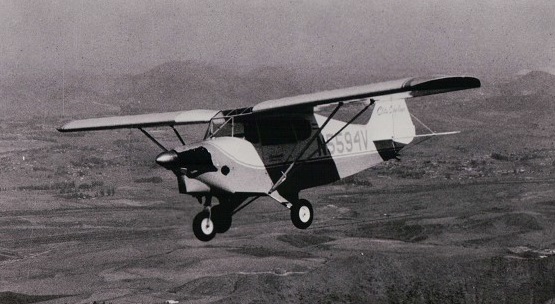
The SA-7 Sky-Coupe was Stits’ initial entry in the “ready-made” two-place aircraft market. About 1956, the SA-7A N5581V was powered by a 65hp Continental engine.

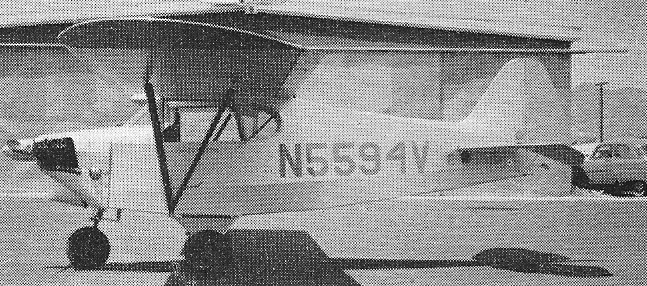
The 1957 SA-7B N5594V had a re-designed fuselage and tail; elevator trim tab and was powered by a 65hp (later 85hp) Continental engine.

One custom-built fuselage only SA-7C was built for a 125hp Lycoming engine.

SA-7D

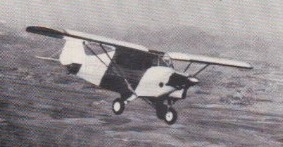
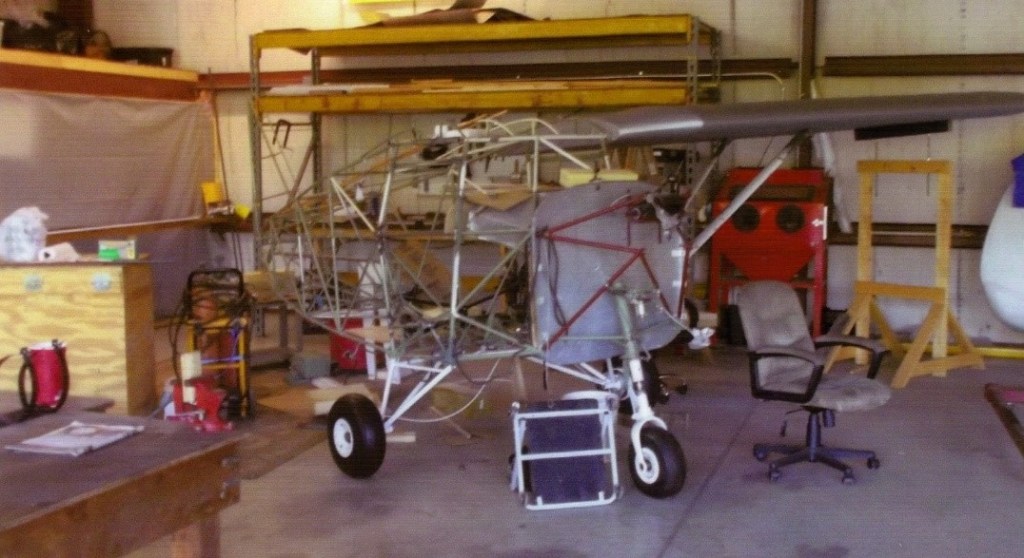
The SA-7D Skycoupe, very similar in appearance to a Piper Colt, is of typical construction for aircraft of the late 1950s — welded chromoly steel tube fuselage, wooden wing, fabric covering, powered by a 125-hp Lycoming O-290-D converted from a military ground power unit.

About 1961 the SA-7D designed by Harold Dale and Ray Stits was a production version supplied in kit and blueprint form. Power options were up to 100hp.

The design proved so popular that Ray Stits, the designer, and his business partners took it through certification.

The Type Certificate for the Stits Model SA-9A Skycoupe was granted by the FAA in December 1961 after four years of testing.

SA-7D Skycoupe
SA-9A Courtesy Don Stits
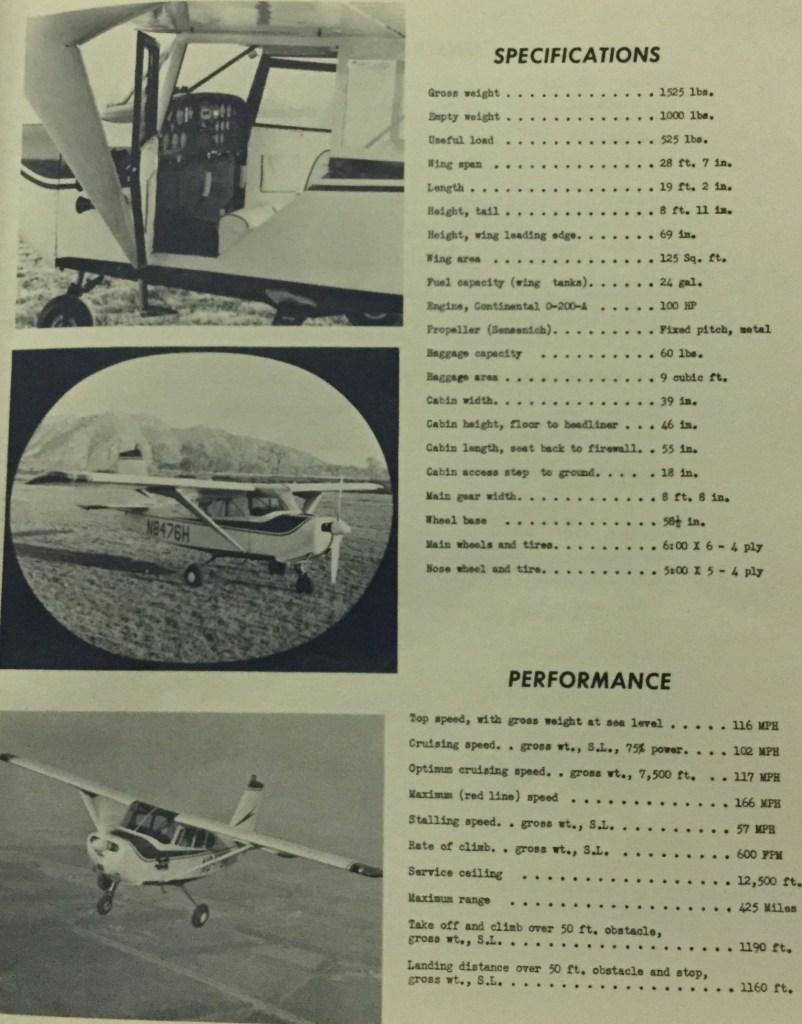
SA-9 Skycoupe Specifications Courtesy Don Stits

Gallery

Variants:
SA-7A
SA-7B
Powered by a Continental C85
SA-7C
SA-7D
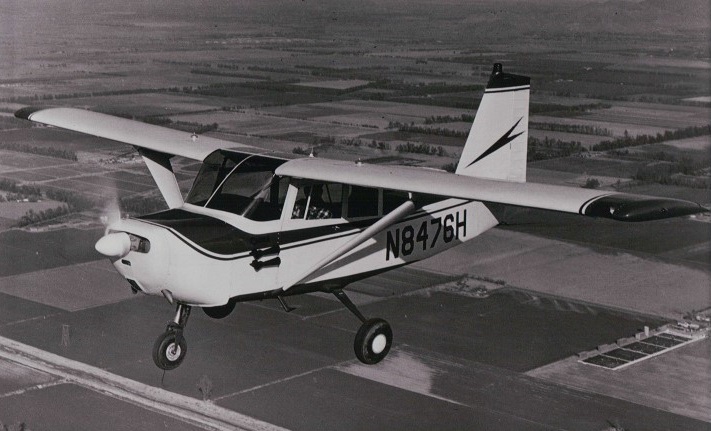
Updated with a squared off swept tail configuration.
SA-9A
A type certificated version.

Stits SA-7 Skycoupe
Engine: 1 × Continental A65, 65 hp (48 kW)
Wingspan: 24 ft 4 in (7.42 m)
Wing area: 120 sq ft (11 sq.m)
Length: 17 ft 9 in (5.41 m)
Height: 6 ft 3 in (1.91 m)
Empty weight: 600 lb (272 kg)
Gross weight: 1,080 lb (490 kg)
Fuel capacity: 17 US gallons (64 litres)
Maximum speed: 87 kn; 161 km/h (100 mph)
Cruise speed: 78 kn; 145 km/h (90 mph)
Stall speed: 30 kn; 56 km/h (35 mph)
Range: 261 nmi; 483 km (300 mi)
Service ceiling: 12,000 ft (3,700 m)
Rate of climb: 1,000 ft/min (5.1 m/s)
Wing loading: 9 lb/sq ft (44 kg/m2)
Seats: 2

SA-7A
Engine: 65hp Continental
Wingspan: 24’4″
Length: 17’9″
Speed: 100 mph
Seats: 2

SA-7B
Engine: 65hp (later 85hp) Continental
Wingspan: 26’8″
Seats: 2

SA-7C
Engine: 125hp Lycoming
Seats: 2

SA-7D
Engine: 85hp Continental
Wingspan: 27’4″
Length: 19’0″
Useful load: 550 lb
Max speed: 140 mph
Cruise: 138 mph
Stall: 48 mph
Range: 410 mi

SA-9A Skycoupe
Engine: 100 hp
Seats: 2
FAA Type cert: 4A31