Stroukoff Aircraft Corp

USA
Formed at West Trenton, New Jersey, by Michael Stroukoff, responsible for design of Chase C-123 military transport, after controlling interest in the Chase Aircraft Company Inc, of which Stroukoff was vice-president, had been acquired by the Kaiser-Frazer Corporation. New Stroukoff corporation developed design of C-123. Experimental model with boundary-layer control flown December 1954. Stroukoff also developed for amphibious aircraft of this class “pantobase” landing gear (retractable land/water skis and wingtip floats).

1953: (Michael) Stroukoff Aircraft Corp, Trenton NJ.

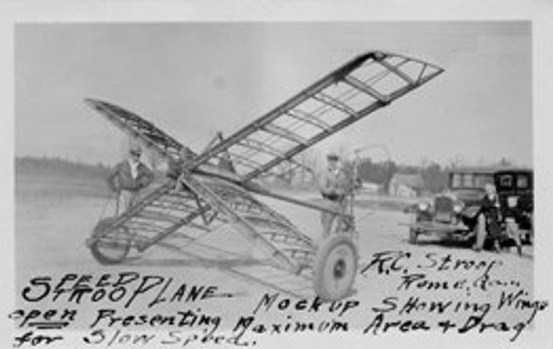
Stroop AT-6

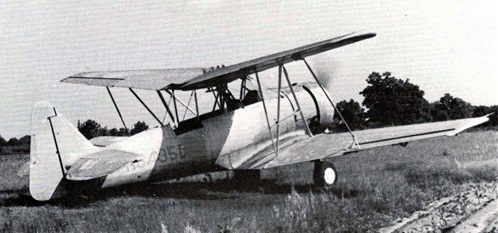
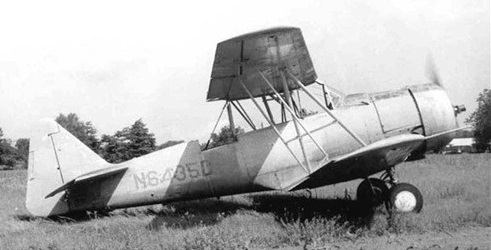
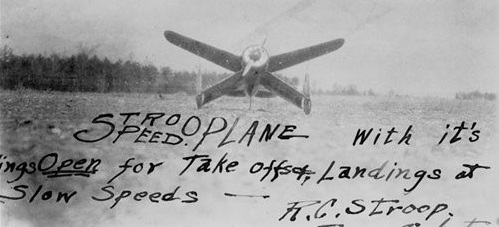
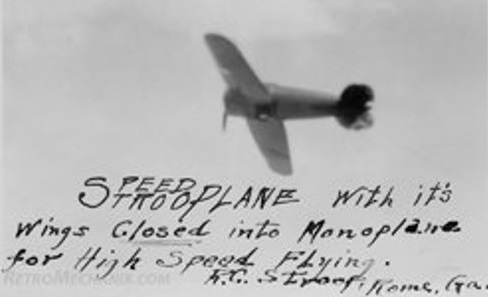
An AT-6 biplane conversion built in Selma, Alabama, by Robert C. Stroop, for use as a sprayer.

This aircraft, N6435D, c/n 88-17079, was an AT-6D originally ordered by the Army as 42-85295, but later assigned to the Navy as SNJ-5, B/N 84995. It was retired from the Navy, stored at NAF Litchfield Park, and then sold as surplus in the late fifties.

Requiring a low and slow sprayer in Alabama, Robert C. Stroop purchased the AT-6D and two more wings from AT-6, plus some additional fittings, and probably about 1964 converted the basic AT-6D into a biplane sprayer.

The airplane retained the basic configuration of the AT-6D, with only the cockpit and addition of the upper wing changing its appearance. The additional wing consisted of two outer wing panels from another airplane, and enough struts to stabilize the structure. The wing produced a negative stagger, probably to move the CG back so that the spray tank could be made larger, and a heavier load could be carried. Cabane struts braced the center section, and large “N” struts were installed outboard. Ailerons were interconnected by a smaller strut, and some bracing wires were installed between the cabane struts. There were no landing gear doors, and the cockpit was completely open except for the standard windshield. Only the front seat remained. The entire airplane was silver or unpainted.

With quite satisfactory takeoff and landing characteristics and a low stalling speed, it received a restricted certificate “only agricultural work”.

The aircraft was operated from 1965 to 1970 (the last known owner – farmer J.F. Carter, of Monroeville, AL,), after which his fate is unknown.
Strom 1911 monoplane

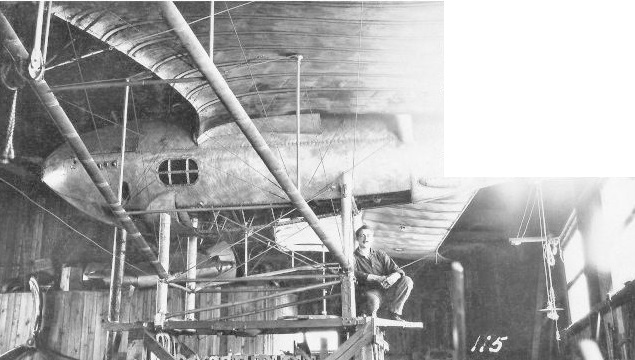
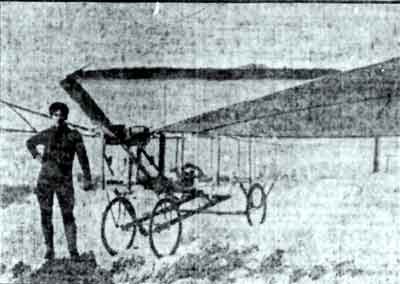
Designed by Carl Strom, a Dane, this was an all-steel passenger-carrying monoplane. Dimensions were 49 feet span, 24 feet height and the wings had a chord of 11 feet. Construction started late in 1911, with Strom building his machine with Oscar Olesen in Mineola, New York, USA.

Appears to have never been completed.

Strojnik S-2

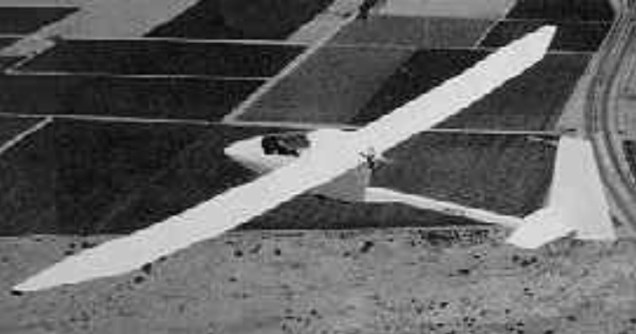
Designed by Alex Strojnik, the S-2 uses carbon fiber and aluminum wing spars with fiberglass skins. The fuselage pod is wood skinned with fiberglass, the boom is aluminum and the tail group is carbon-reinforced and skinned with fiberglass. The fixed gear consist of two small wheels in tandem. The Kohler engine drives a foldable propeller. Glidepath control is by flaps.

Designed by Alex Strojnik, the S-2a is a pod and boom pusher with folding propeller. The span is 15 meters and the best L/D is about 34:1. Alex made many excellent soaring flights with his motorglider, including diamond goal distance. A number of these have been built. Plans are no longer available for sale.

S-2
Wing span: 15 m / 49.2 ft
Wing area: 11.8 sq.m / 127 sq.ft
Aspect ratio: 19
Airfoil: Modified Wortmann
Empty Weight: 280 kg / 617 lb
Payload: 165 kg / 363 lb
Gross Weight: 445 kg / 980 lb
Wing Load: 37.11 kg/sq.m / 7.7 lb/sq.ft
L/DMax: 34 88 kph / 48 kt / 55 mph
MinSink: 0.67 m/s / 2.2 fps / 1.30 kt
Seats: 1
Structure: aluminum, wood and fiberglass

Strohbach 1910 Monoplane

Constructed by George Strohbach, a skilled mechanic in Company E of the Fifteenth Infantry at Fort Douglas near Salt Lake City, Utah. In April of 1910 however, prior to finishing the project, Strohbach deserted the Army and disappeared. A fifty dollar reward for his apprehension was offered, but the Army also had another problem. Still in its box at Fort Douglas was the motor for the flying machine, ordered from St. Louis, yet no one knew how to handle either the motor or the monoplane, and neither was anyone willing to pay the C.O.D. charges on the crated engine – thus leaving the Army’s aeroplane-building attempt forever grounded.