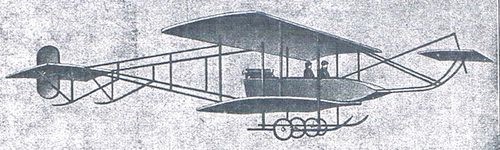
Troy Air Service A / Cape NMJ-1A Trainer

The Troy Air Service A was a 1938 two place open cockpit biplane, designed by Nelson M Jones. A dual control trainer registered NX/NC2619 c/n 102, power was from a LeBlond, then 125hp Warner Scarab on 1 March 1939, then a Menasco C-4 on15 August 1939. The registration was cancelled in 1948.

Other references to is is as the Cape NMJ-1A Trainer appearing on 1940 records included a 130hp Aeromarine 2-A, span: 28’5″, length: 22’8″, max speed of 130 mph, cruise of 118 mph, and a stall of 45 mph. The final modification had canopied cockpits.

The design, with 130hp Franklin, was advanced by Cluett Co, but not completed because of outbreak of WW2.
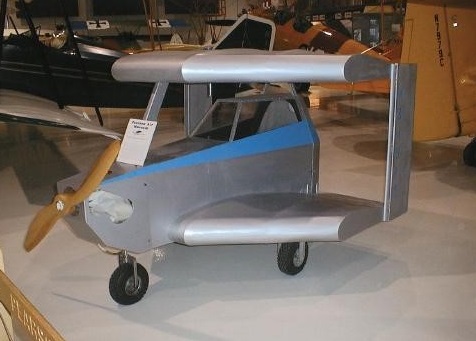
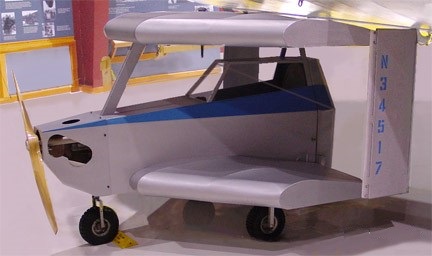
Trotter WSA-1

In 1987 Larry G. Trotter built the WSA-1, claimed of being the “World’s Smallest Airplane”.

With FAA registration N3417 c/n 001, on the first flight attempt, at about rotation speed the propeller threw a blade, which resulted in some extremely violent vibration that did some damage to the front cowling and motor mount and was bad enough to shake the hands off the altimeter.

After repair and the metal prop replaced with a wooden one, Trotter never got around to trying again.

It was later donated to the Pearson Air Museum (WA, USA).

Engine: 16hp one-cyl 2-cycle shipboard utility engine
Seats: 1

Tri-R Technologies

High Tech Composites / HTC

High Tech Composites (HTC) in Oxnard, California, USA, owned by Rich Trickle, produced composite structures for other aircraft manufactures before Rich designed the two-seat KIS TR-1 (KIS stands for “Keep It Simple”). Constructed with the assistance of Vance Jaqua and Martin Hollmann, the aircraft was first presented at the EAA event at Oskosh, Wisconsin, in July 1991.

Subsequently HTC was renamed Tri-R Technologies and the composite kit plane was marketed to the homebuilt constructor.

1995-7: 1114 E. 5th St., Oxnard, CA 93030, USA.

In 2001 the Pulsar Aircraft Company (formed in 1999) acquired the design and production rights of Tri-R, while the latter still produced the composite parts. The two-seat KIS TR-1 was re-designated Pulsar 150, while the KIS Tr-4 Cruiser became the Pulsar Super Cruiser. In 2005 all aircraft production was transferred to Ilopango, El Salvador.

Pulsar Aircraft Corp improved the design and offered an new, larger version called the Super Pulsar 100. They also keep the original legacy Pulsar design alive under the name of Pulsar XP.

Markets kits to build the KIS (Keep It Simple) side-by-side two-seat composites monoplane (first flown 1991), plus the four-seat TR-4 Cruiser (first flown 1994).