Two Wings Mariner EXP

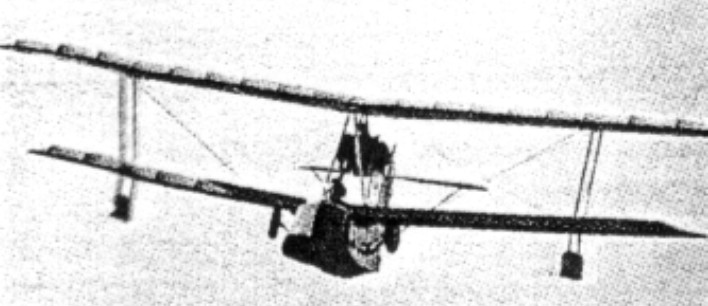
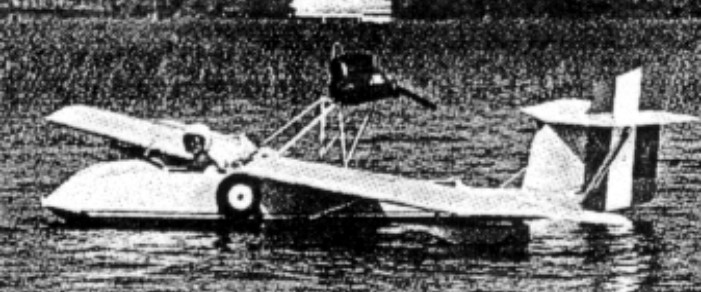
Amphibian pusher made from sheet metal, tube and fabric.

Engine: Subaru, 60 hp
HP range: 30-100
Height: 8 ft
Length: 18.75 ft
Wing span: 28.5 ft
Wing area: 204 sq.ft
Weight empty: 370 lbs
Gross: 950 lbs
Fuel cap: 10 USG
Speed max: 100 mph
Cruise: 80 mph
Range: 400 sm
Stall: 29 mph
ROC: 1500 fpm
Take-off dist: 175 ft
Landing dist: 225 ft
Service ceiling: 20,000 ft
Seats: 1 or 2
Landing gear: tail wheel, retractable

TWK Clarke Glider

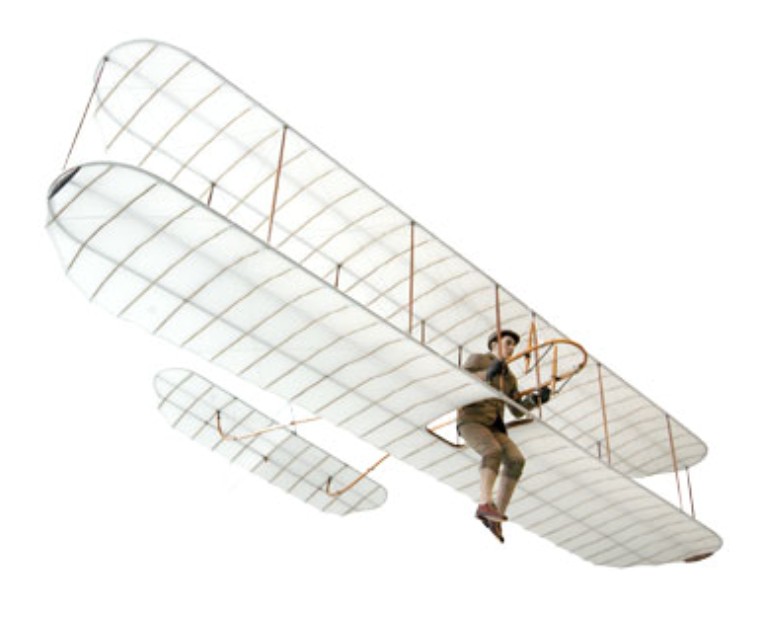
In 1910 TWK Clarke and Co., a Kingston-on-Thames manufacturer of aircraft, accessories and flying models, produced a range of four biplane gliders. This machine, based on a configuration evolved by the American pioneer Octave Chanute, was the third largest of the range and resembled the Wright brothers’ aircraft in general construction. It could be bought as a kit for 10 guineas (£10.50) or completely assembled and covered for £34.
The machine was flown as a hang-glider with the pilot resting his armpits on the padded cushions, while the two control levers, connected in unison, operated the rudder when moved from side to side and the one-piece elevator when moved backwards or forwards. Banking in turns was achieved by the pilot swinging his body and legs towards the inside of the anticipated turn.

Gliding and hang-gliding are now popular leisure pastimes, but at the time T.W.K. Clarke built this glider, powered and controlled flight had yet take place. Gliders were used by many pioneers to perfect their skill at flying and also the machines they were building.

Twining Ornithopter

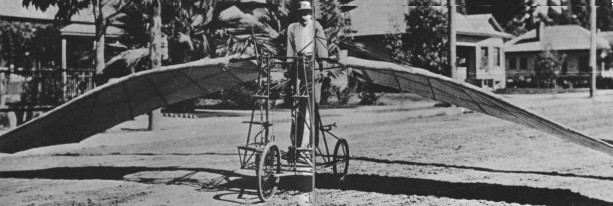
American Harry LaVerne Twining built himself a man powered ornithopter, likely with the assistance of Warren Samuel Eaton. Completed around the summer of 1909 and first appearing in the October 1909 issue of Aeronautics it was tested late in 1909.

It consisted of a tricycle to which articulated 8.2 m (27 ft) wings, operated by foot stirrups, were attached. The Los Angeles Daily Times dubbed it ‘Twining’s Flip Flop’ and assured worried readers that Twining did not intend to rise far from the ground at first, which was just as well because the flip flop was a complete flop, flapping furiously along a Los Angeles street but barely rising an inch.

As President of the Aero Club of California, Twining entered his second ornithopter into the 1910 Los Angeles International Air Meet at Dominguez Field.

20th Century Fox Aichi D3A Val

It was necessary to create a Japanese Air Force to accurately film 20th Century Fox’s “Tora! Tora! Tora!” since no World War II Japanese air¬craft existed in any quantity. Three types were needed; Nakajima B5N 2 “Kate” torpedo bombers, Mitsubishi A6M “Zero” fighters, and Aichi D3A “Val” dive bombers. Ten of each were needed.

The “Vals” were made in 1968 by Steward-Davis from BT¬13’s, the Vultee “Vibrator”, also with the 600 hp Pratt & Whitney. Primary modifications to the BT 13 were a new cowl, extended canopy “Green¬house”, re designed vertical fin, wing dive brakes, heavily spatted main gear, and bomb rack. With the larger engine and wheel fairings this aircraft performs better than the original.

Ten were built, the first N56336. One, N63227, crashed in Hawaii during filming.
20th Century Fox Mitsubishi A6M Zero

It was necessary to create a Japanese Air Force to accurately film 20th Century Fox’s “Tora! Tora! Tora!” since no World War II Japanese air¬craft existed in any quantity. Three types were needed; Nakajima B5N 2 “Kate” torpedo bombers, Mitsubishi A6M “Zero” fighters, and Aichi D3A “Val” dive bombers. Ten of each were needed.

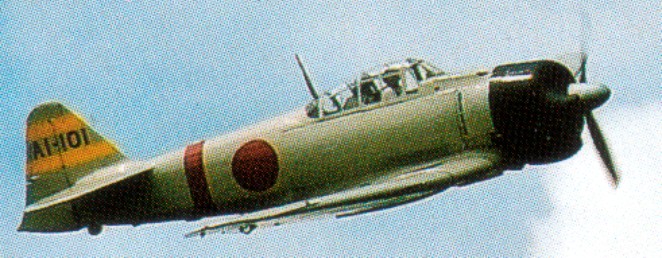
The “Zeros” were made from stock AT 6’s or Harvards by adding wheel covers, authentic cowling and cowl flaps, rounded wing tips, and bomb or auxiliary fuel tank racks. In addition, the cockpit area was modified to match the distinctive Japanese design, as was the area in front of the cockpit. This latter modification was for the two forward firing cowl machine guns. Last but by no means least was the unique and accurate paint scheme. Power is provided by a 600 hp Pratt & Whitney engine.