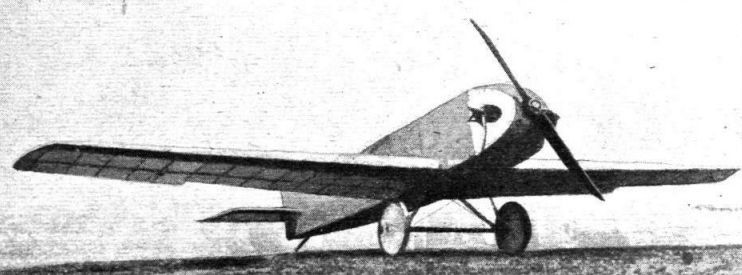
Udet U-1 / U-2

U-1

In the summer of 1921, a new aviation company was formed using the WWI German flying ace, Ernst Udet’s name. William Pohl from Milwaukee, Henry Hans Herrmann and Erich Scheuermann joined to company to fund the aircraft before wartime treaty restrictions were lifted on aircraft production with the intent of building an inexpensive aircraft for the American market. Designed by Hans Henry Herrmann, the builders produced and flew the U 1 five months before the formation of the Udet Flugzeubau GmbH company. The first flight being in May 1922.
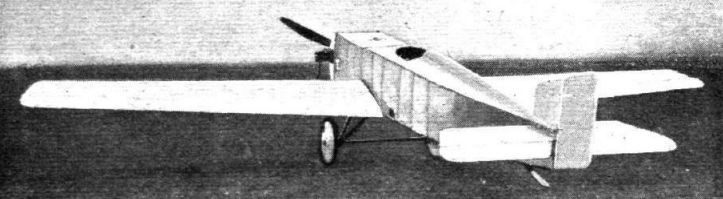
U-1

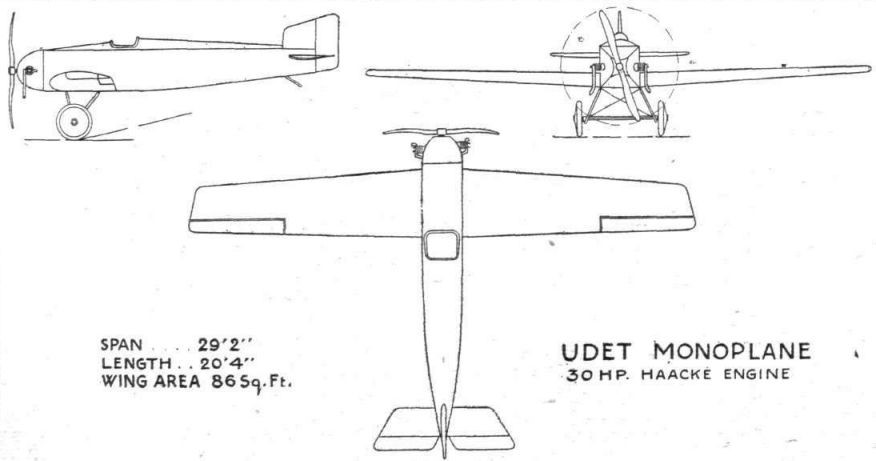
The design was a single seat low wing, open cockpit monoplane with conventional landing gear. The aircraft was large enough to accommodate two passengers, but did not have enough power for more than one person. Only the one was built.
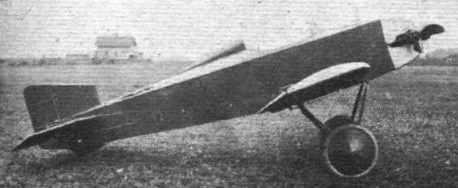
U-2

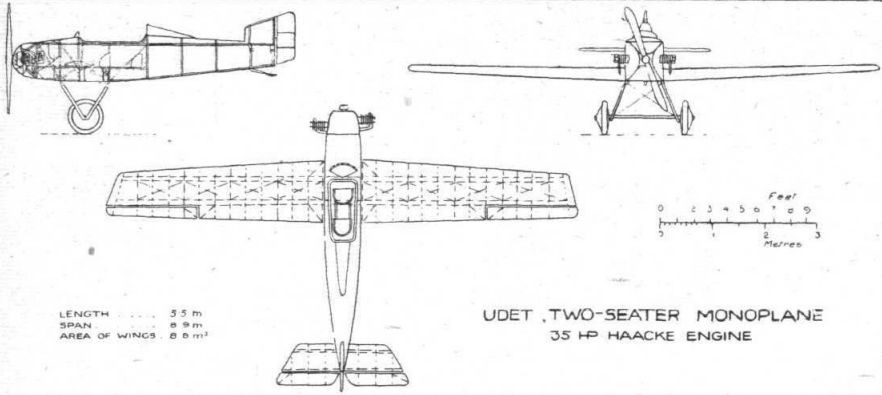
The Udet U 2 was a two seat production variant, first flying in March 1923. Four were produced.
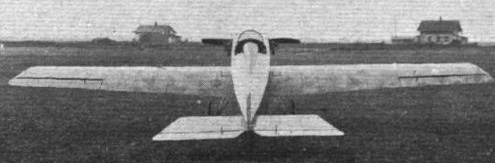
U-2

Gallery

Specifications:

U-1
Engine: 1 × Haacke, 16 kW (22 hp)
Length: 5.33 m (17 ft 6 in)
Wingspan: 8.9 m (29 ft 2 in)
Height: 1.7 m (5 ft 7 in)
Wing area: 8 m2 (86 sq ft)
Gross weight: 200 kg (441 lb)
Maximum speed: 180 km/h (112 mph; 97 kn)
Endurance: 2.5 hr
Crew: 1

U-2
Engine: Haacke, 35 hp
Wingspan: 6.9 m
Length: 5.5 m
Seats: 2
U-1
U-2

Udet Flugzeubau GmbH

German First World War air ace Ernst Udet lent his name to this company, established near Munich in 1921 by American William Pohl. The Udet U-1 single-seat lightplane of 1922 was followed by a two-seat U-2; more powerful U-4; cabin monoplane U-5; another ultralight two-seat U-6; parasol-winged single-seat U-7 Kolibri; small airliner U-8; and an 11 seat high-wing transport U-11 Kondor. Udet left the company in 1925, after agreeing to production of a light training biplane, the Udet U-12 Flamingo, destined to become the company’s best-known aircraft. A two-seat open-cockpit biplane of wooden construction, it was demonstrated throughout the world by Udet. Although the company went out of business in 1925, Flamingo production continued as Bayerische Flugzeugwerke AG in Germany, as well as in Austria, Hungary and Latvia. It served in many roles, notably as a trainer with the German civil flying clubs and at clandestine Luftwaffe pilot training centres.

Tyler Flight Shadow

A two seat enclosed autogyro. The basic frame is bolted 2×2 aluminium, with twin rudders and fibreglass cabin.

The Shadow is fitted with certified disc brakes, a gearbox-driven prerotator, and full electrical system for avionics, lights, etc.

Easily reducible height for storage in a garage or transport by trailer.

Engine: Lycoming 0-320, 150 to 180 hp
Length: 13 ft
Height: 8 ft 4 in (reducible to 6 ft)
Width: 7 ft
Number Of Seats: 2
Empty Weight: 750 lbs
Gross Weight: 1,290 lbs
Useful Load: 540 lbs
Rotor Diameter: 29 ft
Rotor Construction: Composite
Disc Loading: 1.95 lb/sq.ft
Fuel Capacity: 12 USGal (18 USGal opt.)
Range: 100 (min.) to 150+ miles
Take-Off Distance: 100 to 150 ft
Landing Distance: 0 to 25 ft
Rate-Of-Climb: 800 to 1,500+ fpm
Cruise Speed: 70 to 80 mph
Maximum Speed: 100 mph
Vne: 110 mph
Service Ceiling: 18,000 ft