Australia.
Initially producer of 2-stroke engines and lawnmowers; Aviation Division established September 1959 to manufacture Airtourer, two-seat aerobatic lightplane designed by Henry Millicer, chief aerodynamicist of Government Aircraft Factories. Prototype built by Air Tourer group of Australian Ultra Light Aircraft Association and first flew March 1959; production deliveries began mid-1962. Also that year produced prototype Victa 67A two-seat autogyro. Aviation Division closed 2 January 1967; manufacturing rights in Air tourer and later Aircruiser obtained by Aero Engine Services Ltd of New Zealand.
Author: Terry
Vickers-Slingsby
After Slingsby Aircraft Company Ltd had gone into liquidation in July 1969 the firm was reorganised as part of the Vickers Group, at first as Slingsby Sailplanes, later trading as and then as Slingsby Engineering Ltd.
Vickers Vanncock / 150 / 195 / 255

The Vickers Vanncock was designed to meet the Air Ministry Specification B.19/27 calling for a long-range night bomber.
Only one prototype was built, J9131, but it was twice modified and given new type numbers.
The Vanncock Mk.I, Type 150, was powered by two Rolls-Royce Kestrels and fitted with single-bay outer wings.
The Vanncock Mk.II, Type 195, was re-engined with two Bristol Pegasus I,M.3s and had a three-bay wing. The four-seat Mk.II had an AUW of 16,000 lb, span of 76 ft 6 in, and length of 60 ft 4 in.
The final Type 255 reverted to two-bay wings of increased area, retaining the Pegasus engines.
Vickers 98 Vagabond

Following the first Lympne trials held in 1923 for single-seat motor-gliders, the Air Ministry organised a similar event in 1924, this time for low-powered two-seat aircraft. The engine capacity limit was set at 1,100 cc. and, as before, the wings had to fold for easy transport and storage.

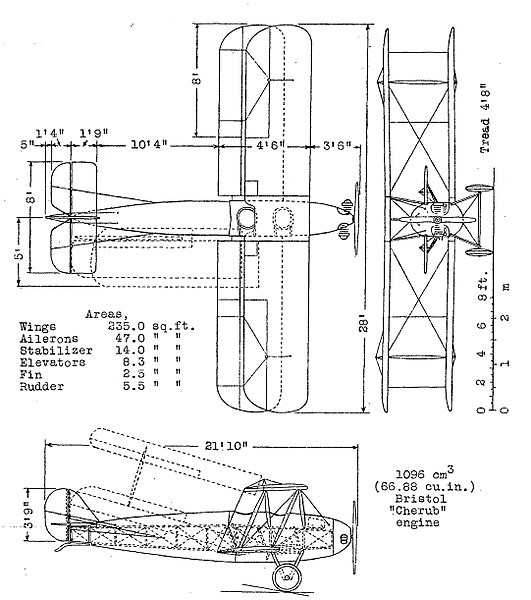
The Vickers Type 98 Vagabond was Vickers’ entrant for the second Lympne light aircraft competition, held in 1924. Designed by R.K. Pierson, it was a single-bay, wire-braced biplane with wings of constant chord except towards the rounded trailing tips. The wings had equal span and carried marked stagger. There were ailerons on both upper and lower wings, with flaps inboard on the lower wings which could be folded to assist wing-folding. The pilot and passenger sat in open cockpits, the latter under the upper wing. The pilot’s upward view was enhanced by a small cutout in the trailing edge of the top wing. The fuselage had a more rounded cross-section than that of the earlier Viget, Vickers’ single-seat entry to the 1923 competition, extending a little below the lower wing. The 32 hp (24 kW) Bristol Cherub III flat twin engine was mounted in a smooth nose with the finned cylinders exposed for air cooling. The horizontal tail was similar to that of the Viget, but the fin and rudder were much more rounded. Because of the stagger, the mainwheels were in front of the lower wing, braced to the lower fuselage logeron aft to the front wing spar and forward to a point roughly below the upper wing leading edge.

A most unusual feature of the Vagabond was the method of longitudinal trimming. Rather than changing the angle of the tailplane with respect to the fuselage, the whole rear part of the fuselage was hinged just ahead of the lower wing’s trailing edge. This was controlled via a handwheel between the two cockpits; the rear fuselage was raised at the start of a landing descent to increase drag and slow the aircraft.
Early flight trials, with H.J.Pain as pilot revealed a need to stiffen the engine mountings. When this was done, the Vagabond, now fitted with a three-cylinder 1,095 cc Blackburne Thrush radial engine flew well enough at Lympne, but was eliminated in the preliminary rounds. The trials took place between 29th September and 4th October 1924.
Nevertheless, the aircraft and engine performance were improved once it had been eliminated from the main event and it subsequently took part in the 100-mile Grosvenor Challenge Cup Race, which was won by Bert Hinkler flying the Avro Avis.
Only one Vagabond, registered as G-EBJF on 1 July 1924 was built. It was deregistered on 24 January 1928.
Powerplant: 1 × Bristol Cherub III, 32 hp (24 kW), later 1,095 cc Blackburne Thrush
Wingspan: 28 ft 0 in (8.53 m)
Wing area: 235 sq ft (21.8 m2)
Width: 10 ft 0 in (3.05 m) (width wings folded)
Length: 21 ft 10 in (6.65 m)
Empty weight: 527 lb (239 kg)
Gross weight: 887 lb (402 kg)
Maximum speed: 77 mph (124 km/h, 67 kn)
Crew: 1
Capacity: 1 passenger
Vickers HMA No. 5 / HMA No. 6 / HMA No. 7
It was intended to buy three more Parsevals from Germany, PL 20, 21 and 22, but the outbreak of war ended this plan. Instead, three ships HMA No. 5, 6 and 7 were built in England by Vickers based on Parseval designs. These were not delivered until late 1917 and were used for training.
Vickers R80
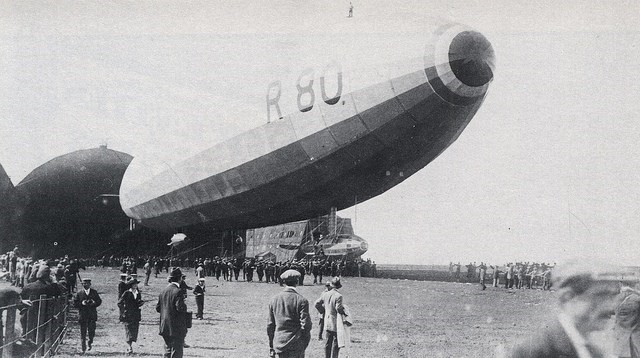
Circa 1921 was the R80; the only example of the Small R33 Class. She was the last rigid to be planned before World War One ended. Measuring 534 ft in length, 70 ft in diameter, with a volume capacity of 1,250,000 cu ft she was fitted with four 250hp Wolsey Maybachs giving a maximum speed of 65mph. R80 was designed by Barnes Wallis and built by Vickers. When at Pulham decisions were reached that she was too small to be a lot of commercial use, and was laid up there after only 73 hours flying time. She was finally broken up in 1924.
R80
Length: 534 ft
Diameter: 70 ft.
Volume capacity: 1,250,000 cu ft.
Engines: four 250hp Wolsey Maybachs.
Maximum speed: 65mph.
Vickers VC-10 Gallery


Vickers VC-10
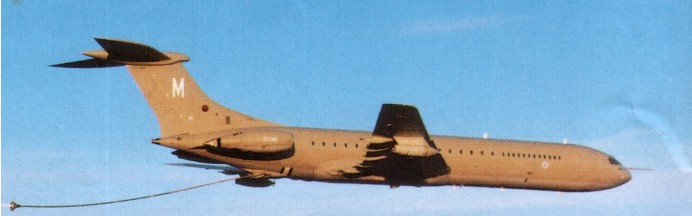
Vickers had honed the VC10 since the cancellation of the VC7/V1000 in 1955. As it became clear that BOAC would buy Boeing 707s for trans-oceanic routes, George Edwards aimed his design at their Medium-Range Empire routes to countries with undeveloped hot and high airports. Alongside this, he also had in mind the RAF’s need for a personnel/freight transport, again to ‘up-country’ destinations. Though in time the Super VC10 did come to fly the North Atlantic, its progenitor was never intended as a true long-ranger, nor was it ever a pure civilian machine. The VC10/Super VC10 needs 17 hydraulic actuators in their tailplanes. Much of its structure was famously milled from solid billets of metal.
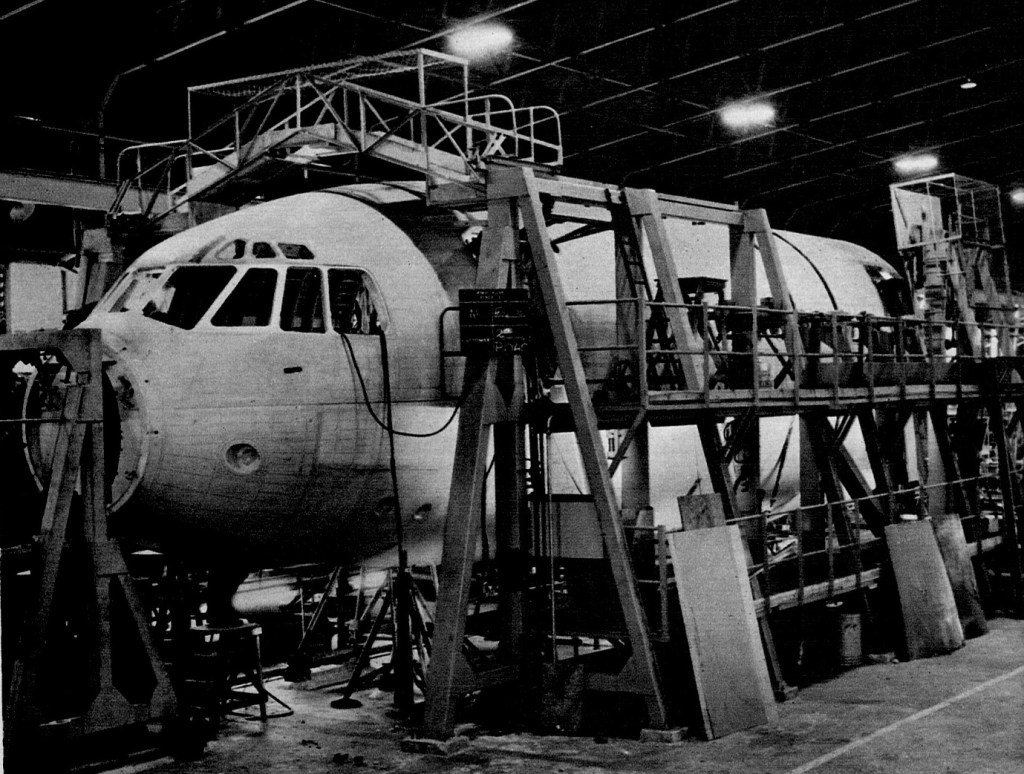
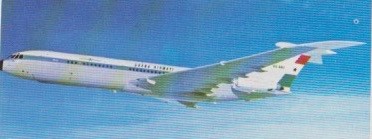
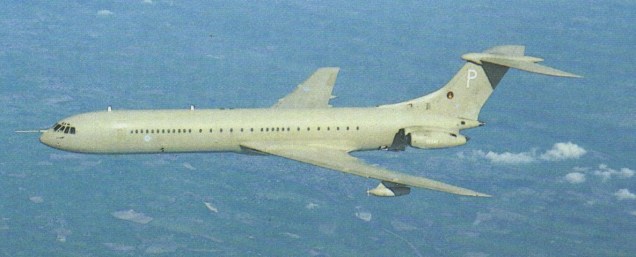
A long range civil transport featuring rear mounted engines emerged when introduced, the VC10 tailored closely to the requirements of BOAC. The prototype (G ARTA) flew for the first time on 29 June 1962, powered by four Rolls-Royce Conway turbofan engines.

The VC10 entered service on BOAC’s route to West Africa on 29 April 1964. Four production variants and a modification of the prototype were produced: the Model 1101, of which 12 went to BOAC accommodated 16 first-class and 93 economy passengers; the Model 1102, of which two went to Ghana Airways, one with a large hydraulically operated cargo door between the standard passenger doors and both with 4% chord leading-edge extension from wing root to fence; the Model 1103, of which three went to British United Airways with cargo door and extended leading edge; Model 1106, of which 14 went to RAF Air Support Command with cargo door, folding hatracks, machined cargo floor, extended leading edge, 97kN Conway RCo.43 Mk 301 turbofans and fin fuel tank; and the Model 1109, the prototype brought up to airline standard for Laker Airways, with the Model 1106 wing. Standard engines for the VC10 were four 90.6kN Rolls-Royce Conway RCo. 42 turbofans in lateral pairs on each side of the rear fuselage. RAF basic transport version designated VC10 C.1. C.2 is the unconfirmed designation of flight refuelling tanker conversions of five VC10 and four Super VC10.
A developed version, the Super VC 10, with a longer fuselage, an improved wing leading edge and more powerful engines was able to accommodate up to 174 economy class passengers and had a maximum range of 4,720 miles (7,600 km).

The stretched fuselage Super VC-10 overflew the 1964 Farnborough Air Show. Landings are made using two section flaps and deflecting leading edge slats.
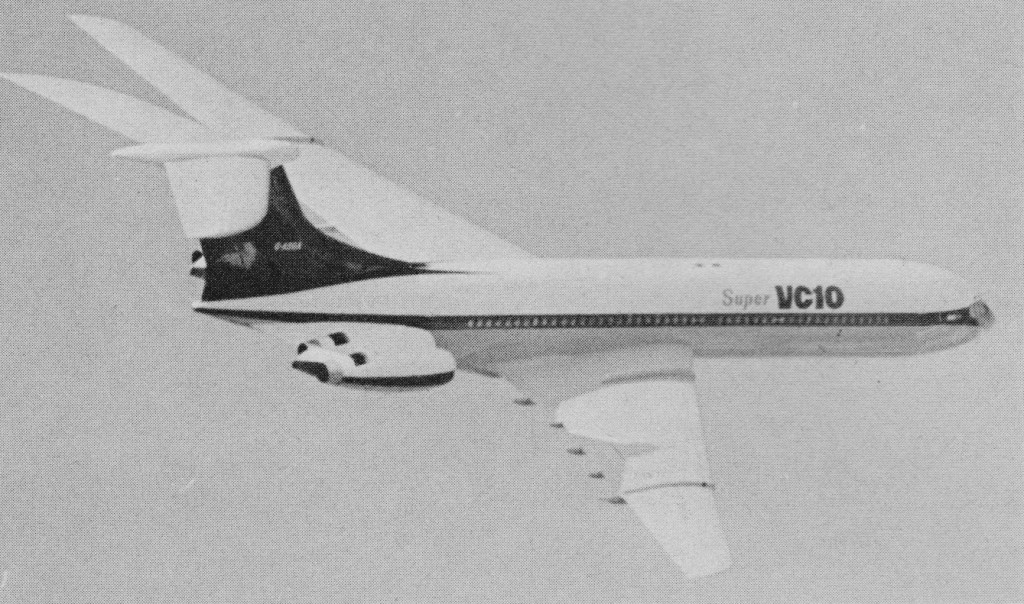
Only 54 sold. Only nine of those built were for customers outside of Britain.

Eleven Super VC 10s, once operated by BOAC and British Airways, were pur¬chased by the RAF/Ministry of Defence in 1981 and flown into long term storage at Abingdom. In 1990 the decision to convert six of the stored airframes to three point refuelling tankers at British Aerospace’s Filton facility was announced.
Engines: 4 x RR Conway RCo-42 turbo-jet, 93.4kN
Max take-off weight: 141521 kg / 312002 lb
Empty weight: 67094 kg / 147918 lb
Wingspan: 44.6 m / 146 ft 4 in
Length: 48.4 m / 158 ft 10 in
Height: 12.0 m / 39 ft 4 in
Wing area: 264.3 sq.m / 2844.90 sq ft
Cruise speed: 915 km/h / 569 mph
Range w/max.fuel: 8328 km / 5175 miles
Range w/max.payload: 6680 km / 4151 miles
Crew: 4-6
Passengers: 108-151
Engines: 4 x Rolls-Royce Conway RCo.42 turbofan, 20370 lb (9240 kg)
Wing span: 146 ft 2 in (44.55m)
Length: 158 ft 8 in (48.36m)
Wing area: 2,851 sq ft (264.9sq.m)
Gross weight: 314,000 lb (142,430 kg)
Max cruising speed: 568 mph (914 kph)
Typical range: 5,040 miles (8,115 km) with max payload
Crew: 3-4
Pax cap: 109
VC-10 Srs 1100
Engines: 4 x RR Conway, 21,000 lb
Wing span: 146 ft 2 in (44.55 m)
Length: 158 ft 8 in (48.36m)
Height: 39 ft 6 in (12.04 m)
Max TO wt: 312,000 lb (141,520 kg)
Max level speed: M0.86
Super VC 10
Engines 4 x 22,500 lb. (10,205 kg.) Rolls Royce Conway RCo.43 turbofan
Length 171.7 ft. (52.32 m.)
Wing span 146 ft 2 in (44.55 m.)
Height, 39 ft 6 in
Gross wing area, 2 932 sq.ft
Basic operational weight, 154 552 lb
Max. take-off, 335 000 lb
Max. landing, 267 000 lb
Max. payload (volume limited), 47,150 lb
Max. zero fuel, 215,000 lb
Total fuel, 154,700 lb
Power loading (max. take-off weight), 3.72 1b/1b
Wing loading (max. take-off weight), 114.2 lb/sq.ft
Wing loading (max. landing weight), 80.9 lb/sq.ft
Accommodation: 24 first-class at 46 in pitch and 103 coach class at 33 in pitch
Max. high density seating: 169 at 33 in pitch.
High-speed cruise, 500 kt. at 33 000 ft
Long-range cruise, 459 kt at 40 000 ft
Approach speed, 134 kt
Take-off field length, ISA at sea level, 8660 ft
Landing field length, ISA at sea level, 6830 ft
Range with allowances, max. fuel, 25,750 lb payload, 5 450 nm
Max. usable floor area, 1130 sq.ft
Max. usable cabin volume , 7600 cu.ft
Max. cabin length, 103 ft
Max. width, 137.8 in
Aisle height, 91 in.
Freight and baggage holds: 1930 cu.ft

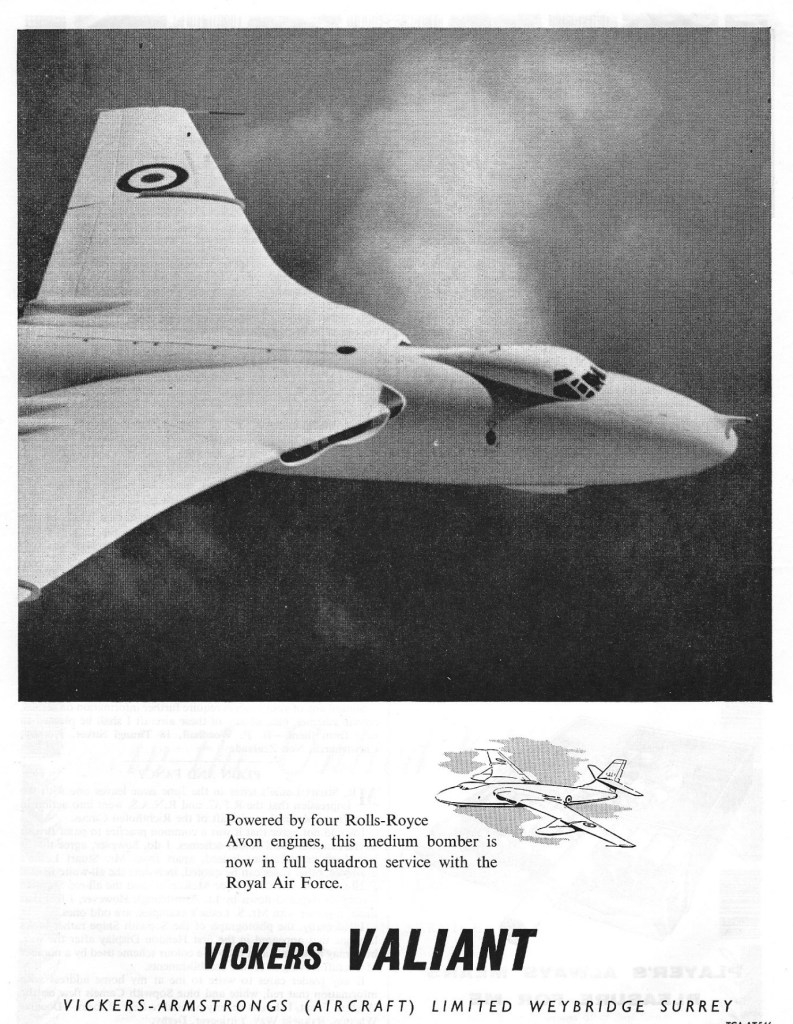
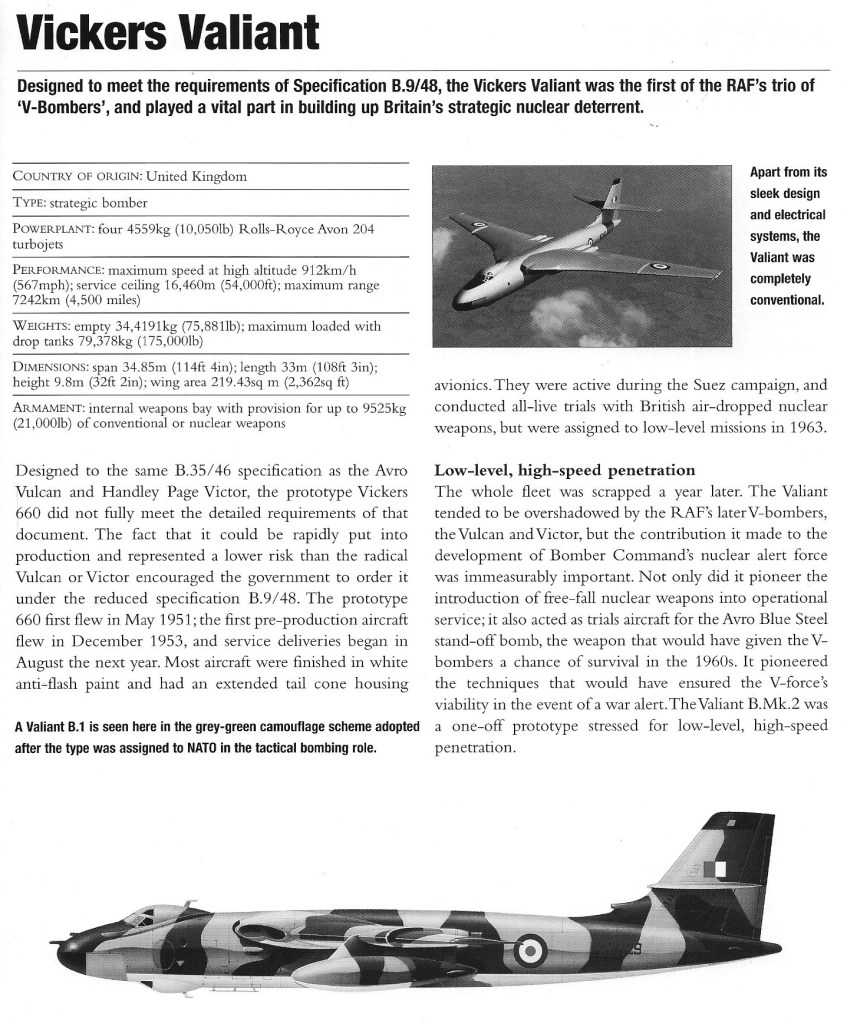
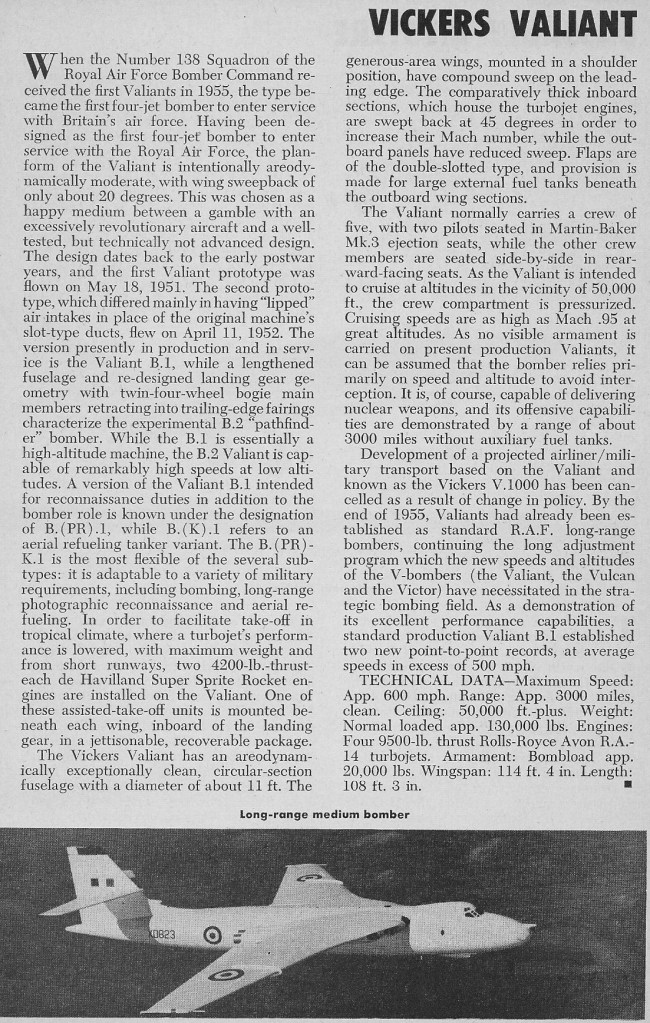
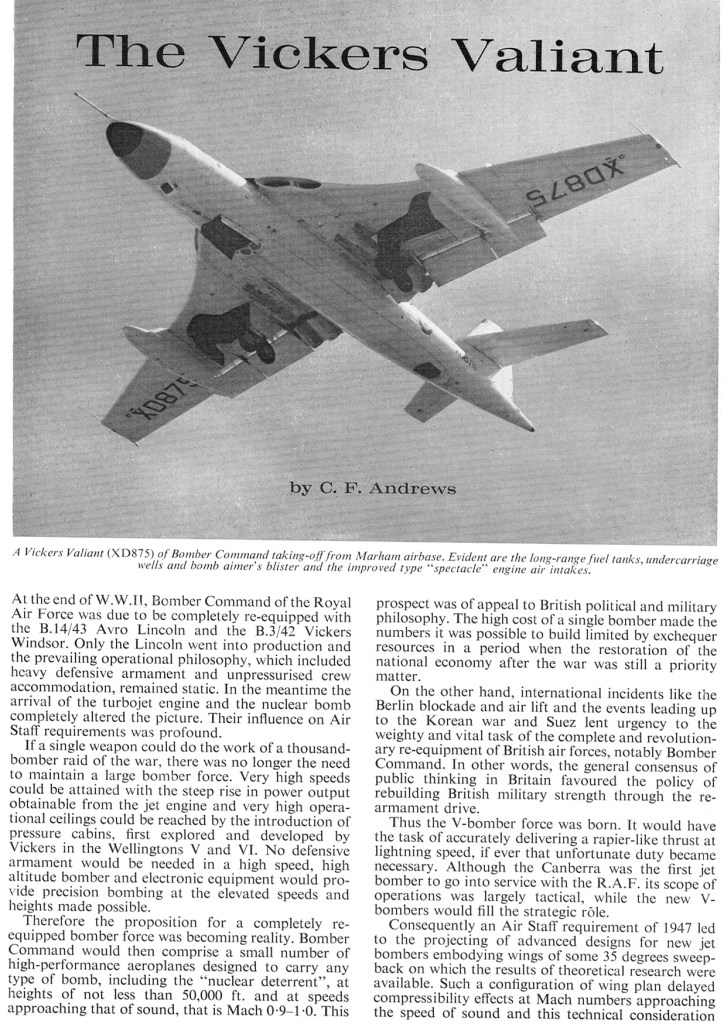
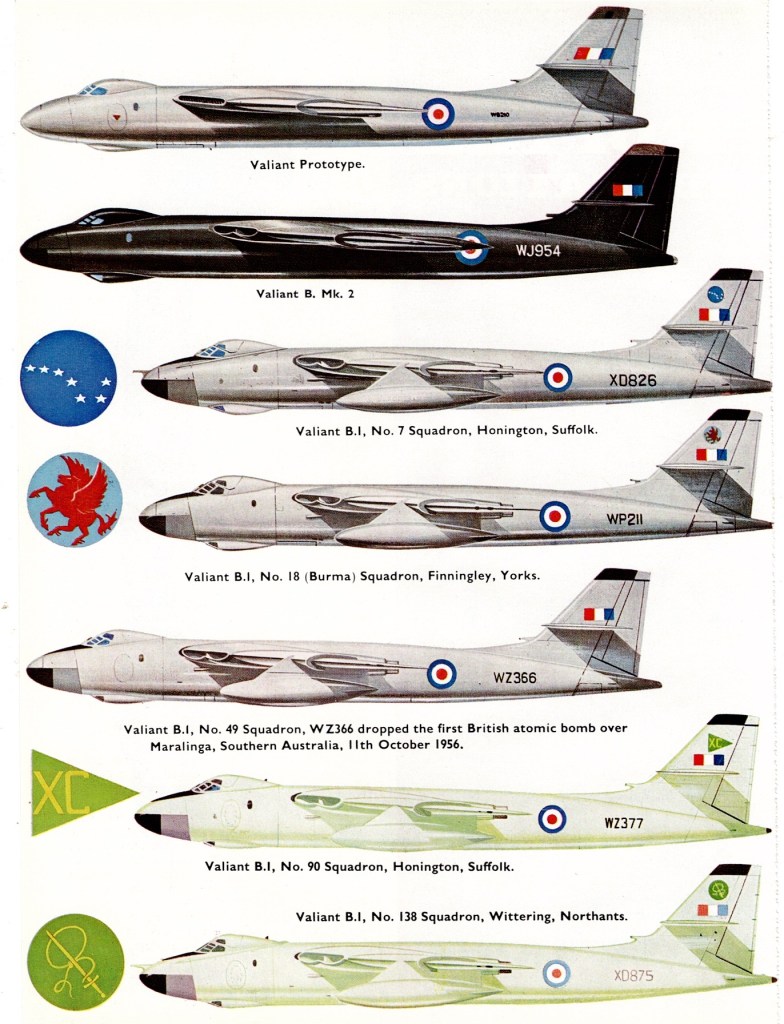
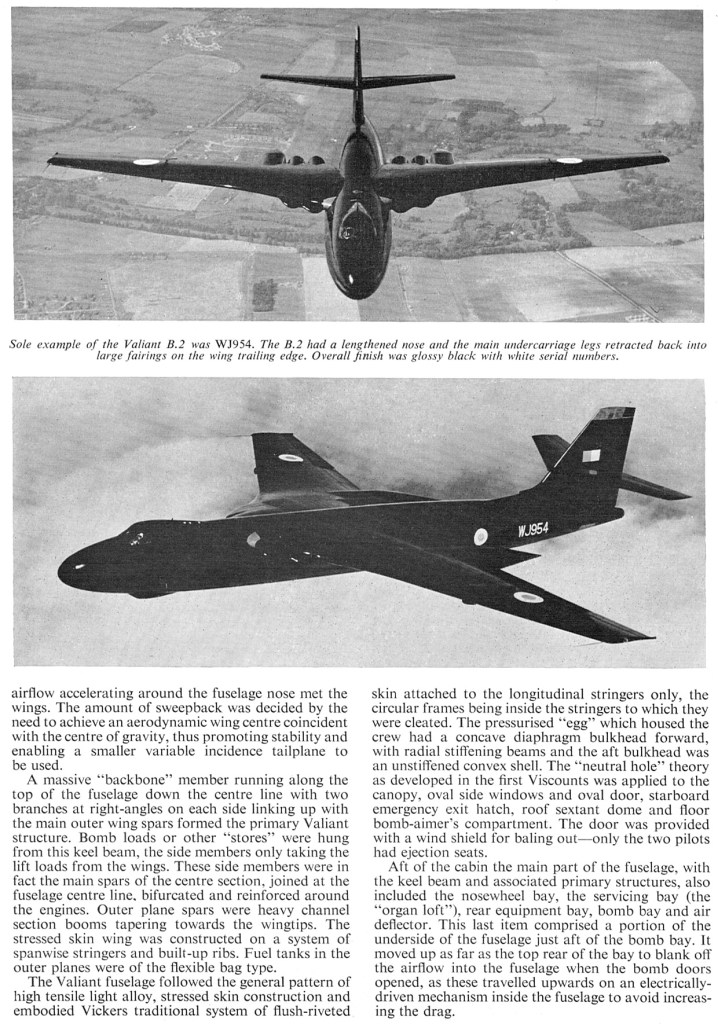
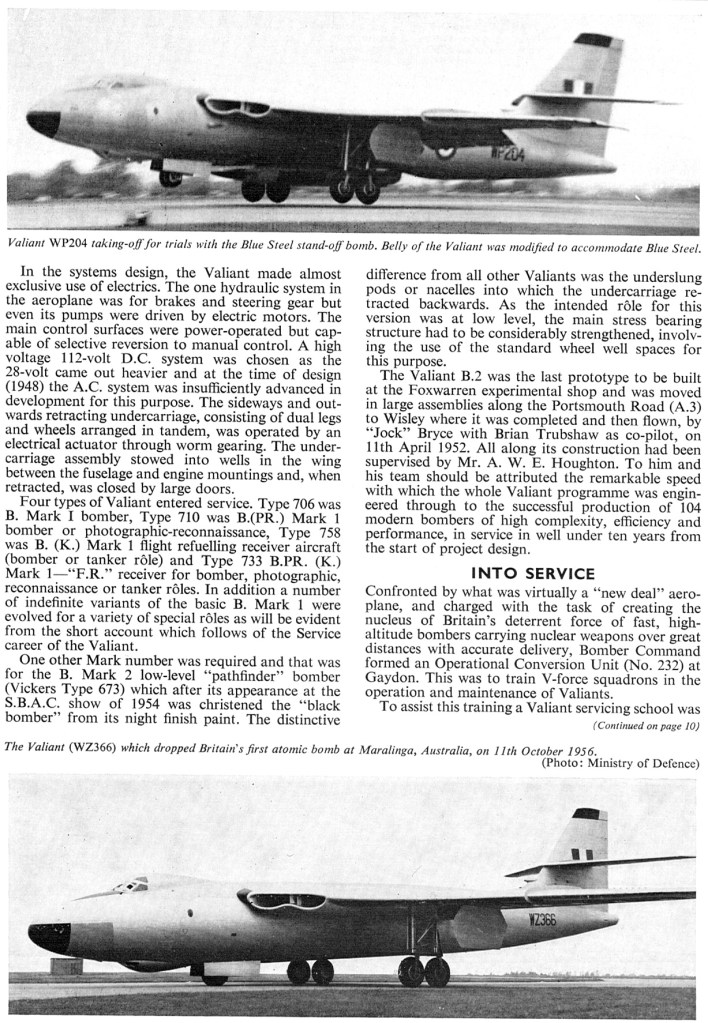
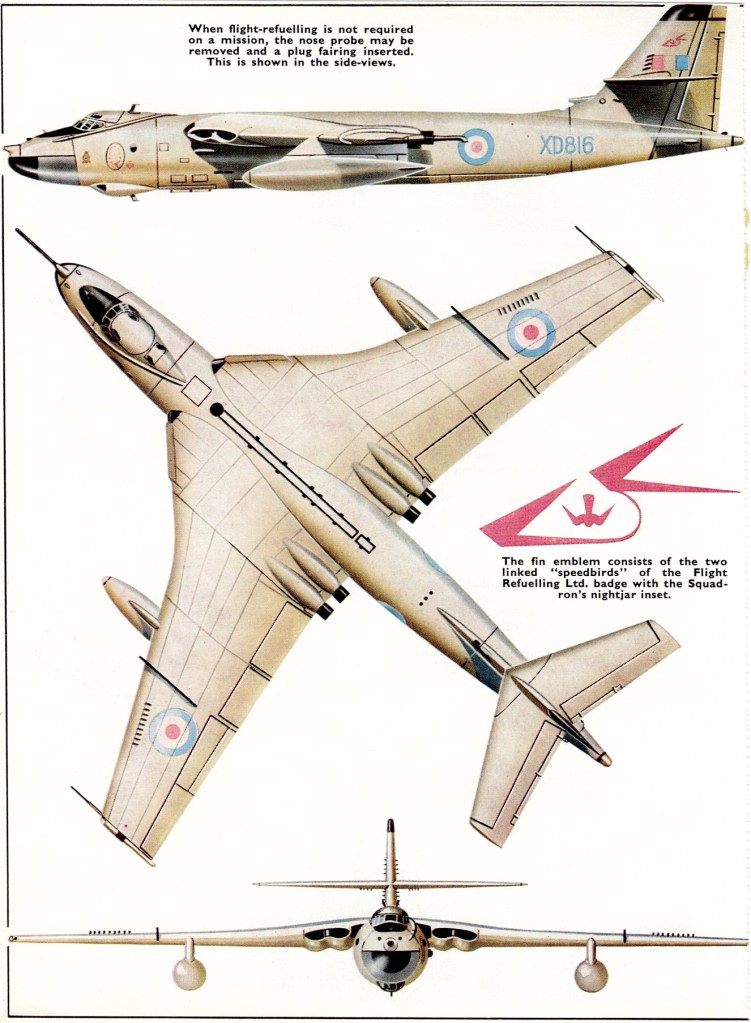
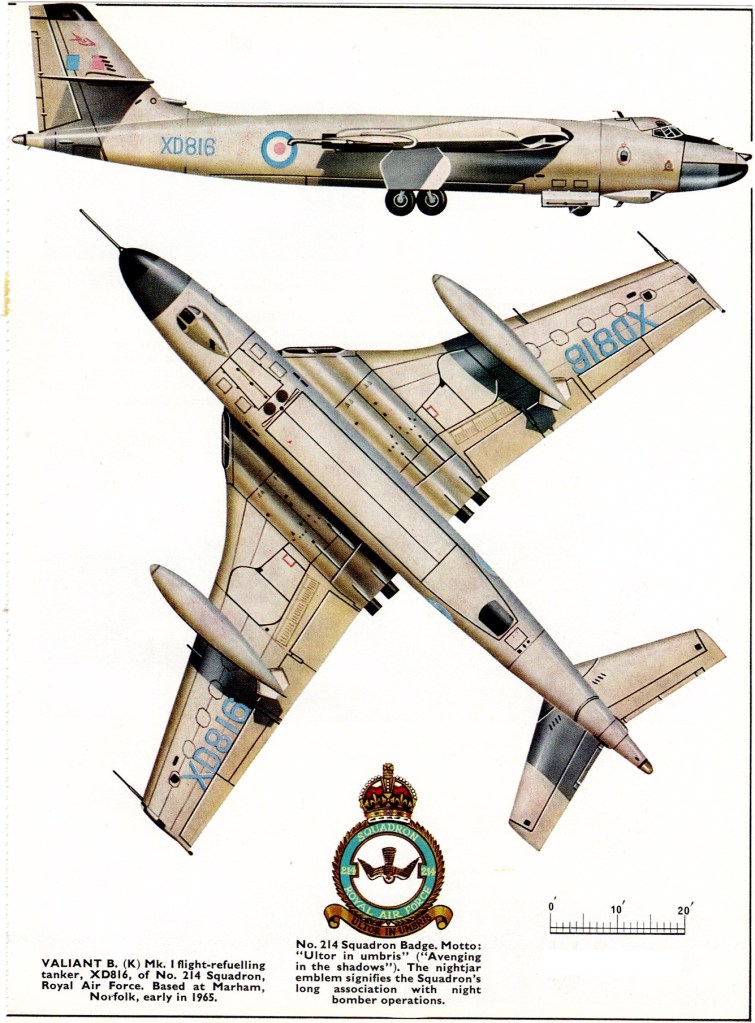
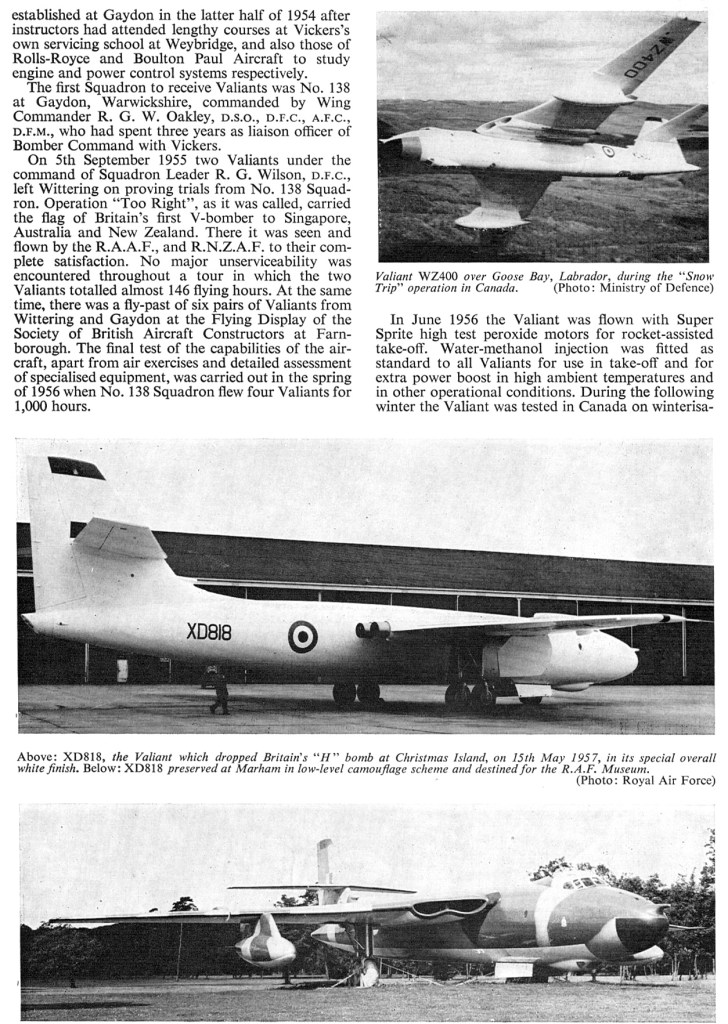
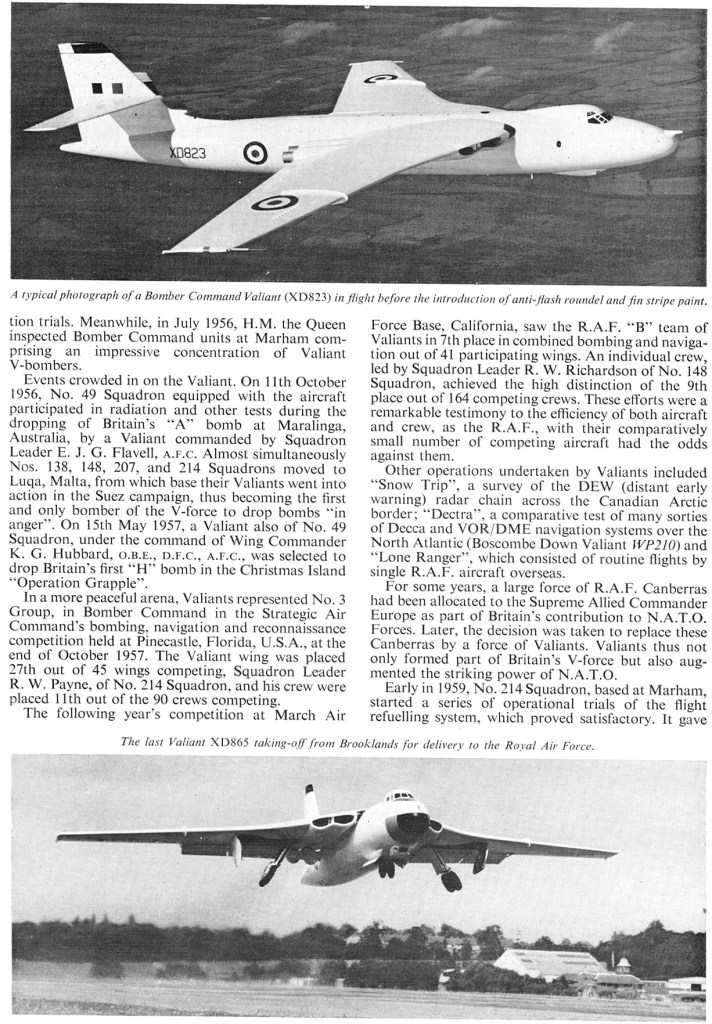
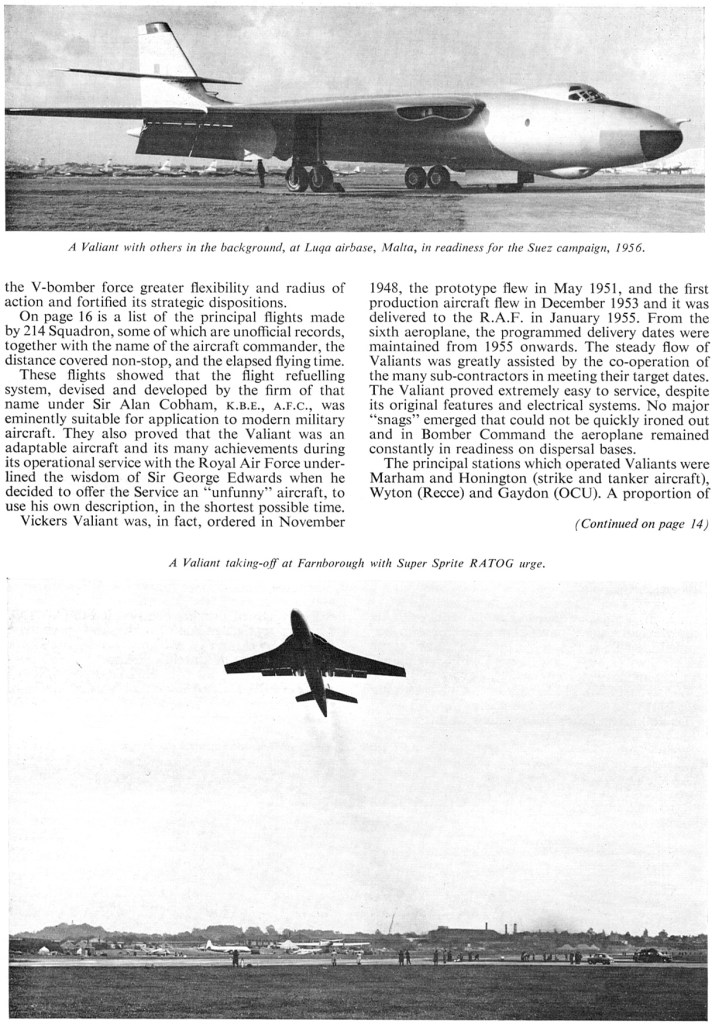
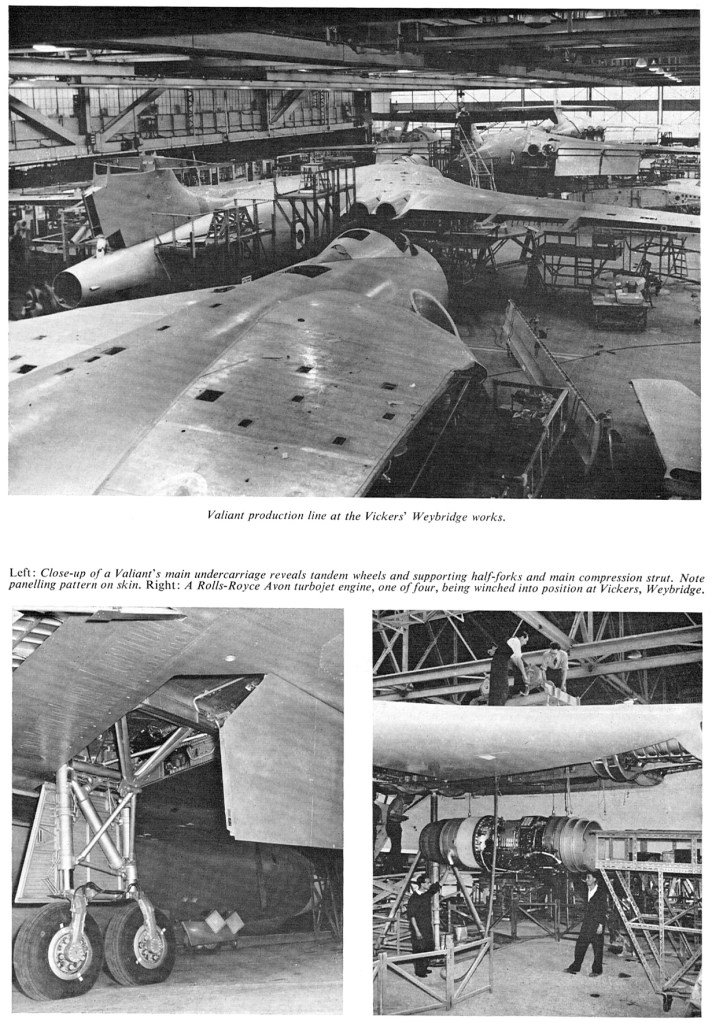
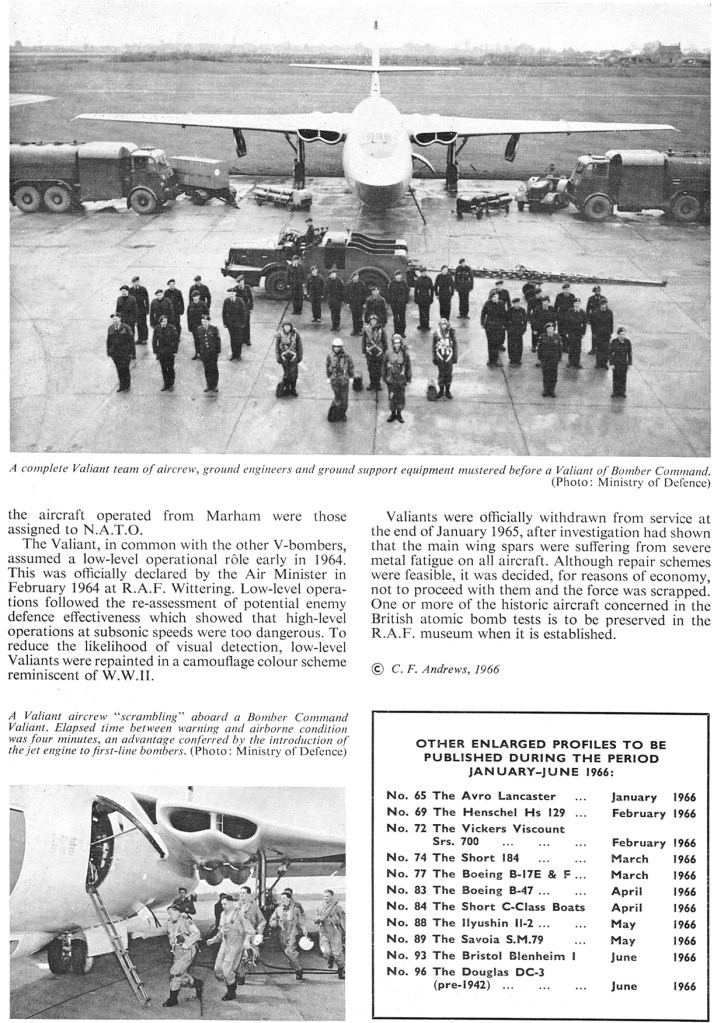
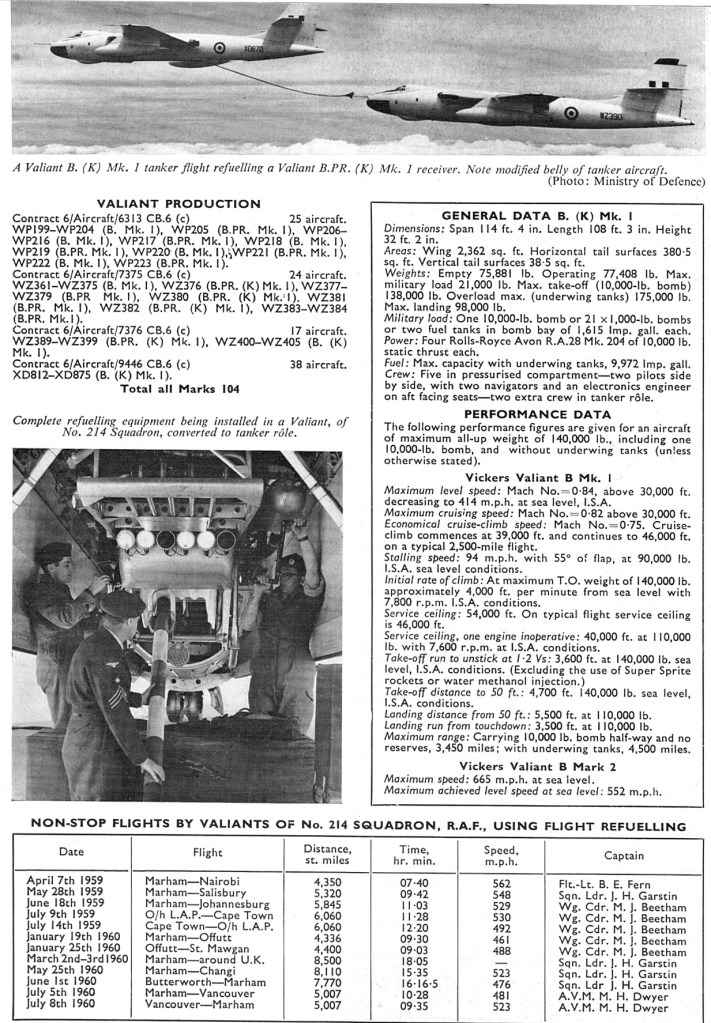
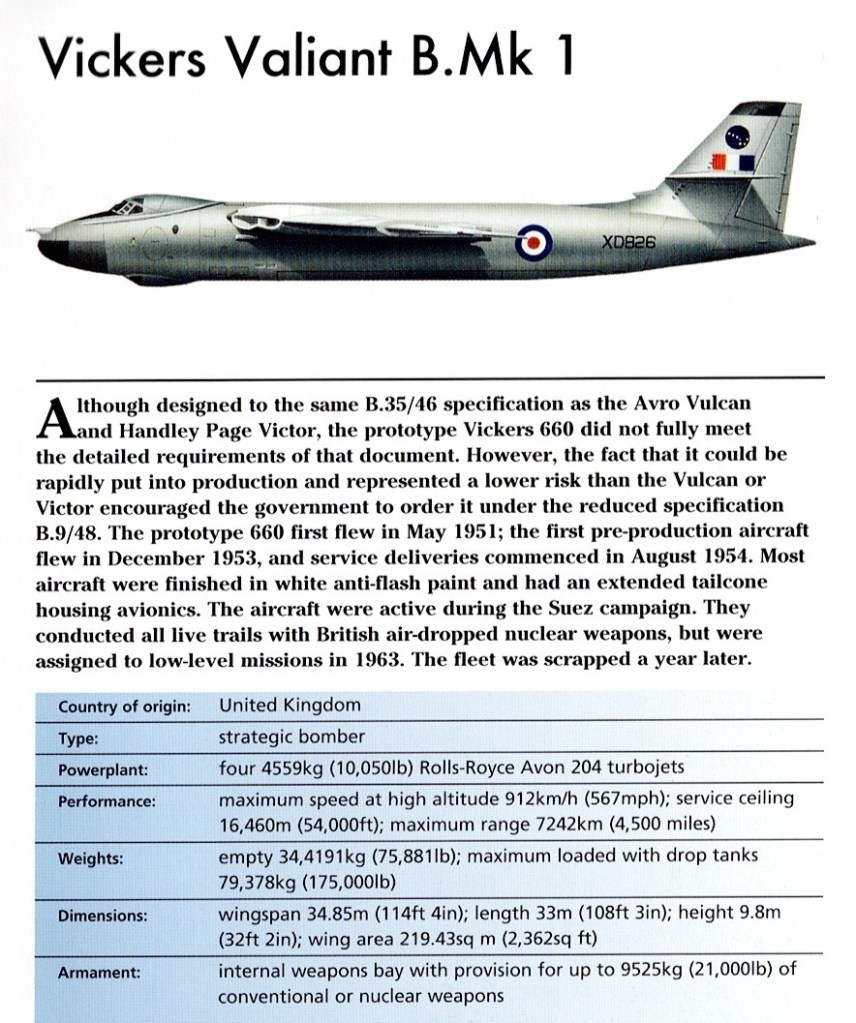
Vickers 660 Valiant Gallery
Back to Vickers 660 Valiant